Jason Whitaker
Jason Whitaker Facebook ad: “Everyone with gout flare-ups needs to see this”
Ran for 83 days, from June 17 to September 8, 2026, the last day Crush saw it.
Run by Jason Whitaker on Facebook. Crush is not the advertiser and does not verify its claims. See this ad in Meta's Ad Library(opens in a new tab)
Want an ad like this for your product?
Crush makes new ad images for your product from this ad: your logo, your product photo, your offer.
Trials from $19.95 USD, then $79.95 USD a month. Cancel anytime.
About this ad
- Meta Ad Library ID
- 2216817255798172
- Platforms
- Facebook, Instagram, Audience Network, Messenger and Threads
- Relaunches
- 1
Ad text
I saw a statistic that made me sick. 1 in 3 men with gout will have a fatal heart event before he turns 70. Even on allopurinol. Even with his uric acid "in range" the whole time. Not 1 in 20. Not 1 in 10. 1 in 3. The medication keeps your uric-acid number looking pretty on paper. It just doesn't stop the thing that's actually killing you — while it quietly takes everything else from you in the meantime. My brother Dale was one of those men. 16 years on allopurinol. Heart attack killed him at 58. His uric acid was perfect the whole time. I'm 61. Last month my own doctor told me the same thing she told my brother at 52. My blood pressure is creeping up. She wants to add a second pill on top of my allopurinol. The same two pills Dale took every morning for the last years of his life. I refused. And what I found instead — in a hill-country farming settlement in southern Missouri — brought my uric acid from 9.4 to 5.1 in twelve weeks. Without a single new pill. But to understand why I was willing to drive five hours to a stranger's farm at 6 AM on a Wednesday morning, you have to know what I watched that combination do to my brother first. For 16 years — and I mean sixteen straight years — Dale was on the standard gout playbook. It started simple. Allopurinol 100 mg. The rheumatologist called it "the gold standard." Said his dose would creep up over time but that was normal. Said the flares would stop in a few months. Within the first year, the flares kept coming. Not the old once-a-year flare. I'm talking about a man who used to coach my son's Little League team. Who could stand at first base all afternoon. Who'd help me re-roof a shed on a Saturday. He started waking up at 4 AM with his big toe on fire. Soaking his foot in a bucket before work. Saying things like "I just need to keep it up for a minute" and not getting his boot back on for two days. His joints went next. By year three, the flares moved. The man who laid brick for thirty years suddenly couldn't kneel on a job he'd done his whole life. He'd stand at the edge of the driveway holding the rail, working up the nerve to come down the two steps. By year five, he stopped coming to the family cookouts. We moved them to my place. He'd come but he'd be sitting in a lawn chair with his foot up by 3 PM. Year seven, the weight started piling on. He was eating cleaner than he ever had in his life. Off the beer the way the doctor told him. The scale just kept climbing. He gained 40 pounds in three years he could not lose no matter what he tried. Year eight, his grandson Cody's first T-ball game. Dale couldn't make the 45-minute drive across the county. Said he was "just too sore to sit in the truck that long." It was the first one he ever missed. It wouldn't be the last. Year ten, the heart stuff began. Pressure in his chest climbing the porch steps. Pounding so hard at night he couldn't sleep through it. He told his rheumatologist. His rheumatologist sent him to a cardiologist. The cardiologist ran a stress test, said his heart looked fine, called it stress, and wrote him a script for a low-dose blood-pressure pill. Year twelve, his blood pressure came back at 158 over 96. The doctor added a second pill. "Just to be safe." Year thirteen, he stopped getting off the couch most days. He'd sit in front of the television with his foot propped up and sleep through whatever was on. Year fifteen, I started driving to his house twice a week to help him get to the bathroom because he couldn't stand long enough on his own. And every single time we asked why this was happening, every single time we said "this isn't normal, he's a different person" — they said the same things they'd been saying for sixteen years. "His uric acid's in range." "Some flares are normal with gout." "It's just his weight." "Has he tried cutting out red meat?" "Some of this is just aging." "Your brother's got high blood pressure. That's a separate thing." "The benefits of the medication outweigh the risks." Never once — not in sixteen years of appointments — did any one of them say: maybe we should look at what's actually causing this. Maybe the medication isn't the whole answer. Maybe there's something nobody is testing for. Then one Sunday morning, Dale was sitting in his recliner, and his heart stopped. He was 58 years old. Sixteen years on allopurinol. Four years on a blood-pressure pill. His uric acid was "well-controlled" the whole time. None of it saved him. It just took everything from him piece by piece first. At the funeral, my mother held my hand and said something I will never forget. "The pills didn't save him, Ray. They just turned him into a shadow first." Three months ago, I sat in a doctor's office for my annual physical. I'm 61 years old. I walk the dog every morning. I cut the beer out in my fifties. I take my allopurinol every morning at 6 AM with water, the way I've been doing for nineteen years. I do everything I'm supposed to do. I walked in feeling fine. The nurse drew my blood. Three days later, my phone rang. "Mr. Mercer, Dr. Reyes needs to see you about your results." I sat in the exam room. The door clicked shut. She pulled up my chart. Looked at me. "Ray, your uric acid came back at 9.4. Given your gout, your age, and your brother's history, I think it's time we raise the allopurinol and add a second pill. Just to be safe." Just to be safe. The same four words my brother heard nine years before me. The room got small. "No," I said. Dr. Reyes looked up from her notes. "Ray, I understand the concern. But uncontrolled uric acid at your level—" "My brother was on allopurinol for sixteen years. They added a second pill at 52. He died at 58. I watched him become someone none of us recognized for a decade before the heart attack got him. I'm not following that path. Not with your gold standard. Not with anyone's." She was quiet for a moment. "Give me three months." She hesitated. Then nodded. "Three months. Diet, water, the works. We'll re-test. But Ray — if it doesn't come down meaningfully, we are raising the dose. With your family history, this isn't optional forever." For three months, I did everything she told me to do. Cut out everything with purines in it. Cherries on the cereal every morning. Water until I sloshed. Walked the dog twice as long. Lost four pounds. Three months later, I went back. Uric acid: 9.2. Barely moved. Dr. Reyes pulled out the prescription pad. "Ray, I really do think it's time." I stared at that pad and felt rage building in my chest. I had done everything they tell men like me to do. Everything the medical world says works. And it wasn't enough. And the only solution they had for me was the same one that erased my brother. "Three more months." "Ray—" "Three more months." She sighed. Wrote something in my chart. I didn't care what she wrote. That night I couldn't sleep. 11 PM. 1 AM. 3 AM. I sat at my kitchen table with my laptop open. Dale's photo was still on the corner of the screen where my phone had backed it up the year before. I started typing. Why do men with gout keep dying of heart attacks? What is the connection between gout and the heart? Why didn't the medication save my brother? Every mainstream site said the same things. Cut out beer. Drink water. Lose weight. Take the medication. My brother did all of that for sixteen years. He still died at 58. I kept digging. Somewhere around 3 AM, I came across a thread that I almost scrolled past. The title was something like: Why are men in these old farming settlements so rarely dying of heart attacks? It sounded like one of those crackpot wellness things. I almost kept scrolling. But something made me click. The Ozark hill country, southern Missouri. Cardiovascular event rates in those old settlement families dramatically lower than the broader American population. Studies linked. Comments from researchers. Someone had posted a photo of a family orchard. A note saying "her family has been growing tart cherries and putting them up the old way for six generations." I looked at the clock. 3:47 AM. By 6 AM, I was in my car. By noon, I was driving down a gravel road in the hill country looking for a hand-painted "Cherries" sign someone had described in the comments. I found it on the third try. I parked beside a small white farmhouse and got out. An elderly woman was working in a long garden bed to the side of the house, kneeling on a folded cloth in the dirt, pulling weeds with steady efficient hands. She had to be in her eighties. Her hair was tied back under a simple cloth scarf. She looked up as I approached. Set down her trowel. Stood up from her kneeling position in one smooth motion, no hand on her knee, no pause. I had walked maybe forty feet from my car. I was a little out of breath. She was eighty-four years old. She straightened up from the dirt like she was thirty. "Can I help you?" I stood there. 61 years old. Winded from a short walk across her yard. Three weeks away from a dose increase I'd watched destroy my brother. I didn't even know how to begin. "My brother had gout," I said. "He was on allopurinol for sixteen years. They added a second pill at 52. He died at 58. Now my doctor wants to do the same thing to me. I read about your people online. About the heart rates out here. I don't know what I'm doing. I just got in the truck." She nodded slowly. Like she'd heard this before. "Come," she said. "Sit on the porch with me. I'll tell you a little." We sat down on a wooden bench. She poured me a glass of water from a pitcher on the small table between us. Her hands didn't shake. "Your doctor," she said. "She's fighting the wrong enemy." I didn't say anything. "Gout isn't only in the toe. The fire that lights up that joint runs through the whole body. But the place it does the most damage — the place nobody is looking — is the heart." She took a slow sip of water. "Listen to me. There are two kinds of uric acid. The kind floating in your blood — that's the kind your doctor measures. And the kind that's already turned to crystal and lodged in your joints. The blood test never sees the second one." She set her glass down. "Your allopurinol only does one thing. It turns down how much uric acid your body makes. It's a faucet. But the flood is already on the floor. The crystals already settled in your joints don't dissolve just because the number in your blood comes down. They sit there for years. And every time they get stirred up, they light the fire again." She looked at me. "That fire doesn't stay in the joint. It runs in your blood. It stiffens your arteries. That's where your brother's blood pressure came from. That's the strain that finally stopped his heart. Same fire in the toe, same fire in the artery — just a different room." I sat there for a long moment. "Why didn't anyone tell my brother?" I finally said. She gave a small sad smile. "There's no medicine you can write a prescription for to clear the crystals or put out that fire. There's nothing to sell. So nobody looks at it. Sixteen years of appointments, and not one of them measured the thing that was actually killing him." She stood up. Beckoned me to follow her back toward a row of trees beyond the garden bed. She reached up and ran her fingers through the leaves of a low tree heavy with small dark-red fruit. "Tart cherry," she said. "We've been growing these here from the same root stock since my husband's great-grandmother set out the first trees. Six generations on this land." She pulled one off and split it open with her thumbnail. The dark juice ran down her hand. "The medicine is in the color. The deep red. Anthocyanins. It's what quiets that fire and helps the body carry the crystals out. People have been using these cherries for as long as anyone here can remember." She closed her hand around the fruit. "But the tart cherry you find in stores is not this. The big companies cook it. They spray-dry the juice with high heat to make a powder fast and cheap. Heat destroys the color — destroys almost all of the anthocyanins. The pills and the juice you buy still say tart cherry on the label. But there's almost nothing left in them. You take it for a year. Nothing happens. Because what you bought was the husk." She straightened up. Brushed her hands on her apron. "My grandson works with one company that does it right. They take the fruit and they pull the extract out cold, so the anthocyanins survive. They put it in one capsule, standardized, so every dose carries the same clinical strength the studies used. Not a watered-down juice. Not a heat-dried dust. The real thing, in a capsule, once a day." She wrote one word on the back of a small index card she pulled from her apron pocket. GoodGrove. "That's the only one I tell people about." I ordered it on my phone before I drove out of her driveway. The bottle arrived three days later. One capsule a day, with water. I took the first one on my back porch. Sat down with a glass of water. Waited. By that evening, something shifted. It was subtle. The dull ache in my foot I'd stopped even noticing had quieted. A kind of ease I hadn't felt in years. The low-grade soreness I didn't realize I'd been living with thinned just a little. I walked back into the house and sat down at the kitchen table. My wife looked up from her book. "You okay?" "I think so," I said. "I think this might actually be working." I tracked every week. Week 1: Uric acid 8.9. Slept through the night for the first time in months — no 4 AM flare. Week 2: 8.1. Got my boot on both feet without sitting down. Week 3: 7.2. Carried two bags of feed up the porch steps without stopping. Stood there for a minute trying to remember the last time that had happened. Week 4: 6.5. My son brought my grandson Cody over and I got down on the floor and built a block tower with that boy and I got back up on my own. Week 6: 5.8. Knelt down to fix the mower and stood right back up. Week 8: 5.1. Three days later, Dr. Reyes called me into her office. She had my chart pulled up. She was looking at it the way you look at something you've read three times. "Ray," she said. "Your uric acid is 5.1." She looked at me. "From 9.4 to 5.1 in twelve weeks. With no medication change." I told her. The 3 AM thread. The five-hour drive. The eighty-four-year-old woman who got out of the dirt easier than I got out of my truck. The mechanism. The product. She typed notes. Nodded slowly. Then she said something I didn't expect. "Ray, I want to run one more test. It's not routine for a gout re-check. But with this kind of improvement, I'm curious. Have you ever had your CRP measured?" "My what?" "C-reactive protein. It's an inflammation marker. If it's elevated, there's a fire running through your system. Most doctors don't order it unless we're already suspecting something. But if what you're telling me is right — if what really happened is the inflammation coming down — your CRP should reflect that." She added the test to the order. A week later, the results came back. CRP: 0.8 mg/L. Well in the normal range. She pulled up an old labwork panel from three years before. There it was, in a column nobody had ever flagged. CRP: 6.1. Elevated. She looked at me over her laptop. "Three years ago, you had real systemic inflammation. Nobody caught it because we were watching the uric-acid number and the blood pressure. Now it's gone. Whatever you're doing isn't just lowering your uric acid. It's putting out the fire that was straining your heart." She closed her laptop. "No dose increase necessary." Four words I had been waiting for since the day I sat in a black suit next to my mother and watched them lower my brother into the ground. I walked out to my truck. Sat there. Called my son. "5.1," I said. Long silence. "Dad. Are you serious?" "No dose increase. No new pill. I did it." He was quiet for a beat. Then he started crying. So did I. Last Saturday, I drove forty-five minutes across the county to my grandson Cody's third birthday party. The drive Dale stopped making when Cody's dad was still a boy. I held that little guy on my lap half the afternoon. I sang Happy Birthday. I cut the cake. I stayed until the last truck pulled out and helped my son fold up the tables. I didn't sit down once. I am 61 years old. Three years younger than my brother was when he stopped going to those parties. Three years older than he was when he died. I am the age he should still be. If you're reading this, you see yourself in my story. Your uric acid is high. Maybe your doctor's mentioned raising the dose. Maybe you're already on allopurinol. You've been on it for years and your labs say you're "in range" while you still wake up at 4 AM with your toe on fire and your heart pounding climbing the stairs. You've watched a brother or a father or a friend with gout slowly fade out while doctors told them everything was fine. You've felt the pressure in your chest climbing the steps. You've been told it's just your weight. You've been told it's just stress. You've been told to cut out red meat. Maybe you've tried other things. Cherry juice. Tart cherry pills. The bottle from the health food store that sat in your cabinet for six months because it didn't seem to do anything. You weren't taking tart cherry. You were taking the husk — heat-dried powder with the color cooked out of it. Here is what I want you to know. If I hadn't gotten in my truck at 6 AM on a Wednesday morning, I'd be on a higher dose and a second pill right now. For life. Watching myself slowly become the man my brother became. Wondering every morning if today was the day the slow disappearance was going to start. But I had a choice nobody had told me existed. There are three reasons GoodGrove worked when the tart cherry in my cabinet didn't. One. Cold-extracted instead of heat-destroyed. Most tart cherry on the market is spray-dried with high heat — fast, cheap, and almost worthless. Heat destroys the anthocyanins, the actual compound that quiets the inflammation and supports clearing the crystals. By the time it's in the bottle, almost nothing is left. GoodGrove is cold-extracted. The anthocyanins survive. They reach the tissue. They work. I felt the difference the first evening. Two. Standardized clinical strength instead of watered-down dust. Most tart cherry on the shelf is a few percent anthocyanin if you're lucky — and the label never tells you. The big supplement companies measure how cheap the powder is and how long it lasts on a shelf. They don't measure the one thing that matters. GoodGrove is standardized to 25% anthocyanins — the same concentration the clinical studies used. Several times more than anything you'll find in a typical bottle. And every lot has a Certificate of Analysis you can pull up yourself. It's the same fruit her great-great-grandmother grew. Nothing has been cooked out of it. Three. One capsule. Not a juice. Not a powder. You don't have to drink a quart of sugary juice. You don't have to choke down a scoop of bitter powder. The whole clinical dose is in a single capsule. GoodGrove is one capsule a day, with water. That's it. The same anthocyanins the studies ran on, in the same strength, every single day — without the heat, without the sugar, without the guesswork. You don't have to take any of this on faith. You'll feel something the first day or two. A small ease. A little less soreness. By week two, you'll start sleeping through the night. By week four, your numbers start moving for the first time in years. By week eight, your bloodwork will look like someone else's. If it doesn't, you don't pay. Try GoodGrove for up to 90 days. If you don't feel the soreness ease. If you don't see your uric acid start moving. If you don't believe in your bones that this is what you've been looking for — for any reason at all — write to customer service. We refund every penny. The empty bottle is fine. We don't need it back. You risk absolutely nothing. You are at a crossroads right now. Path one. Raise the dose. Stack a second pill on the allopurinol. Trust the same two medications that were supposed to protect my brother. Watch yourself piece by piece for the next decade. Hope you are not the one in three. Path two. Do what I did. Try something that puts out the fire that's actually killing you. Give it ninety days. Track your numbers. If it works, keep going. If it doesn't, you get your money back. I chose path two. It kept me off the higher dose. It gave me my joints back. It let me drive forty-five minutes to my grandson's birthday party and stay until the end. Dale stopped making those drives when he was 50. I'm 61. I'm not stopping. Every day you wait is another day the crystals keep sitting in joints you cannot see. Another day the fire keeps running through arteries no one is testing. Another day closer to becoming the man in your family no one recognizes anymore. 1 in 3 men with gout will not see his 70th birthday. Almost none of them are ever told that number. My brother wasn't. He didn't get a second chance. Most men with gout never do. Even if you're skeptical — especially if you're skeptical — order one bottle. Take it for ninety days. Track your sleep. Track your flares. Track your uric acid at your next visit. If it doesn't work, you get your money back. If it does, you get your life back. And your son gets his father back. And your grandson gets the years you were quietly afraid you weren't going to be here for. The system isn't coming to save you. They make too much money keeping you on prescriptions for life. You're going to have to save yourself. — Ray Mercer https://trygoodgrove.com/tart-cherry P.S. I felt the soreness ease the first evening. The sleep came back by week two. My uric acid started moving by week four. It dropped from 9.4 to 5.1 in twelve weeks. My CRP — the inflammation marker nobody had ever thought to test — dropped from 6.1 to 0.8. Your timeline may be different. You won't know unless you try. P.P.S. My son Mark started taking GoodGrove two months ago. His uric acid had been creeping up the same way mine had. His doctor was about to start him on the same medication that took my brother. He just got his latest labs back. Down almost three points. He called me last Sunday and said, "I'm not ending up like Uncle Dale." Neither am I. Neither should you.
Where the ad sends people
trygoodgrove.com
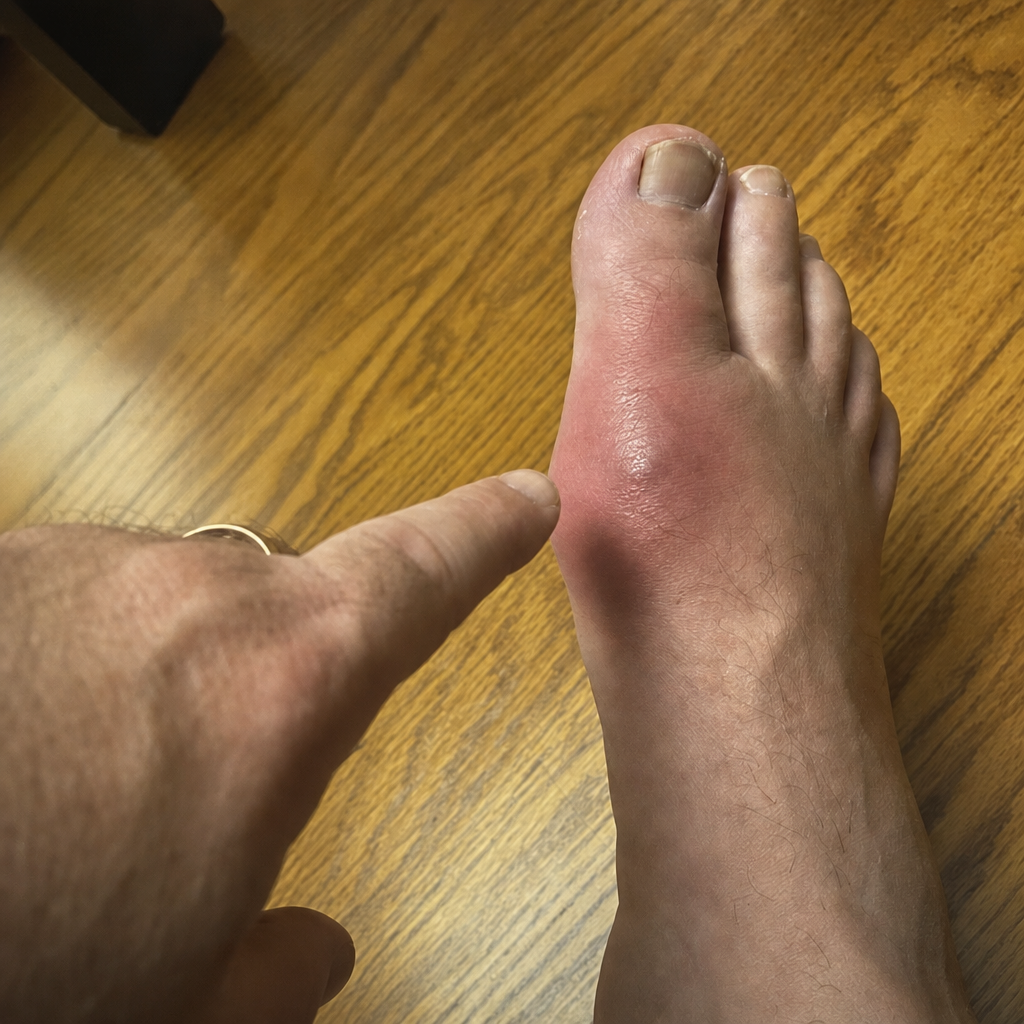
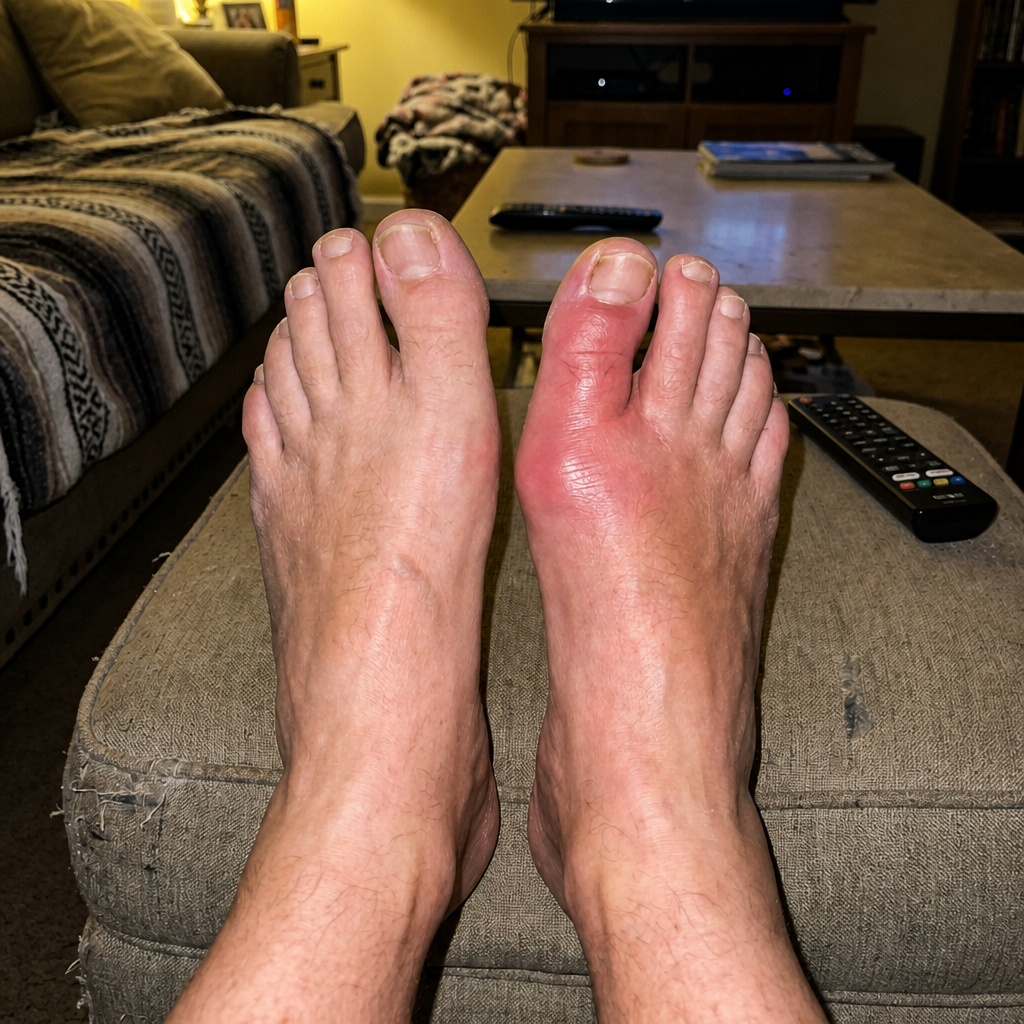
Everyone with gout flare-ups needs to see this ☝️
High-potency 3,600mg tart cherry extract. Cold-processed to preserve natural anthocyanins for maximum joint relief, uric acid flush, and post-activity recovery.
Learn more: trygoodgrove.com(opens in a new tab)