
Inactive· since Jun 27, 2026
- 15
- days it ran
- 3
- relaunches
Ad copy
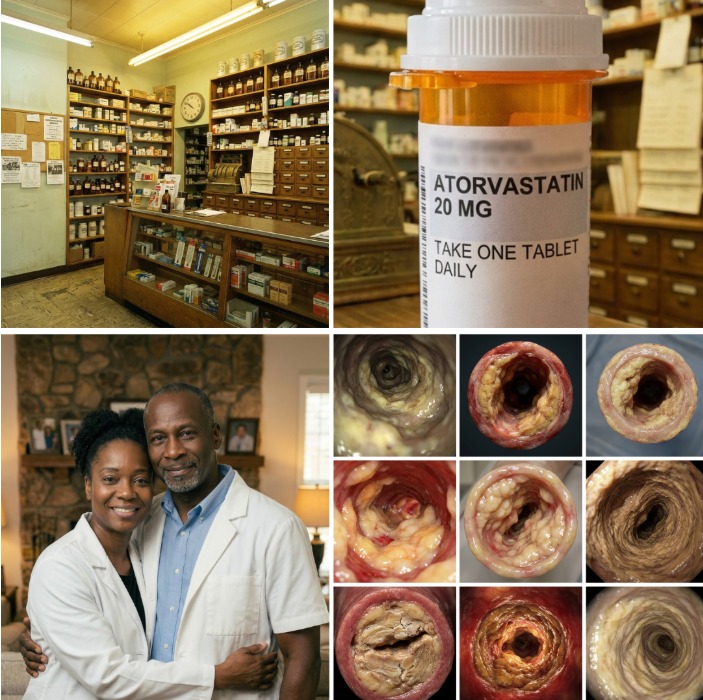
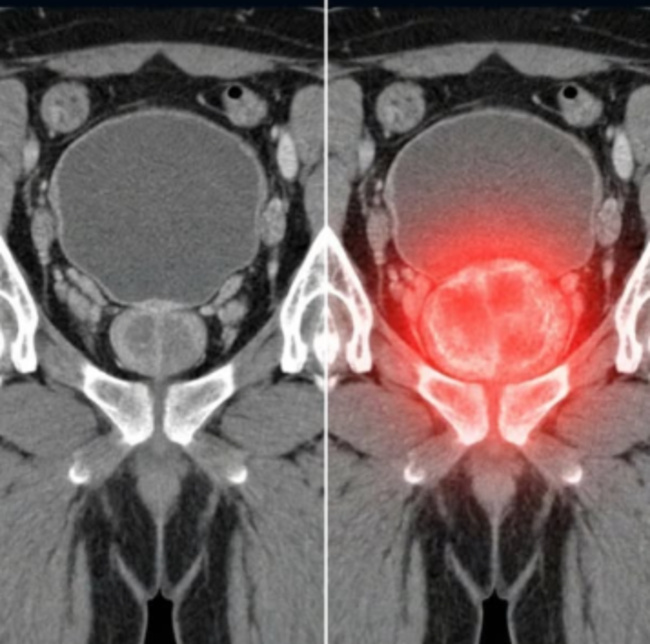
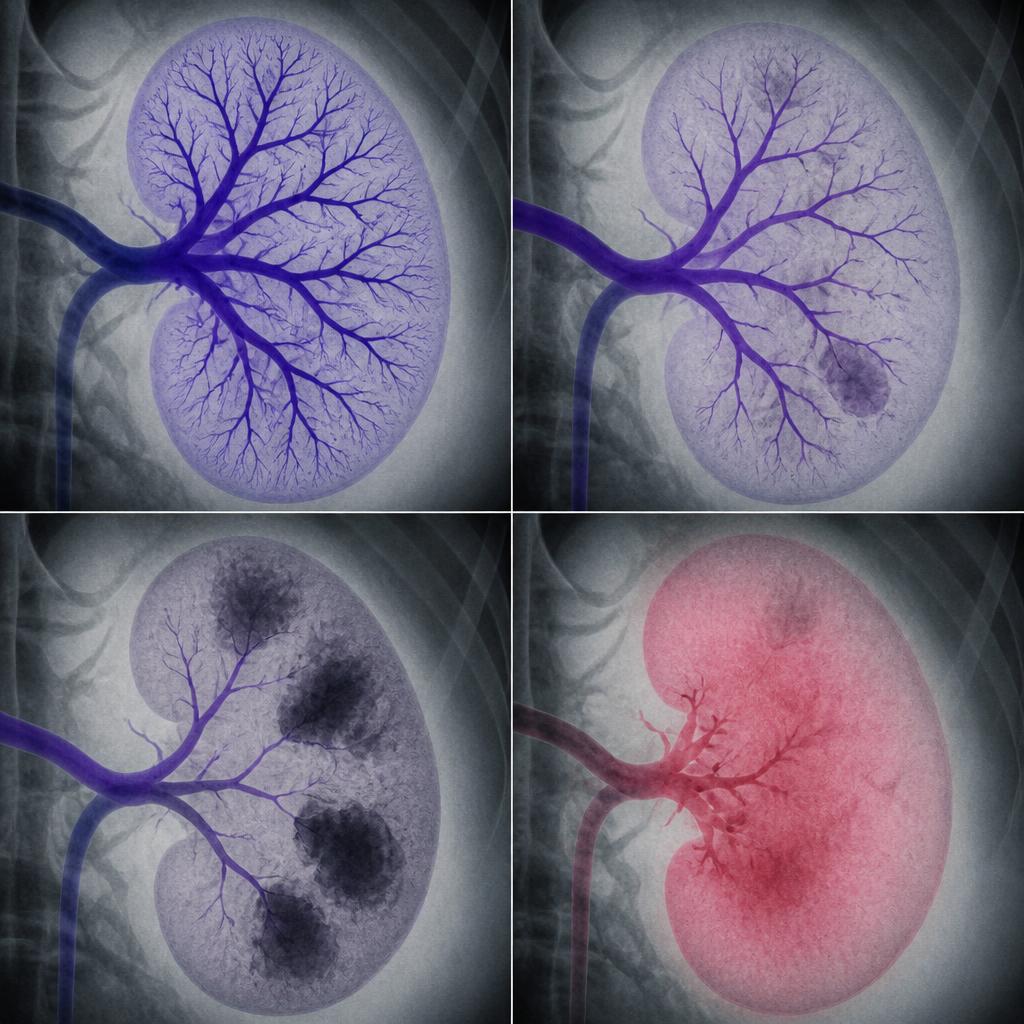
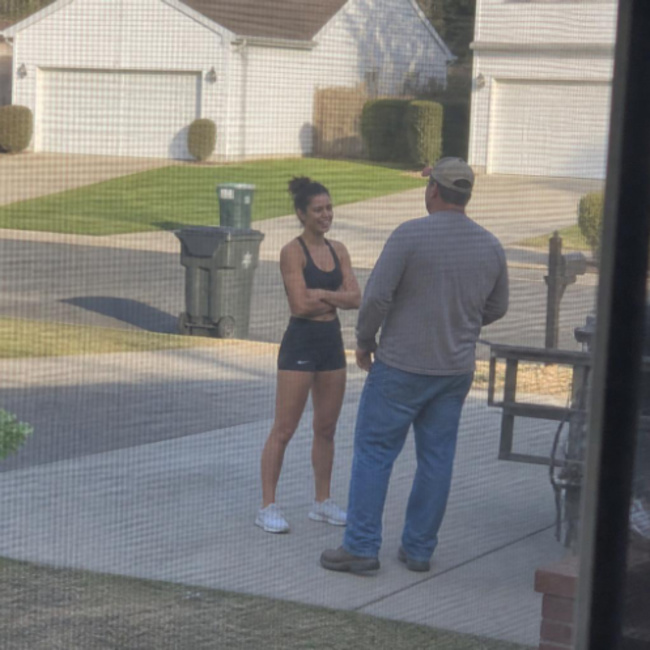
My new 25-year-old neighbor was trying to seduce my 55-year-old husband. She recently divorced a man twice her age, won his house in court, and moved in next door. I decided to teach her a lesson she'd never forget. Her name was Kayla. She moved in next door in April. I know how that sounds. The jealous older wife threatened by the young woman on the block. Trust me — I've been married for thirty years. I don't get rattled by a pretty face. My husband Greg is 55. I'm 52. We've built something real and I've never once worried about it. Until Kayla. She moved into the Hendersons' old place after their divorce. Won the house from a man twice her age — that was the story on the street, anyway. Showed up with a U-Haul and a spray tan and a German Shepherd she walked three times a day in shorts that barely qualified as fabric. I noticed her the first week because she waved at Greg when he was mowing the lawn. Not a neighbor wave. A wave. The kind where you hold eye contact two seconds too long and let your hand drift down slow. Greg didn't wave back. He's not that guy. Thirty years and the man has never given me a reason. But she kept going. Week two, she showed up at our door with a plate of brownies. "Just wanted to introduce myself!" She was looking past me the whole time. Scanning the house for Greg. He was in the garage. She knew that because she'd seen his truck in the driveway. Week three, she started asking Greg for help. The kitchen faucet. A shelf that needed mounting. The garbage disposal. Always something that required him to be inside her house, alone, while she stood too close and laughed at things that weren't funny. I told my sister Denise about it on the phone one night. "She's testing you," Denise said. "She wants to see how much she can take before you snap." "I'm not going to snap." "Good. Because that's what she wants. She wants drama. Don't give it to her." I didn't. I watched. I waited. I kept my mouth shut and I paid attention. Then came the pipe. It was a Tuesday night. After 10 PM. Greg and I were watching TV in the living room and his phone buzzed. He looked at the screen and frowned. "Kayla says she's got a burst pipe. Water everywhere." "Call her a plumber." "It's ten o'clock, Connie. She probably can't get a plumber right now." "That's not our problem." He looked at me. I looked at him. He's a good man. That's the thing about Greg — he's the kind of person who can't hear someone needs help and just sit there. It's one of the reasons I married him. It's also the reason I wanted to kill him in that moment. "I'll be twenty minutes." He pushed himself up off the couch with both hands. Slowly, the way you get up when your body isn't cooperating the way it should. I remember thinking he looked tired. Just tired. He'd been tired a lot lately. He was gone for forty-five. When he came back he didn't look at me. Went straight to the bathroom. Washed his hands. Came to bed without saying a word. I waited until the lights were off. "Was there a pipe?" Long silence. "There was a pipe. I fixed it." "And?" "And she came out of her bedroom in a towel. Said she wanted to change while I was working and forgot I was there." "She forgot." "Connie." "She forgot that the man she texted at ten o'clock at night was standing in her kitchen fixing her pipe. She forgot." "I left. I left immediately. Nothing happened." I believed him. I did. Greg doesn't lie. Not about things like that. He's constitutionally incapable of it — the man flushes red when he tries to fib about eating the last of the ice cream. But something in me cracked open that night. Not jealousy. Not exactly. Something older than that. Something territorial. I'd spent thirty years building a life with this man and some 25-year-old predator thought she could just waltz in and rearrange it because she had a tight body and no shame. I didn't sleep that night. I lay in the dark and I built a plan. Not a confrontation. Confrontation is what she wanted — the hysterical older wife showing up at her door, making a scene, proving that she had power. No. I wanted something cleaner than that. Something that would strip her bare in front of the whole neighborhood so everyone could see exactly who she was. It took me three weeks. Most of the planning happened at the kitchen table after 9 PM, which was easy because Greg was always in bed by then. Had been for a couple years. I'd stopped thinking of it as early. It was just when he went to bed now. I started by getting friendly. That was the hardest part. Smiling at her in the driveway. Complimenting her garden. Accepting her invitation for coffee one afternoon while Greg was at work. Sitting in the kitchen where my husband had stood fixing her pipe, drinking her coffee, listening to her talk about herself, nodding in all the right places. I learned three things about Kayla that afternoon. She was vain. She was careless. And she talked about men — including other women's husbands on the block — like they were items on a shelf she hadn't decided whether to pick up yet. I used all three. I won't go into every detail because this story isn't actually about Kayla. But here's the short version: I organized a block party. Fourth of July weekend. Everybody on the street was invited. I spent two weeks coordinating it — the food, the decorations, the speaker setup in the Millers' driveway. And two days before the party, I used Greg's phone to send Kayla a text. Not from me. From "Greg." I sat on the edge of our bed with his phone in my hands and typed four sentences I knew he'd never write. Asked her to meet him at the side of the Millers' garage during the party — 8 PM, after it got dark — because he "couldn't stop thinking about what almost happened." My hands were steady. Not from nerves. From the satisfaction of knowing exactly how this was going to end. Greg never sent that text. He didn't know about it. I deleted it from his phone immediately after I sent it. But Kayla didn't know that. I'll spare you the choreography. What matters is this: at 8:05 PM on July 4th, Kayla showed up at the side of the Millers' garage in a dress that left very little to the imagination, expecting to meet my husband in private. Instead she found me, Deborah Miller, Joyce Kwan from across the street, and six other women from the block, standing in a semicircle with their arms crossed and their expressions set. I'd left Greg at the party with a plate I'd made for him because he never fixed one for himself at these things anymore. He used to be the first one at the grill, loading up a plate and going back for seconds. Somewhere in the last couple years he'd stopped doing that. I made his plates now without thinking about it. I didn't say anything cruel. I didn't need to. I just said: "Kayla. I think you have the wrong house." Her face went white. She looked at the semicircle of women — every wife on the block — and she understood. Not just that I'd set her up. But that every woman there already knew what she'd been doing. The faucets. The shelves. The garbage disposal. The towel. All of it. She didn't say a word. She turned around and walked back to her house. The German Shepherd was barking through the window. The fireworks started going off two streets over. Joyce leaned over and whispered: "That was the most satisfying thing I've seen in twenty years of living on this street." For about ten seconds I felt it. The vindication. The righteousness. The satisfaction of being the wife who didn't just protect her own marriage but protected every marriage on the block. Then I turned around and walked back to the party and looked for Greg. His chair was empty. The plate he'd been holding earlier was sitting on the armrest, food untouched. His beer was on the ground next to the chair, warm, barely sipped. I scanned the yard. Dave Miller was at the grill. The Kwans were setting up sparklers for the kids. Everyone was there. Except my husband. And standing there in the Millers' backyard with the fireworks starting to pop overhead, I realized I couldn't remember the last time Greg had stayed at a gathering past 8 PM. The last time he'd had the energy. The last cookout where he'd actually eaten a full plate instead of holding one as a prop. The last party where he was fully present — laughing, talking, standing in a group instead of drifting to the edge and eventually disappearing. I'd been so focused on the woman next door that I hadn't noticed my husband was already gone. Not gone to another woman. Just gone. Fading out of rooms. Fading out of conversations. Fading out of his own life. I'd spent a month building a plan to protect him. Studying Kayla's patterns. Tracking her moves. Recruiting allies. Executing a strategy with military precision. And the whole time, the thing actually taking my husband was happening right in front of me and I didn't see it because I was looking in the wrong direction. Some protector. I walked back to our house. His truck was in the driveway. The garage was dark. I found him on the back porch, sitting in the old wicker chair, staring at the yard. No beer. No phone. Just sitting. I sat down next to him. The fireworks were popping in the distance. Red and gold reflections off the neighbor's roof. The air smelled like sulfur and charcoal. "You okay?" He didn't answer right away. He was doing the thing he does when he's trying to say something that costs him — he was rubbing the knuckle of his right thumb with his left hand, slow, over and over. "Greg." "I'm so tired, Connie." "I know. It's been a long night." "No. Not tonight. I'm tired all the time. Every day. I wake up and I'm already tired. I go to bed and I haven't done anything worth being tired about. I just — I don't feel like myself anymore." The fireworks went quiet for a moment. Just the crickets and a dog barking somewhere down the block. I looked at his hands. They were gripping the armrest of the wicker chair — the chair he'd built. The same hands that built the deck underneath us and the pergola over the patio and the shelving in the garage. I'd been looking at those hands for thirty years. I didn't know when the knuckles had gotten so swollen. "I went over there because she asked me to fix a pipe and I wanted to feel like someone who still fixes things." My throat tightened. Something dropped through the floor of my stomach. "Because I don't feel like that guy anymore. I used to be the guy who fixed things. Who built things. I built the deck we're sitting on. I did that in a weekend, Con. One weekend. Now I can't get through mowing the lawn without my hands cramping up so bad I have to sit down." He opened and closed his hands slowly. Like he was testing whether they still worked. "My hands hurt all the time. My shoulders. My knees. I feel like I'm wearing a suit that's two sizes too heavy and I can't take it off. And this fog — it's like I'm watching my own life through a dirty window. Everything's muffled. I hear you talking and I know I should be responding but by the time I figure out what to say, the conversation's moved on." He turned to me. His eyes were wet. "The doctor says the Crestor is keeping me safe. He says my numbers are good. He says I'm healthy. But I don't feel healthy, Connie. I feel like I'm disappearing." I reached over and took his hand. The swollen knuckles. The stiffness he tried to hide every morning when he thought I wasn't watching. I'd been watching. I just hadn't been seeing. And sitting there on the porch with fireworks lighting up the sky and my husband telling me he was vanishing — something clicked into place that I'd been too busy to see. The thing stealing my husband wasn't next door. It was on the second shelf of our bathroom cabinet. Right next to his toothbrush. Twenty milligrams of Rosuvastatin that his cardiologist said was "non-negotiable." It had been there for five years. I sat on that porch and I held his hand and I didn't say anything because I didn't have anything to say yet. But something had shifted. Something I couldn't unshift. That night, after Greg went to bed, I called Denise. Not about Kayla. I didn't even mention Kayla. I told her what Greg said on the porch. Every word. The tiredness. The fog. The hands. The feeling of disappearing. The Crestor. There was a long silence on the other end. Then Denise said something that made my stomach drop. "Connie. That's Ray." "What?" "Everything you just said. That's exactly what happened to Ray." Ray is Denise's husband. He's 57. Retired electrician. He'd been on Crestor for seven years. "The fatigue. The brain fog. The muscle pain. The personality — like somebody dialed him down to 60 percent and left him there. I watched it happen over years. I thought it was aging. I thought it was depression. I thought it was me." "When did you figure out it was the medication?" "I didn't. Not at first. I took him to his doctor. The doctor said his cholesterol was perfectly managed. Said the numbers looked great. I said he doesn't look great, he looks like he's dying in slow motion. The doctor told me some patients experience mild side effects and that the benefits outweigh the risks." I could hear her getting upset. Denise doesn't get upset easily. "Mild side effects. My husband went from a man who wired entire houses by himself to a man who couldn't grip a coffee mug in the morning. That's not mild." "What did you do?" "I went down a rabbit hole. Three weeks of reading everything I could find. And I found something, Connie. Something Ray's doctor never told him. Something Greg's doctor has probably never told him either." She took a breath. "The statin isn't fixing the problem. It's just hiding it." "What do you mean?" "Okay. Think about it this way. Why does the doctor prescribe Crestor? Because Greg's LDL cholesterol is too high. The statin blocks an enzyme in the liver so the body produces less cholesterol. The number on the blood test goes down. The doctor says you're safe now. Right?" "Right." "But here's what they don't tell you. LDL cholesterol — the regular kind — isn't actually what clogs your arteries. It floats through your bloodstream all day, every day, and it doesn't stick to anything. It's not dangerous." "Then why is it the number they test for?" "Because it's the easy number. The one they've been tracking for forty years. But the actual damage — the plaque, the blockages, the thing that causes heart attacks — that's caused by oxidized LDL. It's a totally different thing." "Oxidized." "Oxidized. Like rust on metal. Or an apple turning brown after you cut it. There are these molecules in your body called hydroxyl radicals — they're the most destructive free radicals you produce. And when they attack your LDL cholesterol, the cholesterol changes. Its structure warps. It becomes sticky. And THAT's the version that burrows into your artery walls and forms plaque." I was sitting at the kitchen table. It was almost midnight. I had my laptop open but I hadn't typed anything yet. I was just listening. "So the statin lowers the total amount of cholesterol," I said slowly. "But it doesn't stop the oxidation." "Exactly. You can have lower cholesterol that's MORE oxidized. The number goes down. The danger doesn't. And meanwhile the statin is stripping CoQ10 from your muscles — that's the compound your cells need for energy production. That's why Ray's hands hurt. That's why Greg's hands hurt. That's why they're exhausted. The medication is literally draining the energy molecule out of their muscle tissue." I thought about the pickle jar last Tuesday. Greg had handed it to me without saying anything. I'd twisted the lid off, handed it back, and we'd both moved on like that was normal. Like a 55-year-old man who built a deck in a weekend needing his wife to open a jar was just how things worked now. "Why doesn't the doctor test for oxidized LDL?" "Because most doctors don't. It's not part of the standard lipid panel. They test total cholesterol, LDL, HDL, triglycerides. They see a number. They prescribe a drug to lower the number. They never look at whether the cholesterol that's left is actually oxidizing." Something settled in my chest. Not sadness. Something colder than that. The quiet understanding that this had been happening the whole time and nobody said a word. "So Greg's been taking this drug for five years. His numbers look good on paper. And the whole time, the actual thing that causes heart attacks is still happening." "And the drug is making him feel like a ghost of himself while it does it. That was Ray. That was my husband for seven years." I stared at the kitchen counter. Three weeks ago I'd sat at Kayla's kitchen counter drinking her coffee, studying her, cataloguing her weaknesses, building a case. Three weeks of surveillance on a 25-year-old in a sundress. And the whole time the actual predator was sitting in a prescription bottle ten feet from where I slept. The cold feeling in my chest turned hot. "You said 'was.' What happened?" "I found something that targets the oxidation. Not the cholesterol. The oxidation itself." "What is it?" "Molecular hydrogen." "Hydrogen? Like the gas?" "I know how it sounds. I had the same reaction. But listen — hydrogen is the smallest molecule in existence. It's so small it can pass through cell membranes. It can reach places inside your cells that nothing else can get to. And it doesn't wipe out all free radicals — your body needs some of them for your immune system. It only goes after the hydroxyl radicals. The ones doing the damage. The ones oxidizing the cholesterol." Neither of us said anything for a moment. I could hear the refrigerator humming. The clock on the kitchen wall. Hydrogen. Something that simple. And nobody had mentioned it — not Greg's doctor, not the pharmacist, not a single person in five years of prescriptions and bloodwork and "your numbers look great." "How did you find this?" "A woman in a Facebook group I was in. Wives of men on statins. She posted about her husband's experience. I almost scrolled past it because I'd seen a hundred posts like it — try this supplement, try that supplement. But something about hers was different. She was specific. She talked about the mechanism. She linked research papers. Not blog posts. Actual published studies from Japan and Korea and Germany." "And you tried it." "I tried it. I ordered some hydrogen tablets off Amazon first. Some brand with good reviews." "Did they work?" "Sort of. Ray felt a little more energy after a couple weeks. But his numbers didn't really move. His LDL went from 164 to 159. I was disappointed." "So it didn't work." "No — the hydrogen worked. The BRAND didn't work. That's the part that almost tripped me up. I went back to that Facebook group and started reading more carefully. And people were saying the same thing — most hydrogen tablets are garbage. Low concentration. The hydrogen escapes into the air before you even drink it. You need a certain parts per million to actually reach therapeutic levels. Most of the stuff on Amazon is 2 to 4 PPM. The research studies that showed results were using concentrations way above that." "So what do you use now?" "I found one that works. Ray's numbers are proof. Day four on the right brand, he got out of bed without groaning. I noticed because I'd been listening for that groan every morning for three years. It was just — gone." "Four days?" "Four days for the energy. The fog took longer — about two weeks. But I could see him coming back. Little things. He started finishing sentences again instead of trailing off. He laughed at something on TV and it sounded like him — not that flat half-laugh he'd been doing for years." "And the numbers?" "Six weeks. I made him get bloodwork. Total cholesterol 194, down from 218. LDL 121. But here's the one that matters — I asked the doctor to run an oxidized LDL panel. They'd never done it before. Ray's oxidized LDL was 38. Normal range. His cardiologist couldn't explain how his numbers improved after he stopped taking the Crestor." "He stopped the Crestor?" "We tapered him off after the first four weeks. I know that's not what doctors recommend. But I'd watched what that drug did to my husband for seven years. I wasn't going to watch it for one more month." "And the doctor?" "The doctor stared at the chart for a long time. Didn't say anything. Finally he said, 'I don't know what you're doing differently but your bloodwork is the best I've seen from you in a decade. Keep doing it.'" I was crying. Sitting at my kitchen table at midnight, staring at my closed laptop, crying. Not because of what Denise was telling me about Ray. Because of what I'd been watching happen to Greg for five years and calling it normal. "Denise. Tell me exactly what you gave him." "I will. But Connie — I'm not going to just tell you a brand name over the phone and have you order it on faith. That's what every Facebook scam does. I'm going to send you the research, the criteria for what works and what doesn't, and the brand. You need to see WHY it works. You need to vet it yourself. Read the research first. And don't tell Greg what you're doing. Not yet. Just give it to him. He'll fight you if you explain it. He trusts his doctor. He's not going to stop taking a pill his cardiologist told him he needs because his wife's sister found something on Facebook." "I know my husband." "I know mine too. That's why I didn't ask. I just did it." She sent me everything. Links, PDFs, screenshots of research abstracts. I opened them on my laptop at the kitchen table and started reading. The house was quiet. Just the hum of the refrigerator and, from down the hall, Greg's breathing. That heavy, slow breathing I'd been hearing through the bedroom wall for years. The kind of breathing that sounds like sleep is work. Like even unconscious, his body is laboring. I got up. Walked to the bathroom. Opened the medicine cabinet. Took out the orange prescription bottle. Rosuvastatin, 20mg. Take one tablet daily with food. Dr. Nakamura's name on the label. Refill 4 of 12. I brought it back to the kitchen table and set it next to my laptop. I wanted it there while I read. I wanted to look at the thing that had been doing this to him while I learned exactly how it worked. I read until 2 AM. The Japanese cardiovascular studies. The research on hydroxyl radical damage. The CoQ10 depletion pathway. The mechanism papers on how molecular hydrogen selectively targets oxidative stress without interfering with beneficial free radicals. Every sentence made me angrier. Every time I looked at the orange bottle sitting next to my laptop, the anger got sharper. Five years. Five years of watching my husband's hands swell. Five years of watching the fog settle. Five years of a doctor saying "numbers look great" while the man sitting across from him was dissolving. And the bottle just sat there. Rosuvastatin, 20mg. Take one tablet daily with food. Like it was medicine. Like it was helping. Then I did what I do. The same thing I did with Kayla — except this time I pointed it at something that actually mattered. My first instinct was Amazon. I typed "molecular hydrogen tablets" into the search bar and the top result had 4.7 stars, eight thousand reviews, and a label that said "Premium Hydrogen Water Tablets." Twenty-two dollars. Prime shipping. I could have it by Wednesday. I had my thumb on the Buy Now button when I stopped. Scrolled down to the details. Concentration: 3 PPM. Denise's voice in my head: Most of the stuff on Amazon is 2 to 4 PPM. The research studies that showed results were using concentrations way above that. I took it out of my cart. Closed the tab. If I'd hit that button, I'd have spent three weeks giving Greg something that barely worked — the same mistake Denise made with Ray — and wasted the time he didn't have. I opened a spreadsheet instead. Pulled up the brand Denise recommended and two dozen others. Spent the next two hours going through every hydrogen tablet I could find. Reading lab reports. Checking concentrations. Cross-referencing third-party testing. I wasn't going to give Greg something because my sister told me to, and I wasn't going to give him something because Amazon's algorithm told me to. I was going to give him something because I'd verified it myself. Most of them failed on at least one count. Concentration too low — 2 to 4 PPM when the clinical studies used 7 or higher. Pre-made hydrogen water where the hydrogen had already escaped the bottle. No independent verification of what was actually in the tablet. Cheap fillers. No magnesium. I eliminated them one by one the way I'd eliminated every excuse Kayla could have used at that block party. Methodically. Thoroughly. No gaps. One brand met every criterion. 12 parts per million. Magnesium-based effervescent formula. Third-party lab tested. The same brand Denise had landed on after her own elimination process. PrimeCell. I ordered it at 3 AM with the orange bottle still sitting next to my laptop. Paid for expedited shipping. It arrived on Thursday. Friday morning, before Greg came downstairs, I dropped a tablet in a glass of water. Watched it fizz. Set it next to his coffee mug. He came down in his work clothes. Kissed the top of my head the way he always does. Sat down. Looked at the glass. "What's that?" "Something for your joints. Magnesium. Just try it." "I take a multivitamin." "Greg. Just drink it. Please." He looked at me. Thirty years. He knows when I'm asking something that matters. He drank it. Twenty minutes later I was loading the dishwasher and looked up. Something about his face was different. Clearer. Like someone had adjusted the contrast on a screen I'd been watching go blurry for years. His eyes were focused. He was reading the newspaper — actually reading it, not staring at it the way he usually did in the mornings. I told myself I was imagining it. Placebo. Wishful thinking. By dinner I couldn't tell myself that anymore. He was talking — really talking. Not about anything important. Just a problem at work with a supplier. But he was tracking. Finishing thoughts. Building to a point instead of trailing off halfway through. I texted Denise under the table. "Something's different. Already." She replied in ten seconds. "How long after the glass?" "Maybe twenty minutes this morning. And he's still sharp now." "That's the hydrogen. That's exactly what happened with Ray. First day." I put my phone away and watched my husband finish a sentence for the first time in as long as I could remember. Day five. Greg got out of bed and walked to the bathroom without sitting on the edge of the mattress first. I was lying there watching him the way I'd been watching him every morning for years, bracing for the stiffness, the grimace, the slow rotation of his ankles before he trusted them to hold weight. None of it. He just stood up and walked. I stared at the ceiling. Week two. The fog started lifting. I could see it in conversation — he was tracking again. Responding in real time instead of that half-second delay that had become normal. One night at dinner he told me a story about something that happened at work and he told it with detail. Characters. Punchline. I hadn't heard him tell a story like that in over a year. Week three. A Saturday morning. I was in the kitchen making coffee and I heard the garage door open. I looked out the window. Greg was standing at his workbench. He hadn't touched it in months. He was holding a wrench, turning it over in his hand, flexing his fingers around the grip. He didn't build anything that day. He just organized. Cleaned the bench. Sorted his tools. Hung things back on the pegboard that had been piled in a box since winter. But he was in there for three hours. Moving. Using his hands. Not hurting. I was standing in the doorway watching when he turned around and caught me. "I know you're doing something, Con." "What do you mean?" "That glass every morning. Whatever's in it. I don't know what it is. But don't stop." He didn't ask what it was. Didn't need the explanation. He just needed me to know that he could feel the difference. That the man on the porch who told me he was disappearing — he knew he was coming back. Week four. Greg mowed the lawn on a Sunday morning and then came inside and made lunch. Didn't need to sit down in between. Didn't disappear to the couch with his eyes closed. He made sandwiches and asked me if I wanted to eat on the deck. We ate on the deck he'd built. The one he'd built in a weekend, years ago, back when he was still the guy who built things. Week six. I made him get bloodwork. He didn't know I'd asked the doctor to run the expanded panel including oxidized LDL. He just went in for his regular checkup. Dr. Nakamura pulled up the results on his laptop. Studied them. Scrolled. Studied them again. Total cholesterol: 201. Down from 219. LDL: 124. Down from 158. HDL: 54. Up from 39. The protective cholesterol. The number that five years of Rosuvastatin had never moved. Triglycerides: 131. Down from 178. Oxidized LDL: 41. They'd never tested it before. But 41 was well within normal range. Dr. Nakamura looked at Greg over the top of his glasses. "Greg. These numbers are significantly improved. Across the board. What's changed?" Greg looked at me. I nodded. He told the doctor everything. That I'd been giving him a molecular hydrogen supplement for six weeks. That he'd tapered off the Rosuvastatin three weeks ago. That the muscle pain was gone. The fog was gone. The fatigue was gone. Dr. Nakamura held up his hand. "Greg. I have to be straightforward with you. Discontinuing a statin without medical supervision is not something I can endorse. The guidelines are clear on this. Rosuvastatin was prescribed because your cardiovascular risk profile —" He stopped. Looked at the chart again. The silence lasted a long time. I watched him read the numbers a third time. He didn't finish the sentence about the guidelines. "I'm not going to tell you I understand the mechanism behind what you're describing." Another pause. "I will tell you that your cardiovascular markers are better than they've been since I started treating you. Your HDL especially — I don't see jumps like this." He took off his glasses. Cleaned them. Put them back on. "I want to see you again in three months. Full panel. If these numbers hold — we'll have a different conversation about the statin." Greg shook his hand. We walked out of that office and into the parking lot and Greg stopped next to the truck and just stood there. He took a breath. Then he turned to me. "Connie. I feel like I just got five years back." I put my arms around him. Right there in the parking lot of a medical building on a Tuesday afternoon. I held on because I finally had something to hold on to again. Not the fading version of my husband who sat on porches confessing he'd forgotten who he was. The real one. The one I married. The one who builds things and fixes things and tells stories at dinner and doesn't need a 25-year-old to ask him to fix a pipe to remember he's still a man. That's who I was fighting for. I just didn't know where the fight actually was. I'm writing this on a Saturday morning. Greg is under the kitchen sink. Our kitchen faucet started dripping last week — the same kind of job Kayla used to lure him next door. Except this time he's fixing it in his own house, for his own wife, because he felt like getting up and doing it. No one asked him. He just saw the drip and got his tools. I can hear him down there, the clank of a wrench, a muttered curse when something doesn't thread right. Normal sounds. Husband sounds. Sounds I hadn't heard in this house for years. The medicine cabinet has one less bottle in it. The orange prescription bottle that sat on the second shelf for five years is gone. The little white pill wasn't protecting my husband. It was burying him. And I almost missed it because I was too busy protecting him from the wrong threat. If you're reading this, you're standing where I stood on that porch. Maybe not with a 25-year-old next door. But with a husband who's been dimming. A man who used to be the first one up, the one who fixed things and built things and carried the weight without being asked. And now he's tired. All the time. His hands hurt. The fog rolls in earlier every year. The doctor says the numbers look great. The doctor says the medication is working. And something in you knows that what you're watching isn't a man being protected. It's a man being erased. One path: he takes the statin again tomorrow morning. Same pill, same orange juice, same routine. The numbers stay managed. The doctor stays satisfied. And you watch another year of him gripping the mattress before he stands up. Another year of empty chairs at parties. Another year of conversations he can't finish and projects he can't start and a man who used to build decks in a weekend now asking you to open a jar because his hands won't close around the lid. You tell yourself it's aging. You tell yourself it's normal. You tell yourself this is just what 55 looks like. And every morning you watch him sit on the edge of the bed and you think about the man he used to be and you wonder where he went. The other path: you try what I tried. One tablet. One glass of water. Watch his face twenty minutes later. Watch his hands in the morning. Track the fog. Track the numbers. Verify the results with his own doctor — the same doctor who'll stare at the chart and not be able to explain what happened. There's a 90-day money-back guarantee. If it doesn't work, every penny back. The Crestor Greg was on for five years didn't come with a guarantee. Neither does the statin your husband is taking right now. Think about what that tells you about who's confident in their product and who's just confident in their subscription model. I chose the second path. My husband got five years back. I got my husband back. That's worth more than any number on a chart. P.S. — I keep two bottles in the house now. One in the kitchen next to the coffee mugs. One in the bathroom cabinet — right where the Crestor used to sit. The product is called PrimeCell H2, made by Amala Health. 12 parts per million molecular hydrogen with bioavailable magnesium. One tablet in water, once a day. The hydrogen targets the oxidative damage the statin ignores — the hydroxyl radicals that oxidize LDL cholesterol and cause the actual arterial plaque. The magnesium replenishes what statins strip from your muscles. You'll know within 20 minutes if it's reaching his bloodstream. That clarity, that lift — I saw it in Greg's eyes across the breakfast table on day one before I even knew what I was looking at. That's molecular hydrogen crossing the blood-brain barrier for the first time. Something his statin never did and never will. P.P.S. — If you recognized your husband in Greg's story — the fatigue that looks like aging, the fog that looks like distraction, the muscle pain that looks like "getting older" — you're not imagining it. You've been watching something real. The doctor has been watching the chart. You've been watching the man. Trust what your eyes are seeing. You're closer to the truth than the chart is. P.P.P.S. — Yes, I gave this to my husband. I'm a woman. PrimeCell works the same regardless of who takes it — the mechanism targets oxidative stress in your blood, not a gender. If YOUR cholesterol is the concern, if YOU'RE the one on the statin, this is for you too. I take it now myself. So does Denise. So does my mother. P.P.P.P.S. — Kayla moved out in September. Sold the house to a nice couple with two kids. Nobody on the block mentions her anymore. But sometimes when I'm in the kitchen listening to Greg fix something — the clank of a wrench, the muttered swearing, the sounds of a man using his hands — I think about that Fourth of July. Not the ambush. The porch. The fireworks going off and my husband telling me he didn't feel like himself anymore. That was the night everything actually changed. Not because I caught the neighbor — because I finally heard what my husband had been trying to tell me for five years. The 25-year-old next door was never the threat. The little white pill was. P.P.P.P.P.S. — PrimeCell is a small company. They sell out. Denise warned me — she had trouble reordering after her first bottle. If your husband has bloodwork in the next 30 to 60 days, check if they have stock now. They currently have a buy 3 get 2 free deal that I used to stock up. Every day on the statin is another day of CoQ10 depletion. Every day without addressing the oxidation is another day the damage compounds. Ray lost seven years. Greg lost five. Don't let your husband lose one more month. P.P.P.P.P.P.S. — Do not forget about their 90-day money-back guarantee.
Fix Yourself at the Cellular Level
PrimeCell H2 is a next-generation molecular hydrogen tablet formulated to support your body's natural antioxidant defenses — helping you feel sharper, more energized, and more like yourself.
LEARN MORELike this ad? Make it yours.
Crush rebuilds this exact creative around your product — your brand, your colors, your offer — in about a minute.