
Dr. Emily Rodriquez
Active· since Jun 24, 2026
- 88
- days running
- 0
- relaunches
Ad copy
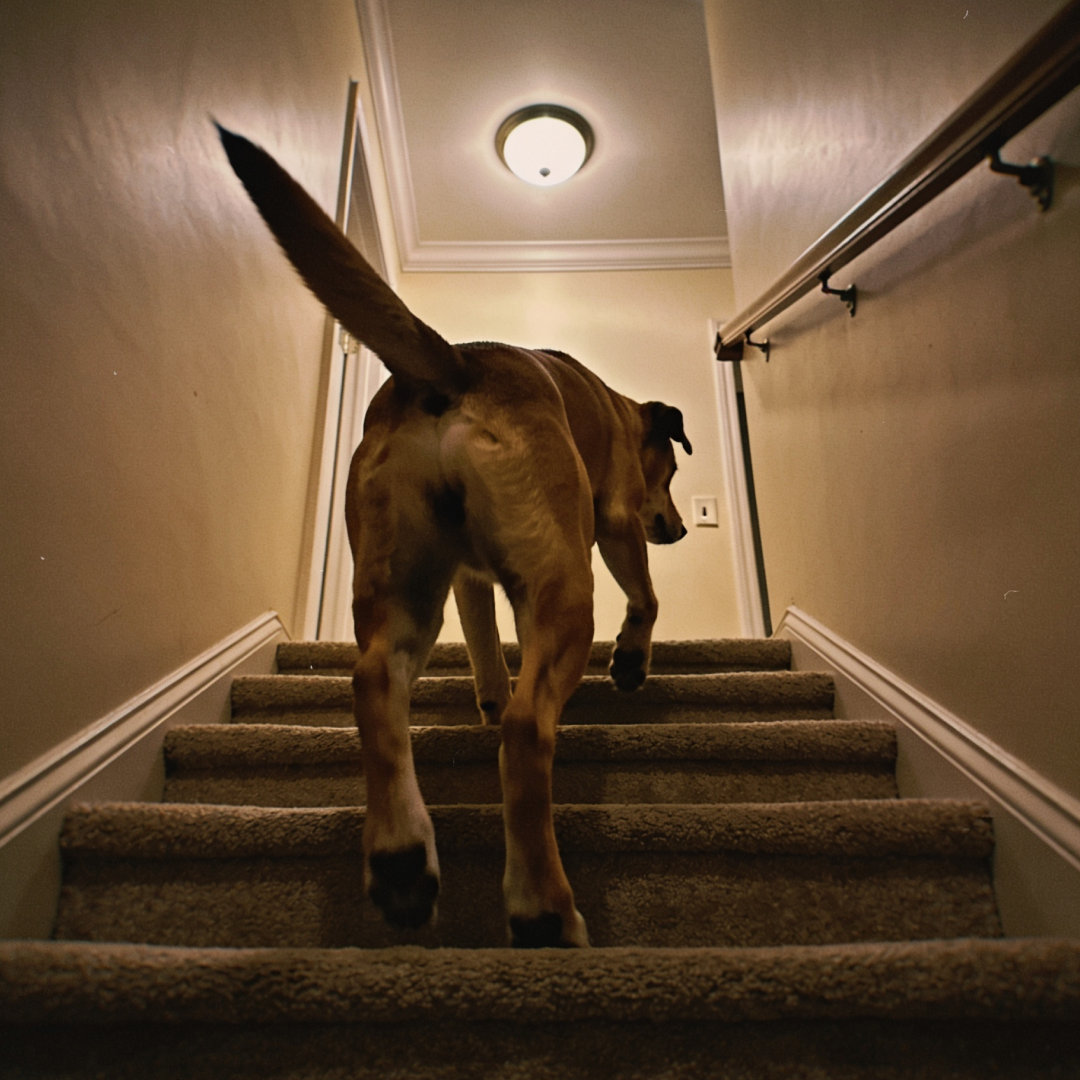
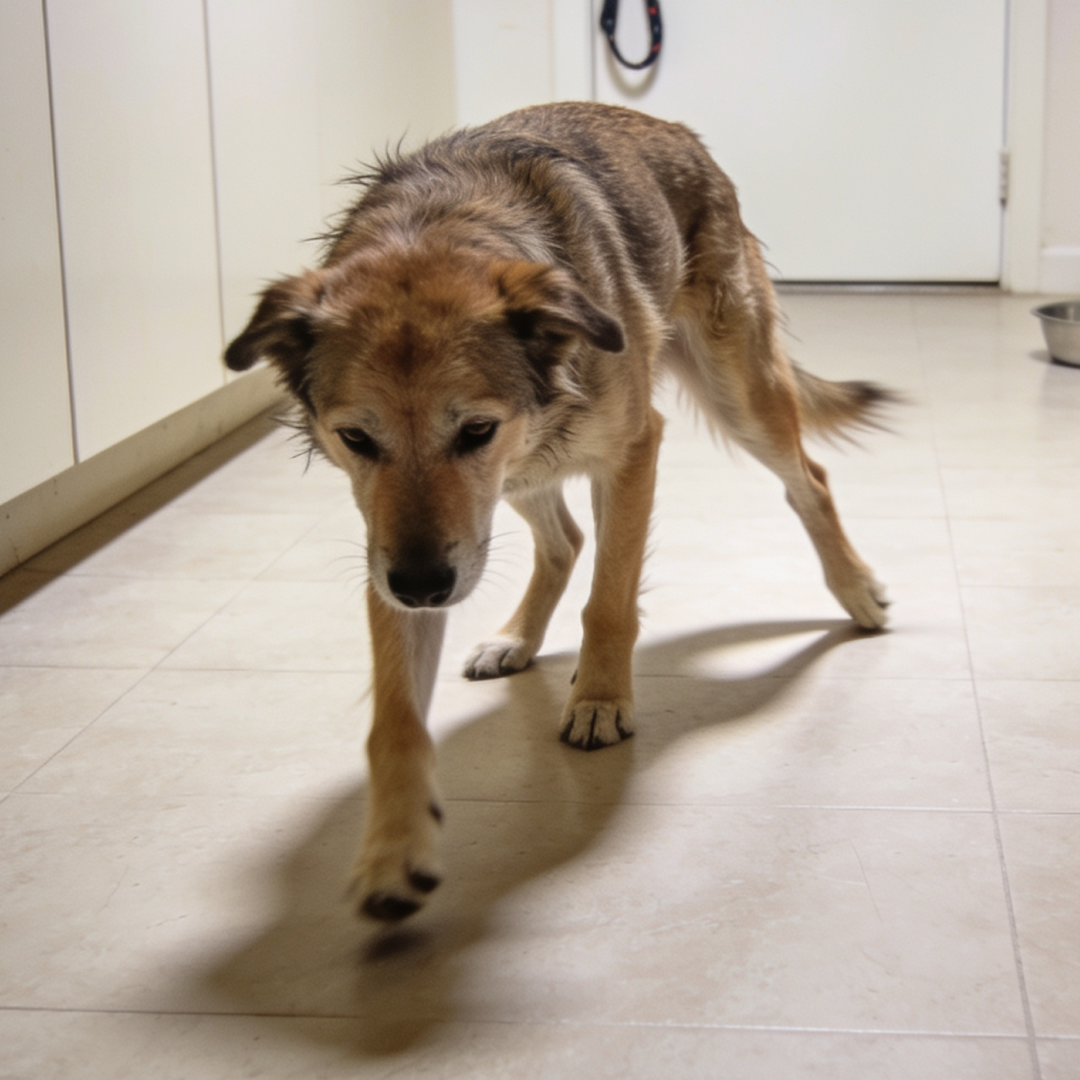
I've been a veterinarian for over two decades, and I almost told a dog parent the same thing I used to tell everyone: "It's just age. Let's manage the pain and talk about surgery when the time comes." I'm glad I stopped myself. Because what I've learned since then changed the way I practice, the way I advise, and honestly the way I sleep at night. I'm Dr. Emily Rodriguez. I've spent more than twenty years working with dogs across every life stage, and a significant portion of that time has been focused on orthopedic and mobility conditions. Hip dysplasia specifically has been something I've watched devastate families who thought they were doing everything right. The joint chews. The fish oil. The vet visits every few months to "monitor." The slow creep toward a surgery estimate that felt, from the very beginning, like the only possible ending. I used to be part of that system. I'm not anymore. Here is what changed my mind. About four years ago, a pet parent came into my office with a three-year-old Labrador. Big dog, athletic build, should have been in his prime. He was struggling to get up off the linoleum floor in my waiting room. His back legs were sliding apart when he tried to stand, like he had no traction, no power, nothing to push against. His owner had taken a video on her phone the week before. She showed it to me. Same thing, but in the kitchen. That moment when the back legs go wide and the dog looks up at you with those eyes. That image kept me up at night. Not because it was unusual. Because it wasn't. I had seen it dozens of times. I had handed over the same pamphlet dozens of times. And I had watched dozens of dogs get progressively worse on the same standard protocol. I started asking a question I had not asked loudly enough before. Why isn't this working? Here is what I eventually understood, and what most conventional approaches completely miss. Hip dysplasia is not one problem. It is two problems happening at the same time, and unless you address both simultaneously, you are only ever fighting half the battle. The first problem is inside the joint itself. The cartilage and the fluid that cushion the ball and socket are deteriorating. The surfaces that should glide smoothly are starting to grind. Think of a door hinge that has lost its oil. At first it squeaks. Then it catches. Then it grates. Then it seizes. The joint is doing something very similar, just quietly, over months and years, long before you see your dog struggle on the kitchen floor. The second problem is what happens around that joint in response. When the joint hurts, the surrounding muscles tighten. They clench. They are trying to stabilize something that feels unstable, and they do it constantly, involuntarily, like a fist that will not open. That chronic muscular tension reduces blood flow to the area. It limits the range of motion further. It creates a compression cycle that accelerates the cartilage damage happening inside. I call this the Two-Layer Problem. You cannot solve Layer One without addressing Layer Two. And you cannot address Layer Two without fixing Layer One. They are locked into each other like a vault that requires two keys turned at the same time. This is exactly why most supplements fail, and I say this as someone who recommended many of them in good faith for years. Glucosamine is the most common ingredient in joint chews, and I want to be fair to it. The idea behind glucosamine is sound. It is a building block for cartilage repair. In theory, if you give the body more of it, the body uses it to restore what is wearing down. That is not a ridiculous idea. It is actually a reasonable one. The problem is delivery. When glucosamine is given orally in the isolated, synthetic form found in most chews and powders, research shows that only around twelve percent of it actually reaches the target tissue. The rest is metabolized, filtered, or excreted before it ever gets near the joint. You are supplementing aggressively and seeing almost no result at the site that needs it. It is like mailing twelve letters and eleven of them never arriving. And glucosamine does not address the muscular tension layer at all. So you get a dog that has been on joint chews for eight months, and you look at the x-ray, and the joint is still grinding, and the muscles are still locked, and the pet parent is exhausted and quietly heartbroken and wondering if surgery is just inevitable. I wondered the same thing for a long time. Then I started researching New Zealand Green Lipped Mussel. Not as an ingredient I had heard mentioned in passing. As a serious scientific subject. And what I found was genuinely surprising to me as a clinician with formal training in pharmacology. Green Lipped Mussel contains a specific class of omega-3 fatty acids called ETA, eicosatetraenoic acid. This is not the same as the omega-3 in standard fish oil. Standard fish oil works through the COX pathway, one inflammatory mechanism. ETA omega-3 blocks both the COX and the LOX pathways simultaneously, which are the two primary drivers of joint inflammation and muscular tension. Research indicates that ETA omega-3 is up to two hundred times more bioavailable and effective at the target site than standard fish oil omega-3. Two hundred times. That number stopped me cold the first time I read it. And it maps directly onto the Two-Layer Problem. The anti-inflammatory action at both pathways begins to address the muscular locking around the joint while the whole-food glucosamine, chondroitin, and glycosaminoglycans in Green Lipped Mussel begin working on the cartilage layer from the inside. Both keys. Turning at the same time. The Labrador I mentioned earlier, the one with the sliding back legs, his pet parent had already tried two different joint chew brands and a fish oil capsule daily for five months before she came to see me. Standard trajectory. Some days slightly better, overall still declining, emotionally running out of road. I recommended The Paw Parent Hip and Joint Powder. One hundred percent New Zealand Green Lipped Mussel. A daily scoop into his food, nothing complicated, nothing that required a new routine or a second mortgage. Week one, she reported that he seemed to be sleeping more comfortably. Less repositioning through the night. That matters because chronic pain is exhausting. The moment that tension in the muscles starts to ease even slightly, the body finally gets real rest. Week two, she texted me a short video. He had gotten up from the kitchen floor without sliding. Not gracefully, not quickly, but he had done it without his legs giving way beneath him. She captioned it: "He stood up on his own." Week four, she brought him in. He was walking into the clinic with noticeably improved rear leg tracking. Not running. Not bounding. But walking with intention, weight bearing more evenly, not compensating with his front shoulders the way he had been for months. Week eight, I watched him trot down the hallway toward her at a pace I genuinely did not expect to see that fast. She was crying a little. She did not try to hide it. I brought in a colleague, a veterinary orthopedic specialist I trust completely, to look at his mobility assessment with me. She went quiet for a moment after watching him move. Then she said, "Whatever you changed, keep doing it." That was her full review. That was enough. He went from a surgical consultation on my mental list to a dog who jumps onto the couch to sit next to his pet parent in the evenings. I know what you might be thinking. You might be thinking this sounds too clean. Too neat. But I have seen this pattern repeat now across enough cases that I no longer consider it surprising. I consider it expected, when the mechanism is right. Here is the honest reason why most pet parents have not heard this explained clearly before. Veterinary training is excellent in many ways and genuinely limited in others. Nutrition and supplementation get very little formal time in the curriculum. Most of what practitioners know about supplements comes from pharmaceutical representatives, from quick literature reviews, from continuing education sessions that are often sponsored by the same companies selling the products. That is not a conspiracy. It is a structural gap. Nobody is lying to you. The information has simply not moved through the clinical pipeline yet, and in the meantime, the standard recommendations continue. Surgery is not wrong in every case. I want to be clear about that. There are dogs for whom surgery is the right answer, and I have recommended it. But it should never be the first answer when the mechanism of the condition has not been properly addressed. That is where I draw the line now. If you are reading this, I think I know where you are. Your dog has been slowing down for a while. You have filed it under getting older. But lately there have been moments that scared you. The sliding in the kitchen. The struggle to stand after a nap. The hesitation at the bottom of the stairs. You have probably tried joint chews. Maybe fish oil. You saw modest improvement or nothing at all. You have been to the vet once or twice, heard the phrase "we'll monitor it," and you left feeling like surgery was a quietly approaching wall. You are not out of options. You are just using the wrong tool for the actual problem. The reason the joint chews did not work is not because you failed. It is because they were never built to address the Two-Layer Problem. They were only reaching about twelve percent of the target, and they were not touching the muscular tension at all. The Paw Parent Hip and Joint Powder is not a joint chew. It is not a fish oil. It is a whole-food powder sourced entirely from one hundred percent New Zealand Green Lipped Mussel, the only natural source of ETA omega-3, combined with the whole-food glucosamine, chondroitin, and glycosaminoglycans that come naturally bound together in the mussel tissue, the way they exist in nature, in a form the body can actually recognize and absorb. No synthetic isolates. No fillers. One ingredient, complete. It works on both layers at once. The cushion rebuilding. The muscles releasing. The vault opening. Most pet parents report seeing a meaningful change within two to four weeks. The Paw Parent offers a ninety-day money-back guarantee on every order, no complicated return process, no questions that make you feel foolish for trying. Thousands of pet parents have used this powder specifically for hip dysplasia cases, many of them, like you, who had already tried something else first and were running low on hope. You are at a crossroads right now. One path is to keep doing what you have been doing and wait for the next vet visit to confirm what you already quietly fear. The other path is to address the actual mechanism, both layers, simultaneously, for the first time. The joint does not pause while you decide. Every week of continued grinding and continued muscular compression is a week of additional wear. The window for meaningful recovery is real, and it is not permanently open. You can read all of the research, the full clinical explanation of what is actually happening inside the joint and why the Two-Layer approach changes the outcome, at thepawparent.com/pages/10-reasons-hip-dysplasia. Read it before your next vet visit. Go in informed. Dr. Emily Rodriguez Veterinarian, Canine Mobility and Orthopedic Health P.S. The most common thing I hear from pet parents after the first four weeks is, "I wish I had started this six months ago." Not because six months ago would have been some magic window. Because they can see now what was possible, and they spent six months giving a supplement that was never going to work. Please do not spend another six months on that path. P.P.S. The ninety-day guarantee is genuine. If you go through a full bag and do not see a change worth talking about, you get your money back. The risk is entirely on them, not on you. The only thing you lose by waiting is time your dog does not have to waste. P.P.P.S. You do not have to change a single thing about your routine. One scoop in the bowl. That is it. Your dog does not know a supplement from a meal. But their hips will know the difference.
Hip Dysplasia Starts Long Before the Limp. Here Are the First Signs.
New research on the Two-Layer Problem and what actually rebuilds the hip joint before the damage reaches the surgery line.
LEARN MORELike this ad? Make it yours.
Crush rebuilds this exact creative around your product — your brand, your colors, your offer — in about a minute.