
Inactive· since Aug 6, 2026
- 15
- days it ran
- 0
- relaunches
- 4,752
- EU reach
Ad copy
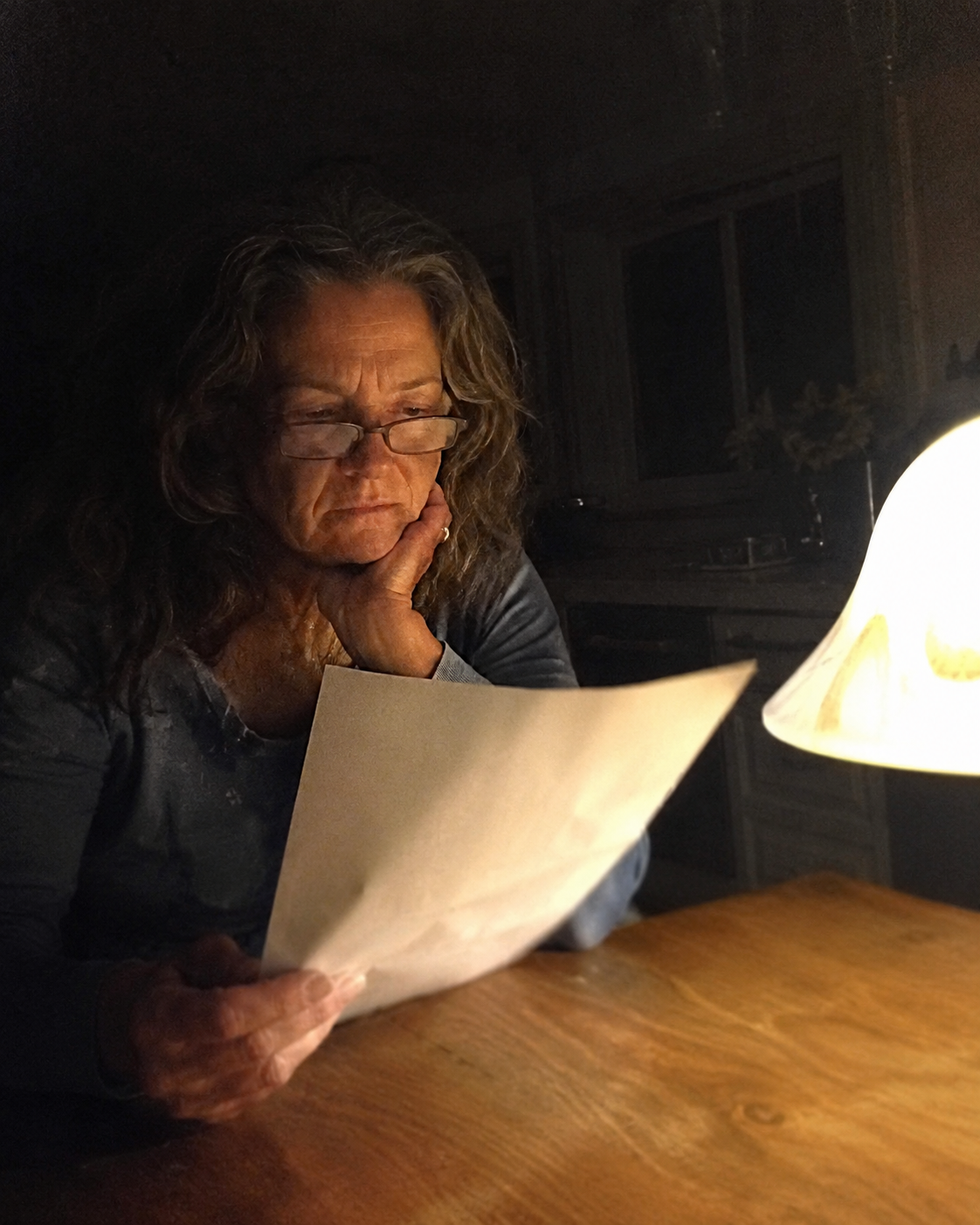
A stranger at the airport asked what i was reading. it was a printout about women's hearts after menopause, and i burst into tears. I hadn't planned to cry in an airport. I'm not a crier. Ask anyone. But our flight was four hours delayed, I'd been carrying a quiet fear around for weeks, and a kind-faced woman in the next seat asked a simple question — and the whole thing just came out of me. She didn't flinch. She just folded her hands and said, "Tell me." So I did. And by the time we finally boarded, she'd given me something I'd been looking for without knowing it. I'm fifty-seven. And I want to tell you, the way I'd tell a friend, about the fear I was carrying through that airport — and the one thing I did about it. No miracle. No magic. Just what I tried, what I noticed, and what I honestly can't prove. Here's the thing nobody sat me down and told me. I spent my whole life not thinking about my heart. I was a woman. Heart trouble was a man's problem — my father's, my uncles'. Not mine. I went through menopause in my early fifties — the heat, the sleep, the whole circus — and came out the other side thinking the hard part was behind me. And then, a couple of years later, I started reading. Late at night, the way you do when a worry won't let you sleep. And what I learned changed how I saw the whole back half of my life. What I learned is this — and it's not a secret, it's just not something anyone makes a fuss about telling women. After menopause, a woman's cardiovascular picture shifts. For a lot of our lives, our bodies have a kind of natural support running in the background. When menopause finishes, some of that quiet background support winds down. And the part of our health we never had to think about becomes the part we probably should start paying attention to. Nobody handed me a pamphlet about that. I found it on my own. And once I understood it, I couldn't un-understand it. It wasn't only the reading. My mother had heart trouble in her later years. So did her sister. I'd spent my whole life filing that under their story, not mine. But at fifty-seven, freshly through menopause, reading about how things change for women at exactly this stage — I couldn't keep it filed away anymore. It wasn't their story. It was a family story. And I was the next chapter. That was the fear I was carrying through the airport that day. A printout in my lap and a knot in my chest. I'd already done the responsible thing. I'd gone to my doctor. Dr. Acharya is wonderful — patient, takes you seriously. I'd told her what I'd been reading and what I'd been afraid of, and she ran everything. The full panel. Blood pressure, cholesterol, all of it. "For fifty-seven, you're in good shape," she'd said. "A couple of these are at the higher end of where I'd like them — nothing alarming, nothing I'd medicate today. But you're smart to start paying attention. After menopause, this is the part of your health to keep an eye on. Keep walking, watch the salt, and we'll monitor it." Here's how that landed. It wasn't bad news. But it wasn't nothing, either. It was a door opening onto a hallway I'd never had to walk down before. The years where I never thought about my heart were over. The years where I did had begun. And "we'll monitor it" — watch and wait — didn't feel like enough. I didn't want to just stand at the top of that hallway waiting to see what happened. I wanted to walk into these years doing something to support myself, not just bracing for a number to drift the wrong way. That's the fear and the wanting I carried to the airport. And that's what a stranger named Geneva walked straight into. Four-hour delay. Packed gate. I was in a row of those bolted-together seats next to a woman about fifteen years older than me — silver hair, sharp eyes, a paperback she wasn't really reading. She glanced at the printout in my lap. "That looks like heavy reading for a Tuesday," she said, kindly. "What is it, if you don't mind my asking?" And I meant to say oh, nothing. I really did. Instead my eyes filled up and I said, "It's about women's hearts. After menopause. I just found out it's the thing I'm supposed to be worried about now, and my mother had heart trouble, and I don't quite know what to do with that." She set her book down. Folded her hands. "Tell me," she said. And so, to a total stranger in a vinyl airport chair, I told her all of it. Geneva listened the whole way through without interrupting. She had a way of listening that made you keep going. When I finally ran out, she was quiet a moment. Then she said: "I know exactly where you're standing. I stood there at about your age. Right after the change, when you suddenly realize the warranty's run out on something you never had to think about. It's a lonely spot. Nobody warns you, and then all at once it's yours to carry." I nodded, because she'd said it better than I could. "How did you handle it?" I asked. "Because you seem like the last person in this airport who's worried about her heart." She smiled. "I'm seventy-two and I walk five miles a day and I feel wonderful, if that's what you're asking. But I had to learn some things to get here." And here's the moment I trusted her completely. Because instead of leaning in with a secret, she held up a hand and got serious. "Before I tell you anything," she said, "I want to be clear about what I am. I'm not a doctor. I'm a retired librarian. I'm not pretending to be a doctor, and nothing I'm about to say to you is medical advice." "Whatever you decide, you take it to your own doctor first, before you do a single thing. Promise me that." "I promise." "Mean it." "I promise, Geneva. Doctor first." She nodded, satisfied, and told me. "It wasn't one thing," she said. "It was a whole change in how I treated this stage of life. The walking, the food, taking it seriously instead of pretending I was still forty." "But there was one thing I added, after a lot of reading — and I read like a librarian, I checked my sources. One thing, on top of everything sensible I was already doing, that I think helped me feel as steady as I do." "Beets," she said. I must have looked skeptical, because she laughed. "I know. I had the same face. The wellness world has ruined every good word. But hear me out, because this one isn't nonsense." "Beetroot is one of the most researched ingredients in the whole cardiovascular and wellness category," she said. "Decades of real study. It is not a fad and it is not internet folklore." "The reason it gets studied is a group of compounds called betalains. That deep red pigment — the stuff that stains your fingers and the cutting board. That's the active part. One of the more potent antioxidants in the food supply." "And what does it do?" I asked. "It supports things." She put weight on the word, the way a careful person does. "Supports cardiovascular wellness. Supports healthy circulation. Supports the body's natural antioxidant balance. Supports healthy blood pressure and cholesterol that are already in the normal range. Supports healthy energy." "Support. That's the honest word and the only one I'll use with you. It is not a treatment. It is not a replacement for a single thing your doctor recommends, now or down the road." "It's support for the layer underneath the numbers. The exact layer I'd just learned starts to need a little more attention once a woman is through the change. The part nobody at the appointment is really looking at, because it doesn't show up as a problem on the panel — yet." She told me one practical thing more, leaning in. "If you go looking — and only after you've talked to your doctor — how they make it matters. Those betalains are heat-sensitive. The cheap, fast products run them through high heat, and the heat wrecks the good part. The cooked-out stuff goes brown." "You want the kind that's cold-pressed at low temperatures. Keeps the betalains intact. The real thing is a deep, dark crimson." Then the part she said slowest, so I'd keep it. "Talk to your doctor or pharmacist first. Make sure it's fine with anything you take. Then add it — don't change anything else. And don't expect a light switch. It's not a drug that flips on. Bodies are all different. Weeks, not days. Some feel something early, some take a long while, some hardly at all. Go in with your eyes open." They called our flight, finally. We were seated rows apart, so we said our goodbyes at the gate. Before we split off she tore the corner off her boarding pass and wrote a brand name on it with a pen from her purse and pressed it into my hand. "Doctor first," she said one more time. "I mean it. I can tell when someone's only half-listening, and you're not, which is why I bothered." "I'm listening. Doctor first. I promise." She squeezed my arm. "You've got a lot of good years in front of you, honey. Go take care of the engine that's going to carry you through them." And then we were down different jet bridges and I never saw Geneva again. I sat in my window seat with a torn boarding-pass corner in my hand and quietly cried for the second time that day — but a completely different kind. The kind where somebody has handed you a candle in a dark hallway. I called Dr. Acharya's office that week. I told the nurse exactly what it was — organic beetroot, the dose, cold-pressed — and asked plainly whether it was alright to add to everything I was already doing. She checked, came back, and said it was a sensible thing to add, that she saw no concern, and to mention it at my next visit so it could go in the chart. I wasn't going to guess with my own heart. I asked the people whose job it is to know. They said go ahead. Then I started. Two capsules of cold-pressed beetroot, a tall glass of water, every morning with my coffee. Added on top of everything else. Nothing taken away. Now — here's where I have to be straighter with you than the internet usually is. I can't prove a thing I'm about to tell you. I changed one thing and then I paid attention, and I genuinely cannot swear to you that what I noticed was the beetroot and not the longer days, or my walking, or simple peace of mind from finally doing something instead of just waiting. I'm a woman who tried something and watched closely. Not a scientist. So I won't dress it up. I'll just tell you what I noticed, in order. The first thing was the afternoons. I'd had a low patch for a couple of years — a slump around three o'clock where I'd want to sit down. A few weeks in, I realized I'd been getting through the afternoons without reaching for the couch. Maybe that was the beetroot. Maybe it was spring. I honestly don't know. I'm telling you I noticed it. The second thing was the walking. I'd been a walker, but it had started to feel like a chore — like I was pushing a body that didn't want to go. Somewhere in the second month the walks felt easier. Lighter. Like the body had a little more to give the hills. Was it the supplement? Was it that I felt motivated and so I walked more, and the walking did the rest? I can't separate those threads. I can only tell you the walks got easier and I noticed. The third thing is harder to name, and it mattered most. The fear quieted. Not because anything was proven — nothing was. But because I'd stopped just waiting and started doing something with clear eyes and my doctor's okay. I had a feeling of steadiness I hadn't had since the day I first read that printout. More energy through the day. Better sleep. A sense of having taken hold of the wheel instead of bracing for the crash. That part, I'll admit, might be as much peace of mind as anything in a capsule. But peace of mind is not nothing, at fifty-seven, with a family history and a hallway ahead of you. I want to be clear about what I'm not claiming. I'm not telling you my heart is healthier — I have no way to know that, and neither does anyone selling you anything. I'm not telling you it lowered a number or lowered a risk. I'm not telling you it'll do for you what I think it did for me. I'm telling you I'm a fifty-seven-year-old woman who got frightened about her heart after menopause, added one well-researched thing to her mornings with her doctor's okay, and felt quietly steadier over the following months. That's the whole of what I know. I won't pretend to more. I had a follow-up with Dr. Acharya a few months in. She ran the panel again, everything she'd checked before. She looked it over, then looked at me, and said: "Well, whatever you're doing, keep it up. A couple of these are sitting in a better spot than last time, and you seem to have good energy. Keep doing what's working, and we'll keep monitoring." I told her about the beetroot. Told her I hadn't changed anything else of substance — same walking, same eating, just added the one thing with the office's okay. She nodded and made a note. "That's a sensible thing to add," she said. "There's good research on antioxidant support for cardiovascular wellness. No concerns with it at all. Keep at it." I didn't ask her to promise me it was the beetroot. She wouldn't have, and she'd have been right not to. But I walked out lighter than I walked in. I'm telling you all of this because there's a fair chance you're a woman somewhere near where I was. Through menopause, or coming up on it. Having just realized — maybe at a checkup, maybe at two in the morning with your own printout — that your heart is now a thing you have to think about, when it never used to be. Doing the right things. Walking, eating well, getting your checkups. And wanting, quietly, to do one more thing to support yourself as you walk into this stage. Not instead of your doctor. Alongside. If that's you, I'd just tell you what a stranger told me in an airport. Not as a promise. As a "here's what I tried." I went looking — well, a stranger handed me — one thing to add. Not a cure. Not a replacement for anything. One thing, with real research behind it, that might support the layer I'd just learned starts to matter more for women after menopause — cardiovascular wellness, healthy circulation, the body's natural antioxidant balance, healthy blood pressure and cholesterol already in the normal range, healthy energy. What I found was beetroot. The brand Geneva tore off her boarding pass for me — the one I added to my mornings — is Rosabella. 1,300 milligrams of organic beetroot per serving, cold-pressed at low temperatures so the betalains stay intact — that deep dark crimson, not the cooked-out brown. Two capsules with a glass of water in the morning. Added to everything I was already doing, in place of none of it. Talk to your doctor or pharmacist before you add any new supplement — especially if there's medication in the picture. That one phone call is what let me do this with a clear conscience. It's the first thing I'd tell any woman to do. It's what Geneva made me promise twice before she'd say a word. That's the whole story. A stranger in an airport saw the fear I was carrying, told me to go take care of the engine that would carry me through my good years, and a few months later I walked the hills lighter than I had in a long time. P.S. If you're a woman who's just realized her heart is now part of the conversation — you're not being a hypochondriac, and you're not overreacting. This genuinely is the stage where it's wise to start paying attention. I wish someone had told me plainly instead of leaving me to find it at two in the morning with a printout. So I'm telling you plainly. It's worth paying attention now, while you've got the most room to support what's still working. P.P.S. Here's the honesty I promised. I can't prove the beetroot did anything for my heart — nobody could. I changed one thing, felt steadier over a few months, and some of that may well be peace of mind. What I can tell you: it's genuinely well-researched, my doctor had no concerns, and the downside of trying was small. That's the calculation I made, with clear eyes. I'm laying it out so you can make your own. P.P.P.S. Here's exactly what I'd tell you to do, in order. First: check with your doctor or pharmacist — this matters most if you take any other medication, so don't skip it. Second: once they've said it's a sensible addition, two capsules with a tall glass of water in the morning. Third: don't change anything else you're doing. Just add this on top. Fourth: give it a couple of weeks, at minimum, before deciding anything. Some women notice something shift early — a little more energy, an easier afternoon, lighter on the hills. Others take much longer. Some don't notice much. Bodies are genuinely different, and anyone who promises you a timeline is selling you something. Be patient with yours. P.P.P.P.S. Rosabella has a 90-day money-back guarantee. If you're not satisfied for any reason at all, every penny comes back, no questions asked. It's a sensible policy for a supplement — it means the only thing you're really risking is a few weeks and a little patience. You get plenty of time to see for yourself before you've committed. P.P.P.P.P.S. Rosabella is a small operation. They harvest and bottle on their own schedule, so I keep an extra bottle in the cupboard just in case. I take mine every morning with my coffee now — it's just part of the routine, like the walk. The thing I keep coming back to, the thing Geneva handed me in a vinyl airport chair, is that you can spend your whole life never thinking about your heart and then wake up one day on the far side of the change knowing it's yours to look after now. And the time to support what's still working is while it's still working — not after something's gone wrong, but while the back half of your life is still ahead of you to take care of. I still have the torn corner of Geneva's boarding pass. Brand written on the back in blue pen. It's tucked in my kitchen window where I see it every morning. Wherever she is, I hope she's still walking her five miles. I hope her engine carries her a good long way. That's where it starts, sometimes. A stranger's question in an airport. A name torn off a boarding pass. Two capsules and a glass of water beside the morning coffee. Individual experiences vary. These statements have not been evaluated by the FDA. This product is not intended to diagnose, treat, cure, or prevent any disease
Support stamina and heart health every day
LEARN MORELike this ad? Make it yours.
Crush rebuilds this exact creative around your product — your brand, your colors, your offer — in about a minute.