Stillwood Institute
Stillwood Institute Facebook ad: “Give Your Curiosity a Place to Grow”
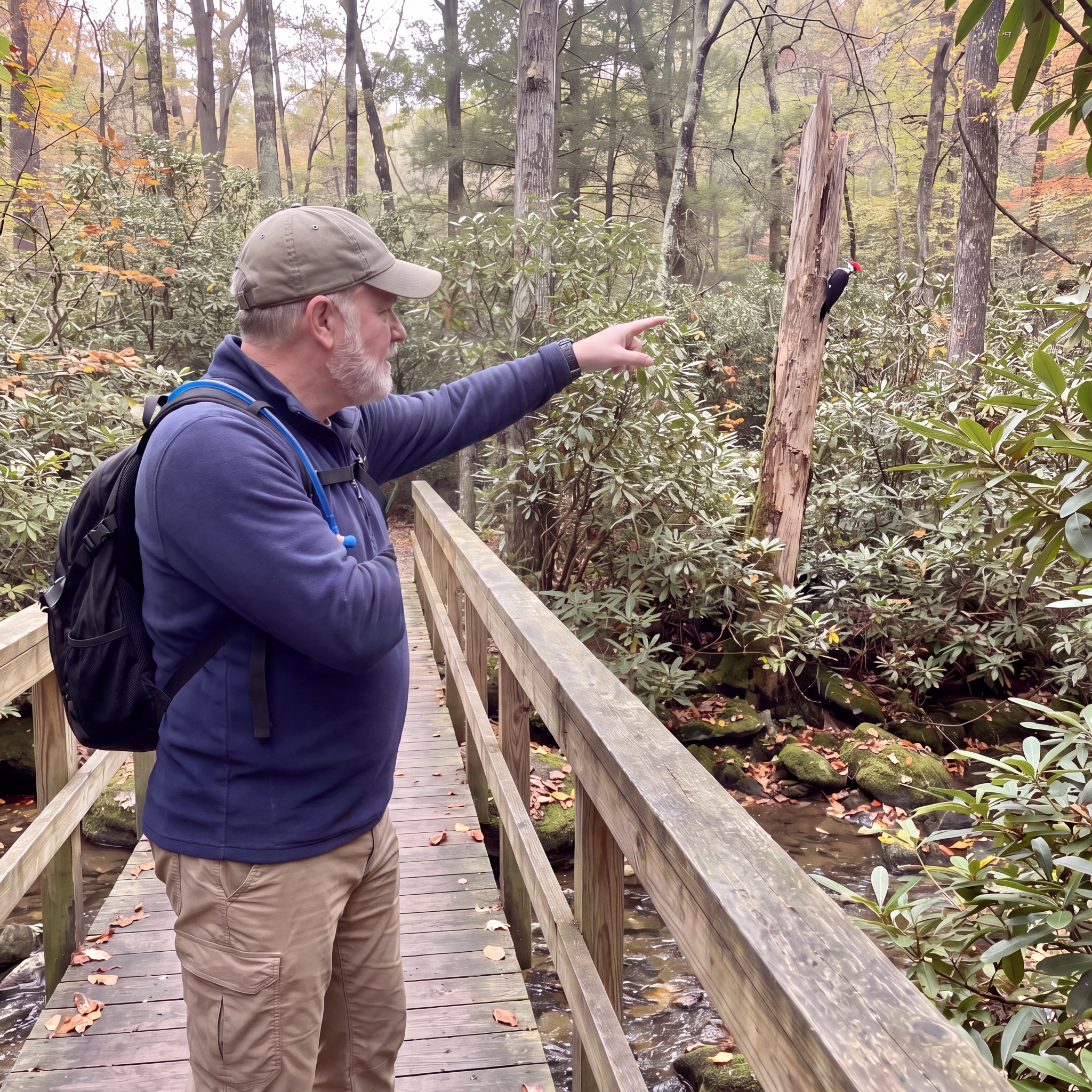
Ran for 1 day, from September 18 to September 19, 2026, the last day Crush saw it.
Run by Stillwood Institute on Facebook. Crush is not the advertiser and does not verify its claims. See this ad in Meta's Ad Library(opens in a new tab)
Want an ad like this for your product?
Crush makes new ad images for your product from this ad: your logo, your product photo, your offer.
Trials from $19.95 USD, then $79.95 USD a month. Cancel anytime.
About this ad
- Meta Ad Library ID
- 2240023650178644
- Platforms
- Facebook, Instagram, Audience Network and Threads
- Relaunches
- 0
Ad text
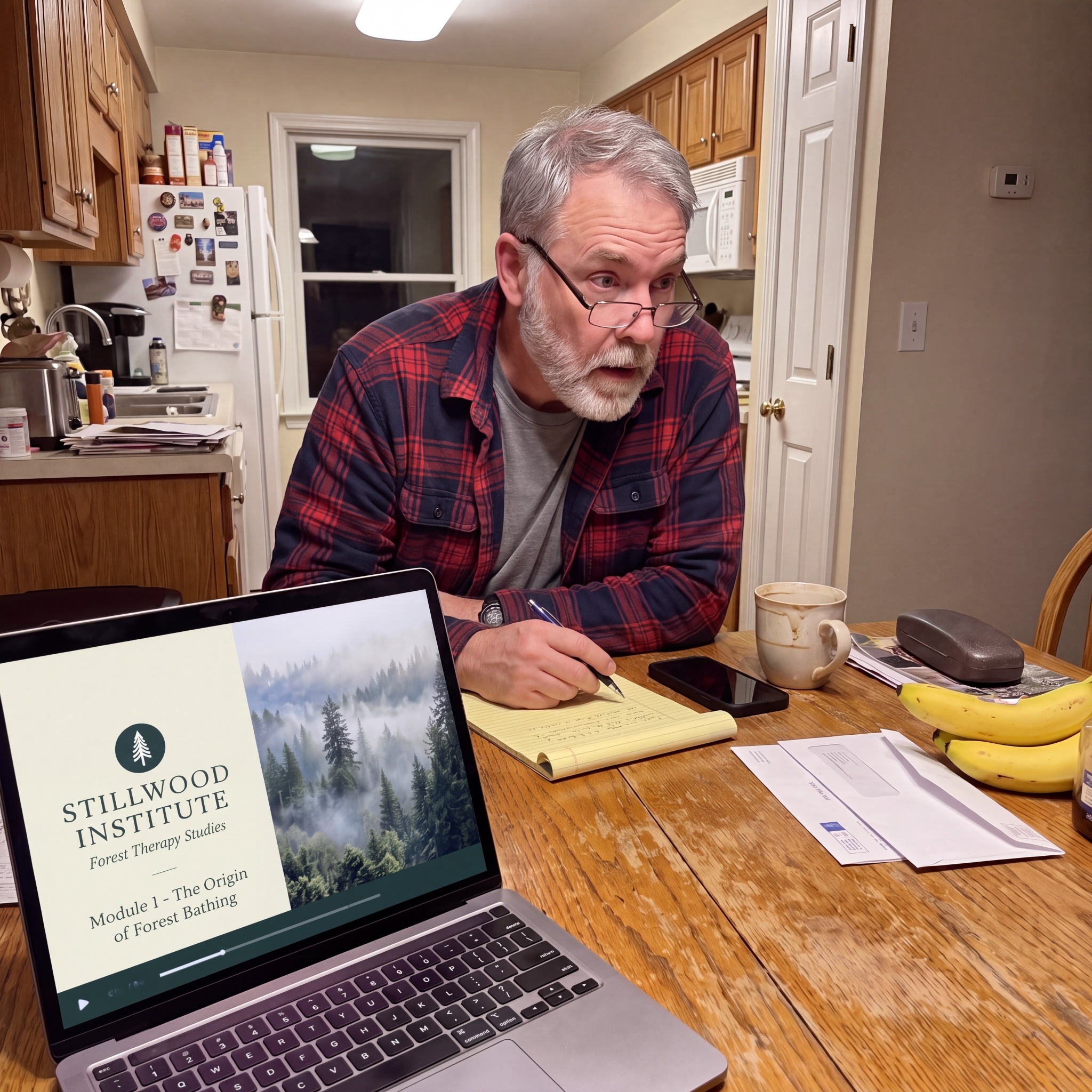
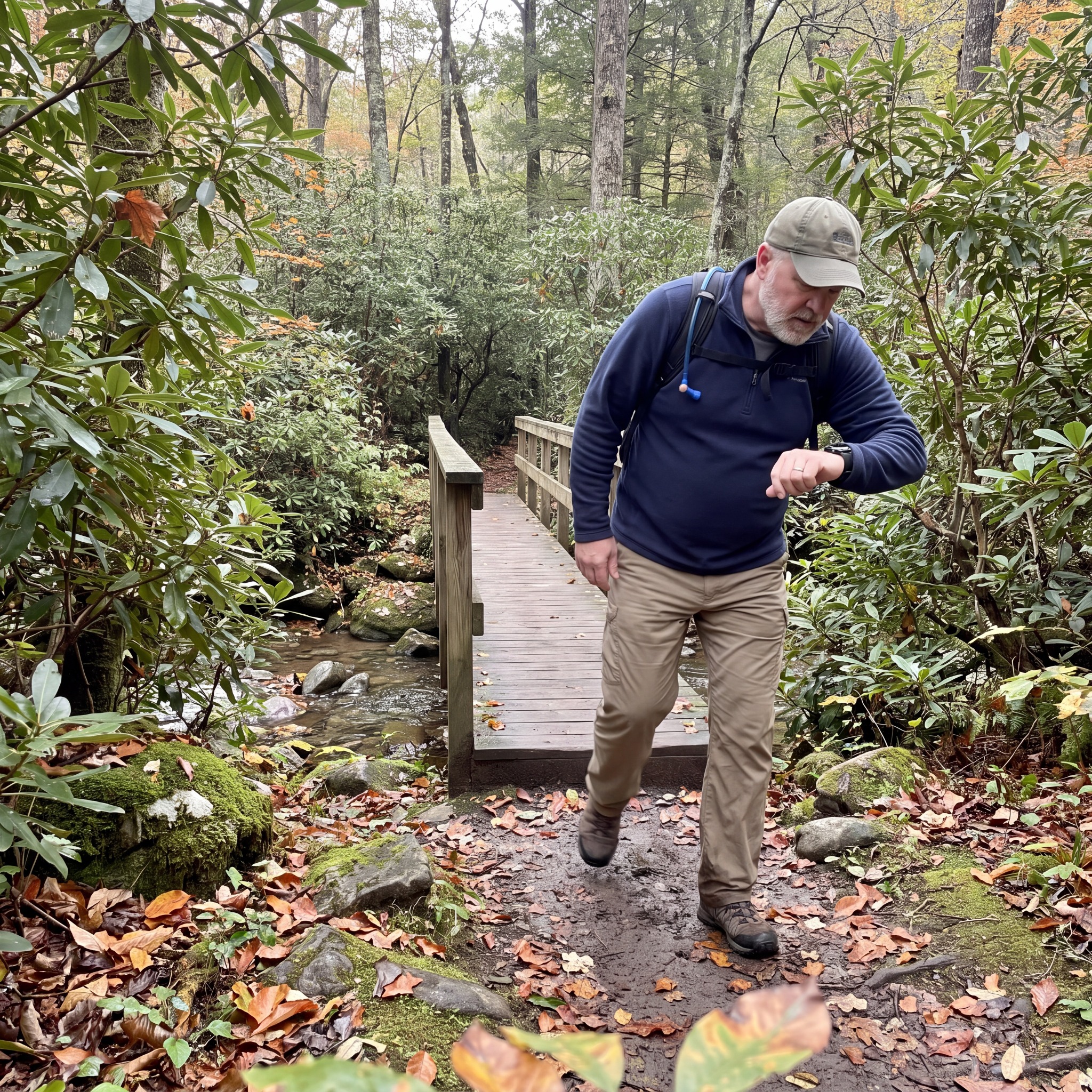
"Did you see the owl?" My wife asked me that in the parking lot while she was pulling off her boots. We had just finished the creek loop, the one about forty minutes from our house. "What owl?" "Mark. It was right over the trail. At the second bridge. You walked under it." I had walked under it. I had also, according to my app, just done 6.8 miles at a 17-minute pace, my best ever on that loop. I remember feeling proud of that number for about four seconds. Then Linda said the thing that stuck with me for the next two months. "You don't hike. You commute through the woods." Some background. I'm 57. I've managed commercial construction projects for 31 years. My whole job is sequencing. What happens first, what depends on what, where the bottleneck is. I'm good at it. About four years ago I started hiking on Saturdays because I wanted something that wasn't a screen or a job site. Friends would come back from a weekend in the mountains looking lighter somehow. Like the woods had done something to them. I wanted that. So I did what I do with everything. I set a goal. By the morning of the owl I had logged 1,140 miles. I had the badges. Good boots, a hydration pack, a rain shell that cost more than my first car payment. And I could not tell you a single thing about any of those miles. Here's what a normal Saturday looked like. Drive forty minutes. Park. Start the app. Walk. By mile two I'd be rewriting a subcontractor schedule in my head. By mile four I'd be arguing with an architect who wasn't there. Back at the truck I'd check my pace, feel a small hit of satisfaction and drive home with the exact same head I'd brought. Linda stopped coming about a year in. She never said why. After the owl, I figured it out. So I tried to fix it. My brother-in-law said, "Leave your phone in the truck." I did. I lost the mileage and kept the argument with the architect. Turns out the phone was never the one doing the thinking. A guy at work who meditates told me to "just be present." I asked him how. He said, "You just... notice." That was the whole instruction. I downloaded a meditation app and tried a walking meditation on the trail. A calm voice told me to feel my feet. I felt my feet for about ninety seconds. Then I was back on the subcontractor schedule, except now I also felt like I was failing at meditation. I watched forest bathing videos on YouTube. Most of them were eight minutes of slow-motion ferns and someone whispering about slowing down. Nice to look at. I finished every one knowing I was supposed to slow down, with no idea what to do once I had. I bought a book. Half of it was research I couldn't use on a Saturday morning. The other half told me, again, to be present. One weekend I sat on a log by the creek and set a ten-minute timer on my watch. Ten minutes of being present. I spent it writing an email in my head to our electrical sub. When the timer went off I actually said out loud, to nobody, "Well. That's that." By then I'd more or less accepted it. Some people are built to notice things. Some people are built to get places. Four years and 1,140 miles said which kind I was. What changed things wasn't a new trick. It was a search I typed at 11 p.m. on a Tuesday, mostly out of irritation. Something like "forest bathing how to actually do it structured." Structured is the word I reach for at work when something keeps failing. One of the results was an online course from a place called Stillwood Institute. I almost scrolled past it. Then one line on the page stopped me. It described forest bathing and Sylvotherapy as experiences that are "structured rather than improvised." I read that three times. Every single thing I had tried was improvised. Be present. Slow down. Just notice. Those aren't instructions. That's the finished product with all the steps missing. A little further down, the page said that instead of covering distance, your attention moves to the senses. What you can see, hear, touch and smell among the trees. Instead of covering distance. I had covered 1,140 miles of distance. Then I looked at the curriculum. Ten modules, in order, each one building on the last. It started with where forest bathing actually came from. Then how things like colors, smells, textures and sounds shape the way we perceive a natural environment. Only after that did it get into the foundations and how an experience is actually put together. It read like a project schedule. For the first time, this thing had a sequence. It was $37 with a 30-day money-back guarantee. I bought it mostly to prove to myself it wouldn't work either. Sunday night I sat at the kitchen table with my laptop and a legal pad, because that's how I learn anything. I didn't expect the history in the first module to matter. It did, oddly. Forest bathing stopped being a mood and became a practice with its own background. And a practice is something you can learn. The second module is where it clicked, and it was almost embarrassing how simple it was. I had been treating the forest as a route. A line from the truck to the turnaround and back. The course treats it as an environment full of color, smell, texture and sound, and each of those shapes how you take the place in. The problem was never that I couldn't slow down. The problem was that when I did, I had given my attention nothing to do. Every piece of advice had told me what to stop. Nobody had told me what to start. (There's also a whole module on something called a Sit Spot. For a man with an 11-mile habit, just the name of that one stung a little.) The next Saturday I went back to the creek loop. I didn't start the app. At the first bridge I stopped and did something that felt ridiculous. I took the course literally and went one sense at a time. I started with smell, because it felt the least natural. Down by the creek the air smelled wet and almost sweet. Two hundred feet up the ridge it smelled like dry pine needles and dust. I have walked that exact stretch something like seventy times. I did not know it had two smells. I did 2.3 miles in two hours. When I got back to the truck, I realized I hadn't rehearsed one single argument with the architect. Not because I'd tried not to. There just hadn't been any room. That night I opened the hiking app out of habit and scrolled back through four years of Saturdays. 1,140 miles. I started laughing hard enough that Linda asked from the other room if I was okay. Four years of trying to get more out of the woods by doing more miles. And the missing piece was the one thing a project manager should have caught on day one. I had a destination and no plan for anything in between. I kept going through the modules in order, the way they're built. I rewatched the sensory material twice. Each Saturday something that used to take effort took a little less. Bark stopped being brown. Birdsong stopped being background noise and turned into three or four different birds in different places. I was noticing on purpose, and then, weirdly, without trying to. On the fourth Saturday Linda came with me. First time in almost three years. About a mile in, I put my arm out and stopped her. There was a pileated woodpecker working a dead tree maybe thirty feet off the trail. I heard it before I saw it. She looked at the bird. Then she looked at me for a lot longer than she'd looked at the bird. "Since when do you stop?" she said. We stood there for close to ten minutes. On the way back, at the second bridge, she pointed up. An owl. I'd like to think it was the same one. I didn't spot it first. She did. But this time I was standing still when she pointed, so I got to see it. "You'd have walked right under that a month ago," she said. I told her it was more like four years. For four years I believed I just wasn't a noticing kind of person. That I was wired to get places. I wasn't wired wrong. I'd been handed a feeling and told to have it, when what I needed was a sequence I could follow. Give me a sequence and I can do almost anything. It's literally my job. Here's the part I keep coming back to. Every bit of advice I got was subtraction. Put the phone away. Walk slower. Stop thinking. But you can't subtract your way into a new way of paying attention. Something has to fill the space you clear. More miles didn't fill it. Less phone didn't fill it. A calm voice in my earbuds didn't fill it. Structure did. So here's what it is, plainly. An online course, ten modules, and you can watch it on a laptop, tablet or phone. It's educational. It doesn't give you a certification and it doesn't promise to fix your life, which after years of videos promising exactly that, made me trust it more. It was $37. There's a 30-day money-back guarantee if it isn't for you. I'd already spent more than that on gas driving to trails I never actually saw. If your weekends end with a number on an app and not much else, you probably already know whether this is for you. Last Saturday I did 2.1 miles on the creek loop. Slowest pace I've ever logged. Best walk I've ever taken. I've stopped starting the app. Story dramatized for illustration.
Where the ad sends people
stillwoodinstitute.com
🌲 Give Your Curiosity a Place to Grow
Explore forest bathing, Shinrin-yoku, trees, phytoncides and practical Sylvotherapy across 10 structured online modules.
Learn more: stillwoodinstitute.com(opens in a new tab)