Lymphedema Reset
Lymphedema Reset Facebook ad: “Ceylon Second Heart Activator With Calf-Pump Reawakening”
Ran for 10 days, from July 26 to August 5, 2026, the last day Crush saw it.
Run by Lymphedema Reset on Facebook. Crush is not the advertiser and does not verify its claims. See this ad in Meta's Ad Library(opens in a new tab)
Want an ad like this for your product?
Crush makes new ad images for your product from this ad: your logo, your product photo, your offer.
Trials from $19.95 USD, then $79.95 USD a month. Cancel anytime.
About this ad
- Meta Ad Library ID
- 2244021223025994
- Platforms
- Facebook, Instagram, Audience Network, Messenger and Threads
- Relaunches
- 0
Ad text
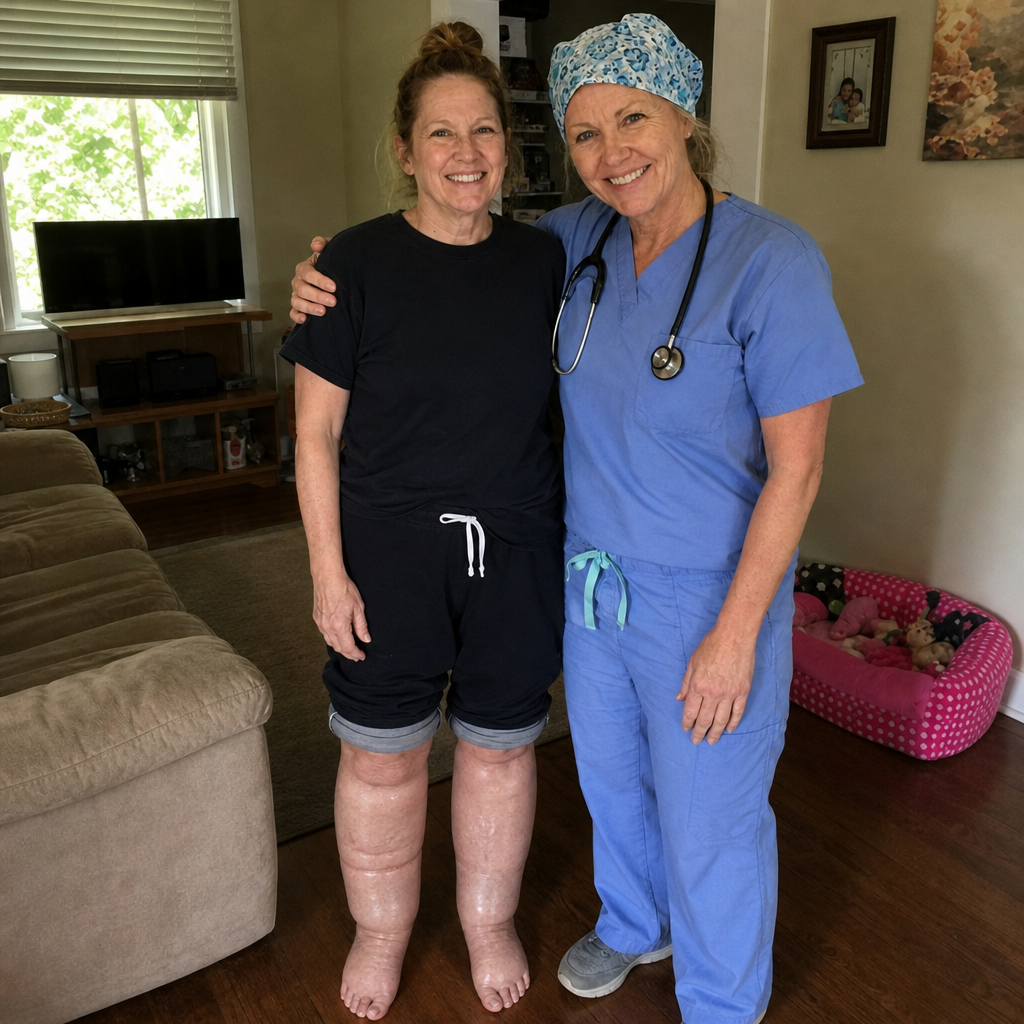
Leg swelling has six stages. I used to ask every homebound patient the same thing. "How long have your ankles been puffy by evening?" Most of them don't worry about a thing until stage four. And it was always managed, somewhere between a little puffy and "it goes down overnight." The wheelchairs aren't full of women who ignored their legs. They're full of women who trusted the wrong advice. It was always someone who did everything her doctor told her to do. I'm Sandra. I've been a home-care nurse for 14 years. Roughly 11,000 women I've helped in their living rooms. And I need to tell you something I've been carrying for a long time, because last month I got my own diagnosis, mild venous insufficiency, and I refuse to end up in one of my own wheelchairs. Let me tell you what these six stages actually look like. Because most people only know the word edema. They don't know what happens on the way there. Stage one. The pump starts stalling. Your calf muscles hold the body's second heart, a pump made of the soleus and gastrocnemius. Their job is to squeeze the deep veins and push blood back up, hour after hour, day after day, for your entire life. What most people don't know is why that pump starts to fail. Sitting or standing all day is like leaving a sump pump switched off while the water keeps rising. Not once. Continuously. The blood circulating down into your ankles has nothing driving it back up, so it settles at the lowest point. No sound. No warning. Just steady, invisible pooling. Your calf pump can go dormant for years before you feel a single symptom. Most women have no idea this is happening right now. Stage two. The sock ring. When that pump is dormant enough, fluid starts seeping into the tissue that was never supposed to hold it. That fluid shows up as puffiness. That is the sock ring. The deep groove your elastic band carves into your ankle that doesn't disappear no matter how long you rub it. Most women notice it, rub it, and forget. It is the one warning you can actually see, and most women ignore it. But I need you to understand what that sock ring is telling you. Your bathroom scale measures one thing. The total weight your body is carrying. A rolling picture of how much you weigh in the morning. That is all it measures. It does not see the tiny deep veins threading through your calf. It does not see the fluid leaking into the tissue. It sees the number on the floor. Not where the fluid is going. A morning weight can be called normal and your calf pump can still be quietly shutting down behind it. Both things are completely true at the same time. Because the scale is tracking the total load. Your ankles are paying the price of the stalled pump underneath. That sock ring is not a warning sign that something might happen. It is evidence that something is already happening. Stage three. Hyperpooling. The silent stage. The most dangerous. Your remaining circulation starts straining to compensate for the pump that has gone quiet. The veins push harder. Stretch wider. Your legs might still look acceptable in the morning. Your doctor says keep an eye on it. But here is what nobody tells you about hyperpooling. Your calf motor nerves, the tiny signal lines whose job is to fire the muscle and squeeze the veins so blood moves up and out, have stopped responding. In a healthy body, the nerve gives the signal, the muscle contracts, blood moves from ankle back toward the heart, and the swelling comes down. In a dormant pump, those nerves stop firing on their own. The blood needs to move. Nothing happens. Your body leans on gravity instead. Still nothing rises. The fluid has nowhere to go, so it stays in your ankles and keeps pooling. Your legs are drowning. Your ankles are flooded. And your healthy veins are working overtime against a fluid load that never lets up, stretching themselves out trying to compensate for what the dormant pump can no longer do. Everything looks fine until it isn't. Stage four. The heaviness. After years of hyperpooling, your ankles balloon. The tightness climbs. The legs your doctor was watching suddenly look bad by afternoon. But the pooling had been happening for years. The tiredness you blamed on aging. Leg fatigue. The dragging feeling that never fully went away. The puffy feet in the morning. The shoes that won't fit by 2pm. The skin so tight it shines. It all arrives at once because your calf pump can no longer compensate. And now the decline isn't slow. It's fast. Stage five. The despair. You drank more water. Didn't work. Cut your salt. Didn't work. Took the water pills. Didn't stop it. You did everything you were told and it kept getting worse. Because nobody addressed what was actually keeping the fluid pooling in the first place. The calf motor nerves were still asleep. The gravity was still winning. The diuretic drained some fluid but never restarted the pump. And the elevation just measured how much faster it all came back the second you stood up. And now your doctor says a word you never expected to hear. Compression socks for life. Stage six. The wrestling match. Every single morning. Ten minutes a leg. A stocking dragged over a heel, a battle that leaves most women sweating and out of breath before breakfast, sometimes needing a second person to help. The elastic squeezes the fluid out for a few hours, does what her calf cannot anymore, and the moment it comes off, it floods right back. I've watched women cry putting those socks on, not from pain but from the weight of what their day became. I've watched women stop going out because they cannot leave the house without the whole ritual. I've watched marriages buckle under the helplessness. One of my long-term patients told me something I think about every single day. She said: "This isn't living. This is just managing." And every single one of them, when I asked how they got there, said the same thing. "I did everything right. My weight was fine. Nobody told me my calf pump was dying." Every. Single. One. Most people think you cannot reverse the swelling once it starts. And while it is true that a torn-out vein cannot be rebuilt, the research shows something important. Most women in the early stages still have a fully working calf muscle. It is not dead. It is asleep under a signal that was never woken up. Restart that pump, and the fluid that is still pooling begins draining again. The research on how to reawaken those motor nerves exists. It has been published. Peer-reviewed. Cited in vascular journals. Sitting in databases that a 15-minute appointment leaves no time to read. There is a specific method that fires the calf motor nerves directly. It bypasses the dormant walking signal entirely. It goes to the muscle, speaks to the machinery inside it, and wakes the pump back up. Studies on neuromuscular electrical stimulation of the calf found it increased venous blood flow several times over compared to sitting still, moving pooled fluid up and out. Several times over. Trials on the calf muscle pump, the vascular field's own focus, found meaningful drops in both ankle swelling and heaviness across multiple sessions. A review of controlled studies analyzed the calf-pump activation approach and found real reductions in both circumference and fluid. Published. Replicated. Real. And in 14 years of working at the end of the road, not once had anyone put this in my hand. Not because doctors are hiding it. Because the pipeline that moves research from a journal into a treatment room runs on prescription money. You cannot patent a muscle. So no pharmaceutical company funds the push that would land it on a sales representative's desk. The studies stay in databases. The women keep coming in with sock rings on their ankles and swelling that climbs another inch each season. That is not your fault. You took the water pills. You tracked your weight. You kept every appointment. The system was only giving you half the answer. Now. You have probably tried a foot massager before and felt nothing. I need you to understand exactly why. The gadget in your closet is a vibration plate. A completely different thing. At the setting required to move real fluid, it only buzzes the surface of your skin. The vascular researchers documented that surface vibration never reaches the deep motor nerves that fire the pump. You were not using the wrong amount of effort. You were using the wrong tool. True calf-pump activation reaches 250 times deeper than skin vibration. It is the only approach appearing in the clinical research showing real circulation results. Even real stimulation aimed at the wrong spot will likely do nothing. The pump lives deep in the calf muscle. Your skin is a thick barrier over it. A shallow buzz has no path down. So the pulses fade at the surface without ever reaching the muscle that needs them. Your gadget did not fail because stimulation does not work. It failed because it never reached the pump. The device I recommend is the Ornexis Second Heart Activator. True calf-pump activation. A foot-plate you rest your bare feet on, sending gentle painless pulses straight to the motor nerves. Verified at the muscle level, not a marketing claim, an actual reactivation of the soleus and gastrocnemius. Tuned to 8 to 25 Hz per session. A pulse rhythm that mimics walking. The stimulation range that corresponds directly to the published clinical work. Delivered right where the fluid pools, the bridge that carries the squeeze into the deep veins where the calf pump has been waiting for years to be woken up. Third-party tested. Every unit verified for output and safety. Sealed and simple, not a drawer of straps and fillers. Last month I got my own diagnosis. Ankles up an inch by noon. Swelling running heavy from 2pm on. Sock rings that stayed carved for ten minutes over ten months. My shoe size had crept from an 8 to an 8 and a half. My doctor said "we'll keep an eye on it." I've heard those exact words from the charts of women who are now sitting in my wheelchairs. I ordered one that night. Week one, the heaviness lifted. I finished a twelve-hour shift and still had legs left under me. Week two, my evening puffiness started showing up smaller. I pressed a thumb into my ankle three times the first evening the dent bounced back in seconds. Week four, the swelling stayed low all the way to bedtime. Week eight, the sock ring stopped forming. My ankle bone came back. Week ten, I zipped a mid-calf boot I hadn't worn in years. Ankles slim from morning to night. She looked at my legs. Looked at me. "What did you change?" I handed her the research I had been reading at 11:30 PM for three weeks. She read for ten minutes. Closed the folder. "Your circulation improved." I nodded. "Keep doing whatever you're doing." If you are seeing that sock ring right now, that is your window. Not next season when your legs come back worse. Not when your doctor finally says compression socks for life. Now. 100-day money-back guarantee. No questions asked. If your evening swelling does not come down, if your ankles do not slim, if you see no difference in 100 days, you pay nothing. The women who see real movement are the ones who committed to at least a few weeks. That is how long it takes to give your calf pump a real chance to wake up and hold. Fifteen minutes on the plate each evening. That is the whole protocol. The wheelchairs aren't full of women who ignored their legs. They're full of women who trusted the wrong advice and waited too long to address what was actually driving the swelling. Don't let someone else tell your story with the words "I wish someone had told me sooner." I just did. ~ Sandra, RN, Home Care, 14 years
Where the ad sends people
ornexis.com
Ceylon Second Heart Activator With Calf-Pump Reawakening
Ornexis
Learn more: ornexis.com(opens in a new tab)