Stephanie Parker
 Facebook ad: “Your brain can rebuild itself”
Ran for 52 days, from September 17 to November 8, 2026, the last day Crush saw it.
Run by Stephanie Parker on Facebook. Crush is not the advertiser and does not verify its claims. See this ad in Meta's Ad Library(opens in a new tab)
Make your own version of this ad
Crush makes it, launches it in your own Meta ad account, scales the winners and pauses the losers.
About this ad
- Meta Ad Library ID
- 2245214462878734
- Platforms
- Facebook, Instagram, Audience Network, WhatsApp and Threads
- Relaunches
- 0
Ad text
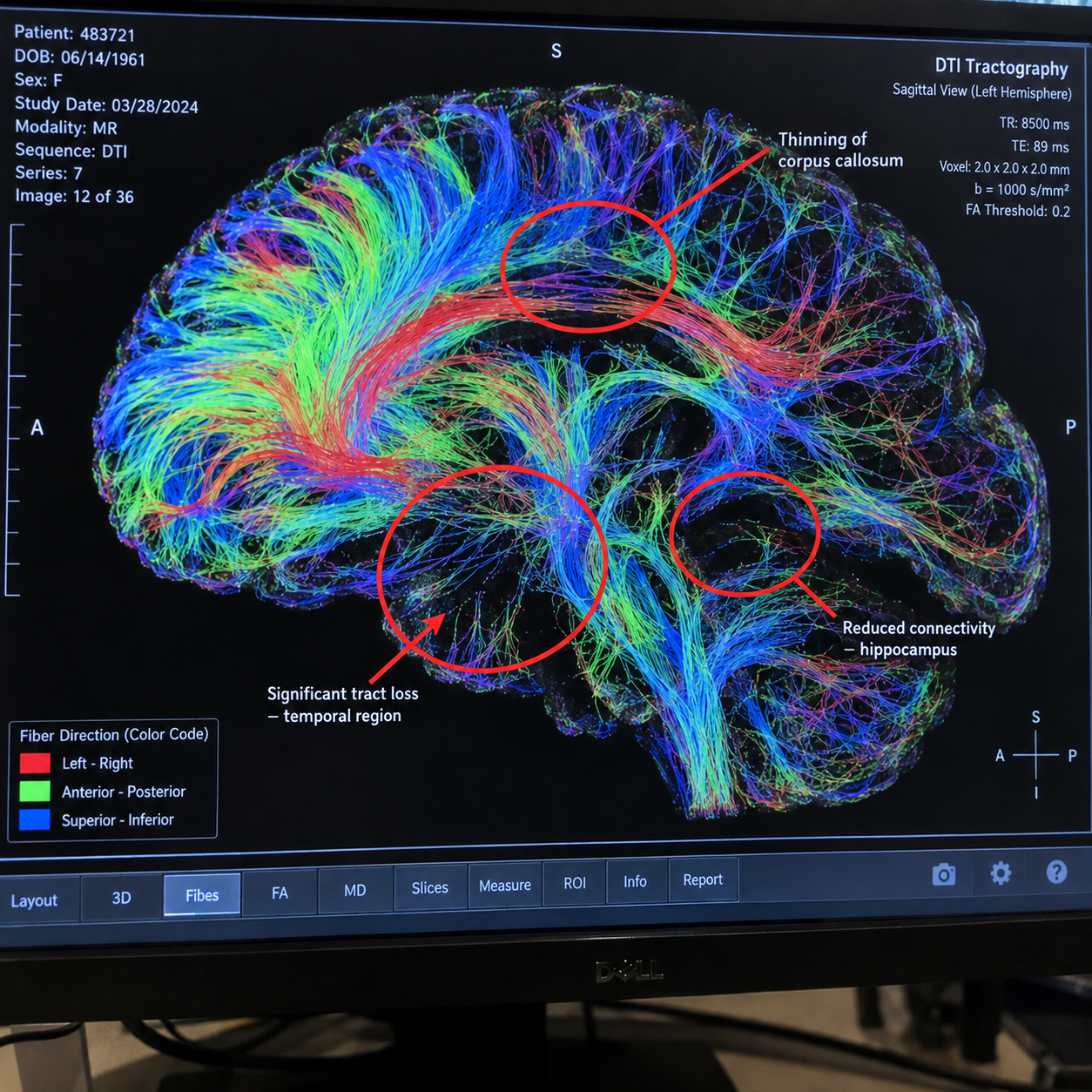
I'm a neurology nurse. For 8 years the neurologist I work beside has been reaching into his desk drawer every morning and taking something from a dark brown bottle. Last month my own words started slipping. I finally asked him what was in the bottle. I want to explain what he told me. Because for 8 years I noticed and I said nothing. And until last month, I kept it to myself. My name is Stephanie. I've been a neurology nurse for 12 years. I work at a hospital with one of the busiest memory clinics in the region. I've sat across the desk from more patients getting their cognitive screening results than I can count. I've assisted with thousands of consultations. Initial assessments. Follow-ups. The conversations where a family sits in a room and hears the words "progressive cognitive decline" for the first time. I work next to a neurologist named Dr. Arjun Rao. He's been my supervising physician for 8 of those 12 years. He is one of the sharpest diagnosticians I have ever seen. He has the kind of mind that holds a patient's entire history, every scan, every score, every medication, without looking at the chart. He walks into a room and knows what he's seeing before the patient finishes the first sentence. For 8 years, I have sat next to him while he delivers the news that changes families. I have seen what cognitive decline looks like from the clinical side. I'm going to be honest about that because I want you to understand where the rest of this is coming from. A sharp mind is a connected thing. 86 billion nerve cells wired together by trillions of branches, every one of them talking to every other one, a web so complex it makes the entire internet look like a child's drawing. When that web is intact, you think clearly. You find your words. You recognize your daughter when she walks through the door. You remember the drive home without thinking about it. When that web starts falling apart, I can see it before the screening catches it. The patient pauses mid-sentence and their eyes go somewhere else for a second. They answer a question I asked three minutes ago because their brain just now retrieved it. They laugh at something that wasn't funny because they lost the thread of the conversation and they're covering. The screening says they're within normal range. I can see they're not. I have sat in that chair across from those patients hundreds of times. I know what cognitive decline looks like before a score catches it, because I have watched it arrive in real time on the faces of people who still pass every test we give them. For 8 years I have also watched something else. Every morning before clinic, Dr. Rao opens his desk drawer and takes one capsule out of a dark brown bottle. He doesn't take it with coffee. He swallows it with water from the glass he keeps next to his computer. Then he puts the bottle back, closes the drawer, and starts reviewing charts. I noticed it in my first year working with him. I never asked what it was. He has 30 patients on his schedule before lunch. You don't ask the neurologist personal questions when he's reviewing charts. You assist. I assumed it was a multivitamin. That's what I told myself for 8 years. Last month my own words started slipping. I almost didn't say it out loud. I'm 53 years old. I'm a neurology nurse. I walk five days a week. I eat well. I read constantly. I have spent 12 years watching what cognitive decline does to people. I do not have a failing brain. But the words were slipping. Not the hard words. The easy ones. The ones I've used a thousand times. I'd be charting a patient note and the word I needed would just disappear. Not on the tip of my tongue. Gone. Like a drawer I'd opened a hundred times suddenly had nothing in it. I'd be talking to a patient's wife and lose the thread of my own sentence halfway through. I'd be on the phone with my daughter and say "the thing, the thing you put in the oven" because the word "casserole" just wasn't there. I started avoiding long conversations. Not on purpose. I just noticed I was keeping things short. Finding reasons to get off the phone. Letting my daughter's calls go to voicemail and texting back instead. Because every conversation had become a minefield where I might reach for a word and come back with nothing, and the silence where the word should have been was so loud I couldn't stand it. I tracked it for two weeks. It was getting worse, not better. I felt sick. Not because I didn't know what was coming. I felt sick because I knew exactly what was coming. I've been watching it arrive for 12 years. I've been administering the screening to women my age and watching them pass it while their families sit behind them mouthing "it's worse than that" where the patient can't see. My doctor called me after my annual physical. "Stephanie, you're at the age where some cognitive changes are expected, especially with the family history you noted. I'm going to refer you to a neurologist and we'll get a baseline on file. In the meantime, I'm going to start you on donepezil. 5 milligrams. It helps with memory and word retrieval. We want to get ahead of this." Donepezil. I sat in my car in the hospital parking garage after my shift that day for 40 minutes. I couldn't turn the key. I'd just spent the morning with a 68 year old woman I've been seeing in our clinic for 7 years. She was started on donepezil at her first visit. Her screening scores held steady for about a year. Her family said she seemed a little sharper for a few months. And then the slide picked back up. Slowly at first. Then faster. She's been on donepezil for 7 years. Last Tuesday she couldn't tell me what month it was. Her daughter was sitting behind her, silently crying, while her mother smiled and said she felt fine. The donepezil had been managing her scores for 7 years. Whatever was managing them had not been protecting her from this. I was going to be that woman. The thought of becoming one of my own patients was so heavy I couldn't drive home for almost an hour. The next morning I walked into the office before our first patient at 7:45 AM. Dr. Rao was at his desk. He'd just taken his capsule. The dark brown bottle was next to his keyboard. I asked him what was in the bottle. He stopped what he was doing and looked at me for a moment. Then he put the bottle back in the drawer. Closed it. "Stephanie. There's a conversation we should have. Not now. At the end of the day." We finished the last patient at 5:30 PM. Everyone else had already gone home. The hallway was quiet. Dr. Rao closed his office door and sat down across from me at the small table we use for chart reviews. The dark brown bottle was already sitting on the table between us. He told me everything I'm about to tell you. The most direct conversation we've had in 8 years of working together, and we had it because he could see on my face that morning that my own words were going, and because he is, underneath everything, a kind man. I'm going to tell it to you the way he told it to me. The way I needed to hear it. The way I've never heard it explained in any patient education session or any neurology continuing education course in 12 years of nursing. Your brain has 86 billion nerve cells connected to each other by trillions of branches. He called them connections. I'll call them that too because it's the easiest way to say it. When the connections are intact and the network is strong, your brain works the way it's supposed to. You find words. You follow conversations. You remember where you parked. You drive home without thinking about which turn to make. You recognize your husband's voice on the phone before he says his name. You don't think about it the same way you don't think about breathing. Your brain has been maintaining that network for you your entire life. But those connections are not permanent. They fray. They crack. Every single day some of them come apart. That is not a disease. That's just the cost of using your brain. Every thought, every memory, every word you reach for puts wear on the wiring. This has been happening since you were born. Here's the part nobody explains. It was never a problem before because your brain used to fix the connections as fast as they broke. It had a repair system running every single day. While you slept, while you rested, your brain was patching frayed connections and building new ones. The wiring broke during the day and got rebuilt overnight. Like clockwork. You never thought about it because you never had to. Dr. Rao leaned back in his chair and looked at me. "The thing that tells the repair system to do its job is a protein your brain makes on its own. Nerve Growth Factor. NGF. You've never seen it on a lab panel. You've never heard it mentioned in a patient education session. Most neurologists don't test for it. Most physicians don't even know to ask about it." He paused. "When NGF levels are healthy, the brain maintains itself. It patches old connections. It grows new ones. The network stays dense. Words come when you reach for them. Names are where you left them. You drive home from the grocery store without a single hesitation." "When NGF production slows down, and it does slow down, starting in your 40s and accelerating after 50, the brain doesn't crash. It doesn't shut off. It just quietly stops repairing itself. The connections thin out. Not all at once. One at a time. You reach for a word and it's not there. You walk into a room and the reason you came in is gone. You lose the thread of a sentence you were in the middle of saying." He looked at me. "That is what I have been watching happen to our patients for years. And it is what I could see starting to happen to you yesterday morning." My chest felt tight. "Now here's the part that made me start taking what's in that bottle." He leaned forward. "Donepezil does not restart the repair system. It doesn't touch NGF. What donepezil does is slow the breakdown of acetylcholine, the neurotransmitter that carries signals between nerve cells. It turns up the brightness on a screen that already has cracks running through it. The picture looks sharper for a while. The screening scores hold steady for a year, maybe two." "But the wiring underneath keeps fraying. Because nobody restarted the repair crew. The connections keep thinning. The network keeps developing holes. And eventually turning up the brightness can't hide the fact that half the screen is dark." He sat back. "That is why our patients stabilize on donepezil for a year and then slide anyway. That is why we add memantine on top of it. That is why the doses go up. That is why the family comes back a year later and says it's worse even though the medication hasn't changed. Because the medication was doing what medication does. Amplifying the signal. Not repairing the wiring." I thought about the woman from Tuesday morning. Seven years on donepezil. Couldn't tell me what month it was. "What about the supplements," I said. "The fish oil. The B vitamins. The ginkgo. Prevagen. Everything our patients try." He made a sound that was almost a laugh. "Fish oil reduces inflammation in the body. That is a real thing. But it does not cross the blood-brain barrier and it does not trigger NGF production. It is putting lotion on the outside of a house with no wiring inside." "Ginkgo improves blood flow to the brain. More blood reaching a network that's falling apart. You're shipping more supplies to a construction site where nobody showed up for work." "B vitamins support the nervous system in general. The way watering a lawn supports a house in general. It does not fix the foundation." "Prevagen is a jellyfish protein that has never been shown in any rigorous trial to do anything meaningful for human cognition at the dose in the bottle. It is a marketing budget with a supplement attached to it." He tapped the table. "Every single one of those is aimed at supporting a brain that has stopped repairing itself. Not one of them restarts the repair crew. The connections keep fraying. The network keeps thinning. And the patient decides nothing works." I sat there with my hands folded in my lap. "So what restarts the repair crew," I said. He picked up the dark brown bottle and set it upright between us. "A mushroom," he said. "And I know how that sounds coming from a board-certified neurologist." He told me about a mushroom that's been used in East Asia for centuries. In traditional Chinese medicine it was called the scholar's mushroom. Buddhist monks consumed it before long retreats that demanded weeks of sustained clarity. Japanese mountain priests carried it on pilgrimages. The people who used it stayed sharp into old age while the people around them faded. They didn't know why it worked. They just knew it worked. "Modern neuroscience is catching up to what they observed," he said. "The mushroom is Lion's Mane. It contains two families of compounds found nowhere else in nature. Not in any other mushroom. Not in any plant. Not in any pharmaceutical. Hericenones and erinacines." "Here's what those compounds do. They cross the blood-brain barrier, which almost nothing does, and they stimulate the brain's own production of Nerve Growth Factor. Not a stimulant that pushes a tired brain harder. Not a drug that amplifies a fading signal for four hours. A signal. The same signal your brain used to send on its own when you were 30. Lion's Mane hands it back." "When NGF production restarts, the repair crew that has been sitting idle goes back to work. It starts patching the connections that have been fraying. It starts growing new ones. The network that has been thinning for a decade starts rebuilding." "Not because a drug forced your brain to perform. Because your brain finally has the protein it needs to do what it already knows how to do." He pulled up something on his phone and laid it on the table. Studies. Dates. Measured outcomes. Human trials showing improvements in cognitive function, word retrieval, and processing speed in adults with mild cognitive concerns. "The research has been accumulating quietly for years," he said. "This is not fringe. This is published, peer-reviewed work." I thought about every bottle of donepezil I had watched our patients open for 12 years. Every family that came back a year later saying it's worse. "Why doesn't anything on the supplement shelf work then," I said. "I've had patients tell me they tried Lion's Mane and felt nothing." He nodded like he had been waiting for that question. "Because what they took wasn't Lion's Mane. Not really." He set the dark brown bottle upright on the table. "Nine out of ten Lion's Mane products on the market are not made from the mushroom. They're made from mycelium grown on rice grain. The root system. They grow it on grain because it's fast and it's cheap. The mycelium threads through the rice, and then they grind the entire thing, rice and all, and press it into a capsule. What the patient swallows is mostly rice starch with a trace of fungal material." "The hericenones and erinacines, the two compound families that actually cross the blood-brain barrier and trigger NGF production, those are concentrated in the fruiting body. The actual mushroom. The part that grows above the surface. The part that takes real growing conditions and real time and costs more to produce. Most companies skip it." "And even the ones that use the fruiting body usually just dry it and grind it into powder. But hericenones are alcohol-soluble and erinacines are water-soluble. A raw powder capsule doesn't fully release either one. To get both compound groups out and into a bioavailable form, you need a dual extraction. Hot water for the erinacines. Alcohol for the hericenones. Then you concentrate it and standardize it so every capsule contains a verified dose." "The bottle your patient bought at the drugstore with the mushroom on the label. The one from Amazon with 47 ingredients in a proprietary blend. The powder from the wellness influencer. None of them are doing what I just described. They're selling ground-up rice with a picture of a mushroom on it. The patient's brain never gets the signal. The repair crew never shows up. And the patient tells you Lion's Mane doesn't work." "Lion's Mane works. What they took didn't." I asked him how long he had known this. He said: "Since my fellowship. The NGF research isn't hidden. It's in the neuroscience literature. Every neurologist who's read the primary research on neurotrophin signaling knows this mechanism exists. It's just that donepezil is what the guidelines recommend, so donepezil is what we prescribe." I asked him why he doesn't recommend it to his patients. He looked at the dark brown bottle on the table for a long time before he answered. "Stephanie, I've thought about it for years. The honest answer is that recommending a mushroom supplement instead of a guidelines-based medication would end my career. I'd be in front of the medical board within a year. The hospital would pull my clinical privileges. The insurance companies would stop covering my consultations. And the patients I currently see would go to a neurologist who would put them on donepezil and tell them nothing else." He paused. "So I run the clinic. I prescribe the donepezil. And I tell the patients I'm closest to about the mushroom, quietly, off the record, when nobody is listening." He looked at me. "I should have told you years ago. I'm sorry." I sat with that for a long time. The office was completely still. The hallway outside was dark. Everyone else had been gone for over an hour. For 8 years I had been sitting next to a neurologist who had been quietly taking a supplement he wouldn't write on a prescription pad because the system he worked inside would have destroyed him for it. For 8 years I had watched him take it. For 8 years I had not asked. And every single patient whose screening I'd administered, every single family I'd sat across from while Dr. Rao explained the diagnosis, every single prescription for donepezil I'd watched him write, had been for a condition that was driven by the very mechanism he'd just explained to me in that empty office after everyone else had gone home. I told Dr. Rao I was going to write what he had just told me down. He didn't stop me. I told him I was going to put it somewhere people could read it. He looked at the dark brown bottle for a long time. Then he said: "Stephanie. Do it. I can't. But you can." So that's what I'm doing. The specific bottle Dr. Rao has been taking for 8 years is Nutrivia Lion's Mane. Dr. Rao is particular about what he puts in his body. He told me that most Lion's Mane on the market is mycelium grown on grain. Rice starch with a mushroom on the label. The active compounds aren't in there in any meaningful amount. A lot of bottles have so little hericenone and erinacine content they won't move the needle on anything. Nutrivia checks every box he cares about. Real fruiting body, not mycelium. Dual-extracted for both compound families. Standardized so every capsule contains a verified dose. Third-party tested for purity and potency. Made in the US. No grain filler. No rice starch. No proprietary blends hiding the fact that there's barely any Lion's Mane in the bottle. I started taking it the next morning. One capsule with water before my shift. I never filled the donepezil. I want to be honest about what the first few days felt like. It wasn't a stimulant. Lion's Mane doesn't work like that, and once I understood the mechanism I knew why. The first two weeks the compounds are crossing the blood-brain barrier and telling your brain to start making NGF again. The repair crew is getting the signal to show up. What I noticed wasn't dramatic. It was that the 2pm fog I'd been blaming on long shifts started to lift. I was less exhausted by the end of the day. I slept more deeply. Small things I didn't connect at first. Week 3. I was charting a patient note after a consultation and I used a word, "confabulation," that I hadn't been able to pull up in months. It came out of my fingers onto the keyboard without a pause. I sat and looked at it for a second. That word had been gone. And it came back like it had never left. Week 4. I was on the phone with my daughter and we talked for 45 minutes. I didn't lose a single word. I didn't trail off once. I didn't have to say "you know, the thing" instead of the actual word. When I hung up I realized I had been avoiding phone calls for months because I kept losing the thread of my own sentences and the embarrassment had gotten so heavy I just stopped picking up. That avoidance was gone. I called my daughter back the next night just because I wanted to talk. Week 6. I was in the office with Dr. Rao and a patient's family. Complex case. Lots of medication history. Multiple prior assessments. I recited the patient's history from memory, dates and scores and dosage changes included, without looking at the chart. Dr. Rao glanced at me. He didn't say anything. He didn't have to. We both knew what had just happened. Week 8. I ran my own cognitive assessment. The same screening I give to patients every day. Not because I was worried. Because I wanted to see the number. My scores were higher than they had been at my last physical. Measurably higher. In the areas I had been slipping, word recall, processing speed, short-term retrieval, I was back to where I'd been 3 years ago. I'm now 12 weeks in. My doctor saw me at my follow-up last week. She asked how I was feeling. I told her I felt sharper than I had in 3 years. She looked at me over her glasses. "You do seem different. Clearer. More present. What did you change?" I told her. Dr. Rao. The mushroom. The mechanism. The real extract versus the rice powder. The dose. She wrote down the name of the product on her notepad. She has not referred me to neurology. She has not prescribed the donepezil. I'm telling you this because I think you might be where I was last month. If you're on donepezil right now and you're wondering whether it's actually giving you the protection you need, I'm telling you what the neurologist I work next to told me. The medication is doing part of the job. It is amplifying the signal. It isn't repairing the wiring underneath. If your words are slipping and your doctor is reaching for the prescription pad, I'm telling you what the neurologist I work next to told me. There's a mushroom extract that has been sitting in a bottle in his desk drawer for 8 years that addresses the part the medication doesn't. If you've tried fish oil and ginkgo and Prevagen and the brain training apps and nothing is bringing your words back, I'm telling you what the neurologist I work next to told me. Those things work somewhere else. None of them cross the blood-brain barrier and restart the repair crew. Nutrivia Lion's Mane. One capsule every morning. It restarts the repair system your medication isn't designed to touch. The same bottle the neurologist I've sat next to for 8 years has been quietly taking himself. I'm a nurse. I don't sell supplements. I don't get paid for this. I'm writing this because I am a neurology nurse who watched a woman fail to tell me what month it was last Tuesday while her donepezil sat in her purse and her daughter cried behind her, and because my own words were going, and because the neurologist who has been treating other people's cognitive decline for years has been quietly taking something he wouldn't put on a prescription pad and I am tired of pretending I didn't notice. Nutrivia has a 90-day money-back guarantee. If your words aren't coming back, if the fog hasn't lifted, if you can't feel a difference you can name, you get a full refund. No questions asked. In 12 years of neurology nursing I have never seen a pharmaceutical company offer to give you your money back if their drug doesn't work. Think about that. Nutrivia is a small company and they sell out regularly. If you have a doctor's appointment in the next 30 to 60 days and you want to give your brain a real shot at sharper numbers before that visit, check availability now. Don't wait. Every day the repair crew sits idle is another day the connections keep fraying. Another day closer to the prescription your doctor is already planning to write. Or the dose increase they're already considering. Or the screening I've been administering for 12 years that catches the fire after the house has already burned down. 👉 https://getnutrivia.com/products/lions-mane You still have time. The woman in the chair last Tuesday did not. ~ Stephanie Parker, Neurology Nurse, 12 years P.S. I want to say one thing about working with your doctor. Do not stop your medication on your own. Bring this to your next appointment. Ask them to recheck you in 8 weeks. My own doctor is the one monitoring me. Dr. Rao was clear with me about this. The point is not to fight your doctor. The point is to give your brain the one thing the prescription pad can't. P.P.S. The 90-day guarantee covers the full window. Most people feel measurable changes between week 3 and week 6. If you don't, you send the bottle back and Nutrivia refunds you. The only thing you risk is the cost of two months of coffee. P.P.P.S. Nutrivia produces in small batches to preserve potency. They sell out regularly and the next batch can take weeks. Dr. Rao ran out once and he told me it bothered him every single day until the next bottle arrived. If you want this in your hands before your next appointment, today is a better day than next month. P.P.P.P.S. Dr. Rao read this before I posted it. He asked me to take his name out. I changed it. He asked me to take the hospital name out. I did. He asked me what would happen if his colleagues read it. I told him they would read it eventually and they would have to decide for themselves what to do with it. He has not asked me to take it down. He has not stopped taking the Lion's Mane either. 👉 https://getnutrivia.com/products/lions-mane
Where the ad sends people
getnutrivia.com
Your brain can rebuild itself
Nutrivia®
Learn more: getnutrivia.com(opens in a new tab)