Paul Mitchell
 Facebook ad: “Ceylon Cinnamon 7200mg Equivalent with MCT Oil”
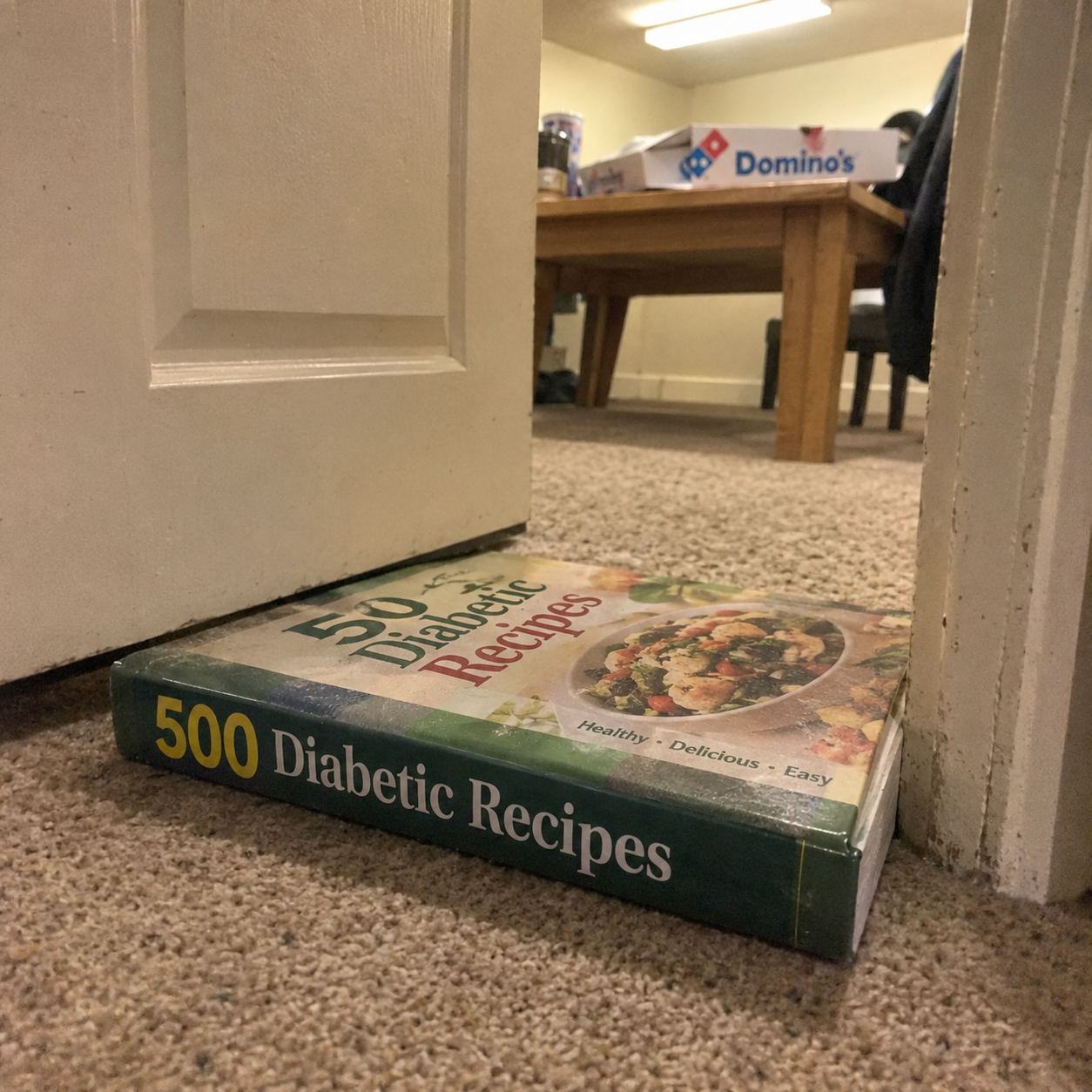
Running for 2 days since November 22, 2026. Crush last saw it on November 24, 2026.
Run by Paul Mitchell on Facebook. Crush is not the advertiser and does not verify its claims. See this ad in Meta's Ad Library(opens in a new tab)
Make your own version of this ad
Crush makes it, launches it in your own Meta ad account, scales the winners and pauses the losers.
About this ad
- Meta Ad Library ID
- 2264926237764834
- Platforms
- Facebook, Instagram, Audience Network, WhatsApp and Threads
- Relaunches
- 0
Ad text
I was told my type 2 diabetes was permanent at 57. I’m 71 now. Turns out my cells were never broken. They were locked, and for fourteen years I’d been swallowing the wrong thing to open them. It never would have reached them anyway. For fourteen years, I “managed” a condition nobody ever actually explained to me. Fourteen years of counting carbs that helped for a week during a new diet and did absolutely nothing when I went back to eating like a normal human being. Fourteen years of cinnamon capsules that cost me a combined $2,000 and changed exactly zero numbers on a single blood test. Fourteen years of B12 that my doctor prescribed because “it’s good for diabetics” without ever explaining that the nerve damage I was developing was a downstream effect of the same resistance driving my blood sugar. Fourteen years of Metformin dose increases that my pharmacist could have set on a calendar. 500. Then 1000. Then 1500. Then “we may need to add something.” I didn’t learn what was actually wrong with me until a woman in my church group handed me an article and said, “Read this. I wish someone had given it to me ten years ago.” My name is Harold. I’m 71. I live in Knoxville with my wife, Diane. I was diagnosed with type 2 at 57 after a routine physical came back with a fasting glucose of 186 and an A1C of 8.1. My doctor put me on Metformin the same day. 500mg twice a day. “This will help bring your numbers down,” he said. “Watch your carbs. Exercise. We’ll check again in three months.” Three months later, my A1C was 7.4. He called it a win. I called it the rest of my life. For the first few years, I was a good patient. I walked every morning. I ate grilled chicken and steamed vegetables until I could smell them in my sleep. I took my pills. I pricked my finger. I went to every appointment. My A1C hovered around 7.0 to 7.3. “Stable,” they said. But stable felt like dying in slow motion. The energy left first. I used to build furniture in my garage on weekends. By 60, I could barely get through a Saturday without a nap. By 62, the garage was storage. The fog came next. I’d be in the middle of a conversation and lose the thread. My wife would say something, and I’d nod, and two minutes later realize I had no idea what she’d said. Then the feet. Burning at night. Tingling during the day. I’d stand in my kitchen and feel like the floor was vibrating. It wasn’t. Then the vision. Reading got harder. I couldn’t read the hymnal at church without holding it at arm’s length. My optometrist said it was “age-related.” I was 63. Every single one of these symptoms showed up in the years my diabetes was “stable.” Every single one of them was filed under something else. Age. Stress. Poor sleep. Normal decline. But I knew. I could feel my body failing in ways that stable shouldn’t mean. At 65, my A1C hit 7.8. My doctor brought up insulin. “We’ve pushed the Metformin as far as we can,” he said. “It might be time.” I asked him the question I’d been holding for eight years. “Why does my A1C keep climbing if I’m doing everything you told me to do?” “Type 2 is progressive,” he said. “The pancreas gets tired over time.” “But my pancreas is still making insulin,” I said. “Every blood test shows that. So why isn’t it working?” He said something about beta cell function declining with age. I could tell he was reading from a script he’d given a thousand times. I went home and I didn’t start insulin. Not yet. Instead, I started reading. I’m a retired engineer. When something doesn’t work, I don’t accept “it’s just how it is.” I look at the mechanism. The mechanism was insulin resistance. Not insulin deficiency. Resistance. My pancreas was producing insulin. My blood tests proved that. The insulin was arriving at my cells. But my cells weren’t responding. The insulin receptors — the doors on every cell that are supposed to open when insulin knocks — had stiffened over time. The key was there. The lock was rusted. Metformin reduces the sugar the liver dumps. It doesn’t fix the lock. Sulfonylureas make the pancreas produce more keys. More keys don’t help if the lock is stuck. Insulin injections are just more keys, from the outside instead of the inside. None of them — not one — addresses the lock. I spent three months reading everything I could find about insulin receptor function. Then I found the research on MHCP. MHCP — methylhydroxychalcone polymer. A compound found in cinnamon that mimics insulin at the receptor level. It doesn’t replace insulin. It works alongside it. It helps the receptor recognize the signal again — like WD-40 on a rusted hinge. But the research was specific about three requirements. Species: Ceylon cinnamon — Cinnamomum verum. Not Cassia. Cassia has almost no MHCP and loads you with coumarin, which stresses the liver. Every cinnamon supplement I’d ever bought was Cassia. Concentration: A 12:1 concentrated extract. Not ground bark. Ground bark gives you a fraction of the MHCP the studies used. It’s like eating a handful of olives and expecting the effect of concentrated olive oil. Delivery: MCT oil. MHCP is fat-soluble. A dry capsule sends it through your gut without absorbing it. MCT oil carries it across the gut wall and into your blood. Three requirements. Every cinnamon supplement on my kitchen counter failed all three. The woman from my church group had written “Resia” on the back of the article she gave me. That night, I looked it up. 7,200mg equivalent of Ceylon cinnamon. Cinnamomum verum. 12:1 extract. MCT oil delivery. FDA-registered facility. Third-party tested. 60-day guarantee. I ordered two bottles. Buy 2 get 1 free, $54.99. I’m an engineer. I tracked everything. Day 1-7: Fasting glucose averaging 162. No change. Day 8-14: Fasting glucose averaging 143. First drop in months. Day 15-21: 128 average. The fog started lifting. I finished a crossword puzzle for the first time in two years. Day 22-28: 118 average. The tingling in my feet quieted. Not gone, but noticeably less. I started sleeping through the night. Week 5-6: 108 average. I walked to the garage and stood there for ten minutes. Then I found my hand sander. Week 8: Bloodwork. A1C: 6.4. Down from 7.8. My doctor stared at the screen. Then he pulled up my chart going back six years. A line going up, up, up. Then a cliff. “Harold... what did you do?” I explained it the way an engineer would. The mechanism. The receptor dysfunction. The three formulation requirements. The compound. The species. The concentration. The carrier. He listened. He wrote it down. Then he leaned back. “We’re not talking about insulin anymore,” he said. That was nine months ago. My last A1C was 6.1. I’m back in my garage on weekends. I read without holding the page at arm’s length. The burning in my feet is almost gone. I still take my Metformin. I still walk. I still watch what I eat. But I also have numbers going the right direction for the first time in fourteen years. If you’re an engineer like me, this will make sense immediately: you can’t solve a lock problem with more keys. You have to fix the lock. Resia fixes the lock. $29.99 a bottle. Buy 2 get 1 free, $54.99. Buy 3 get 2 free, $79.99. 60-day money-back guarantee. Two capsules every morning with breakfast. ~ Harold
Where the ad sends people
tryresia.com
Ceylon Cinnamon 7200mg Equivalent with MCT Oil
resia
Learn more: tryresia.com(opens in a new tab)