Foot Care Tips
Foot Care Tips Facebook ad: “Get Heel Pain Relief”
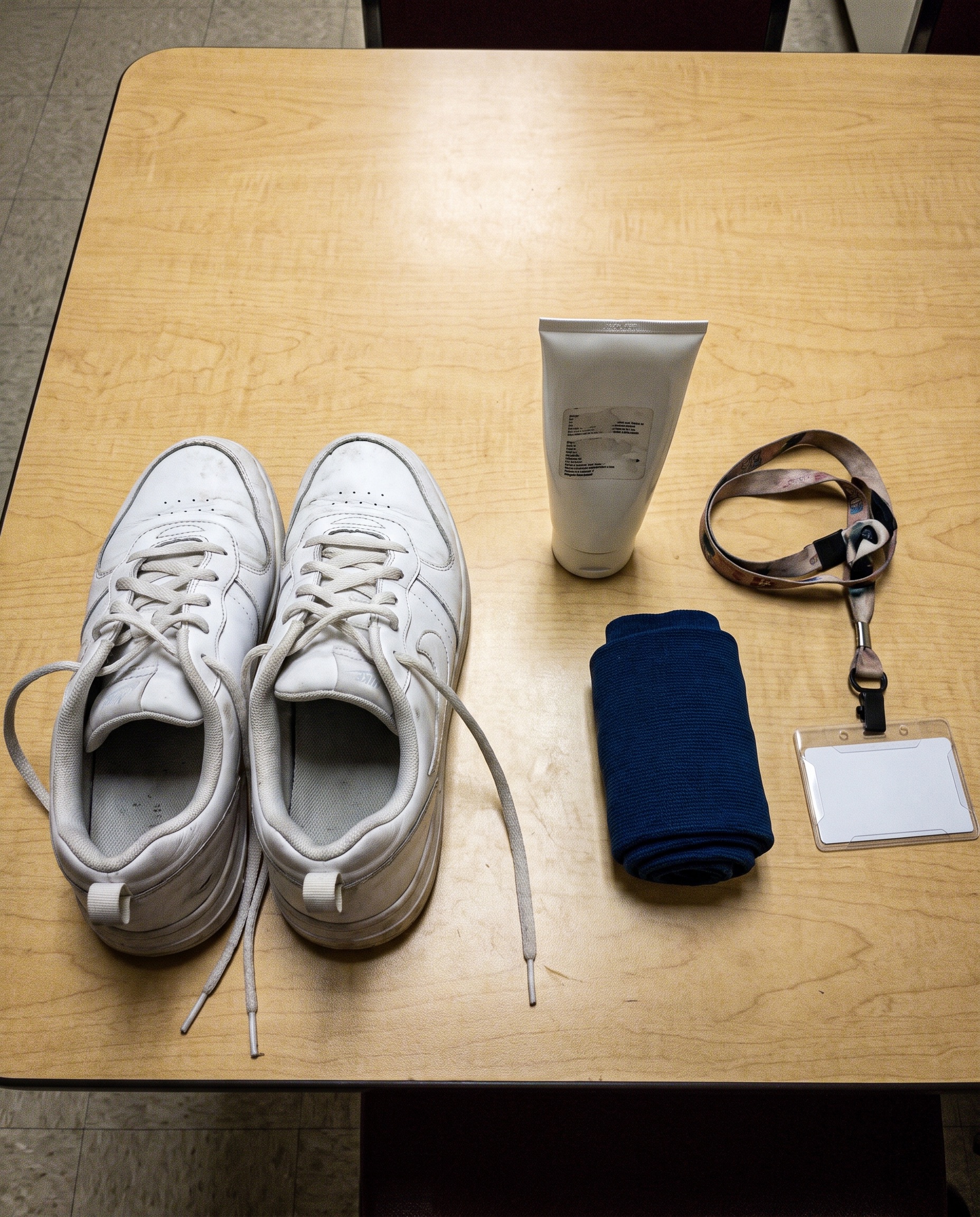
Ran for 2 days, from July 9 to July 11, 2026, the last day Crush saw it.
Run by Foot Care Tips on Facebook. Crush is not the advertiser and does not verify its claims. See this ad in Meta's Ad Library(opens in a new tab)
Want an ad like this for your product?
Crush makes new ad images for your product from this ad: your logo, your product photo, your offer.
Trials from $19.95 USD, then $79.95 USD a month. Cancel anytime.
About this ad
- Meta Ad Library ID
- 2268303130667881
- Platforms
- Facebook, Instagram, Audience Network and Messenger
- Relaunches
- 0
Ad text
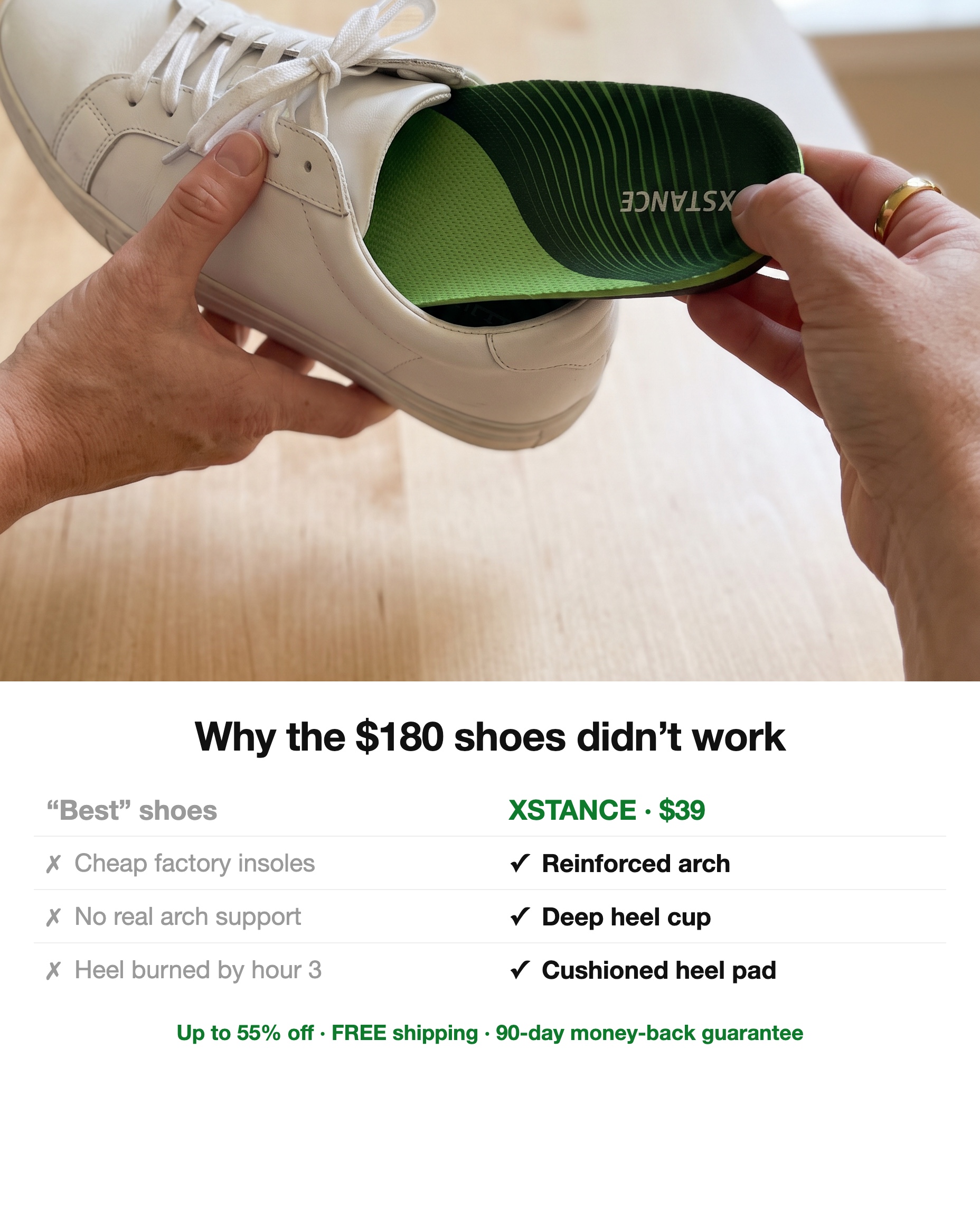
At 7:40 in the morning, after a twelve-hour night shift, I watched our charge nurse take the stairs in the parking garage, and I stood by the elevator and couldn't move. I'm not exaggerating. Her name is Pam. She's 58. She's been a nurse for thirty-four years, and for as long as I've worked with her, Pam has ended every shift the same way every nurse with bad feet ends a shift. If you're a nurse, you already know the walk. The 7:40 walk. You clock out, you get through the lobby on professionalism alone, and the second those doors close behind you, the limp you've been hiding for twelve hours comes out. Short steps. Hand on the rail. The elevator, always the elevator, even for one floor. That morning, Pam walked past the elevator, pushed open the stairwell door, and went up two flights to her car like it was nothing. Like it was 1998. I caught her at her car. I didn't even pretend I wasn't chasing her. I said, "Pam. What is going on with you." She put her bag on the hood, looked at me the way she looks at a new nurse who's about to learn something, and said, "Dana. Get in. You're going to sit for this one." I got in. She said, "Honey. We've been treating the wrong end of the problem for our entire careers." My name is Dana. I'm 47 years old. I've been a med-surg nurse for twenty-three years, nights mostly, at the same hospital. Twelve-hour shifts on the same linoleum floors. I've probably walked the length of that unit a hundred thousand times. Here's something about nurses. We assess everybody. We can spot a patient guarding an injury from across the room. We notice the shuffle, the wince, the hand on the wall. It's the job. And here's the other thing about nurses. We hide our own. I have been hiding mine for four years. Every morning, or every evening for me, since I sleep days, the first step out of bed feels like stepping on something sharp. Right in the heel. I have a system. Sit on the edge of the bed. Pull my toes back. Stand up holding the dresser. Shuffle to the bathroom on the outside of my foot. My husband has never seen the whole routine, because I've gotten good at making it look like waking up slow. At work, hour one through hour five, I'm fine. Around hour six, my heel starts burning. By hour nine, I'm finding reasons to chart sitting down. By hour eleven, I am doing math on every call light. Not whether I'll answer it. I always answer it. But I catch myself calculating the steps, and I hate myself a little every time I do it. There's a tube of lidocaine cream in my locker. There's a bag of ice with my name on it, more or less, in my freezer at home. Some mornings after a bad stretch of shifts, I've sat in my car in that garage and cried before driving home. Not from sadness. From the specific exhaustion of hurting for twelve hours while making sure nobody could tell. And I did everything. Please understand that I did everything. I'm a nurse. I don't ignore symptoms, I manage them. I bought the Danskos everyone swears by. I bought the Hokas, a hundred and sixty dollars, and they genuinely helped for about two months, and then the cushion died and the pain came back like it had just stepped out for coffee. Compression socks. A pair of custom orthotics from a podiatrist that were so rigid I couldn't get through one shift in them. A cortisone shot two years ago that gave me six beautiful weeks and then faded like they told me it might. Calf stretches at the med cart when nobody's looking. My own doctor, a woman I like, told me the honest truth as she saw it. "Dana, the treatment is rest, and you work twelve-hour shifts on your feet. As long as you're doing this job, we're managing this, not fixing it." As long as you're doing this job. I drove home from that appointment doing the worst math a nurse can do. How many years I have left in me. Whether I end my career on my terms or my heel's terms. So when Pam sat me in her car, I listened like my license depended on it. She said, "You remember Renee. The travel nurse we had on the floor last winter, the one who never sat down and never limped, and we all quietly hated her for it." She said, "Last month I ran into her at a conference, and I finally asked her straight out how her feet survive this job. And Dana, she laughed, and she said, they didn't. She said five years ago she was worse than me. And then she asked me questions like she was working through an assessment. Is the first step after sleep the worst one. Does it ease off, then come back around hour six. Are you charting sitting down. Do you own Hokas that worked for exactly two months. Did you get a shot that bought you six good weeks. Is there something in your locker you'd be embarrassed to explain." Pam said, "Dana. She named the lidocaine. I never told a soul about the lidocaine." And then Renee explained it to Pam, and Pam explained it to me in the front seat of her car in that garage, and I'm going to explain it to you. The pain is in the heel. The problem is not in the heel. The problem is in the step. There's a band of tissue that runs along the bottom of the foot, heel to toes. In a lot of us, when the foot lands, it rolls too far inward. It's a small motion. You can't feel it happening. But every time the foot rolls in, that band gets stretched further than it's built to go. Think of a rubber band. Stretched a little, fine. Overstretched, thousands of times, it frays. It stays irritated. While you sleep, that tissue finally settles and starts to tighten back up. Then you take your first step, and you tear it right back open. That's the sharp one. That's why the first step is always the worst step. You're pulling apart the only healing that happened all day. Then you go to work and do it fourteen thousand more times on linoleum over concrete. Pam said, "It's a loop, Dana. It calms overnight, you tear it in the morning, you pull on it all shift, it calms overnight, you tear it again. And now look at your list. Ice calms the tissue. The shot calms the tissue. The Hokas padded the tissue. The stretches loosen the tissue. Every single thing either of us has done in four years has been aimed at calming that tissue down. Not one thing has ever stopped the motion that keeps tearing it. We've been medicating the symptom our whole careers. You'd never let a patient get away with that." I sat there in her car with my badge still on and I didn't say anything. Because she was right, and I knew it the way you know it when a diagnosis finally fits every symptom on the chart. Why the shot gave me six weeks and quit. It calmed the tissue while fourteen thousand steps a shift kept pulling it back apart, and the steps won. Why the Hokas gave me two months. Fresh cushion pads the landing, then the cushion dies, and the roll never stopped for a single step either way. Why rest days help and three shifts in a row erase them. Why it always, always comes back. I had assessed everyone on that unit for twenty-three years and never once assessed my own gait. I said, "Pam. What did Renee put you onto." She reached into her bag and pulled out an insole. In the parking garage, at 7:45 in the morning, after a twelve-hour shift. I laughed. I actually laughed. I said, "Pam. I have a drawer full of those. I have rigid ones from an actual podiatrist." She said, "I know you do. So did I. Now be quiet and let me finish, because this is the part Renee made me sit still for." I was quiet. She said, "Every insole either of us has owned did one job. The gel ones, the ones that came in the Hokas, cushion. They soften the landing, and the foot rolls in just the same, so that band gets pulled just the same. You padded a tear that kept happening. And your podiatrist pair did try to stop the roll, and they were so rigid you couldn't finish a shift in them, so they live in a drawer. Dana, a correction you can't wear for twelve hours isn't a correction for people like us. The loop runs the whole shift whether your orthotics are comfortable or not." She said, "That's the trap for nurses specifically. The comfortable ones don't correct. The corrective ones can't survive a twelve. And the only thing that breaks the loop is stopping the roll on every step of every shift. Both jobs at once, for twelve hours straight, or it doesn't count." Then she turned the insole over and walked me through it like a skills check. "These are called XSTANCE. Three parts. Firm support under the arch. That's what stops the foot rolling in, the piece your gel ones never had. It takes the pull off that band on every step, all fourteen thousand of them. Cushioned pad under the heel, sitting in a deep cup. That's the landing, the shock, right at the spot that's burning by hour six. And the top layer is soft, so it feels like something you'd choose, not something you were prescribed. That's not a comfort feature, Dana. If it isn't comfortable at hour eleven, it ends up in the drawer with the others, and the drawer is where corrections go to die." She said, "Stop the roll. Soften the landing. Comfortable for a full twelve. All three at once. That's what none of ours ever did." I asked the practical questions right there. They slide into regular work shoes, the sneakers we actually wear. Hers had been through three months of shifts and hadn't flattened, and she reminded me the Hoka foam hadn't survived two. And she said, "There's 90 days on them. Real shifts, real floors. If it doesn't change anything, you send them back for a full refund. Renee told me that's why she risked it, and it's why I did. We've both spent enough on our feet to appreciate a treatment with a return policy." Then she gave me her timeline, nurse to nurse, no exaggeration. First few shifts, she mainly felt the arch. Present, supportive, a little strange for a day, then normal. End of week one, hour six came and went without the burn showing up on schedule. Tired feet, yes. The burn, no. Week two was her first step after sleep. Braced for the sharp one, got a dull one. She stood next to her bed and waited for the real thing to arrive. It didn't. Week four she worked three twelves in a row and did something on the third morning she hadn't done in years. Errands. And week six was the stairwell, the morning I chased her down. She said, "Thirty-four years, Dana. I thought hurting was the tuition for this job. Nobody ever told me it was optional." Now let me give you my objections, because I had all of them, and if you've worn a badge for twenty years you have them too. I thought, I've tried real medicine for this. A podiatrist, a shot. This is an insole from an ad. But then I did the honest chart review. The shot calmed tissue. The rigid orthotics tried to fix the motion and couldn't survive one shift. So the actual intervention, correcting the roll for twelve straight hours, had never once been tried on me. Not by anyone. The box was empty. I thought, if this worked, someone at the hospital would know. Then I thought about what we all actually do. We recommend shoes to each other. Shoes and shots and lidocaine. A hundred nurses on that campus quietly limping in the garage, all managing, none of us fixing, all of us too tired at 7:40 to ask why. I thought, the Hokas taught me that anything under my foot dies in two months. But the Hokas were foam doing one job. Pam's pair had a firm arch piece that hadn't budged in three months of shifts. And if it did budge, 90 days, back in the mail. My last footwear experiment cost a hundred and sixty dollars with no recourse at all. I thought, it can't be this simple, not after four years. And Pam's voice was already in my head. It's not simple, it's specific. Three jobs at once, every step, all shift. Nothing I'd ever owned had done more than one. I ordered a pair before I pulled out of the garage. Here's my timeline, charted honestly. First shift, they mostly just felt present. Support under the arch, cup around the heel. Not painful like the rigid pair. My feet were still tired at 7:40. I remember thinking, fine, they're comfortable, welcome to the drawer eventually. Shift four is when it got strange. Hour nine, I was standing at the med cart, and I realized I was standing square on both feet. Not shifted onto one hip. Not perched. I stood there with a blister pack in my hand doing the math on how long it had been since hour nine felt like hour three. Week two was the first step. I sat on the edge of the bed, did my routine out of pure habit, braced, and stood up. It wasn't gone. I want to be honest with you, because you've been lied to by enough products. It was quiet. Quiet enough that I took a second step just to check on it. Week three, I caught myself just getting out of bed. No routine. I stood in my bedroom and realized I'd skipped it without deciding to. Week five, I answered a call light at hour eleven at something close to a jog, because the patient sounded scared, and it wasn't until I was in the room that I realized I hadn't done the math. I just went. That one got to me more than the mornings, honestly. That's the one I'd been ashamed of. Four months now. The lidocaine is still in my locker, unopened since spring. I keep meaning to take it home and I keep leaving it there. I think I like what it proves. Three nurses on my unit have pairs now. One of them, a tech who's been on her feet in that building for nineteen years, stopped me in the hallway last week and said, "Dana. I stood through my daughter's whole graduation and never once looked for a chair." Nineteen years. I'm telling you this because I hid a limp in a parking garage for four years while assessing everyone's gait but my own. I blamed the job, blamed my age, blamed the shoes, and quietly started counting the years I had left. And the whole time it was one small motion, fourteen thousand times a shift, undoing every single thing I tried. If your first step after sleep is the worst one. If the burn shows up around hour six like it's scheduled. If you chart sitting down when you can. If you've done the Hokas, the clogs, the shot, the rigid orthotics in a drawer. If there's something in your locker you'd be embarrassed to explain. If you've started doing math on call lights and hating yourself for it. You are not wearing out. You are not too old for this job. Your foot has been re-tearing the same spot on every step, and nothing you've tried has ever addressed the step itself. XSTANCE insoles do the three jobs at once. Firm arch support that stops the inward roll. A cushioned heel pad in a deep cup that softens every landing. A soft top layer that stays comfortable through a full twelve, which is the only way any of it counts. They slide into the shoes you already wear on the floor. Over 300,000 people wear them, and a whole lot of them are nurses, techs, and people who walk hospital floors for a living. There's a buy one, get one free offer running. Do what Pam told me to do. One pair in the work shoes, one in the everyday shoes, because the loop doesn't clock out when you do. And you get 90 days. Real shifts, real floors. If it doesn't change anything, send them back for every penny. That is a better guarantee than any of us got with the shot. I'm 47. I'm a med-surg nurse in her twenty-third year. I'm not a doctor, and I'm not selling you a miracle. I'm the woman who chased her charge nurse across a parking garage at 7:40 in the morning because she took the stairs. Don't give this another year of shifts. Every twelve you push through is fourteen thousand more pulls on the same spot. 👉 https://getxstance.com/article/5-reasons/ P.S. The guarantee is 90 days from delivery, any reason. Wear them for real shifts. If your mornings and your hour-elevens don't change, mail them back for a full refund. I checked the terms before I ordered, because nurses read the fine print for a living. Renee checked before Pam, Pam checked before me. You do have to actually send them back to get the refund. Fair enough. P.P.S. If you're a CNA, a tech, a unit secretary who never sits, a housekeeper pushing a cart on those same floors without a footwear stipend or anyone ever asking about your feet. This is for you too. You walk the same linoleum we do. The loop doesn't check job titles. And if you're a nurse who has quietly started counting the years your feet have left in this career, I want you to hear what Pam said to me in that car. Hurting is not the tuition. Nobody ever told us it was optional, so I'm telling you. P.P.P.S. Last week Pam and I clocked out together and walked to the garage, and at the elevator she looked at me and raised an eyebrow, and we took the stairs. Both flights. Talking the whole way about her granddaughter, not about our feet. At the top she said, "You know what I like best, Dana? We didn't decide to take the stairs. We just took them." That's what I want for you. A morning where you just take the stairs. 👉 https://getxstance.com/article/5-reasons/
Where the ad sends people
getxstance.com
Get Heel Pain Relief
Shoes and traditional insoles could actually be making people’s feet worse. They may feel comfortable in the moment, but might ignore the root cause. It’s time to upgrade to Xstance.
Learn more: getxstance.com(opens in a new tab)