
Inactive· since Jan 4, 2026
- 150
- days it ran
- 3
- relaunches
Ad copy
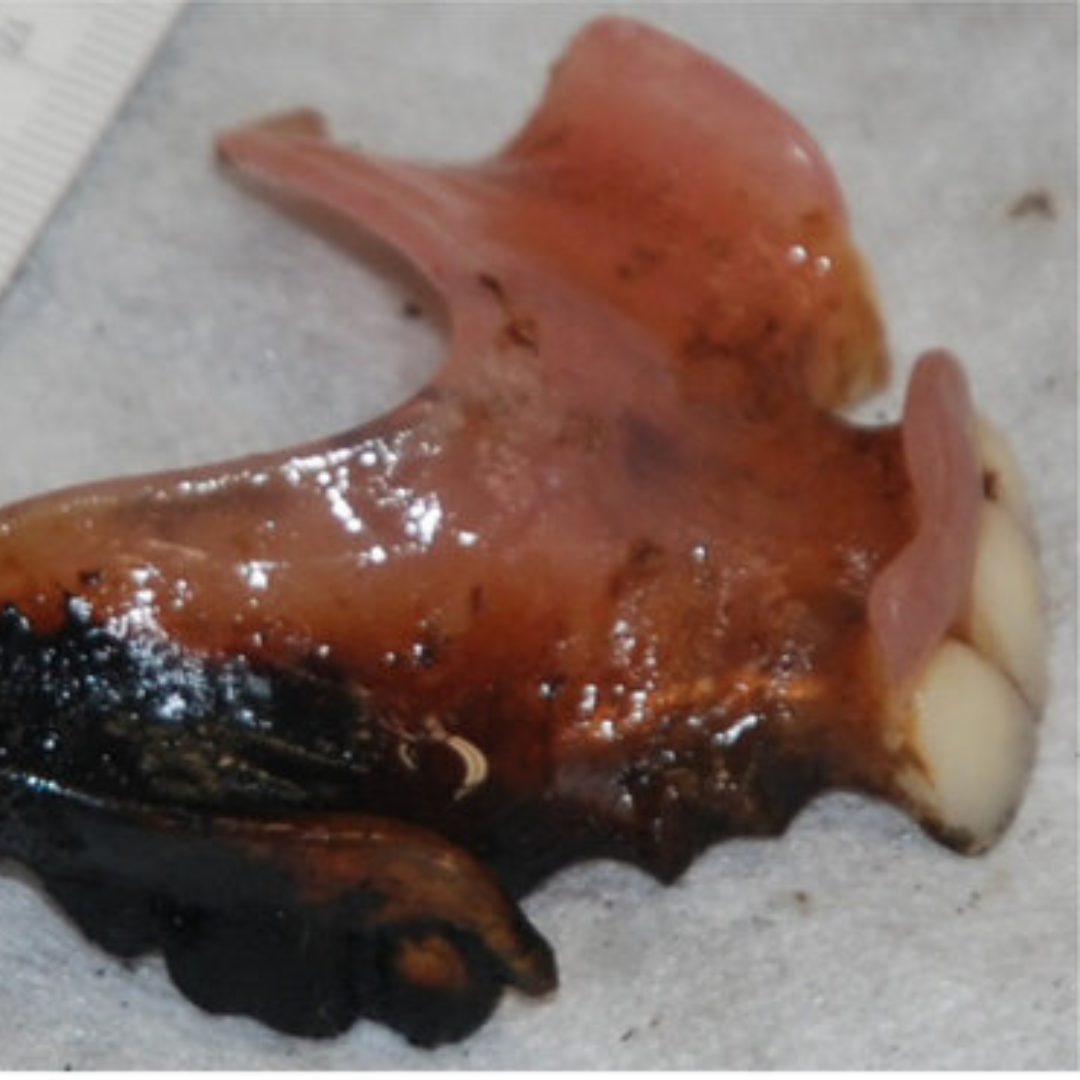
I told my son I didn't want to post this. He said, 'Mom, someone needs to know.' He's probably right. I had a stroke last April. Not a massive one — but enough to paralyze my left side and slur my speech for three terrifying minutes before my husband got me to the ER. The doctors ran every test. MRIs. Blood panels. Carotid ultrasounds. And when they found the cause, I couldn't believe it. It wasn't my cholesterol. It wasn't my blood pressure. It wasn't genetics. It was my dentures. I got my teeth 8 years ago. Root canals that failed. Bone loss. Gum disease. Pretty standard stuff for anyone over 65 — happens to millions of Americans every year. And as a former nurse, I genuinely thought I was doing everything right. But about two years before my stroke, I started noticing things weren't right. I'd wake up exhausted. My joints felt rusty in the mornings. My gums were constantly sore and inflamed. And I had this weird metallic taste in my mouth that wouldn't go away no matter how much I brushed. I went to my doctor. Everything came back normal. She told me: "You're 68. This is just what aging looks like." So I tried everything. Walking every morning. Mediterranean diet. Turmeric, fish oil, vitamin D. Nothing changed. If anything, I felt worse. Then about six months before my stroke, I started waking up at 3 a.m. every night. Wide awake. Heart racing. Low-grade panic for no reason. I felt like I was falling apart. And nobody could tell me why. Then one morning last April, I was making coffee and my left arm went completely dead. Not numb — dead. Like someone had cut the strings. I tried to set down the mug but my hand wouldn't respond. The mug fell and shattered. I tried to say "I'm okay" but what came out was garbled nonsense. My husband came running, took one look at my face — the left side drooping — and called 911. His voice was shaking. And that's when I knew how bad it was. Because my husband never shakes. At the hospital, the neurologist went through every possible cause. My cholesterol was normal. Blood pressure was normal. No family history. I didn't fit the profile. "Then what caused it?" I asked. He hesitated. Then he said: "We found bacterial endotoxins in your bloodstream. They triggered inflammation that caused the clot." "From where?" He looked at my chart. "Do you wear dentures?" My stomach dropped. "Yes. For 8 years." "How do you clean them?" "I brush them with denture paste. I soak them in Polident three nights a week." He nodded. "That's what most people do. Unfortunately, it's not enough." He showed me images of biofilm under a microscope. Sticky. Layered. Crawling with bacteria. "Dentures are porous," he said. "Bacteria embed deep inside — far deeper than brushing or soaking can reach. Over time, those bacteria release toxins that enter your bloodstream through your gums. In your case, that inflammation caused a clot." I felt like I'd been punched in the chest. I went home terrified. Terrified to sleep. Terrified to wear my dentures but also terrified NOT to. What if it happened again? I'd treated stroke patients who never recovered. Who lost speech. Mobility. I kept imagining my husband finding me unresponsive. I started setting alarms every two hours at night. Just to make sure I could still move my arms. Still speak. My husband would find me sitting on the edge of the bed in the dark, wiggling my fingers, repeating my name. "Linda Harrison. Linda Harrison. Linda Harrison." He begged me to talk to someone. But I didn't want therapy. I wanted to fix the problem. My son lives three hours away. He came to visit two weeks after the stroke. When he walked in, I could see it in his face: He thought he was going to lose me. We sat at the kitchen table. I tried to act normal. But my hands were shaking when I poured the milk. And he noticed. "Mom," he said quietly. "You're not okay." I started crying. I hadn't cried in front of him since his brother died. I told him everything. The 3 a.m. panic. The alarms. The terror of wearing the thing that almost killed me every single day. He didn't say anything for a long time. Then he said: "I'm going to figure this out." Four days later, he called. His voice sounded urgent. "Mom. I think I found something." When he showed up that weekend, he was carrying a box. "Before you say anything," he said, "I know you're skeptical. But just… trust me. Please." He pulled out a small white device. "It's called a Denture Dome. It uses ultrasonic cleaning and UV-C sterilization to kill bacteria. Hospital-grade. The same technology they use to sterilize surgical instruments." He looked at me. And I saw something in his face I hadn't seen since he was a little boy: Fear. Not fear of the device — fear of losing me. "Mom, I can't watch you live like this. Terrified every night. Please." I'm a retired nurse. I know every "miracle cure" scam in existence. But I realized: He's not trying to sell me something. He's trying to save me. So I said yes. That night I read the research he'd sent. Study after study linking denture bacteria to systemic inflammation, cardiovascular disease, stroke. And I kept thinking: Why didn't I know this? I worked in hospitals for 35 years. I saw thousands of stroke patients. Why did no one ever ask them about their dentures? Because we're still treating dentures like it's 1965. Brush them. Soak them. Hope for the best. But dentures are a medical prosthetic. They sit in your mouth 16–20 hours a day. If we treated surgical instruments the way we treat dentures, we'd be shut down by the health department. You can't sterilize a scalpel by soaking it in Polident overnight. So why do we think that works for dentures? It doesn't. The bacteria embed too deep. You need ultrasonic vibration to break it apart. And you need UV-C light to kill it at the cellular level. I used it that night. When I lifted my dentures out, the water was cloudy. Little particles floating everywhere. I'd brushed those dentures that morning. I thought they were clean. They weren't. I ran my finger across the surface. They felt slippery-smooth. Like glass. I put them back in my mouth. And for the first time in two years, they didn't taste like anything. No metallic flavor. Just clean. Week one: The metallic taste was gone. My gums stopped bleeding. Week two: I woke up without that grogginess. My brain felt clearer. Week three: The morning stiffness started easing up. Week four: I slept through the night. All the way through. No 3 a.m. panic. No alarms. My husband woke up and found me still asleep at 7 a.m. He checked to make sure I was breathing. Within two months, I felt like a different person. The chronic inflammation I'd been carrying for two years —the fatigue, the fog, the joint pain — it was gone. I went back to Dr. Patel for my 3-month follow-up. My inflammatory markers — the ones that had been elevated for over a year — were back to normal. He looked at the results. Then at me. "What did you do?" I told him about the Denture Dome. He wrote it down. Then he said: "I wish I'd known to tell you this before your stroke." Me too. If I had found this two years ago — when the symptoms first started — I might have avoided the stroke entirely. The paralysis. The terror. My son's face when he thought he was going to lose me. That's why I'm sharing this. Because if you recognize ANY of the symptoms I described — the fatigue, the joint pain, the brain fog, the metallic taste, the sore gums — please don't wait. Before you go looking for an ultrasonic cleaner, I need to warn you: Most of the ones on Amazon or Walmart do NOT work. I know because after my stroke, I tested them all. Cheap ones. Expensive ones. Most were garbage. Here's why: Real ultrasonic cleaning requires **40 kHz frequency**. That's what breaks apart bacterial biofilm in denture material. Most cheap cleaners on Amazon run at 35 kHz. That's fine for jewelry. It does NOTHING for dentures. And the "UV-C lights"? Most are fake. Just blue LEDs at 395 nanometers. They glow blue but don't kill bacteria. Real UV-C sterilization — the kind hospitals use — happens at 253.7 nanometers. That destroys bacteria at the DNA level. I've been in operating rooms where equipment sterilization is life or death. I know what real sterilization looks like. The Denture Dome is the only at-home device I've found that delivers true 40 kHz ultrasonic frequency, medical-grade 253.7nm UV-C sterilization, and a stainless-steel tank. That's why it works. And that's why the cheap knockoffs don't. I bought two. One for me. One for my husband. I also bought one for my sister. Within three weeks, she called me crying. "Linda, I didn't realize how bad I felt until I started feeling good again." That's what chronic inflammation does. It creeps up so slowly you forget what normal feels like. The Denture Dome sells out constantly. Every time a health publication runs a story about the denture–stroke connection, inventory disappears for weeks. Last month, one of my former nursing colleagues tried to order one. It was sold out. Three weeks later it came back in stock. But by then, she'd had a TIA — a mini-stroke. She called me and said: "I wish I'd ordered it the first time I saw it." I don't want that to be you. If you're reading this and it's in stock — get it. Don't think "I'll do it later." Because here's the thing about strokes: You don't get a warning. One minute you're making coffee. The next minute your arm is dead and you can't speak. I got a second chance. My colleague got hers. But not everyone does. The Denture Dome comes with a 90-day money-back guarantee. If you don't feel a difference, you get every penny back. But I'm confident you will. Because I felt it. My sister felt it. My colleague felt it. Don't wait until you're in an MRI machine praying it's not permanent. Don't wait until your family is terrified. Don't wait until it's too late. Get it now. While it's in stock. While you still can. 👉 https://try.ploise.com/denturedome — Linda Harrison, RN (Retired) 35 years in nursing Stroke survivor And someone who wishes she'd found this sooner
Like this ad? Make it yours.
Crush rebuilds this exact creative around your product — your brand, your colors, your offer — in about a minute.