Thriving In Menopause
 Facebook ad: “Say Goodbye to Joint Pain”
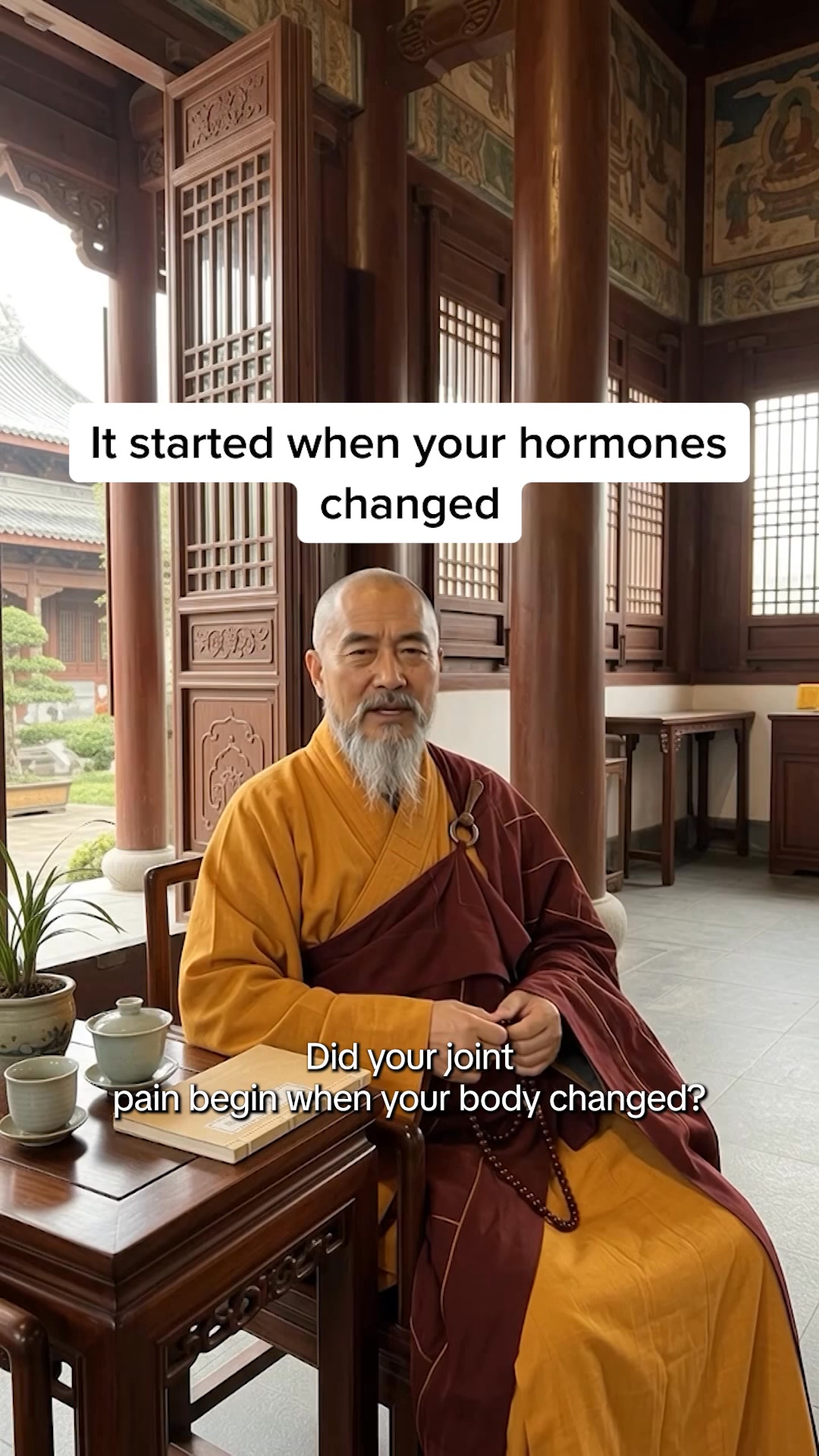
Ran for 30 days, from October 19 to November 18, 2026, the last day Crush saw it.
Run by Thriving In Menopause on Facebook. Crush is not the advertiser and does not verify its claims. See this ad in Meta's Ad Library(opens in a new tab)
Make your own version of this ad
Crush makes it, launches it in your own Meta ad account, scales the winners and pauses the losers.
About this ad
- Meta Ad Library ID
- 2289650488488703
- Platforms
- Facebook, Instagram, Audience Network, WhatsApp and Threads
- Relaunches
- 0
- Niche
- Skincare & Beauty
Ad text
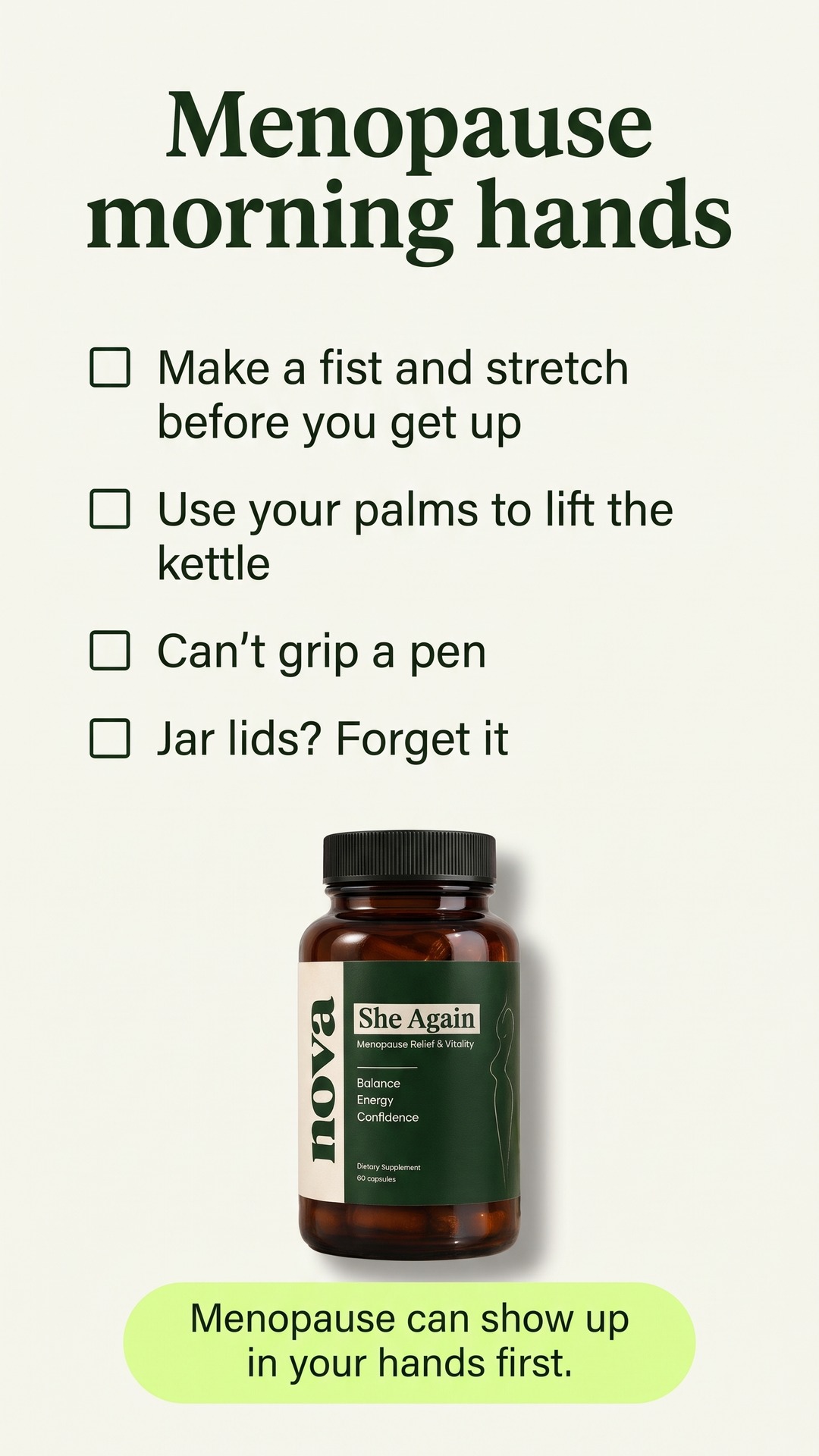
I'm a rheumatologist. I've spent 14 years studying the joints of women whose bodies turned on them at menopause. The first thing you learn in my field is that the most common patient you will ever see is a woman between forty-five and sixty, in pain, already failed by three doctors before she reaches you. Then I spent two weeks in Okinawa, where women in their nineties kneel in their gardens every morning and have never taken a thing for their joints. What I found there broke everything I thought I knew. Let me back up. I run a clinic. Doctors send me women when they've run out of answers. The ones with folders full of normal results and bodies quietly falling apart. By the time a woman reaches my office, she's usually been suffering for years. And before she says a word, I already know what her file is going to say. Because it always says the same thing. Patient reports stiff hips every morning. Notes: likely early osteoarthritis. Recommend anti-inflammatories. Patient returns. Pain spread to the knees. Notes: age-related wear and tear. Recommend gentle exercise. Patient returns. Can't sleep on her side anymore. Notes: sleep disturbance. Discuss sleep hygiene. Patient returns. Now the hands. The shoulders. Notes: generalised osteoarthritis. Patient returns. Tried turmeric, collagen, glucosamine. Nothing worked. Notes: reassure patient. Continue current management. Five visits. Five years. Five separate diagnoses. Five versions of the same shrug it's just your age. Then she ends up in front of me. I examine her. I look at the pattern. And in under a minute I find what explains every single one of those visits. The morning stiffness. The way it started in one joint and crept into many. The way it began the same year her body changed. This isn't wear and tear. This is hormonal inflammation the deep, body-wide inflammation that switches on when a woman's hormones change and never switches off. It settles into the joints. It dries them out. It's the real cause beneath what everyone keeps labelling arthritis. Five years of doctors. Thousands spent. And the answer was sitting in her own timeline the whole time. This is what I see every single day. It never changes. The same pattern. The same wrong labels. The same years of suffering. So when I was invited to present at a conference in Japan last spring, I added two extra weeks to the trip. Because something had nagged at me for years that I couldn't explain with anything I'd learned in fourteen years of medicine. Okinawa has one of the highest concentrations of women over ninety on earth. And not the old age we see in the West not the walking frames and the hip replacements and the chairs by the window. These are women who gardened on their knees, carried their own shopping, and walked every day, deep into their nineties, free of the joint pain that destroys Western women thirty years younger. That makes no sense. These women went through exactly the same menopause as my patients. The same hormonal drop. By everything I'd been taught, their joints should fail the same way. They don't. I needed to understand why. After the conference I took a train, then a ferry, out to a quiet village in the north of the island. Farmland. Sea air. Houses where families had cooked the same food the same way for a hundred years. I arranged a homestay through a university contact who'd done fieldwork in the region. The woman I stayed with is named Kiyo. She's ninety-four. Lives alone in the house she was born in. Tends a garden on her hands and knees. Walks to her neighbour's farm twice a week. Cooks everything herself. And every single day, in nearly everything she eats, there's turmeric. Fresh. Whole. The actual root grated into her soup, her rice, her tea exactly as her mother did it, and her mother before her. Alongside ginger. Every meal. Every day. For ninety-four years. My rheumatologist brain is going haywire at her kitchen table on day two. I'm watching a ninety-four-year-old woman lower herself flat to the floor to reach a low cupboard and rise again without using her hands. I have patients of fifty who grip my desk to stand up from a chair. I had to ask. "Kiyo, your joints they never trouble you? At your age?" She stops. Sets down her knife. Looks at me the way a grandmother looks at a child who has asked something both clever and a little foolish. "Of course the body wants to stiffen with age. It has always wanted to. The reason mine doesn't is what I put in the pot. Every day. My whole life." She wipes her hands and tells me to sit properly. "You want to know why the old women in this village still kneel in their gardens? Why my neighbour is ninety-eight and still hangs her own washing? It is not luck. It is not our blood. It is what we eat, every day, since we were small girls. The golden root. Our mothers would not let a meal leave the kitchen without it." She shakes her head. "City people take a little yellow powder in a pill. Once in a while. When they already hurt. And they believe it is the same thing. It is not. A pinch of dust, taken late, is nothing. It must be the whole root. It must be strong. And it must be every day, for years, long before the pain comes so the pain never comes." I sat there staring at her. I have a medical degree. Fourteen years in clinic. I've studied and prescribed anti-inflammatories my whole career. And this ninety-four-year-old woman had just described, in three sentences, the exact thing I'd been circling in my own field for a decade that the turmeric Western women take is too weak, too occasional, and taken far too late to do anything at all. Like it was obvious. Everything she said lined up with four things I know to be true. One. The common version is too weak. She said a pinch of dust is nothing. She's right. The turmeric on a supermarket shelf is around three percent curcumin the compound that actually calms inflammation. Ninety-seven percent of it is inert. The clinical research that shows real results uses standardised curcumin at around ninety-five percent. Three percent against hormonal inflammation is a whisper against a fire. Two. Absorption decides everything. Even good curcumin is barely absorbed on its own your body flushes most of it out before it does anything. It needs black pepper extract alongside it to absorb properly. Kiyo got that for free; her cooking paired the root with pepper, exactly as tradition demanded, without ever knowing why. Three. Consistency is the whole point. She said every day, for years, before the pain comes. She's right. Hormonal inflammation isn't a one-off you dab at when it flares. It's constant. It has to be calmed continuously, which is why a bottle taken for two weeks and abandoned never works. Four. Timing she started before she ever hurt. Prevention, not rescue. My patients only reach for turmeric after years of damage is already done, when the inflammation is entrenched. She never let it take hold in the first place. Four facts. Fourteen years and a medical degree to confirm them. She learned them from her mother. I spent the rest of that week talking to everyone I could. Kiyo's neighbour is ninety-eight. Cooks with the root every day. Has since she was a girl. "It is not medicine," she told me. "It is just food. Like rice. You never think about it. You just never stop." A woman down the lane, ninety-one. Same thing. Her grandmother taught her. "The ones who still move well at our age," she said, "are the ones who never skipped it." An elder of eighty-nine who still works his own vegetable plot told me, "We have always eaten it. It is why we bend and the others break." I looked at these people the way I look at my patients. Kneeling. Rising. Carrying. Walking. No stiff mornings. No spreading pain. No swollen knuckles. Then I thought about my patients. Women in their fifties. Gripping the stair rail. Unable to sleep on their side. A cupboard full of turmeric that did nothing. Being told it's just their age. The contrast made me sick. When I got home, everything Kiyo taught me lined up with the research. The compound is curcumin. I've known about it in an academic context for years. But I'd only ever thought about it the way it's sold three percent, occasional, taken too late. And in that form, it doesn't work. I know the science. Too weak, too poorly absorbed, too inconsistent. That's the limitation I'd been quietly documenting in my own patients for years. Every woman who told me "I tried turmeric, it did nothing" had tried a version that never stood a chance. But Kiyo wasn't taking a pinch of dust once in a while. She was taking the whole root, at full strength, with pepper, every single day, for ninety-four years. And that changes everything. When curcumin is concentrated to ninety-five percent, paired with black pepper extract so the body actually absorbs it, and taken every day, it does what three percent never could. It reaches hormonal inflammation at the strength required to calm it. It stays ahead of it instead of chasing it. The exact thing Kiyo's cooking did for her, by accident, for nearly a century. As a doctor, I can tell you this is the only approach that makes sense given how this inflammation actually behaves. You don't dab at it once it flares. You calm it at the source, at full strength, every day. Every old culture figured this out independently. That's the part that really got to me. Kiyo's village in Okinawa. India, where the same root has been used for inflammation for thousands of years. Southeast Asia. The Middle East, where it was once worth more than gold. Different continents. No contact. The same golden root. The same use. The same result old women who keep moving. In science, when independent groups reach the same conclusion without contact, we take it very seriously. That's not coincidence. That's convergent discovery. Every culture that lived close to its food kept this. The one that swapped it for a pill bottle? The modern West. And we're the ones with waiting rooms full of fifty-year-old women who can't sleep on their side. Which brings me to why I'm angry. A doctor today gets a handful of hours on nutrition in their entire training. So when a woman walks in stiff, aching, exhausted, her doctor reaches for what they were trained to reach for. Anti-inflammatories. Wear and tear. Hormones. Age. Not because they're stupid because they were never taught to look at what Kiyo's mother taught her as a girl. And the things sold to fix it are a joke. I say that as the specialist whose entire job is joints. Three-percent turmeric. Collagen the body can't use while it's inflamed. Painkillers that wear off by lunch and were never meant to fix anything. Every one of them generates repeat business. A woman who's managed forever is worth far more than a woman who's well. Kiyo's village has no joint-pain epidemic. No cupboards full of painkillers. Because they calmed the cause every day for ninety years instead of masking the symptom every morning. "City people take a pill when they already hurt." She was right. I started taking it seriously myself when I got home. Not a pinch of dust. Real, concentrated curcumin, properly absorbed, every single day. Week one nothing dramatic. I told myself not to expect anything. Week two my own hands, which had been aching in clinic in a way I'd been ignoring, felt looser in the mornings. Week three this is the week that matters. Every weak protocol I'd ever seen patients try fails here, around week three, when they give up because nothing's changed. Nothing failed. The stiffness kept easing. Week four the morning stiffness I'd written off as long days on my feet was simply gone. I sat through a full clinic without my hands complaining once. Week six full change. Steady through the day. Hands sharp. The aches that had crept into my own life, gone. A colleague looked at me across the clinic and said, "You look better. Did you do something?" I hadn't done anything clever. I'd finally done for myself what a ninety-four-year-old woman has done every day of her life. Before you try to recreate it yourself don't bother. I tried. I bought fresh turmeric root and tried to eat it daily like Kiyo. Within a week my kitchen was stained orange, half of it rotted in the fridge, and I had no real idea whether I was getting anywhere near the dose that matters. Eating enough whole root, every day, at the strength the research uses, paired with pepper, is almost impossible in a modern life. Kiyo can do it because it's woven into ninety years of habit and a way of cooking we simply don't have anymore. The brand I use now is a small company called She Again. Concentrated curcumin at ninety-five percent, with black pepper extract so your body actually absorbs it, built specifically for the hormonal inflammation that drives menopausal joint pain alongside the things that support the joint while the inflammation calms. It's the modern version of what the women in that village have done at the stove every day for generations. The whole root, at full strength, every day without the stained kitchen and the guesswork. Two capsules every morning. One purchase. No subscription. Sixty-day money-back guarantee. If nothing changes, every penny back. I still see patients every day. I still meet women whose doctors told them nothing was wrong. I still see the morning stiffness, the spreading pain, the folder full of normal results, the cupboard full of three-percent turmeric that never stood a chance. And now I think of Kiyo every time. Ninety-four years old. The golden root in every meal. On her knees in her garden every morning. Moving the way the women in my clinic wish they still could. While my patients are handed another anti-inflammatory and told it's just their age. If you have hip or knee pain that started when your body changed. If you're stiff for the first twenty minutes of every morning. If it's spread from one joint to many. If you can't sleep on your side anymore. If you've tried turmeric and it did nothing. That last one isn't proof turmeric doesn't work. It's proof you were sold the weak version, too late, like nearly every woman is. Your doctor will call it arthritis. The tests will look normal. The pills will wear off by lunch. I've spent fourteen years watching it happen. But a ninety-four-year-old woman in a village in Okinawa showed me what actually works. The same thing every old culture on earth figured out on its own. The golden root. At full strength. With pepper. Every single day. You can start tomorrow morning. She Again is a small company and they sell out constantly. If you click and they're out, sign up for the restock notification. It's worth the wait. Stop waiting for your body to fail you. Link below
Where the ad sends people
www.hernovabottle.com
Say Goodbye to Joint Pain
Learn more: hernovabottle.com(opens in a new tab)