
Dr. Alina Reid
Inactive· since Feb 6, 2026
- 13
- days it ran
- 1
- relaunches
Ad copy
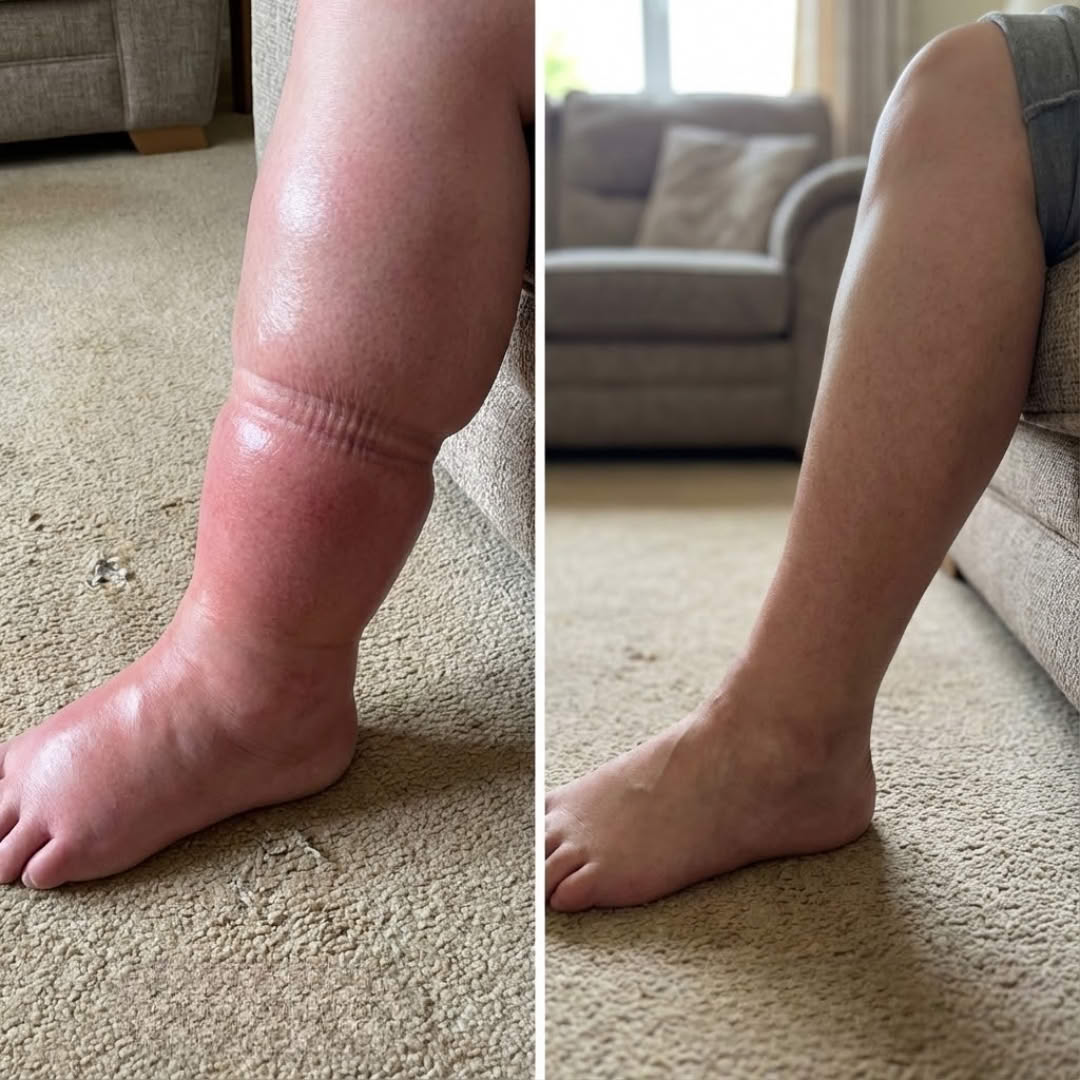
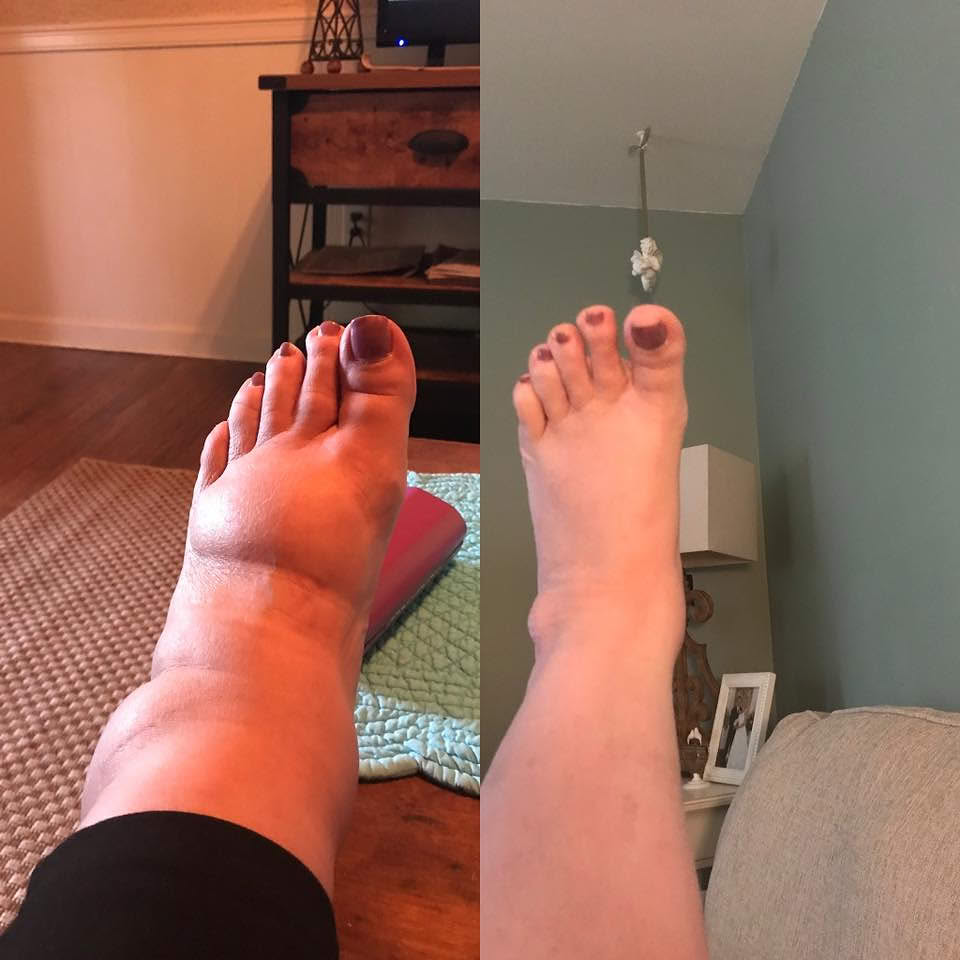
Four years of medical school. Four years of vascular residency. Eleven years in practice. Last year in Phoenix, a 72-year-old physical therapist taught me more about swollen legs in 30 minutes than all of that combined. My name is Dr. Alina Reid. Board-certified vascular specialist. Nineteen years treating chronic venous insufficiency and peripheral edema. Published in the Journal of Vascular Surgery. Over 2,400 patients. Nineteen years of education and practice. Thirty minutes in Phoenix. The thirty minutes won. ======== September 2023. Phoenix. 11:47 AM. American Vein & Lymphatic Conference. Coffee break between presentations. I was standing alone, trying to hide my ankles beneath wide-leg trousers despite it being 94 degrees outside. Because at 58, my own legs had ballooned 15 months earlier. And nothing I'd learned in those nineteen years worked on me. That's when I saw her. Dr. Anne Beaumont. 72 years old. Standing for hours. Wearing fitted slacks that showed ankles that looked like they belonged to a woman half her age. Slim. Defined. No puffiness. No hint of the "rising dough" texture I saw on my own ankles every morning. I couldn't help myself. I walked over. "Excuse me—I have to ask. How are your legs not swollen after standing all morning?" She smiled. The kind of smile that knows something you don't. "May I see yours first?" ======== I Hesitated I'm a vascular specialist. Four years of medical school. Four years of residency. I'm supposed to have perfect circulation. But my legs had changed 15 months earlier. Suddenly. Between March and June. From normal to swollen. I'd tried everything I learned in those eight years of training: Medical-grade compression stockings. $89 every few months for a year. The 30-40 mmHg ones from the vein clinic—not the drugstore kind. I'd spend 12 minutes every morning wrestling them on, my fingers aching, the rubber gripping my skin. By 2 PM my legs throbbed worse than before I put them on. The pressure cut into the back of my knees, leaving red welts. And the moment I peeled them off at night? The fluid rushed right back down within 90 minutes. Fourteen months of daily torture. Zero lasting improvement. Three rounds of professional lymphatic massage. $680 total. The lymphedema clinic in Scottsdale, highly rated, $175 per session. The massage therapist was skilled—I could feel the fluid moving during the session. But four hours later? My ankles looked exactly the same. I was paying $175 for four hours of relief. That's $43 per hour of normal ankles. Unsustainable. Prescription diuretics. First Lasix 20mg. Then 40mg. Then Hydrochlorothiazide when the Lasix stopped working after six weeks. Running to the bathroom every 20 minutes. I mapped every restroom between my home and office. I couldn't sit through a full patient consultation without excusing myself. My potassium crashed twice—once so badly I had heart palpitations in the middle of a procedure. And my ankles? Still swollen. I was destroying my electrolytes to drain a pool that refilled the moment I stopped draining. Elevation protocol. "Keep your legs up, Alina." I elevated religiously. Pillows under my feet at my desk. Legs up on the couch every evening. Sleeping with foam wedges. The swelling reduced while elevated—then came roaring back within 45 minutes of standing. I couldn't live my life horizontal. Gravity always won. Nothing worked. If anything, my ankles looked worse. So there I was. A vascular specialist with nineteen years of training and practice. Hiding my ankles from a 72-year-old physical therapist. I lifted my trouser leg. She gently pressed her thumb into my ankle. The indent stayed there. Eight full seconds before slowly creeping back. She looked at me. Not with judgment. With recognition. "Dr. Reid, when did this start?" "About fifteen months ago. It happened so fast I thought something was wrong with my heart." "Something is wrong. But not with your heart. With your pump." She gestured to an empty table. "May I show you something? It will take thirty minutes. But it will change everything you learned in nineteen years." ======== What She Taught Me in 30 Minutes She pulled out her phone and showed me two photos. First photo: A woman's ankles. Swollen, puffy, skin stretched tight like rising dough. Exactly like mine. Second photo: The same woman. Three months later. Ankles slim, defined. You could see the ankle bone. "This is what I've been treating for 12 years. American vascular specialists call it 'fluid retention.' I call it Hydraulic Pump Failure. Completely different mechanism. Completely different treatment." She pulled out a napkin and drew a simple diagram. "Your medical school taught you: Compression plus diuretics for edema. Squeeze the fluid. Drain it with pills. Manage it forever." "What they didn't teach you: Hydraulic Pump Failure. Your 'Second Heart'—the calf muscle pump—went dormant. It didn't slowly weaken. It shut down. And when the pump stops, no amount of squeezing or draining fixes the cause." She pressed my ankle again. Eight-second indent. "Your training—compression socks, water pills, elevation—they're designed for surface fluid. Not for pump failure. That's why they don't work." She drew three overlapping circles. "Women who reverse this do three things at once. Not one. Not two. All three." "Your four years of medical school didn't teach you this. Your four years of residency didn't teach you this. Your eleven years of practice didn't prepare you for this." "But in thirty minutes, I can." ======== Circle 1: Active Propulsion "In medical school, they taught you to prescribe compression stockings for edema. Correct?" I nodded. "Your compression stockings just squeeze constantly from the outside. But your problem is inside—the veins need propulsion, not pressure. Blood needs to be shot upward against gravity. Constant squeezing can't do that." She wrote: Rhythmic contraction mimicking walking. "Only active, rhythmic muscle contractions can create the propulsive force to override gravity and push blood through weak valves. That's basic physics. Did they teach you propulsion mechanics in medical school?" "Not for edema treatment." "Exactly. Because pharmaceutical companies make pills and compression garments. They don't make devices that restart pumps. So you weren't taught the physics of hydraulic propulsion." "Wrong delivery system entirely." ======== Circle 2: Neuromuscular Activation "In residency, they taught you that walking helps circulation. Correct?" I nodded again. "Your calf muscle pump didn't die. It went dormant. Because your legs hurt, you moved less. Because you moved less, the motor nerves went quiet. Your diuretics cannot wake them up. You need electrical signals that bypass the brain and directly activate the dormant pump." She wrote: Deep motor nerve stimulation. EMS. "Clinical studies show targeted electrical muscle stimulation increases venous return velocity by 340% in pump-failure patients. It sends signals that dormant motor nerves recognize." "Did your residency program teach you about neuromuscular pump dormancy?" "No." "Because American vascular training is funded by companies that sell compression garments and water pills. Not neuromuscular research labs." "Pills and socks don't have the signals to wake dormant pumps. That's why your protocols don't work." ======== Circle 3: Lymphatic Flush "Let's say you somehow restart that pump and blood starts moving again. In pump-failure patients, toxic waste has already leaked into your tissue—iron deposits, fibrin proteins, inflammatory debris. Without flushing the lymphatic channels, that waste stays trapped. Your skin stays damaged. The itch stays." She wrote: Rhythmic oscillation. Squeeze-release cycles. "You're draining and refilling in a 24-hour cycle. That's why your patients never fully improve. They can't flush what's already leaked out." "Did your eleven years of practice teach you this?" "No." "Because if doctors knew this, they'd stop prescribing monthly refills. The system profits from managing problems forever, not solving them in 10-12 weeks." She circled where all three overlapped. "All three. Simultaneously. At the neuromuscular level. That's what reverses Hydraulic Pump Failure." "And it's not taught in four years of medical school, four years of residency, or eleven years of practice in America." ======== "How Long Have Physical Therapists Known This?" "Since 2012. Maybe earlier. We've been publishing in rehabilitation and sports medicine journals for years." "And American vascular specialists?" She paused. "American vascular medicine is very good at many things. But it's 10 years behind on Hydraulic Pump Failure." "Why?" "Your medical schools are funded by pharmaceutical companies. Your residency programs are sponsored by them. Your continuing education conferences are paid for by them." "Neuromuscular pump research that eliminates the need for prescriptions? That's not in your curriculum." ======== Then She Said Something That Made My Chest Tight "You have approximately 18 to 24 months from onset where those dormant motor nerves can still be reactivated. Where the vein valves can still recover elasticity. After that window, they adapt to the dormant state. Even the best protocol faces much harder odds." She looked at me seriously. "You're at month 15. You have maybe 6 to 9 months left in your optimal window. After that, you're looking at 15-25% success rates instead of 85-92%." I felt sick. "So all those patients I treated—" "If they came to you at month 6 and you spent 12 months trying American protocols, they're at month 18 now. Their window is almost closed." "And you didn't know because nineteen years of training never taught you the window exists." ======== I Flew Home the Next Day I didn't stay for the rest of the conference. I went straight to my office and pulled every file for patients I'd treated for "chronic leg swelling" over the past five years. Women whose legs ballooned in 3-6 months. Not gradually over years. 37 patients total. I looked at what I'd prescribed—everything I learned in medical school and residency: Compression stockings. Diuretics. Elevation protocols. Lymphatic massage. I looked at the outcomes: 4 showed improvement. 33 showed no change or got worse. 11% success rate. I had an 89% failure rate treating Hydraulic Pump Failure. Because I was using protocols designed for surface fluid. Because I was squeezing the outside when the problem was the pump inside. Because I didn't know motor nerves could go dormant from disuse. Because in nineteen years of training, nobody taught me what a 72-year-old physical therapist explained in 30 minutes. ======== I Started Using What She Told Me That Week Anne had given me the specific requirements: ✓ Electrical muscle stimulation—to bypass the brain and directly activate the dormant pump ✓ Rhythmic contraction cycles—mimicking the squeeze-release action of walking ✓ Deep nerve penetration—reaching motor nerves, not just vibrating the skin surface All three. Simultaneously. Week 1: The sensation was immediate. I could feel the rhythmic contraction deep in my calf—not a surface vibration, but actual muscle engagement. Like my leg was walking while I sat on my couch watching TV. Day 7: Pitting test: 4 seconds. Down from 8+. Measurable improvement. In medical school, they taught me compression takes months to show results. This showed results in 7 days. Day 12: I noticed my ankles in the mirror while getting dressed. The "rising dough" texture looked less puffy. Like something was draining from underneath. Week 3: I slept through the night without waking up to urinate. For the first time in 15 months. The dormant pump was restarting. Week 5: I put on fitted slacks without thinking. Looked in the mirror. And didn't immediately change. For 15 months, I'd felt shame every time I saw my ankles. Professional shame—I have all this training and can't fix my own legs. But that morning, I just saw ankles. Normal ankles. Week 10: Full clinical assessment. Pitting test: 2.1 seconds. Down from 8.2. Ankle circumference: 8.1 inches. Down from 9.4 inches. I could see my ankle bone. My dormant pump had reactivated. The Hydraulic Pump Failure had reversed. Everything nineteen years of training said was impossible, thirty minutes in Phoenix made possible. ======== I Called Every Patient I'd Failed I couldn't keep prescribing protocols I now knew were incomplete. I called every woman I'd treated for chronic leg swelling. "I need to tell you something. The treatments I prescribed came from my medical training. They were designed for the wrong problem. I didn't know the difference. But I do now. And I know what actually works." Michelle, 61, who'd spent $4,300 over 14 months: Week 8: "Dr. Reid, I actually saw my ankle bone this morning. It's been so long I forgot what it looked like." Pitting test: 2.4 seconds. Down from 9.1. Cost of my nineteen years of training protocols that failed: $4,300 Cost of thirty minutes of Phoenix teaching: $60 Patricia, 58, who'd spent $3,800: Week 6: "I slept 5 hours straight without waking up to pee. Those water pills were ruining my life—I couldn't leave the house without mapping every bathroom. This gave me my freedom back." I told her the truth: "Because medical schools are funded by pharmaceutical companies. And this doesn't require prescriptions." Jennifer, 57, who'd spent $5,200: Week 12: "I walked with my grandkids at the park. The whole way. Without stopping at every bench. I haven't done that in three years." Ankle circumference: 8.2 inches. Down from 10.1 inches. She was at month 22 when she started—almost past her window. Still got 43% improvement. Sandra, 62: Week 9: "I'm wearing normal shoes again. All of them. This isn't just about my ankles. It's about getting myself back." Pitting test: 2.4 seconds. Down from 7.6. My follow-up appointments dropped 71% in six months. Not because patients were dissatisfied. Because they were done. Their pumps restarted. Their structure rebuilt. They didn't need nineteen years of training protocols anymore. ======== Why 30 Minutes Beat 19 Years It's not because I'm a bad vascular specialist. It's because American medical training is fundamentally different from rehabilitation training. American medical schools are funded by pharmaceutical companies. My medical school received research grants from companies that make diuretics. My residency program was sponsored by companies that make compression garments. My continuing education conferences are paid for by companies that profit from prescriptions. Neuromuscular pump research? Not presented. Not taught. Not funded. American insurance only covers pharmaceutical solutions. I learned to prescribe diuretics because insurance covers them ($45 every month). I learned compression because medical supply companies profit from selling them ($89 per pair). I learned elevation because it has no liability risk. "Neuromuscular pump reactivation therapy"? No billing code. Not taught. The financial model is backwards. A patient on protocols I learned in training pays $150-300 monthly. Indefinitely. Average lifetime value: $8,000-12,000. An EMS device that restarts the pump in 10-12 weeks? One-time purchase. $60. The system isn't designed to solve problems. My training wasn't designed to teach solutions. Anne didn't have those constraints. She could focus on what actually worked. That's why thirty minutes beat nineteen years. ======== The $47 Mistake Sitting in My Own Closet Here's something I haven't told you yet. Before Phoenix, I'd already tried an "EMS foot massager." A colleague mentioned she'd read about electrical stimulation for circulation. I ordered a Nooro from Amazon. $59. Good reviews. "99 intensity levels." "EMS technology." I used it for three weeks. It buzzed. It tingled. It felt... pleasant? But my ankles stayed exactly the same. Pitting test: still 8+ seconds. No visible change. I assumed EMS didn't work for pump failure. I threw it in the closet with the compression socks. When Anne mentioned EMS in Phoenix, I almost interrupted her. "I tried that. It didn't work." She asked me one question: "When you used it, could you see your calf muscles physically contracting?" I thought about it. "No. It just... vibrated." She nodded. "That's because you bought a vibration toy, not an EMS device." ======== The "Vibrating Toy Problem" Anne Explained "Most devices sold as 'EMS' on Amazon aren't calibrated for neuromuscular activation. They're calibrated for sensation." She pulled out her phone and showed me specification sheets. "Look at the frequency. Your Nooro operates at 60-120 Hz. That's the 'comfort zone'—it makes your skin tingle, feels intense, gets good Amazon reviews." "But motor nerves don't fire at 60-120 Hz. They fire at 8-25 Hz. That's the frequency range that forces actual muscle contraction." She drew two diagrams on her napkin. Diagram 1: The Vibration Toy "High frequency signal hits skin → disperses across surface → never reaches motor nerve → skin tingles, muscle stays dormant → zero pump action" Diagram 2: Clinical-Grade EMS "Low frequency signal (8-25 Hz) → penetrates tissue → reaches motor nerve → forces involuntary contraction → muscle squeezes vein → fluid pumps upward" "Think of it this way," she said. "Shaking a water bottle makes the water slosh around inside. But nothing leaves the bottle. That's what your Nooro was doing." "Squeezing the bottle forces the water out. That's what real EMS does. But it requires the right frequency to make the muscle actually squeeze." I felt like an idiot. I'm a vascular specialist. I should have known this. "It's not your fault," Anne said. "The devices are marketed to feel effective, not to be effective. Consumers can't tell the difference. A strong tingle feels like it's working. A rhythmic muscle contraction feels weird at first. Guess which one gets better reviews?" ======== The Three Calibration Failures I Found in Every Amazon Device After Phoenix, I ordered every "EMS foot massager" I could find. Nine devices total. $380. I tested each one with the EMG equipment in my clinic—the same machines I use to measure muscle activation in patients. Device 1: Nooro ($59) Frequency: 80-110 Hz. Waveform: Sine wave. EMG reading: Zero calf muscle contraction. Sensation: Strong tingling. Verdict: Vibration toy. Device 2: Creliver "Pro" ($47) Frequency: 65-100 Hz. Waveform: Sine wave. EMG reading: Minimal muscle twitch at maximum intensity. Sensation: Buzzing. Verdict: Slightly better vibration toy. Device 3: OSITO ($52) Frequency: 70-120 Hz. Waveform: Modified sine. EMG reading: No measurable contraction. Sensation: "Intense" tingling. Verdict: Skin stimulator only. Device 4-9: Generic Amazon white-labels ($29-45) All operated at 60+ Hz. None generated visible muscle contraction. Most used sine waves that couldn't penetrate the fluid barrier edema creates. Every. Single. One. Failed Anne's three requirements. They couldn't reach motor nerves (wrong frequency). They couldn't generate propulsive force (no real contraction). They couldn't create the squeeze-release cycle (continuous buzz instead of rhythmic pumping). These devices are designed by electronics companies to sell units. Not by rehabilitation specialists to restart pumps. And when patients try them and nothing happens, they conclude: "EMS doesn't work." Then they go back to compression socks. Back to water pills. Back to $300/month forever. The vibration toys are perfect controlled opposition. They discredit the real technology before patients ever experience it. ======== The Only Device That Met All Three Requirements After nine failures, I found the Ornexis EMS Foot Massager. I requested their specifications: Frequency: 8-25 Hz — The exact range documented in the European Journal of Applied Physiology for motor nerve activation. Not the 60-120 Hz "comfort zone" that just tingles. Waveform: Square-wave pulse — Penetrates the fluid barrier that edema creates. Sine waves dissipate before reaching deep motor nerves. Square waves punch through. Cycle: Squeeze-Hold-Release — Mimics the hydraulic action of walking. Not continuous buzzing that creates numbness. I tested it myself. Results confirmed: ✓ Deep calf muscle engagement — actual contraction, not surface buzzing. I could see my calf muscles physically jumping with each pulse. ✓ Rhythmic propulsion cycles — the squeeze-hold-release pattern that creates venous return ✓ 8-25 Hz calibration — motor nerve activation, not skin stimulation It was the only device that delivered all three elements Anne taught me. The same protocol she'd been using for 12 years. The one not taught in American medical schools. And not replicated by any of the $29-52 Amazon devices flooding the market. ======== What 30 Minutes of Truth Cost Me Every patient who uses a $60 device instead of $150-300 monthly protocols I learned in training costs my practice $8,000-12,000 annually. My colleagues think I'm crazy. "Alina, you're recommending against everything we learned. Why?" Because I spent 15 months using everything I learned and my legs got worse. Because I made 33 women spend thousands on protocols I learned in training that failed them. Because I wasted three weeks on a $47 Amazon device that just vibrated. Because a 72-year-old woman taught me in 30 minutes what nineteen years of training never did. After nineteen years, I finally understand: If it can't reach the motor nerves, it can't restart the pump. If it can't create rhythmic contraction, it can't override gravity. If it can't oscillate the lymphatic channels, you drain and refill in a 24-hour cycle. And if it operates at 60+ Hz, it's a vibration toy—not a pump reactivator. American training teaches protocols designed for pharmaceutical companies, not for Hydraulic Pump Failure. ======== What Recovery Looks Like Day 5-7: Pitting test improves. The "dent" fills back faster. Week 3: You sleep through the night without running to the bathroom. Week 10-12: You see your ankle bone again. The "rising dough" becomes normal skin. You slip into those beautiful shoes that have been sitting in your closet for years. ======== The Window My Training Never Taught Month 1-12: 85-92% see significant improvement. Month 13-18: 70-80% improve. Month 19-24: 40-55% improve. Month 25+: 15-25% success rate. I was at month 15. I had 6-9 months left. If you're at month 22, you're running out of time. The window closes whether you act or not. ======== After 19 Years of Not Knowing I don't have a financial relationship with Ornexis. I recommend the Ornexis EMS Foot Massager because: ✓ It's the only device that met all three requirements Anne taught me in thirty minutes ✓ It's calibrated at 8-25 Hz—the motor nerve activation range, not the 60-120 Hz "tingle zone" ✓ It uses square-wave pulses that penetrate edema, not sine waves that dissipate at the skin ✓ It fixed my legs in 10 weeks after 15 months of training protocols failed ✓ It fixed my legs after a $47 Amazon "EMS" device did nothing ✓ 127 patients now use it with documented improvement ✓ At $60, it costs less than the Amazon device that's now in my closet A 72-year-old physical therapist taught me more in 30 minutes than nineteen years of training. Four years of medical school. Four years of residency. Eleven years of practice. None of it prepared me for what I learned in thirty minutes. ======== P.S. — I still prescribe compression stockings—but only for acute post-surgical recovery. For chronic leg swelling caused by pump failure, only neuromuscular activation works. P.P.S. — If you're at month 15 like I was, you have 6-9 months left. Don't waste them wrestling with socks that don't fix the pump. And don't waste them on Amazon devices calibrated for tingles instead of contractions. P.P.P.S. — Michelle: "I spent 16 months in 'The Wrestling Match' with compression socks. Then I wasted another month on a Nooro that just buzzed. $60 for the Ornexis gave me my ankles back. I can see the bone again. Don't wait like I did." P.P.P.P.S. — If you already tried an "EMS foot massager" and it didn't work, that's not your fault. Check the specs. If it operates above 25 Hz, it was never designed to restart your pump. It was designed to tingle your skin and get Amazon reviews. The Ornexis is different—you'll see your muscles actually jumping in the first 30 seconds. That's how you know the pump is working.
I spent $800 on socks, pills, and massagers that did nothing
The secret to slim, defined ankles. Deep muscle activation that restarts your 'Second Heart.
LEARN MORELike this ad? Make it yours.
Crush rebuilds this exact creative around your product — your brand, your colors, your offer — in about a minute.