
Active· since Apr 5, 2026
- 164
- days running
- 1
- relaunches
Ad copy
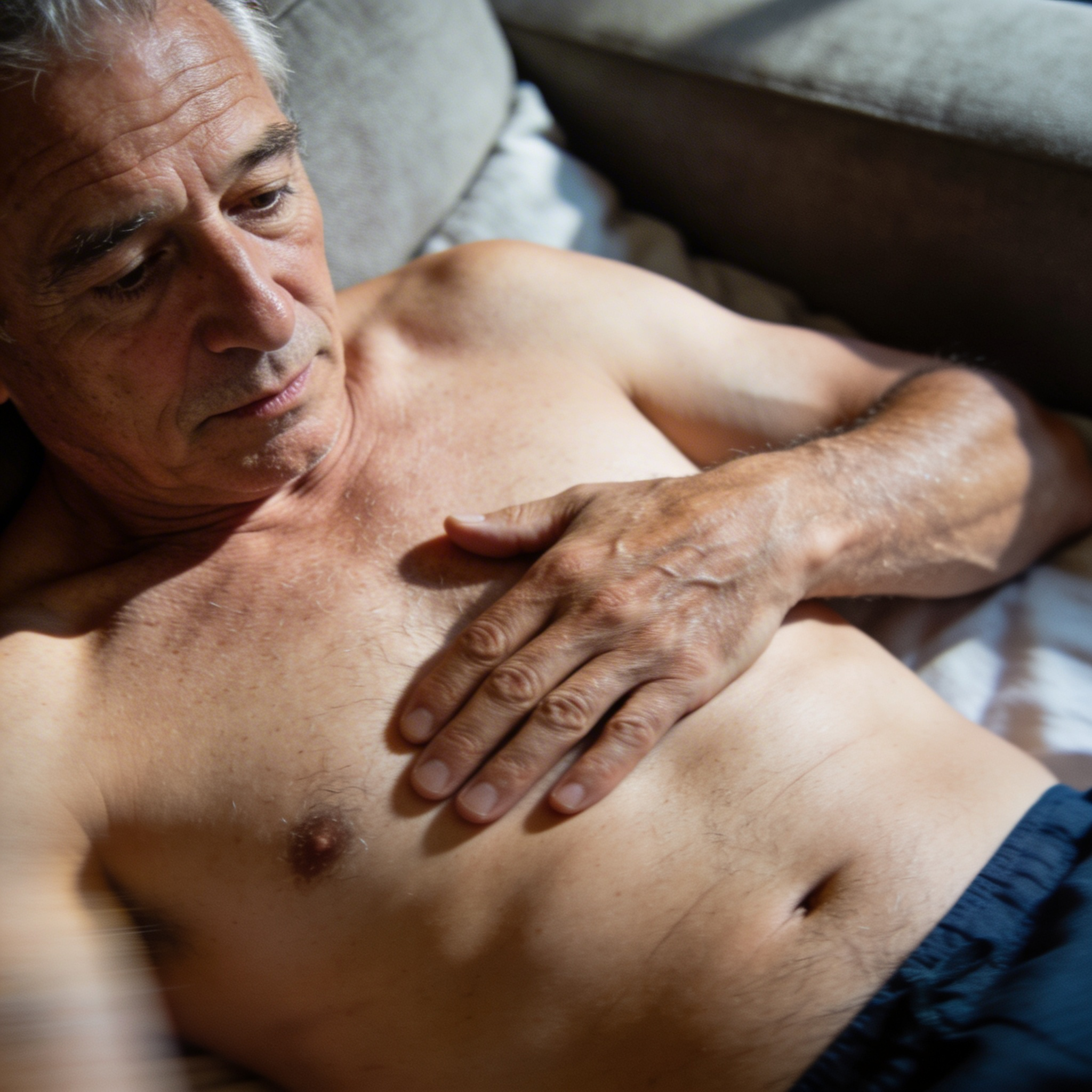
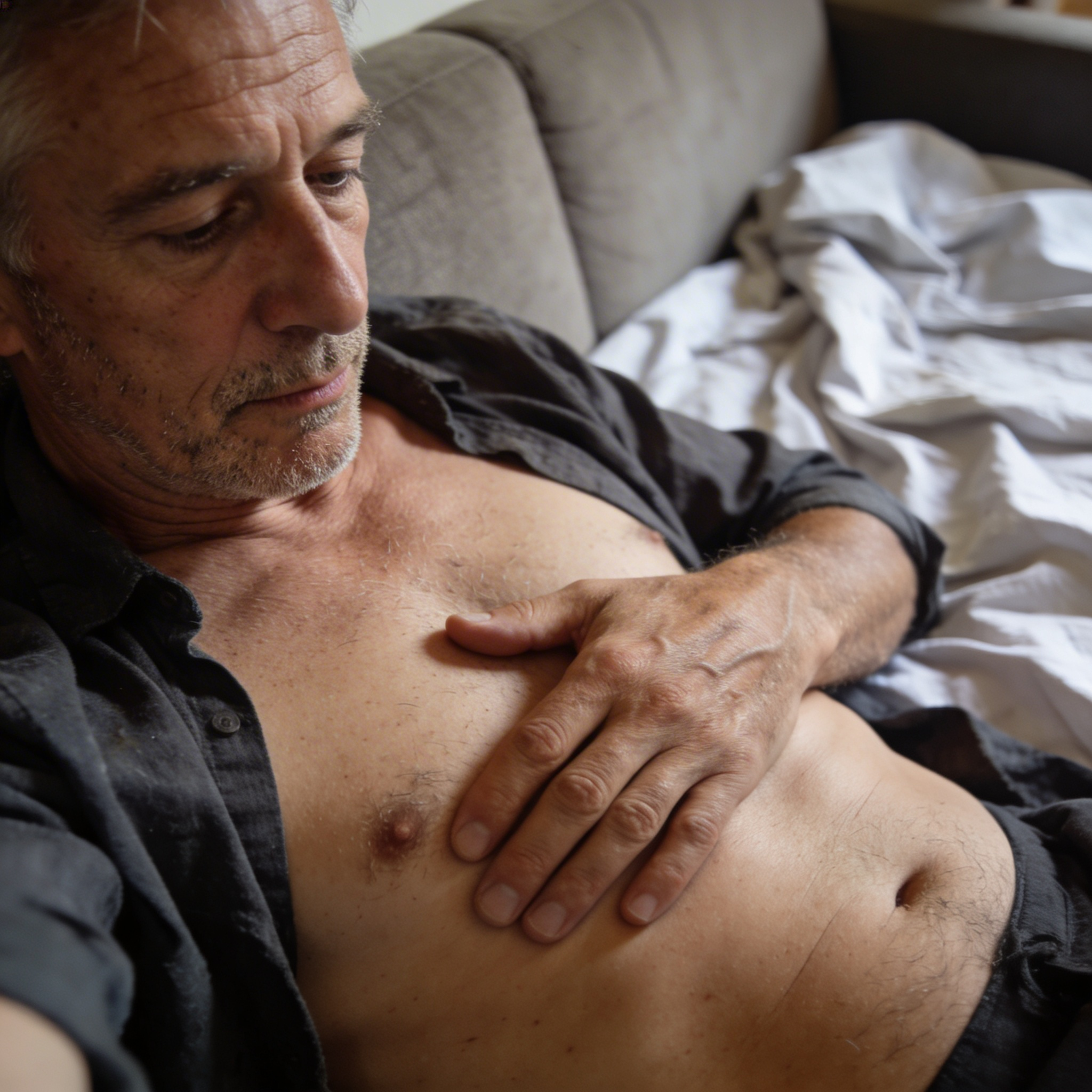
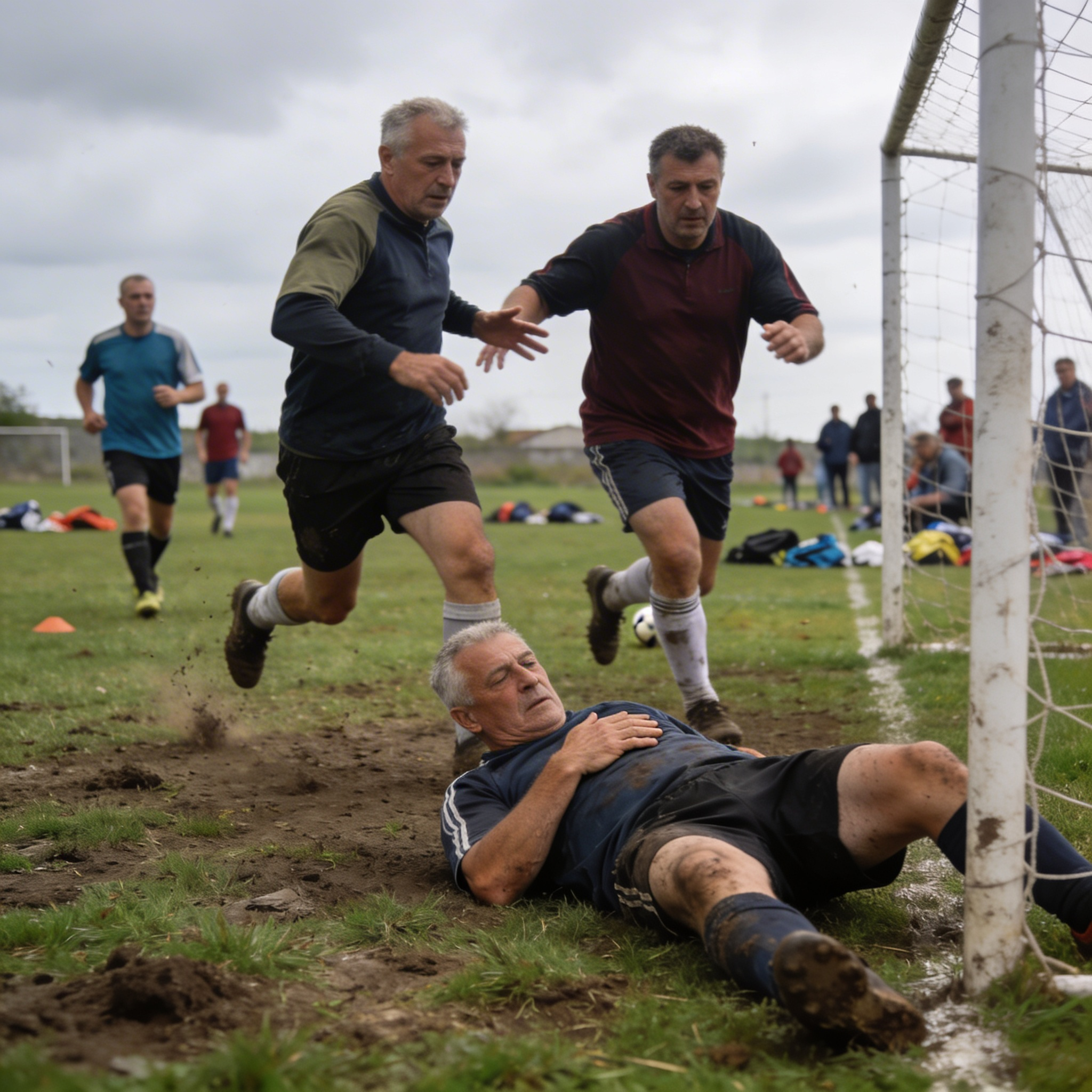
We were 20 minutes into the game when my legs went. Not all at once. First the edges of my vision went bright. That specific kind of bright that isn't light, it's the absence of something. Like the contrast got turned up on everything and then immediately started washing out. I stopped running. Just stopped. Mid-field. My body made that decision before my brain did. One of the guys jogged past me and said something I couldn't quite hear because there was a rushing sound filling up my ears from the inside. I put my hands on my knees. And then I was on the ground. I don't remember going down. I remember being on my knees and then I remember the grass against the side of my face and Marcus crouching over me saying my name, saying it louder each time, and the sky behind him being very white and very far away. I was 61 years old and I had just fainted on a soccer field in front of eight men I've known for twenty years. That's the image that stayed with me longer than anything else that happened that day. Not the ambulance they almost called. Not the twenty minutes I sat on the sideline with my head between my knees. Not the drive home where my friend Paul insisted on following me in his car because nobody felt comfortable letting me go alone. The image that stayed was Marcus's face when I opened my eyes. The fear in it. Because I realized in that moment that what I'd been privately managing for the past two years, the numbers, the monitoring, the quiet adjustments, the things I'd been handling on my own because I didn't want to alarm anyone, had just become visible. It wasn't private anymore. And if I'm being completely honest with myself, which I've had a lot of time to do since that afternoon, it probably should have stopped being private a lot earlier than that. Let me go back. I'd been playing in this same Saturday group since my late 40s. Nothing serious. Recreational. A bunch of men in their late 50s and early 60s running around a field for 90 minutes because we weren't ready to stop. Because the day we stopped would mean something we weren't prepared to name. About two years ago I started noticing something during games. Not pain. Nothing dramatic. Just a heaviness that would settle into my legs around the 30 or 40 minute mark that felt different from normal fatigue. And a pressure across my forehead that would build as the game went on. And sometimes after a sprint, a particular dizziness that would pass in a few seconds but leave me feeling like I needed to slow down even when I didn't want to. I told myself it was fitness. Getting older. Probably needed to train more between Saturdays. I told myself that for two years. My blood pressure had been running high. Not catastrophically. But consistently in a range that my body was clearly struggling to manage. I knew this. I'd been managing it the way I managed most things, quietly and alone, with dietary changes and exercise and a general sense that I was handling it. What I didn't understand, what nobody had explained to me clearly, was what was actually happening inside my body during physical exertion with blood pressure in that range. Here is what I've since learned. When blood pressure is chronically elevated, the blood vessels involved aren't just dealing with higher pressure at rest. They've typically lost a significant degree of flexibility. They've stiffened over time. And stiff vessels don't respond well to sudden increased demand. When you go from standing to sprinting, your body needs to rapidly redistribute blood flow. More to the working muscles. More to the surface to manage heat. Maintained flow to the brain throughout all of it. Flexible, responsive vessels handle this automatically. They expand, contract, reroute, adapt in real time. Read More: https://shop.trymaia.co/shocking-discovery-bp Stiff, unresponsive vessels can't keep up with those rapid shifts. Blood flow to the brain can become inconsistent. Pressure that was already elevated at rest climbs further with exertion. The system that was supposed to regulate everything under demand is the exact system that's been compromised. That dizziness after a sprint. That pressure building behind my eyes. The edges of my vision going bright. That wasn't just getting older. That was my vascular system failing to respond to what I was asking of it. I wish someone had said that to me two years ago instead of letting me reframe it as fitness. After that Saturday, after the grass on my face and Marcus's eyes and Paul following me home, I stopped pretending I was handling it. Read More: https://shop.trymaia.co/shocking-discovery-bp I read. A lot. More honestly than I'd let myself read before because I wasn't protecting myself from the information anymore. That's when I found research on nitric oxide and what happens to its production as men age. Nitric oxide is produced inside the lining of your blood vessels. It's the compound that signals those vessels to relax, widen, and respond. It's the biological mechanism behind vascular flexibility. Behind your vessels being able to adapt in real time to physical demand. Production declines with age. Gradually. And as it declines, so does the vessels' ability to respond. What you're left with is a circulatory system that works adequately at rest but struggles under any real demand because the signaling mechanism that kept it adaptive has been progressively lost. What restored my interest in actually solving this, rather than just managing it, was reading about the flavanol content in ceremonial grade cacao and its specific effect on nitric oxide production. Flavanols activate pathways inside the cells that line your blood vessels. Pathways that produce nitric oxide. The research isn't fringe. It's been built on by serious institutions for decades. The mechanism is understood. The effect on vascular function is documented. The reason cacao has never entered most people's thinking around blood pressure is that the cacao most people have access to has been industrially processed in a way that strips out most of these flavanols before you ever consume it. The compound that would have helped is gone before it reaches you. Ceremonial grade cacao, real cacao, minimally processed, unalkalized, keeps those flavanols intact. Which is why the traditional cultures who used it daily weren't just doing something spiritual. They were giving their bodies something that modern processing made unavailable. MAÏA is ceremonial grade. I started it about three weeks after that Saturday. One scoop in hot water every morning. Before food. Before anything else. I didn't go back to the Saturday game for six weeks. Partly because of what happened. Partly because I needed to know my body was doing something different before I asked it to do that again. Week three I noticed I was getting through my morning walks without the low pressure headache that had been my standard companion for most of the previous year. Week four my resting numbers had moved in a direction I hadn't seen in a long time. Not dramatically. But consistently and in the right direction. Week six I went back to the field. I want to describe this carefully because I don't want to overstate it. I ran. I sprinted when I needed to. I played the full first half. Around the 35 minute mark, which was historically when things would start to feel wrong, I took a breath and checked in with myself. Read More: https://shop.trymaia.co/shocking-discovery-bp Nothing. Normal exertion. Normal fatigue. My vision was clear. My head was clear. My legs were heavy the way legs get heavy when you've been running, not the way they got heavy that Saturday. I played the whole game. Drove myself home without anyone following me. That was four months ago. I've played every Saturday since. The group knows something changed. They haven't said much because men don't say much. But Marcus asked me a few weeks ago what I'd been doing differently and I told him. He ordered some that night. I'm sharing this because I know there are men reading this who are doing what I did. Privately managing something that's getting less private. Reframing symptoms as aging. Telling themselves they're handling it because the alternative to handling it is admitting they're not. I know what that Saturday on the grass looked like to the men standing over me. I don't want that to be the thing that finally makes you take it seriously. MAÏA is linked below. One scoop in hot water every morning. Thirty-day money-back guarantee, so there's no cost to finding out if your body responds. If you're still playing, and you want to keep playing, this might be the thing that lets you.
Like this ad? Make it yours.
Crush rebuilds this exact creative around your product — your brand, your colors, your offer — in about a minute.