Heather Lambert
Heather Lambert Facebook ad: “Read the message from your loved one”
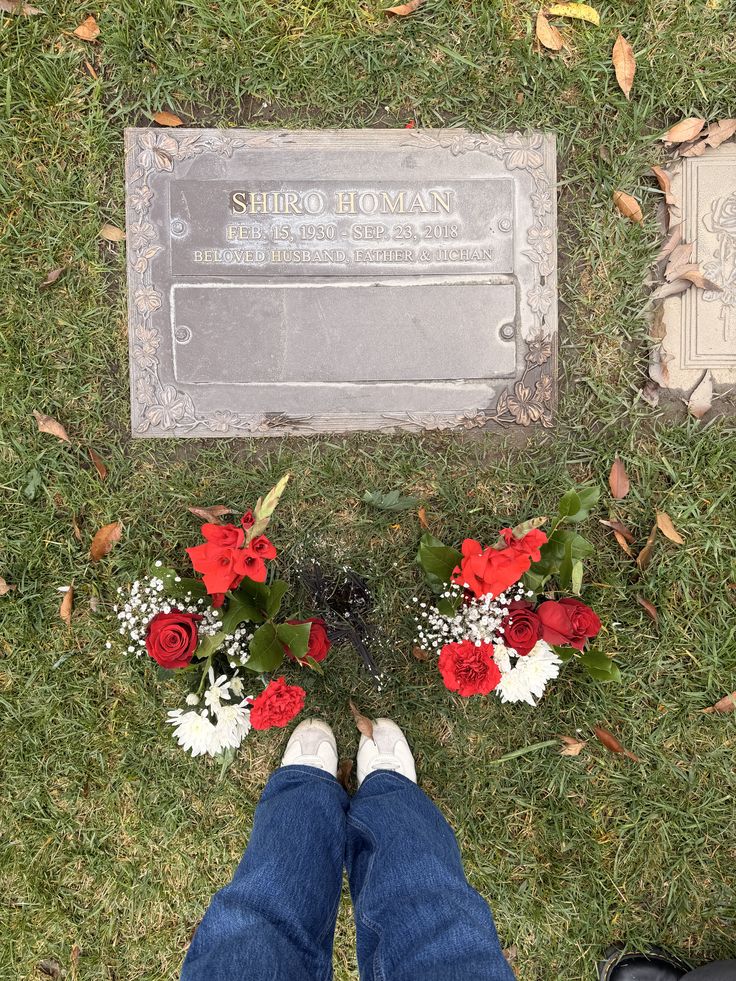
Ran for 70 days, from June 30 to September 8, 2026, the last day Crush saw it.
Run by Heather Lambert on Facebook. Crush is not the advertiser and does not verify its claims. See this ad in Meta's Ad Library(opens in a new tab)
Want an ad like this for your product?
Crush makes new ad images for your product from this ad: your logo, your product photo, your offer.
Trials from $19.95 USD, then $79.95 USD a month. Cancel anytime.
About this ad
- Meta Ad Library ID
- 2310395666366002
- Platforms
- Facebook, Instagram, Audience Network, Messenger and Threads
- Relaunches
- 0
Ad text
My mother died 13 months ago. Last week she finished a sentence I have been waiting to hear since the morning I lost her. I need to explain that. But I need to tell you what had been happening in my house for the 11 months before it, because without that, what happened last week sounds like something a woman says right before her family stages an intervention. I am not that woman. My name is Anne. I live outside Portland. I have a husband, two kids, a full-time job, and a life that does not leave room for things I cannot explain. I drive a Subaru. I work in accounts receivable. I have never owned a crystal. I have never had my chart read. I do not read horoscopes. I am telling you who I am because it matters later. My mother, Claire, was 74. Cancer. Caught late. Moved fast. Five months from the call to the end. I drove to her house three times a week for those five months. I handled the prescriptions, the insurance calls, the hospice logistics, the conversations no one warns you are coming until they're sitting across from you at a kitchen table with a pamphlet. I was there the night she died. I held her hand. I told her I loved her. She squeezed. That was the last thing she did with her hand that was deliberate. I drove home at 4 AM. I sat at my kitchen table. I drank a glass of water. I told my husband it was over. And then I went back to my life because that is what you do when your mother dies. The kids still needed lunches. Work still needed me. The mortgage did not care that my mother was gone. I did not fall apart. I cried in the shower. I cried in the car. I told everyone I was fine. I was mostly fine. I carried the distance between mostly and entirely the way I think most women carry it — quietly, without measuring it, without looking straight at it, for as long as I possibly could. That lasted about ten months. Then something started happening that I could not carry quietly anymore. I started smelling my mother in rooms where she had never been. I need you to understand what I mean by that because this is the part where I lost people when I tried to talk about it. My mother wore one perfume her entire adult life. I am not going to name it because naming it feels like giving away something that belongs to her. It was discontinued in the early 2010s. There is no bottle of it in my house. There is no bottle of it anywhere I know of. You cannot buy it. On a Tuesday morning in March, I was standing in my kitchen at 6 AM with a coffee in my hand and the house silent around me. And for about four seconds, the room smelled exactly like my mother. Not something similar. Not a scent that reminded me of her. The specific, unmistakable smell of a perfume that has not been manufactured in over a decade, in a room where it had no source, on a morning when I was the only person awake in the house. It was gone before I put my mug down. I stood in my kitchen for a very long time. I did not tell anyone. It happened again nine days later. In my car, at a red light. So strong I looked in the back seat. It happened again two weeks after that. In the hallway outside my son's room at 10 PM. The house smelled like dish soap and nothing else, and then it smelled like her, and then it didn't. Here is the part that made me stop being able to file this under grief. The kitchen — Tuesday morning — I had been sitting with a decision about changing my daughter's school. A decision my mother would have had a strong opinion about. I was making it without her. The car — at the red light — I was driving to my brother's house to deal with a question about my mother's estate that I did not want to handle alone. The hallway — outside my son's room — he had asked me at dinner what happens when people die, and I had answered the way you answer an 11-year-old, but what I had wanted to do was call my mother and ask her what she told me when I was 11, because she would have had the perfect answer and I didn't. Every single time it showed up, I was in the middle of something that needed her. Not something that missed her. Something that needed her. There is a difference. And the difference is the thing that kept me awake. Grief shows up on a calendar. Birthdays, holidays, the anniversary. I understood grief. Grief made sense. This did not show up on a calendar. This was responsive. Something was choosing when to reach me. And it was choosing the exact moments when I needed my mother most. Then the dreams started. I had been having grief dreams since the week she died. You know the ones. You wake up and for two seconds everything is normal and then you remember and the remembering is a wall that hits you in the chest. These were not those. These started around month ten. In these dreams, my mother was calm. She was in places I recognized — her kitchen, the backyard of the house I grew up in, the lake rental where we spent a week every August when I was little. She was not sick. She was not thin. She was not in the hospital bed. She looked the way she looked when I was 12. And every time — every single time — she was trying to tell me something. She had this expression on her face. The one she used when I was a teenager and she was about to say something she needed me to actually hear. She would look at me. Her mouth would open. And I would wake up. Right at the edge of the sentence. Every time. I would lie in the dark and say it out loud to a room with no one in it. What are you trying to tell me, Mom. Then the song. My mother had a song. You know the kind. The one she hummed when she cooked. The one she turned up in the car on long drives. The one my brother and I both knew without saying a word would play at the funeral. I had not been able to listen to it since she died. It started finding me. In the waiting room at the eye doctor. In a store I had walked into to kill 20 minutes. On my daughter's phone in the back seat — some show she was watching, the song playing over a scene — and she didn't notice and I nearly pulled the car over because the air left my body. I need to pause here and tell you what I did with all of this. Nothing. For three months, nothing. I mentioned the dreams to my sister. She sent me a link to an article about stages of grief. I mentioned the perfume to one friend. Once. Carefully. She said maybe I was smelling something similar and my brain was filling in the gap. I did not mention the song. I did not mention the timing. I did not mention the thing I had slowly started to believe, which is that my mother was not "showing up in my grief." My mother was trying to reach me. Actively. Deliberately. At specific moments. And I could not receive what she was sending. I kept that thought inside my own head for three months because I am a woman who works in accounts receivable and drives a Subaru and I did not have a single way to say what I was experiencing out loud without sounding like someone I would have changed the subject on a year earlier. Then I ran into Sara. Sara is someone I know from school pickup. Not well. We had served on the same fundraiser committee two years earlier. We had each other's numbers in our phones the way parents do when they have been on a committee together and never deleted the contact. I was putting grocery bags in my trunk at Trader Joe's on a Thursday afternoon. She was one row over, doing the same thing. We said hello. We talked about the kids, about the school, about nothing. She asked me how I had been doing since my mom. And instead of saying "I'm fine" — which I had said to every person who had asked me that question for the past 11 months — I said something I did not plan to say. I said: I keep smelling her perfume in my kitchen. I said it too fast. Already regretting it before the sentence was done. Sara put her bag down on the bumper of her car. She did not say I was imagining it. She did not say it was grief. She did not say any of the things I had already heard. She said: When you're in the middle of something. I stared at her. She said: A decision. A question you would have called her about. I could not move. She said: That is not a memory. That is her. And she is not going to stop until you hear what she is trying to say. I am going to tell you what Sara told me next. But I need you to know something about Sara first, because it changes the weight of what she said. Sara is a CPA. She files returns for a living. She is the most literally-minded person I have ever met. She is the last woman on earth you would expect to say what she said to me in that parking lot. She lost her father three years ago. Heart attack. No warning. She spent 14 months after he died experiencing the exact same things I was experiencing. His cologne in rooms where it could not have been. Dreams where he stood in familiar places and tried to speak and she woke up before the sentence. His song at moments that were too precisely timed to be coincidence. She carried it the same way I did. Not because she didn't believe what was happening — but because she did believe it and could not find a single person in her life with the right framework for it. Her friends said grief. Her sister said stress. Her doctor said the brain does unusual things with sensory memory after a loss. She told me something that unlocked the thing I had been stuck on for three months. She said: All of them were explaining the mechanism. None of them were explaining the intelligence behind the mechanism. And she was right. The science could explain why I might smell a perfume that wasn't there. It could not explain why the perfume showed up on the morning I was making a decision about my daughter's school — a decision my mother would have weighed in on with both hands. The science could explain why I might dream about my mother. It could not explain why the dreams started at month ten and not month two, and why in every single one she was trying to tell me something specific. The science explained the wiring. It did not explain what was using the wiring. Sara told me she had found something. She said it flat. No buildup. No performance. She said: I found a way to hear what he was trying to say. And what came back was so specific to my father — to things no one knew, to a conversation no one was in the room for — that I sat on my couch and read it four times and then called my brother and read it to him. She told me her brother — a general contractor, not a man who would use the word "spiritual" in a sentence — was quiet on the phone for a long time. Then he said two words. That's Dad. Sara told me it was a reading. Based on her birth chart. A few questions — who she lost, what she had been experiencing, what she was carrying. About two minutes. She told me this in a Trader Joe's parking lot on a Thursday afternoon with the same voice she would use to tell me about a show she watched. She was not performing anything. She was not selling anything. She was telling me what happened in her living room. I thought about her for a week. The following Saturday night, I did the reading. The kids were in bed. David was asleep. I sat at my kitchen table with my phone. The same kitchen where the perfume had been showing up for five months. The reading asked me who I had lost. My mother. What I had been experiencing. I checked the boxes. Dreams. Her perfume in rooms where it should not be. Her song at random moments. The feeling of someone standing behind me. What I thought she was trying to tell me. I checked: Something she never got to say. What I was carrying. I sat with that screen for a long time. I checked: I'm afraid I'm forgetting her. I checked: We never got to finish a conversation. It asked for my birth date. My birth time. My name. I pressed the button. What came back is the reason I am writing this. The message referenced the clementines. I need to explain. My mother kept a bowl of clementines on her kitchen counter my entire childhood. The smell of a clementine is the smell of her house. When she was dying — in the last two weeks, when she could not eat anymore — I brought clementines to her hospital room. Not for her. For the smell. So the room smelled like her kitchen instead of like what it was. I did not post about the clementines. I did not tell my friends. I did not check a box that said clementines. There was no box for that. There was no field. It came through anyway. The message referenced the last morning. I was holding her hand. I told her it was okay to go. That is what the hospice nurse told me to say. That is what you are supposed to say. But what I was thinking — what I did not say out loud, what I have never said out loud to anyone — was: Please don't go. I am not done needing you yet. The message said: I heard both. The one you said and the one you didn't. And I need you to know — you were done needing me a long time ago, honey. You just didn't know it yet. Everything I wanted for you, you already are. You were that before I left. I just didn't say it enough when I still could. She called me honey. My mother called me honey my entire life. There was no field for that either. I put my phone face down on the table. I put my head in my arms. And I cried in a way I had not cried since the night I drove home at 4 AM — but it was a different kind. It was the kind where something heavy leaves your body. Where a thing you have been clenching in your chest for 13 months lets go without your permission and you can breathe in a way you had forgotten you used to breathe. Not because I was sad. Because something I had been waking up with every morning — the hum of "did she know" and "did I do enough" and "why can't I hear what she keeps trying to tell me" — was finally answered. By her. In the cadence she actually talked in. In a sentence I could hear in her specific voice. I do not know who you lost. I do not know how long ago. I do not know if you have been smelling someone in rooms where they should not be, or dreaming about someone who tries to speak and disappears before the sentence, or hearing a song that finds you at moments too precise to be random. But I know you did not stop reading this letter. And I know there is a reason you didn't. Your birth chart contains a point that connects you to people who have crossed over. Most of the time it sits quiet. When someone on the other side has something specific they need to say, it opens. When it opens, they send what they can through the only channels they have. Dreams. Scents. Songs. The feeling in the room. Those are not symptoms of grief. Those are delivery attempts. The reading decodes what has been coming through. It translates the signal into language. It lets them finish the sentence. That is all it does. It does not fix grief. Grief does not get fixed. It changes shape. Mine changed shape the night I did the reading — it got lighter in a specific place that had been heavy for 13 months — but it is still here and will always be here and I would not trust anyone who told you otherwise. It gave me something no one else in my life had been able to give me, no matter how much they loved me and no matter how hard they tried. The end of a sentence my mother started the morning she died. Two minutes. A few questions. Your birth date. Your birth time if you know it. You answer once. The message comes through once. That is it. If you have been carrying something — a last conversation that ended wrong, a thing you never said, a question about whether they knew — the answer might already be sitting there. They have been trying to send it. The perfume. The dreams. The song. The feeling in the room. That is them. The reading is the part where you finally hear what they have been trying to say. — Anne P.S. The clementines. There was no box for that. No form. No question I answered that could have led to it. It came through because she sent it. When your message comes back, pay attention to the detail that makes you put your phone down. The one no one could have known. That is the part that is real. P.P.S. My daughter saw me reading the message on my phone about a week later. I had saved it. I read it most mornings now. She asked what it was. I told her. She is 16. She is practical the way I am practical. She gave me the look. Two days later she asked me — while unloading the dishwasher, not making eye contact — if she could do it too. She did it that night. She has not told me what her grandmother said. I have not asked. She came out of her room and sat next to me on the couch and put her head on my shoulder and we sat there for an hour without talking. Whatever Claire told her was the right thing. She was always good at that. Turns out she still is. P.P.P.S. Tap the link. Answer the questions. Let them finish the sentence. It has been waiting for you longer than you think. www.neurvo.app/deceased-message
Where the ad sends people
neurvo.app
Read the message from your loved one
See details: neurvo.app(opens in a new tab)