The Hair Growth Journal
The Hair Growth Journal Facebook ad: “My Transplant Was $16,400. Kiierr Addressed What I Missed”
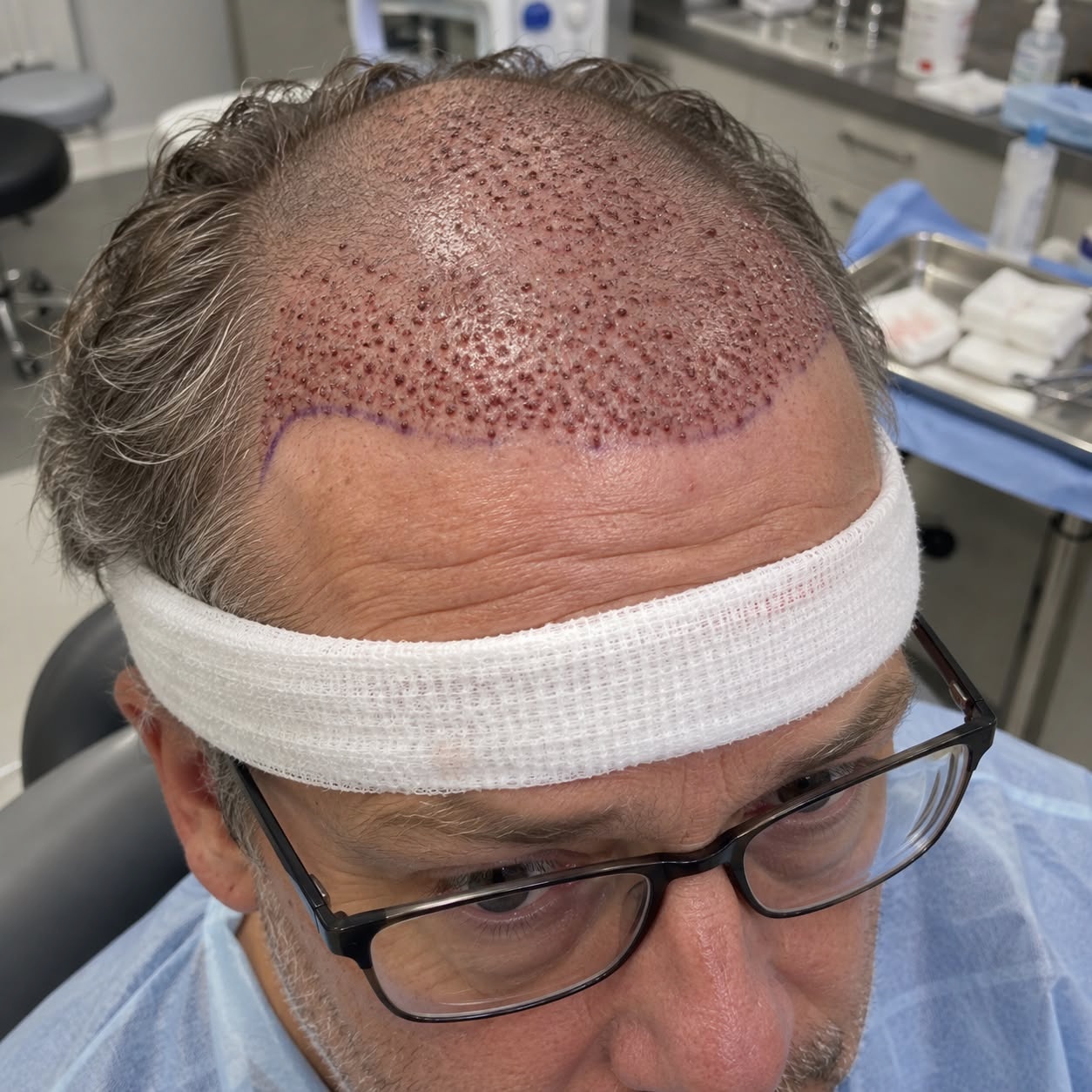
Ran for 21 days, from September 9 to September 30, 2026, the last day Crush saw it.
Run by The Hair Growth Journal on Facebook. Crush is not the advertiser and does not verify its claims. See this ad in Meta's Ad Library(opens in a new tab)
Want an ad like this for your product?
Crush makes new ad images for your product from this ad: your logo, your product photo, your offer.
Trials from $19.95 USD, then $79.95 USD a month. Cancel anytime.
About this ad
- Meta Ad Library ID
- 2324965128243255
- Platforms
- Facebook, Instagram, Audience Network, WhatsApp and Threads
- Relaunches
- 0
- Niche
- Hair Care
Ad text
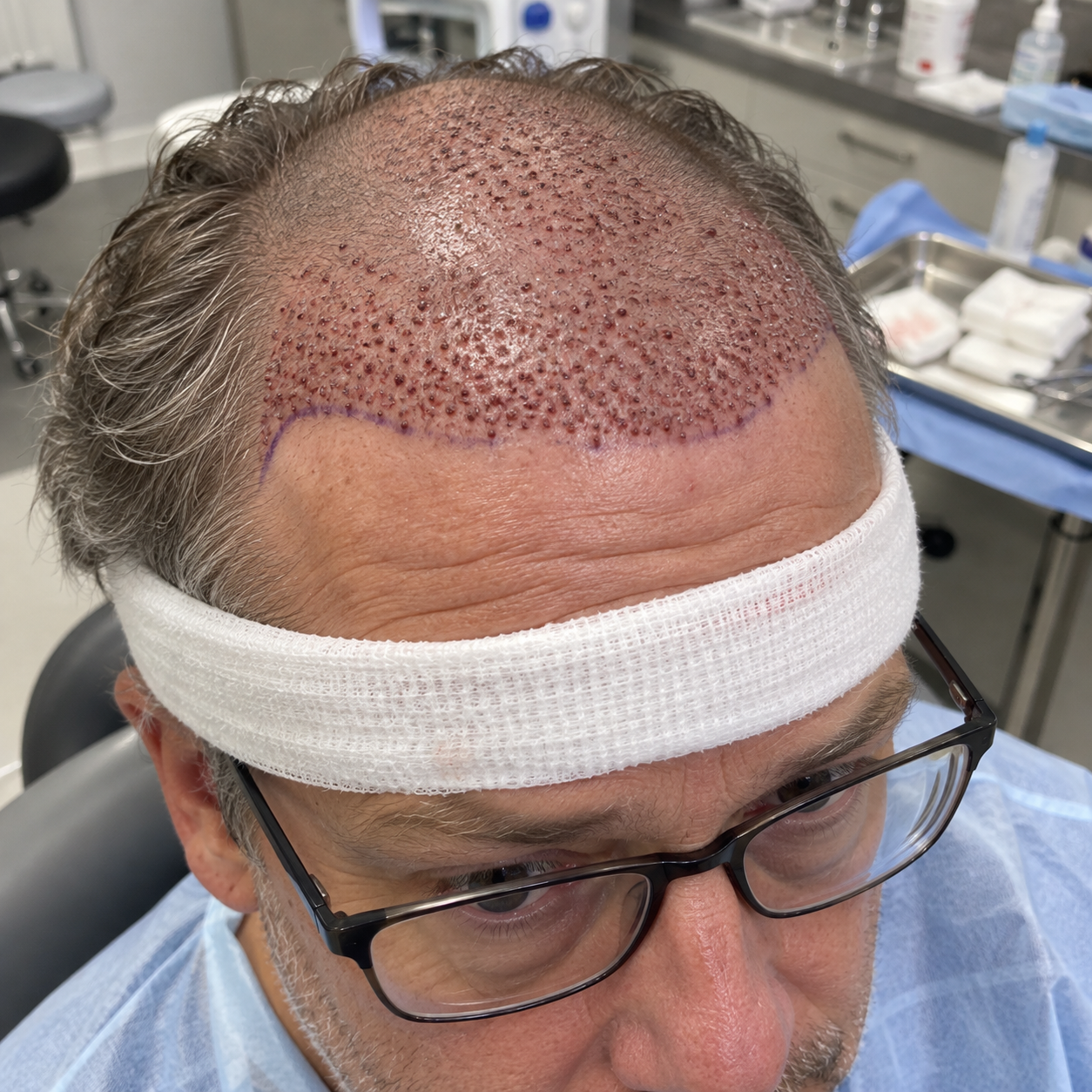
I paid $16,400 for a hair transplant because I thought losing my hair was why my wife stopped touching me. Eleven months later, she cheated on me with our 21-year-old landscaper. The worst part? I went through the surgery because I thought I was saving our marriage. When I confronted Laura, she tried to explain it for less than a minute. Then she stopped. Then she admitted she had been sleeping with the 21-year-old landscaper who had been working around our house all summer. His name was Tyler. He was younger than our marriage. That detail destroyed me more than I want to admit. I’m 54. My hairline has been receding for seven years. The hair across the top of my head had become so thin that every overhead light turned my scalp into a mirror. And the first thought that entered my head wasn’t: “My wife betrayed me.” It was: “Of course she chose him.” I pictured Tyler standing in our backyard. Twenty-one years old. Thick hair. No hat. No strategically placed strands across his forehead. No need to check his reflection before stepping into sunlight. He looked like I did when Laura first met me. I walked into the bathroom and turned on the light. My transplanted hairline was visible at the front. Behind it, the native hair across the top and crown was still thinning. I stared at myself and felt ridiculous. Eleven months earlier, I had paid $16,400 for that hair transplant because I thought losing my hair was why my wife had stopped touching me. Now I knew what she had been doing instead. Laura stood in the bathroom doorway. “This wasn’t because of your hair,” she said. Maybe that was true. Her cheating was her decision. But she didn’t understand that I had already been blaming my hair for years. Hair loss hadn’t caused her betrayal. It had simply given me a reason to believe I deserved it. I pointed toward the bedroom. “I need you to pack a bag.” She started crying. I didn’t. Not yet. She left just after midnight. I sat alone at the kitchen table until the house went quiet. For twenty-one years, Laura had filled that house. Her coffee cup beside mine. Her shoes beneath the bench. Her side of the bed. Now the only thing I could think about was a man younger than our marriage standing where I used to stand. At 1:47 a.m., I called my brother Daniel. He answered on the third ring. “What happened?” “Can I come over?” A pause. “Yes.” I packed a shirt, my charger and the baseball cap I wore whenever I left the house. Daniel opened the door before I knocked. He looked at my face and stepped aside. “Guest room is ready,” he said. “I haven’t told you anything.” “You called me at two in the morning carrying a bag.” He poured two glasses of water and sat across from me at the kitchen table. I told him what I had found. I told him who it belonged to. Then I told him the part I was ashamed to say aloud. “He’s twenty-one, Dan.” Daniel said nothing. “He has a full head of hair.” Still nothing. “I spent sixteen thousand dollars trying to make her want me again, and she chose someone who didn’t have to try.” Daniel leaned forward. “She didn’t do this because you lost your hair.” “I know.” “No, you understand the sentence. You don’t believe it yet.” I looked away. He let me sit in silence before showing me the guest room. There was a black baseball cap on the nightstand. At least, that was what it looked like from the outside. I picked it up to move it. The inside was covered with precisely positioned lenses running from the hairline toward the crown. It wasn’t fabric. It was a device built inside a cap. Daniel appeared in the doorway. “What is this?” “My laser cap.” I almost laughed. “You own a laser cap?” “Have you looked at my crown lately?” I had. Something had changed, but I assumed he had started styling it differently. He opened his phone and found a photograph from eight months earlier. The difference was obvious. In the first picture, the light hit a visible area of scalp at his crown. In the newest photograph, the same area looked more filled in. Same bathroom. Same lighting. Same angle. “What did you use?” He pointed at the cap. “Kiierr.” “I already had a transplant.” “I know.” “So why would I need that?” Daniel sat on the edge of the bed. “Because the transplant moved hair into your hairline. It didn’t stop the follicles behind it from continuing to weaken.” I stared at him. He turned the cap over. “That is the part nobody explained to me either.” Daniel had spent months researching why his crown continued thinning even though he used expensive shampoos, supplements and a topical treatment. The answer kept leading back to the same three letters: DHT. DHT is a hormone that can attach to genetically susceptible hair follicles. Over time, those follicles begin to miniaturize. Their growth phase becomes shorter. Each new strand can grow back finer, weaker and less visible than the one before it. That was why my hair loss had happened so gradually. My follicles hadn’t disappeared in one dramatic moment. They had been producing increasingly thinner hair for years. The temples moving backward. The scalp becoming visible through the top. The crown appearing larger in every photograph. They were different signs of the same process. The transplant had moved follicles from the back of my head into the front. It created a new hairline. But the native follicles behind that line were still sitting in the same environment. DHT hadn’t disappeared because I had undergone surgery. It kept slowly miniaturizing the susceptible follicles I still had. I had spent $16,400 moving hair into one area and assumed the rest of my scalp was handled. It wasn’t. “So this blocks DHT?” I asked. “No,” Daniel said. “It supports active follicles through a different pathway.” Low-level laser therapy uses light to stimulate activity inside weakened follicles. At the right wavelength, that light supports cellular energy production called ATP. It also supports circulation around the scalp, helping deliver oxygen and nutrients to follicles while encouraging a healthier growth phase. DHT may be applying pressure from one direction. Laser therapy supports the follicle from another. That distinction mattered to me. I had already spent years choosing between daily medications, greasy topical treatments and surgery. This was drug-free. No daily pill. No liquid running down my forehead. No second procedure. But Daniel told me the same thing his research had taught him: Not every cap glowing red delivers the same treatment. Some caps use inexpensive LEDs. Others combine LEDs and lasers, then advertise the total number as “diodes” without telling you how many are actual lasers. A bright red glow looks powerful in an advertisement. It doesn’t tell you what is reaching your scalp. Daniel’s cap was the Kiierr 272 Premier. It contained exactly 272 medical-grade laser diodes. Actual lasers. Each one calibrated to 650 nanometers and positioned throughout the cap to deliver coverage across the hairline, top and crown. FDA-cleared low-level laser technology. Thirty minutes every other day. “That’s it?” “That’s it.” “How long before you noticed?” “Months. Not days.” He showed me Kiierr’s seven-month growth guarantee. “That was why I trusted it enough to start,” he said. “They give you enough time to judge your hair honestly.” I looked at his before-and-after pictures again. The change wasn’t theatrical. That made me believe it more. It looked like the same man with more coverage where the light used to expose his scalp. I slept four hours that night. When I woke up, Daniel had already made coffee. The cap sat on the table between us. “Send me the link,” I said. “Read everything first.” I did. Two hundred seventy-two medical-grade laser diodes. 650-nanometer wavelength. Thirty minutes every other day. Hairline-to-crown placement. Seven-month growth guarantee. Every specification Daniel had mentioned was stated plainly. I ordered the 272 Premier before finishing my coffee. Not because I thought it would repair my marriage. Not because I wanted Laura back. And not because I believed I could turn myself into a 21-year-old. I ordered it because I was exhausted from abandoning myself. The cap arrived the following week. Laura’s side of the closet was half-empty. Her toothbrush was gone. For the first time in twenty-one years, nobody was upstairs waiting for me. I went into the bathroom and took pictures of my hairline, top and crown. Same overhead light. Same distance. No fibers. No strategic angle. The transplant had created a clear front hairline. Behind it, the top looked thin and disconnected. The crown reflected the flash. I put on the Kiierr cap and pressed the button. Thirty minutes later, my hair looked exactly the same. Of course it did. Hair cycles take time. For once, I wasn’t being asked to pretend that one use had changed anything. I only had to follow the schedule and keep the photographs honest. Month one. Nothing dramatic happened. I wore the cap every other day while answering emails or watching television. Thirty minutes. Done. I stopped inspecting my scalp after every session. I had spent years looking for proof every morning and quitting when I couldn’t see it. This time, I followed the schedule. Month three. The sink looked different. I wasn’t clearing away as many loose strands after styling my hair. I took another photograph beneath the same bathroom light. The change was subtle. But the scalp behind my transplanted hairline didn’t catch the flash quite as aggressively. I wasn’t ready to call it anything yet. I saved the picture and kept going. Month five. My barber was cutting around the transplant line when he stopped. “What have you been doing?” My stomach tightened. “Why?” He separated the hair across the top with his comb. “You’ve got short hairs coming through back here.” He turned the chair and held up the mirror. For years, I had hated that mirror. It showed the exact view I spent every morning avoiding. This time, the crown looked different. Not perfect. Not the crown I had at twenty-five. But less exposed. The hair around it looked stronger and easier to style. I showed him the baseline photograph. He moved the phone beside my head and looked between them. “Keep doing whatever you’re doing.” Month seven. I placed every photograph in order. Day one. Month three. Month five. Month seven. Same bathroom. Same overhead light. Same man. The transition behind my transplanted hairline no longer looked as empty. The top appeared more filled in. The crown didn’t blaze beneath the flash the way it had the night Laura left. I stood there for a long time. I didn’t look twenty-one. I no longer needed to. A week later, Laura came to collect the rest of her books. She stopped when she saw me. “You look different.” “I am.” “Is it your hair?” “Partly.” She waited for me to say more. I didn’t. She looked around the house. “I miss this.” I believed her. That didn’t mean she got to return to it. Kiierr did not repair my marriage. It didn’t erase the image of Tyler in our backyard or what I found beneath that chair. It did something I needed more. It changed the man making the decision about what happened next. For years, I had treated myself like a man whose best days were already behind him. I wore hats indoors. I avoided swimming. I stood at the back of photographs. I stopped initiating intimacy because rejection felt easier when I rejected myself first. Then I watched Laura stop reaching for me and quietly decided my hair explained everything. It didn’t. Her betrayal was hers. What I did next was mine. I started leaving the house without a hat. I went swimming with Daniel for the first time in six years. At a friend’s birthday dinner, someone took a group photograph. I didn’t tilt my head. I didn’t ask to inspect it. I didn’t delete it. That may sound small. It wasn’t. A few weeks later, I met two old friends for breakfast. Kevin looked across the table. “Did you do something different?” “The hair transplant was almost a year ago.” “No. Something else.” I told him about Kiierr. He laughed. “I bought a red-light cap on Amazon. Did nothing.” “How many actual lasers were inside it?” He stopped. “I don’t know. It said 300 diodes.” “Lasers or LEDs?” He opened the listing. It never said. That was exactly the mistake Daniel had helped me avoid. A large diode number means very little if the company doesn’t separate actual lasers from LEDs. Kiierr tells you exactly what is inside the 272 Premier. Two hundred seventy-two medical-grade laser diodes. 650 nanometers. Positioned across the thinning areas. Thirty minutes every other day. Kevin ordered one the following week. Months later, he sent me a photograph of his crown. Same bathroom. Same light. Then one sentence: “My barber noticed.” I understood exactly what that meant. Today, the Kiierr cap sits beside the photograph I took the night before my transplant. In that picture, my scalp was shaved. A surgical line was drawn across my forehead. Thousands of tiny graft sites covered the front of my head. I remember looking into the clinic mirror and thinking: This has to make her want me again. I wish I could speak to that man. I would tell him hair restoration should never be an audition for someone else’s love. I would tell him a transplant can move hair, but it doesn’t automatically support every susceptible follicle DHT is still weakening across the scalp. I would tell him to understand the mechanism before spending $16,400 out of fear. Most importantly, I would tell him this: You don’t need to become younger to stop disappearing. When I think about that Thursday now, I no longer think: “Of course she chose him.” I think: “That was the day I finally chose myself.” If your hairline is retreating, your crown is becoming more visible or the hair behind a transplant is continuing to thin, don’t wait until you have arranged your entire life around hiding it. Look at the hardware. Kiierr’s 272 Premier uses 272 medical-grade laser diodes at 650 nanometers, positioned across the scalp to support weakened follicles through low-level laser therapy. Use it for thirty minutes every other day from home. Take baseline photographs. Follow the schedule. Give your hair the full seven months Kiierr provides. Right now, Kiierr is offering up to $600 off the 272 Premier, backed by its seven-month growth guarantee. Don’t buy it to compete with someone younger. Don’t buy it to convince someone else to choose you. Do it because you are not finished. Nobody told me either. But now you know. Your move.
Where the ad sends people
kiierr.com
My Transplant Was $16,400. Kiierr Addressed What I Missed👉
🏆 Award-Winning Innovation, Clinician Trusted
Learn more: kiierrhealth.com(opens in a new tab)