
Inactive· since Mar 17, 2026
- 16
- days it ran
- 0
- relaunches
Ad copy
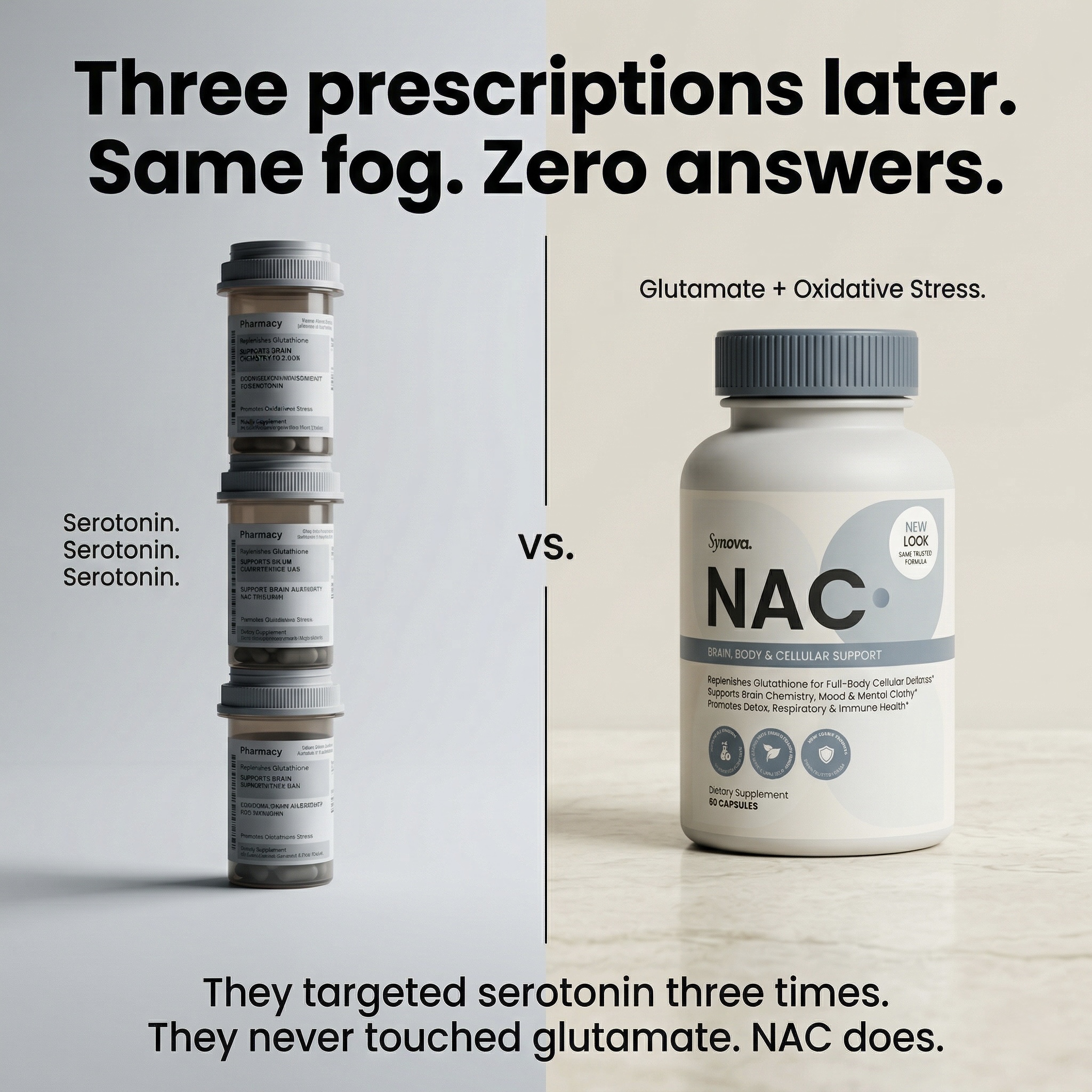
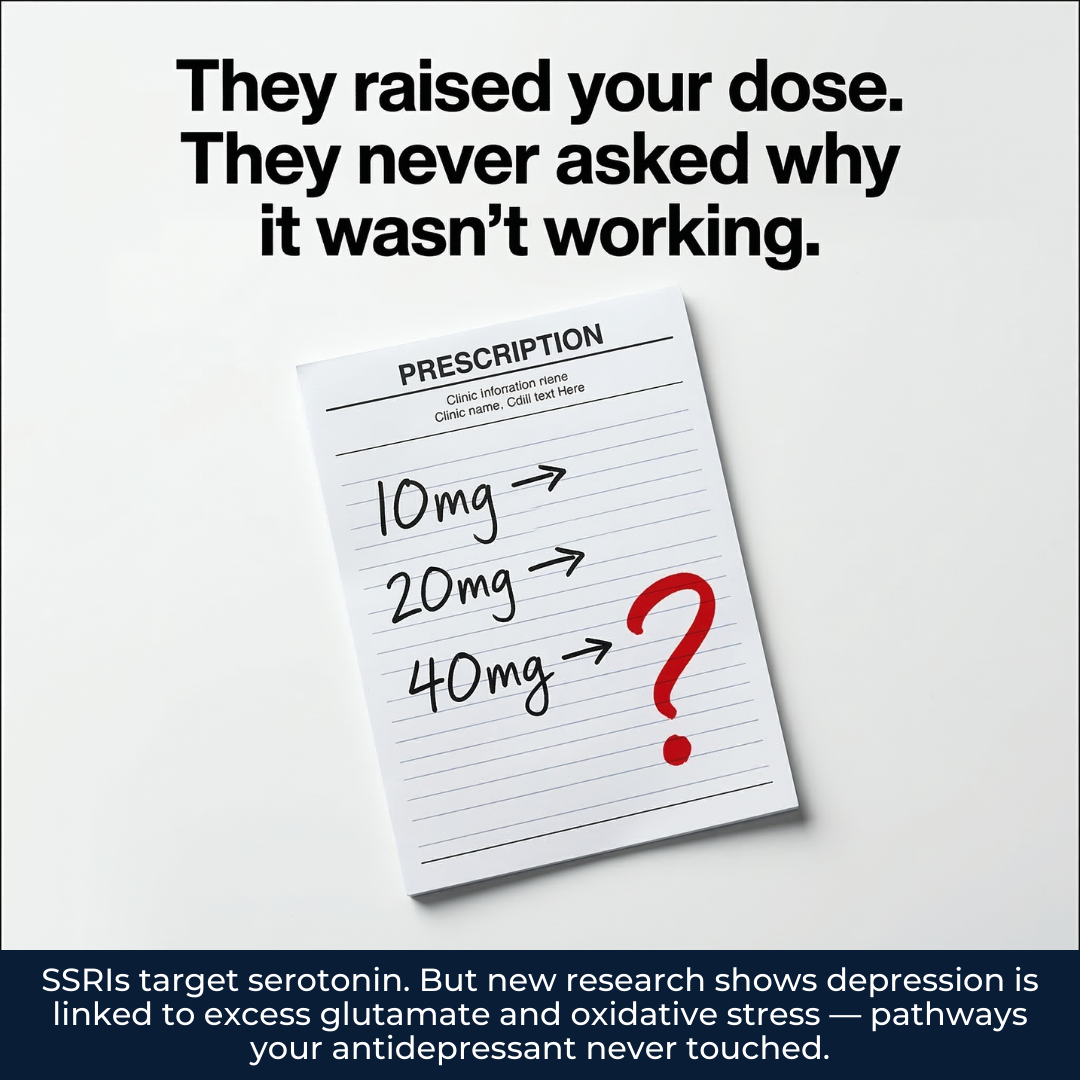
The number one solution for depression isn't exercise, it's not therapy, and it's definitely not "trying harder." And I'm not going to tell you to go for a walk. You probably haven't left your bed in weeks except to use the bathroom or grab something from the kitchen. You might be reading this on your phone right now, under the covers, because even the idea of sitting upright feels like climbing a mountain. Maybe you haven't showered in days—not because you don't know you should, but because the thought of water touching your body feels unbearable. Or maybe you did shower this week, and it took every ounce of willpower you had, and now you're completely drained. You avoid texts. You let calls go to voicemail. Not because you don't care about people, but because the idea of forming words and pretending to be okay feels impossible. And here's the cruelest part: People keep telling you what to do. "Just go for a run." "Eat healthier." "Practice gratitude." "Get some sunlight." But you don't even have the mental energy to brush your teeth. How are you supposed to exercise or make a proper meal? And even when you DO use all your willpower to do these things—even when you claw your way out of the hole—all it takes is one little push and you're back to zero. No matter how hard you try, the intrusive thoughts come back. The mental paralysis returns. The heaviness settles in again like you never left. You've tried therapy. You sat in that chair, week after week, talking through your childhood, your relationships, your thought patterns—and maybe it helped you understand yourself better, but it didn't stop the thoughts from looping. You've tried medication. Zoloft made you numb. Lexapro killed your sex drive. Prozac made you gain weight and feel nothing—not sad, but not happy either. Just... flat. And when you told your doctor it wasn't working, they didn't give you a different approach. They increased the dose. Or added a second medication. Or switched you to another SSRI that did the exact same thing with a different name. And you're still here. Still in bed. Still unable to function. Still being told it's your fault for not trying hard enough. That's not laziness. That's not a character flaw. That's not "treatment-resistant depression." That's glutamate dysregulation. And here's what almost no one tells you: you weren't broken—you were misdiagnosed. For decades, the medical industry built a trillion-dollar empire on one single idea: Depression is caused by low serotonin. The "chemical imbalance" theory. It's in every commercial. On every prescription pad. In every well-meaning conversation with your doctor who has 12 minutes to see you before the next patient. "You have low serotonin. Here's an SSRI. It'll balance your brain chemistry." Except here's what new research keeps showing: Depression—especially the kind where you feel trapped in your own mind, where intrusive thoughts loop endlessly, where getting out of bed feels physically impossible—maybe isn't correlated with serotonin deficiency. It might be correlated with glutamate dysregulation. Glutamate is your brain's primary excitatory neurotransmitter. It's the "gas pedal" for neural activity. It's what makes thoughts fire, emotions intensify, and mental loops accelerate. When your glutamate system is dysregulated, your brain gets stuck in overdrive. The intrusive thought appears—and instead of passing through like it would in a healthy brain, it grabs you. It spirals. It repeats for three hours. You try to stop it, but you can't. Because the mechanism that's supposed to create a "pause button" between stimulus and response is broken. That's the system SSRIs never touched. Your SSRIs failed because they were fixing the wrong neurotransmitter. And worse—by artificially flooding your brain with serotonin, SSRIs created new problems: They downregulated your dopamine signaling, which is why you looked at your kids and felt nothing. Why music stopped hitting. Why sex became a chore you avoided. They overstimulated serotonin receptors globally, which is why you couldn't feel joy without also losing access to sadness, excitement, or connection. You didn't get selective relief—you got a flat line. They never addressed the excitotoxic glutamate still firing in overdrive, which is why the intrusive thoughts never stopped. The mental paralysis never lifted. You just stopped caring about it as much because you stopped caring about everything. So you ended up emotionally numb, sexually broken, and still depressed. You traded your humanity for incomplete symptom management. And when you told your doctor this wasn't working, they didn't say, "Maybe we're targeting the wrong system." They said, "Let's increase the dose." Because here's the truth the medical system won't say out loud: SSRIs were never designed to cure the underlying mechanism of depression. They were designed to manage symptoms. To keep you functional enough to go to work. To keep you calm enough to not be a burden. To keep you subscribed to a medication you'll take for years—or decades—while the actual broken circuit in your brain stays broken. Recurring prescriptions = recurring revenue. And the system that profits from your dependency isn't going to tell you there's a different way. But here's what most people with depression don't even realize: Your psychiatrist has no idea there's a better option. Not because they're incompetent. Not because they don't care. But because the information pipeline that feeds them is controlled by pharmaceutical companies. No pharma rep is walking into your doctor's office with a glossy brochure about glutamate modulation. No one is taking your psychiatrist to a five-star restaurant to talk about natural compounds that restore the excitatory-inhibitory balance in the nucleus accumbens. Because there's no patent on the compound that does this. No patent = no profit margin = no marketing budget = your doctor never hears about it. And when someone did try to bring attention to it, the system tried to bury it. In 2020, the FDA attempted to ban this compound from being sold as a supplement. Not because it was dangerous. Not because people were getting hurt. But because it competed with patented SSRIs. The excuse? A legal technicality from 1963. The compound had been approved as a prescription drug decades ago for a completely different use (acetaminophen overdose), so technically it couldn't be sold as a supplement. Amazon pulled it from their platform overnight. Reddit exploded. Biohacking forums went into crisis mode. People who'd been using it for years started stockpiling bottles like the apocalypse was coming. Because they knew what the FDA didn't want you to know: This compound works. Not for everyone. Not as a miracle cure. But for a specific population—people whose depression is driven by glutamate dysregulation, not serotonin deficiency—it works in ways SSRIs never could. By 2022, the backlash was so fierce the FDA quietly reversed course. They released "enforcement discretion" guidance that effectively allowed it to stay on the market. But the damage was done. The controversy educated a small, informed community—biohackers, PSSD survivors, people in online mental health forums—but the general public still has no idea this option exists. Your psychiatrist still isn't being told. And millions of people are still being funneled into the SSRI cycle, year after year, while the research showing a better option sits in peer-reviewed journals no one is incentivized to read. The compound is called N-Acetylcysteine. NAC. And every time I mention it, I get the same reaction: "Wait... the amino acid?" "The thing bodybuilders take?" "Isn't that a liver supplement?" Wide eyes. Confusion. That face people make when something sounds too simple to be true. And honestly, I get it. How could an amino acid do what Zoloft, Lexapro, and Prozac couldn't? But here's what you need to understand: NAC doesn't work like SSRIs. At all. SSRIs work by blocking serotonin reuptake. They increase serotonin levels in your synapses, which modulates ALL emotional processing—joy, sadness, anxiety, love, grief, excitement. That's why you can't selectively keep the joy and remove the anxiety. Serotonin is involved in everything. It's a sledgehammer when you need a scalpel. NAC works through a completely different pathway: It provides cysteine, the rate-limiting amino acid your body needs to produce glutathione—your brain's master antioxidant and the key regulator of the glutamate system. When you take NAC, it restores something called System xc-, which normalizes glutamate levels in specific brain regions: The nucleus accumbens (the area responsible for motivation, reward, and the ability to feel pleasure). The dorsal anterior cingulate cortex (the area responsible for error detection, conflict monitoring, and the "mental loop" that won't let intrusive thoughts go). These are the exact circuits that are overactive in people with glutamate-driven depression. NAC activates inhibitory autoreceptors—specifically mGluR2/3—that act like a "pause button" between stimulus and response. Here's what that means in practice: The intrusive thought still appears. But it doesn't grab you anymore. You can acknowledge it—"Oh, there's that thought again"—and let it pass, instead of spiraling into a three-hour mental loop you can't escape. The depressive episode still comes. But instead of pinning you to your bed for a week, it passes through in a day. Maybe two. The mental paralysis—the thing that makes brushing your teeth feel like climbing Everest—starts to lift. Not because you're "cured." But because the circuit that was stuck in overdrive is finally getting the regulatory signal it needed all along. And here's why this mechanism preserves your emotional range in a way SSRIs never could: Glutamate modulation is selective. It only reduces excess excitation in the overactive circuits—the ones creating the intrusive thoughts, the rumination, the mental paralysis. It doesn't touch your dopamine reward pathways, which means no emotional flatness. No anhedonia. No "I look at my kids and feel nothing." It doesn't affect the serotonin receptors that govern sexual function, which means no dysfunction. No numbness. No libido death. It clears the mental "static"—the noise, the loops, the paralysis—while leaving the emotional "signal" intact. You're not choosing between depression and numbness. You're not choosing between anxiety and a flat line. You're choosing to fix the actual broken mechanism so you can feel like yourself again—anxious some days, sure, but alive. And the clinical research backs this up: A landmark 2012 study on OCD (which shares the same glutamate-driven intrusive thought mechanism as depression) showed a 72.6% response rate in patients who'd failed SSRIs. A 2008 study on bipolar depression (Berk et al.) showed that NAC improved mood without triggering mania or emotional flattening—the two main risks of standard antidepressants in bipolar patients. A 2009 study on trichotillomania (Grant et al.)—a condition driven by compulsive, intrusive urges—showed that 56% of participants achieved control over behaviors they'd struggled with for years. This isn't fringe science. This isn't "alternative medicine." This is peer-reviewed, published research showing that NAC works for the exact population SSRIs fail: people with glutamate-driven intrusive thoughts, compulsive rumination, and treatment-resistant depression. But here's what no one tells you about NAC: You're not going to wake up on Day 3 feeling "fixed." This isn't Adderall. It's not a stimulant. It's not going to give you a buzz or a motivation surge or suddenly make you productive. Here's what actually happens: Week 1: You might notice the intrusive thoughts still come—but they don't trap you in 45-minute spirals anymore. You can redirect your attention without fighting yourself for an hour. Week 2: Basic tasks start to feel less like impossible obstacles. Showering doesn't require a full day of mental preparation. Responding to a text doesn't feel like scaling a mountain. Not easy. Just... doable. Week 3: You look at your partner, your kids, your dog—and something shifts. You feel something. Not overwhelming joy. Not "cured." Just... presence. Connection. The emotional flatness starts to lift, and you realize how long you've been numb. Week 4-8: The "back to zero" cycles start to stabilize. You still have bad days, but they don't completely erase your progress anymore. The baseline starts to rise. The intrusive thoughts lose their grip. You start to feel like yourself again—not perfect, but alive. This is what precision regulation looks like. Not global suppression. Not trading your humanity for symptom management. Just: the mental noise quiets down enough that you can function again. And here's the part that matters most: Every other solution people suggest requires energy you don't have. Therapy requires you to show up, be vulnerable, process trauma, do homework between sessions. Exercise requires you to get dressed, leave the house, move your body for 30 minutes. Meal prep requires executive function, planning, and the ability to stand in a kitchen without feeling overwhelmed. Meditation requires you to sit still with your thoughts when your thoughts are the problem. But this? This just requires you to swallow two capsules. That's it. No protocols. No morning routines. No "you need to fix yourself first before this will work." Just: take it. And I'm not saying this casually. I've been recommending NAC for 3 years to people who come to me at 25, 30, 35 years old—bed-bound, emotionally flatlined, told they're "treatment-resistant." People who've tried every SSRI in the book. People who've done cognitive behavioral therapy, dialectical behavior therapy, EMDR, somatic work. People who've been hospitalized. People who've given up. And three weeks later, they message me with this disbelief in their voice: "I brushed my teeth today without it feeling like Everest." "I responded to a text without three days of dread." "I looked at my kids and actually felt something." Not because they're suddenly "cured." But because for the first time in months—or years—the mechanism that was broken is starting to work again. The clinical studies I mentioned earlier used a specific dosing range: 1,200mg to 2,400mg daily. That's not arbitrary. That's the therapeutic threshold where NAC reaches the brain regions responsible for glutamate regulation. Most drugstore NAC? 600mg per capsule. People buy it, take one capsule, feel nothing after a week, and conclude "supplements don't work." But they never reached the dose that was studied. They never got the sustained-release formulation that prevents the 2pm crash when immediate-release NAC burns out of your system. They never got the cofactors—selenium, molybdenum—that activate the glutathione pathway so NAC actually converts into the compounds your brain needs instead of just passing through your digestive system unused. And they definitely didn't get the purity standards required to avoid fillers, flow agents, and excipients that interfere with absorption. I spent years testing NAC brands myself. Watching people waste months on underdosed, poorly absorbed formulations, then giving up before they ever reached therapeutic levels. The only brand I've found that meets every single clinical standard is a small company called Synova. They're not sold in drugstores. They don't have a massive marketing budget. They're not running TV commercials. But their NAC formula contains: 1,200mg per serving of pharmaceutical-grade N-Acetylcysteine. Manufactured in the USA in an FDA-registered, cGMP-certified facility with third-party testing for purity, potency, and heavy metals. No silicon dioxide. No fillers that block the pathways NAC is supposed to activate. Stabilized with natural antioxidants to prevent oxidation (NAC degrades rapidly when exposed to air, which is why most cheap brands lose potency within weeks of opening). Designed to match the exact dosing protocols used in the clinical studies on depression, OCD, and intrusive thought disorders. I take it every morning. Two capsules. Water. Done. And now, so do thousands of people who've failed SSRIs, who've been told they're "treatment-resistant," who've lost years to emotional numbness and mental paralysis. They read the reviews. They see the clinical research. They try it. And three weeks later, they're the ones writing the reviews that sound too good to be true—because they forgot what it felt like to have their emotional range back. Synova offers a 60-day money-back guarantee, because they're confident it will work the way it's worked for the thousands of people who were exactly where you are right now. Most people buy it at regular price, but right now they're running a promotion where you save significantly if you commit to the 90-day protocol—which is what the research recommends anyway. The only issue is they're a small company. And as NAC gains traction in mental health communities—Reddit, PSSD support groups, biohacking forums—they keep selling out. So I'm telling you now: if you click the link below and see they're temporarily out of stock, I'm sorry. People have told me they've refreshed the page for weeks waiting for inventory to come back. But I'd suggest you click now so you can see for yourself if they have any left. Because if you're exhausted from being told to "just try harder"... If you're tired of medications that traded your humanity for a flat line... If you want a solution that targets the actual mechanism behind your intrusive thoughts and mental paralysis without requiring energy you don't have... This is it. The research your psychiatrist isn't reading because there's no pharma lunch attached. The compound the FDA tried to bury because it competed with their patented drugs. The option millions of people still don't know exists. Click below before they sell out again. 👉 https://trysynova.com/pages/feel-anxiousless
Like this ad? Make it yours.
Crush rebuilds this exact creative around your product — your brand, your colors, your offer — in about a minute.