BodyMind Reset
BodyMind Reset Facebook ad: “THIS is what changed my body!”
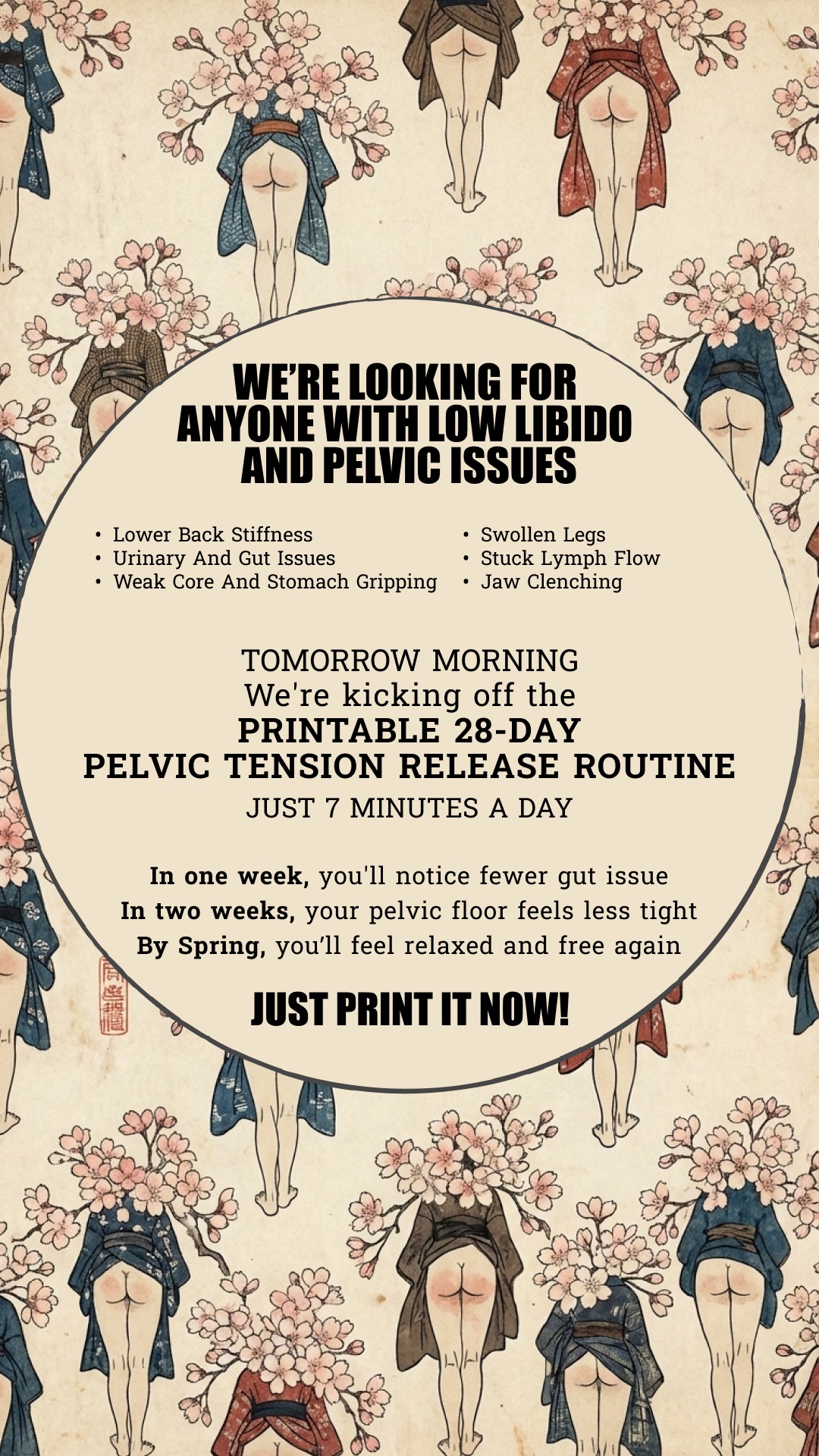
Ran for 3 days, from March 24 to March 27, 2026, the last day Crush saw it.
Run by BodyMind Reset on Facebook. Crush is not the advertiser and does not verify its claims. See this ad in Meta's Ad Library(opens in a new tab)
Want an ad like this for your product?
Crush makes new ad images for your product from this ad: your logo, your product photo, your offer.
Trials from $19.95 USD, then $79.95 USD a month. Cancel anytime.
About this ad
- Meta Ad Library ID
- 2354183498320535
- Platforms
- Facebook, Instagram, Audience Network, Messenger and Threads
- Relaunches
- 1
- EU reach
- 136
Ad text
It's been 3 weeks since my wife stopped flinching when our kids jumped on her in the morning. She's 39. For two years, even a hug that landed wrong would send a jolt through her pelvis. She thought that was just her life now. I want to tell you what I watched happen to her. Because I don't think she'd tell this part herself. My wife is the kind of woman who handles everything. She managed a full-time job, two school-aged kids, a household, and her own health issues — all without letting any of them visibly collide. From the outside, she was holding it all together. But I lived inside that house. And I saw what it actually cost her. I saw her pause at the bottom of the stairs every morning — just for a second — like she was doing a quiet internal assessment before committing to the first step. I saw her laugh at something on TV and then immediately go still, jaw tight, waiting. I saw her start sitting on the edge of chairs instead of in them, and I didn't understand why until much later. I saw her stop reaching for me at night. Not because she didn't want to. I knew that. She'd look at me sometimes with this expression I couldn't quite read — part apology, part grief — and she'd turn over instead. She told me once, very quietly, that her body felt like it belonged to someone else. That she didn't know how to be in it anymore. She was 39. She wasn't supposed to feel like a stranger in her own skin. She'd been dealing with this since our second child — three years of what the doctors kept calling "normal post-partum pelvic floor changes." Three years of kegels, twice daily, without fail. Months of pelvic physiotherapy. A specialist who suggested a pessary. Another who recommended surgery, "just as a precaution." She did the physio. She followed every protocol. She never complained out loud, but I could see the quiet math she was doing every time we made plans. Is there a bathroom nearby? Will I have to stand for a long time? Can we leave early if I need to? She stopped coming to the kids' football on the sidelines. She said it was too cold. I knew it wasn't the cold. One night I found her sitting on the bathroom floor, not crying exactly, but something close to it. She said: "I just want to feel normal. I'd give anything to feel normal for one day." The thing that finally changed it wasn't another physio or another exercise. It was understanding why the exercises weren't working. A specialist she found online explained it in a way that finally made sense: the pelvic floor sits inside a web of fascia that connects the base of the spine, the deep hip muscles, and the core. When that fascial web becomes chronically tight — through stress, pregnancy, trauma, or just years of unconscious bracing — it literally compresses the pelvic floor from the outside. It's like trying to open a door that has a brick wall built against it. You can pull the handle all day. The problem was never the handle. She needed to remove the wall first. So she started 7 minutes every morning. Fascial decompression before anything else. No squeezing. No forcing. Just signaling to her nervous system that it was finally safe to let go. Week 1: She started sleeping through the night without waking up tense. She mentioned it casually at breakfast, like it was nothing. It wasn't nothing. Week 2: Our son flew at her from across the living room for a hug — the full-body, no-warning kind. She caught him. Laughed. Didn't flinch. I stood in the kitchen doorway and just watched. Week 3: She reached for me first. I don't know how to write that without it sounding like everything. But it was everything. She said: "I feel like I'm back. Like my body is mine again." If your partner has gone quiet in ways you can't quite name. If she's stopped doing things she used to love and you're not sure why. If she brushes it off and says she's fine, but you've watched her build a whole secret system just to get through a normal day — She's not broken. She's not weak. She's not being dramatic. Her pelvic floor is compressed inside a fascial system that no one has addressed yet. And there's a reason all the conventional advice hasn't helped. She hasn't been given the right starting point. Over 210,000 women have already started releasing. 89% report the internal tension significantly eased within the first 12 days. Take the 2-minute test together. Understand exactly what her body has been holding — and why it's finally ready to let go.
Where the ad sends people
tryleaply.com
THIS is what changed my body!
Leaply VGN quiz
Learn more: tryleaply.com(opens in a new tab)