
Active· since Jun 18, 2026
- 89
- days running
- 0
- relaunches
Ad copy
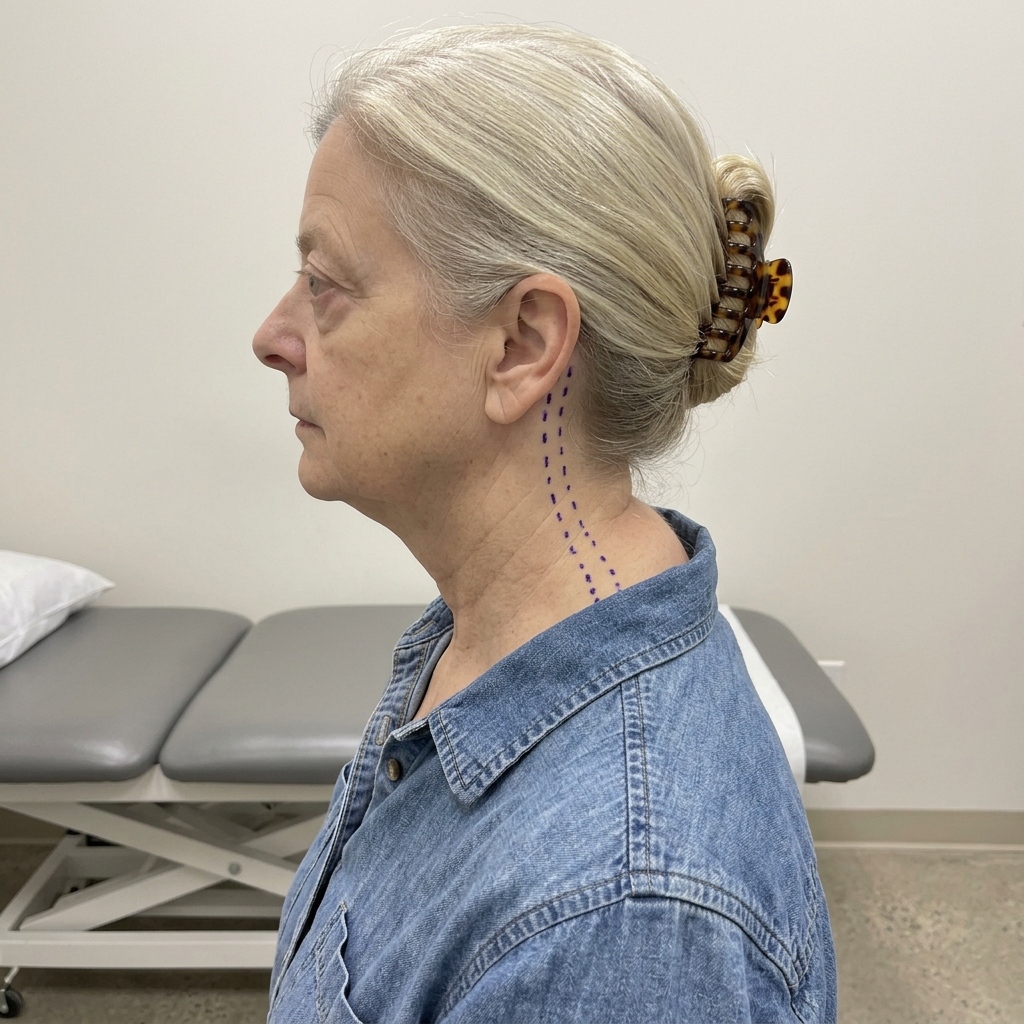
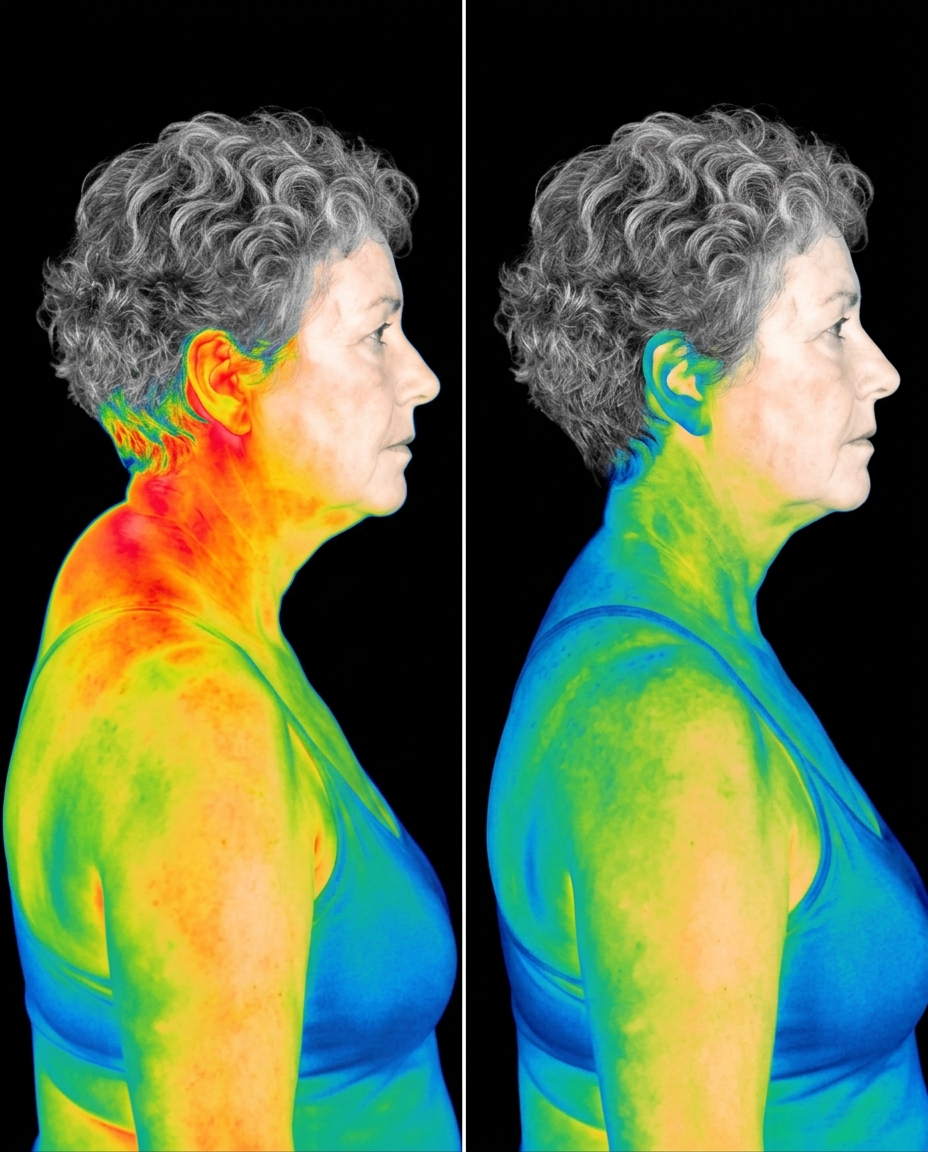
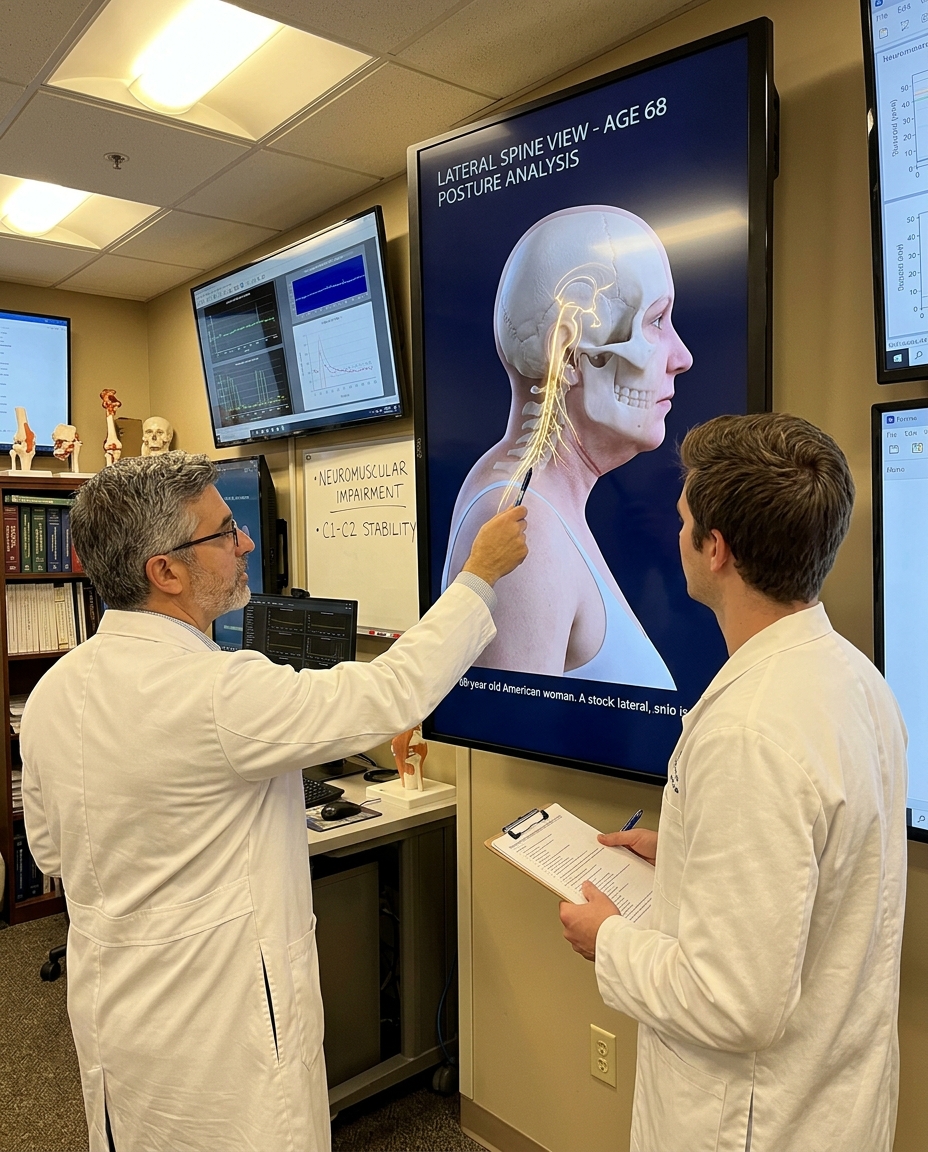
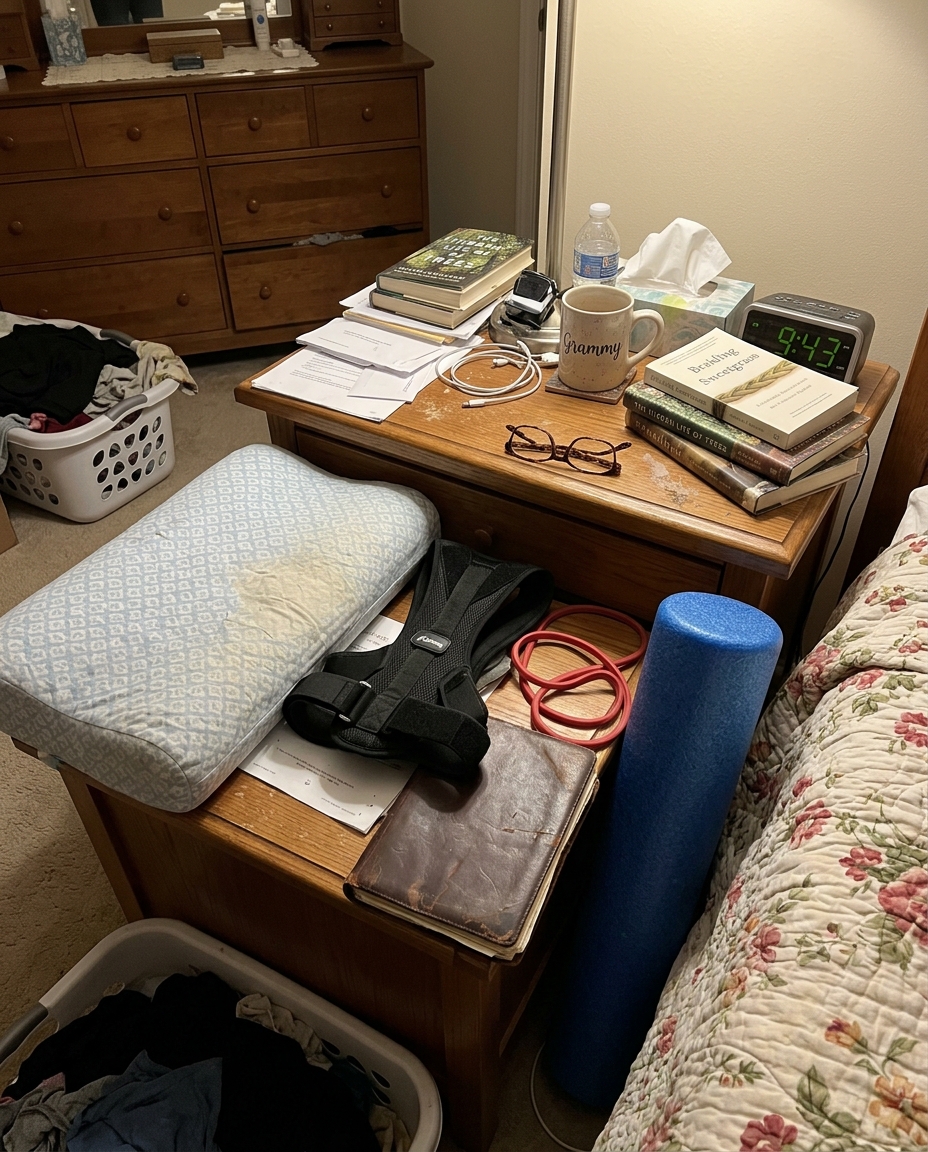
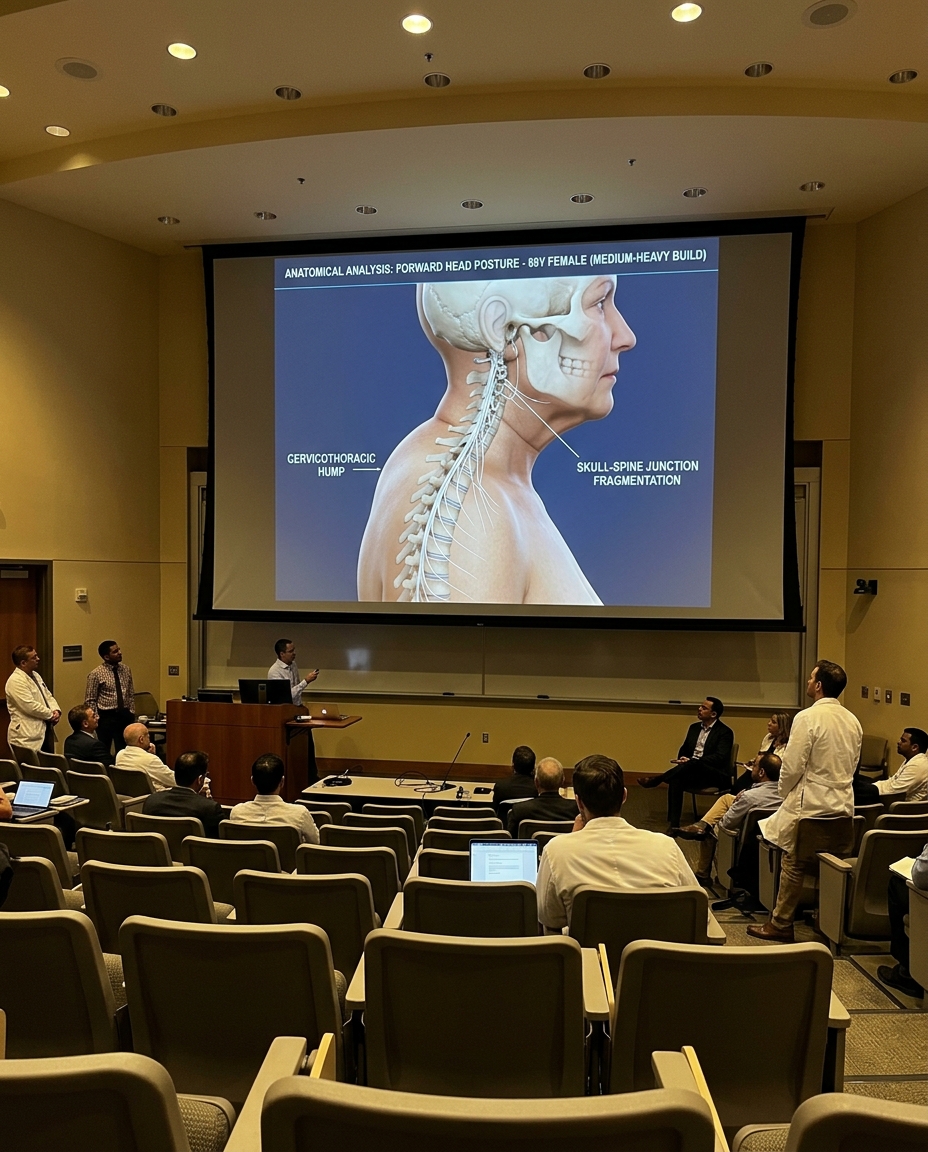
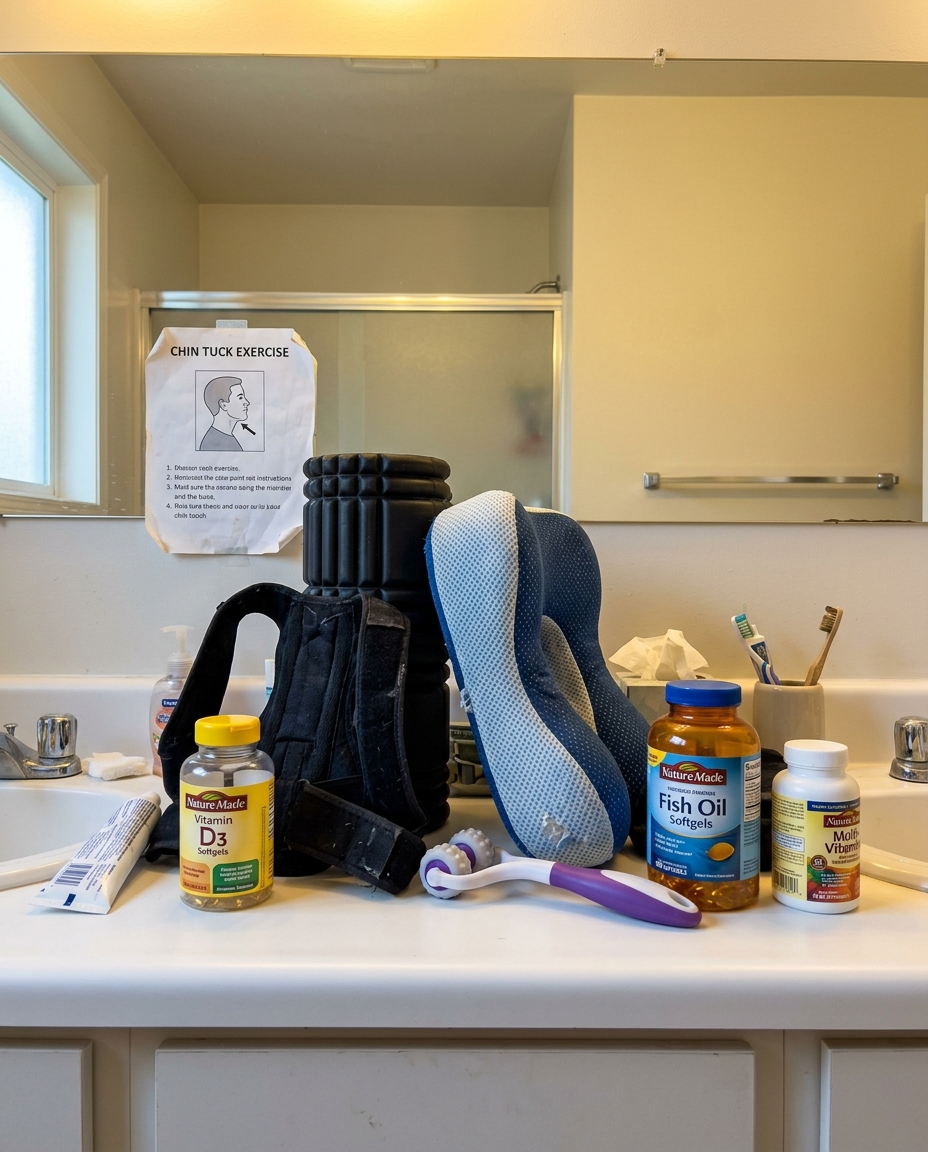
My wife started her neck hump protocol in January, 2022. Attended every session. Bought the cervical pillow. Did her exercises twice a day. Started wearing the brace, of all things. She did everything the practitioner told her. She lost herself anyway. Not to illness. To disappearance. The slow kind. The kind nobody names. Her favourite cardigan is still on the hook by the door. The high-collar one she started wearing when the management began. I can't move it. If I move it, something shifts that I'm not ready for. I need to tell you what happened to Diane. Because I'm seeing the same posts on Facebook that I was making just months before she disappeared — "my wife's practitioner told her her measurements are elevated, any tips?" and it makes me physically ill. If you're over 50 and your neck hump is building, or someone you love has one, please read this entire thing. I know it's long. I know you're scrolling. I know you have things to do. Three years ago I would have given anything, everything, for someone to tell me what I'm about to tell you. Diane went in for a routine assessment in December, 2021. She felt fine. Better than fine. She'd just turned 56. She still organized every gathering on our street. She still called all the shots at Sunday dinners. She still walked into every room like she owned it — not because she was loud, just because she was fully, completely there. Two days later her practitioner called. Forward head of 2.4cm. Tissue buildup at the cervicothoracic junction. "Your measurements are significantly elevated, Diane. We need to talk about your posture habits." Diane was quiet on the call. I was in the kitchen pretending not to listen. "How much time do you spend at a screen?" "Work all day. Some evenings. Weekend driving." "That's enough to do this. You need to start a management protocol. Immediately. We'll reassess in three months." Diane hung up the phone and sat at the kitchen table for forty minutes without saying anything. Then she stood up, walked to the bedroom, and reorganised everything. I watched her buy a $180 ergonomic monitor stand. A $90 cervical support pillow. A $40 posture brace. Two months of sessions pre-booked. The whole setup, redone in under an hour. "That's it," she said. "I'm starting tomorrow." And she was. For 103 days, she didn't miss a thing. Every session. Every exercise. Every morning with the brace. Not at her niece's wedding in February. Not at the neighbourhood block party in March. Not at her own 57th birthday dinner in April where her sister arrived and Diane had done her full routine before breakfast but was still positioning herself at the edge of every photo. She stopped going to her Tuesday night book club because she couldn't sustain being fully present for that long while managing. She lost her confidence in the rooms she used to own. She lost the ease of just showing up. She lost a piece of herself she'd been carrying for thirty-five years. And she did it anyway. Because the practitioner said to. She bought a cervical roller, Diane, with the cervical roller, I still can't picture it. She did her exercises every single morning before work. She wore the brace for two hours every evening. She started sitting at every dinner with her back to the wall and the light behind her. She did everything right. The follow-up assessment came back on April 12th. Forward head: 2.2cm. Tissue: unchanged. She'd attended every session for 90 days and the measurements had barely moved. The practitioner said "give it more time. The cervical system changes slowly. We'll reassess in 6 months. Keep doing what you're doing." Diane came home that night and sat at the kitchen table. She didn't say anything for a long time. Then she said: "Thomas, I gave up everything. Everything. And it didn't work." I told her to give it time. I told her the practitioner said six months. I told her to trust the process. She nodded. She kept doing her exercises. She kept wearing the brace. She kept attending the sessions. Five days later — five days — she woke up at 2 AM and went to the wardrobe. I found her there at 4:30 AM. Not in pain. Just standing. "I was planning tomorrow's outfit," she said. "Automatically. I was half asleep and I was already calculating." I sat with her until morning. By the time we'd had coffee, something had shifted in her. Not physically. Something quieter. Something that didn't have a name. Diane spent the next eleven months managing. I learned things about cervical signal failure I never wanted to know. I learned that when the deep cervical motor nerve signal breaks down, the management the body develops — the constant positioning, the automatic calculation, the steady withdrawal from the center of every room — becomes indistinguishable from the person. She wasn't managing her neck. She was becoming someone who manages. On day 180 of the protocol, Diane asked me three times in twenty minutes whether we'd been invited to the Hendersons' dinner. We hadn't been invited. But we used to be. Every month. Without thinking. I learned that the body develops what rehabilitation researchers call a compensation loop. The practitioner told me it's the same cycle they see in established inhibition cases. She said the compensation loop is what keeps the management running even when the protocol is being followed. She said it was the only thing they had at this stage and at this point they were hoping it could buy her stability. It bought her eleven more months of the same. Month 8, her social calendar started contracting. She cancelled three events. Then she stopped suggesting them altogether. Month 10, she stopped proposing the good table at the restaurant. She started arriving early to assess the seating before I got there. I called our daughter. Month 11 — March 19th — I was in the living room. She'd asked me to leave while she did her brace protocol. She didn't want me to watch anymore. I sat in the kitchen and I knew. Not that something acute had happened. That something slow had finished. The Diane who used to fill a room had been replaced, one session at a time, by a Diane who assessed every room before she entered it. I drove to her next appointment alone. The exercise protocol was still on the counter. The brace was by the door. The cervical pillow was on the windowsill above the sink. Her favourite high-collar cardigan was still on the hook by the door. Where it hangs today. I sat in her chair. I didn't move for six hours. The house was so quiet I could hear the refrigerator hum. Twenty-eight years. And the only sound was the refrigerator. I tried to go back to normal. I couldn't. Because every time I opened my phone I saw people her age posting things like "practitioner said my forward head is a little elevated, anyone tried the posture brace?" or "annual assessment, slightly elevated tissue, no big deal." And I knew — I KNEW some of them were doing exactly what Diane did. Attending. Exercising. Bracing. Complying. And disappearing anyway. I couldn't just sit there and watch it happen. So I started researching. Not because I wanted to. Because I had to. Because if Diane gave up everything for nothing, if I can't help even one person avoid what happened to her, then I can't live with that. I read for weeks. Rehabilitation journals I barely understood. Cervical health forums. Studies out of Europe and Canada. And one thing kept coming up, over and over, that no practitioner ever told us: The reason Diane's measurements didn't come down is that management only stops the progression of new load. It doesn't repair what's already broken. Specifically: the brain-muscle signal. The brain-muscle signal is the continuous activation pathway inside every deep cervical motor nerve. When accumulated forward load breaks down the cervical system, it inhibits the brain-muscle signal and the inhibition floods the deep cervical layer with dormancy that keeps the muscles quiet long after the trigger has been addressed. Management reduces the load. It doesn't restore the signal. And here's what no one told us. After age 40, the cervical motor nerve system's ability to restore the signal on its own declines every single year. The one approach that actually reaches the inhibited motor nerves — clinical-grade graduated program-specific direct EMS — becomes nearly impossible to replicate through surface devices or manual approaches. Your surface muscles receive it. The deep motor nerve layer doesn't. Taken through a generic EMS device without the right program specificity, almost none of the activation survives the surface layer and reaches the inhibited motor nerves. By 55, most people have years of accumulated cervical signal failure with no meaningful direct activation getting through — without knowing it. And here's the part that made me sit up straight: When your brain-muscle signal is broken, the tissue buildup doesn't stop just because the management started. Diane's measurements weren't staying elevated because she wasn't trying hard enough. They were staying elevated because the signal failure that the accumulated load had triggered was still running — and nothing she was using was calibrated specifically enough to reach her deep cervical motor nerves and restore it. Read that again. Her neck wasn't failing because she wasn't managing. It was failing because the signal failure the accumulated load had started was still running and the activation that could have restored it never reached her. And here's why management alone didn't save her: attending sessions manages the position from above. It doesn't restore the brain-muscle signal that's already broken below. Her signal failure was already established by the time the practitioner told her to manage. The dormancy was still running. Exercising, adjusting, bracing — those things slow the rate of new load accumulation. They don't restore the signal that's already broken. That's why her measurements wouldn't move. She gave up everything she loved for 103 days to stop adding load to a signal failure that was already running inside her. I sat with that for three days. And then I started looking for something that actually worked. I went to the wellness store. I stood in that aisle for forty minutes. Posture brace. Cervical traction device. Foam roller kit. "Cervical health" 30-day program. Generic EMS device — $49, single frequency, the cheap stuff. I bought the cheap EMS device. Used it for two weeks on Diane. No changes to her measurements. I started Googling and what I found made me throw it in the trash. Standard EMS devices run at single fixed frequencies. The clinical research showing direct EMS restoring motor nerve activation uses graduated program-specific parameters calibrated for each inhibition stage — specifically matching the activation to where the dormancy actually is. And even at the right frequency, motor nerve activation requires bilateral delivery. Without bilateral delivery targeting both sides of the cervical system simultaneously, the signal is asymmetric. Without 19 graduated intensity levels, you can't build the activation progressively as the inhibited nerves begin to respond. You're overloading dormant nerves from day one instead of meeting them where they are. Calibration is everything. The right approach at the wrong delivery does nothing. I was furious. I'm still furious. About a week later I was reading a thread on Facebook — one of those cervical health groups, full of people like Diane was, "elevated measurements" people, "early progression" people — and a woman posted something that stopped me cold. She said her husband had found a device for her that combined 8 unique programs at graduated intensity levels with bilateral cervical delivery and clinical-grade motor nerve pathway targeting. Her forward head went from 2.6cm to 1.1cm in ten weeks. Without stopping any of her other management. Without doing anything else different. I read that post six times. I started looking into the device she mentioned. And what I learned is that there are five things a serious signal restoration device has to do at the same time, or it's a waste of your money: It has to deliver 8 unique programs calibrated for different inhibition stages — not the single fixed frequency in cheap surface devices. That's the range used in clinical research demonstrating motor nerve signal restoration. Below that specificity, you're not reaching the inhibited layer. It has to include 19 graduated intensity levels — not a fixed maximum setting. The graduated levels allow progressive reactivation by meeting the dormant nerves at their current response threshold and building from there. Without it, you're overloading inhibited motor nerves that can't yet respond at full intensity. It has to deliver bilaterally — both sides of the cervical zone simultaneously. The cervical holding system is a paired mechanism. Unilateral delivery creates asymmetric reactivation. Without bilateral delivery, the signal restoration is incomplete. It has to include clinical-grade motor nerve pathway targeting — not surface muscle stimulation. The inhibition is at the deep motor nerve layer. Surface stimulation activates skin sensation and surface muscles. The inhibited motor nerves? Never even touched. And it has to be third-party tested for parameter delivery. Not "clinical-grade" on the label. Actually verified to deliver the parameters it claims. Five things. All five. At the same time. I went through every device I'd looked at in the wellness store. Not one of them did all five. Most did one. The expensive ones did two. None of them paired bilateral delivery with graduated intensity, let alone added program specificity and verified parameters alongside. That's when I found Cevera. It was the only device I could find that hit all five. 8 unique programs. 19 adjustable intensity levels. Bilateral cervical delivery. Clinical-grade motor nerve pathway targeting. Third-party tested parameters. 90-day money-back guarantee — if you don't notice the difference, you get every penny back, no questions asked. I almost didn't order it. After the wellness store aisle. After the cheap EMS device. After eleven months of watching Diane disappear. After everything. But I had a brother-in-law who was managing like Diane used to manage. I had a colleague with "borderline" early cervical progression. I had Diane. I ordered it. Diane's brother Frank. Came back from a routine assessment with a forward head of 2.2cm. Didn't know what to do. I sent him a device. I didn't ask. I just sent it. Wrote a note that said "If you don't use this every morning I will never speak to you again, Frank, I mean it." He used it. He kept his management protocols — he wouldn't stop them, he's stubborn the way Diane was stubborn — but he used it every morning for 15 minutes. He went back to his practitioner four weeks ago for a follow-up. Forward head: 1.1cm. Down from 2.2cm. In ten weeks. He hadn't stopped any of his management. He hadn't changed his ergonomic setup. He hadn't done anything else differently. The only thing he changed was the device he used in the morning. He called me crying. Frank. 57 years old. Crying on the phone like a kid. He said: "Thomas, I think Diane almost disappeared because nobody told her about this." I had to hang up. Then there's my colleague. 44, two kids, "borderline early progression" at her last assessment. Started using it six weeks ago. She says her morning management has stopped. She says the low-level awareness she'd been carrying for two years — the one her practitioner said was "probably just habit" — is gone. My neighbour Karen. Her husband watched her go through the same thing four months before Diane started. Two families on the same street watching the same disappearance happen. Karen started using it two days after I told her. She says it's the first time since it started that she doesn't feel like she's waiting for things to get worse. I told my sister. I told Frank. I told the women in Diane's book club when she finally went back. I told the neighbours at our street barbecue. I'm not a doctor. I'm not a scientist. I'm not selling anything and I don't get a penny from any of this. I'm a 61-year-old man sitting at our kitchen table at 2 in the morning because I can't sleep and I can't stop thinking about the eleven months I watched Diane disappear and how close we came to that being permanent. Here's what I know because I lived it: Management reduces the load accumulation. It doesn't restore the brain-muscle signal that's already broken. A posture brace holds the position. It doesn't address the signal failure the muscles are still under. Cheap EMS devices without program specificity and bilateral delivery don't reach your deep cervical motor nerves. You're using something that sounds right and does nothing. Diane gave up everything she loved for 103 days and it almost didn't save her because nobody told her that the signal failure was still running inside her — and that the only thing that could have restored it was never reaching her. I wish someone had told us before January, 2022. Before the routine assessment. Before the brace by the door. Before the 103 days of twice-daily exercises. Before the cardigan on the hook that I watched her reach for every single morning. She can still go forward. You can. The woman you love can. The page that explains all of this — the brain-muscle signal mechanism, why the measurements don't move when you manage, what your practitioner doesn't know about deep motor nerve activation, and what Cevera actually delivers — it's the page I found at 3 AM. Not managing. Restoring. That's the line that finally made it click for me. I want you to read it. Not for me. For whoever you'd leave behind if this kept going. 👉 https://trycevera.com/pages/adv2-womens-wellness-report Diane used to say: "You can't undo the drift, but you can stop it." She was right. We stopped it. — Thomas Marsh, age 61. P.S. Her cardigan is still on the hook by the door. I don't need to move it anymore. Because she reached for something different this morning. An open neckline. For the first time in three years. But for eleven months — eleven months — I watched her reach for that cardigan every single morning and disappear a little more each time. And a device that costs less than her Tuesday night book club membership — a device her own practitioner told me contained exactly what her cervical system needed if only she'd known — please. Don't end up here. Don't let someone you love end up here. 👉 https://trycevera.com/pages/adv2-womens-wellness-report P.P.S. I don't work for Cevera. I don't get a penny from this. I'm writing this at 2:14 AM because I can't sleep and Diane is finally back in the rooms she used to own and Frank is 57 and stubborn and I'm grateful every time the phone rings and it's just him calling to check in. Share this with anyone you love whose neck hump keeps building. Even a little. Even "managed." Even if they've already started. Please.
Like this ad? Make it yours.
Crush rebuilds this exact creative around your product — your brand, your colors, your offer — in about a minute.