Dylan Callahan
Dylan Callahan Facebook ad: “If You're Dealing With Hair Loss. Read This”
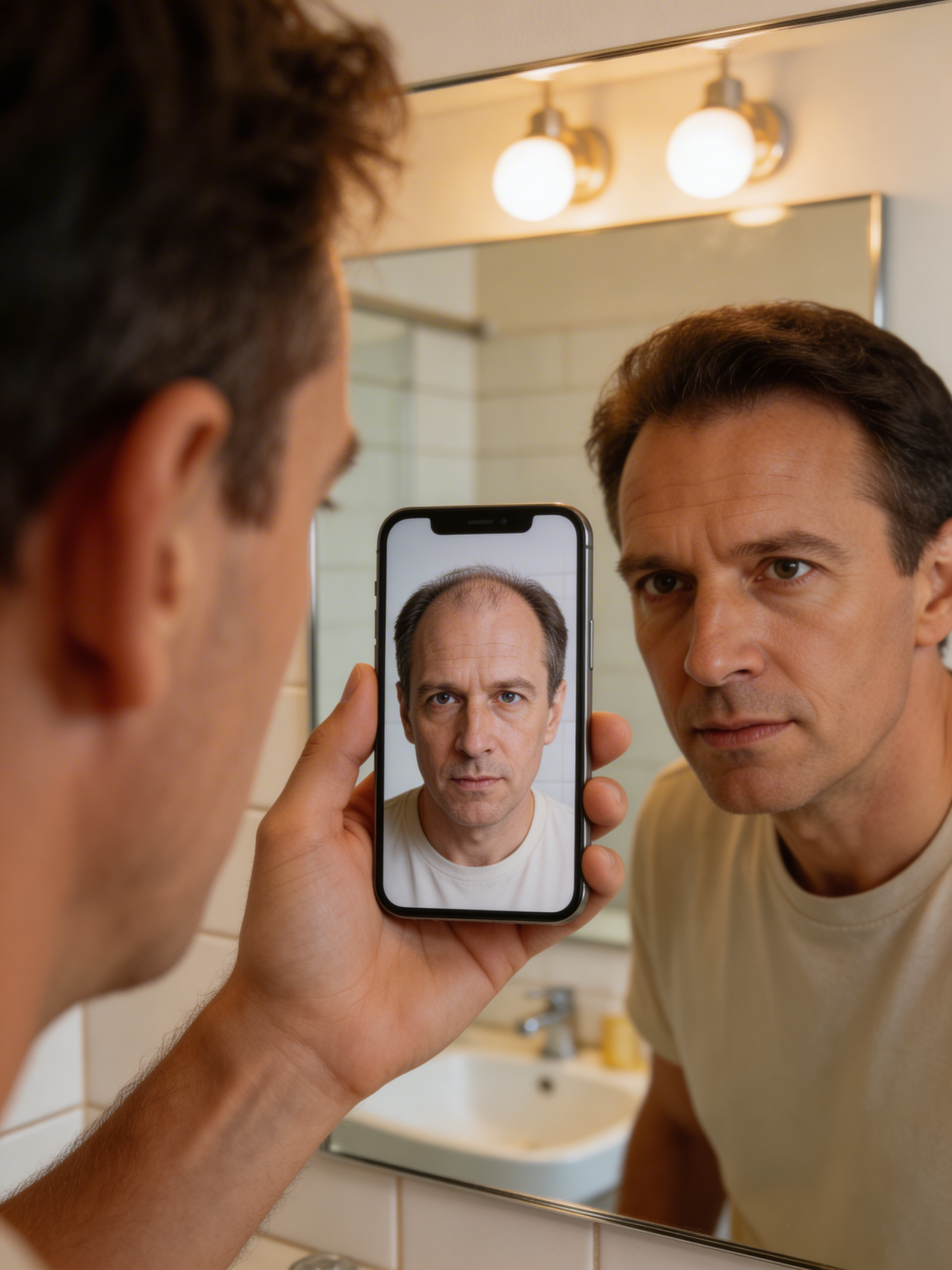
Ran for 7 days, from April 8 to April 15, 2026, the last day Crush saw it.
Run by Dylan Callahan on Facebook. Crush is not the advertiser and does not verify its claims. See this ad in Meta's Ad Library(opens in a new tab)
Want an ad like this for your product?
Crush makes new ad images for your product from this ad: your logo, your product photo, your offer.
Trials from $19.95 USD, then $79.95 USD a month. Cancel anytime.
About this ad
- Meta Ad Library ID
- 2371119263400663
- Platforms
- Facebook, Instagram, Audience Network, Messenger and Threads
- Relaunches
- 4
- EU reach
- 59
Ad text
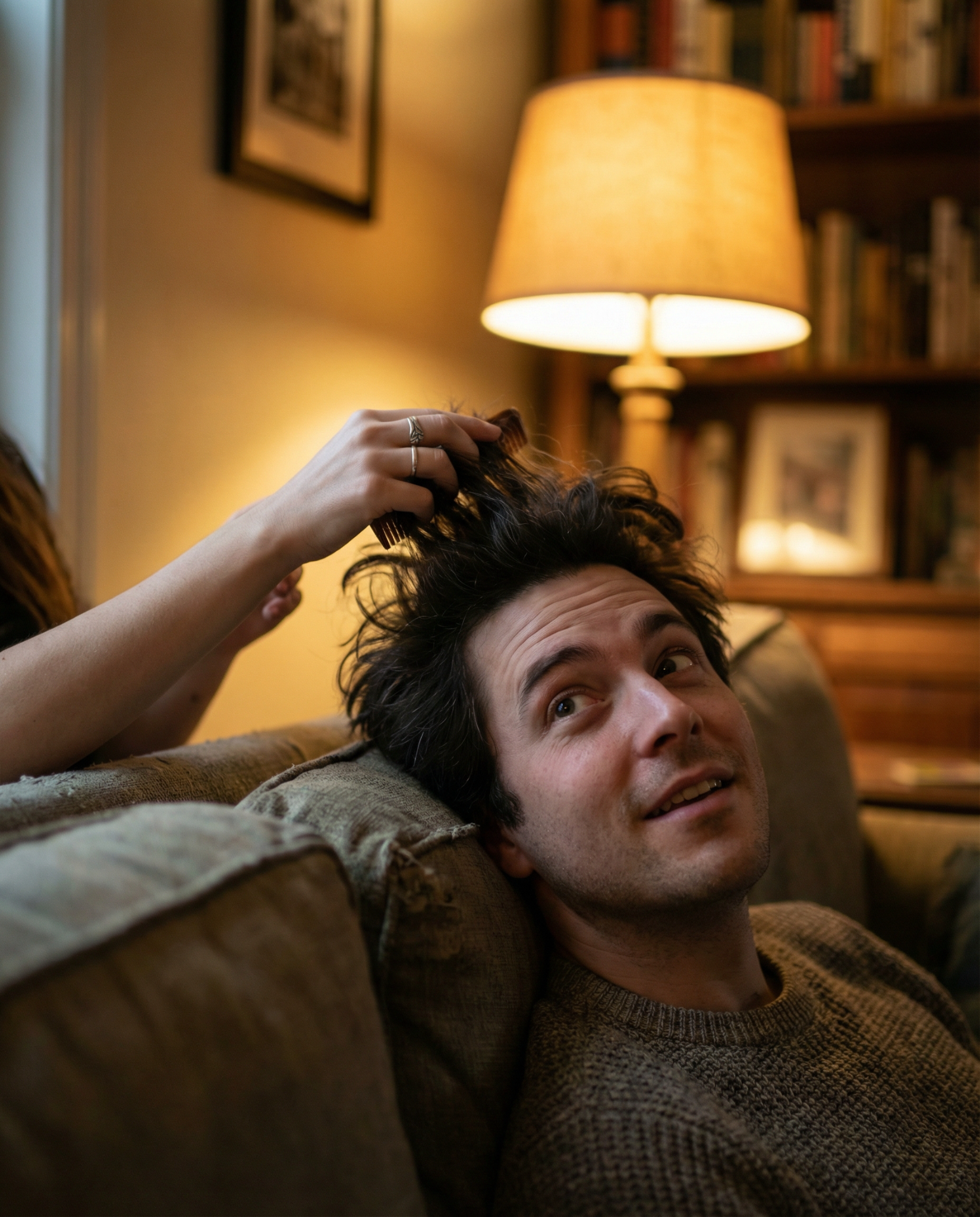
The first time I found a fistful of my own hair in the shower drain, I told myself it was normal. That's what the forums said. That's what the guy on Reddit with 400 upvotes said. "It's the shedding phase. It means it's working. Give it three months." So I gave it three months. Every morning I'd wake up and check my pillow. Not casually. Deliberately. Like a ritual I couldn't stop. I'd scan the fabric for hairs, then get in the shower and watch hair collect in the drain. A small dark nest of hair that used to be attached to my head. Then I'd stand in front of the mirror under the overhead light and tilt my head. First the crown. Then the temples. Checking if today was worse than yesterday. Pulling out my phone to compare photos from a week ago. A month ago. It was always worse. I was 29 years old. I wasn't supposed to be doing this. Here's what nobody tells you about minoxidil. They tell you it's FDA-approved, the gold standard, that it works for 60 to 70 percent of people. All technically true. What they don't tell you is how it works. Minoxidil forces blood flow to your scalp. That sudden rush of circulation pushes out weak, miniaturized hairs. The idea is stronger hairs replace them. In practice, you watch your hair fall out in clumps for months while praying something grows back. They call it the "dread shed." That name exists because enough men experienced it to need one. My scalp burned. Not a tingle. An actual burning sensation that never fully went away. The propylene glycol made my skin red and irritated. I'd scratch my scalp at my desk and flakes would fall onto my keyboard. My hair was greasy all the time. Flat. Limp. I'd style it in the morning and by noon it looked like I hadn't washed it in a week. I started planning application times around my schedule. Date nights meant skipping the evening dose so my hair wouldn't feel like I'd dipped it in cooking oil. I was spending more time managing the treatment than managing the problem. After three months of the shed, the burning, the grease, the obsessive mirror checks, the drain counting — my hair looked roughly the same. Maybe worse. The forums said "give it six months." My reflection said "what are you doing to yourself?" But I kept going. Because I was terrified of what would happen if I stopped. That's the part that broke me. The dependency. Every thread said the same thing. If you stop, you lose everything. Not just what you gained. Everything. Sometimes worse than before you started. I was trapped. Using a product that burned my scalp, made my hair greasy, caused months of shedding, and produced zero improvement. But stopping meant starting over from a worse position. I lasted eight months. Eight months of the shed, the grease, the itch, the burn. Eight months of feeling like I was losing a fight I never signed up for. I quit on a Tuesday morning. Put the bottle in the trash and felt relief for about six hours. Then the panic hit. The minoxidil rebound. All the hair you maintained starts falling out. The follicles you were artificially supporting go right back to miniaturizing. Sometimes faster than before. I'd spent eight months and $300 on a treatment that left me with thinner hair, a damaged scalp, and a specific kind of anger that only comes from trusting a system that failed you. I looked into finasteride. Couldn't do it. Too many posts about sexual side effects. Decreased libido. Erectile dysfunction. The UK's medical regulatory agency issued a formal warning about persistent sexual dysfunction. I wasn't willing to trade my sex life for my hair. I looked into transplants. $12,000 for the crown alone. And the surgeon said I'd probably need finasteride afterward anyway. So the $12,000 surgery still led back to the pill I refused to take. I was 31 and starting to accept this was just who I was now. The guy with the hat. The guy who angles his head in photos. The guy who avoids bathrooms with fluorescent lights. Then in October I flew to Portland for a college friend's wedding. I hadn't seen Ryan in almost two years. Last time, we'd sat at a bar and the conversation drifted to hair. Both thinning. His crown visible under the bar lighting. Mine worse. We joked about it the way guys do when something actually hurts. So when I saw him at the reception, I did a double take. His hair was different. Not infomercial-level. Not suspicious. Just thicker. Fuller around the temples. The crown I remembered being see-through was covered. He looked like he did three or four years ago. During a break I found him near the bar and asked. "Man, what did you do?" He laughed. He knew exactly what I meant. Same minoxidil experience. The shed, the burn, the grease. Plateaued after six months. Dermatologist wanted to add finasteride. He refused, same as me. Quit and resigned himself to it. Then months later, during a routine mole check, his dermatologist made an offhand comment. "Have you looked into copper peptide research? There's a peptide called GHK-Cu showing interesting results for follicle signaling." She wasn't selling anything. It was a casual remark during a skin screening. Ryan looked it up. Found studies. Found a serum using GHK-Cu as the main active ingredient. The thing that made him try it was one detail. No shedding phase. After what minoxidil put him through, that was the only thing that mattered. I asked him how it worked. Not the results. The mechanism. Because I'd been burned enough to know "it just works" isn't an answer. Minoxidil is a vasodilator. It floods your follicles with circulation. That's why weak hairs shed. It's a brute-force approach. You're flooding a dying garden with a firehose and hoping the strong plants survive. GHK-Cu works completely differently. It's a signal peptide your body already produces, but production declines with age. It sends a biological repair signal to damaged tissue, including follicles. It tells the follicle to start its natural rebuilding process. It doesn't force blood flow. It doesn't rip out weak hairs. It signals. Signaling vs. forcing. That distinction matters more than anything I've learned in three years of obsessive research. No shedding phase because you're not pushing out weak hairs. You're telling dormant follicles to wake up. As long as the follicle is dormant and not dead, the signal can reach it. Ryan told me something else. Dormant follicles don't stay dormant forever. There's a window. The follicle is alive under the surface, miniaturized but functional. Over time, without the right signals, it dies permanently. Nothing topical brings it back. That's transplant territory. Every day you wait, that window gets smaller. His timeline: less hair in the drain by week two. No scalp irritation. No grease, no residue. Baby hairs by week six. Barber noticed by month four. By month five, the hat was a choice, not a requirement. I watched him take a group photo at that wedding. He didn't check a mirror. Didn't adjust his hair. Didn't pick a specific angle. He walked into the frame and smiled. That small, automatic freedom was everything I wanted. Not perfect hair. Just the absence of the anxiety. I ordered the serum the next day. Expected nothing. After minoxidil, the laser cap, the rosemary oil, every Amazon serum that felt like scented water, I had zero trust left. Week one. No burning. No itching. No grease. No residue on my pillowcase. After eight months of minoxidil turning my scalp into a red, oily mess, a product that felt like nothing was a relief. Week two. Less hair in the drain. I'd been photographing it daily. By day ten, visibly less. I compared photos. I wasn't imagining it. Week four. The thin spot at my crown looked less obvious under bathroom lighting. The light wasn't slicing through to my scalp the same way. Week six. Baby hairs around my left temple. Short, fine, pale. Maybe twenty of them. New. Week ten. My girlfriend ran her hand through my hair and said "your hair feels thicker." She didn't know what I was using. Week twelve. I didn't request a refund. My crown was covered. Not dense, but covered. I was brushing my hair normally. Like I used to. I left the hat on the hook one Thursday morning. Didn't think about it until I was at work. Waited for the anxiety to hit. It didn't. Month four. My barber said my hair was coming in thicker at the crown. Asked if I'd started taking vitamins. "Whatever you're doing, keep doing it." Month five. Group photo at a friend's birthday. I didn't check the lighting. Didn't adjust my hair. I stood there and smiled. It's not a miracle. My hair isn't what it was at twenty-two. But it's thicker. It's real. And it's growing. I know there are guys reading this who are exactly where I was. Sitting on the couch after quitting minoxidil. Scalp recovering. Hair thinner than when you started. Scrolling Reddit at two in the morning looking for someone whose experience matches yours. I'm not going to tell you this is different because a bottle or a Facebook ad says so. I'm telling you because of how it works. Every product you've tried either forced something or rinsed off in two minutes. This does neither. It signals. It works with your biology instead of overriding it. No shed. No rebound. No burning. No grease. That's not a marketing claim. That's a mechanical difference. If you're curious about how GHK-Cu copper peptides and follicle signaling actually work, the link below is a good place to start. If you're on minoxidil and you hate every second of it, it's worth looking into. If you quit and you're watching the rebound happen, it's worth looking into. If you're stuck in the research spiral telling yourself you'll start next month, it's worth looking into. But don't wait too long. Your follicles are either dormant or dead. And dormant doesn't last forever. The link is below.
Where the ad sends people
fleava.shop
If You're Dealing With Hair Loss. Read This
Fleava
Learn more: fleava.shop(opens in a new tab)