Dr. Joseph Smith
Dr. Joseph Smith Facebook ad: “The IVF Variable Nobody Optimized”
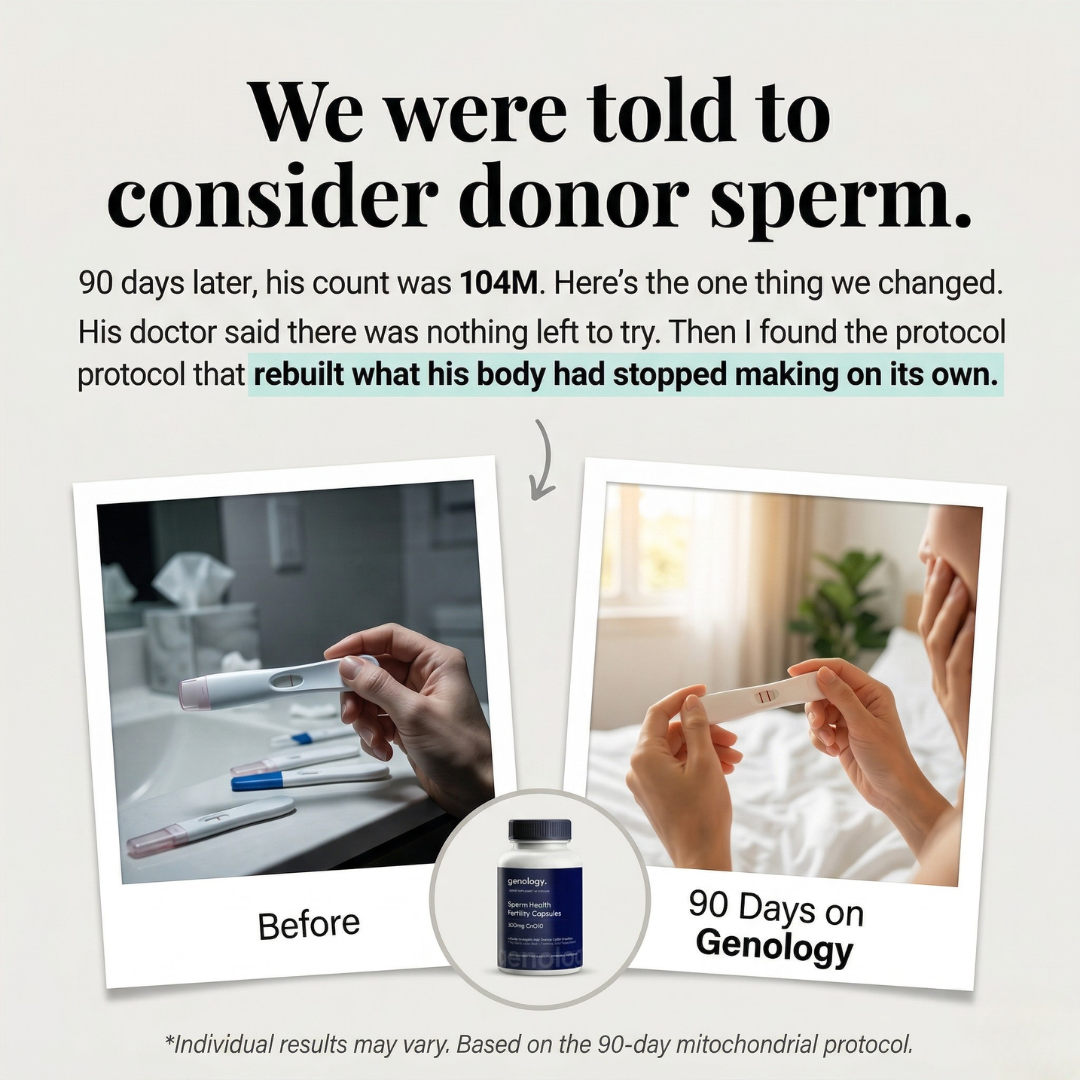
Ran for 1 day, from March 26 to March 27, 2026, the last day Crush saw it.
Run by Dr. Joseph Smith on Facebook. Crush is not the advertiser and does not verify its claims. See this ad in Meta's Ad Library(opens in a new tab)
Want an ad like this for your product?
Crush makes new ad images for your product from this ad: your logo, your product photo, your offer.
Trials from $19.95 USD, then $79.95 USD a month. Cancel anytime.
About this ad
- Meta Ad Library ID
- 2395551290872186
- Platforms
- Facebook, Instagram, Audience Network, Messenger and Threads
- Relaunches
- 0
Ad text
Your RE gave you a 47-step IVF protocol. They told him to take a multivitamin. That gap could cost you $25,000. If you're preparing for IVF right now — injecting yourself nightly, tracking every blood draw, managing a supplement spreadsheet for your eggs — read this before your next cycle. I made a mistake that cost us $28,000 and a year of heartbreak. It had nothing to do with my eggs. I'm Megan. 35. My husband James and I tried for two and a half years before starting IVF. I was militantly ready. CoQ10 for egg quality. Prenatal vitamins. Mediterranean diet. Acupuncture twice a week. Cut caffeine, alcohol, processed food. Read "It Starts With the Egg" cover to cover. Built a spreadsheet tracking 11 supplements. IVF was the most important project I'd ever managed. While I endured a 47-step protocol — stim medications, trigger shots, blood draws, ultrasounds, hormone monitoring — the clinic told James: "Take a multivitamin. Avoid hot tubs. Abstain for two to three days before collection." That's it. No sperm DNA fragmentation test. No referral to a reproductive urologist. No discussion about whether his sperm quality would determine if our embryos survived past Day 5. He bought CoQ10 from CVS. 100mg. Cheapest on the shelf. I didn't question it. I was too busy managing my own protocol. But nobody — not our RE, not the nurses, nobody — explained that his sperm determines up to half of IVF outcomes. Not just fertilization. Embryo quality. Implantation. Even miscarriage risk. They treated his side like a footnote to a $28,000 procedure. Our first retrieval looked promising. 14 eggs. 11 mature. 7 fertilized. Day 5: 2 made it to blast. We transferred one. Two weeks later I was in the clinic bathroom staring at my bloodwork. HCG negative. $28,000 gone. Three months of preparation. The injections. The egg retrieval under sedation. The hope. Gone. My RE said: "Sometimes embryos just don't take. We can try again." Another $28,000. Another round of everything. The question I couldn't stop asking at 2 AM: Was it my eggs? Was it me? What did I do wrong? I researched obsessively. And what I found made me furious. Here's what nobody explained: ICSI doesn't fix damaged sperm. It just puts damaged sperm closer to the egg. ICSI selects sperm based on appearance. Shape. Movement. But you can't see DNA fragmentation at 400x magnification. A sperm can look perfectly normal and still carry shredded DNA inside. Think of it like a delivery truck. ICSI picks the truck that looks cleanest and drives straightest. But nobody checks whether the cargo — the genetic blueprint for half your baby — has been destroyed in transit. That damage comes from oxidative stress caused by damaged mitochondria inside the sperm cell. Mitochondria are tiny engines powering every sperm. When they're healthy, they produce energy. When they've been worn down by age, heat, toxins, stress — they produce toxic exhaust instead. Molecules that shred the sperm's DNA from the inside out. The embryologist picks that sperm. Injects it into your egg. The embryo starts dividing. Day 1. Day 2. Day 3... Then it stalls. Or transfers but doesn't implant. Or implants then... chemical pregnancy. Your doctor says "sometimes embryos just don't take." What they don't say: sometimes the paternal DNA was too fragmented to sustain development. And nobody checked. Then I found a 2025 meta-analysis — 9 randomized controlled trials, 781 men. Men who supplemented with clinical-dose CoQ10 (the active form, ubiquinol, at 200–300mg) showed roughly 6 times greater pregnancy odds. Six times. James's CVS bottle? 100mg. Inactive form. No absorption support. One-third the dose. Most of it destroyed in his gut before reaching his bloodstream. But more CoQ10 alone isn't the answer either. A major NIH trial gave men a cocktail of generic antioxidants — vitamin C, E, selenium, zinc, folic acid — and found zero improvement. The supplement group actually showed a decrease in sperm concentration. Random antioxidants don't work. What works is targeting the mitochondria specifically — powering the ones still running, building new ones to replace those already damaged, and defending the system during the 90-day window before retrieval. I found one company that combined all four steps into a single daily capsule: CoQ10 as ubiquinol at 300mg — the clinical dose linked to 6x pregnancy odds. PQQ at 20mg — the only compound shown to trigger creation of brand new mitochondria. Acetyl-L-Carnitine to shuttle fuel into each engine. Alpha-Lipoic Acid — the only antioxidant that works in both water and fat environments AND recycles other antioxidants. Black Pepper Extract to boost CoQ10 absorption by up to 30%. It's called Genology. No zinc. No folic acid. No kitchen-sink ingredients the NIH already proved don't work. Just targeted mitochondrial support designed for the 90 days before retrieval. I ordered it that night. 87 days until our second cycle. James took one capsule a day. Didn't overhaul his diet. Didn't start training for a marathon. Just took it every morning. On collection day, the embryologist called with his results. Concentration significantly higher. Motility jumped. She said: "Whatever he's doing, keep doing it." We asked her to check twice. 9 eggs fertilized. 6 made it to Day 5. We transferred one. Same clinic bathroom. Same chair. Same anxiety. HCG positive. Our daughter was born eight months later. I keep thinking about the math. $55,000 across two cycles. One bottle of Genology costs less than a single blood draw at the clinic. If I could hand James that bottle 90 days before our first retrieval... I wouldn't just save $28,000. I'd save myself from the worst year of my life. Right now you have two choices. Close this and hope his CVS multivitamin is enough. Hope ICSI compensates for whatever's happening inside his sperm at the DNA level. Hope "sometimes embryos just don't take" doesn't happen to you. Or start his 90-day mitochondrial preparation today. Give his sperm the same clinical-strength support you've been giving your eggs. Walk into retrieval day knowing you optimized both sides — not just yours. Genology comes with a 90-day money-back guarantee — matched to the full sperm maturation window. Not satisfied? Full refund. You're about to spend $20,000–$35,000 on a single cycle. Less than $1 a day to optimize the other half of the equation — with a full guarantee? That's not a purchase. That's an insurance policy. The 90-day window is counting down. Every day you wait is a day of his maturation cycle you can't get back. Don't find this after your cycle fails.
Where the ad sends people
shopgenology.com
The IVF Variable Nobody Optimized
His sperm determines up to 50% of IVF outcomes. Give it the same clinical support you're giving your eggs. 90-day guarantee.
Learn more: shopgenology.com(opens in a new tab)