
Active· since Sep 7, 2026
- 2
- days running
- 0
- relaunches
Ad copy
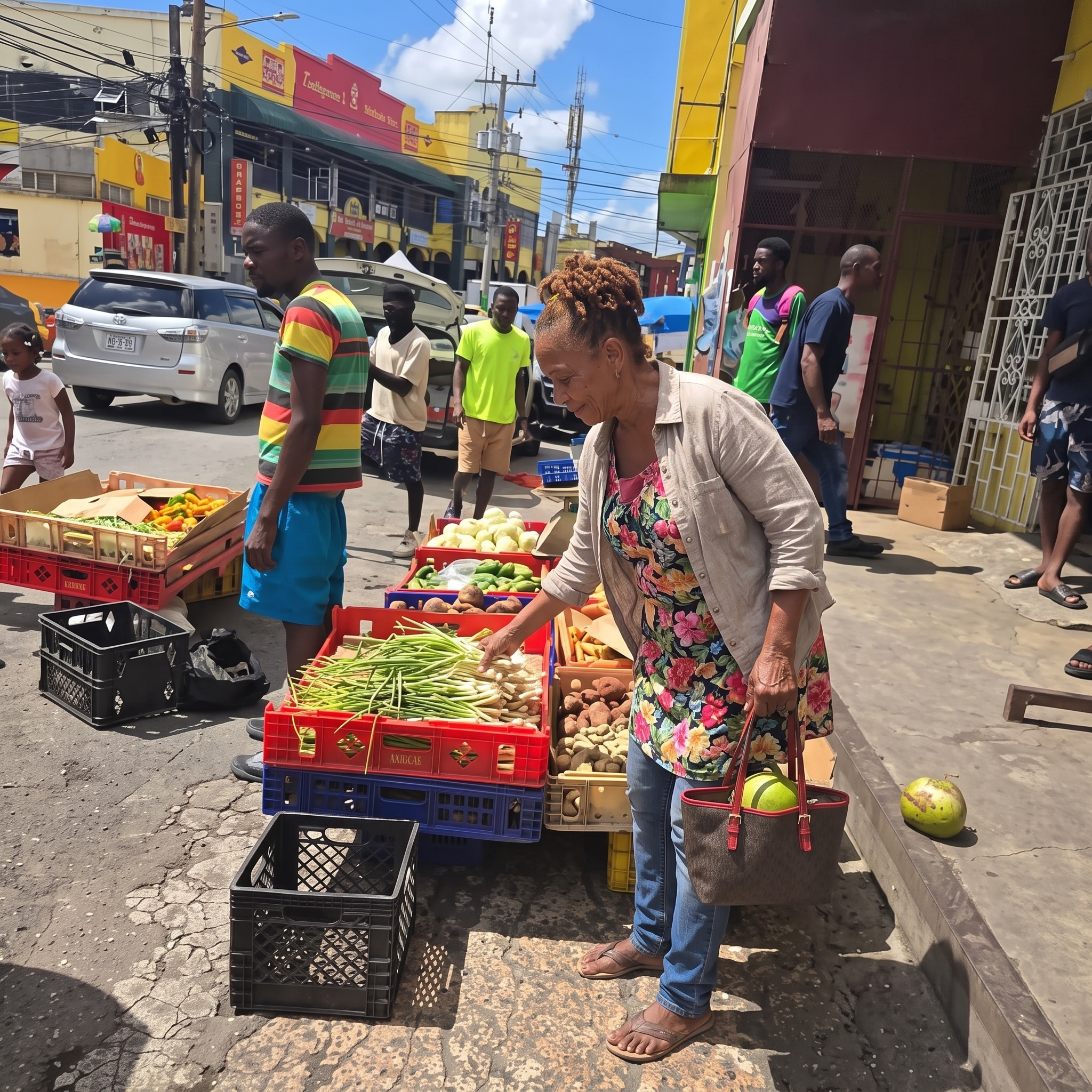
I was on vacation in Ghana, eating less than I did at home, walking all day, and somehow feeling more swollen and tired than ever. Three months ago, I was walking through a market in Accra with my cousin when an older woman stepped out from behind a stall and asked me a question that caught me completely off guard. She did not ask where I was from. She did not ask what I wanted to buy. She looked at me for maybe five seconds and said, “Do you ever feel comfortable after you eat?” I laughed because I thought she was joking. It was 2 PM. The sun was brutal. I was sweating through the back of my dress and carrying a bottle of water that was already warm. My cousin had been bargaining for fabric two stalls over, and I had stopped walking because I felt that familiar tightness in my middle. You know the kind. The kind where you are not necessarily in pain, but you cannot stop thinking about your body. You keep adjusting your clothes. You stand differently. You tell yourself you are fine because you are too tired to explain why you are not. That had been my life for longer than I wanted to admit. I was 46. I worked from home. I was not someone who ignored her health. I went to the gym when I could. I bought the expensive groceries. I had a cabinet full of supplements that promised to support everything from energy to skin to metabolism. I knew how to make a good salad. I knew how to drink more water. I knew how to start Monday with a plan and somehow end Friday night feeling like I had spent five days fighting my own body. At first, I thought it was just getting older. Then I thought it was work stress. Then I thought it was the coffee I was drinking because I could not get through the afternoon without it. Then I thought it was the bread, so I cut out bread for a while. Then dairy. Then sugar. Then I started trying to eat dinner earlier, as if my body was a difficult coworker I needed to manage with better scheduling. Some days were better than others. But the pattern stayed the same. I would wake up feeling normal enough. By late afternoon, I felt tired, heavy, and strangely disconnected from the version of myself who had gotten dressed that morning. My jeans fit at breakfast. By dinner, I wanted to change into something soft and loose and never leave the house again. I had learned how to make it look normal. I would wear a longer shirt. I would pull a cardigan forward in photos. I would say I was not hungry when really I was tired of adding food to a day where I already felt uncomfortable. My husband, Marcus, knew I had been frustrated. He would ask if I wanted to go out for dinner, and I would say I was tired. He would ask if I wanted to meet friends, and I would tell him I had too much work to do. Both things were sometimes true. Neither was the whole truth. The whole truth was that I did not want to put on anything that made me think about my middle again. I did not want to sit at a restaurant for two hours wondering if everyone else could tell I was uncomfortable. I did not want another photo where I looked at myself first and saw the one thing I had spent all day trying not to notice. I had told myself this trip to Ghana would reset me. My cousin had moved there two years earlier, and she had been begging me to visit. She told me I would sleep better because the days were fuller and I would be off my laptop. She told me I would walk more. She told me I would eat food that was simple and fresh and would forget about the weird little routines I had built around feeling bad. The first few days were beautiful. We went to the coast. We ate outside. We visited family friends who treated me like I had known them my whole life. But by the fourth day, I had the same feeling I had at home. The same afternoon slump. The same tension in the waistband of my dress. The same thought I hated having: “Why do I feel like this when I am trying so hard?” That is why the older woman’s question landed so hard. She had not asked whether I was trying to lose weight. She had not asked whether I had counted calories or tried a new workout. She asked whether I ever felt comfortable after I ate. I looked at her more closely. She was probably in her late sixties, maybe older. She had a bright patterned head wrap, a faded yellow apron, and hands that moved quickly as she sorted fresh leaves into small bundles. There were baskets around her feet filled with ginger, hibiscus, roots I did not recognize, and dark green leaves that looked almost too alive to touch. She was not trying to sell me something. She was watching me wait for an answer. I finally said, “Not really.” She nodded like she had expected that. Then she said, “You have been making your body work too hard.” I asked her what that meant. She pointed at the coffee in my hand. Then at my half-finished water bottle. Then, very gently, at the way I had my forearm pressed against my stomach. “You are tired,” she said. “You are carrying your whole day here.” I wanted to disagree with her. I wanted to tell her that I ate well. That I exercised. That I was not careless. But something about her tone stopped me. She did not sound like someone blaming me. She sounded like someone who had seen this before. So I asked her what she meant. She smiled and called out to the woman beside her, who I later learned was her sister. They spoke in Twi for a few seconds. Then she looked back at me and said, “My daughter was like you.” She told me her daughter had left Ghana for the United States when she was young. At first, she called her mother all the time asking how to make the things she grew up with. The teas. The soups. The bitter leaves her mother would prepare after a stretch of heavy food or when her daughter said she did not feel settled after meals. Her mother would tell her to go to a market, buy the fresh leaves, boil them slowly, and take time with it. Her daughter would laugh and say, “Mama, I am in Atlanta. I cannot walk out my door and find what you have there.” Then life got busier. Work got busier. Her daughter had children. She started reaching for whatever was easy. Sweet drinks with “wellness” printed on the label. Capsules she forgot to take. Gummies that tasted good but never became part of a real routine. The older woman did not say any of this like she was criticizing her daughter. She said it like a mother who had watched a familiar rhythm disappear because life got too fast. “She called me one day,” the woman said, “and she said, ‘Mama, I am tired all the time. I do not even know what feels normal anymore.’” I felt my throat tighten a little when she said that. Because I had said almost the same thing to Marcus a few weeks before my trip. I had been standing in the kitchen after dinner, cleaning up dishes I did not have the energy to clean. He asked if I was okay. And I said, “I do not even know what feeling good is supposed to feel like anymore.” The woman at the market turned to the bundles of leaves on her table. She picked up one of the dark green bunches and held it out to me. “This,” she said, “is one of the things I used to make for her.” She explained that in her family, bitters were part of a regular herbal practice. Not a punishment. Not a crash plan. Not something you took for three days because you felt bad about a weekend. A routine. A way of paying attention to digestion before the whole day started feeling off. She told me her daughter could not recreate every part of that ritual in the United States. She could not get the leaves from her mother’s stall or sit in the kitchen while the pot simmered. She could not ask her mother which root to add when a meal had been heavier than usual. But she could keep the feeling of the ritual. That was when the older woman pulled out her phone. I expected pictures of plants or recipes. Instead, she showed me a photo of her daughter standing in a kitchen in the United States with a bottle in her hand. Her daughter was smiling, but what I noticed first was the little note on the refrigerator behind her. It said, “After dinner. Do not rush.” The woman laughed when she saw me looking at it. “She is always rushing,” she said. “I told her, if you cannot have the leaves I make here, then find something you can take after meals and keep it simple.” I asked what her daughter used. She pointed to the bottle in the photo. It was Serene Herbs Soursop Bitters. I had never heard of it. She told me her daughter found it because she wanted a bitter herbal blend she could actually keep in her routine in America. Not a sweet drink that disappeared into the back of the refrigerator. Not another capsule she would forget beside the coffee maker. A liquid bitter blend she could take after meals as a small way of coming back to herself. The woman did not tell me it was exactly the same as standing in a market in Ghana with fresh leaves in front of you. She said nothing replaces the way a family ritual feels when it is made by someone who knows you. But she said it was the closest thing her daughter had found to keeping that part of home with her after she moved away. I remember thinking that sounded nice. I also remember thinking I had been fooled by nice stories before. I had bought too many products because they had beautiful packaging and a woman on Instagram said they changed everything. So I asked her why she trusted that one. She shrugged like the answer was simple. “It is bitter,” she said. “You will not take it because it is fun. You take it because you are tired of forgetting about yourself.” Then she told me to read the label. She showed me the image on her phone and pointed out that it was a multi-herb blend with soursop leaf, ginger, tamarind, turmeric, black seed, hibiscus, and other botanicals traditionally used in bitter herbal practices. She said her daughter liked that it had a concentrated soursop leaf extract, was made in the United States, and had third-party lab testing. I did not order it in the market. I wanted to. But I was still skeptical enough to tell myself I would look it up when I got home. For the rest of that day, though, I could not stop thinking about one thing she said. “You are tired of forgetting about yourself.” That was it. I had not been neglecting my body in the obvious ways people like to talk about. I was not lying in bed all day. I was not eating fast food for every meal. I was not refusing to move. I had been forgetting the small part of the day when I was supposed to notice how I felt. I would eat lunch while answering emails. I would drink coffee because I was tired without asking why I was tired. I would change into a giant shirt after work and call it getting comfortable. I would go to sleep promising myself that tomorrow I would have more discipline. I did not need another promise that I could become a different person by Monday. I needed a routine I could keep when life was normal and busy and not picturesque at all. When I got home, I looked up the bottle from the photo. I read the product page. It did not promise a miracle. It said the blend supported digestive health and regularity, helped support comfortable elimination, and could support a lighter, more comfortable feeling after meals as occasional bloating eased. That felt more honest to me than the claims I had been seeing everywhere else. I ordered it. When it arrived, I did not start by taking a huge amount because I was desperate for a dramatic change. I followed the directions. I started with one tablespoon after dinner for the first few days because I was new to bitters. I learned quickly that the woman in Ghana was right about the taste. It was bitter. Very bitter. I kept a cold drink nearby the first time, and Marcus watched my face from across the kitchen table like I had just eaten something suspicious. He said, “That cannot be enjoyable.” I laughed and said, “It is not supposed to be dessert.” That became our little joke. But after a few days, I started to understand why the ritual mattered. It made me slow down after meals. It made me notice the difference between eating because I was hungry and eating because I was tired, rushed, or looking for a break from work. It made me drink water with more intention instead of filling a bottle in the morning and realizing at 8 PM that I had barely touched it. And it gave me one small thing I could do consistently without turning my whole life into a project. The first change I noticed was not in the mirror. It was on a Tuesday evening. I got home from work, started dinner, and realized I was still wearing the same jeans I had put on that morning. I had not changed out of them the second I walked through the door. I had not pulled a sweatshirt over my stomach. I had not thought about whether I could make it through dinner. I was just making dinner. That sounds like nothing. If you have lived with the constant mental noise of feeling uncomfortable in your own body, you know it is not nothing. The next thing I noticed was that I stopped treating every evening like damage control. I stopped making myself a smaller dinner because I was angry about how I felt. I stopped telling Marcus I was too tired to go for a walk after we ate. I stopped feeling like the only answer was to become more restrictive. I was not suddenly perfect. I still had busy days. I still had meals that made me feel heavier than I wanted to. I still reached for coffee sometimes because I liked coffee. But I started feeling like I had a rhythm again. I had a little more energy at the end of the afternoon. I felt more comfortable after meals more often. I felt less like I was waiting for my body to betray me by dinner. A few weeks later, I called my cousin in Ghana. I asked her whether she had seen the older woman at the market again. She knew exactly who I meant. Apparently, everyone knew her. My cousin said her name was Ama, and she had been selling herbs in that same market for years. When I told my cousin I had ordered the bitters Ama’s daughter used, she laughed. Then she said something I wrote down because I did not want to forget it. “She does not think people need to be fixed,” my cousin said. “She thinks people need to stop abandoning the routines that make them feel like themselves.” That was the part that stayed with me. I did not come home from Ghana with one exotic secret that solved every problem I had. I came home with a better question. Instead of asking, “What is wrong with me?” I started asking, “What small thing have I been ignoring because I am too busy trying to force a bigger change?” For me, that answer was my digestion. It was the way I felt after meals. It was the regularity I had not paid attention to until I realized how much it shaped my day. It was the fact that I had become comfortable calling discomfort normal. If you have been ending every day feeling heavy, tired, and unlike the person who woke up that morning, I am not telling you that you need a strict diet or a perfect routine. I am telling you that you might want to ask a different question. Maybe you do not need another sweet product that feels exciting for three days. Maybe you need one small ritual you can keep after life gets busy again. I left the bitters Ama’s daughter uses here for anyone who wants to look at them. 👉 https://sereneherbs.com/products/soursop-bitters
When Your Gut Feels Better, Everything Becomes Easier
A 17-herb herbal tonic designed to support digestive comfort, bloat relief, regular elimination & daily energy. Feel lighter in days. Third-party tested.
LEARN MORELike this ad? Make it yours.
Crush rebuilds this exact creative around your product — your brand, your colors, your offer — in about a minute.