Dr. Elliot Johnson
Dr. Elliot Johnson Facebook ad: “Neurologist: Neuropathy Isn't A Pain Problem At All”
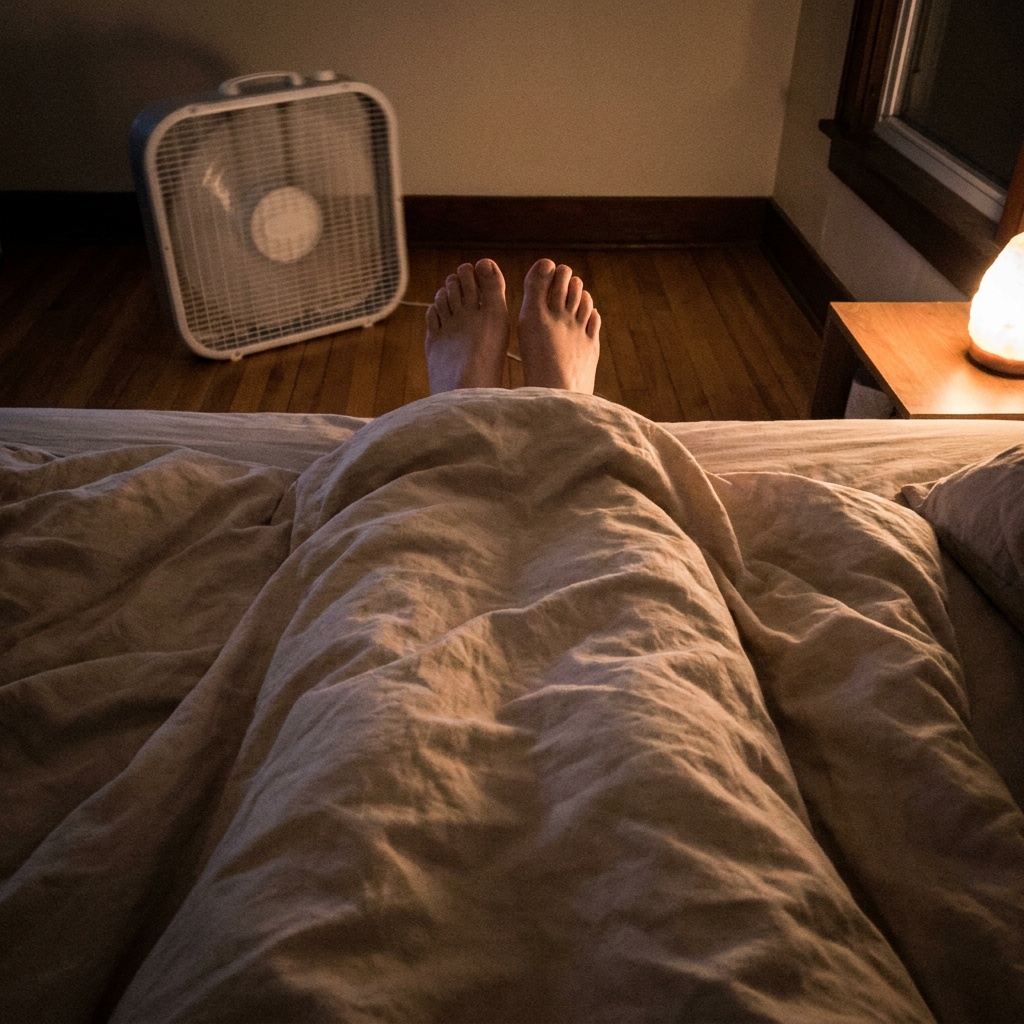
Ran for 7 days, from August 19 to August 26, 2026, the last day Crush saw it.
Run by Dr. Elliot Johnson on Facebook. Crush is not the advertiser and does not verify its claims. See this ad in Meta's Ad Library(opens in a new tab)
Want an ad like this for your product?
Crush makes new ad images for your product from this ad: your logo, your product photo, your offer.
Trials from $19.95 USD, then $79.95 USD a month. Cancel anytime.
About this ad
- Meta Ad Library ID
- 2461412617702239
- Platforms
- Facebook, Instagram, Audience Network and Messenger
- Relaunches
- 0
Ad text
When someone finally loses all sensation in their feet — the doctor doesn't write "small-fiber neuropathy" in the chart and then does something about it. He writes "peripheral neuropathy." He increases the Gabapentin. He mentions Lyrica. He mentions a foot-care referral. He does not mention that the small nerve fibers carrying sensation from those feet to the brain have been slowly dying, fiber by fiber, for years — and there's a certain point where this numbness becomes irreversible. There is a reason for that, and it has nothing to do with paperwork. It has to do with what neuropathy actually is — and where the damage is really happening. And once you understand it, you understand why Gabapentin, Lyrica, and every numbing cream you've tried have never restored a single person's sensation — and why a Nobel Prize awarded in 1998 may matter more to you, personally, than any pill your doctor has ever prescribed. I want to tell you what peripheral neuropathy actually is. Not the textbook definition. The real one. Peripheral neuropathy is a disease of starved nerves disguised as a disease of pain. The burning, the tingling, the stabbing — that's the symptom you can feel. It's the thing that wakes you at 3 a.m. It's what every drug in the standard protocol is built to quiet. Turn down the volume on the pain, and everyone calls it a day. But the actual damage — the damage that takes feeling, takes balance, takes the ability to feel the floor under you, to feel your own grandchild's hand, to feel anything at all below the ankle — is happening one layer underneath. In the tiny nerve fibers themselves. And in the microscopic blood vessels that are supposed to keep those fibers alive. Here's what almost nobody explains to you. Your nerves are not wires that run on their own. Every nerve fiber in your feet is fed by a network of capillaries so small they're invisible — vessels that deliver the constant supply of oxygen and nutrients the fiber needs just to stay alive. Choke off that blood supply, and the fiber starts to suffocate. Slowly. Fiber by fiber. Some misfire on the way out — that's the burning, the electric shocks, the "shattered glass," the spider-crawling feeling. Others go silent — that's the numbness, the muffled floor, the pebble in your shoe you never feel. That is neuropathy. Not a mystery. Not "just getting older." Nerves being starved of the blood that keeps them alive. So what starves them? Sometimes it's diabetes — years of high blood sugar sticking to the walls of those tiny vessels, coating them, stiffening them, choking off the flow. That's the most common cause, and if that's you, it matters. But it is far from the only one. Aging does it. Old injuries and compressed nerves do it. Chemotherapy does it. B-vitamin deficiency, thyroid problems, autoimmune conditions, decades of poor circulation — they all end in the same place. Starved fibers. Fading sensation. A foot that used to feel and slowly stops. The cause on your chart may be different from your neighbor's. The mechanism underneath is the same. The blood isn't reaching the nerve. The Mayo Clinic admits this on their own patient pages. The Cleveland Clinic admits it. Poor blood flow and nerve damage appear in the first paragraph of both. Your doctor knows this. Your doctor has known it since medical school. Now here is the part that should make you angry. There is not a single drug in the standard neuropathy protocol that repairs the nerve itself, and not a single one that restores the blood supply feeding it. Gabapentin doesn't. Lyrica doesn't. The numbing creams don't. Amitriptyline doesn't. They quiet the pain signal for a few hours and leave the damage exactly where it was. The standard protocol mutes your symptoms while the actual machinery — the fibers that decide whether you keep feeling your own feet — gets quietly destroyed underneath the fog. And then, when it gets worse, they raise the dose. Or add another pill to numb what the first one couldn't. That is not treatment. That is a treadmill. I have been calling it the walking pharmacy treadmill — and you have been on it for years. Maybe it started with a low dose of Gabapentin because you mentioned, almost apologetically, that your feet had started burning at night. It didn't touch it, so they raised it. Then it made you a zombie — dizzy, foggy, half-asleep by noon — and the burning was still there when it wore off. So they switched you to Lyrica. Then added a cream. Then an antidepressant "that also helps with nerve pain." Then a stronger dose of that. Maybe right now, this morning, you are foggy before your first cup of coffee, and the burning is still there anyway. And the conversation at every appointment is the same. It's a little worse. The pills aren't holding it. Let's bump the dose and see you in three months. Add. Add. Add. Never take away. Never repair. Never finish. Just one more pill. And one more. And one more. Forever. Nobody in any of those appointments is going to ask you whether you can still feel the floor when you stand up in the morning. Your doctor is not the one who is going to step you off this treadmill. I want to say that carefully, because I respect doctors. Most of them are good people working inside a broken machine. But I have to be honest with you about how the machine works. Your doctor has 7 minutes with you. Maybe 12 if you're lucky. Your doctor was trained — for four years of medical school and three to five years of residency — in a system that treats neuropathy as a one-way street. It only gets worse. You only manage it. And nothing in that training prepares him to ask whether the soles of your feet have started to feel muted, or whether the numbness has been climbing up the ankle for the last two or three years, or whether you've started gripping the wall on the way to the bathroom and stopped mentioning it. In 2018, a board-certified physician named Dr. Sarah Hallberg gave a TED talk about how the standard guidelines were making her patients sicker — how "manage it and slowly escalate the medications" was a treadmill, and how real improvement was possible, but only by ignoring the dogma she'd been taught. It has been viewed over 12 million times. Dr. Hallberg died in March 2022. In her last interviews, she warned that the system was not going to change quickly. That doctors trained in the old paradigm would keep prescribing the old protocol. That patients themselves would have to take the lead. I'm telling you this because she's not coming back, and there aren't enough doctors like her to go around. There are maybe a few hundred "doctors who left the system" in the entire English-speaking world. There are tens of millions of people living with neuropathy. You are not going to get a Hallberg. You are going to get the family doc who has 11 minutes for you and another patient in the waiting room. So you are going to have to take the lead. Not by firing your doctor. Not by stopping your medications. Not by doing anything reckless. By learning what the system was never set up to teach you — how to reach the actual source of the nerve damage instead of just masking it. Whether you spend the next twenty years walking your own neighborhood on your own two feet, or whether you spend them in a chair while everyone around you whispers about "options." The nerve. And the blood supply that keeps it alive. In 1998, three researchers — Dr. Louis Ignarro, Dr. Robert Furchgott, and Dr. Ferid Murad — were awarded the Nobel Prize in Physiology or Medicine for the discovery of nitric oxide as a signaling molecule in the cardiovascular system. It was the discovery that explained, for the first time, how the lining of every blood vessel in the human body decides whether to open or stay closed — and therefore whether blood reaches the tissue it is supposed to feed, including the small nerve fibers that give your feet the ability to feel anything at all. Nitric oxide opens the vessel. The blood follows. The nerve gets fed. That is the entire chain neuropathy breaks. And no drug in the standard neuropathy protocol restores it, or gives the starved fibers a way back. There is one drug-free technology with a peer-reviewed mechanism of action that does — and that does the second thing a damaged nerve needs at the same time. Its name is photobiomodulation. Red and near-infrared light therapy. Not a heat lamp. Not a numbing gadget. Two precise wavelengths of light — 660nm red and 850nm near-infrared — that penetrate the tissue and do something to a starved nerve that almost nothing else in this category is built to do. What these two wavelengths do to damaged nerve tissue is the only two-sided mechanism in this category I have ever seen documented in peer-reviewed research. They open the circulation today. The near-infrared light drives your body's own nitric oxide — the natural "open" signal that neuropathy has been slowly silencing for years. The tiny vessels begin relaxing again. Blood begins reaching fibers that have been starved for a decade. Warmth is often the very first thing people feel. And they help repair the nerve over time. The same wavelengths stimulate Nerve Growth Factor — the body's own signal to rebuild damaged nerve endings — and calm the inflammation grinding into the tissue day after day. Less inflammation. Better circulation. Fibers that were suffocating finally getting fed. Two sides of the same mechanism. Two wavelengths. One device you wear. Open the circulation. Repair the nerve. And here is the part that matters most for anyone who has noticed their feet going numb — the small nerve fibers in your feet do not die because they are inherently fragile. They die because the microscopic blood vessels that feed them have been choked off. Restore the blood supply, stimulate the repair signal, and in the early-to-moderate stages of small-fiber neuropathy, the fibers can begin to recover. The published evidence on small-fiber regeneration is real, it is documented, and it is the single most important piece of research most people with neuropathy have never heard. There is a point past which the fibers do not come back. I do not know where that point is for you. Nobody does, exactly. What I know from the literature, and from the patients I have watched in my own practice, is that the early-to-moderate stage is the window. The people who recover sensation are the ones who act while the numbness is still partial. The ones who wait until they can feel nothing at all are the ones who, in many cases, never get it back. That is the fear I want you to hold in your head while you decide what to do next. Not death. Death is a long way off. The thing that may not be a long way off is the day you step on something sharp and never feel it — and the first you know of it is the stain in your sock. That day arrives quietly. There is no warning shot. It just arrives. And the people I have seen reach it do not get a second window. This is where Nouvera Neurosoothe comes in. I'm not going to insult your intelligence with a "miracle cure" pitch. You've seen too many of those. The foot massager off Amazon that made your sensitive feet worse. The creams that gave you an hour of relief and then the stabbing came right back. The drawer full of half-empty supplement bottles that did absolutely nothing. You've been burned. So have your friends. I'm going to do the opposite. I'm going to tell you exactly what the device does, exactly which wavelengths, and exactly why. Nouvera Neurosoothe is a wearable red light therapy wrap built around the two clinical wavelengths the published research actually uses — 660nm red light to increase circulation and activate healing at the surface, and 850nm near-infrared to penetrate deeper into the nerve fibers themselves and stimulate Nerve Growth Factor and nerve regeneration. Those are the same wavelengths found in the professional devices clinics charge thousands of dollars a course to use. It is not a proprietary gimmick hiding behind a fairy-tale name. It is the mechanism the research actually studied, in a format you can use at home. Clinics charge thousands for red light therapy — but the machines are bulky, the appointments never end, and the waitlists are real. Nouvera brings the same clinically effective wavelengths straight into your home, in a comfortable wearable wrap. No driving across town twice a week. No hundred dollars a session. No surgery. No pills that fog your brain. Thirty minutes a day, wrapped around your feet while you read or relax. That is the entire program. I want to draw a hard line, because if I don't, I'm no better than the gadget-of-the-week crowd. Nouvera Neurosoothe is not a cure. There is no such thing as a cure for neuropathy you wear on your feet. Anyone who tells you otherwise is selling you a fairy tale. It is not a replacement for the medications your doctor has prescribed. Do not stop your Gabapentin, your Lyrica, or anything else without your doctor's involvement. When you start to feel things change — and many people do — bring that to your doctor and ask about your options. That is the right path. And if the root cause of your neuropathy is diabetes, understand this plainly: the device supports the nerve, but it does not replace managing your blood sugar. The single most powerful thing you can do for a diabetic nerve is stop feeding it the sugar that's starving it. Nouvera is built to support that work, not excuse you from it. It is not instant. Your nerves have been starved for somewhere between 5 and 20 years. They don't reset in 5 days. The circulation begins engaging the nitric oxide pathway within days. The deeper work of repairing the tissue and giving the fibers a chance to recover happens over weeks and months. That is why our money-back guarantee is 90 days. We want you to have enough time to actually feel something change. That is the line. Now let me tell you what people using Nouvera have started to notice. By law, I have to remind you that results are not typical, your individual results may vary, and these statements have not been evaluated by the FDA. This product is not intended to diagnose, treat, cure, or prevent any disease. With that understood — the first thing most people notice is warmth. Cold feet, in particular, warming up. This is one of the most common pieces of feedback in the first one to two weeks. It is consistent with what the published literature would predict from improved peripheral circulation. The second thing most people notice is sleep. The 3 a.m. burning that has been waking them for months — a lot of people report it gets quieter. Not gone, in a lot of cases. Quieter. Enough to sleep through the night for the first time in a year. The third thing is the tingling and the electric-shock sensations. The false alarms your damaged nerves have been firing — the stabbing, the "shattered glass," the spider-crawling feeling — a lot of people report those start to settle as the fibers stop misfiring and start getting fed again. The fourth thing is the one nobody else will tell you about, because no pill in this category is built to deliver it. The fourth thing is sensation. Not pain relief. Pain relief a numbing cream can fake. This is different. This is feeling coming back. People report it usually somewhere between week three and week six. Often in the shower. They feel the water on the soles of their feet the way they used to feel it a decade ago. The floor stops feeling like it's behind a thick leather sole and starts feeling like the floor again. They notice a pebble in their shoe the moment it's there, instead of an hour later when it's already broken the skin. The fifth thing — and this is the one that takes the full 90 days, sometimes longer — is the walking. The thing you had quietly accepted was slipping away. You walk to the mailbox without gripping anything. You walk the neighborhood without wincing, feeling the pavement under your feet. You get down on the floor to play with a grandchild and you get back up on your own. And the moment you realize you're doing it, you also realize you can feel every step. The way you used to. The sixth thing, for those whose neuropathy comes from diabetes, is the bloodwork. A lot of them come back from their next appointment with an A1C that has finally moved in the right direction — not because the device lowered it, but because feeling their feet again got them walking again, and the walking did the rest. Their doctor asks what changed. Almost all of them say, keep doing whatever you're doing. The deepest piece of feedback we ever got — and I think about this one a lot — was from a woman in her sixties who wrote to us three months in to say: "I was standing in the shower last Tuesday and I started to cry. Not because anything was wrong. Because I could feel the water on my feet. I hadn't felt the floor properly in maybe six years. I didn't even know that's what I had lost until it came back." I read that letter to the team out loud. That is why we built this. I know you're skeptical. You should be. The neuropathy gadget industry has earned every ounce of your distrust. So I want to be plain about why I think Nouvera is different — and then I'm going to give you a guarantee that takes essentially all the risk off your shoulders. The mechanism is real. Nitric oxide won a Nobel Prize in 1998. The starved-nerve model of neuropathy is published, validated, and admitted to on the patient-facing pages of the Mayo Clinic and the Cleveland Clinic. The photobiomodulation research on 660nm and 850nm wavelengths for circulation and nerve repair is peer-reviewed. These are the same wavelengths professional clinical devices use. We did not make any of this up. We took the technology that was already proven and gate-kept behind expensive appointments, and built it into something you can wear on your own couch. The device is honest. The two wavelengths are printed plainly — 660nm and 850nm. There is no "ancient secret." No proprietary blend. The mechanism is real, the wavelengths are real, the science is real, and where the science is early or limited, I just told you so a few paragraphs ago. The format is gentle. Thirty minutes a day, wrapped around your feet. Painless — even for the most sensitive feet. No pills. No fog. No appointments. The guarantee is 90 days. Use Nouvera daily for three months. If you don't see and feel meaningful progress on the things that matter to you — the warmth in your feet, the burning at night getting quieter, the tingling settling, the sensation coming back, the walking getting easier — send it back in any condition and we will refund every dollar. No interrogation. No restocking fee. No "are you sure" upsell. That is not a marketing trick. That is us putting our money where the science is. If the device doesn't work for you, we lose money on your order. The only way that math works for us is if it works for most people. I want you to picture two different futures. In one future, you keep doing what you're doing. The pills keep getting added. The burning keeps you up. The numbness keeps spreading — first it was just less vivid, then it was muted, then it was nothing at all below the ankle. You step on something you never feel. The wound won't close. The doctor uses the word "wound-care center." Then, one afternoon, sitting in a chair in an office that smells like antiseptic, the doctor uses another word. And you go quiet. Because you knew it was coming. You just didn't know it would be this soon. Your children start whispering in the kitchen about whether you should still live alone. Your grandchildren ask why Grandma won't get down on the floor to play anymore. And the person you used to be — the one who walked her own neighborhood, who felt the ground under her feet, who never needed to grip the wall — is gone. Not because of an accident. Not because of one event. Because of years of nerve damage nobody ever reached the root of. In the other future, you start a program — today — that targets the actual mechanism that is taking you apart. You give it 90 days. You watch your feet warm up. You watch your sleep get longer. You stand in the shower one morning and feel the water on your soles for the first time in years. You walk the neighborhood without gripping the wall. You get down on the floor with your grandchild and you get back up on your own. You show up to the lunches you'd been canceling. You stop being the one everyone worries about. And the person who could feel her own feet — the one your family remembers — comes back. You break the pattern. Not for everyone. For you. While the window is still open. That is not a guarantee. I am not allowed to make that guarantee, and I would not even if I were. But it is what is possible. And it is what is not possible if you stay on the treadmill and let the numbness become permanent. If you've read this far, you already know. You knew before you started reading. You knew when the doctor bumped your dose again last time and nothing changed. You knew when your feet started burning at 3 a.m. in February. You knew last weekend when you looked down and realized you hadn't felt the floor properly in longer than you could remember. You don't need another piece of evidence. You need permission and a path. This is both. Tap below to claim your Nouvera Neurosoothe, backed by our 90-day money-back guarantee. Thirty minutes a day. One pathway your doctor was never trained on. One Nobel Prize you almost never heard about. One chance — at 58, 64, 70 — to be the person who walks her own neighborhood on her own two feet, who feels the ground under her, who gets down on the floor with the grandchildren and gets back up on her own, the way she used to, before the numbness quietly started taking her apart. I'll see you on the other side of 90 days. — Dr. Elliot Johnson, MD Neurologist & Peripheral Neuropathy Specialist
Where the ad sends people
trynouvera.store
Neurologist: Neuropathy Isn't A Pain Problem At All
Nouvera
Learn more: trynouvera.store(opens in a new tab)