Dr. James Sullivan
Dr. James Sullivan Facebook ad: “Your GOOD A1C doesn’t protect your arteries”

Ran for 49 days, from July 24 to September 11, 2026, the last day Crush saw it.
Run by Dr. James Sullivan on Facebook. Crush is not the advertiser and does not verify its claims. See this ad in Meta's Ad Library(opens in a new tab)
Want an ad like this for your product?
Crush makes new ad images for your product from this ad: your logo, your product photo, your offer.
Trials from $19.95 USD, then $79.95 USD a month. Cancel anytime.
About this ad
- Meta Ad Library ID
- 2469040506938164
- Platforms
- Facebook, Instagram, Audience Network, Messenger and Threads
- Relaunches
- 0
Ad text
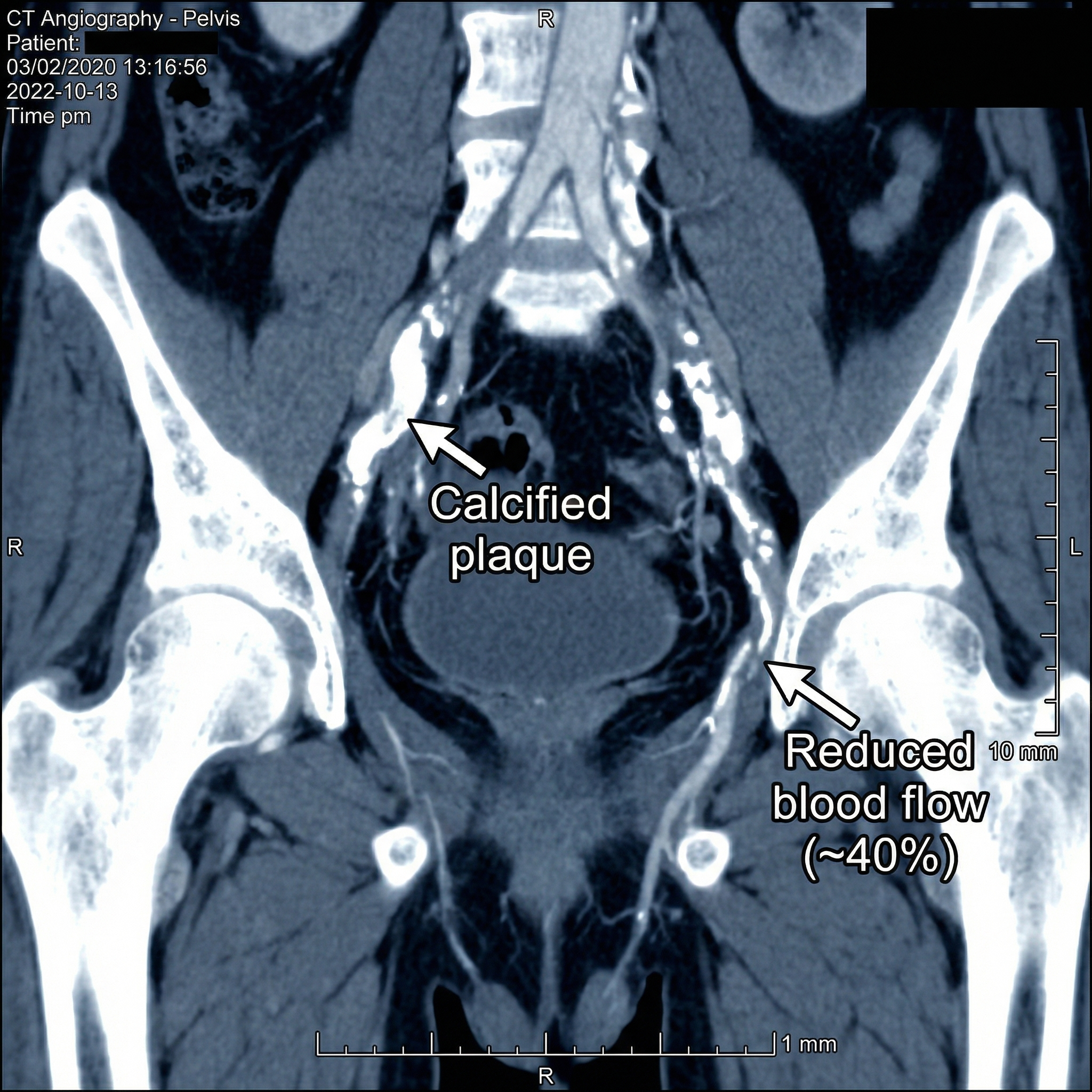
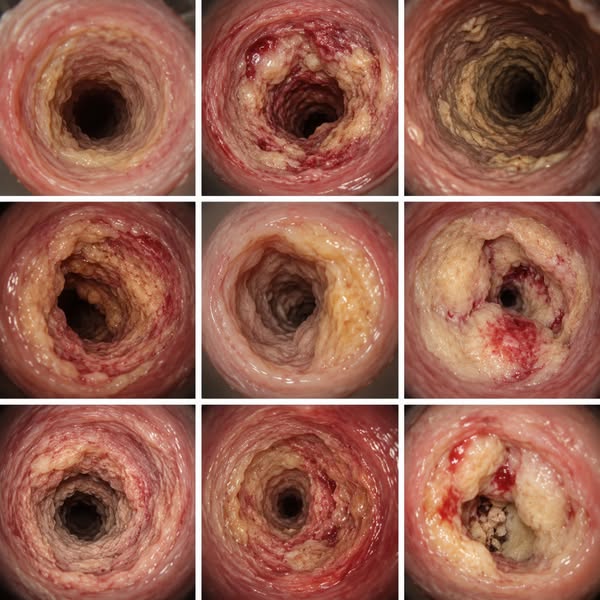
If you're a diabetic or prediabetic man and your erections have weakened, become unreliable, or disappeared most mornings — even with an A1C your doctor calls "well-controlled" — you have somewhere between five and seven years before the same vascular failure could reach your heart. I'm a vascular health specialist with fifteen years of practice. I've spent the last decade watching this exact timeline unfold in diabetic men while telling most of them, in effect, nothing at all. I'm writing this letter to break that silence. ⠀ The single most common phrase I hear from diabetic men who come into my office with fading erections is "my sugar's fine, Doc, it must be something else." That phrase was handed to them by an endocrinologist who was only ever looking at one number, and it has cost more diabetic men their vascular health than any other phrase in modern medicine. ⠀ I'm Dr. James Sullivan. I'm a vascular health and men's performance specialist who spent fifteen years hearing that phrase from patients — and in effect confirming it, more often than I'd like to admit, without explaining what was actually happening underneath a perfectly good lab report. ⠀ When my own numbers came back prediabetic at 52, A1C 6.1, "borderline, keep an eye on it," I knew something I had never fully explained to a single patient. ⠀ The fading erection isn't the disease. It's a symptom of one underlying problem — glycation, sugar molecules binding directly to the proteins lining your blood vessels, stiffening that lining, and shutting down the endothelium's ability to produce nitric oxide. This happens at blood sugar levels most doctors call fine. It happens years before any A1C reading gets high enough to alarm anyone. The only question is which symptom shows up first, and whether the medical system masks it with prescriptions while the underlying vessel damage keeps moving toward your heart. ⠀ I've treated thousands of diabetic and prediabetic men in my career. ⠀ I've seen what happens at 48. At 55. At 61. At 67. ⠀ And I've seen what almost no vascular specialist documents properly, because the appointments are too short and "your sugar's under control" has become a clinical shortcut that closes the conversation before it starts. ⠀ The 55-year-old. Came in last spring with morning erections gone for over a year. Type 2 for six years, A1C sitting at 6.4 the entire time — genuinely excellent, by any standard his endocrinologist used. He wasn't yet on anything for his erections. His endocrinologist had told him for two years running that his numbers were great and whatever else was going on wasn't diabetes-related. His testosterone was 700 — fine. His blood pressure was 138 over 88. He'd already started the conversation with his urologist about sildenafil. I could already see where this went. Dose climbing within eighteen months. Daily tadalafil added within three years. A cardiac event nobody saw coming somewhere around year five, with an A1C that looked perfect the entire way there. ⠀ The 61-year-old. "My sugar's fine, Doc. Has been for years." Type 2 for eleven years, A1C between 6.0 and 6.6 that whole time. His erections had been declining for eight years, gone entirely for the last three. His endocrinologist had never once connected the two. Then his cardiologist found a coronary calcium score of 580 during a routine workup. Then his urologist put him on escalating sildenafil doses without ordering a single vascular imaging test. By the time he came to me for a second opinion, three different physicians had been managing three different pieces of the same disease, and not one of them had told him his perfect A1C and his failing erections and his calcium score were all downstream of the same thing. ⠀ I see these men in follow-up. They don't complain. They're relieved their numbers look good. They've accepted that whatever's happening in the bedroom is just some separate, unrelated decline. ⠀ But I know what they lost. ⠀ They had years — sometimes more than a decade — to address the vessel damage producing all of it at once. Years to restore nitric oxide signaling before it reached their heart. Years where a "well-controlled A1C" gave them false reassurance while the actual damage kept compounding underneath it. ⠀ Their bodies had been sending the warning the entire time. Their endocrinologists kept answering it with a good lab number while the vessel damage moved toward the event nobody was tracking. ⠀ What almost no doctor explains to a diabetic man with a fading erection is this. ⠀ Your A1C measures your average blood sugar over roughly three months. It tells you nothing about the cumulative damage sugar has already done to your vessel lining over the last five, ten, fifteen years. That damage doesn't reverse because this quarter's number looked good. It just sits there, in the lining, whether your labs are excellent or not. ⠀ The process is called glycation. Sugar molecules bind directly to the proteins in your vessel walls. The lining stiffens. It inflames. And the endothelium — the single-cell-thick layer responsible for producing nitric oxide, the signal that tells your arteries when to open — starts failing, regardless of what your fasting glucose says on any given morning. ⠀ The smallest vessels in your body take this damage first and fastest. The arteries feeding an erection are one to two millimeters wide, versus three to four in the arteries feeding your heart. That's why this shows up in the bedroom years before it shows up anywhere your cardiologist is looking. ⠀ Every fading erection, every stiffening vessel wall, every quiet accumulation of coronary plaque in a diabetic man traces back to the same underlying glycation-driven decline in endothelial nitric oxide production — independent of whatever your current A1C happens to read. ⠀ "My sugar's fine" is often technically true. It's also incomplete in a way that has cost men their lives. Yes, your current control might genuinely be good. No, that doesn't undo the damage already sitting in your vessels from the years before you got it under control, or from the years it was borderline and nobody flagged it as a real problem. ⠀ The fading erection isn't the actual warning. It's the warning after the warning. The plaque quietly building in your coronary arteries — silent for now, symptomatic later — is the disease underneath all of it. ⠀ Peer-reviewed vascular research has documented this timeline for years. In diabetic men specifically, erectile dysfunction precedes the first major cardiovascular event by an average of five to seven years, often regardless of A1C control during that window. Men with declining erectile function and any history of elevated blood sugar carry a cumulative cardiovascular risk substantially higher than their A1C alone would suggest. ⠀ Your fading mornings aren't reassured away by a good lab result. They're your five-to-seven-year early warning system, running independently of it. ⠀ I wasn't going to let this become the cascade I'd been quietly documenting in thousands of patients. I needed something that addressed the actual mechanism instead of taking comfort in a number that wasn't measuring the right thing. ⠀ I tried what diabetic men try. ⠀ Tightened my diet further. Increased exercise. A1C came down to 5.9. Genuinely good news, by every standard measure. The fading mornings didn't change at all. ⠀ Standard supplements next. L-arginine. Beetroot extract. A men's vitality blend with a dozen ingredients on the label. Didn't move the needle on anything that mattered. ⠀ My A1C looked better than it had in years. But my flow-mediated dilation stayed poor. My morning function stayed inconsistent. The glucose work had improved the number everyone was watching while the actual vessel damage kept sitting there, untouched. ⠀ But I kept coming back to something that didn't sit right with standard practice. ⠀ Glycation-driven endothelial damage can be partially addressed if the right pathway is activated directly — independent of blood sugar control. The vascular research had been documenting this for over a decade. Almost nobody in endocrinology or general urology was applying it, because almost nobody was looking past the A1C in the first place. ⠀ So why wasn't I applying it to myself? ⠀ March 3rd. 11:40 PM. ⠀ I was reviewing journals after a long clinic day, couldn't sleep, and my own morning function had been almost entirely absent for the better part of a year — despite an A1C I was, on paper, managing well. ⠀ I was scrolling through vascular endothelial research, not looking for anything specific. Just tired and restless. ⠀ I found a paper on polymethoxyflavone compounds and their effect on endothelial nitric oxide synthase — the enzyme responsible for actually producing nitric oxide in a vessel lining, glycated or not. ⠀ These compounds, concentrated in a Thai rhizome called Kaempferia parviflora — Black Ginger — do two things at once. They upregulate endothelial nitric oxide synthase, restoring the body's own production of the opening signal, independent of blood sugar control. And they calm the PDE5 enzyme — the one whose entire job is erasing that signal once it's produced — at the root, rather than blocking it temporarily the way a prescription does. ⠀ The mechanism didn't just support symptom relief. It supported actual endothelial repair, and the research specifically included diabetic study populations. Sustained use had been shown to improve flow-mediated dilation and restore nitric oxide signaling in exactly the vessel type glycation damages first. ⠀ The underlying nitric oxide pathway itself won the Nobel Prize in Medicine in 1998, awarded to Furchgott, Ignarro, and Murad for identifying it as a signaling molecule in the cardiovascular system. ⠀ I sat there at 11:40 PM staring at the mechanism diagram. ⠀ Sildenafil forces smooth muscle relaxation by blocking the PDE5 enzyme temporarily. The relaxation lasts as long as the drug is in your bloodstream. Your underlying glycated endothelium doesn't improve at all. The escalating dose is the price you pay for symptom relief that never touches the actual damage. ⠀ Polymethoxyflavones restart your body's own nitric oxide production and calm the same enzyme the pill only blocks for a few hours. Continuous signal, not a rented one. Your endothelium heals instead of being chemically overridden — and it heals whether your A1C is 5.9 or 7.2, because it's working on the lining directly, not on your blood sugar. ⠀ The vascular dysfunction producing your fading erections and your accumulating cardiac risk simultaneously — actually improves. ⠀ I've been treating vascular decline for fifteen years, and I had never connected this mechanism to what I was seeing in diabetic men specifically. The shared root — glycation-driven endothelial decline that explains why diabetic men develop fading erections and accelerating cardiovascular risk together, regardless of how well-managed their sugar looks on paper — was never part of any curriculum I sat through. ⠀ At 12:15 AM I went looking for a properly formulated version. ⠀ What I learned during that search is something every diabetic man who's tried Black Ginger before needs to know. ⠀ Polymethoxyflavones are heat-sensitive. Most commercial extraction processes destroy the majority of the active compound before it ever reaches a capsule. And most Black Ginger sold commercially is grown at low elevation, where the plant never concentrates the compound to meaningful levels in the first place. ⠀ For the compound to actually reach the endothelial cells that need it, it has to come from highland-grown plant material and be cold-extracted rather than heat-processed. Standardization matters just as much — the research uses extract standardized to five percent polymethoxyflavone content. Most commercial products test under one percent when independently verified. ⠀ Almost nothing on the market meets all three requirements at once. ⠀ I found one that did. Omvyra Labs Black Ginger Complex. ⠀ 300mg per serving, standardized to five percent polymethoxyflavones — the exact concentration the research uses. Highland-sourced from northern Thailand, where the elevation is what forces the plant to concentrate the compound in the first place. Cold-extracted to keep it intact. One ingredient. No proprietary blend hiding a dose behind ten other things. ⠀ I ordered it that night. Two capsules every morning with breakfast. ⠀ I started March 4th. ⠀ March 11th. One week in. Morning function returning. Not consistent yet. But present, for the first time in close to a year. ⠀ March 18th. Two weeks in. Noticeably better energy through the afternoon, which I hadn't expected and hadn't been tracking for. ⠀ April 1st. Four weeks in. Morning function most days now. My wife asked what had changed. ⠀ "Different approach," I told her. ⠀ "Whatever it is, keep doing it." ⠀ April 29th. Eight weeks in. ⠀ Repeat bloodwork. A1C essentially unchanged — 5.8, more or less where it already was. Inflammatory markers down across the panel. Flow-mediated dilation, which I'd had checked as a baseline out of professional curiosity, measurably improved. ⠀ I went to a colleague for a Doppler and a full vascular workup. ⠀ He pulled up my flow readings. Looked back at his notes from eight months earlier. ⠀ "James, what did you do? Your peak systolic velocity is back to where it was at 45. Your A1C barely moved." ⠀ I explained the endothelial nitric oxide synthase upregulation. The PDE5 calming. The mechanism that worked directly on the vessel, independent of glucose control. ⠀ He was quiet for a moment. ⠀ "I have hundreds of diabetic patients I've been reassuring for years because their A1C looked fine. If what you're describing is reproducible..." ⠀ "The mechanism is real. It works independent of glucose control. The extraction matters. The sourcing matters. And the timeline matters." ⠀ He started ordering it for his own diabetic patients with the same complaint and the same "but my numbers are good" confusion. ⠀ I'm not writing this letter because I think glucose management is unimportant. ⠀ Managing your A1C matters enormously, for your kidneys, your eyes, your nerves, your risk of a dozen other complications. Keep doing it. ⠀ But it doesn't fix your already-glycated endothelium. It doesn't undo damage that happened at the borderline numbers years ago, or the well-controlled numbers since. It doesn't lower your accumulated cardiovascular risk on its own. It manages the input. It doesn't repair the lining the input already damaged. ⠀ I see what happens five years later, when diabetic men who took comfort in a good A1C walk into a cardiologist's office with chest pain, an LDL nobody had rechecked in years, and a coronary calcium score nobody had been watching. ⠀ Your fading mornings aren't reassured away by good labs. They're warning you. ⠀ The same glycation-driven endothelial dysfunction causing your fading erections is right now building plaque in your coronary arteries, regardless of what your last A1C said. ⠀ You have two choices. ⠀ Take comfort in a good number while the vessel damage keeps moving. Or address the endothelial root directly, independent of glucose control. ⠀ I think about what I almost did. I almost took my own 5.9 as reassurance that nothing else needed attention. I almost became the patient I'd been quietly making for fifteen years — the man with excellent labs and a body that was still, underneath it, telling a completely different story. ⠀ Eight weeks. ⠀ That's how long it took my inflammatory markers to drop, my morning function to return, and my flow readings to recover to where they'd been at 45 — while my A1C barely moved the entire time. ⠀ Eight weeks of letting my endothelium do what it was built to do, separate from whatever my glucose was doing. ⠀ Heal. ⠀ I'm not saying blood sugar control doesn't matter. I'm saying it isn't the same thing as vessel repair, and treating them as the same thing is what's been costing diabetic men their function and, eventually, their cardiovascular health. ⠀ Your fading erection is your check engine light. A good A1C is a clean fuel gauge. They are not telling you the same thing. Sildenafil is electrical tape over the check engine light. The light's still on underneath. You just can't see it anymore. ⠀ But I see it every week in diabetic men who come back years after their first prescription asking why nothing works anymore, with an A1C that looks fine the entire time — and years later when their cardiologist calls to ask what they'd been prescribed. ⠀ Every single one of them says some version of the same thing. ⠀ "I thought my sugar being good meant this part of me was fine too." ⠀ I'm telling you now. It doesn't necessarily mean that. ⠀ Omvyra Labs Black Ginger Complex. 300mg, standardized to five percent polymethoxyflavones, highland-sourced, cold-extracted, one ingredient. Ninety-day money-back guarantee. If your symptoms haven't measurably improved, every dollar comes back. ⠀ — Dr. James Sullivan, MD Vascular Health & Men's Performance Specialist, 15 years Practicing physician ⠀ P.S. — Give it 60 to 90 days. The upside is the version of yourself that stops using a good A1C as reassurance for a body that's been trying to warn him for a decade, through a completely different channel. ⠀ P.P.S. — You're not too late. Your endothelium is glycated, not dead. The nitric oxide pathway still responds, regardless of how long your numbers have been good or bad. Address it now, before the damage your quarterly labs have been quietly reassuring you about reaches the organ you'll finally pay attention to. ⠀ Individual experiences vary. These statements have not been evaluated by the FDA. This product is not intended to diagnose, treat, cure, or prevent any disease. Do not discontinue any prescription medication without consulting your prescribing physician.
Where the ad sends people
omvyralabs.co
Your GOOD A1C doesn’t protect your arteries
Thousands of Diabetic & Pre-Diabetic Men Over 45 Are Discovering Why Viagra, T-Boosters, and Even “Well-Controlled A1C” Suddenly Stopped Working — And How One Forgotten Root Repairs the Real Damage Sugar Leaves Behind
Learn more: omvyralabs.co(opens in a new tab)