The Meno Club
The Meno Club Facebook ad: “My 16-year-old asked me last spring if I was dying. I lied…”
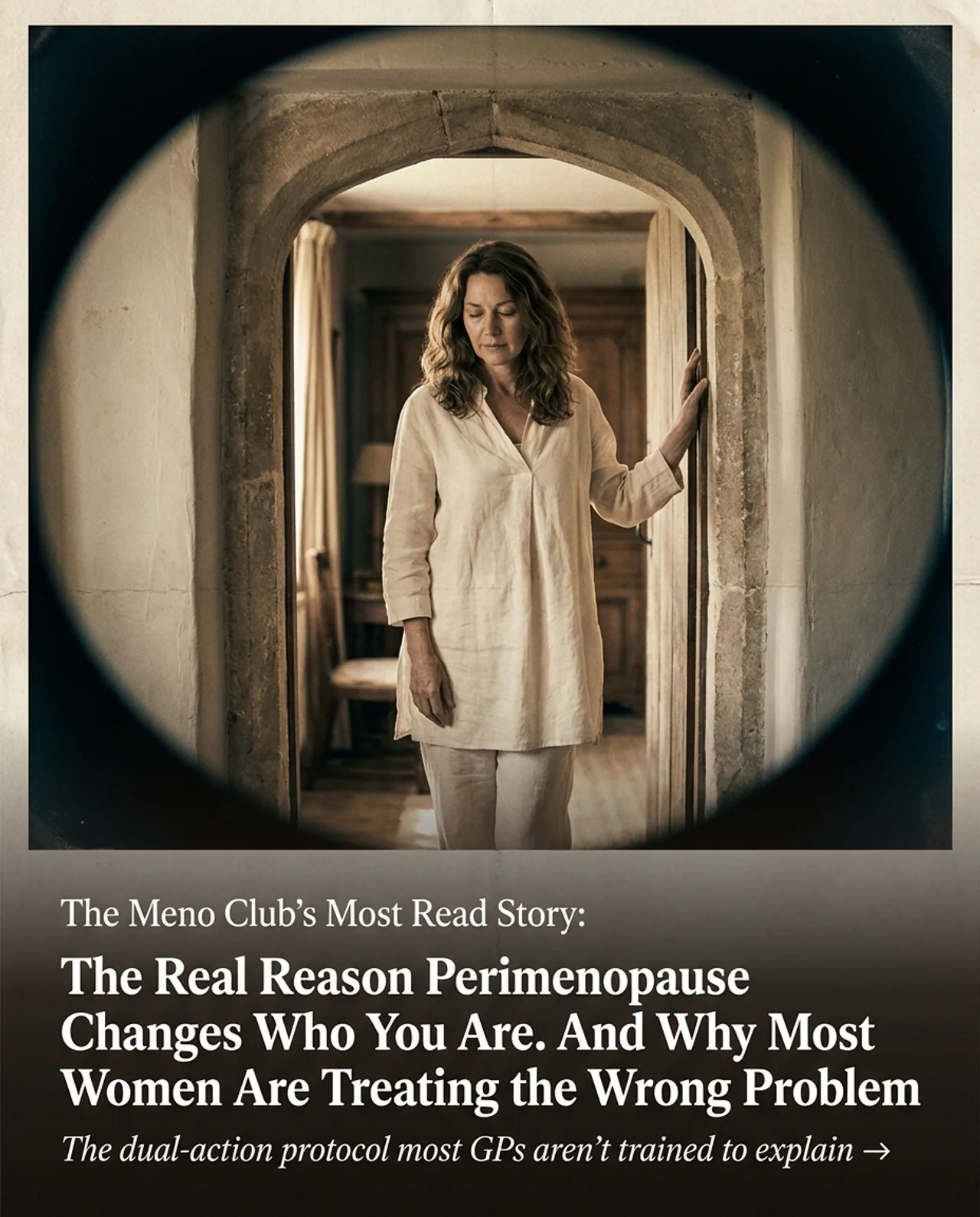
Ran for 5 days, from May 5 to May 10, 2026, the last day Crush saw it.
Run by The Meno Club on Facebook. Crush is not the advertiser and does not verify its claims. See this ad in Meta's Ad Library(opens in a new tab)
Want an ad like this for your product?
Crush makes new ad images for your product from this ad: your logo, your product photo, your offer.
Trials from $19.95 USD, then $79.95 USD a month. Cancel anytime.
About this ad
- Meta Ad Library ID
- 2483225112113966
- Platforms
- Facebook, Instagram, Audience Network, Messenger and Threads
- Relaunches
- 0
- EU reach
- 4
Ad text
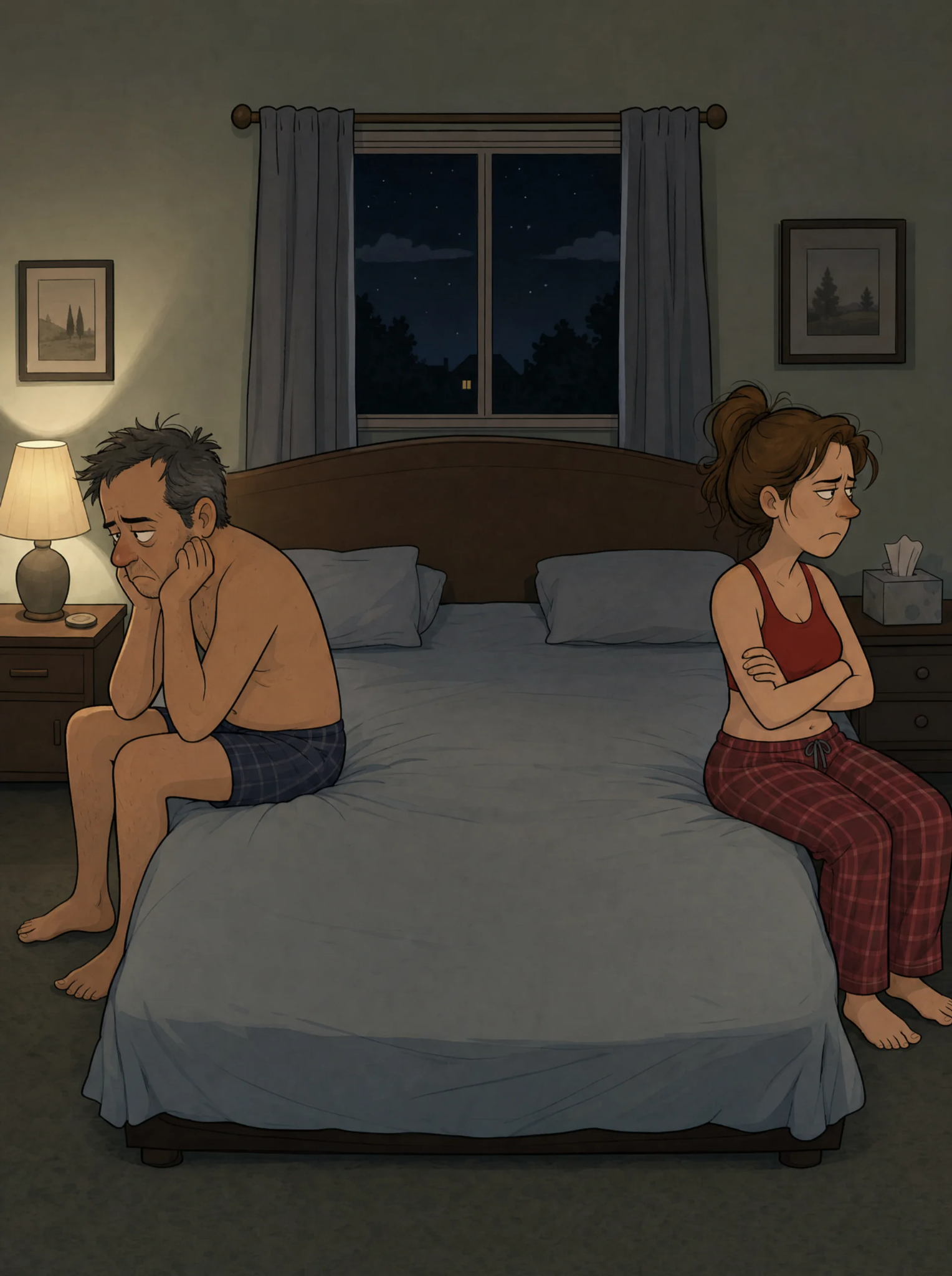
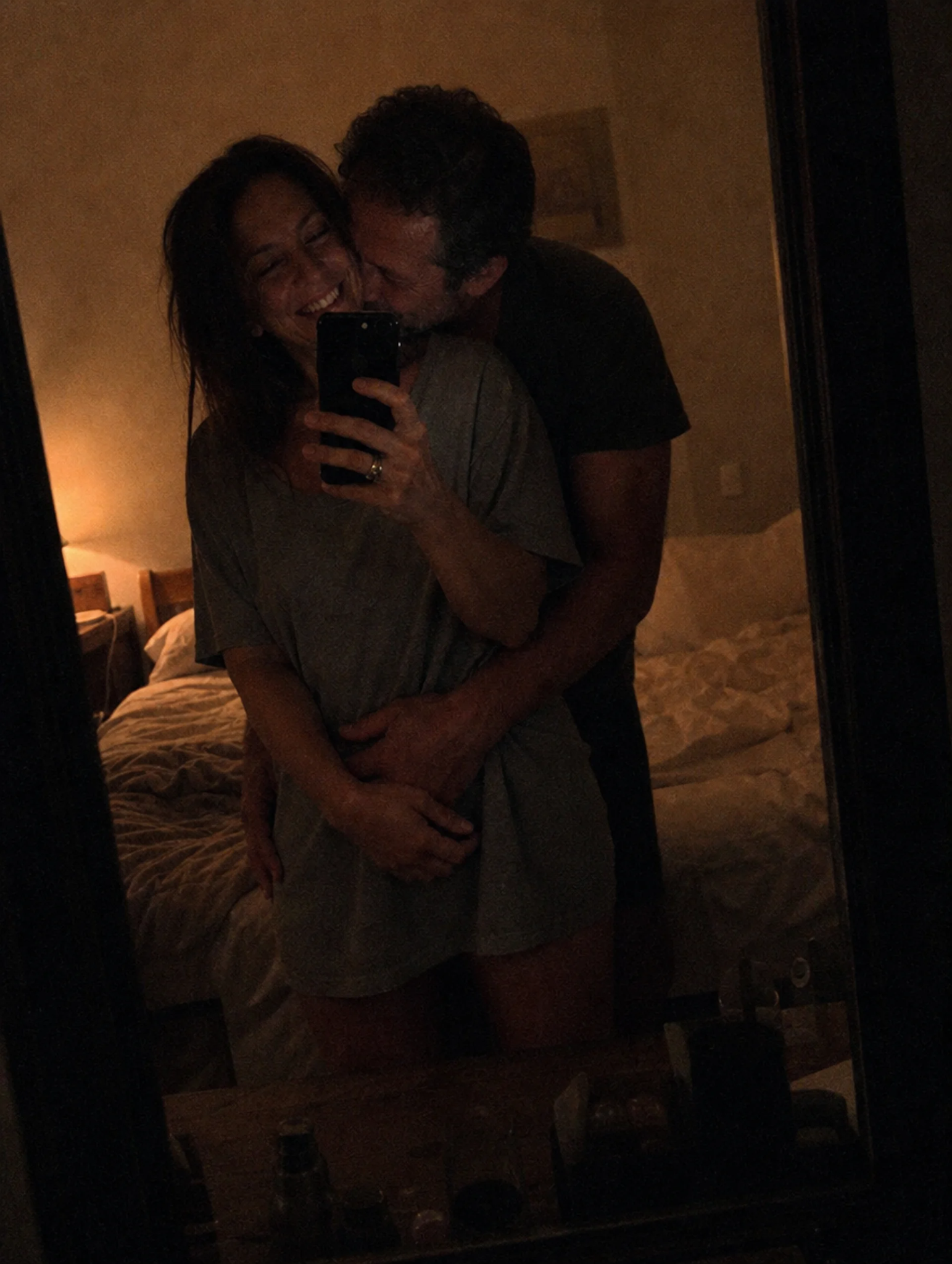
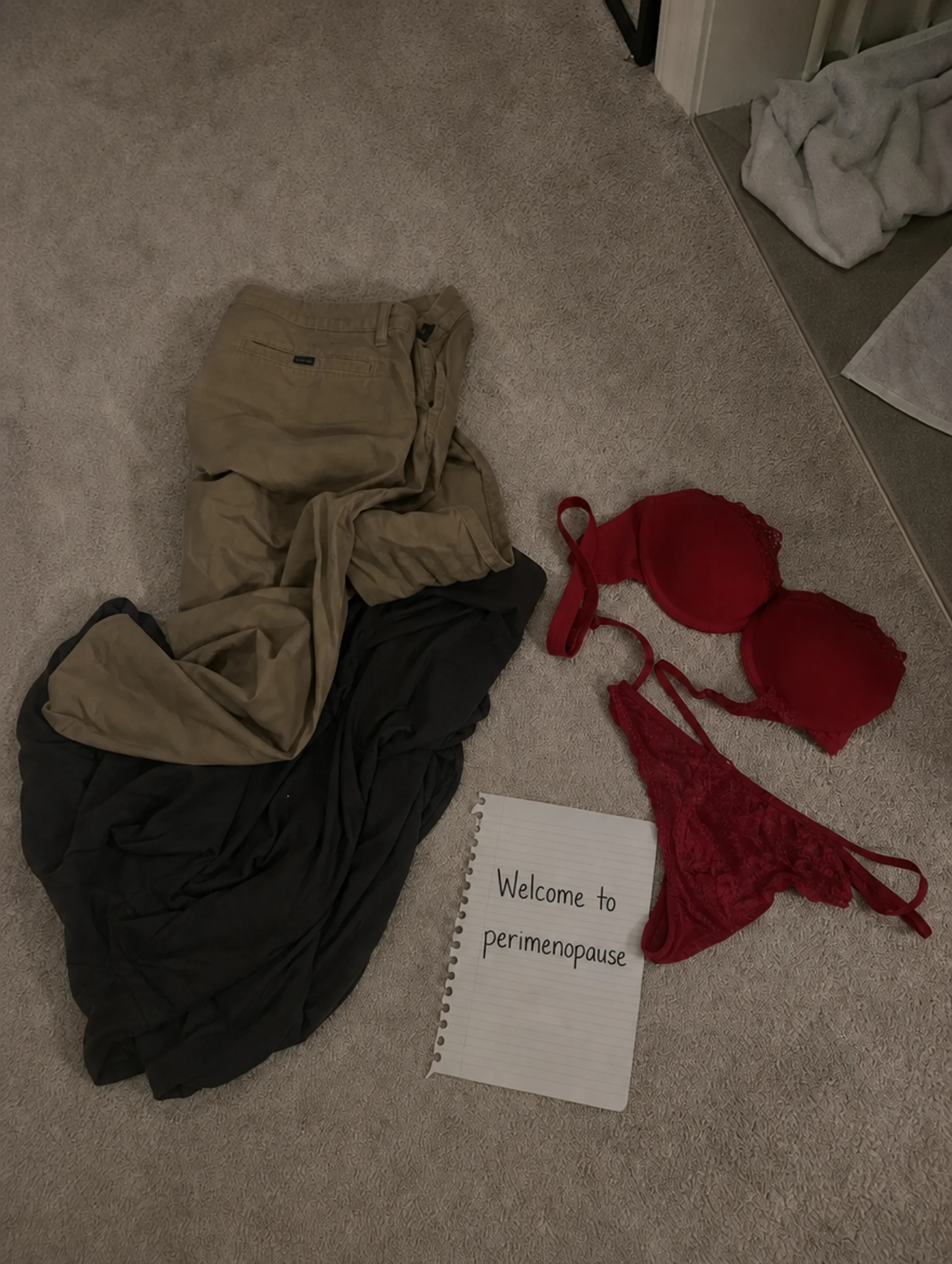
After perimenopause hit, I told my husband of 23 years I didn't love him anymore and asked him to leave. Yet six months later, my 16-year-old has started knocking before she comes into the kitchen. I'm Rachel. I'm 47. I have two daughters, sixteen and thirteen. And what I'm about to tell you is something I have not told anyone… Not my sister, not my best friend, not the GP who saw me in April and the GP who saw me in July, and certainly not the man I almost threw away. It started about fourteen months before I asked him to leave. I didn't notice it then. The shift was so slow it didn't feel like a shift. The world got dimmer and louder at the same time, and I started naming it the wrong things. I named it stress. I named it the girls' GCSEs. I named it my mum's hospital appointments. I named it forty-six. I started waking up at 4am with my heart pounding and a single sentence sitting in my chest I could not say out loud: I do not want this life anymore. I have a husband I have loved for 23 years. Two daughters I would die for. A house I helped build. A job I worked my whole twenties to earn And every morning at 4am, in the dark, in my own bed, I lay there with that sentence in my chest and could not get rid of it. I started snapping at the kids. Putting laundry in the wrong drawer. Forgetting the word for fridge one Saturday morning and standing there pointing at it. I started avoiding the back-lit mirror in our bathroom. The one Daniel installed for me as a Christmas present three years ago. The woman in it didn't quite look like me anymore, and I didn't want to know what she did look like. I started avoiding Daniel. Not in a dramatic way. I'd stay downstairs an extra hour after he'd gone to bed. I'd stop joining him in the kitchen when he was making coffee. I'd flinch when his hand brushed mine on the sofa. He'd ask what was wrong and I'd say nothing, and I meant it, because I didn't know what was wrong, only that the man I'd loved for 23 years had become a sound I could not tolerate. The way he chewed. The way he asked about my day. The way he existed in the same room as me. There was a thought I could not say out loud to anyone. I think I have fallen out of love with my husband. There were other things, too. Things I noticed and dismissed. The night sweats that went through two sets of sheets a week. The way I'd lost the thread of conversations halfway through. The way I'd started crying in the school car park before I drove home, not over anything, just because the car was the only place nobody could see me. And one quieter thing. A thing I'd been noticing for almost a year and dismissing every single time, because compared to the rest of it, it felt vain to even think about. The hair on my pillow. Not loads. Just more than there used to be. Then more than that. Then enough that I'd started checking Daniel's pillow in the morning before I made the bed, because I could not bear for him to see what was coming off my head while I slept. The drain catcher in the shower I now emptied every other day. The way my ponytail used to wrap twice around the band and now wrapped three times. The widening centre part I caught in the rear-view mirror at school pickup one Wednesday in March, in fluorescent car-park light, where I sat looking at it for so long that the bell rang and the kids came out before I'd reapplied my lipstick. The morning my eldest came into the bathroom while I was getting ready, picked up my hairbrush, and said, Mum, ew, your brush sheds way more than mine. Are you okay? I said yes. I drove her to school. I came home. I sat on the kitchen floor for an hour and a half before I could stand up and answer my emails. That was the first week of April. Two weeks later I asked Daniel to leave. I didn't tell him the truth, because I didn't know what the truth was. I told him I had stopped being able to feel anything for him. I told him I thought he deserved someone who could. I told him I was so tired and so angry and so far away from myself that I no longer believed I would come back. He sat at the kitchen table and looked at me for what felt like an hour. He didn't argue. He didn't cry. He asked one question. Rachel, what happened to you? I went to the GP the next morning. I didn't tell her about Daniel. I couldn't get the words out. I told her about the hair, because the hair was the only thing I could point at without crying. The shedding. The widening part. The wispy regrowth. She asked about my periods. (Irregular for over a year.) My sleep. (Broken.) My mood. (I lied. Said fine.) She told me, gently, that this was perimenopause. She offered HRT. I didn't take it. My mum had a hormone-receptor positive tumour in her early fifties and the conversation about HRT in my family is not a simple one. The GP understood. She said I could try the usual things, diet, exercise, supplements, sertraline if my mood didn't lift. I left with a prescription I never filled. What followed was four months I would rather forget. I bought biotin. I bought a $75 multivitamin from a brand with pretty pastel packaging that said "menopause-adjusted" on the front. I bought collagen powder, evening primrose oil, a "menopause hair complex" recommended by an Instagram woman my age with a perfect gloss-blow-dry. None of it did anything. I have a drawer full of half-empty bottles to prove it. My ponytail kept getting thinner. My part kept getting wider. And every Sunday night, when Daniel, who had not, in the end, left, asked me what I wanted to do that week, I'd hear the dismissive tone in my own voice answering him, and I'd hate the woman who lived in my body. Then on a Wednesday in late September I was driving back from picking up my mum from a hospital appointment. The kids were at school, Daniel at work, and I had a podcast on I wasn't really listening to. A guest came on I almost skipped. A dermatologist. Fifteen years studying women's hair loss in midlife. I'd heard a hundred experts at this point. They all said the same things…eat protein, manage stress, give it time, your hair will sort itself out. She said something different. She said the reason most perimenopausal hair loss does not respond to anything is because almost nobody, including most GPs, actually understands what's causing it. The cause has a name, and once you understand it, almost everything else about midlife hair loss becomes obvious. The cause is a hormone called DHT. She said DHT had been in our bodies our entire lives. Quietly. Doing nothing. Because estrogen had been blocking it. Estrogen, she said, doesn't just regulate periods and moods. It physically forms a shield around every single hair follicle on a woman's scalp. It blocks DHT from binding. It is why women in their twenties and thirties almost never lose their hair, no matter how stressed or sleep-deprived they are. But when estrogen drops in perimenopause, and she said this slowly, that shield comes down. DHT, which has been in your body the whole time, suddenly has direct, unbroken access to follicles that have never had to defend themselves before. It binds to them. It miniaturises them. It starves them. Quietly. Methodically. Over months. By the time you can see thinning in the mirror, the damage has been compounding for over a year. And the same drop in estrogen, she added, almost casually, is what causes the rage. The 4am wake-ups. The brain fog. The flinching. The feeling, she said, that you no longer recognise the woman in the mirror or the marriage you're in. I pulled into a lay-by. She had just described, in two minutes, the entire fourteen months I had lost. The hair. The mind. The marriage. All of it. She said one more thing before the interview ended, and this is the part I want you to hear if you don't read anything else. She said the reason almost every "natural" hair treatment fails on perimenopausal women is because they only address half the DHT problem. There is an ingredient, pumpkin seed oil, that works. There is a real, peer-reviewed clinical study showing it can increase hair count by up to 40% in 24 weeks. It contains compounds called phytosterols that slow down the enzyme that makes DHT. Less new DHT is produced. Genuinely effective. Real science. But pumpkin seed oil does nothing about the DHT that is already in your scalp. Already attached to your follicles. Already shrinking them right now while you read this. For that, you need a second ingredient. Saw palmetto. Saw palmetto does not slow DHT production. It physically blocks DHT from binding to your follicles in the first place. It sits on the receptor so DHT cannot dock. Pumpkin seed oil turns down the factory. Saw palmetto locks the door. Neither of them works properly without the other. The dermatologist mentioned a brand called Bloom & Bond. The only formula she had found, she said, that combined both ingredients at clinically meaningful doses, in one capsule, designed specifically for hormonal hair thinning in women. I ordered it that night. Told Daniel it was a sleep supplement. I could not bear to explain. Week three: the shedding slowed. Not stopped. Slowed. The brush had less in it. The drain catcher took longer to fill. I told nobody. I had been disappointed too many times. Week six: I noticed I had been sleeping through the night. I had not noticed I'd stopped, because the 4am wake-ups had become so normal I'd written them into my identity. Week eight: Daniel walked into the kitchen on a Saturday morning, said something stupid about the cat, and I laughed. Properly laughed. The first one in over a year. He stopped what he was doing and looked at me like he had seen a ghost. Week ten: I had baby hairs along my hairline. Soft, dark fuzz where there had been nothing. I stood in front of the back-lit bathroom mirror, the one I had not used in over a year, and ran my fingers along them and my hands started shaking exactly the way they had on the kitchen floor in April. Month four: my eldest came home from school, dropped her bag in the hall, walked past me into the kitchen and said, without turning round, Mum your hair looks really nice today. I had to put down the kettle. Month five: I stopped arranging my hair before leaving the house. The widening part wasn't widening anymore. The bit I'd been hiding had stopped existing as a thing to hide. Month six: my eldest started knocking before she came into the kitchen. I asked her about it once. She rolled her eyes the way 16-year-olds do and said, Mum, you and Dad are being weird again. I'm giving you space. I closed the dishwasher and stood in the kitchen for a long time after she'd gone upstairs. Because what she meant, and what I think she has known, in the way teenagers always seem to know things before their parents are ready for them to, is that the laughter she used to walk into the kitchen and interrupt has come back. And she does not want to be the one who breaks it. I am not going to sit here and tell you a hair supplement saved my marriage. That is not what happened. What happened is that the same drop in estrogen that was destroying my hair was also rerouting my entire nervous system, my sleep, my libido, my patience, my ability to feel like anything other than a stranger to my own family. The hair was the most visible part. The most measurable part. The part I could not argue with, when the rest of me was happy to dismiss everything as stress, or aging, or I think I've fallen out of love with my husband. When the dual-action DHT protection started working, the hair was the first thing to come back. And the hair coming back gave me my first piece of evidence that I was not broken. That my body still worked. That something specific was happening to me, and that something specific could be addressed. Once I had named the DHT, I could finally see everything else. The rage. The 4am wake-ups. The withdrawal from Daniel. The way I had convinced myself I had fallen out of love with a man I had loved for 23 years. None of it was who I was. All of it was a hormonal shift that nobody, not my GP, not my mother, not a single one of my friends going through the exact same thing, had ever explained to me in those terms. The supplement did not fix my marriage. I did, with help. But the supplement was the door. If you are 44, 46, 49, and you are reading this at 11pm because you cannot sleep again, and if there is a thought you have had in the last six months that you have not been able to say out loud, even to your sister, even to the journal you stopped writing in, I would like you to consider that what you think is happening to you might not be what is actually happening to you. Your estrogen has dropped. The shield is down. DHT, which has been in your body since you were sixteen, is doing now what it has waited your whole life to do. It is miniaturising follicles you have had since birth. And the same hormonal shift is doing things to almost everything else about you while it does it. You do not need HRT to address the DHT piece. You do not need an antidepressant. You do not need to ask your husband to leave. You need to block DHT. Both sides. Production and binding. Source and shield. Every day that goes by without it is another day of follicle miniaturisation that becomes harder to reverse. The follicles you have today are the ones you can still save. The follicles that shut down completely do not come back. The link to the formula I take is below. It is the only one I have found that does both ingredients properly, in one capsule, at the doses the research is built on. You are not falling apart. You are not done. You are not the woman you have been for the last fourteen months. You're just unprotected. And it's still fixable, but only while there's something left to protect. 👉 https://thebloomingbond.com/products/new-pumpkin-seed-oil-softgels
Where the ad sends people
trybloomandbond.com
My 16-year-old asked me last spring if I was dying. I lied to her face.
45,000+ Happy Customers
Learn more: thebloomandbond.com(opens in a new tab)