Mary's foot journey
Mary's foot journey Facebook ad: “Read this if you have plantar fasciitis”
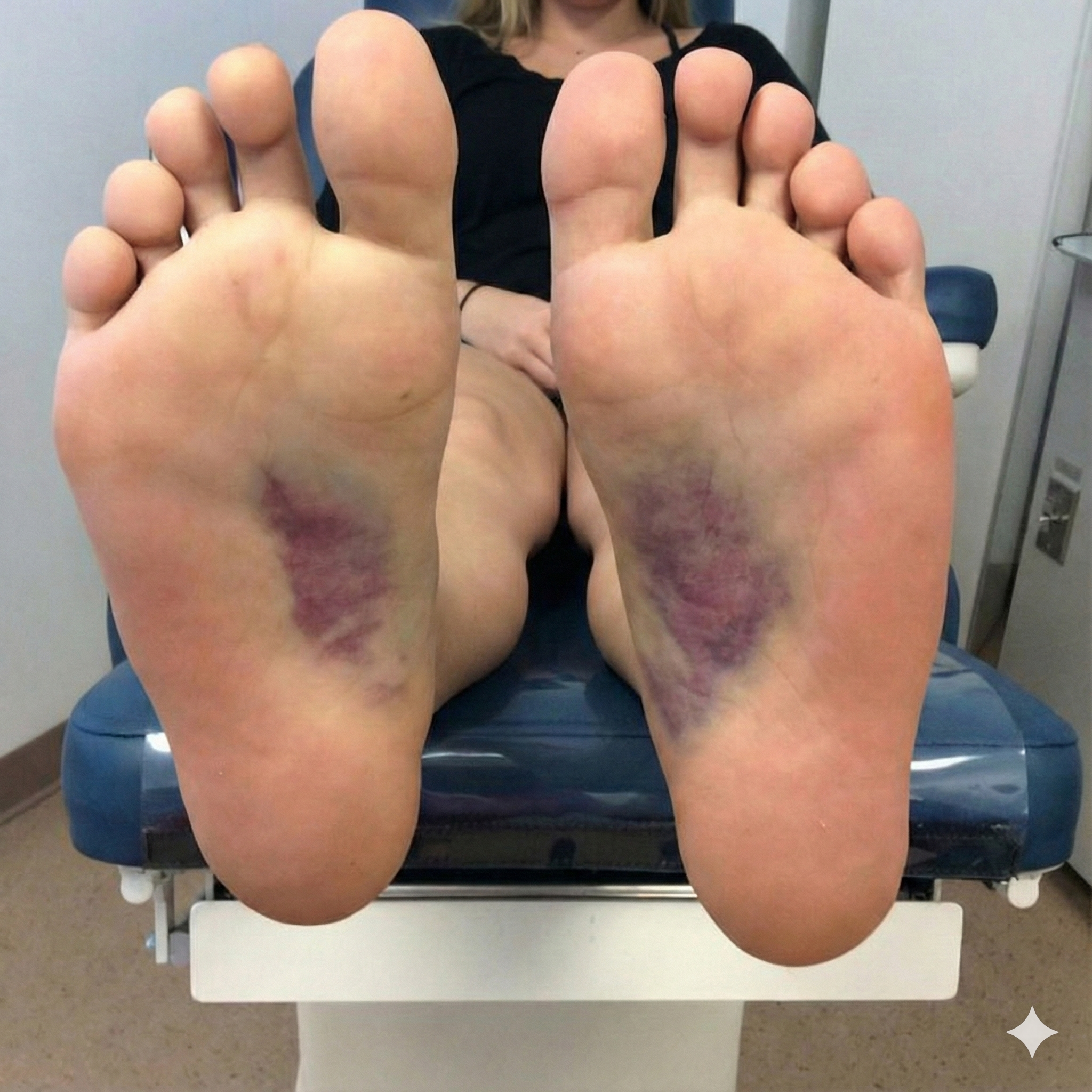
Ran for 60 days, from December 2, 2025 to January 31, 2026, the last day Crush saw it.
Run by Mary's foot journey on Facebook. Crush is not the advertiser and does not verify its claims. See this ad in Meta's Ad Library(opens in a new tab)
Want an ad like this for your product?
Crush makes new ad images for your product from this ad: your logo, your product photo, your offer.
Trials from $19.95 USD, then $79.95 USD a month. Cancel anytime.
About this ad
- Meta Ad Library ID
- 24869172482785895
- Platforms
- Facebook, Instagram, Audience Network, Messenger and Threads
- Relaunches
- 0
- Niche
- Insurance
Ad text
If you struggle with plantar fasciitis, I need to tell you what my podiatrist never did. 👇 He never told me why my $600 custom orthotics only worked for three weeks. He never told me why every treatment gave me "promising" results that disappeared by next month. And he never told me that my plantar fascia was stuck — not just inflamed. Last Tuesday, after spending $1,847 trying to fix my feet, I sat in Dr. Stevens' office staring at another failed treatment bill. That's when he looked at my chart and said: "At your age, some foot pain is just part of life. We can manage it, but it may never fully go away." At my age. I'm 48. Not 80. That stabbing heel pain every morning? I had it. That broken-glass feeling with every step? I lived it. The Monster Walk where you grip the wall just to make it to the bathroom? That was my reality for two years. But honestly, the pain wasn't even the worst part anymore. What broke me was realizing I'd spent nearly $2,000 on treatments that were just "managing" symptoms — while the real problem stayed trapped. Because that day, something broke in me. Not my foot. My trust. I'd done everything he told me to do. I wore those $600 custom orthotics religiously for six months. They helped for exactly three weeks before the pain came roaring back. I showed up to every single PT appointment at $85 a session. The stretches felt good during the hour. By bedtime, my feet were screaming again. I tried the cortisone shot he swore would "reset" the inflammation. It worked for four weeks. Then the stabbing returned worse than before. I wasn't some difficult patient who refused to follow instructions. I was a 12-hour-shift ICU nurse who'd spent $1,847 trying to fix the one thing I needed to keep doing my job: walking. And I was being told to accept that this was just "part of life now." That night, I couldn't sleep. Not just because my feet were burning — though they were. But because something he'd said kept playing in my head. "We can manage it." Manage. Not fix. Not heal. Not address. Manage. Like I was a chronic condition to be medicated and monitored, not a person who wanted her life back. At 2:23 AM, lying in bed with my feet propped on pillows that didn't help, I started googling. Not "best treatments for plantar fasciitis" this time. I'd already tried all of those. This time I googled: "Why do orthotics stop working for plantar fasciitis" "Why does plantar fasciitis keep coming back after treatment" "What podiatrists don't tell you about heel pain" That last search brought up an article I almost didn't click. The headline felt like bait: "What Your Podiatrist Isn't Telling You About Why Your Plantar Fasciitis Won't Heal." I was so tired of clickbait promising miracle cures. But something made me open it anyway. Maybe it was the phrase "isn't telling you." Because that's exactly how I felt. Like I'd been told a story that was missing critical chapters. The article was written by Dr. Elise Morgan, a podiatrist who'd spent ten years treating plantar fasciitis patients before realizing something was fundamentally wrong with the standard treatment protocol. Her opening line stopped me: "If your podiatrist told you that orthotics and stretches would fix your plantar fasciitis, they told you a half-truth. Not because they're lying — but because they're treating the symptom, not the cause." I sat up in bed. She went on: "Orthotics support your arch. That's real. PT stretches your tight muscles. That's real too. But neither of them address why your plantar fascia is stuck in the first place." Stuck. Not inflamed. Not torn. Not overstretched. Stuck. She explained it in a way no one ever had: The bottom of your foot is covered in thin layers of connective tissue called fascia. They're supposed to glide smoothly over each other — like silk sheets sliding. But years of hard hospital floors, narrow nursing shoes, standing for 12-hour shifts? That silk turns into Velcro. The layers stick together. Adhesions form. Your fascia gets pulled into what she called a "death grip" around the bones and nerves in your foot. And here's the part that made me furious: Orthotics can't unstick fascia. They just prop up your arch while the stuck tissue stays stuck. Stretches can't release adhesions. They just pull on already-irritated tissue. Anti-inflammatories can't break apart layers that have glued themselves together. They just numb the signal your body is screaming. That's why the pain always comes back. Because no one was addressing the root problem. They were all treating inflammation — the symptom — while my fascia stayed trapped. I sat there at 2:41 AM with my laptop glowing in the dark, tears running down my face. Not because I was sad. Because I was angry. $1,847. Eighty-five dollar PT sessions three times a week that I could barely afford. A $600 pair of custom orthotics that felt like expensive cardboard in my shoes. Months of my life spent stretching, icing, rolling on tennis balls, doing everything right. And no one — not my podiatrist, not my physical therapist, not a single medical professional — had ever mentioned stuck fascia. They'd all been aiming at the wrong target. Dr. Morgan's article went deeper. She explained that stuck fascia needs a sequence to release. Not one thing. A sequence. First, you need heat — deep, penetrating heat — to soften the tissue. Like warming up cold glue before trying to peel it apart. Then you need compression — gentle, rhythmic compression — to coax those stuck layers to loosen. Not jabbing. Not aggressive rolling. Waves of pressure that work with your tissue, not against it. Then you need movement — dynamic massage that follows the natural curves of your fascia as it releases, helping it remember how to glide again. Heat. Compression. Movement. In that order. Daily. Consistently. She wrote: "Most treatments only give you one of these. Heating pads give heat but no compression. Massage guns give movement but no heat to soften first. Orthotics give support but none of the above. That's why your closet is full of things that didn't work." My closet. She was describing my closet. The night splint that kept me awake. The gel inserts. The frozen water bottles. The tennis ball I'd rolled on for six months. The Amazon massager that stopped working with a loud pop after eight months. All of them incomplete. All of them aiming at symptoms while my fascia stayed stuck. For the first time since this started, someone was explaining why I'd spent nearly $2,000 and was still in pain every single morning. And it wasn't because I was "getting older" or because I "just had to accept it." It was because the standard protocol was incomplete. The article mentioned a device Dr. Morgan had helped design after treating hundreds of women like me — women who'd done everything right and were still suffering. It was called RelievaFlex. A 3-in-1 therapy wrap that combined all three elements in the exact sequence stuck fascia needs. I looked at the price and felt my stomach drop. Another device. Another promise. Another potential addition to my graveyard of failures. But then I read what other people were saying. Not the usual "This changed my life overnight!" garbage. Real stories: "My podiatrist told me the same thing — that I'd just have to manage it. This was the first thing that actually addressed WHY my orthotics stopped working." "I'm an OR nurse. I've tried everything. This is the only thing that made sense when someone finally explained stuck fascia to me." "It didn't cure me in a week. But by week three, I wasn't limping through my shift anymore." These were women who sounded like me. Nurses. Healthcare workers. Women who'd trusted doctors and spent money they didn't have on treatments that didn't work. Women who were angry. But also... better. At 3:17 AM, I made a decision. I ordered it. Not because I believed it would work. But because someone had finally explained why everything else hadn't. And that understanding — that validation that I wasn't crazy, that the treatments really were incomplete — was worth the risk. It arrived six days later. I didn't feel magic the first time I used it. I felt warmth. Deep, even warmth that actually reached my heel and arch. I felt compression — gentle waves that didn't hurt, that actually felt like my tissue was being coaxed instead of forced. I felt massage heads moving with the curves of my foot instead of jabbing one spot. But my plantar fasciitis wasn't gone after 15 minutes. I used it that night before bed. And the next night. And the next. On day eleven, I woke up for my 6 AM shift, swung my feet out of bed, and made it to the bathroom before I realized: I hadn't done the Monster Walk. The stabbing pain was still there — but duller. Like a 4 instead of the usual 8. I could walk without gripping furniture. By week three, I made it through an entire 12-hour shift without sitting down to "rest my feet" during my break. By week five, I walked my daughter's dog around the block without planning the route based on where I could sit if the pain got bad. I'm writing this eight weeks in. I still use RelievaFlex almost every night. But I don't use it desperately anymore. I use it because it's the first thing that made sense. The first thing that addressed what was actually broken instead of just managing my symptoms. My podiatrist didn't lie to me. But he didn't tell me the whole truth either. And if you're reading this because your doctor told you to "just accept it" or "manage it" or that "at your age, some pain is normal"... You deserve to know what they're not telling you. You deserve to know about stuck fascia. You deserve to know why orthotics and stretches aren't enough. I've shared my full story below on how I finally beat plantar fasciitis after my doctor told me to just "accept it" — and discovered what $1,847 in treatments never addressed. It's the same story about what Dr. Morgan explained to me at 2:23 AM that finally made everything click — why the orthotics failed, why the PT didn't last, and what actually worked. I don't know if this will work for you the way it worked for me. But I know this: Understanding why I'd been failing was worth more than every dollar I'd wasted. And trying something that actually addressed the root cause was worth more than accepting that pain was just "part of life" at 48. Here's my full story on how I escaped the "manage it" trap and got my life back: https://velmoure.com/pages/relievaflex-therapy-wrap I also linked it down below. You deserve the whole truth. Not just the part that's easy to bill insurance for.
Where the ad sends people
velmoure.com
Read this if you have plantar fasciitis ☝
Velmoure
Learn more: velmoure.com(opens in a new tab)