Men's Health
Men's Health Facebook ad: “Your Retrograde Ejaculation Is A Stroke Warning.”

Ran for 16 days, from August 1 to August 17, 2026, the last day Crush saw it.
Run by Men's Health on Facebook. Crush is not the advertiser and does not verify its claims. See this ad in Meta's Ad Library(opens in a new tab)
Want an ad like this for your product?
Crush makes new ad images for your product from this ad: your logo, your product photo, your offer.
Trials from $19.95 USD, then $79.95 USD a month. Cancel anytime.
About this ad
- Meta Ad Library ID
- 2487517675102089
- Platforms
- Facebook, Instagram, Audience Network, Messenger and Threads
- Relaunches
- 1
Ad text
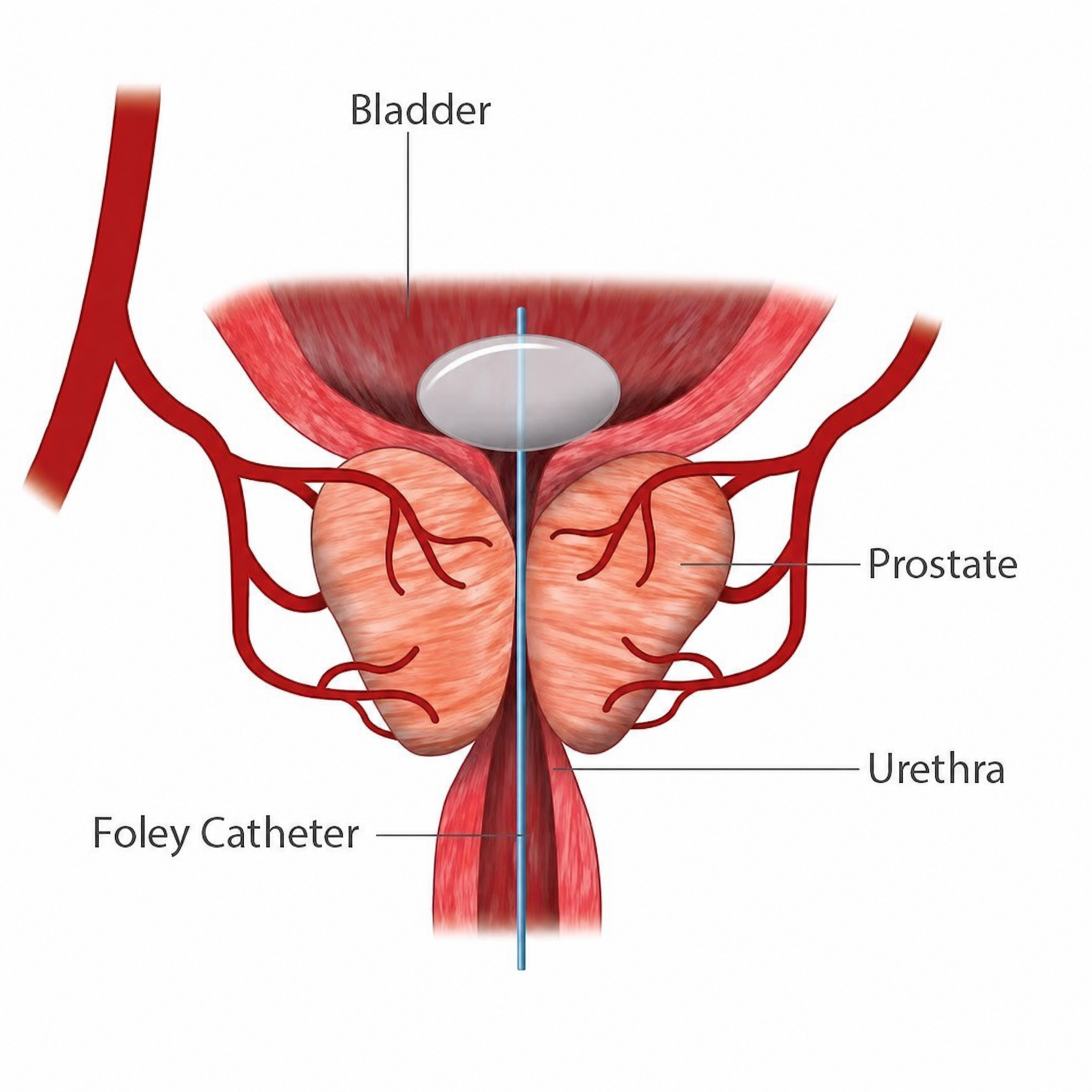
If you are a man on testosterone replacement therapy and your ejaculate has disappeared, weakened, or started going backwards, you have somewhere between three and five years before the same vascular failure could reach your heart. I am a urologist with 19 years of practice. I have spent the last decade watching this exact timeline unfold in men on cypionate while telling none of them what was actually coming. I am writing this letter to break that silence. Men on testosterone replacement therapy for two or more years experience retrograde ejaculation, ejaculatory volume reduction, or full anejaculation at rates that almost no men's health clinic discusses before starting the protocol. Almost none of them are told that the same vascular failure causing it is happening simultaneously in their coronary arteries, their carotid arteries, and the microvasculature feeding their brain. They are told it is "part of being optimized." That phrase is one of the most expensive lies in modern men's health. I'm Dr. Daniel Westbrook. I'm a board-certified urologist who spent fifteen years writing eight-minute prescriptions to men on TRT without telling them what was about to happen to them next. When my own urinary and vascular symptoms started at 51, I knew something I had never explained to a single TRT patient. The prostate isn't the disease. The erection isn't the disease. The disappearing ejaculate isn't the disease. They are all symptoms of one underlying problem — the progressive buildup of fibrin inside every artery in the body, compounded by the hyperviscosity that weekly testosterone cypionate is silently accelerating in the same body it appears to be helping. Almost every standard urological treatment added to a TRT protocol masks the symptom while the underlying disease compounds toward a cardiac event. I have treated thousands of men on TRT in my career. I have seen what happens at year two on cypionate. Year four. Year six. Year eight. And I have seen what almost no urologist documents properly because the appointments are too short and the prescriptions are too easy. The 58-year-old. On weekly cypionate for four years. Total T 720 every time. Hematocrit had been hovering at 54 percent. His men's health clinic told him quarterly phlebotomy was "normal management of polycythemia." Came to me when his PSA crept to 4.2. I wrote him a tamsulosin prescription. He was grateful — the urinary urgency had been getting worse for a year. Three months later he called the office quietly asking why nothing came out anymore. His TRT clinic had not mentioned that tamsulosin would do this to him. I had not mentioned it either. Two years after that he had his first cardiac event. Coronary calcium score 412. His hematocrit on the day he went down was 55. The polycythemia his men's health clinic was "managing" had finally driven the platelet aggregation his coronary arteries could not handle. And underneath the polycythemia, his arteries had been silently filling with fibrin for years — the sticky protein mesh that thickens the blood even further and narrows the passages the thickened blood is trying to move through. The 54-year-old. On TRT since age 47. Cypionate 100mg weekly. Anastrozole twice weekly when his estradiol climbed. HCG to preserve testicular volume. Three injections every week. His PSA crept past 3.5 in year five. His urologist added tamsulosin. Within six months the retrograde ejaculation appeared. He stopped trying. The lack of result had become its own quiet humiliation, and he had a wife twelve years younger who he did not want to disappoint. Then his erections started failing — even on TRT, even with morning erections back, the actual function was disappearing. He came back asking for tadalafil. I wrote the prescription. Eight months later he was in his cardiologist's office. LDL of 174 despite Crestor for the last two years. His TRT protocol had restored his lab number while every other vascular marker was getting worse. The fibrin lining his arterial walls had never been measured, never been discussed, never been addressed. I see these men in follow-up appointments. They do not complain. They are grateful I am "managing" their condition. But I know what they lost. They had years to address the fibrin accumulation and rising blood viscosity that TRT-driven polycythemia was compounding. Years to clear the arterial obstruction. Years to save themselves from the cascade. Their symptoms had been screaming the warning the entire time. The prescriptions just turned down the volume one organ at a time while the cypionate kept driving the underlying vascular load up. What almost no doctor explains to a man on TRT with retrograde ejaculation is this. The men's health clinic that put you on weekly cypionate told you a story about hormone optimization. Total T 340 was below optimal. Cypionate would bring it to 700 plus. Energy would return. Libido would return. Morning erections would return. All of that is true and all of that happened. What they did not tell you is that weekly cypionate produces supraphysiological peaks within 24 to 48 hours of injection that drive estradiol conversion, prostate growth, and erythropoiesis. The estradiol peaks accelerate prostate smooth muscle hypertrophy. The erythropoiesis drives your hematocrit up — sometimes to 54, 55, 56 percent — which dramatically increases your risk of arterial thrombosis. The prostate growth eventually crosses a clinical threshold where your PSA climbs and your urinary symptoms become unavoidable. At that point your urologist adds tamsulosin on top of the cypionate. The tamsulosin relaxes the bladder neck. The bladder neck no longer closes during ejaculation. The ejaculate takes the path of least resistance — into the bladder, not forward. Retrograde ejaculation. But here is the part nobody connects. The polycythemia is not just raising your hematocrit number. It is thickening your blood. And that thicker blood is now trying to push through arteries that have been quietly narrowing with fibrin for years. Fibrin is the sticky protein mesh your body lays down inside arterial walls in response to inflammation, micro-damage, stress, and the ordinary wear of decades. In a young man, the body produces enough fibrinolytic enzymes to dissolve the fibrin after the repair is done. The mesh is cleared. The artery stays open. Past 40, those cleanup enzymes slow. Past 50, they slow further. The fibrin stops being temporary. It becomes permanent. Layer after layer, narrowing every artery from the inside. And when you add polycythemia-driven hyperviscosity on top of fibrin-narrowed arteries, you get a compounding effect — thicker blood being forced through narrower passages. The smallest arteries fail first. The penile arteries. The prostatic arteries. The arteries feeding the bladder neck. The morning erections that came back when you started cypionate are starting to fade again — not because your total T is low, but because the small vessels feeding the corpora cavernosa are now contending with thicker, more sluggish blood being pushed through passages that fibrin has been narrowing for years. That same combination — hyperviscosity plus fibrin-narrowed passages — is doing exactly the same thing to your coronary arteries and your carotid arteries. Just slower. Just more silently. Just with bigger consequences when the threshold is crossed. A 2006 study in European Urology documented this timeline. Erectile dysfunction precedes the first cardiovascular event by an average of three to five years. In men on long-term TRT with polycythemia, that timeline shortens. The retrograde ejaculation you have been quietly living with is not the warning. The fading erections are the warning. The hematocrit at 54 is the warning. The cypionate-driven vascular load compounding on top of years of fibrin accumulation is the warning. Men with documented ED on TRT carry a significantly higher cumulative cardiovascular risk than non-TRT men with ED at the same age. The polycythemia is the single biggest documented risk factor. Phlebotomy manages the lab number. It does not dissolve the fibrin lining your arterial walls. It does not address the underlying structural obstruction that the thickened blood is being forced through. I was not going to start the cascade I had been writing for thousands of TRT patients. And I needed to find a path that actually addressed the mechanism rather than masking the symptoms. I tried what TRT patients try. Quarterly phlebotomy when my own hematocrit started climbing. Helped the number. Did not help the symptoms. Reduced cypionate dose. Improved the estradiol picture. Did not restore the morning function or move the urinary symptoms. Standard supplements. Saw palmetto. Pumpkin seed oil. Beta-sitosterol. L-arginine. The standard list. Did not move the needle. My PSA was stable. My total T was managed. But my arteries were still narrowing. My flow rate stayed weak. My morning erections stayed inconsistent. The cypionate had restored the lab number while the fibrin kept accumulating and the blood kept thickening. But I kept thinking about something that made no sense in standard men's health clinic practice. Fibrin accumulation can be reversed even in men on TRT if the right enzyme is introduced. Blood viscosity can be reduced even in the presence of moderate polycythemia. Arterial flow can be restored. The vascular research had been showing this for years. Nobody in men's health was applying it. So why was I not applying it to myself? November 14th. 10:23 PM. I was reviewing journals after a long clinic day. Couldn't sleep. The urinary symptoms were worse. The morning erections — even on TRT — were almost completely gone. I was scrolling through research on vascular interventions for arterial narrowing and hyperviscosity. Not looking for anything specific. Just exhausted. I found a paper on nattokinase and fibrinolytic activity in atherosclerotic arterial walls. Nattokinase is an enzyme derived from natto — a traditional Japanese fermented soybean food consumed for thousands of years. It directly dissolves fibrin — the sticky protein mesh that builds up inside arterial walls year after year. And it reduces blood viscosity — literally thinning the blood so it flows more freely through narrowed passages. That second mechanism is the one that should make every man on TRT with elevated hematocrit stop and pay attention. Nattokinase reduces blood viscosity through a pathway that operates independently of phlebotomy. It doesn't remove red blood cells. It dissolves the fibrin fragments circulating in the blood that are contributing to the thickness. And it dissolves the fibrin lining the arterial walls that is narrowing the passages the thickened blood is trying to move through. The mechanism didn't just support symptom relief. It supported actual clearing of the obstruction and actual thinning of the blood — addressing both halves of the compounding problem that TRT-driven polycythemia creates. Sustained nattokinase supplementation had been shown in multiple studies to reduce fibrin deposits, improve arterial flow, lower inflammatory markers, and support healthy blood pressure. I sat there at 10:23 PM staring at the diagram. Tamsulosin forces smooth muscle relaxation by blocking alpha-1 adrenoceptors. The relaxation lasts as long as the medication is in your bloodstream. Your underlying arterial narrowing does not improve. Your blood viscosity does not change. The retrograde ejaculation is the price you pay for the symptom relief — and the bladder neck function does not return when the medication is stopped. Nattokinase dissolves the fibrin mesh that is physically narrowing the arteries in the first place. It reduces blood viscosity so blood flows more freely — even through vessels that have not fully cleared yet. It works continuously, systemically, in every artery in the body. Your arteries actually clear and your blood actually thins instead of being chemically forced open while the obstruction and the viscosity remain. The vascular dysfunction causing your urinary symptoms, your retrograde ejaculation, your fading erections, and your accumulating cardiovascular risk simultaneously — actually improves. The compounding load that polycythemia is placing on your arteries gets partially offset by reduced blood viscosity and improved arterial flow. I have been a urologist for 19 years. I have studied prostate disease for my entire career. And I had never connected therapeutic nattokinase to BPH symptoms in TRT patients. The shared mechanism — the underlying fibrin accumulation and hyperviscosity that explains why men on TRT cluster prostate symptoms, retrograde ejaculation, fading erections, and accelerated cardiovascular disease in the same individual — was never part of any urology or men's health curriculum. At 11:11 PM I went looking for a properly formulated nattokinase supplement. What I learned during that search is something every man on TRT who tries nattokinase needs to know. Nattokinase is a fragile enzyme. When you swallow a standard dry-powder nattokinase capsule, your stomach acid destroys most of the enzyme before it ever reaches your bloodstream. You feel like you are doing something. Almost none of it is reaching your arterial walls. For nattokinase to actually reach the arteries where fibrin lives, two things must happen. The softgel must be enteric-coated — surviving stomach acid intact and releasing the enzyme further down where it can actually be absorbed. And the enzyme must be suspended in a carrier oil that enhances absorption. MCT oil is the carrier the research supports. Almost no nattokinase supplement on the market does both. Most use standard capsules with dry powder. No enteric coating. No oil suspension. The enzyme is destroyed before it reaches the bloodstream. Men take it for months, feel nothing, and conclude nattokinase doesn't work. The nattokinase was fine. The delivery was the failure. I found one brand that was different. Vitalyn. 4,000 fibrinolytic units of nattokinase per serving — the full clinical dose in a single softgel. Enteric-coated so the enzyme survives stomach acid. Suspended in MCT oil so the body actually absorbs it. With CoQ10 for heart muscle energy. With bromelain for secondary fibrin breakdown. With turmeric and ginger for the arterial inflammation that causes fibrin to deposit on the walls in the first place — the upstream trigger that polycythemia compounds. With olive leaf for vascular protection. With white willow bark for natural anti-platelet support — particularly relevant for TRT patients whose polycythemia is already driving platelet aggregation risk. I ordered a pouch that night. One softgel in the morning with breakfast. I didn't expect miracles. The mechanism was sound. I started November 15th. November 22nd. One week in. Morning erections returning. Not consistent yet. But present for the first time in over a year. November 29th. Two weeks in. Did not wake up to urinate the previous night for the first time in two years. December 13th. Four weeks in. Morning erections every day. Full stream returning during the day. My wife asked what I had changed. I had not told her I was taking anything. I wanted the physiology to prove the mechanism before I said anything. "Different approach," I told her. "Whatever it is, keep doing it." January 10th. Eight weeks in. Repeat bloodwork. Hematocrit had dropped from 54 to 51. Blood pressure down from 144 over 88 to 126 over 78. Inflammatory markers down across the panel. LDL down 19 points. But the part that should make every man on TRT reading this letter pay attention came when I went back to my urologist colleague for a flow study and a digital exam. He looked at my flow rate. Looked at my prostate. Looked at his notes from six months ago. "Dan, what did you do? Your flow rate is back to where it was when you were 45. And your bladder neck tone has clearly changed." I explained the fibrinolytic mechanism. The enzyme dissolving the fibrin scaffolding lining the arterial walls. The reduction in blood viscosity — particularly significant in the context of TRT-driven polycythemia, where the blood is already thicker than it should be. The turmeric and olive leaf working upstream to slow the inflammation driving new fibrin deposits, while the nattokinase and bromelain worked downstream to dissolve the buildup already there. The white willow bark providing natural anti-platelet support that partially offsets the platelet aggregation risk polycythemia creates. He was quiet for a long moment. "I have hundreds of TRT patients I have written tamsulosin and finasteride for over the years. If what you are describing is reproducible..." "The mechanism is real. The dose matters. The delivery matters. And the timeline matters." He started ordering it for his TRT patients with retrograde ejaculation and weak flow. He has been telling me what he is seeing. I am not writing this letter because I am against TRT or tamsulosin or any of the standard urological treatments. These medications work. Cypionate restored my lab number. Tamsulosin would have restored my urinary stream. They have helped millions of men. But they do not dissolve the fibrin lining your arterial walls. They do not reduce the blood viscosity that polycythemia is driving. They do not address the compounding vascular load that long-term TRT is placing on your arteries. They do not lower your accumulated cardiovascular risk. They do not reverse the disease. They temporarily mask each individual symptom while the underlying damage compounds toward a cardiac event that no specialist on your team is currently tracking. And I see what happens five years later when men on long-term TRT walk into a cardiologist's office with chest pain, a hematocrit of 55, an LDL of 180, and a coronary calcium score that nobody was tracking. Your prostate symptoms are not failing you. Your retrograde ejaculation is not failing you. They are warning you. The same fibrin accumulation and hyperviscosity that long-term cypionate is silently compounding is causing your urinary symptoms, your retrograde ejaculation, your fading erections, and right now, building plaque in your coronary arteries. You have two choices. Mask each symptom with a separate prescription while your underlying vascular load accelerates toward the heart. Or dissolve the fibrin, reduce the viscosity, and address the vascular root that is causing all of them simultaneously. I think about what I almost did. I almost started tamsulosin on top of my TRT. I almost accepted retrograde ejaculation as the cost of staying optimized. I almost masked a cardiovascular warning with a prostate prescription. I almost became the TRT patient I had been making for fifteen years — the man in his late fifties on five medications for five symptoms with no doctor connecting them to the underlying disease the cypionate had been quietly compounding. Because once you are deep in the cascade, you are on medications for life. Once you have a cardiac event, the damage is permanent. Once you need bypass surgery, your life changes forever. You do not get a second warning. Your prostate symptoms and your retrograde ejaculation are your first warning. Your only warning you can still act on while there is still time. Eight weeks. That is how long it took my blood pressure to drop, my hematocrit to fall, my urinary symptoms to ease, my morning erections to return, and my flow rate to recover to where it had been at 45. Eight weeks of letting my arteries do what they were designed to do. Clear. I am not saying stop your TRT. I am saying understand what you are masking when you add a urological prescription on top of it. Your retrograde ejaculation is your check engine light. Tamsulosin is electrical tape over the warning indicator. Your arteries are still filling with fibrin. The polycythemia is still thickening your blood. You just can't see the light anymore. But I see it every day in the TRT patients who come back to me three years later asking why their erections have stopped working — and six years later when their cardiologist calls me to ask what I prescribed. Every single one of them says the same thing. "I wish someone had told me my retrograde ejaculation was connected to my heart." I am telling you now. Your retrograde ejaculation is connected to your cardiovascular health. The same vascular damage your TRT is silently compounding is causing both. Dissolve the fibrin, thin the blood, clear the arteries, and you potentially save your remaining sexual function and your heart at the same time. Mask it, and risk everything. That is all I am asking you to consider. Give your circulation a chance to heal before you accept the cascade or risk a cardiac event. Vitalyn nattokinase costs $54.99 for 60 days. Less than a dollar a day. Compare that to a lifetime of prescriptions stacked on top of your TRT while the disease compounds. Compare that to the cost of a cardiac event — emergency catheterization, stenting, bypass, the cardiac rehab, the lost work, the changed life. It comes with a 90-day money-back guarantee. Use it for the full period. If your stream is not stronger, if your sleep is not better, if your morning erections are not returning, if your blood pressure and hematocrit are not moving, send back the pouch, even empty, and get a full refund. No questions asked. I have never seen a pharmaceutical company offer that. I have never seen a cardiac procedure come with a money-back guarantee. Address the circulation now, while you still can. thevitalynlab.com/products/nattokinase-4000-fu-daily-complex — Dr. Daniel Westbrook, MD Board-Certified Urologist, 19 years Practicing physician P.S. — Give it 60 to 90 days. See the difference for yourself. The upside is the version of yourself that doesn't end up in a cath lab in three years wishing someone had connected the dots between his TRT, his disappearing ejaculate, and the warnings his body had been sending him the entire time. P.P.S. — You are not too late yet. You are still urinating, even with a weak stream. You are still getting some morning erections, even if they have faded. Your TRT-driven vascular load has not yet produced the cardiac event the timeline is building toward. That means the fibrin can still be dissolved. The blood can still be thinned. The arteries can still be cleared. Please clear them now, before any of it changes. Before your urologist writes the tamsulosin prescription, before your cardiologist gets your phone call, before the cascade your TRT clinic is missing reaches the organ they finally pay attention to.
Where the ad sends people
thevitalynlab.com
Your Retrograde Ejaculation Is A Stroke Warning.
Support your cardiovascular health with our nattokinase softgels, a premium supplement meticulously formulated for those who prioritize long-term heart vitality.
Learn more: thevitalynlab.com(opens in a new tab)