Sarah Morgan
Sarah Morgan Facebook ad: “Get Grounded While You Sleep!”

Ran for 13 days, from June 16 to June 29, 2026, the last day Crush saw it.
Run by Sarah Morgan on Facebook. Crush is not the advertiser and does not verify its claims. See this ad in Meta's Ad Library(opens in a new tab)
Want an ad like this for your product?
Crush makes new ad images for your product from this ad: your logo, your product photo, your offer.
Trials from $19.95 USD, then $79.95 USD a month. Cancel anytime.
About this ad
- Meta Ad Library ID
- 2491449648038380
- Platforms
- Facebook, Instagram, Audience Network, Messenger and Threads
- Relaunches
- 0
- EU reach
- 17,115
Ad text
I found my father's medication list tucked inside his Bible the morning after we buried him. It was on a folded piece of notebook paper, in his careful block handwriting. Seven medications. The dosage next to each one. The pharmacy phone number at the bottom like a grocery list footnote. My sister Gloria was in the kitchen packing dishes. I was supposed to be going through his nightstand. I opened the Bible to put it in the box and the paper fell out into my lap. I sat on the edge of his bed and read it twice. Then I went to the bathroom and counted the bottles on the shelf anyway. Seven of them. Orange prescription bottles, all with his name on the label. Phillip Jerome Watkins. Most of them still had refills left. Seven medications for a man who had grilled fish every Friday, walked the neighborhood every morning before the heat came up, and hadn't touched a cigarette since 1987. He was 71 when he died. Massive stroke. He'd been in the yard pulling weeds when my mother found him face down in the flower bed. His last blood pressure reading, two weeks before he died, was 158 over 96. He was on three blood pressure medications. My name is Sarah Morgan. I'm 54. I live in Shreveport, Louisiana, twenty minutes from the house my parents lived in for 32 years. I'm a high school assistant principal. I have been in education for 26 years. I know how to manage a crisis. I know how to sit across from a parent and deliver hard news without flinching. I know how to hold a room together when things are falling apart. What I didn't know how to do was stand in my father's bathroom holding his prescription bottles and not feel like I was looking at a preview of my own future. I want you to understand who my father was before I tell you the rest of this. Phillip Watkins coached youth basketball at the YMCA for nineteen years. He built the deck on the back of their house himself. He drove my mother to every one of her chemotherapy appointments in 2014 and sat in the waiting room doing crossword puzzles so she wouldn't feel like a burden. He knew everyone on his street by name, including the kids. He was not a reckless man. He was not a man who ignored his health. He started on his first blood pressure medication at 58. The doctor said it was "just a little elevated." He took the pill. He kept walking every morning. He kept eating the way my mother cooked, which was well. He did everything right. By 65 he was on two medications. By 68 he was on three. His doctor kept adjusting dosages, kept adding things, kept saying they were "optimizing his protocol." His pressure never got below 148 over 90. Seven years of optimization. Three medications. And 158 over 96 two weeks before a stroke dropped him in the flower bed. I thought about what those seven years looked like from inside them. The appointments where he'd nod and take the new prescription. The side effects he mentioned once and then stopped mentioning. The way he'd told me two years before he died that he felt like his body had become a project someone else was managing. He said, Sarah, I do everything they tell me and I still feel like I'm losing. He was right. He was losing. And nobody was asking why. I'd skipped my annual the year before. I told myself it was because I was busy. The truth was that some part of me didn't want to know. My doctor is Dr. Patricia Fontenot. She's been my doctor for eleven years. She's direct in the way that takes some getting used to. She pulled up my labs and she didn't do any preamble. "Sarah. Your blood pressure is 144 over 88. Your LDL is 171. Your father just died of a stroke." I said, I know. She said, "I want to start you on lisinopril. Low dose. We'll monitor and adjust." I looked at her. I said, my father was on three blood pressure medications and died at 71 with a reading of 158 over 96. She said, "Your father's situation was complicated." I said, his situation started exactly like mine. First pill at 58. One becomes two becomes three. Numbers that never actually came down. I'm 54. I'm not doing that. She put her pen down. She looked at me. She said, "Then what are you going to do?" I didn't have an answer. Not yet. I left without the prescription. I drove home thinking about my father's bathroom shelf. About the way those bottles looked all lined up, each one representing a year, a new problem, a new adjustment. A medical system that kept reacting to numbers while the numbers kept getting worse. I started reading that night. I'm an educator. Reading and research are instincts for me. I know how to evaluate a source. I know the difference between something peer-reviewed and something dressed up to look like it. I went to the medical literature first and I stayed there. I read about blood pressure for three weeks. Not articles about blood pressure. Studies. Actual published research. The kind with methodology sections and sample sizes and conflict of interest disclosures that most people skip. I read about ACE inhibitors and calcium channel blockers and what they actually do inside the body versus what the brochures say. I read about why the standard treatment protocols often manage the numbers without changing the trajectory. I read about why Black women carry a disproportionate burden of hypertension and cardiovascular disease, and what the research said about why. I read a lot of things I wished I hadn't. And then I found the thread I'd been looking for. What I found over those weeks changed the way I understood everything that had happened to my father, and everything that was starting to happen to me. Here's what the research was telling me that no doctor had ever put together in one room. Blood pressure is not a problem that lives in the blood. It lives in the walls. The arteries in your body are not passive pipes. They're living tissue. They have a thin inner lining, called the endothelium, that is constantly regulating itself. When that lining is healthy, it produces a compound called nitric oxide that signals the vessel walls to relax and expand. When blood volume increases, the vessels flex. Pressure stays steady. But that lining doesn't stay healthy on its own forever. It gets irritated. By inflammation. By oxidative stress. By decades of processed food and chronic cortisol and not enough sleep. The irritation builds slowly, one year at a time, mostly invisible. The lining loses its ability to produce nitric oxide properly. The vessels stop flexing the way they should. They stiffen. And when blood moves through stiff vessels, pressure rises — because there's nowhere for the force to go. Blood pressure medication works on the force. It tells the heart to push less, or tells the kidneys to reduce fluid, or blocks the hormones that tighten the vessels. It manages the pressure inside the pipes while leaving the pipes exactly as stiff as they were. That's why my father was on three medications and still reading 158 over 96. The medications were doing their job. They just weren't doing the job that mattered. The walls were still stiff. The inflammation in the lining was still there. The cause was running untouched underneath the treatment, year after year, while the dosages went up and the readings barely moved. Three medications working on the force. Zero working on the walls. I sat back from my laptop and I thought about my father doing crossword puzzles in a chemotherapy waiting room. About him pulling weeds in the yard the morning he died. About that piece of notebook paper folded inside his Bible, the medication list he carried for years without ever mentioning it to me. He kept it in his Bible. Of all the places. Like it was something he was praying about. I thought, he deserved better than that. And so do I. The question I kept returning to was the one no prescription had ever tried to answer: what supports the endothelium itself? What helps the lining stay healthy, produce nitric oxide, keep the vessels flexible? That search led me somewhere I hadn't expected. I came across a paper on grounding — or earthing, which is the clinical term — published in the Journal of Alternative and Complementary Medicine. I'd heard the word grounding before in a vague way and hadn't taken it seriously. But this wasn't a blog. It was a peer-reviewed paper with a sample size and a methodology section and citations going back decades. And the mechanism it described mapped directly onto what I'd been reading about the endothelium. The Earth maintains a continuous negative electrical charge on its surface. For most of human history, the human body was in constant contact with that charge — bare feet on soil, sleeping close to the ground. In the last century, we insulated ourselves from it almost entirely. Rubber-soled shoes. Elevated beds. Paved surfaces. We live our whole lives electrically disconnected from the ground our biology evolved in contact with. That matters because chronic inflammation — the kind that damages the arterial lining over decades — is driven by an excess of positively charged free radicals in the body. When you reconnect to the Earth's charge, free electrons transfer into the body. Those electrons neutralize the free radicals. The inflammatory process that has been quietly damaging the endothelium starts to lose its fuel. And the research showed something specific that I read three times. Grounded subjects showed measurable improvements in blood viscosity — the thickness and flow of the blood — which is a direct factor in vascular pressure. They showed normalization of cortisol rhythm, which matters because chronically elevated cortisol is one of the primary drivers of arterial stiffness, especially overnight. And in multiple studies, grounded subjects showed reductions in the specific inflammatory markers most closely associated with endothelial damage. This was not treating the force. This was addressing the walls. I pulled every study I could find that cited the original paper. I read a 2013 study on grounding and inflammation by a team at the University of California. I read Gaétan Chevalier's work on blood viscosity and grounding. I read a clinical review that summarized a decade of earthing research and concluded that reconnection to the Earth's surface charge had measurable effects on multiple cardiovascular markers. I sat at my kitchen table on a Saturday morning with a cold cup of coffee and I thought about my father asking his cardiologist if there was something else. Every appointment. Every adjustment. Every new bottle on the shelf. There was something else. Nobody told him. I called my sister Gloria in Baton Rouge. Told her what I'd been reading. She was quiet for a moment and then she said, "Sarah, do you know how many times Daddy asked his doctor if there was something different he could try." I said, I know. She said, "Every time. Every single appointment." I said, I know. I ordered a GroundingWell sheet the next morning. I want to be honest about what I expected, which was not much. I'm a scientist by training and a skeptic by instinct. I'd watched my mother spend two years on supplements that promised cardiovascular support and delivered nothing she could measure. A coworker had pushed magnesium on me twice. I'd tried it. I'd felt nothing. My threshold for believing something worked was a number I could check with a cuff, not a feeling. But the mechanism was specific. The studies were real. They'd been replicated. They weren't funded by a company trying to sell something. And GroundingWell had a 90-day guarantee. If the readings didn't move in 90 days I'd send it back and go back to Dr. Fontenot and fill the prescription. GroundingWell sheets are made from organic cotton with pure silver fiber woven directly into the fabric. Not a coating. Not a surface treatment that wears off with washing. The silver is in the weave, which means the conductivity is uniform across the entire surface and doesn't change over time. Silver is one of the most conductive natural materials that exists. The sheet connects through a grounding cord to the ground port of your wall outlet, which connects through your home's wiring to the grounding rod in the soil outside. You're connected to the Earth's charge for as long as you're lying on it. All night. Every night. It arrived in four days. I read the instructions. Made the bed. Connected the cord. Tested the conductivity with the tester included, got a clean reading. I took my blood pressure, wrote it down, and went to sleep. I want to tell you what the next few months actually looked like. The first two weeks, nothing I could measure. I slept. I woke up. I went to work. I kept taking my blood pressure at home with the cuff I'd bought after my appointment with Dr. Fontenot. The numbers moved around the way they always did. Nothing dramatic. I almost stopped at day 16. Then I thought about what my sister Renee always said when we were kids and wanted to quit something. She'd say, you don't leave in the middle of the chapter. I stayed in the chapter. Week three, I noticed I was waking up differently. Not dramatically. But I'd been waking at 4 or 4:30 most mornings for years, that alert, heart-already-going kind of waking that takes an hour to wind back down. I started sleeping through to my actual alarm. It happened enough times in a row that I stopped thinking it was coincidence. Week four, I took my blood pressure three days in a row at the same time in the morning. 138 over 84. 136 over 83. 137 over 82. I checked the dates on my earlier readings. In the month before I'd started, my morning readings were averaging around 147 over 91. Ten points. Without a pill. I didn't call anyone. I wrote it down in the notebook I'd been keeping and I kept going. Month two, my colleague Brenda — who's been watching me closely since my father died because she lost her own mother to a stroke four years ago — stopped me in the hallway after a faculty meeting and said, "Sarah. You look different." I asked her what she meant. She said, "Less tense. Around the eyes. Like something let go." Month three, I went back to Dr. Fontenot. She pulled up my chart before I said a word. "Your blood pressure." She looked up. "You're averaging 131 over 80. That's a 13-point drop systolic since your last visit." I said, yes. She said, "You didn't fill the lisinopril." I said, no. She asked what I'd been doing. I told her everything. The research. The endothelium. The nitric oxide. The grounding studies. The GroundingWell sheet. The 90 days. She was quiet for longer than I expected. Then she said, "Your numbers support what you're telling me." She didn't push the lisinopril. She said come back in three months with home readings. I walked out of that office and sat in my car and I did something I hadn't done since the funeral. I cried. Not from sadness. From something more complicated than that. Relief, maybe. And grief underneath the relief, because my father spent seven years on three medications asking his doctor if there was something else, and there was, and nobody ever told him. That was four months ago. My last reading was 128 over 78. I take no prescriptions. I take a magnesium glycinate at night and that's it. I want to say something to you directly, if you've read this far. If you are a woman in your 50s watching your numbers start to move in a direction that scares you, especially if you watched a parent disappear into a medication list, I want you to hear this. Blood pressure medication manages the force inside the vessels. It does not address what's making the vessels stiff in the first place. That's why people stay on it for years and the numbers barely budge. The cause is still running underneath. Grounding addresses the cause. The research on inflammation, arterial health, and cortisol normalization in grounded subjects is published, it's real, and it maps directly onto the mechanism that's driving your numbers up. GroundingWell is the only product I found built to actually deliver it. Organic cotton. Pure silver woven into the fabric — not coated on, woven in — so the conductivity holds through washing, through years of use, permanently. A grounding cord included. Straightforward setup. They offer a 90-day guarantee. If your numbers don't move, if you don't feel a difference, send it back. I'm on month four. The sheet is still on my bed. If something in your chest is telling you there's another road, there is. I'm walking it. I took it because my father couldn't. 👉 https://www.groundingwell.com/products/groundingwell-bedsheet P.S. The 90-day guarantee is the only reason I ordered. I'd watched my mother spend money on supplements that didn't work. I needed to know I wasn't doing the same thing. Four months later I've never thought about sending it back. P.P.S. My father's medication list is folded inside my own Bible now. I moved it there the week I started the sheet. I don't know if that's strange. It felt right. Every morning when I take my blood pressure reading I think about his block handwriting and the pharmacy number at the bottom like an afterthought. He carried that list for years and never said a word about it to me. I think about what he was carrying. I think about what I'm not. P.P.P.S. If you have a daughter, or a niece, or a younger woman in your life whose numbers are already starting to creep — don't wait. Whatever is happening in our vessels didn't start at 54. It started thirty years ago. The earlier she addresses it the better the walls hold up. I wish someone had told me that at 30. I'm telling you now.
Where the ad sends people
groundingwell.com
Get Grounded While You Sleep!
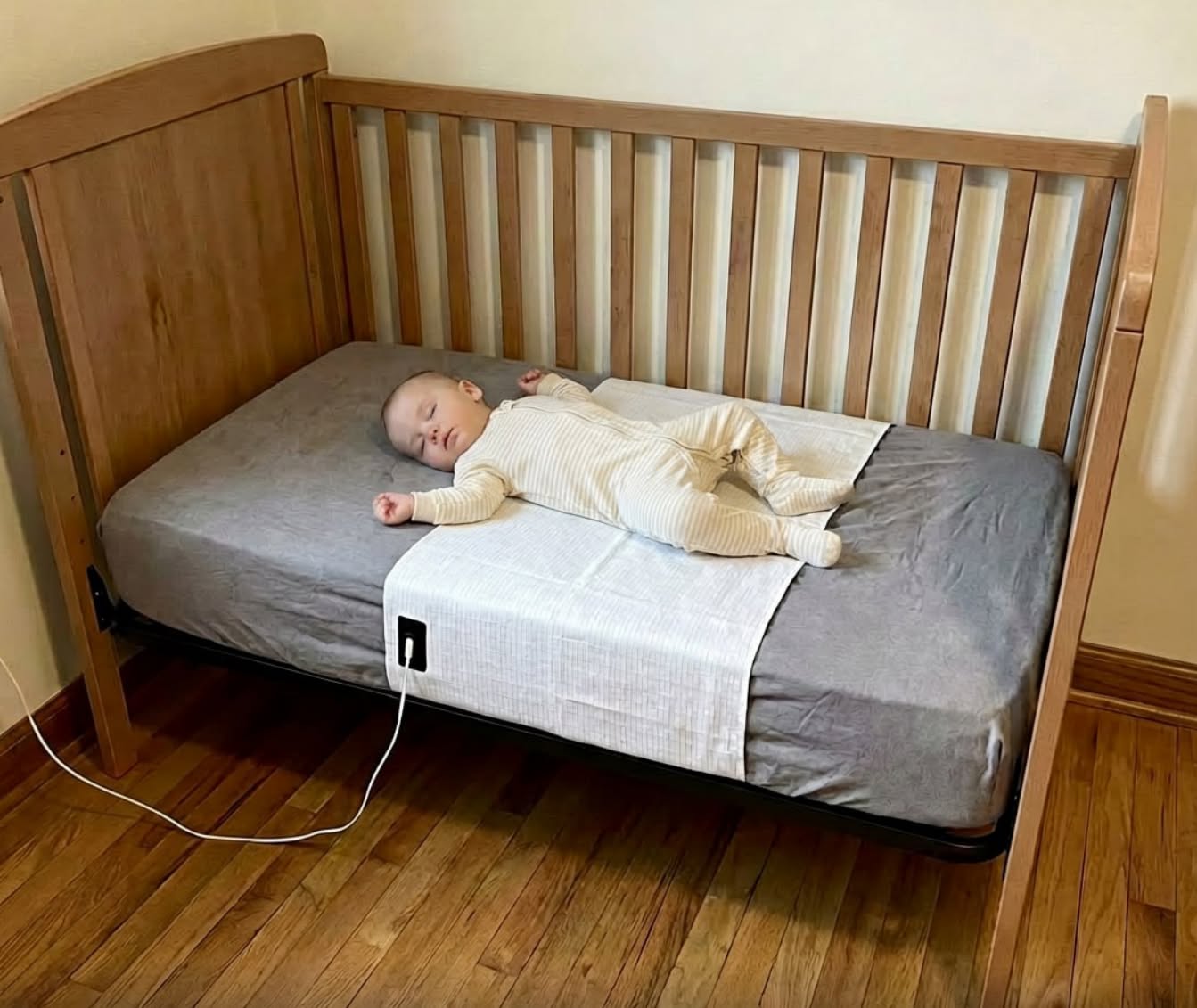
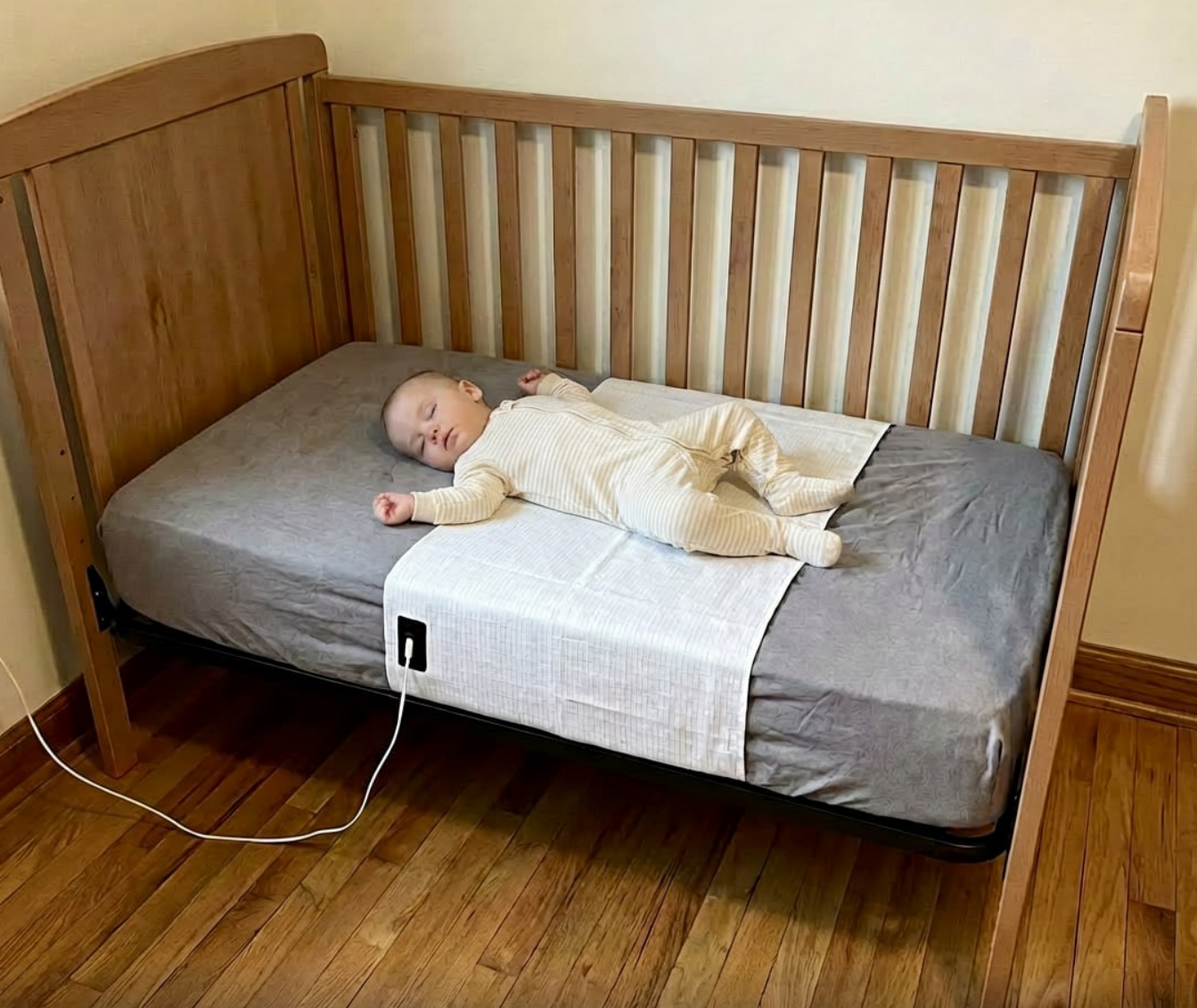
The GroundingWell™ Bedsheet channels Earth's electrons into your body, promoting deeper sleep, reduced stress, and faster healing while you rest.
Learn more: groundingwell.com(opens in a new tab)