
Active· since Jul 27, 2026
- 50
- days running
- 0
- relaunches
Ad copy
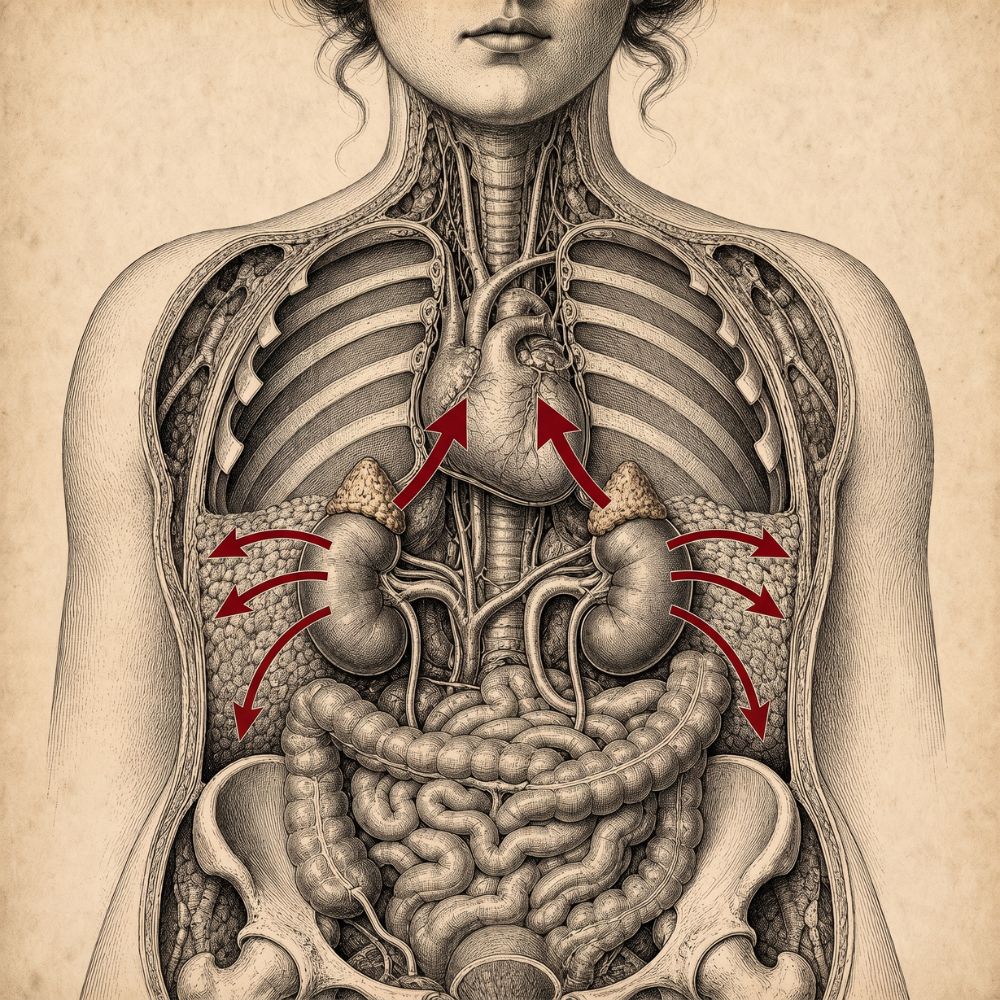
If you're a woman over 40 who eats reasonably well, exercises at least sometimes, and still can't get through a day without your nerves getting the better of you, and lately you wake up anxious for no reason, you're foggy by 2pm, and you're wide awake at 3am no matter how early you went to bed, I'm about to tell you exactly what's happening inside your body that nobody warned you about. And by the end of this, you're going to be furious. Because there are three things happening right now: One. Your cortisol has fallen out of its daily rhythm. Not because you're weak, or because you're stressed about the wrong things. Because the nutrients your nervous system needs to hold that rhythm have been quietly draining for years. Two. Nobody calls it a hormone problem, because your cortisol looks normal on a morning blood draw. So you have no idea that the thing waking you at 3am has been running unchecked this whole time. Three. Nothing you've tried has worked, because everything you've tried only touched one piece. And until someone addresses both halves at once, you can take magnesium every night for the rest of your life and still be awake at three. Let me tell you my story, because it's probably gonna sound familiar. My name is Claire. I'm 47, I live just outside Bath, and I was never an anxious person. That's the part I need you to understand first. I wasn't a worrier. I was the one people rang when something had gone wrong. I ran a team of nine. I sat exams, moved house, buried my father, and got on with it. Normal stuff. What every woman I know does. Nothing that should have made me stop coping. But somewhere around 43, things started changing. It started with the mornings. I'd wake up and before my feet touched the floor, my chest was already going. Not about anything. There was nothing to be anxious about. I'd lie there running through things that hadn't happened and weren't going to, and my body was reacting like every one of them already had. A woman in a forum put it exactly. She said she woke up every day between three and five with her brain swimming in cortisol, worrying about what would happen to her mortgage if she died. She wasn't an anxious person either. That was it. That was exactly my mornings. Then the afternoons went too. Two o'clock. Every day. Didn't matter if I'd slept six hours or nine. I'd hit this wall where my brain just shut off. I'd be staring at my screen reading the same email over and over because nothing was processing. Losing my train of thought while speaking. That's the one that frightened me. I'd be mid-sentence in a meeting and just... stop. The word would vanish. I'd stand there searching my brain for basic vocabulary. Started writing everything down because I couldn't trust my memory anymore. I used to be sharp. I built my career on being the person who remembered everything. Now I was forgetting conversations from yesterday. I thought I had early onset dementia. I want to say that out loud because I don't think women admit it enough. I sat in a car park and worked out how I'd tell my daughters. And then the nights. Falling asleep was never the problem. Three in the morning was the problem. Every night, sometimes half two, popping awake and so wired I couldn't even hold my eyes closed. Exhausted and completely alert at the same time. I didn't know a body could do both. I'd lie there until five. Sleep for an hour. Get up and do the whole day again. And the rage. I'm not an angry person. I have never been an angry person. But I snapped at my husband over the dishwasher and then sat in the bathroom afterwards feeling like I was losing my mind. My daughter asked me something at the wrong moment and I bit her head off and watched her face change. That's the one I still think about. I blamed work. Then not sleeping. Then my age, because that's what women get handed, isn't it. Every symptom we have gets blamed on hormones or getting older. My friends were all dealing with similar stuff. We'd joke about it. Who's up. Anyone else. Normal stuff, we told ourselves. Then I got bloodwork done and my doctor said everything was normal. Thyroid fine. Hormones fine. Cortisol fine, that morning blood draw they always do. "Everything looks great," she said. "This is just perimenopause. Try to manage your stress a bit better." Manage my stress. I'd been doing that for three years. Cut the caffeine after midday. Stopped drinking on weeknights. In bed by half nine. The breathing app. And I was still awake at three. But I did what she said. Stricter about the wine. Magnesium every night, the glycinate one everyone recommends. A B complex. Then a different B complex. Ashwagandha for six weeks. A weighted blanket. Then a private prescription for something to sleep, which worked for eleven nights and then stopped. I lay awake through it like I'd taken nothing at all. My mornings stayed anxious. My afternoons stayed foggy. My nights stayed broken. And when I went back six months later? Nothing had changed. My doctor shrugged and said, "Give it more time. Your body is adjusting to perimenopause." Give it more time? I'd been giving it time for three years. What I'm doing ISN'T WORKING. I'd tried every supplement anyone recommended. I'd changed everything about how I lived. And I was still anxious every morning. Still foggy every afternoon. Still awake every night at three. That's when I realised something was seriously wrong, and managing my stress harder wasn't going to fix it. So I started researching. Not wellness blogs. Not influencers selling detox teas. Actual research. Endocrinology papers. Clinical trials on cortisol rhythm and what happens to it in women over 40. And what I found made me furious that nobody had ever explained this to me. Here's what's actually happening inside your body when you can't sleep through the night and you wake up anxious every morning: There's a loop running, and it has two halves, and each one makes the other worse. The first half is depletion. Your nervous system doesn't run on nothing. Every stress response your body mounts spends nutrients. Magnesium. B vitamins. Vitamin C. Every time. The traffic. The email. The argument. The four hundred small ones a day you don't even register. They get spent. That's not a metaphor. That's just what a stress response costs. For most of your life, you replaced them faster than you spent them. In your twenties the tank refilled overnight. You had a terrible week and by Sunday you were fine. But a stressful decade doesn't cost you one bad week. It's a slow drawdown. Month after month, spending slightly more than you put back. And you can't feel a tank draining. There's no symptom for getting low. You just notice, eventually, that you're a different person. The second half is rhythm. Cortisol is meant to move on a curve. It rises in the morning to get you up. It falls through the evening and stays low overnight, and that low is the signal your body waits for. That's when it switches off and repairs. Rise in the morning. Fall at night. That's the job. But your body needs those same nutrients to hold that curve. Magnesium and B vitamins aren't optional extras here. They're what the system runs on. So when the tank gets low, the curve stops holding. Cortisol stops falling when it should. It stays elevated at night, when it's supposed to be at its lowest. And that is the 3am wake. That's not insomnia. Insomnia is not being able to get to sleep. You get to sleep fine. What's happening at three is cortisol climbing when it should be flat, and your body reading that as a signal to be awake. It's a wake-up hormone. It's arriving at the wrong time. And it's the morning anxiety too. That feeling in your chest before your feet hit the floor. About nothing. That isn't a thought you're having. That's a hormone that never came down overnight, surging on top of a baseline that was already high. Your brain arrives afterwards and looks for something to pin it to. So it picks the mortgage. Your daughter. Nothing at all. You are not an anxious person. You are having an anxiety response to a hormone that's in the wrong place. And here's what makes it a loop. Being out of rhythm is expensive. A body that never fully powers down overnight burns through more of those same nutrients trying to cope. Depleted nutrients push the rhythm further out. The rhythm being out burns more nutrients. Which pushes it further out again. Round and round. Quietly. Month after month. That's the Stress-Depletion Loop. And once you're in it, it doesn't need any more stress to keep going. It runs on itself. That's why the symptoms didn't stop when the stressful part of your life did. And here's what makes it invisible: Your cortisol looks completely normal on a blood test. Because they draw it in the morning. And in the morning, cortisol is supposed to be high. Nobody checks what your cortisol is doing at eleven at night when you're trying to switch off. Or at 3am when you're lying there wired and exhausted at the same time. The rhythm is the problem. A single morning number can't show you a rhythm. It's one frame from a film. So you walk out with a piece of paper saying everything is normal, and you conclude the only thing left to conclude. That it must be you. It isn't you. Your results came back normal because the test was never capable of finding this. That's why nothing you tried worked. You've been trying to fix a two-part loop with one-part solutions. Magnesium on its own. That's real. It addresses depletion. But it cannot bring a cortisol curve back into position. You can refill the tank every night and still have a rhythm in the wrong place, and the rhythm is what wakes you at three. Ashwagandha on its own. Also real. It works on the cortisol side. But taken into a body that's already run down, you're asking it to hold a rhythm steady while the shortage that broke it carries on underneath. A B complex on its own. Replaces some of what's been spent. Doesn't touch the timing. Sleeping tablets. They'll knock you out. They will not put cortisol back on its curve. That's why they stop working. That's why you wake at three straight through them. Better sleep hygiene. Blackout blinds, no screens, cool room. All sensible. All completely irrelevant to a hormone arriving eight hours early. Every one of them was doing its job. Every one was doing a third of a job in a body that needed all three at once. Like bailing out a boat while the hole stays open. You can bail all night. The water will be exactly where it was. And this is what made me lose my absolute mind. None of this is secret. The connection between nutrient status and cortisol rhythm is in the literature. It's established. But there's no drug for it. That's the whole reason nobody tells you. You can't patent magnesium. There's no billion-pound molecule for restoring a cortisol curve. There's no money in a woman getting better and going away. There IS money in the sleeping tablet you refill every month. In the antidepressant handed to a woman whose actual problem is a hormone arriving at the wrong hour. In the follow-up appointment. In the private clinic running another panel that comes back normal. See how that works? Manage every stage of it. Never fix the loop underneath. So your doctor tells you to manage your stress, try to relax, give it time. Give it time. While the loop keeps turning and you keep waking at three. Magnesium helps with depletion. That's real. But magnesium CANNOT bring a cortisol curve back into rhythm. It cannot stop a nervous system that's being kept on high alert by a hormone arriving eight hours early. Ashwagandha helps with cortisol. That's real. But taken into a depleted body, it cannot hold a rhythm steady while the tank underneath it keeps emptying. You've been fighting your body with the wrong tools. Like putting a screen protector on a phone that's waterlogged from the inside. The protection is useless when the thing driving the problem is still running at full volume. So I kept digging. I needed to find what actually breaks both halves at once. I'm reading clinical trials now. Studies on HPA axis dysregulation. Research on the specific compounds documented to lower cortisol, restore rhythm, and replenish the nutrients stress has drained. And I found specific compounds that kept coming up again and again: KSM-66 Ashwagandha. The most clinically studied form there is, standardised to 5% withanolides, the specific compounds that do the work. This is not the generic ashwagandha in the bottle you bought from a health food shop. In placebo-controlled trials, KSM-66 produced a 27.9% reduction in serum cortisol and a 44% reduction in perceived stress over 60 days. That's the number I couldn't get out of my head, because I'd tried ashwagandha before and got nothing from it. I'd concluded ashwagandha didn't work. What I'd actually concluded was that the one I bought didn't work. Reishi. Works alongside it, supporting the body's ability to power down at night rather than forcing it. Magnesium. One of the first things a stressed body spends, and one of the most common shortfalls in women our age. There's a trial worth being precise about here. Magnesium combined with vitamin B6 outperformed magnesium alone, but that advantage held specifically in the severely stressed group, not across everyone in the study. If you're severely stressed, and if you're reading this at 3am you probably are, that combination is doing more for you than magnesium by itself. L-Theanine. The compound in green tea that produces calm without sedation. Relaxed and clear-headed, not relaxed and half asleep. This is the one that works today rather than over months. B vitamins, vitamin C, zinc and selenium. This is the tank. Vitamin C is concentrated in the adrenal glands and gets spent heavily during a stress response. This is the replacement layer, and it's the layer almost nobody bothers with, because refilling a tank isn't an exciting thing to sell. Here's what made this different from everything else I'd tried: every compound sits on a specific part of the loop. Calm the system today. Bring the rhythm back over the following weeks. Refill what's been spent underneath both. It's not a random collection of stress herbs. It's the loop, broken in three places at once. Then I found Stress Reset. Now here's the thing. When I first started, I was buying everything separately. Six bottles from four different companies. Over ninety pounds a month, and a handful of capsules every morning, half of which I'd forget by Wednesday. It was expensive. It was unsustainable. Stress Reset is all of it. One formula. Three layers. Calm. L-Theanine and magnesium, for relaxed alertness today. Reset. KSM-66 Ashwagandha and reishi, to bring cortisol back into rhythm over time. Restore. B vitamins, vitamin C, zinc and selenium, to replace what stress has drained. Two capsules a day. Clinical doses. The actual KSM-66, not generic ashwagandha with a nice label. No fillers. £29.99 a month. I was spending three times that buying the same compounds separately, in worse forms, at doses I'd never checked. I've been taking it a year now. And after about two weeks? The afternoons changed first. Two o'clock came and went and I was still working. I got to five before I noticed I was tired. First time in three years. After three weeks? I slept through. Just once. I woke at ten past six and lay there checking the clock twice because I didn't believe it. Then it was two nights that week. Then most of them. My husband said it before I did. He came downstairs one morning and said, "You didn't get up last night." He'd been listening for it. For three years he'd been half awake at three listening for me going down to the kitchen, and I never knew. After five weeks? The mornings went quiet. That's the only way I can describe it. I woke up and my chest wasn't going. Nothing was there. I lay in bed waiting for it to arrive, the way you check a tooth that used to hurt. It just didn't. After eight weeks? My sister rang and said, "You sound like yourself." I asked what she meant. She said, "I don't know. You just do. You've sounded flat for about two years." Two years. She'd been hearing it for two years and never said a word, because what do you say. And then my daughter, a month later. She asked me something across the kitchen and stopped halfway and said, "Sorry, I was waiting for you to be annoyed." That's the one that got me. She'd been bracing. My own child had learned to brace herself before speaking to me, and I hadn't noticed it happening. She doesn't do it now. I don't think about three in the morning anymore. It isn't something I manage or plan around. It's just not there. Here's what I need you to understand: You're not weak. You're not failing to cope. You haven't become an anxious person. You're a woman whose nutrient reserves have been drawn down by a stressful decade, and whose cortisol rhythm has drifted out of position because of it. The two have been feeding each other for years. Nobody told you the rhythm is what wakes you at three. Nobody explained that the morning dread is a hormone arriving at the wrong hour, not a personality change. Nobody told you the blood test that came back normal was never built to see any of it. The 3am wake isn't an insomnia problem. The morning anxiety isn't a mental health problem. The short fuse isn't a character problem. They're all the loop. Two halves. Feeding each other. Causing the things you've been trying to fix separately. Magnesium is a good thing. Keep it if you like it. But it doesn't move a cortisol curve back into place, and it never did. You need to break both halves. In your twenties this fixed itself. Bad month, then Sunday, then fine. Your thirties, mostly still working. Still bouncing back. It's not bouncing back in your forties. Because the loop doesn't wind down on its own and it doesn't need any more stress to keep turning. There's no more automatic recovery. But here's the thing. You don't have to overhaul your life. You don't have to leave the job. You don't have to find some reservoir of calm you've never had. You've been told to manage your stress for years, and now you know why it didn't work. You have to break the loop. Both halves. At once. And once you do? You might find you wake at six instead of three. You might find the mornings go quiet. You might find someone tells you that you sound like yourself again. That's what happened to me. That's what's happening to the women I've sent it to. Link below. Try Stress Reset, three layers in one formula, with KSM-66 Ashwagandha, Reishi, L-Theanine, Magnesium, B vitamins, Vitamin C, Zinc and Selenium. Take it for 30 days. Two capsules a day. If you're still waking at three, still anxious in the mornings, still hitting that wall every afternoon, send it back for a full refund. No questions. Because nobody else is going to tell you this. Your doctor will say manage your stress. Your friends will say it's just your age. And the loop will keep turning at three in the morning while you lie there wondering what's wrong with you. You have to break your own loop.
Feel Like Yourself Again
Reduce stress, improve sleep, and boost energy with Stress Reset - a natural adaptogen supplement for daily calm, balance, and resilience.
LEARN MORELike this ad? Make it yours.
Crush rebuilds this exact creative around your product — your brand, your colors, your offer — in about a minute.