Save Our Planet
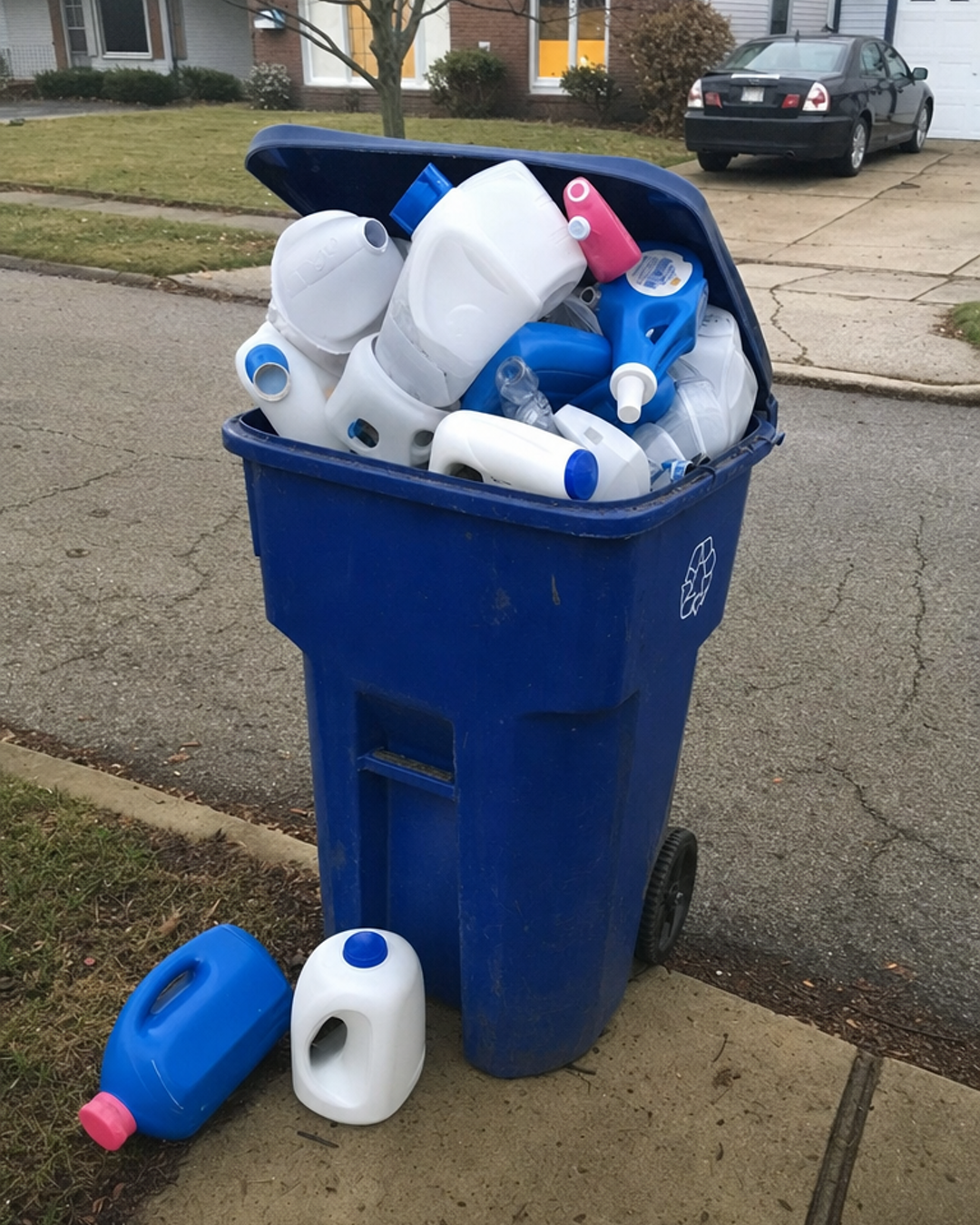
Save Our Planet Facebook ad: “Is It Better To NOT Recycle Your Detergent Jug?”
Ran for 14 days, from July 30 to August 13, 2026, the last day Crush saw it.
Run by Save Our Planet on Facebook. Crush is not the advertiser and does not verify its claims. See this ad in Meta's Ad Library(opens in a new tab)
Want an ad like this for your product?
Crush makes new ad images for your product from this ad: your logo, your product photo, your offer.
Trials from $19.95 USD, then $79.95 USD a month. Cancel anytime.
About this ad
- Meta Ad Library ID
- 2528392900915044
- Platforms
- Facebook, Instagram, Messenger and Threads
- Relaunches
- 3
Ad text
I stopped recycling six months ago. On purpose. And I'm about to convince you it might be one of the more responsible things I've ever done — starting with the jug sitting in your laundry room right now. I want to tell you about the afternoon I found out I'd been lied to for thirty-two years. Because once you know this, you can't un-know it, and I think you deserve to know it too. I'm the recycler in my family. Always have been. I'm the one who rinses the peanut butter jar. I'm the one who peels the label off the can. I'm the one who fishes a plastic bottle out of the regular trash at a barbecue and quietly moves it to the recycling, and pretends I'm not judging you, and is absolutely judging you. I did this for thirty-two years and I felt good about it. It was my small thing. My little contribution. Every Tuesday I rolled the blue bin to the curb and felt like I'd done right by my grandkids' planet. And then my brother-in-law came to dinner. He'd spent eleven years driving a truck, and the last two of them hauling for a materials recovery facility — that's the fancy name for the place your recycling actually goes to get sorted. I was doing my usual thing, moving his empty seltzer can from the trash to the recycling, and he watched me do it, and he said — not unkindly — "You know most of that doesn't get recycled, right?" I laughed. I said, "Sure, some of it. But most of it does." He didn't laugh. He said, "Barb. Sit down for a second. I'm going to ruin recycling for you." Here is what he told me, and here is what I spent the next week confirming on my own, because I didn't want to believe it. Reporting has found that only about 9% of all the plastic ever made has actually been recycled. Nine percent. Which means 91% of it — even the stuff you rinsed and sorted and carried to the curb like a good person — gets buried in a landfill or burned. Or it ends up somewhere much worse, and I'll get to that. I said, "That can't be right. Why would they tell us to recycle if it doesn't work?" And that's when he told me the part that actually made me angry. Investigations have found that the big oil and plastic companies knew, decades ago, that most plastic would never be economical to recycle. And instead of telling us that — instead of making less plastic — they spent a fortune promoting recycling. The bins. The arrows-in-a-triangle symbol. The ad campaigns telling us it was OUR job to recycle. Because if recycling is YOUR responsibility, then the plastic in the ocean is YOUR fault. Not theirs. They didn't invent recycling to save the planet. Investigations suggest they promoted it to move the guilt off of the companies making the plastic and onto the rest of us. I have felt guilty about plastic my entire adult life. And it turns out the guilt was a product. They manufactured it right alongside the jugs. This is not your fault. It was never your fault. I need you to hear that before I go on, because I sat at my kitchen table that night feeling like an idiot, and you don't have to. Okay. So I asked the obvious question: "If I do everything right — I rinse it, I sort it — why doesn't it get recycled?" And my brother-in-law walked me through it, and this is where it stops being about "plastic in general" and starts being about the exact jug sitting in your laundry room right now. He said plastic gets rejected at the sorting facility for a bunch of reasons. But two of the biggest are color and contamination. COLOR first. He said bright, dyed, colorful plastic is much harder to recycle than clear plastic. The dyes limit what it can be turned into, so a lot of colored plastic just gets pulled off the line and sent to the landfill. Nobody wants it. Then CONTAMINATION. He said if there's residue left inside a container — food, oil, soap — it can contaminate a whole batch. One gunky container can get a bunch of otherwise-good stuff rejected. So facilities often just toss the containers that tend to be messy. And then he looked at me and said, "What's the messiest, most brightly-colored plastic container in your whole house?" And I knew. It was in my laundry room. A big, heavy, bright blue jug of laundry detergent, with sticky dried goo crusted around the cap, that I'd been dutifully "recycling" for years. Brightly colored: check. Contaminated with sticky soap residue: check. It was practically designed to get rejected. And that's when a question popped into my head that I had somehow never asked in three decades of buying the stuff: Why is laundry detergent always blue? Or green? Your clothes don't come out blue. So what is the color even for? So I looked it up, and I fell down a hole, and I did not climb out for a week. The color is dye. Just added coloring. It doesn't clean a single thing. It's there so the liquid LOOKS strong and potent when you pour it — marketing you can hold in your hand. And that same dye is part of what makes the jug so hard to recycle. Then I found the part that upset me more than the recycling. Optical brighteners. You know how detergent makes your whites look almost impossibly bright? Brighter than clean? Here's the trick: optical brighteners are chemicals designed to stick to the fabric and STAY there. They don't lift dirt. They don't clean anything at all. They absorb invisible light and glow faintly blue, which fools your eye into reading the fabric as "whiter." They're engineered NOT to wash out. That's the whole point — they have to stay on the clothes to keep working. Which means they stay on the fabric that sits against your skin all day. Researchers have found some of these compounds can transfer through the skin. Then I found out the jug is up to 80% water. You're paying to ship water, carry water, store water, and pour water — with a little soap and a lot of dye mixed in. And then I found the one I really didn't like. A chemical called 1,4-dioxane. It's not something they add on purpose — it's a byproduct that can form when a lot of conventional detergents are made. And because it's a contaminant and not an "intentional ingredient," it doesn't even have to be listed on the label. Studies have linked 1,4-dioxane to cancer. Regulators list it as a probable human carcinogen. Now — the official line is that the trace amounts are considered safe. Maybe that's true. I'm not a chemist. But I stood in my laundry room and thought: I don't need anybody to promise me it's fine. I just don't want a chemical that's been linked to cancer in the thing I wash my grandkids' clothes with. That's not science. That's a grandmother making a choice. And I decided I was allowed. So now I had a jug that: — barely gets recycled, — is dyed a color that makes it worse to recycle, — is full of brighteners engineered to stay on my family's skin, — is 80% water, — and can carry a chemical linked to cancer that isn't even on the label. I thought: there has to be a better way. So I went looking. The pods? Same problems — the dye, the brighteners, the plastic. I tried making my own "eco" detergent at home, the way the internet swears by. It clumped, it didn't dissolve, and it left a film on my towels I had to wash out twice. (If someone tells you to make your own detergent: don't. I have the ruined towels.) I looked at powders. Then I read a study that raised concerns about powdered detergents releasing fine particles into the air you breathe while you pour them. Pass. I remembered hearing about laundry SHEETS a while back — but I'd also heard they didn't really clean, so I'd dismissed them. Then my daughter, of all people, sent me a link. She'd found a small company out of Kentucky called Earth Breeze — an American company, making the sheets here, not shipping them in from a mystery factory overseas. And the first thing that caught my eye wasn't a claim. It was what wasn't there. No dye. No optical brighteners. No plastic jug at all. Every ingredient listed openly, in real words. Independently tested in a US lab. It's not a jug. It's a thin, pre-measured sheet — super-concentrated detergent pressed into something the size of a dryer sheet (not a dryer sheet — a laundry detergent sheet). You drop one in the wash and it dissolves the second it hits the water. I braced for disappointment. I'd heard sheets didn't work, remember. I ran a week of real laundry through it. Grandkids' grass stains. Kitchen towels. My husband's work shirts. They came out clean. And they smelled fresh — like clean, not like a perfume aisle. I ran a second load to be sure. Same thing. I wasn't expecting that. I'll be honest with you — I wasn't. That's the whole report. Not a miracle. Just clean, the plain way clean is supposed to be, without any of the stuff I'd just spent a week reading about. Here's the part that closed the loop for me, though. Remember the guilt? The manufactured guilt, the ocean, the whole thing my brother-in-law ruined for me at dinner? This tiny company does the opposite of the big ones. Instead of selling you guilt, they actually do something with it. They've partnered to help protect sea turtles — the ones choking on the plastic that's supposed to be recycled and isn't. They fund ocean cleanups that pull plastic back out of the water. They plant trees. And they donate laundry — real loads of it — to shelters and families who can't afford it. So every time I do a load now, I'm not adding a dyed, contaminated jug to a landfill or an ocean. I'm doing the opposite. I put down a thirty-two-year-old habit that turned out to be a lie, and I picked up one that isn't. Over 3 million Americans have already switched. It has 70,000+ 5-star reviews. It's made in Kentucky, with ingredients from the US, Canada and Europe. It works in every machine, including HE, in any water temperature. The whole pack is a thin cardboard envelope you could fit a year's worth of in a cupboard. And it costs less per load than the jug I'd been buying for decades. No dye. No brighteners. No 80% water. No heavy jug. No sticky blue goo on the cap. And nothing going into a landfill or an ocean with my name on it. If any of this made your stomach drop the way mine did — do the two things that changed it for me. One: turn your detergent jug around tonight and actually read it. Look for a real ingredient list, in real words. If it just says "cleaning agents" and "brighteners," ask yourself why they won't tell you. Two: if you don't like what you find, there's a link below to what I switched to. Right now they're running a special — up to 64% off with 4 free gifts when you subscribe, backed by a 60-day money-back guarantee. If you don't love it more than your old detergent, you get every penny back. I only wish my brother-in-law had ruined recycling for me thirty years sooner. — Barb T. P.S. — Give it a few weeks before you judge anything. And do the reading. I know it's easier to just keep buying the blue jug. I did it for thirty-two years. The reading is the part that set me free. P.P.S. — The 91% number is the one I can't let go of. Every time I tell someone, I watch their face do exactly what mine did. Nine percent. That's it. Everything else you carefully rinsed and sorted — buried, burned, or floating somewhere it shouldn't be. Turn your jug around. Start there. P.P.P.S. — My brother-in-law switched too. He's the one who ruined recycling for me, and now he's the one texting me pictures of his empty laundry shelf like it's a trophy. It kind of is. P.P.P.P.S. — I keep an extra pack in the cupboard now, because they ship it right to the door and I never want to run out and be tempted back to the jug. If you're the type to run out of things at the worst moment (I am), that's worth knowing. https://earthbreeze.com/gwp Individual experiences vary.
Where the ad sends people
earthbreeze.com
Is It Better To NOT Recycle Your Detergent Jug?
70,000+ 5-star reviews
See details: earthbreeze.com(opens in a new tab)