Dr. Sarah Mitchell - Shoulder Care
Dr. Sarah Mitchell - Shoulder Care Facebook ad: “Menopause + Shoulder Pain? Read This.”
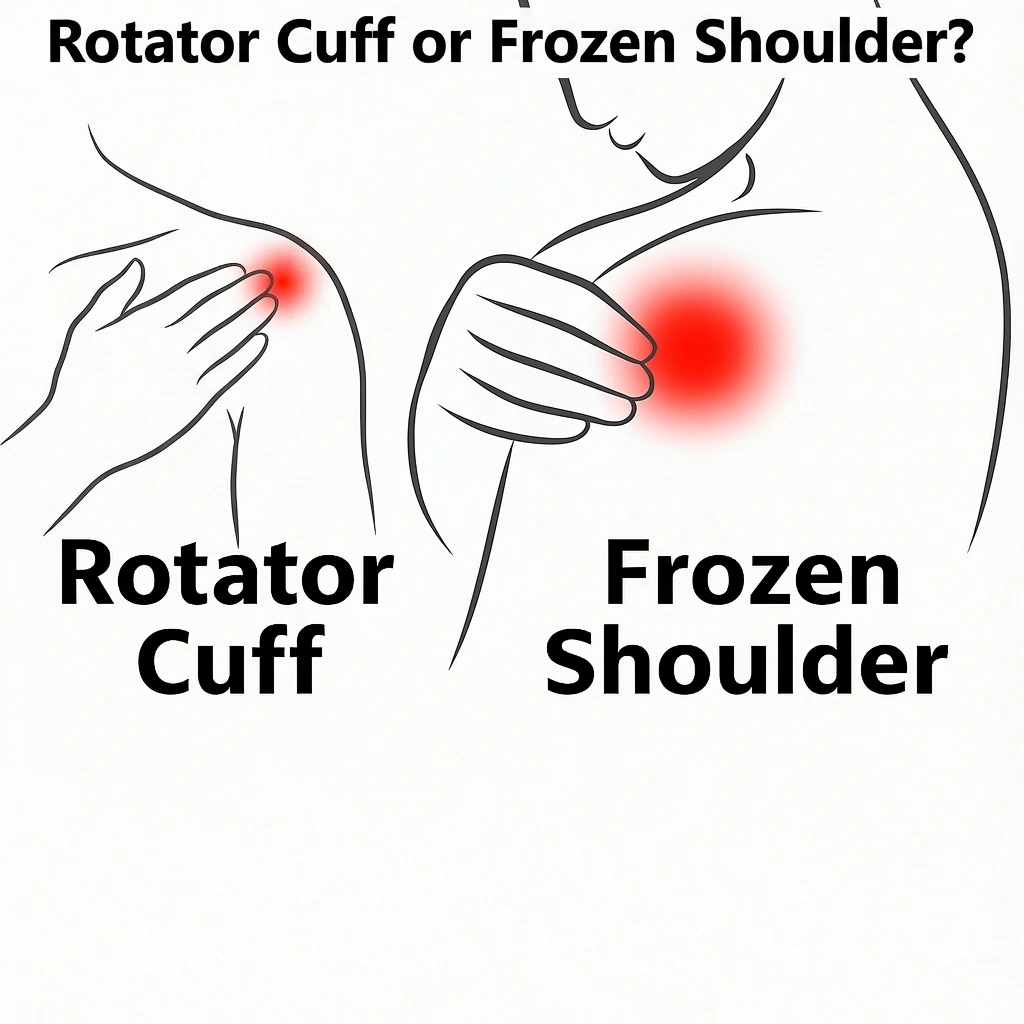
Ran for 47 days, from December 31, 2025 to February 16, 2026, the last day Crush saw it.
Run by Dr. Sarah Mitchell - Shoulder Care on Facebook. Crush is not the advertiser and does not verify its claims. See this ad in Meta's Ad Library(opens in a new tab)
Want an ad like this for your product?
Crush makes new ad images for your product from this ad: your logo, your product photo, your offer.
Trials from $19.95 USD, then $79.95 USD a month. Cancel anytime.
About this ad
- Meta Ad Library ID
- 25359382590385550
- Platforms
- Facebook, Instagram, Audience Network, Messenger and Threads
- Relaunches
- 0
Ad text
I'm an orthopedic surgeon and I was wrong about frozen shoulder treatment for 12 years. After watching my third patient that week struggle to put on her coat in my office, I knew I had to do something different. I'm Dr. Sarah Mitchell, and I've been practicing orthopedic medicine for 17 years. I specialize in shoulder conditions. And for the last decade, I've watched the same heartbreaking pattern repeat itself in my office almost every single day. A woman in her late 40s or 50s comes in with shoulder pain that "came out of nowhere." She's been dealing with it for months. Sometimes over a year. She can't sleep. Can't lift her arm. Can't do her hair or fasten her bra. Her primary care doctor told her it was "just aging" and prescribed ibuprofen. By the time she gets to me, she's desperate. And I have to tell her the truth: "This is adhesive capsulitis. Also called frozen shoulder. It typically takes 18 to 36 months to resolve on its own." I watch her face fall. Every. Single. Time. Here's what frustrates me most about frozen shoulder: We know exactly what causes it in menopausal women. We know the mechanism. We know why it happens. And we know what works to treat it. But the standard treatment protocol—physical therapy, NSAIDs, maybe a cortisone injection—addresses symptoms, not the underlying problem. Let me explain what's actually happening. When estrogen levels drop during menopause, it doesn't just cause hot flashes and mood changes. It fundamentally alters how your connective tissue responds to inflammation. The shoulder capsule—the tissue that surrounds your shoulder joint—begins to thicken and contract. Think of it like scar tissue forming around the joint. This tissue becomes inflamed, tight, and increasingly restrictive. That's why you can't move your shoulder. It's not muscle pain. It's not a tendon injury. Your shoulder joint is literally being encased in thickened, contracted tissue. And here's the critical part that most patients never hear: This process has a specific temperature threshold. Collagen fibers—what your shoulder capsule is made of—become temporarily more elastic at sustained temperatures between 140-150°F. Below that threshold, heat provides comfort. It feels good. But it doesn't change the structural properties of the tissue. This is why standard heating pads don't work. They max out at 110-120°F and shut off after 15-20 minutes. They're providing comfort, not therapy. They're not reaching the temperature or duration needed to affect capsular tissue elasticity. For years, I sent patients to physical therapy with this understanding. "Heat your shoulder before therapy. Get the tissue warm and pliable, then work on range of motion." The problem? Most patients were using standard heating pads at home. They'd come back after 8 weeks of PT and say: "I'm doing the exercises, but nothing's changing." Of course nothing was changing. They were trying to stretch cold, contracted tissue. Like trying to stretch a frozen rubber band. It doesn't work. And it often makes things worse. Three months ago, one of my patients—Linda, 52 years old—came in for a follow-up. She'd been dealing with frozen shoulder for seven months. We'd done a cortisone injection that helped for about three weeks. She'd been in PT for two months with minimal progress. I was about to discuss a second injection when she said something that stopped me: "I can lift my arm again." I looked at her chart. Nothing had changed in her treatment protocol. "What did you do differently?" I asked. She pulled out her phone and showed me a device she'd ordered online. A heated shoulder wrap that delivered sustained therapeutic heat—140-165°F—for 45-60 minute sessions. Built-in vibration massage to work the tissue while it was warm and pliable. Cordless, so she could wear it while doing other things. "I use it every morning," she said. "Twenty minutes of heat, then I do my PT exercises while my shoulder is still warm. The difference is incredible." I examined her shoulder. She had regained 40% of her range of motion in three weeks. Forty percent. After months of minimal progress with standard treatment. I started asking my other frozen shoulder patients what they were using for heat therapy at home. Almost all of them: standard heating pads. Maximum temp: 120°F. Auto-shutoff: 15-20 minutes. They were doing everything right—the exercises, the stretching, the consistency. But they were using a tool that was physically incapable of reaching therapeutic temperatures. I felt like I'd been sending patients into battle with inadequate equipment. I started researching therapeutic heating devices. Most of them were designed for general muscle pain. But I found a few that were specifically engineered for adhesive capsulitis: Sustained heat delivery at 140-165°F. Treatment durations of 30-60 minutes. Integrated massage to work adhesions while tissue is pliable. Cordless design for overnight use (critical, since tissue contracts during sleep). I ordered one to examine myself. Tested the temperature ranges. Verified the specs. It delivered exactly what the research said menopausal frozen shoulder patients needed. I started recommending it to my patients. Not as a replacement for PT or medical treatment. As a critical component that makes everything else actually work. Because here's the truth: You can do all the physical therapy in the world. But if you're trying to stretch tissue that's cold and contracted, you're wasting your time. You need the tissue warm and pliable first. Actually warm. Therapeutically warm. Not comfort-warm. Healing-warm. The results have been remarkable. Patients who'd been stuck in the "frozen" phase for months are regaining range of motion in weeks. Sleep quality improves dramatically (the overnight heat therapy makes a huge difference). PT exercises become actually effective instead of just painful. Linda—the patient who first showed me the device—has now regained 90% of her shoulder function. She's back to doing yoga. Styling her hair. Living her life. "I was ready to get surgery," she told me at her last visit. "I couldn't live like that anymore." She didn't need surgery. She needed her tissue heated to the right temperature for the right duration so her body could actually respond to treatment. I'm sharing this because I see too many women suffering needlessly. Going through the same cycle: Doctor visit. "It's frozen shoulder. Give it time." Months of pain and disability. Standard heating pads that don't work. PT exercises that hurt without helping. Cortisone injections that provide temporary relief before the pain returns. Eventually, either surgery or just... accepting this as their new reality. It doesn't have to be that way. If you're dealing with frozen shoulder right now—especially if you're in your late 40s, 50s, or early 60s—you need to understand this: Standard treatment protocols work better when combined with actual therapeutic heat delivery. Not comfort heat. Therapeutic heat at temperatures that affect tissue elasticity. I still recommend PT. I still do cortisone injections when appropriate. But I also tell my patients: "The exercises won't work if you're trying to stretch cold tissue. Get your shoulder to therapeutic temperature first." The device I recommend most often is called Heatify. I have no financial relationship with the company. I don't get paid to recommend it. I recommend it because it delivers what my frozen shoulder patients actually need: Sustained heat at 140-165°F (verified therapeutic range). 45-60 minute treatment cycles (adequate duration for tissue response). Integrated vibration to work adhesions during elasticity window. Cordless design for overnight use. I've now had over 60 patients use it with their PT protocol. The average time to significant improvement: 4-6 weeks. Compare that to the 18-36 months this condition typically takes. Here's what I tell my patients: "I can give you exercises. I can do injections. I can refer you to excellent physical therapists. But if you're not heating your shoulder to actual therapeutic temperatures before working on it, you're doing everything the hard way. Your tissue needs to be warm and pliable for treatment to work. Actually warm. Measurably warm. Not 'feels nice' warm. 'Changes tissue properties' warm." Most of them come back four weeks later and say the same thing: "I wish someone had explained this to me six months ago." Me too. I'm not here to sell you anything. I'm a doctor who's tired of watching women suffer through a condition that has a known mechanism and a clear solution. Estrogen loss causes capsular inflammation and contraction. Therapeutic heat temporarily increases tissue elasticity. During that window, gentle movement can restore range of motion. It's not complicated. But it requires the right tools. Standard heating pads aren't the right tool. They were never designed for this. If you're dealing with frozen shoulder right now: Yes, see a doctor. Get a proper diagnosis. Yes, do physical therapy. The exercises matter. But also understand that those exercises work dramatically better when your tissue is at therapeutic temperature. Not comfort temperature. Therapeutic temperature. The difference between those two things is the difference between months of suffering and weeks of steady improvement. I've been in medicine long enough to know that there's no magic cure. Frozen shoulder takes time to heal, regardless of what you do. But there's a massive difference between: 18-36 months of disability and pain And 8-12 weeks of steady improvement with proper therapeutic intervention. That difference is understanding the mechanism and using the right tools. Your shoulder capsule needs sustained heat at specific temperatures to become pliable enough to respond to treatment. Give it that, and your body can actually heal. Don't, and you're just managing symptoms while the underlying problem persists. If you want to look into the device I recommend to my patients, it's called Heatify Again, I have no financial relationship with them. I just recommend what works. And after watching 60+ patients go from barely able to lift their arm to regaining full function in weeks instead of years, I know this works. Your doctor should still be your primary resource. But if they're not talking to you about therapeutic temperature thresholds and tissue elasticity windows, you're not getting the full picture. And you deserve the full picture. You deserve to understand what's actually happening in your shoulder. And what it actually needs to heal. Dr. Sarah Mitchell, MD Orthopedic Medicine, 17 years Specializing in Shoulder Conditions
Where the ad sends people
tryheatify.store
Menopause + Shoulder Pain? Read This. ☝️
Heatify
Learn more: tryheatify.store(opens in a new tab)