
Inactive· since May 21, 2026
- 76
- days it ran
- 2
- relaunches
- 66,111
- EU reach
Ad copy
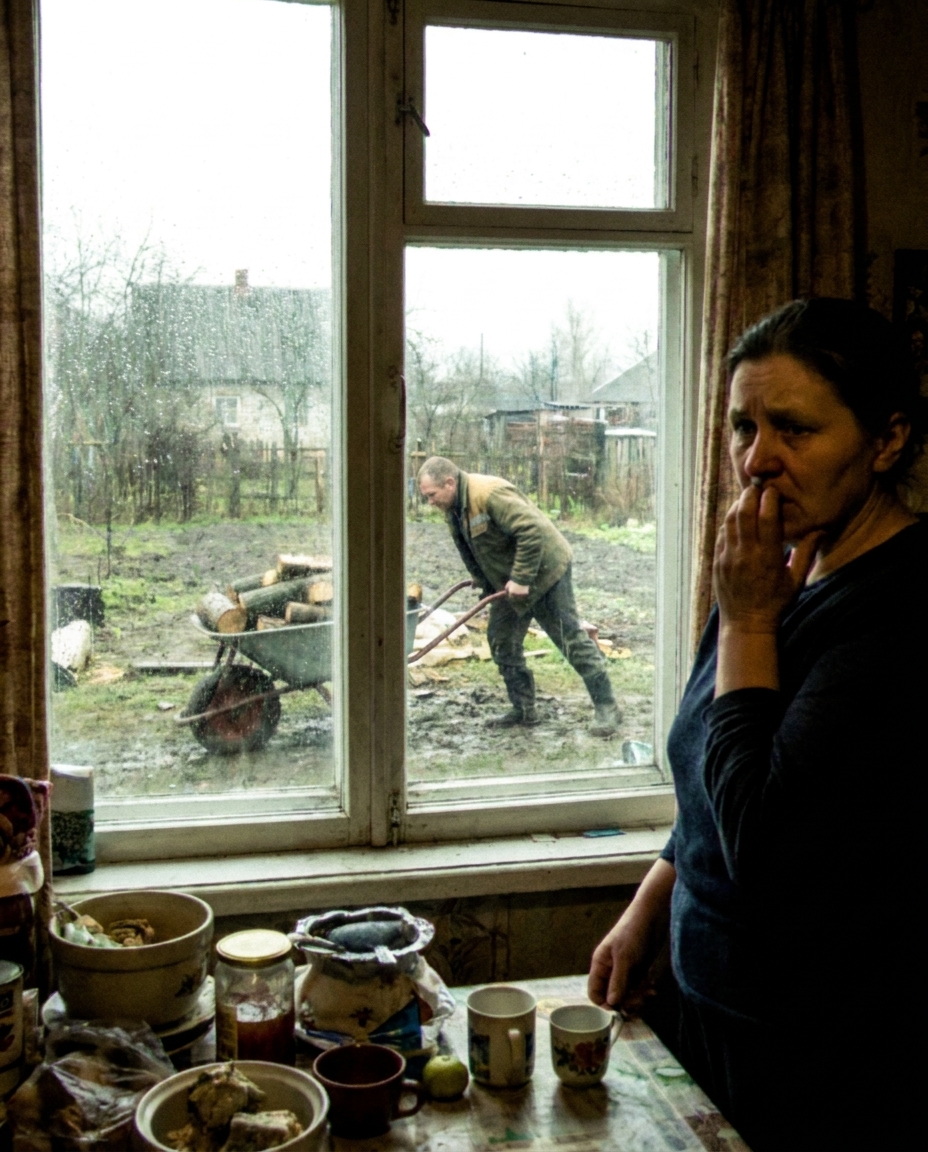
I Buried My Brother at 67. Then I Watched My Husband Start Sitting in the Same Chair. My brother George died three years ago. He was 67. I am 60 now. George was the older one. Four years older. When we were kids, he taught me how to ride a bike, how to skip a stone across the pond behind our parents' house, and how to argue with our father without making him angry. He was the smartest person I knew. He owned a small accounting firm for 34 years. He had three kids and seven grandchildren and a wife named Carol who adored him. He died on a Tuesday afternoon. He was sitting in his chair on the porch. Carol went to bring him a cup of coffee. He was already gone. The doctor said his heart had simply given out. He'd been a healthy man — a little overweight, but who isn't at our age — with bloodwork the doctor had always called "fine." There was no warning. That's not exactly true. I want to start over. There was a warning. Several of them. I just didn't know how to read them. The two years before George died, he had been fading. I want to describe what that looked like, because I think it's the most important thing I can describe in this story. He had been the kind of man who did the New York Times crossword in pen every Sunday morning at the kitchen table while drinking coffee from the same mug he'd had since 1987. About two years before he died, he stopped doing the crossword. He told Carol the puzzles had gotten too easy. She knew they hadn't. He had been the kind of man who got up at 5:30 a.m. every morning to take a long walk around the neighborhood before the rest of the world woke up. About 18 months before he died, the walks got shorter. Then they stopped. He told us he'd been getting bored with the same route. We knew he hadn't been bored. He had been the kind of man who watched every single one of his grandchildren's school events — recitals, soccer games, science fairs, school plays — front row, no exceptions. About a year before he died, he started missing them. He told everyone he had "a thing" that night. He didn't have a thing. He had a chair. The chair on the porch. He sat in it most evenings now and watched the bird feeder. He had been the kind of man who could not be in a room without telling a story. About six months before he died, he stopped telling them. He'd start a sentence, drift off, look out the window, forget where he was going. He told us he'd lost his train of thought. We all said the same thing. That happens to me too. It's just getting older. We were all lying. To him. To ourselves. To each other. I was at his funeral three years ago this past April. I sat in the front pew next to Carol while a minister talked about how my brother had "lived a full life." I cried so hard I couldn't see. I cried partly because my brother was dead. I cried partly because I had been watching him die for two years and I had not done one single thing about it. I had told myself it was just aging. Just retirement. Just the normal slowing down that happens to men in their 60s. I had told myself this every time I visited him. Every time I noticed something new he'd stopped doing. Every time Carol pulled me aside in the kitchen and said something is wrong with George. I had told my own sister-in-law she was overreacting. I want to live the rest of my life atoning for that. Now I have to tell you about my husband, Mike. Mike is 64. He has been my husband for 38 years. He is a retired insurance adjuster. He has a workshop in the basement. He has a fishing cabin he co-owns with his oldest friend. Mike used to do the Wall Street Journal crossword in the morning. About a year and a half ago, he stopped. Mike used to walk to the coffee shop on Saturday mornings — a mile and a half each way — to read the paper at the counter and chat with the owner. He hasn't done that in over a year. Mike used to come downstairs in the morning whistling. I don't think I've heard him whistle in eight months. I had been telling myself for the last two years that this was just retirement. That this was just aging. That this was normal. I told myself this every morning when I watched him sit at the kitchen table and stare at his coffee for ten minutes before he took a sip. I told myself this every evening when he went to bed at 8:45 — 8:45 — even though for 35 years he had been a man who couldn't sleep before midnight. I told myself this every weekend when he sat in the chair in the living room and watched a game he wasn't actually watching. I told myself the same lies I had told myself about my brother. For the same reason. Because the truth was unbearable. The moment it broke open for me was Thanksgiving last year. We hosted. The whole family came. 14 people. Our three kids, their spouses, the grandkids, my younger sister and her husband. Mike spent the morning in his chair in the living room. He didn't help with the food the way he used to. He didn't carve the turkey the way he had for 35 years. Our son-in-law did it. We sat down to dinner at 4 p.m. Mike ate quietly. He didn't tell the story he always told at Thanksgiving — the one about the year the oven broke and we cooked the turkey in pieces in the kitchen toaster oven. The grandkids waited for it. He didn't tell it. By 5:30, before dessert had been served, he had fallen asleep at the table. Not asleep at the table the way men do at the end of a big meal. Asleep at the table with his head tilted back, mouth slightly open, fork still loosely in his hand. Our four-year-old grandson tapped his arm. "Grandpa." Mike woke up with a start. Looked around. Apologized. Said he'd had a long day. I sat across the table from him. I looked at him. And I saw my brother George sitting in his chair on the porch. I saw George at his desk a year before he died, drifting off mid-sentence. I saw George missing his grandchildren's recitals. I saw George telling everyone he had "a thing." I saw George dead in his chair on a Tuesday afternoon. And then I saw Mike. Sitting in the same chair, in our dining room, three years later, four years younger than George had been when his heart gave out. I excused myself from the table. I went upstairs to our bedroom. I sat on the edge of the bed. And I cried for a long time. Quietly enough that nobody heard. Because Carol was right and I was wrong. And George was dead. And Mike was next, if I kept doing what I had done for my brother. Which was nothing. Three weeks after Thanksgiving, I drove out to see Doug. Doug is Mike's oldest friend. They have known each other since they were 19 years old. They went to college together. They were each other's best men. They have fished together every summer for 35 years at a cabin Doug owns up north. Doug is 65. I had not driven out to see Doug alone in 35 years. But I drove out alone that morning, in mid-December, because I needed to ask him something I couldn't ask my husband. I sat in his kitchen. His wife Linda was in the next room reading. I said, "Doug, I have to ask you something. Have you noticed anything about Mike?" Doug set down his coffee. He looked at me for a long moment. He said, "Yeah. I've been worried for two summers now." I felt the floor fall out from under me, even though it was the answer I had driven out to hear. "What have you noticed?" He told me. He said the last summer, Mike hadn't gotten up to fish in the morning — not once. Not on a single day of the week-long trip. He said the summer before that, Mike had slept in the boat after lunch instead of casting. He said Mike had stopped telling the stories he always told around the fire. He said Mike had been quieter at dinner. He said Mike had been wanting to come home a day or two early both summers, when for 33 years before that he had been the one who didn't want to leave. "I didn't know how to tell you," Doug said. "I thought it might be something between you two." "It's not." "I figured." I started to cry at his kitchen table. I had not cried in front of Doug since I was 25 years old and he had given a toast at our wedding that made me laugh and cry at the same time. He didn't say anything. He just put his hand on top of mine and kept it there. After a few minutes, Linda came in from the next room. She had heard. Linda is 63 years old. She is a retired librarian. She is one of the most quietly observant women I know. She sat down with us at the table. She said, "Susan, I want to tell you something." She told me she had gone through her own version of what I was describing about three years ago. She said it had started slowly. The energy went first. Then the interest in her morning routine. Then the books she'd loved for 40 years stopped pulling her the way they used to. Then she stopped going to her book club. Then she stopped initiating conversations with Doug. She said her doctor had told her she was fine. Her bloodwork was perfect. She said her husband had told her she was fine. He didn't see it. She said her sister had told her she was fine. Just getting older. She said she had known they were all wrong but she didn't have the vocabulary to argue. She said it had taken her about ten months to find her way back to herself. She said it had been a combination of things. She had started walking again, slowly at first, then longer. She had cleaned out the back room of the house and made it a small studio for her watercolors. She had reconnected with her sister in a real way. And — she said this almost as an afterthought — she had added a beetroot supplement to her morning routine after reading about it. She said she didn't know how much of any one thing had done the work. She said she suspected most of it was just her body coming back to itself when she finally gave it permission to. But the beetroot was the one external thing she'd added during that period, and she'd kept taking it. "It's called Rosabella," she said. "It's a small company. Cold-pressed at low temperatures. The processing matters because the active compounds in beets — the betalains, the deep red pigments — are sensitive to heat. Most beetroot supplements get processed in ways that damage those compounds before the powder ever reaches the bottle." She paused. "It's not a miracle. I want to be clear about that. But it's a small thing that supports the body's natural antioxidant balance and cellular energy. At our age, those things start to matter in ways they didn't before." I asked her if she'd be willing to write down the name for me. She did. On the back of a receipt. I drove home with the receipt in my console. That night, I did not tell Mike about the conversation. I sat on the couch with my laptop after he had gone to bed at 8:45. I read about beetroot for several hours. I read about betalains specifically. The compound family in beets that does most of the work in the body. Supports antioxidant balance. Supports cellular energy. Sensitive to heat. I read about Rosabella. Small operation. Cold-pressed at low temperatures. Plain language on the bottle. I read until 2 a.m. I closed the laptop. I sat in the dark thinking about my brother George. I thought about the two years Carol had been pulling me aside in her kitchen. I thought about every time I had told her she was overreacting. I thought about George in his chair on the porch. I thought about Mike in his chair in our living room. I thought about how nobody had given me a vocabulary for what I had been watching happen. Linda had given me a vocabulary. I owed Linda the rest of my life. The next morning, I called Mike's doctor's office. I told the nurse who picked up exactly what I'd been watching. I told her about Thanksgiving. About the chair. About my brother. She was quiet for a moment. She said, "I want to tell the doctor what you just told me. Can he call you back this afternoon?" He called back at 2 p.m. He listened for 20 minutes without interrupting. He said, "Susan, I want you to bring Mike in. Not for an annual physical. For a longer appointment where we actually have time to talk. I think you're seeing something real, and I want to look at it properly." I almost cried again. For three years before George died, no doctor had ever said anything like that to Carol. I asked the doctor, while I had him on the phone, about the supplement Linda had mentioned. A beetroot supplement, cold-pressed, for general antioxidant and cellular energy support. He said he had no concerns about Mike adding it. He said he often recommended general antioxidant support to patients Mike's age. He said to make sure Mike kept taking everything he was currently on, exactly as prescribed. I want to stop here and tell you something clearly. That phone call was the most important thing I did in this entire story. Not the supplement. The phone call. If you take one thing from what I'm writing, take that. You call the doctor's office before you add anything new for someone you love. Always. That phone call costs you four minutes. It is the single most important step. Mike went in for the longer appointment two weeks later. The doctor took our concerns seriously. He ordered some additional bloodwork. Everything came back, in his words, "within expected range — but I hear what your wife is describing, and I want us to pay attention to it." He told Mike to keep doing what he was already doing medically. He told Mike to try, gently, to add some small things back into his life. He told both of us that the supplement was a sensible thing to add and to keep him posted. We left the office and Mike was quiet on the drive home. When we got home, he sat on the couch and said, "I didn't realize you'd been this worried." I said, "I know." He nodded. "I think I've been pretending too," he said. That was the first crack in the door. The bottle came three days later. I put it on the counter next to the coffee maker. Mike opened it the next morning. Two capsules with breakfast. The first few weeks I didn't see anything I could point to. I had learned from Linda to expect this. Bodies are slow. Patience is part of the protocol. Sometime in the second month, Mike got up one morning and made coffee for both of us — instead of just for himself — for the first time in months. I didn't say anything. I didn't want to spook it. A few weeks after that, he asked me what I thought about going up to Doug's cabin in the spring, just the two of us, for a long weekend. He hadn't suggested a trip in over a year. I told him I thought that sounded wonderful. Later in the winter, he started reading at night again. Not much. Twenty minutes before bed. But the lamp on his side of the bed had been off for over a year and now it was on. By the end of winter, he was going to the coffee shop on Saturday mornings again. The first Saturday he went, he walked there and back. A mile and a half each way. He came home and didn't mention it. He just sat down at the kitchen table with his coffee and started reading the paper. I noticed he was sitting up straight in his chair. I cried in the bathroom for a few minutes. By spring, he and Doug had booked the cabin for the first week of June. The week before they left, Mike came into the kitchen one morning whistling. I had not heard my husband whistle in over a year. I had to leave the room to compose myself. Mike is still on his medications. He hasn't changed anything his doctor told him to take. His bloodwork at his most recent appointment was, in the doctor's words, "in good shape — keep doing what you're doing." The doctor didn't tell us why Mike seemed lighter. The doctor doesn't really know. The doctor knows numbers. I know my husband. And my husband came back to me, gradually, over the course of about six months. Mike is 64. George was 67 when he died. Mike will turn 65 this fall. We are going to celebrate it the way Mike wants to — with Doug and Linda and our kids and our grandkids — at Doug's cabin. We have booked the place for a long weekend. Mike has been talking about it for two months. He is not going to be my brother George. I do not know what will happen down the road. Nobody knows. Bodies are mysterious and time does what it does. But for now, my husband is here. He is whistling. He is making coffee for both of us in the morning. He is reading at night. He is going to fish in June. That is everything I wanted. P.S. If you have been watching someone you love fade — and if you have been telling yourself it's just aging, the way I told myself about my brother for two years — please don't keep doing that. Talk to the doctor. Not about supplements. About the person. Tell the doctor what you've been seeing. Don't let yourself or the doctor wave it off. Some of it might be aging. Some of it might not. You won't know until somebody who can actually look at the bloodwork hears what you're seeing. I will spend the rest of my life wishing I had said this to my sister-in-law instead of telling her she was overreacting. P.P.S. If you decide to try Rosabella, call the doctor's office before you start. Like I did. Just to confirm there's no reason not to add it given whatever else the person is taking. It takes one phone call. Most nurses will get you an answer the same day. That phone call is the most important step. Then put the bottle next to the coffee maker. Two capsules with water in the morning. Don't change anything else they're taking. Just add this one thing. Give it 60 days before you decide anything. Some people notice something within the first few weeks. Others take longer. Bodies are different. Be patient with whoever you're trying it for. P.P.P.S. Rosabella has a 90-day money-back guarantee. If you're not satisfied for any reason, every penny back. No questions asked. That's a sensible policy for a supplement. It gives you long enough to actually see whether it helps before you decide. P.P.P.P.S. Rosabella is a small operation. They harvest and bottle on their own schedule, so I keep an extra bottle in the cupboard. They currently offer a multi-bottle option that I went with myself. Worth a look. P.P.P.P.P.S. I drove out to see Carol last month. We sat in her kitchen the way we used to. I told her everything that had happened with Mike. The Thanksgiving moment. Driving out to Doug's. Linda. The phone call to the doctor. I told her I had been wrong about George. I told her she had been right. She listened without interrupting. When I was done, she reached across the table and held my hand. She said, "I knew you knew. I knew you'd know eventually." She didn't say anything else. She didn't have to. George is buried in the cemetery behind the church our family has gone to for 50 years. Mike is at home making coffee. That is the gap between the two paths. I think about it every single morning. https://track.tryrosabella.com/cdc16426-3e48-40a7-9fad-21098084f6cf DISCLAIMER Individual experiences vary. These statements have not been evaluated by the FDA. This product is not intended to diagnose, treat, cure, or prevent any disease.
Support stamina and heart health every day
LEARN MORELike this ad? Make it yours.
Crush rebuilds this exact creative around your product — your brand, your colors, your offer — in about a minute.