
Inactive· since Jul 13, 2026
- 30
- days it ran
- 0
- relaunches
Ad copy
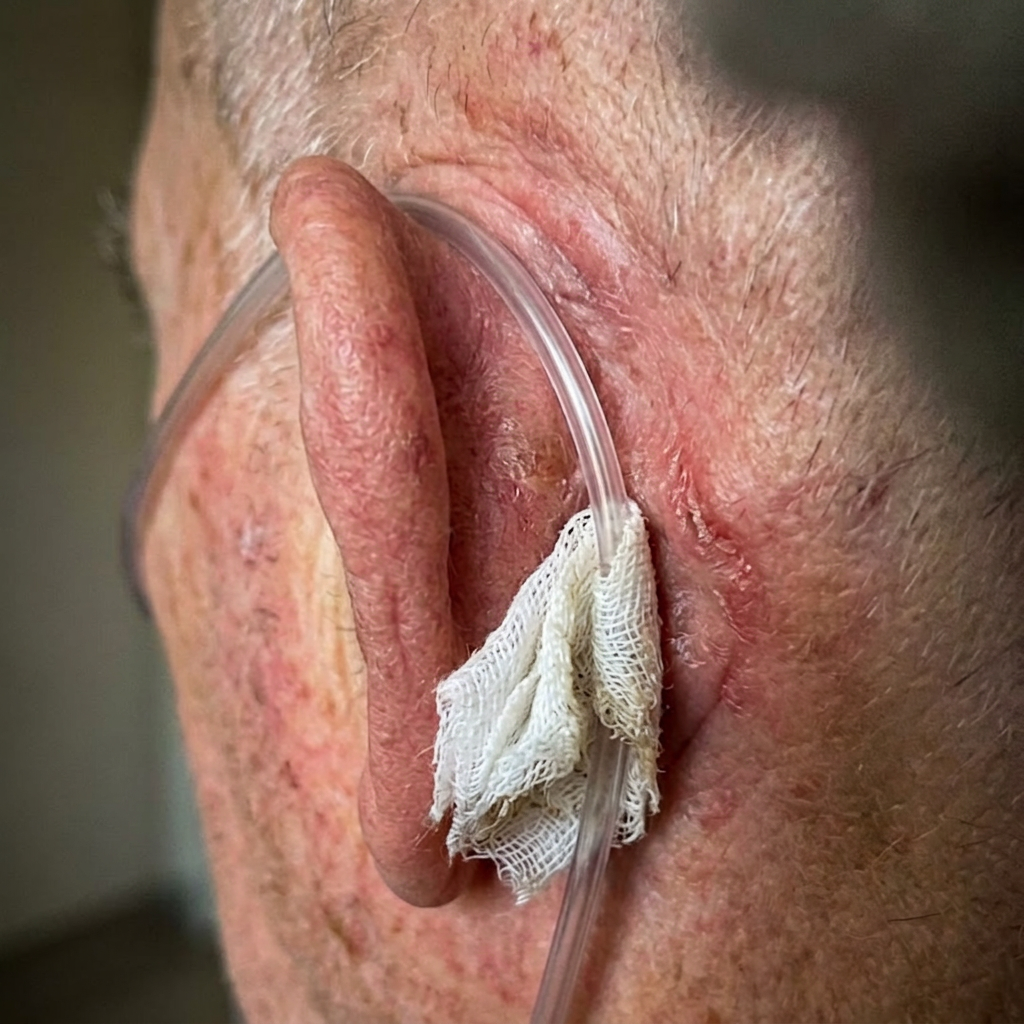
If you're on supplemental oxygen and you've got sores behind your ears, a nose that bleeds every other morning, and 7.6 metres of tubing you've tripped on twice this week — and you've just accepted all of this as "the trade-off for staying alive" — I need to tell you something nobody told me. Because there are three things happening right now: One — that cemented mucus lodged deep in your airways is burying the surfaces your lungs use to absorb oxygen on their own Two — every litre of supplemental O2 you're running through that cannula is compensating for a blockage, not just damaged tissue And three — there's a reason your pulmonologist never mentions any of this, and it'll make you furious when you hear it So let me tell you what happened with me, because my story is going to change the way you think about that tube in your nose. For THREE YEARS I was tethered to a concentrator. Two litres at rest. Four when I stood up to walk to the bathroom. 7.6 metres of tubing running through every room in my house like some kind of medical obstacle course. I'm 73. Retired meter reader. Spent 34 years walking routes for the power company. Rain, ice, dogs, you name it. Now I can't walk from my bedroom to the kitchen without my O2 dropping into the low 80s if I forget to turn up the dial. And the cannula itself? Let me tell you what "keeping you alive" actually looks like day to day. Nosebleeds. Every other morning. I'd blow my nose and the tissue would come back red. My nostrils were raw and cracked no matter how much saline gel I packed in there. Sores behind both ears where the tubing sits. My wife started taping gauze pads under the loops because the skin was breaking down. At night she'd tape the cannula to my cheek so it wouldn't slide out while I slept in my recliner. The concentrator humming all night like a jet engine in my living room. My wife moved to the bedroom. I stayed in the recliner next to the machine. That was two years ago. And the portable unit? Battery lasts maybe an hour at 3 litres. I haven't been to the supermarket in over a year. My daughter does my shopping now. I haven't been to church since Easter three years ago. At rest I need 2 litres. But if I get up to move to another room I need 4. Then when I sit back down, back to 2. So half the time I just don't get up. Because adjusting the dial every time I stand is a real pain and some days it's easier to just sit there. That's what oxygen therapy looks like. That's what "keeping you alive" actually means. And every time I went to the pulmonologist, you know what he said? "Your numbers are stable. Keep doing what you're doing." Stable. My nose is bleeding. I've got open sores behind my ears. I haven't left my house in months. My wife sleeps alone. But my numbers are "stable." So obviously I tried everything else too, right? Mucinex 1200mg twice a day. NAC capsules. Mullein tea my daughter ordered off Amazon. Flutter valve device. Steam over a pot with eucalyptus oil. Even tried those salt pipe inhalers. All of it did the same thing. Thinned out some watery stuff on top. The fresh mucus. Maybe loosened a thin glob or two. But that heavy, cemented layer I could feel sitting deep in my chest? The one that made every single breath feel like I was sucking air through a wet rag? Didn't touch it. And my O2 numbers didn't change. Not even a little. And that's where I'd be right now — still in that recliner, still cranking the dial, still watching my wife tape gauze behind my ears every morning — if it wasn't for my rehab partner, Don. Don and I did pulmonary rehab together for about eight months. Both on oxygen. Both Stage 3. He was worse than me actually. Three litres at rest. Five when he walked. Then one Tuesday he shows up to rehab without his portable unit. I almost said something. Thought he'd forgotten it. But then I watched him do the walking circuit. No tank. No cannula. O2 stats holding at 93. I didn't say anything that week. Or the next. Third week, same thing. No oxygen. Walking the full circuit. Colour in his face I hadn't seen in a year. So I finally grab his arm after class and I say Don, what the hell is going on? He gets quiet for a second. Then he says, "My son figured it out." Don's son, Marcus, is a paramedic. Been running calls for fourteen years. And Marcus told Don something that changed everything for me. He said Dad, I've responded to hundreds of COPD calls. And the ones who need the most oxygen are always the ones with the most mucus. Not the most tissue damage. The most mucus. He said there's two layers of mucus in your lungs. Not one. Two. The top layer is fresh. Watery. That's what Mucinex thins. That's what the nebuliser loosens. That's the stuff that comes up when you hack over the sink in the morning. But underneath that? There's a second layer. Older. Hardened. Cemented to the walls of your airways from years of buildup. It coats the surfaces where oxygen is supposed to pass from your airways into your blood. And here's the part that made my stomach drop: That cemented layer is BURYING your gas exchange surfaces. The tissue underneath might still be functional. But it can't absorb oxygen because it's coated in hardened mucus that nothing you've taken has ever reached. So your concentrator isn't just compensating for damaged tissue. It's compensating for blocked tissue. Tissue that could still work if you could get that layer off. And nothing you swallow can reach it. Not Mucinex. Not mullein. Not NAC. Not any capsule or tea. Because anything you swallow gets destroyed by stomach acid. Less than 1% ever touches your airways. You're treating your stomach while your lungs stay cemented shut. Marcus said the only way to dissolve that deep layer is direct delivery to the airways. Same logic hospitals use with nebulisers. You don't swallow a nebuliser treatment. You breathe it in. It goes straight to where the problem is. He told Don about a botanical spray that does the same thing. Four plant compounds. Eucalyptus to dissolve the hardened mucus bonds. Licorice root to kill the inflammation holding it in place. Peppermint to open the airways so the broken-down mucus can move. And calendula to revive the cilia — the tiny hairs buried under the cement that are supposed to sweep your lungs clean but have been smothered for years. You spray it directly into your airways. No stomach acid. No digestion. Direct contact with the cemented layer. And Marcus said when it starts working, you'll know. Because you'll start coughing up dark mucus. Brown. Almost black. Dense. That's the cemented layer finally breaking apart. The darker it is, the longer it was stuck. Don said the first time it happened he called Marcus in a panic. Never seen anything like that come out of his body. After two weeks, dark mucus was coming up every morning. After a month, his resting O2 went from 89 on 3 litres to 93 on room air. His pulmonologist ran the test twice because he didn't believe it. After two months, Don ditched the portable unit completely. Still keeps the concentrator at home for nights, but during the day? No cannula. No tubing. No sores. No nosebleeds. No battery dying after an hour. That's when he started showing up to rehab untethered. So I tried it. First ten days, nothing dramatic. Then one morning I'm coughing over the bathroom sink and I see it. Dark brown. Thick. Chunks of something I didn't know was in there. And every time that stuff came out, I could feel more air getting deeper. By week three, I turned my resting flow down from 2 litres to 1. My O2 held at 92. By week five, I walked to the letterbox and back on 1 litre without my stats dropping below 90. First time in three years. My wife stopped taping gauze behind my ears because I was only wearing the cannula at night. The nosebleeds stopped because my nostrils actually got a break during the day. And I sat in church last Sunday for the first time in three years. No portable unit. No tubing draped over the pew. No one staring at the tube in my nose. Just me. Sitting there. Breathing on my own. Now here's what I need you to understand: I'm not saying throw your oxygen away. I'm not a doctor. Marcus isn't telling anyone to stop their prescribed O2. But if you're on supplemental oxygen right now, and you're dealing with the nosebleeds, the sores, the tubing catching on doorframes, the concentrator humming all night, the portable battery dying in an hour, the looks from strangers — you need to ask yourself one question: How much of my oxygen need is damaged tissue, and how much is a cemented layer that nobody has ever tried to dissolve? Because Mucinex isn't dissolving it. It's a water-based expectorant. It thins the fresh stuff. The cemented layer doesn't care. Mullein tea? NAC? Same problem. Swallowed. Digested. Destroyed before it ever touches your airways. Your concentrator is keeping you alive. But it's also masking a blockage that might be removable. The spray is called LungPure™. And I know how that sounds. I know because I've seen every one of those internet ads and thought "scam" just like you're thinking right now. But Don is walking around without his portable unit. I'm sitting in church without a tube in my nose. And my pulmonologist literally ran my O2 test twice because he couldn't explain the numbers. They're running 50% off right now with fast shipping. And there's a 30-day money-back guarantee so you're not risking anything. I'll put the link below. But I want you to think about something. Even if this just lets you turn the dial down by one litre. Even if it gives you one extra hour a day without the cannula. Even if the only thing that changes is the nosebleeds stop because your nostrils get a few hours of rest. Isn't that worth trying? I spent three years accepting the tube as my life. Three years of sores, nosebleeds, tripping on tubing, watching my wife sleep alone, never leaving the house. And the whole time, the real problem was a cemented layer nobody ever tried to reach. Don't do what I did. 👉 https://go.usevelaro.com/lungpure/lung-specialist-reveals-the-hidden-mucus-layer-that-suffocates-87-of-all-copd-patients EDIT: Almost forgot — when you start using it and dark brown mucus comes up for the first time, don't panic. That's the cemented layer dissolving. That's the stuff that was burying your gas exchange surfaces and forcing your concentrator to work overtime. The darker it is, the longer it was blocking you. That's not a side effect. That's the reason you needed 3 litres instead of 1.
Like this ad? Make it yours.
Crush rebuilds this exact creative around your product — your brand, your colors, your offer — in about a minute.