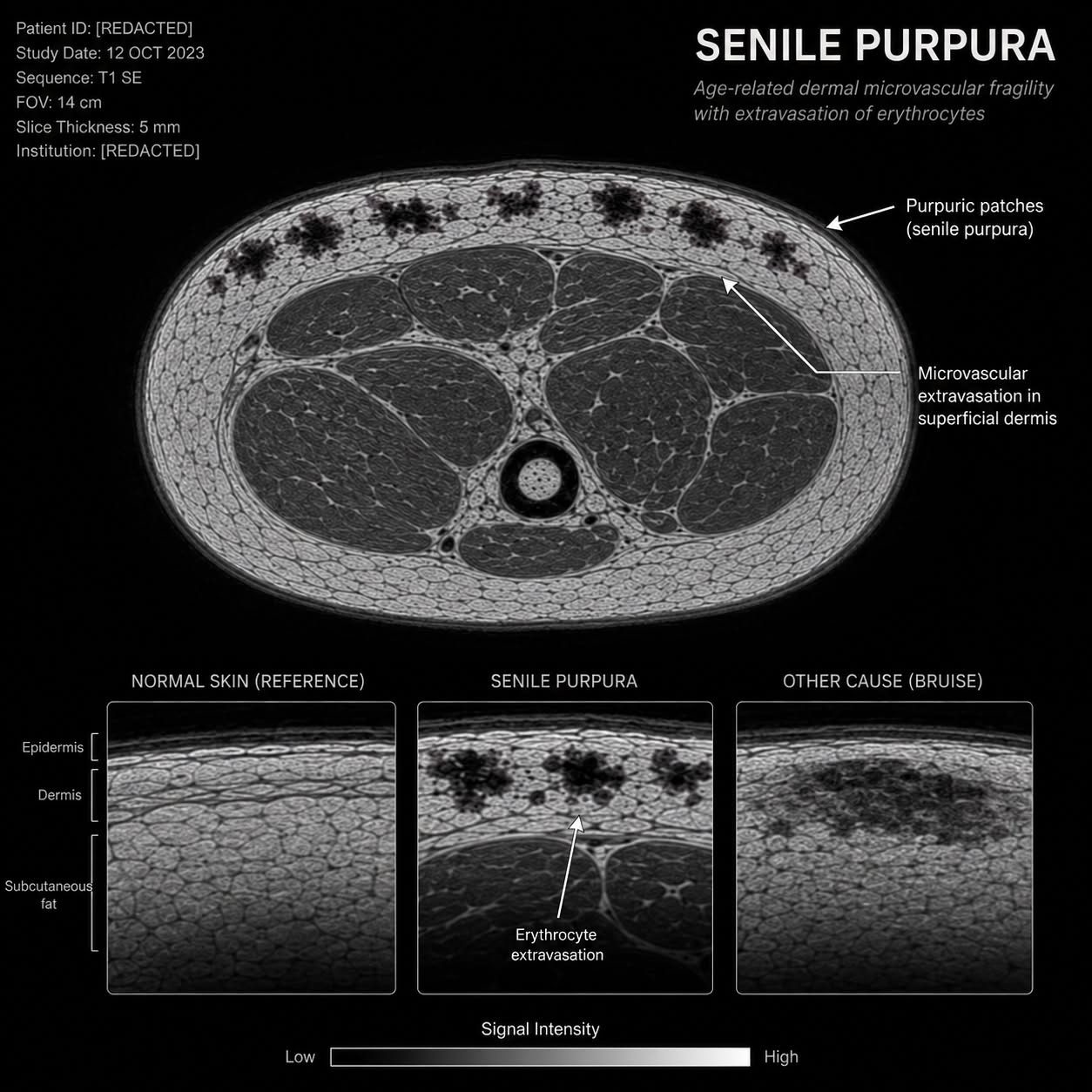
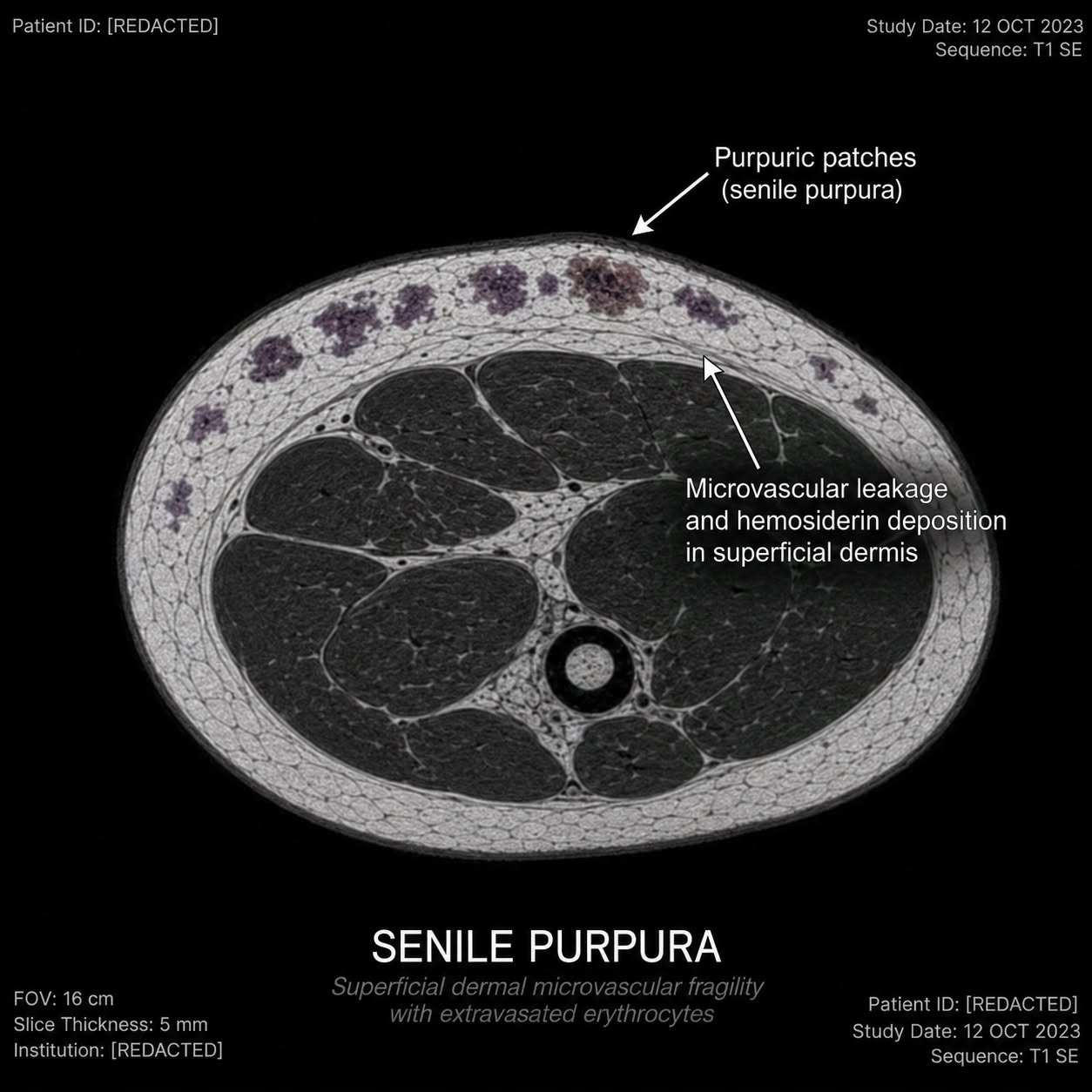
Senile Purpura Reset
Senile Purpura Reset Facebook ad: “How I Finally Stopped the Cycle of Purple Bruises”
Ran for 2 days, from September 6 to September 8, 2026, the last day Crush saw it.
Run by Senile Purpura Reset on Facebook. Crush is not the advertiser and does not verify its claims. See this ad in Meta's Ad Library(opens in a new tab)
Want an ad like this for your product?
Crush makes new ad images for your product from this ad: your logo, your product photo, your offer.
Trials from $19.95 USD, then $79.95 USD a month. Cancel anytime.
About this ad
- Meta Ad Library ID
- 2564344857327207
- Platforms
- Facebook, Instagram, Audience Network, Messenger, WhatsApp and Threads
- Relaunches
- 0
Ad text
I saw a statistic that made me sick. Women with senile purpura who accept that "bruises are just part of aging" are far more likely to watch new dark purple blotches appear on their forearms every time they bump against a counter than women who address the underlying dermal thinning directly. I didn't believe it when I read it. I'd had senile purpura for almost 18 years and not one dermatologist had ever told me why nothing worked. But here's the truth. Your doctor tells you your blood vessels are fragile. Your family doctor hands you a thick moisturizing cream that sits on top of your skin. The real problem sits underneath the skin that looks clear... and nobody is paid to look there. That's why most of us never heard this. That's why my mother never heard it either. My mother was part of that statistic. Twenty-one years of covering her arms, watching dark purple blotches spread across both forearms, her hands, and her upper arms before she died at 71. I'm 64. Last month my dermatologist told me to accept that fragile capillaries are just part of getting older and warned me that there was nothing to stop the bruising cycle. I refused. And what I found instead... at a farmer's market on a Saturday morning in September... took me from fourteen dark purpuric bruises I hid under long sleeves... to resilient, clear skin and short sleeves again. No endless cycle of accidental bruising. No weeks of hiding ugly purple blotches. But to understand why I was desperate enough to drive forty minutes to a farmer's market at 7 AM looking for answers, you have to know what I watched those bruises do to my mother. And what I didn't know they were quietly doing to me too. For 21 YEARS... over two decades... my mother was trapped fighting those dark purple bruises. Started with one ugly purpuric patch on her left forearm after lightly brushing against the kitchen counter. Her dermatologist called fragile skin "an inevitable part of aging." Said she just had to be careful, but that was fine because bruises heal eventually. They healed. Everything else fell apart. Within the first year, a dark bruise appeared on the forearm beside it without warning. Doctor said it was just the way aging skin progresses over time. By year three she had eight purple blotches across both forearms and couldn't wear a short-sleeved blouse without people asking if she'd been hurt. Her confidence? Gone. This was a woman who gardened every weekend, proud of her arms, always reaching for people when she talked. By year five she wore long sleeves in August. Her skin got thinner. The slightest tap left a deep, dark purple mark that lingered for weeks. We'd run our fingers across her forearms and the paper-thin skin felt fragile and defenceless. Thirty-eight years she'd kept her skin. And every time we brought it up, her dermatologist said the same thing. "It's just senile purpura, Margaret. Your capillaries are delicate with age. Just wear long sleeves and be careful." She kept being careful. She applied the heavy lotions. Patience wasn't the problem. My sister said it was like watching her hide one bruise at a time. They had her wearing long sleeves in summer for TWENTY-ONE YEARS. Twenty-one years of the bruising spreading. Twenty-one years of feeling like her arms weren't her own. Twenty-one years of appointments where they'd sympathize or hand her another thick barrier cream... but never once... not ONE TIME... did anyone say, "Maybe something is wrong beneath the surface that surface lotions can't reach." And then the purpura spread to her chest anyway. 71 years old. Seventy-one. She passed with purple blotches across seven body parts she spent two decades trying to hide. At the funeral my aunt grabbed my hand and said something I'll never forget. "For 21 years they told her it was just aging skin, Linda. They were wrong the whole time." So fast forward to eighteen months ago. I'm 64. Diagnosed with senile purpura at 46. I've been a good patient. Be careful around furniture. Apply the heavy moisturizers between visits. Wear SPF 50 every morning without fail. I still have fourteen dark purpuric bruises, worse than the day I started. I go to my annual skin check. The nurse looks at my forearms. Frowns. The dermatologist pulls up my chart. Looks at me. "Linda, the heavy creams aren't holding the barrier. The purpura has spread to your chest and upper arms now. We just have to accept that capillaries become fragile with age. Be extra careful." My chest tightened. More resignation. Twenty-one years of watching my mother come back every three months with new bruises. Twenty-one years of her covering her arms at family dinners. Twenty-one years of her pulling her sleeves down every time someone looked at her forearms. And then it spread to her chest anyway. "No," I said. She blinked. "Excuse me?" "I'm not accepting this. My mother dealt with senile purpura for 21 years. I watched what it did to her. And the bruising spread to her chest anyway." She gave me that look. "Linda, senile purpura is just what happens when skin thinned by photoaging loses structural support for capillaries—" "What's the point of waiting if the dermal matrix keeps collapsing underneath?" She didn't have an answer. I told her to give me three months. She wasn't happy. Wrote something in my chart. I didn't care. For three months I did everything right. Applied the barrier creams twice daily without missing a morning. Added a vitamin C serum. Bought an expensive firming body oil from the health food store. Started a collagen supplement. Three months later I went back. Two bruises healed slightly faster. The other twelve were the same or worse. A new purple blotch had appeared on my right hand between visits. The dermatologist sighed. "Linda, it's just aging." "Give me three more months." "Linda—" "Three more months." She sighed. I didn't care what she wrote. That night I couldn't sleep. I kept thinking about my mother. Same bruises. Same fragile skin. Same purple blotches spreading right up until the day she died. At 2 AM I gave up. Went downstairs. Opened my laptop. I started searching. What actually causes senile purpura to keep worsening. Why the topical lotions never touch it. Why some women get worse and worse even when they do everything right. Every site said the same thing. Be careful. Apply thick creams. Wear long sleeves. Accept it. I'd done all of it. So I kept digging. Looking for women who'd actually strengthened their dermal matrix and stopped the bruising cycle. Not managed it. Stopped it. That's when I found the thread. A forum post with over 2,000 comments. The title: "Why do my arms bruise from the slightest touch even after perfect care?" I read every comment. Women like me. Eight years of covering bruising arms. Twelve years. Twenty. Perfect compliance. Purple blotches spreading to new areas every single season. Dermatologists saying "it's just normal aging." Watch lists that kept growing. And buried in the comments — one woman. She'd had severe senile purpura for fourteen years. Bruises on six body parts. Then she changed her approach. Started something else. Something she'd found from a retired dermatologist she'd met at a Saturday morning market. Her skin went from paper-thin and bruised to thick, resilient, and clear in six weeks. I read that comment six times. I looked up the market she mentioned. Forty minutes from my house. Open every Saturday at 7 AM. I looked at the clock. 2:47 AM. By 7 AM I was there. I didn't have a name. Just walked the stalls until I spotted a woman selling botanical skincare products at the end of the row. Had to be pushing 75. Small. Sharp eyes behind wire-rimmed glasses. White hair pulled back. She was explaining something to a customer with her hands, gesturing at the smooth, strong skin of her own forearm. Bare arms in September. Resilient skin. No dark purple bruises. No paper-thin fragility. Just even, calm, strong skin on a woman sixteen years older than me. I waited until the customer left. Walked up. "Excuse me," I said. "I don't want to bother you. But how old are you?" She looked up. "Seventy-nine." I stood there. 64 years old. Hiding fourteen dark purple bruises under a cardigan in September. And this woman fifteen years older had arms I hadn't seen on anyone since before my mother's diagnosis. "I'm 64," I said. "I have senile purpura. My dermatologist tells me to accept fragile capillaries and wear long sleeves. My mother had purple bruising on her arms for 21 years. It spread to seven body parts before she passed at 71." She set down what she was holding. Looked at me for a long moment. "You came here for a reason," she said. "Let me show you something." She pulled two folding chairs out from behind the stall. Poured two cups of coffee from a thermos. Sat down like she had all morning. "I practiced dermatology for 38 years," she said. "Retired six years ago. And the thing that bothered me most in 38 years wasn't the patients who wouldn't comply. It was the ones who did everything right and watched their skin get thinner and bruise more easily anyway." I stared at her. "Your moisturizing creams," she said. "They sit on the surface. Protect the outermost layer. That's what they were designed to do. And they do it well." She folded her hands. Beneath every bruise you can see — and beneath the skin that looks clear around it — there's a collapsed dermal matrix. Collagen and elastin break down, leaving capillaries with zero structural scaffolding. The slightest bump shears the vessel wall. That's why the purple blotches appear out of nowhere." She tapped the inside of her forearm. "The thick barrier cream removes the immediate dryness. It doesn't touch the dermis. And every water-based lotion you've been applying — standard moisturizers, vitamin C serums, collagen lotions, any of it — hits the stratum corneum and stops. The skin's outermost layer is a lipid barrier. Oil-based by design. Water bounces off it. Less than four percent of any water-based lotion reaches the dermis." I stared at her. "So nothing I've been applying has ever actually reached the dermal matrix." "Not even close. You've been painting the roof of a house whose foundation is crumbling." She looked me straight in the eye. "And here's the part that will make you angry. Every dermatologist who told you to apply thick lotions more consistently knew this. We all know water-based compounds don't cross the stratum corneum to the dermis. It's in the textbooks. But the advice doesn't change because aging skin is treated as inevitable." My eyes started to burn. "That's why your purpura keeps worsening. That's why new bruises appear from tapping a table. That's why your mother's bruising spread for 21 years despite perfect care. And no drugstore lotion fixes it. No water-based serum fixes it. No collagen cream from the health food store fixes it. Because none of those things have the right carrier to reach the dermis." She leaned back. "That is what happened to your mother. Not bad luck. Not poor compliance. A dermal matrix they could never reach... and micro-vessels left without structural support year after year... because nothing they prescribed could get there." I asked her what could. She smiled. A small smile. "Cold-pressed botanical oils. Specifically camellia oil and sea buckthorn oil as the lipid carrier. Those are the two oils with the molecular structure to actually penetrate all seven skin layers to the dermis, delivering deep nourishment where collagen and elastin are rebuilt." I'd seen botanical body oils. They hadn't worked. She must have read my face. "That's not what you think it is," she said. "What's in the health food store is surface moisturizer." She reached under the table. Pulled out a bottle. "Real lipid-based dermal penetration requires the right carrier. Camellia and sea buckthorn — not sunflower, not jojoba. Those sit on the surface. And the superfruit extracts have to be oil-soluble. Rich in bioflavonoids and antioxidant compounds that support vascular integrity. Not water-soluble extracts — those bounce off the stratum corneum exactly like your standard lotions do." She held up the bottle. "Oil-soluble superfruit extracts carried by camellia and sea buckthorn through all seven skin layers to the dermis. Directly supporting the dermal scaffolding that cradles your capillaries. Not on the surface. In the dermis. Where the structural support actually lives." She set the bottle down. "And botanical actives at clinical concentration for natural collagen synthesis. Replacing the thinning dermal pattern with firm, resilient skin structure from the dermis out. Without the irritation harsh synthetics cause in aging skin." She looked at me. "Zero water in the formula. Because every drop of water dilutes penetration. Water-based lotions sit at the surface. Everything has to be oil-soluble and lipid-delivered or it bounces off the same way your barrier creams do." I asked her if anyone made this the way she was describing. She nodded. "One brand that formulates it correctly. Took me two years of retirement to find it. Wild-harvested botanicals. Cold-pressed. Oil-soluble superfruit extracts at clinical concentration. Zero water. Zero filler. Applied morning and evening — because capillary support requires constant nourishment." She wrote the name on the back of a market receipt and handed it to me. Doriela Superfruit Extract. I ordered it from the market stall. Bottle arrived two days later. I applied it that evening and the next morning. Didn't expect much. I'd been burned by three generic body oils already. And decades of dermatologists telling me to just accept aging skin. Checked my skin the next morning. Bruises still healing. Too early to tell. Week one. Nothing dramatic. Skin felt slightly softer. Maybe less dry at the edges of my forearms. Small change. Could be nothing. I wasn't trusting it yet. Week two. More resilient. I pressed my forearm against the edge of the kitchen counter — an angle that usually left a purple mark—and noticed no bruising appeared. I pressed again. Still nothing. Consistent. Skin felt thicker than I'd felt in years. Less fragile than after any of the heavy barrier creams. Now I'm paying attention. My husband noticed I wasn't pulling my sleeves down automatically at dinner. "Something's different," he said one night. "You seem less... protective of your arms." Week three. I bumped my left forearm hard against the car door while getting in. Normally, that meant a dark purple blotch the size of a quarter. I checked an hour later. Barely a faint pink shadow that faded by evening. I walked outside. Stood in the morning sun with my arms out. Just stood there. Years of accepting senile purpura never let me do that without immediately checking for new purple bruises afterward. I sat on the porch steps and put my head in my hands. Not from stress. From relief. Week four. The day before my appointment with my dermatologist. Resilient forearms. Stronger skin. The paper-thin fragility I'd carried for eighteen years — visibly improved. My husband ran his hand across my forearm before I did. At the appointment, the nurse examined my forearms. Looked. Paused. Looked again. She photographed them for the file. Routine for her. For me? Everything. My dermatologist walked in. Pulled up my chart. Stopped. "Your forearms look remarkably less fragile. The skin thickness on the sites we've been monitoring — noticeably improved. The minor bumps that usually caused purpura — no bruising." "Yes." She looked at the previous visit photos. Thin, delicate skin, dark purple blotches across both forearms and hands. Then today's. Smoother, stronger skin. No new purpuric bruises. "You started taking oral supplements?" "No." Her head came up. "No?" "I found something else. A superfruit body oil. Cold-pressed camellia and sea buckthorn as the lipid carrier — the two oils that actually penetrate all seven skin layers to the dermis. Oil-soluble superfruit extracts at clinical concentration. It reaches the dermal matrix where collagen supports the capillaries. Where the barrier creams and water lotions never got." Her jaw tightened. "Linda, a cosmetic oil isn't a medical—" "My skin went from paper-thin and bruising at the slightest touch to strong and resilient in four weeks. No new purple blotches from minor bumps. That's on your screen right now. Years of being told to just accept aging skin never gave me a single visit with no new bruising." She stared at me. Then at the chart. Then back at me. Long silence. "What's it called?" "Doriela Superfruit Extract." She typed it in. Read the site. Looked at the ingredient list. Cold-pressed camellia and sea buckthorn. Oil-soluble superfruit extracts. Zero water. Another silence. "Continue what you're doing. I want to see you back in eight weeks. If it holds, we'll note the improvement." If it holds, we'll note the improvement. No endless cycle of hiding arms. No expensive ineffective barrier creams. No resigning to inevitable decline. I walked out of that office. Sat in my car. Called my daughter. "Fourteen prone sites of senile purpura, skin thickened, no bruising from minor impacts. My dermatologist was actually speechless." I heard her exhale. Then a sob. "Mom. I was so scared you'd end up like Gran." "I know. Me too." That was four months ago. My skin this morning at my checkup? Stable. Resilient across the board. No new bruises. No paper-thin fragility reforming. My dermatologist photographs the sites every visit. Skin thickness is visibly improved. Normal. Strong. No hiding under long sleeves. I'm not following my mother's path. Last weekend I took my granddaughter to the lake. I wore a short-sleeved blouse. Walked right to the water's edge with my arms out. She grabbed my arm and said "Grandma, your arms feel so strong and smooth now." I didn't tell her I was crying behind my sunglasses. I called my sister that night. Told her about my arms. Long silence. "Mom would have wanted to know about this, Linda." I know. If you're reading this, you probably see yourself in my story. Your skin bruises from the slightest touch and nothing touches the underlying fragility. Purple blotches keep appearing every season and your dermatologist has just told you to be careful, wear long sleeves, and accept aging skin. You've tried thick barrier creams. You've tried vitamin C serums. You've tried collagen lotions. You've tried retinol. Maybe two of them. Maybe all of them. They didn't work. But now you know why. You weren't using a lipid-based carrier that actually crosses the stratum corneum. You were applying water-based lotions to the surface of a lipid barrier that physically blocks them. The actives never got through. The dermis stayed thin underneath. And your arms have been hidden under long sleeves this whole time... just like my mother's were... waiting for a summer that never came. Doriela Superfruit Extract is different. Cold-pressed camellia and sea buckthorn as the lipid carrier — not sunflower, not jojoba. The two oils that actually penetrate all seven skin layers to the dermis. Oil-soluble superfruit extracts rich in bioflavonoids and antioxidants at clinical concentration. The oil-soluble form that crosses the stratum corneum and reaches the dermal matrix where capillaries need structural support. Sixteen botanicals. Zero water. Zero filler. Applied morning and evening. Third-party tested. Try Doriela Superfruit Extract for 90 days. Press your forearm gently against everyday surfaces every morning. Watch for the skin's resilience to improve. Take a photo at day 30 and compare it. If the skin isn't stronger, if bruising isn't reduced, if new purpuric spots are still appearing on schedule — full refund. No questions asked. You're at a crossroads. One path: Keep applying thick barrier creams. Watch bruising spread to the next area. Resign yourself to fragile capillaries as aging takes over. Spend the next 20 years hiding your arms while the real problem never gets touched. End up where my mother did. Another path: Try what I tried. Reach the dermal matrix from the inside out. Let the lipid carrier take oil-solubleI saw a statistic that made me sick. Women with senile purpura who accept that "bruises are just part of aging" are far more likely to watch new dark purple blotches appear on their forearms every time they bump against a counter than women who address the underlying dermal thinning directly. I didn't believe it when I read it. I'd had senile purpura for almost 18 years and not one dermatologist had ever told me why nothing worked. But here's the truth. Your doctor tells you your blood vessels are fragile. Your family doctor hands you a thick moisturizing cream that sits on top of your skin. The real problem sits underneath the skin that looks clear... and nobody is paid to look there. That's why most of us never heard this. That's why my mother never heard it either. My mother was part of that statistic. Twenty-one years of covering her arms, watching dark purple blotches spread across both forearms, her hands, and her upper arms before she died at 71. I'm 64. Last month my dermatologist told me to accept that fragile capillaries are just part of getting older and warned me that there was nothing to stop the bruising cycle. I refused. And what I found instead... at a farmer's market on a Saturday morning in September... took me from fourteen dark purpuric bruises I hid under long sleeves... to resilient, clear skin and short sleeves again. No endless cycle of accidental bruising. No weeks of hiding ugly purple blotches. But to understand why I was desperate enough to drive forty minutes to a farmer's market at 7 AM looking for answers, you have to know what I watched those bruises do to my mother. And what I didn't know they were quietly doing to me too. For 21 YEARS... over two decades... my mother was trapped fighting those dark purple bruises. Started with one ugly purpuric patch on her left forearm after lightly brushing against the kitchen counter. Her dermatologist called fragile skin "an inevitable part of aging." Said she just had to be careful, but that was fine because bruises heal eventually. They healed. Everything else fell apart. Within the first year, a dark bruise appeared on the forearm beside it without warning. Doctor said it was just the way aging skin progresses over time. By year three she had eight purple blotches across both forearms and couldn't wear a short-sleeved blouse without people asking if she'd been hurt. Her confidence? Gone. This was a woman who gardened every weekend, proud of her arms, always reaching for people when she talked. By year five she wore long sleeves in August. Her skin got thinner. The slightest tap left a deep, dark purple mark that lingered for weeks. We'd run our fingers across her forearms and the paper-thin skin felt fragile and defenceless. Thirty-eight years she'd kept her skin. And every time we brought it up, her dermatologist said the same thing. "It's just senile purpura, Margaret. Your capillaries are delicate with age. Just wear long sleeves and be careful." She kept being careful. She applied the heavy lotions. Patience wasn't the problem. My sister said it was like watching her hide one bruise at a time. They had her wearing long sleeves in summer for TWENTY-ONE YEARS. Twenty-one years of the bruising spreading. Twenty-one years of feeling like her arms weren't her own. Twenty-one years of appointments where they'd sympathize or hand her another thick barrier cream... but never once... not ONE TIME... did anyone say, "Maybe something is wrong beneath the surface that surface lotions can't reach." And then the purpura spread to her chest anyway. 71 years old. Seventy-one. She passed with purple blotches across seven body parts she spent two decades trying to hide. At the funeral my aunt grabbed my hand and said something I'll never forget. "For 21 years they told her it was just aging skin, Linda. They were wrong the whole time." So fast forward to eighteen months ago. I'm 64. Diagnosed with senile purpura at 46. I've been a good patient. Be careful around furniture. Apply the heavy moisturizers between visits. Wear SPF 50 every morning without fail. I still have fourteen dark purpuric bruises, worse than the day I started. I go to my annual skin check. The nurse looks at my forearms. Frowns. The dermatologist pulls up my chart. Looks at me. "Linda, the heavy creams aren't holding the barrier. The purpura has spread to your chest and upper arms now. We just have to accept that capillaries become fragile with age. Be extra careful." My chest tightened. More resignation. Twenty-one years of watching my mother come back every three months with new bruises. Twenty-one years of her covering her arms at family dinners. Twenty-one years of her pulling her sleeves down every time someone looked at her forearms. And then it spread to her chest anyway. "No," I said. She blinked. "Excuse me?" "I'm not accepting this. My mother dealt with senile purpura for 21 years. I watched what it did to her. And the bruising spread to her chest anyway." She gave me that look. "Linda, senile purpura is just what happens when skin thinned by photoaging loses structural support for capillaries—" "What's the point of waiting if the dermal matrix keeps collapsing underneath?" She didn't have an answer. I told her to give me three months. She wasn't happy. Wrote something in my chart. I didn't care. For three months I did everything right. Applied the barrier creams twice daily without missing a morning. Added a vitamin C serum. Bought an expensive firming body oil from the health food store. Started a collagen supplement. Three months later I went back. Two bruises healed slightly faster. The other twelve were the same or worse. A new purple blotch had appeared on my right hand between visits. The dermatologist sighed. "Linda, it's just aging." "Give me three more months." "Linda—" "Three more months." She sighed. I didn't care what she wrote. That night I couldn't sleep. I kept thinking about my mother. Same bruises. Same fragile skin. Same purple blotches spreading right up until the day she died. At 2 AM I gave up. Went downstairs. Opened my laptop. I started searching. What actually causes senile purpura to keep worsening. Why the topical lotions never touch it. Why some women get worse and worse even when they do everything right. Every site said the same thing. Be careful. Apply thick creams. Wear long sleeves. Accept it. I'd done all of it. So I kept digging. Looking for women who'd actually strengthened their dermal matrix and stopped the bruising cycle. Not managed it. Stopped it. That's when I found the thread. A forum post with over 2,000 comments. The title: "Why do my arms bruise from the slightest touch even after perfect care?" I read every comment. Women like me. Eight years of covering bruising arms. Twelve years. Twenty. Perfect compliance. Purple blotches spreading to new areas every single season. Dermatologists saying "it's just normal aging." Watch lists that kept growing. And buried in the comments — one woman. She'd had severe senile purpura for fourteen years. Bruises on six body parts. Then she changed her approach. Started something else. Something she'd found from a retired dermatologist she'd met at a Saturday morning market. Her skin went from paper-thin and bruised to thick, resilient, and clear in six weeks. I read that comment six times. I looked up the market she mentioned. Forty minutes from my house. Open every Saturday at 7 AM. I looked at the clock. 2:47 AM. By 7 AM I was there. I didn't have a name. Just walked the stalls until I spotted a woman selling natural health and wellness formulas at the end of the row. Had to be pushing 75. Small. Sharp eyes behind wire-rimmed glasses. White hair pulled back. She was explaining something to a customer with her hands, gesturing at the smooth, strong skin of her own forearm. Bare arms in September. Resilient skin. No dark purple bruises. No paper-thin fragility. Just even, calm, strong skin on a woman sixteen years older than me. I waited until the customer left. Walked up. "Excuse me," I said. "I don't want to bother you. But how old are you?" She looked up. "Seventy-nine." I stood there. 64 years old. Hiding fourteen dark purple bruises under a cardigan in September. And this woman fifteen years older had arms I hadn't seen on anyone since before my mother's diagnosis. "I'm 64," I said. "I have senile purpura. My dermatologist tells me to accept fragile capillaries and wear long sleeves. My mother had purple bruising on her arms for 21 years. It spread to seven body parts before she passed at 71." She set down what she was holding. Looked at me for a long moment. "You came here for a reason," she said. "Let me show you something." She pulled two folding chairs out from behind the stall. Poured two cups of coffee from a thermos. Sat down like she had all morning. "I practiced dermatology for 38 years," she said. "Retired six years ago. And the thing that bothered me most in 38 years wasn't the patients who wouldn't comply. It was the ones who did everything right and watched their skin get thinner and bruise more easily anyway." I stared at her. "Your moisturizing creams," she said. "They sit on the surface. Protect the outermost layer. That's what they were designed to do. And they do it well." She folded her hands. Beneath every bruise you can see — and beneath the skin that looks clear around it — there's a collapsed dermal matrix. Collagen and elastin break down, leaving capillaries with zero structural scaffolding. The slightest bump shears the vessel wall. That's why the purple blotches appear out of nowhere." She tapped the inside of her forearm. "The thick barrier cream removes the immediate dryness. It never reaches the bloodstream or delivers systemic micronutrients to the dermis. And every topical lotion you've been applying — standard moisturizers, vitamin C serums, collagen lotions, any of it — hits the stratum corneum and stops. The skin's outermost layer is a lipid barrier. Oil-based by design. Water bounces off it. Less than four percent of any topical reaches the dermis." I stared at her. "So nothing I've been applying topically has ever actually reached the dermal matrix." "Not even close. You've been painting the roof of a house whose foundation is crumbling." She looked me straight in the eye. "And here's the part that will make you angry. Every dermatologist who told you to apply thick lotions more consistently knew this. We all know topical compounds don't fix internal structural collapse. It's in the textbooks. But the advice doesn't change because aging skin is treated as inevitable." My eyes started to burn. "That's why your purpura keeps worsening. That's why new bruises appear from tapping a table. That's why your mother's bruising spread for 21 years despite perfect care. And no drugstore lotion fixes it. No water-based serum fixes it. No collagen cream from the health food store fixes it. Because topical products cannot rebuild your internal dermal matrix." She leaned back. "That is what happened to your mother. Not bad luck. Not poor compliance. A dermal matrix that needed internal nutritional support year after year... because topical creams could never get inside the bloodstream to rebuild the capillary walls." I asked her what could. She smiled. A small smile. "Targeted nutritional capsules. Specifically bioactive superfruit extracts delivered systemically through the bloodstream to nourish the dermis from the inside out. Rebuilding collagen and strengthening micro-vessels where topical creams can't penetrate." I'd tried health store supplements. They hadn't worked. She must have read my face. "That's not what you think it is," she said. "What's in the health food store is synthetic filler and low-grade vitamin C." She reached under the table. Pulled out a bottle of capsules. "Real dermal repair requires systemic bioavailability. High-potency superfruit extracts rich in bioflavonoids, anthocyanins, and specialized plant antioxidants that actively support vascular integrity and stimulate collagen synthesis from within. Not topical concoctions — those sit on the surface." She held up the bottle. "Bioactive superfruit extract capsules delivered via the bloodstream straight to the dermal matrix. Directly supporting the collagen scaffolding that cradles your fragile capillaries. Not on the surface. From the inside out. Where the structural support actually originates." She set the bottle down. "And clinical-grade antioxidant synergy for natural cellular repair. Replacing the thinning dermal pattern with firm, resilient skin structure from within. Without the digestive upset harsh synthetics cause." She looked at me. "Pure, targeted encapsulation. Zero artificial fillers. Because systemic absorption requires clean, high-potency actives. Taken daily — because capillary support requires consistent internal nourishment." I asked her if anyone made this the way she was describing. She nodded. "One brand that formulates it correctly. Took me two years of retirement to find it. Wild-harvested superfruits. Bioavailable capsule form. Clinical-grade extracts. Zero artificial binders. Taken morning and evening." She wrote the name on the back of a market receipt and handed it to me. Doriela Superfruit Extract. I ordered it from the market stall. The bottle arrived two days later. I swallowed two capsules that evening and the next morning. Didn't expect much. I'd been burned by three generic supplement brands already. And decades of dermatologists telling me to just accept aging skin. Checked my skin the next morning. Bruises still healing. Too early to tell. Week one. Nothing dramatic. Skin felt slightly less dry overall. Small change. Could be nothing. I wasn't trusting it yet. Week two. More resilient. I pressed my forearm against the edge of the kitchen counter — an angle that usually left a purple mark—and noticed no bruising appeared. I pressed again. Still nothing. Consistent. Skin felt thicker than I'd felt in years. Less fragile than after any of the heavy barrier creams. Now I'm paying attention. My husband noticed I wasn't pulling my sleeves down automatically at dinner. "Something's different," he said one night. "You seem less... protective of your arms." Week three. I bumped my left forearm hard against the car door while getting in. Normally, that meant a dark purple blotch the size of a quarter. I checked an hour later. Barely a faint pink shadow that faded by evening. I walked outside. Stood in the morning sun with my arms out. Just stood there. Years of accepting senile purpura never let me do that without immediately checking for new purple bruises afterward. I sat on the porch steps and put my head in my hands. Not from stress. From relief. Week four. The day before my appointment with my dermatologist. Resilient forearms. Stronger skin. The paper-thin fragility I'd carried for eighteen years — visibly improved. My husband ran his hand across my forearm before I did. At the appointment, the nurse examined my forearms. Looked. Paused. Looked again. She photographed them for the file. Routine for her. For me? Everything. My dermatologist walked in. Pulled up my chart. Stopped. "Your forearms look remarkably less fragile. The skin thickness on the sites we've been monitoring — noticeably improved. The minor bumps that usually caused purpura — no bruising." "Yes." She looked at the previous visit photos. Thin, delicate skin, dark purple blotches across both forearms and hands. Then today's. Smoother, stronger skin. No new purpuric bruises. "You started taking oral supplements?" "Yes." Her head came up. "Yes?" "I found something else. A targeted superfruit extract in capsule form. Bioavailable plant antioxidants and bioflavonoids delivered through the bloodstream straight to the dermal matrix. Nourishing the collagen and strengthening the micro-vessels from the inside out. Where topical barrier creams never reached." Her jaw tightened. "Linda, a supplement isn't a medical—" "My skin went from paper-thin and bruising at the slightest touch to strong and resilient in four weeks. No new purple blotches from minor bumps. That's on your screen right now. Years of being told to just accept aging skin never gave me a single visit with no new bruising." She stared at me. Then at the chart. Then back at me. Long silence. "What's it called?" "Doriela Superfruit Extract capsules." She typed it in. Read the site. Looked at the ingredient list. Bioavailable superfruit extracts. Zero artificial fillers. Another silence. "Continue what you're doing. I want to see you back in eight weeks. If it holds, we'll note the improvement." If it holds, we'll note the improvement. No endless cycle of hiding arms. No expensive ineffective barrier creams. No resigning to inevitable decline. I walked out of that office. Sat in my car. Called my daughter. "Fourteen prone sites of senile purpura, skin thickened, no bruising from minor impacts. My dermatologist was actually speechless." I heard her exhale. Then a sob. "Mom. I was so scared you'd end up like Gran." "I know. Me too." That was four months ago. My skin this morning at my checkup? Stable. Resilient across the board. No new bruises. No paper-thin fragility reforming. My dermatologist photographs the sites every visit. Skin thickness is visibly improved. Normal. Strong. No hiding under long sleeves. I'm not following my mother's path. Last weekend I took my granddaughter to the lake. I wore a short-sleeved blouse. Walked right to the water's edge with my arms out. She grabbed my arm and said "Grandma, your arms feel so strong and smooth now." I didn't tell her I was crying behind my sunglasses. I called my sister that night. Told her about my arms. Long silence. "Mom would have wanted to know about this, Linda." I know. If you're reading this, you probably see yourself in my story. Your skin bruises from the slightest touch and nothing touches the underlying fragility. Purple blotches keep appearing every season and your dermatologist has just told you to be careful, wear long sleeves, and accept aging skin. You've tried thick barrier creams. You've tried vitamin C serums. You've tried collagen lotions. You've tried topical retinol. Maybe two of them. Maybe all of them. They didn't work. But now you know why. You were relying on topical creams that sit on the skin's surface and never enter the bloodstream. They couldn't nourish the dermal matrix or strengthen your capillary walls from within. The dermis stayed thin underneath. And your arms have been hidden under long sleeves this whole time... just like my mother's were... waiting for a summer that never came. Doriela Superfruit Extract capsules are different. Bioavailable superfruit extracts rich in bioflavonoids, anthocyanins, and plant antioxidants — formulated specifically for systemic absorption. Delivered through the bloodstream straight to the dermal matrix where capillaries need internal structural support. Zero artificial fillers. Taken daily morning and evening. Third-party tested. Try Doriela Superfruit Extract capsules for 90 days. Press your forearm gently against everyday surfaces every morning. Watch for the skin's resilience to improve. Take a photo at day 30 and compare it. If the skin isn't stronger, if bruising isn't reduced, if new purpuric spots are still appearing on schedule — full refund. No questions asked. You're at a crossroads. One path: Keep applying thick barrier creams. Watch bruising spread to the next area. Resign yourself to fragile capillaries as aging takes over. Spend the next 20 years hiding your arms while the real problem never gets touched. End up where my mother did. Another path: Try what I tried. Nourish the dermal matrix from the inside out. Let bioavailable superfruit capsules deliver vital plant nutrients through the bloodstream to where topical lotions never could. Watch your skin every morning. See what changes in 90 days. I chose the second path. It gave me my arms back. And my summers back. The system isn't coming to save you. Your dermatologist is treating the surface. Your barrier creams are sitting on the stratum corneum. Nobody is reaching the dermis from within. Every season you wait is another bruise your thin skin suffers. Another summer in long sleeves. Another year closer to becoming the statistic I refuse to be. My mother didn't have this information. You do. 👉 https://doriela.com/pages/senile-purpura — Linda Carey, age 64, Portland OR P.S. Skin resilience was noticeably improved within the first two weeks of taking the capsules morning and evening. Reduced bruising by week three. No new purpuric marks at my four-week appointment. My dermatologist revisited our assessment at month two. Strong, clear arms by month four. Your timeline might be different. But you won't know until you try. P.P.S. My older sister Janet started Doriela Superfruit Extract capsules eight weeks after I did. She's 67. Skin thickness visibly improved already. The frequent bruising stopped. Last Sunday she called me crying. "I'm going to wear short sleeves this summer." So am I. So should you.
Where the ad sends people
doriela.com
How I Finally Stopped the Cycle of Purple Bruises
Former chronic bruising sufferer's husband and dermatology researcher exposes the skincare industry's "Topical Creams-First Playbook" conspiracy — and the internal breakthrough that ended 23 years of thin, fragile, easily bruised skin (without sticky vitamin K creams, messy arnica gels, or endless...
Learn more: doriela.com(opens in a new tab)