
Active· since Jun 23, 2026
- 92
- days running
- 0
- relaunches
Ad copy
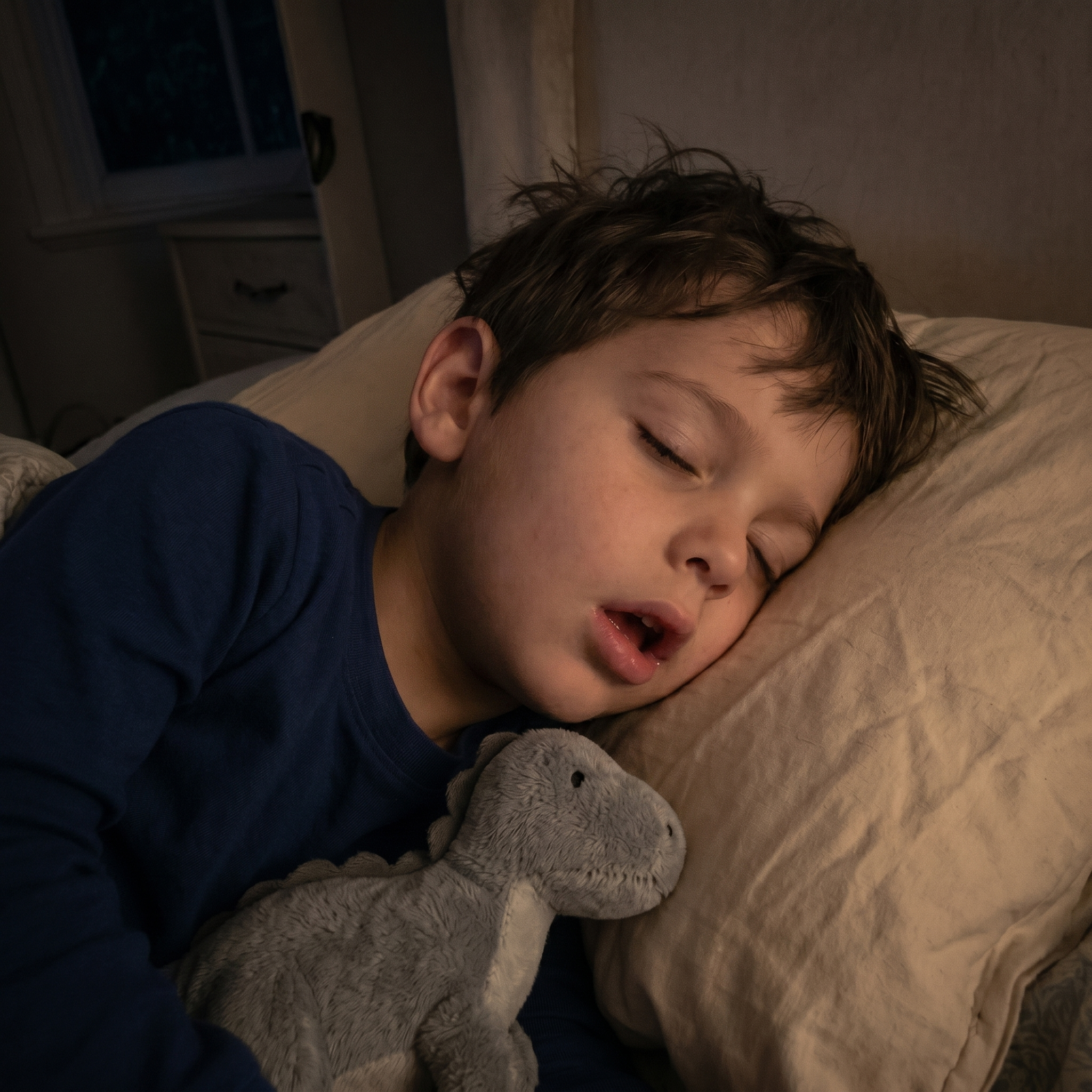
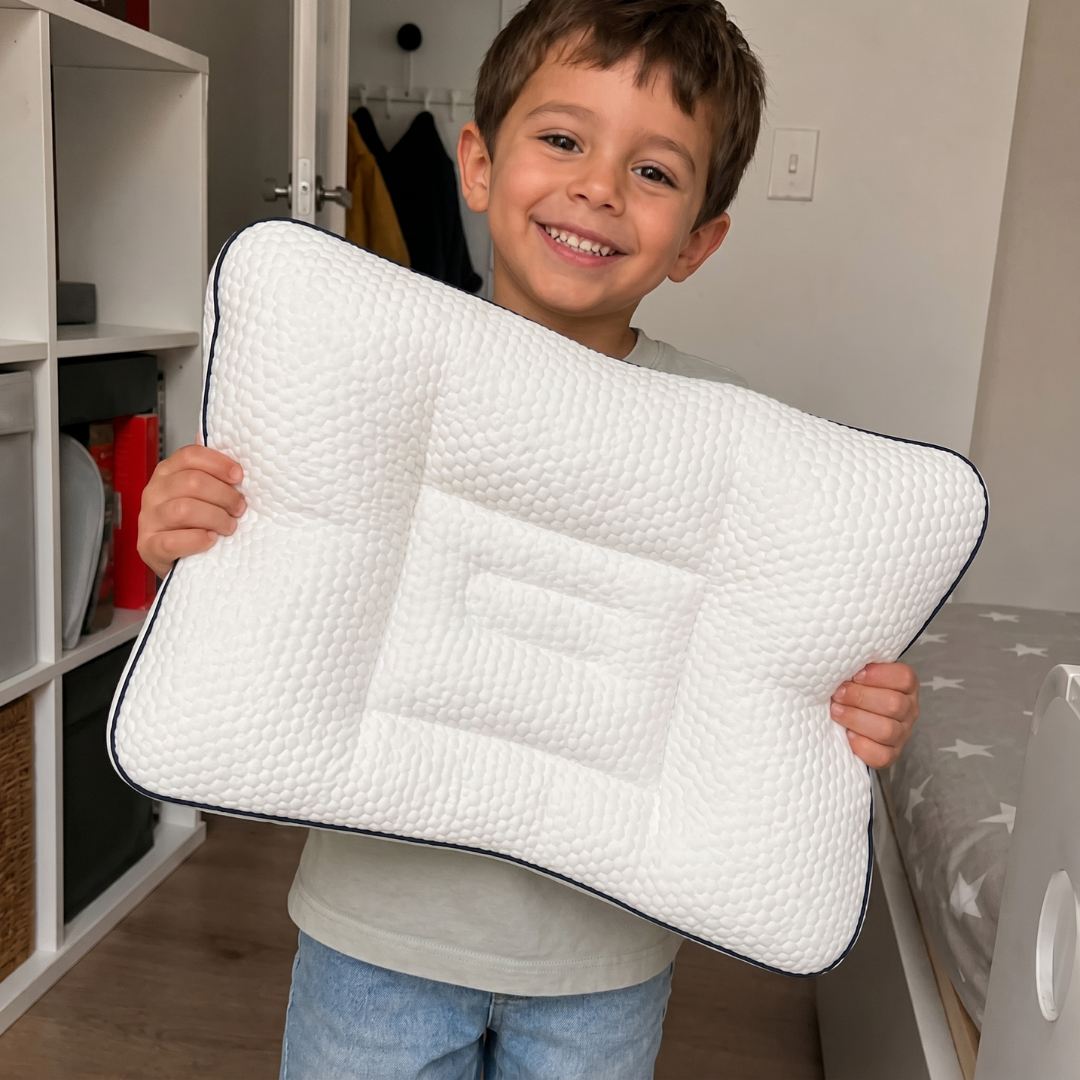
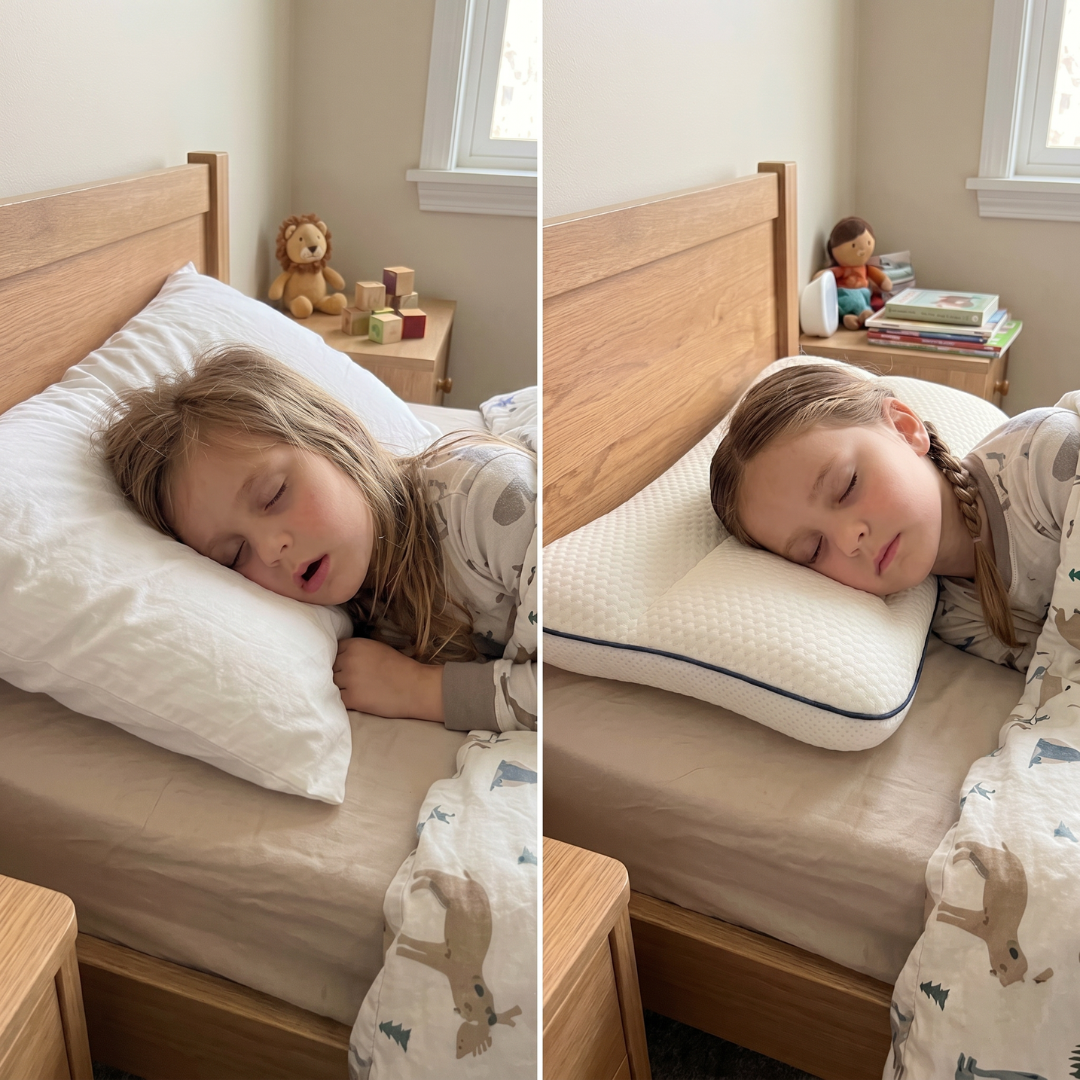
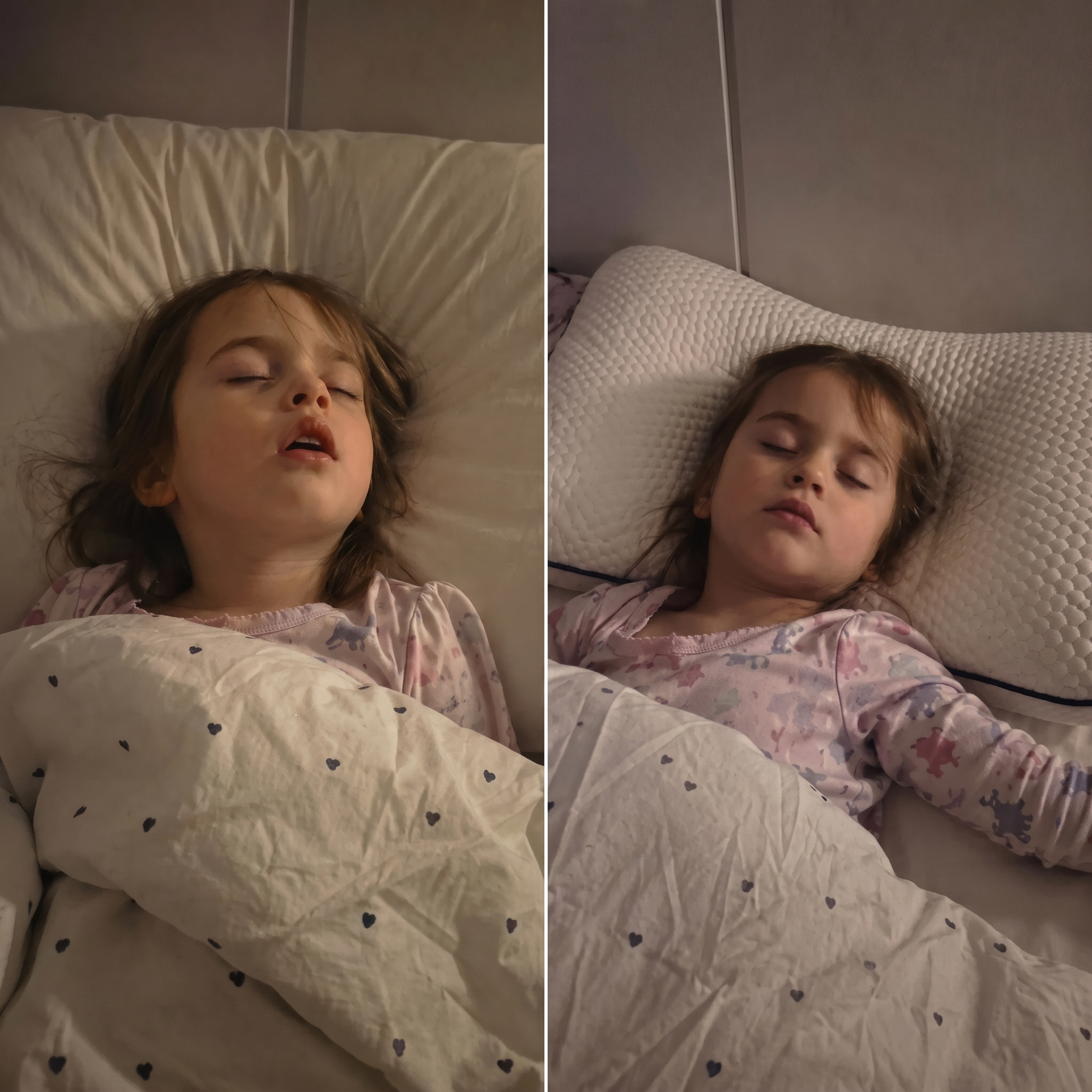
I've worked with children for 12 years, it's my job. And I completely missed it with my own. I'm a childminder. I've looked after dozens of children, I know sleep rhythms, teething, regressions, growth curves. That's why parents trust me. It's also why what I'm about to tell costs me a little. My daughter, my own, slept with her mouth open from when she was tiny. She snored. She woke up cranky, with dark circles. And me, the pro, I saw that every day without flinching. I told myself she slept a lot, that she was a heavy sleeper. The same line I served parents to reassure them. Look at the photo on the left. That's her, before. Mouth wide open, head sunk into the pillow, face tense. I must have seen her sleep like that a thousand times. And a thousand times, it didn't alarm me. What woke me up was a training session. A speaker, a dental surgeon specializing in children's airways, came to talk to us about toddlers' sleep. And she said a sentence that chilled me, me, with my 12 years on the job. She said that a child sleeping with their mouth open isn't a child sleeping well. It's a child who can't breathe properly lying down. And that at this age, it doesn't just tire them out. It deforms. She explained what I'd never learned. Between ages 3 and 9, a child's face and jaw form largely during sleep. On an adult pillow, too big, too soft for a small neck, the head sinks in, the chin tips back, the airways close. The child opens their mouth to breathe. And night after night, the tongue leaves the palate, the jaw grows downward and back, the face elongates. Much of facial development is settled before age 9. I went home that evening and watched my daughter sleep. Really watched, for the first time with those eyes. Mouth open. Neck twisted. Exactly what she had described. Twelve years reassuring parents, and I hadn't known how to protect my own daughter. It crushed me. But she had also said: as long as you're in the window, you can rebalance. And the first thing to correct is what the child rests their head on at night. I changed her pillow the very next day. A pillow designed for a child's build, with a 3-zone ergonomic structure: a central hollow that holds the head, two side supports that keep the neck at the right height, a firmness that stops the head from sinking. The memory foam is CertiPUR-certified, I checked, because I wanted to know what she was breathing at night. Straight neck, clear airways, closed mouth. Look at the photo on the right. The same little girl. The same night, a few weeks later. The neck supported, the face relaxed, the mouth closed. She's breathing through her nose. It's the same little girl. But finally at rest. The first signs, I saw them in the order I'd been told. Around the first week, the snoring eased. Around two weeks, she no longer slept with her mouth open. Three weeks, the jaw seemed to be moving back into place. After a month, her lips stayed closed on their own, with nothing for us to do. Today, I talk about it to every parent I meet. Because if I, whose job it is, missed it for years, then any parent can miss it. Watch your child sleep tonight. If they look like the photo on the left, it's not inevitable. It's just the wrong pillow. And as long as they're under 9, you can still get the photo on the right. I've left the link to the one we use in my daughter's room, for the parents who ask me. It's exactly the same one.
Like this ad? Make it yours.
Crush rebuilds this exact creative around your product — your brand, your colors, your offer — in about a minute.