Dana Mercer
Dana Mercer Facebook ad: “Minoxidil was never aimed at what's shrinking your…”
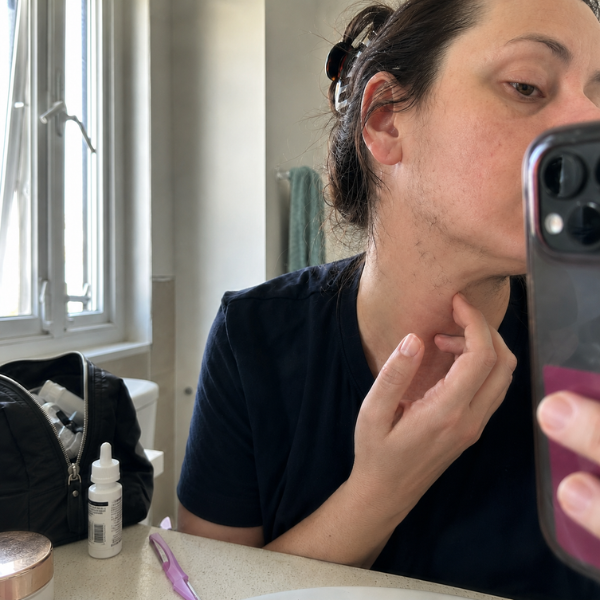
Ran for 11 days, from July 21 to August 1, 2026, the last day Crush saw it.
Run by Dana Mercer on Facebook. Crush is not the advertiser and does not verify its claims. See this ad in Meta's Ad Library(opens in a new tab)
Want an ad like this for your product?
Crush makes new ad images for your product from this ad: your logo, your product photo, your offer.
Trials from $19.95 USD, then $79.95 USD a month. Cancel anytime.
About this ad
- Meta Ad Library ID
- 2595859307497890
- Platforms
- Facebook, Instagram, Audience Network, Messenger and Threads
- Relaunches
- 0
Ad text
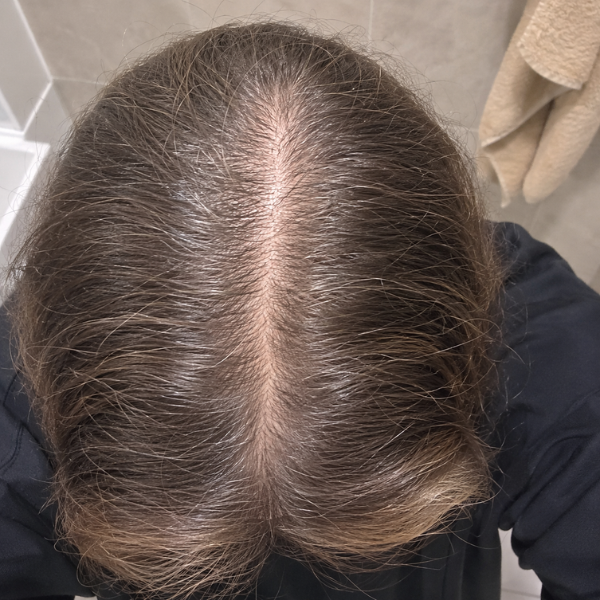
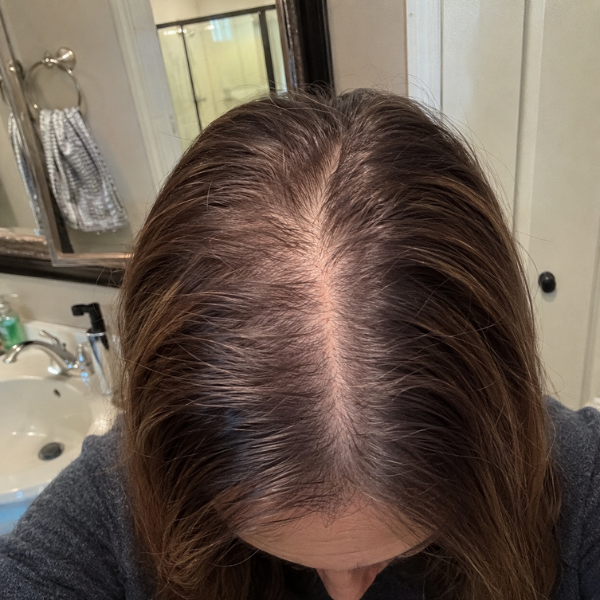
Please STOP buying hair supplements until you can answer one question about the bottle in your hand. It isn't the ingredients. It isn't the milligrams. It isn't the reviews. It's one question, and I would bet almost anything that you can't answer it — because I couldn't either, and it cost me two years. You already ruled out minoxidil. You were right to. But probably not for the reason you think. It isn't that it's a drug and you wanted something natural. It's that it was aimed at the wrong target. And until you know what that target is, you will keep buying "natural" things that are aimed at the wrong one too. I learned that the expensive way. Because I didn't rule it out. I took it. Two years ago I made a decision I still have complicated feelings about. I started minoxidil. Standing in my bathroom at 11pm with a dropper in my hand, parting my hair into sections the way the leaflet showed, waiting the twenty minutes for it to dry so it wouldn't transfer onto my pillow and onto my face. Doing that every single night for two years. Two years. Never missing. Bringing it in my carry-on. Doing it in hotel bathrooms, at my mother's house, on holiday, hungover, sick, exhausted. And here's the thing nobody prepares you for: it worked. That is what makes this so hard to explain to people who have never been through it. The drain got cleaner. The baby hairs came in along my part. I stopped taking photos from above to check the damage. For about eight months I was genuinely, quietly happy. Then the trade started coming due. It started as a shadow at my jawline that I told myself was the light. Then it was hair. Dark, wiry, growing along my jaw and up towards my temples in a place where I had never had hair in my life. My makeup stopped sitting right. I started carrying tweezers. Then I started carrying a razor. I was fighting to keep the hair on my head and paying for it in hair on my face. And that was just the part I could see. My scalp was permanently dry and flaky. My under-eyes got darker in a way no concealer fixed. Some nights my heart would do a thing in my chest that made me put my hand flat against my sternum and wait. I was not sleeping. I had headaches I never used to get. I spent an entire year assuming I was just tired. I got on Reddit and found dozens of women describing the exact same list. Facial hair. Peach fuzz on the cheeks. Flaky, itchy scalp. Palpitations. Insomnia. Dizziness. Brain fog. Blurred vision. And the one that scared me most — women saying it just stopped working for them after a year or so, no matter how faithfully they applied it. But none of that was the real trap. The real trap was this: I couldn't stop. I read the threads. Women who quit and shed so hard they ended up below where they started. One woman wrote that she lost more hair in the four months after stopping than she had in the two years before she began. Another said she had gone from hiding diffuse thinning to seeing her scalp everywhere, and she wanted to warn people. So there I was. Two bad doors. Keep going, keep shaving my face, keep feeling my heart skip. Or stop, and find out what happens. I stayed on it because I was scared. Not because I loved it. I went to my dermatologist and told her all of it. She listened. She nodded. And then she said the sentence I have not been able to shake: "Some women just can't tolerate it. It's unfortunate. Not everyone is a candidate." Not a candidate. For the only thing that had ever worked. Delivered as a shrug, and then she moved on to the next appointment. I sat in my car in the parking garage and cried, and then I got angry at myself for crying, and then I got angry at myself for being angry. Because underneath all of it was the thought I could not say out loud to anyone: Other women take this and they're fine. Why can't my body just cooperate? Why is this so hard for me specifically? That night — I remember it was 1:47am, because I'd been lying there watching the clock — I picked up my phone and searched something I had never searched before. Not "minoxidil alternatives." Not "how to stop hair loss." I'd done those a hundred times. I typed: why does stopping minoxidil cause rebound shedding And that is where I finally found the question. The one I should have been asking about every single thing I had ever bought. Not "is it natural." Not "how many milligrams." Not "how many stars does it have." The question is this: does it work on blood flow, or does it work on DHT? Because those are two completely different targets, and almost everything on the shelf is aimed at the first one. Minoxidil is a vasodilator. That's it. That is the whole mechanism. It widens the blood vessels in your scalp and floods the follicle with more blood, more oxygen, more nutrients. That wakes up a sluggish follicle and thickens the strand. It's real. It genuinely works. That is why women stay on it. But female pattern shedding is usually driven by DHT — a hormone that binds to your follicle and slowly shrinks it. Miniaturises it. Makes each new hair a little thinner than the last, until eventually the follicle goes quiet. Minoxidil does not lower DHT. It does not block DHT. It does not touch DHT. It floods the follicle with blood while the hormone that is shrinking it keeps working underneath, completely untouched, the entire time. Now here is why that mattered so much to me, and why it should matter to you even if you never touch the stuff. Rosemary oil? Blood flow. Scalp massage? Blood flow. Derma roller? Blood flow. Caffeine serums? Blood flow. Laser caps? Blood flow. Biotin and collagen aren't even that — they're building materials for hair that's already growing normally. They cannot do anything about a hormone that is strangling the follicle from the inside. Every single thing in my bathroom cabinet was either pushing blood at the problem or feeding a follicle that was being slowly shut down. Not one of them was aimed at the thing actually causing it. That's not bad luck. That's not "my body is difficult." That is a room full of products aimed at the wrong target, and me, blaming myself for two years. And the facial hair suddenly made a horrible kind of sense too. Minoxidil doesn't know where you want more hair. It's blood flow. It stimulates growth wherever it reaches. It has no way of knowing that you want it in your part and nowhere near your chin. So here is the reframe that took me eighteen months to arrive at: I did not fail these products. I did not have a weak constitution. I was not a bad candidate. They did exactly what they were designed to do. They just were not designed to remove the thing that made me need them in the first place. That was the first night in two years I slept properly. The next morning I started researching again — but this time I wasn't looking for a stronger version of what I'd been doing. I was looking for something that went after the DHT itself. Three things kept coming up. The first: it has to work on the hormonal pathway, not on blood flow. That means a 5-alpha reductase inhibitor — something that gets in the way of the enzyme that converts testosterone into DHT in the first place. Not a stimulant. Not a circulation booster. Something that reduces the pressure instead of pushing against it. The second: one angle isn't enough. DHT does its damage in two places — the enzyme that produces it, and the androgen receptor on the follicle where it actually binds. Pumpkin seed oil contains phytosterols that work on the enzyme. Saw palmetto works at the receptor. The research that kept coming up wasn't about either one alone. It was about both, together. The third — and this is the one that made me feel stupid for a second — dose and form. I had actually tried pumpkin seed oil, years earlier, from Amazon. Twenty dollars. Felt nothing. Wrote off the entire ingredient. What I did not know is that most PSO capsules are built around cheap heat-processed seed powder instead of cold-pressed oil, and almost none of them include saw palmetto at all. I had tried the ingredient. I had not tried the formula. That is when I found Bluume. Two ingredients. 2,000mg of cold-pressed pumpkin seed oil, and 200mg of saw palmetto as a 4:1 extract — extract, not powder. No twenty-ingredient blend. No proprietary formula hiding the milligrams. Third-party tested. Made for women's hormonal shedding, and nothing else. And then I found the thing that actually made me order it. A 2021 study put pumpkin seed oil head to head against minoxidil, in women, with pattern hair loss. Both produced measurable improvement. Not "natural alternative that's gentler but weaker." Directly compared, in women like me. Except one of them works on blood flow you have to keep supplying forever. And one of them works on the hormone underneath. Week two, the drain. It's always the drain first. Not dramatic. Just noticeably less than the week before, and I stood there staring at it like it might be a trick. Week six, the brush. I stopped clearing it out every single morning. That sounds small. If you know, you know it isn't. Week eight, baby hairs. Along the temples. The same little wispy strands minoxidil used to give me, except this time I wasn't buying them with my jawline. And somewhere around month two I realised I hadn't reached for the tweezers in weeks. The hair on my face was going. Slowly, and then all at once, and then it just wasn't a thing I thought about anymore. Month three, my hairdresser stopped mid-section, ran her hand through my part, and asked what I'd changed. I told her. She made me spell it for her. It has been six months. My part is narrower than it was on minoxidil. And the difference — the whole difference — is that I am not afraid of what happens if I stop. Because there's no dependency loop to stop out of. There's no vasodilation to withdraw from. It isn't propping anything up. It is reducing the pressure that was shrinking the follicle in the first place, which means the follicle is not sitting there waiting for me to fail. So before you buy the next thing — the serum, the gummies, the roller, the shampoo, the twenty-ingredient bottle with the beautiful label — ask the question. Does this work on blood flow, or does this work on DHT? If the bottle can't answer it, put it down. And if the answer is blood flow, understand exactly what you're buying: something that props the strand up for as long as you keep paying, while the thing shrinking your follicle carries on completely untouched. I read a full side-by-side breakdown that lays out both targets properly — what minoxidil actually does at the follicle, what a DHT blocker does instead, why the rebound happens, why the facial hair happens, and what the 2021 comparison actually found. It is the clearest explanation of the difference I have come across, and it is what I wish someone had put in front of me before I spent two years aiming at the wrong thing. You can read it here. You were right to walk away from minoxidil. Just make sure the thing you walk toward isn't doing the exact same thing in a prettier bottle. P.S. — The question I get most from women who ruled out the drug and went natural instead: "will the natural option even be strong enough?" That was my fear too. It's why the 2021 study mattered so much to me — pumpkin seed oil was put directly against minoxidil, in women with pattern hair loss, and both produced measurable improvement. Natural did not have to mean weaker. It only had to mean correctly aimed. P.P.S. — If you already tried pumpkin seed oil from Amazon and felt nothing, please don't let that be your conclusion. Go and look at the bottle. Check whether it says cold-pressed oil or seed powder. Check whether there's any saw palmetto in it at all. Check the milligrams. Mine had 500mg and no saw palmetto, and I spent three years believing the ingredient didn't work for me. It wasn't the ingredient. It was the bottle. P.P.P.S. — It comes with a 90-day guarantee. No photos, no forms, no proving anything to anyone. After what my dermatologist put me through, being believed without having to submit evidence was not a small thing.
Where the ad sends people
trybluume.com
Minoxidil was never aimed at what's shrinking your follicles.
Natural Support For Shedding
Learn more: trybluume.com(opens in a new tab)