Dopamine Planner
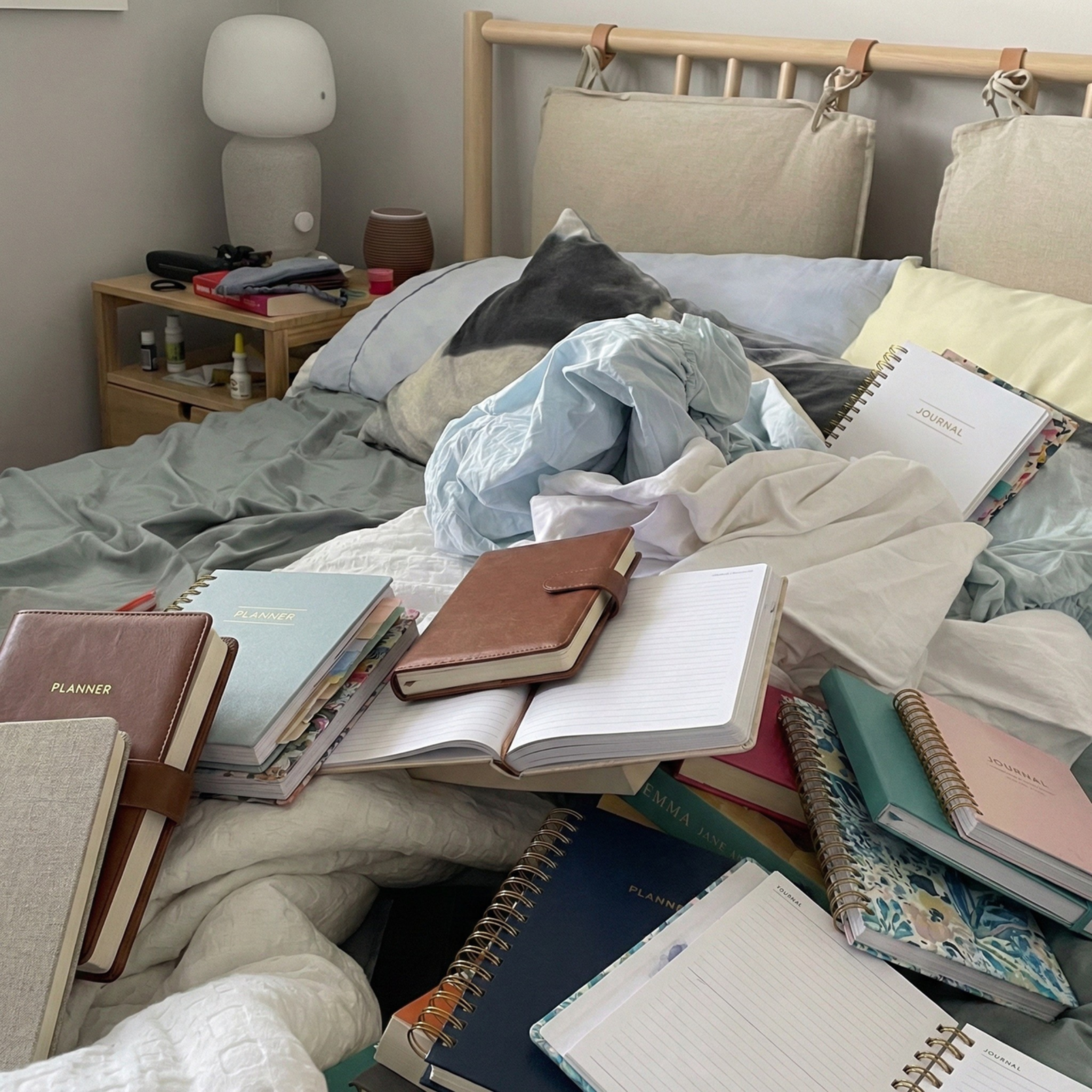
Dopamine Planner Facebook ad: “Read this if you have a drawer full of abandoned planners”
Ran for 24 days, from February 12 to March 8, 2026, the last day Crush saw it.
Run by Dopamine Planner on Facebook. Crush is not the advertiser and does not verify its claims. See this ad in Meta's Ad Library(opens in a new tab)
Want an ad like this for your product?
Crush makes new ad images for your product from this ad: your logo, your product photo, your offer.
Trials from $19.95 USD, then $79.95 USD a month. Cancel anytime.
About this ad
- Meta Ad Library ID
- 26118709277740694
- Platforms
- Facebook, Instagram, Audience Network, Messenger and Threads
- Relaunches
- 0
- Niche
- AI & Software
Ad text
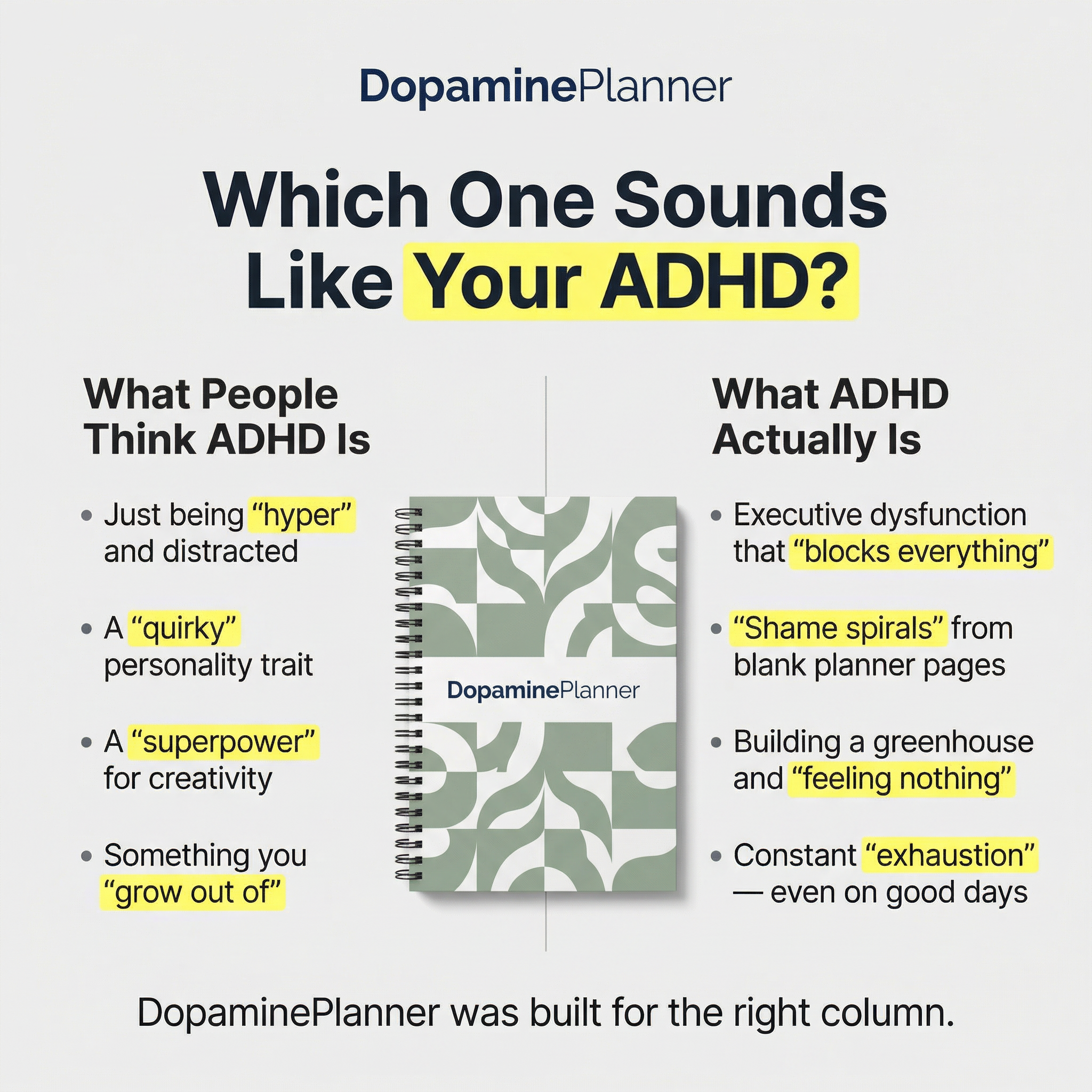
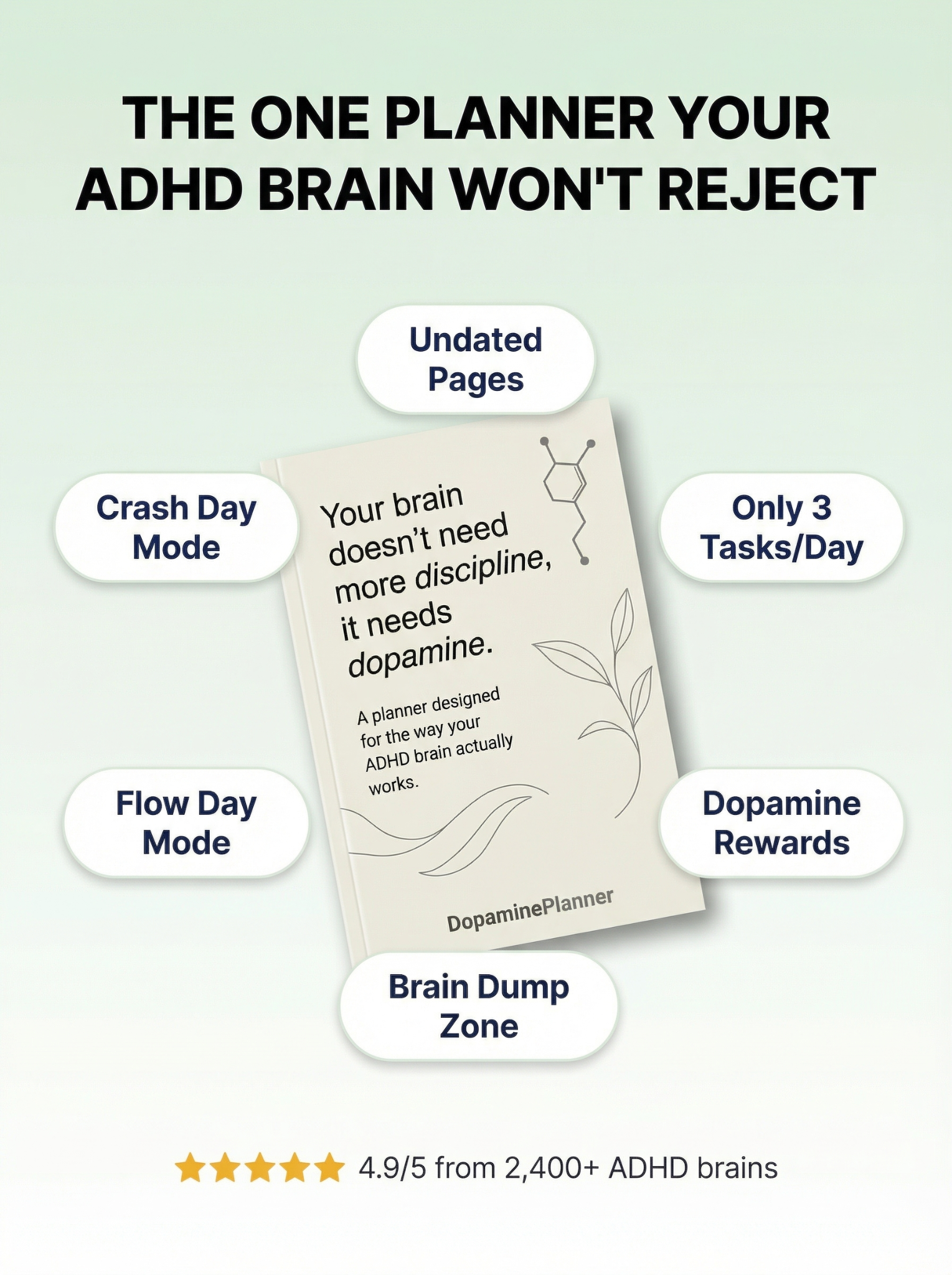
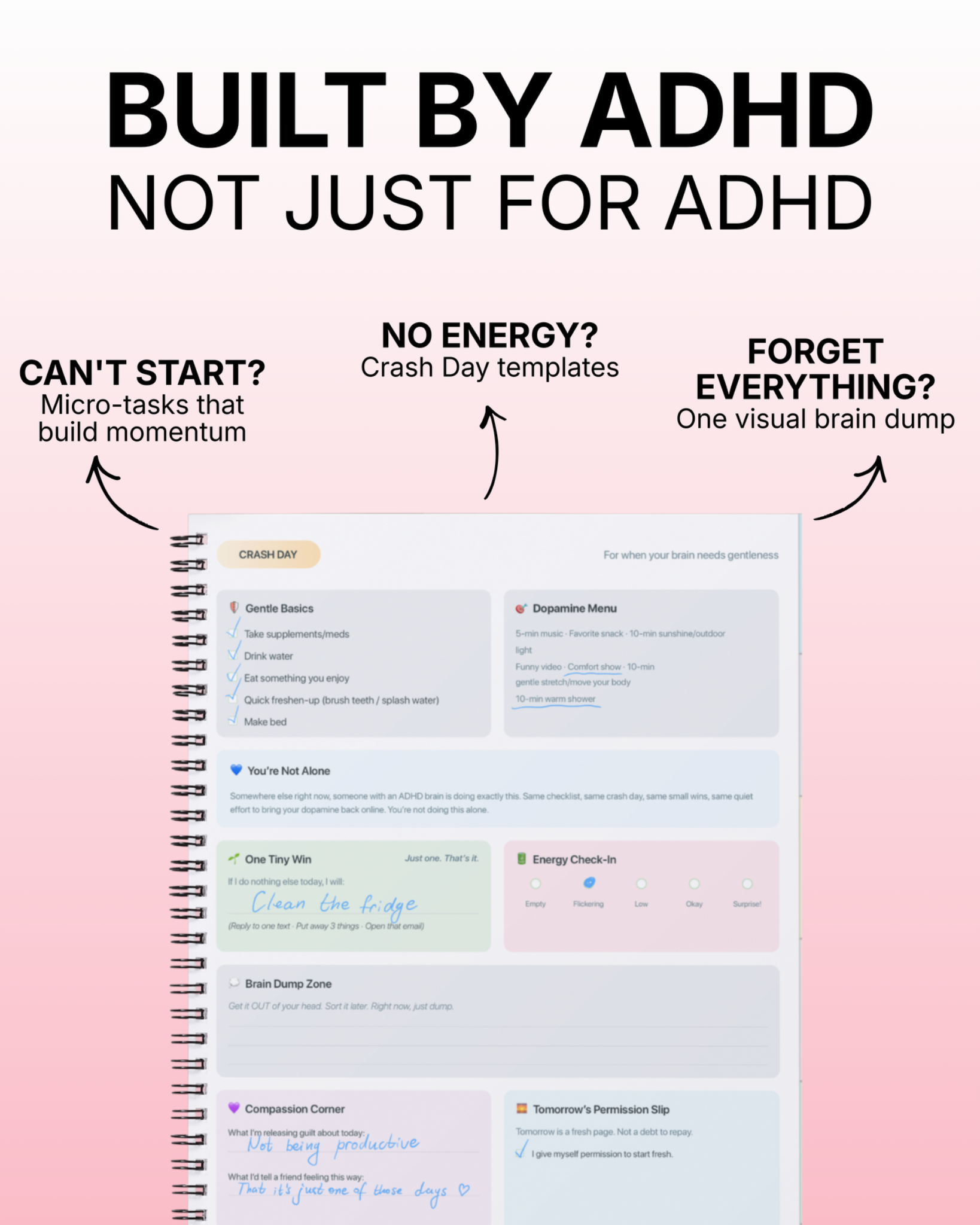
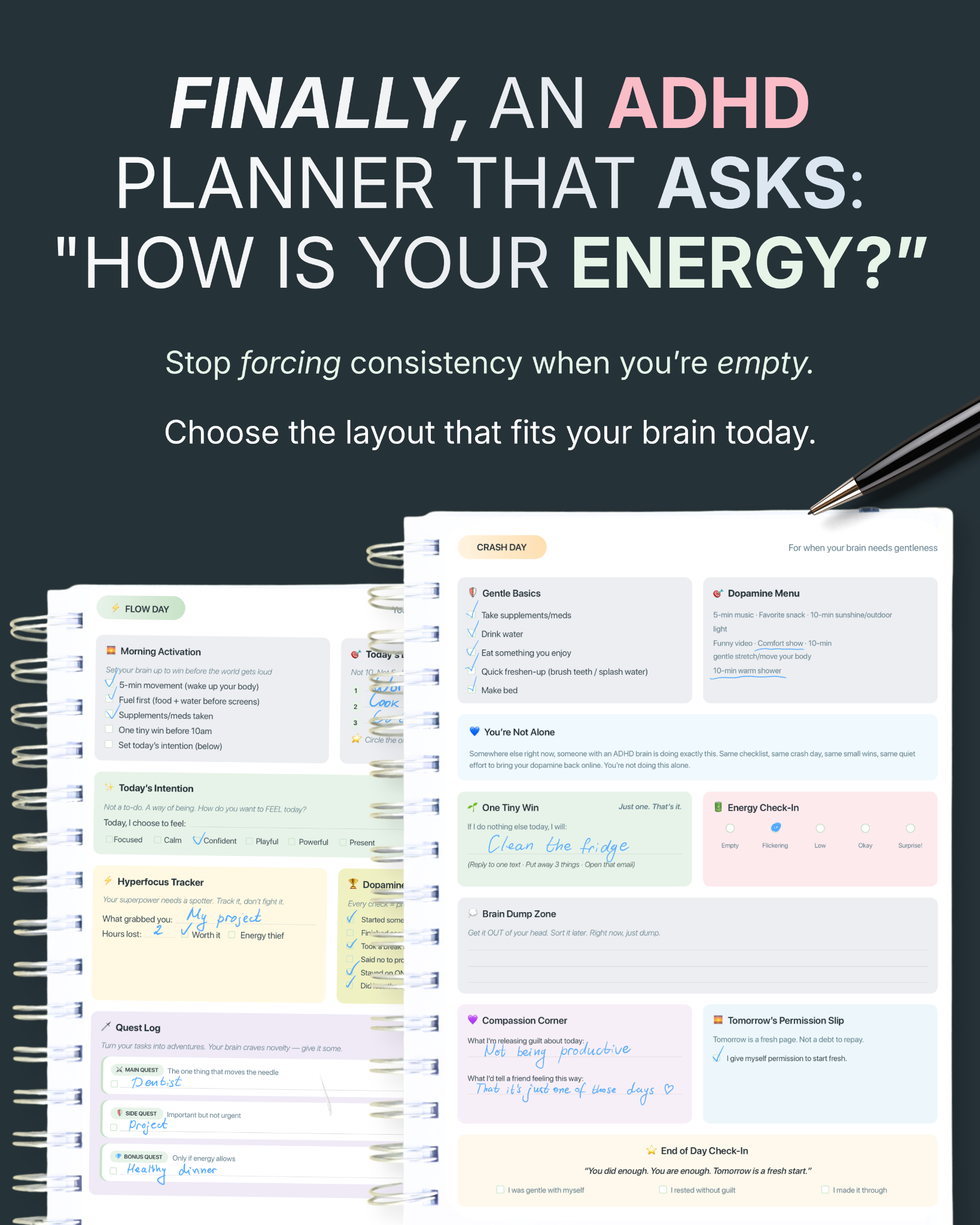
I wasn't going to post this because it's honestly kind of embarrassing. But if it helps even one person stop blaming themselves for something that was never their fault, it's worth it. I have 23 planners in my house. I counted. Passion Planner. Happy Planner. Clever Fox. Two bullet journals I spent an entire weekend setting up with washi tape and color-coded tabs. A $40 Panda Planner I used for exactly 11 days. Three different Notion templates I found on TikTok that I spent more time making "pretty" than I ever spent actually planning in. Twenty-three planners. All of them with the same story: a few pages filled in at the front, then nothing. Just blank pages staring back at me like little paper accusations. My therapist calls it a "planner graveyard." I call it proof that something is fundamentally wrong with me. Or at least, I used to. Here's what happened. Last October, I had what my husband gently refers to as "The Wednesday Incident." I forgot to pick up my daughter from soccer practice. Not because I was busy. Not because something came up. I was sitting on the couch, scrolling my phone, and it simply… didn't exist in my brain anymore. Out of sight, out of mind. Literally. The coach called. My daughter was the last kid standing in the parking lot. She was fine - but the look on her face when I pulled up 35 minutes late is something I'll carry for a long time. I sat in the car after we got home and just cried. Not because of one missed pickup. Because of the pattern. The bills I forgot until they were late - not because I didn't have the money, because the envelope disappeared from my brain the second I set it down. The friend's birthday I missed even though I'd bought the card three weeks early (it was still in my glove box). The work deadline I scrambled to meet at 11pm because I'd spent the entire day making a beautiful to-do list instead of doing a single thing on it. I knew what I needed to do. I always know what I need to do. I just... couldn't make myself do it. And every planner I bought to "fix" this made me feel worse about it, not better. I was diagnosed with ADHD at 34. Late, apparently, but not unusual - especially for women. My doctor told me that girls with ADHD get missed constantly because we don't bounce off walls. We daydream. We mask. We develop coping strategies that look like "having it together" from the outside while we're drowning on the inside. The diagnosis helped. Medication helped. But neither one solved the planning problem. Because here's what I didn't understand until embarrassingly recently: Every single planner I'd ever bought was designed for a brain that doesn't work like mine. Not "sort of" designed for a different brain. Fundamentally. Neurologically. Architecturally designed for people whose brains run on importance and discipline — while my ADHD brain runs on dopamine, interest, novelty, and urgency. That's not a metaphor. It's neuroscience. PET imaging studies show that ADHD brains have significantly lower dopamine receptor availability. Our brains literally don't get the same reward signal from checking off a boring task that neurotypical brains do. So when a traditional planner says "write down your goals and schedule your week"… my brain looks at that blank weekly spread, gets zero dopamine from the idea of filling it in, and shuts down. Not because I'm lazy. Because the tool is asking my brain to do something it's chemically not wired to do. Those 23 planners didn't fail because I lack discipline. They failed because they were built for someone else's brain. I found DopaminePlanner through a comment on a Reddit thread. Someone in r/adhdwomen was asking the usual question — "Has any planner actually worked for you longer than two weeks?" — and most of the replies were the usual mix of dark humor and defeat. But one comment said something that stopped my scrolling: "I've used mine for 3 months. The reason it works is that it has different pages for days when your brain is cooperating and days when it's not. So you literally can't fall off the system. There's no wagon to fall off of." Three months. From someone with ADHD. Who had previously described their planner collection as "a small library of broken promises." I was skeptical. Obviously. I have 23 reasons to be skeptical. But I looked it up anyway. The first thing I noticed was that it was created by someone who actually has ADHD. Not "designed for ADHD" by a neurotypical productivity company that slapped some pastel colors on a regular planner. Actually built by a brain like mine. The second thing I noticed was the structure. Or rather - how different it was from anything I'd tried before. There are two types of daily pages: Flow Days and Crash Days. Flow Days are for when your dopamine is cooperating. Your Big 3 tasks (not 10, not 5 - just 3, because that's what an ADHD brain can realistically hold). A hyperfocus tracker. An energy audit. Small, visual, completable. Crash Days are for when your executive function has left the building. The days where brushing your teeth feels like climbing Everest. Instead of pretending those days don't exist - like every other planner does - there's a whole separate layout. Gentle basics. A dopamine menu of tiny things that might help bring your brain back online. A brain dump section. And a reminder at the bottom that says: "You did enough. You are enough. Tomorrow is a fresh start." I actually teared up reading that for the first time. Because every other planner I've owned has made crash days feel like failure. This one made them feel like... part of the plan. The third thing - and this is the one that made me actually buy it - is that it's completely undated. Do you know what happens when you miss two weeks in a dated planner? You open it up to 14 blank pages of evidence that you failed. Fourteen days of nothing, right there in ink, judging you. Your brain builds a Wall of Awful around that planner so high you'd rather shove it in a drawer than look at it again. DopaminePlanner has no dates. You use a page when you use it. You skip a day or a week or a month, and when you come back, you just... start the next page. No blank accusatory pages. No evidence of "failure." No shame spiral. You literally cannot fail at using this planner. You can only pause and restart. For an ADHD brain, that changes everything. I've been using it for four months now. That's longer than every other planner I've owned. Combined. But here's what actually changed, and it's not what I expected. I didn't become a "planner person." I didn't suddenly start color-coding my week or waking up at 5am to journal. I'm still me. I still have crash days. I still forget things. But last month, my husband said something that almost made me cry again. He said: "You seem less stressed. Like, you're not beating yourself up as much." And he was right. Because the planner wasn't just organizing my tasks - it was reorganizing my relationship with myself. When you use a system that has a page for your worst days, it stops feeling like your worst days are a personal deficiency. They're just... Tuesday. And there's a page for that. I haven't missed a pickup since October. Not because the planner magically fixed my memory - but because the system works with my brain instead of against it. I put the three things that matter most at the top. I track my energy so I know when I'm running low. And on the days my brain won't start, I don't abandon the whole system. I just flip to a crash day page and do what I can. My daughter noticed too. She saw me using it one morning and said, "Mom, is that your special planner?" I said yes. She said, "It must be really good because you never use the same one this long." Kids, man. They notice everything. I'm sharing this because I know someone reading this has a drawer full of planners they've abandoned. And every single one felt like more evidence that they're broken. You're not broken. You were just using tools that were designed for someone else's brain. DopaminePlanner works because it's not built on discipline and willpower - it's built on dopamine science. Flow Days for your good days. Crash Days for the hard ones. Undated pages so you can never "fall behind." And a design philosophy that assumes you're human, not a robot. It comes as a digital download - you can use it on your tablet, print it out, or use the Notion template. Whatever works for your brain today. And if your brain changes its mind tomorrow about which format it prefers? All three are included. It's $35. Which, yes, I know - I've probably spent $500 on planners that are gathering dust. The difference is that this one was designed by someone who understands why those other ones ended up in the graveyard. They also have a 30-day "We'll Make It Right" promise. Give it an honest try, and if it doesn't work for your brain, they'll help you get more from the system or make it right financially. But honestly? I don't think you'll need it. Because this isn't another planner that asks you to become a different person. It's the first one that works with the person you already are. P.S. - One thing I wish someone had told me: don't try to use all the features on day one. Start with just the Flow Day or Crash Day page - whichever matches your energy that morning. That's it. Don't set up a "system." Don't plan your whole month. Just use today's page. Your ADHD brain will thank you for the low entry point, and you can explore the rest when curiosity kicks in. That's actually how it's designed to work. P.P.S. - If you're reading this thinking "I'll just save this post and come back to it later"... you and I both know how that ends. The tab gets lost. The screenshot gets buried. The thought ceases to exist. Your ADHD brain is interested right now. That matters. Here's the link: dopamineplanner.com
Where the ad sends people
dopamineplanner.com
Read this if you have a drawer full of abandoned planners 👆
The first planning system built around how ADHD brains actually work. Crash day templates, zero shame for missed days, and reset rituals that let you pick back up whenever you're ready.
Learn more: dopamineplanner.com(opens in a new tab)