
Inactive· since Feb 22, 2026
- 5
- days it ran
- 5
- relaunches
Ad copy
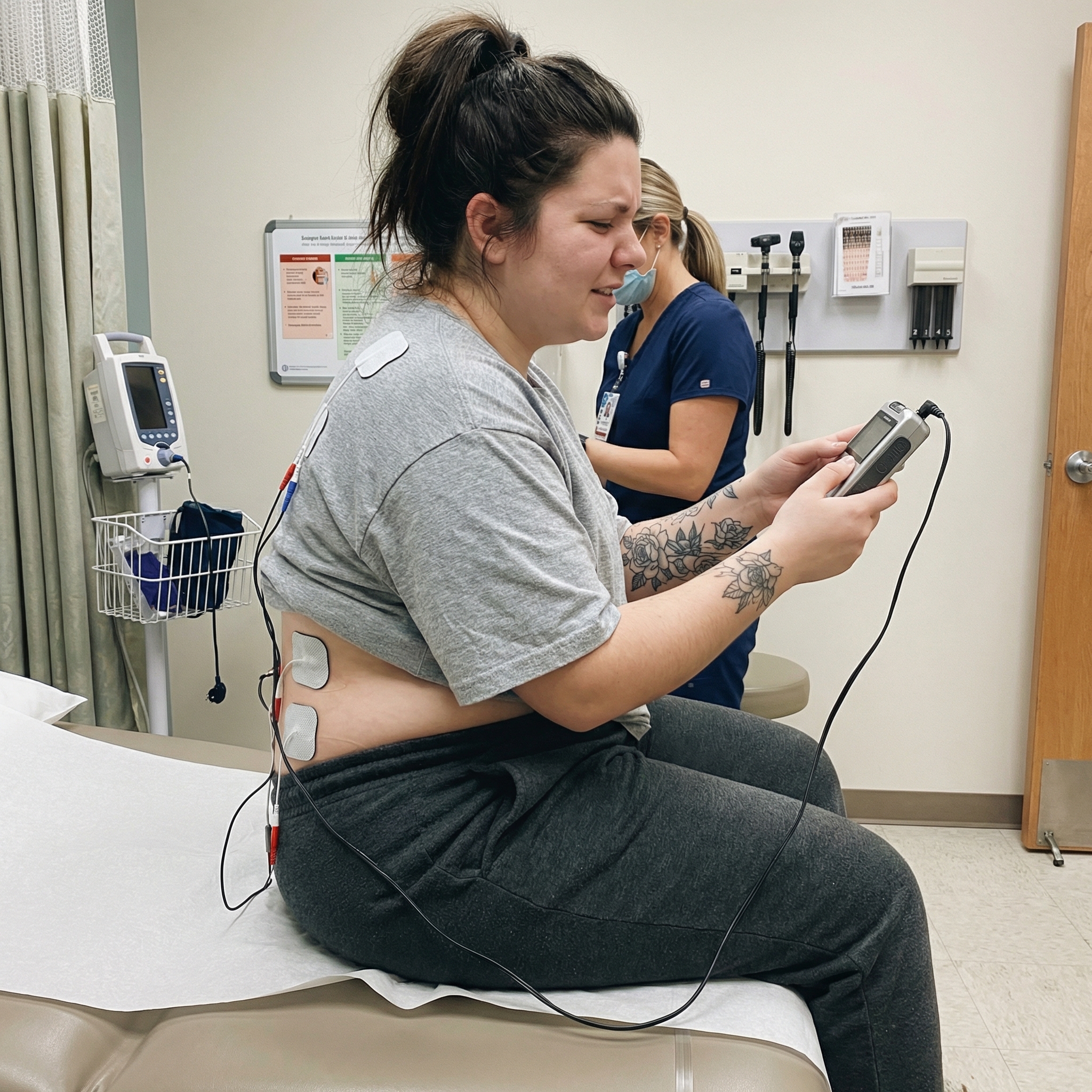
I have to say something that's genuinely hard for me to admit. For the first decade of my medical career, I was one of those doctors. You know the ones. The doctor who'd look at a fibromyalgia patient describing their nighttime pain, nod with what I thought was compassion, and say: "Sleep disturbances are a well-documented part of fibromyalgia. Let's try melatonin, make sure you're practicing good sleep hygiene, and if that doesn't work, we can look at a low-dose sleep medication." And then I'd move on to the next patient. I'm not proud of that. But I want to be honest with you about why it happened — because I think it'll help you understand why your own doctors keep failing you. Here's the truth: fibromyalgia and sleep isn't taught in medical school. Not really. You get a few paragraphs about it in a textbook. You learn that fibromyalgia patients report poor sleep. You learn to prescribe accordingly. And then you graduate and carry those gaps in your knowledge directly into your practice. Nobody teaches you why the sleep is disrupted. Nobody explains the neurological mechanism. Nobody says: "Here is the biological reason these patients wake up in more pain than when they laid down." So you fill the gap with what you were taught. You prescribe Ambien. Trazodone. Tell them to reduce stress. And when it doesn't work, you chalk it up to fibromyalgia being "complex" and "difficult to treat." I did this to hundreds of patients over fifteen years. And then my sister Rachel got sick. Rachel is 44. She's a high school English teacher in Ohio — one of those people who lights up a room, the kind of person who remembers every student's name and stays late to grade papers because she genuinely loves what she does. Three years ago, she called me crying. She'd been officially diagnosed with fibromyalgia six months earlier, but the symptoms had been building for two years before that. She'd gone from doctor to doctor being told it was anxiety, then stress, then early menopause, then "possibly psychosomatic." By the time she got the fibromyalgia diagnosis, she was relieved. Finally a name for it. Finally something to treat. Except nothing they prescribed was actually treating it. "Charlotte," she told me. "I fall asleep fine. But by 2 or 3 in the morning, I'm wide awake. Every single joint hurts. My hips ache like someone's pressing down on them. My shoulders feel like they're being squeezed. My lower back is on fire. And the pain just sits there — it doesn't ease up, it doesn't shift, it just screams at me until sunrise." She described rolling from one side to the other all night, searching for a position that hurt less. Finding none. She called herself a rotisserie chicken — flip to the left, pain. Flip to the right, different pain. Flat on her back, different pain again. All night long. She was getting 9, sometimes 10 hours in bed. And waking up feeling like she hadn't slept at all. By the time she called me, she'd had to cut her classroom hours. Her brain fog was so severe she'd lose her train of thought mid-sentence. She was forgetting the names of students she'd taught for three years. She'd given up her weekend hikes, her book club, her Friday dinners with friends — not because she didn't want to go, but because by 6 PM she was already empty. Running on fumes. "You're the doctor," she said. "Tell me why this is happening." I opened my mouth to say what I'd been saying to fibromyalgia patients for fifteen years. And I stopped. Because for the first time, it wasn't a patient chart in front of me. It was my sister. And what I was about to tell her — the melatonin, the sleep hygiene, the "it's just part of fibromyalgia" — I suddenly understood, viscerally, what that actually felt like to hear. Like being handed a brochure when your house is on fire. I didn't say anything. I told her I'd call her back. And then I sat down and actually did what I should have done fifteen years earlier. I went back to the neuroscience. I read the research I'd skimmed in medical school. I followed citations. I talked to colleagues in pain research. I went looking for the mechanism — not just the symptom. What I found was something called the Serotonin Pain Gate. And I am genuinely embarrassed I didn't know it the way I should have. Your body has a neurological pain filtering system in your spinal cord. When it's functioning properly, serotonin keeps this gate partially closed. You feel aches and discomfort, but they're filtered, manageable, in the background. But here's what happens in the middle of the night: serotonin naturally dips. In healthy people, this dip is minor and the gate barely moves. But in people with fibromyalgia, this nighttime serotonin drop is more dramatic. And when it happens, that pain gate opens. The pain flooding through at 2 or 3 AM isn't new pain. Rachel's joints weren't suddenly getting worse at midnight. What was happening was that her pain filter was dissolving — and every ache that serotonin had been quietly holding back all day was rushing through at full intensity. That's why she'd wake up in more pain than when she'd laid down. Not because sleep was hurting her. But because her body's ability to filter pain collapses in the middle of the night. And here is the thing that kept me awake for three nights after I learned it. Every sleeping medication I had been prescribing for fifteen years — Ambien, Trazodone, Amitriptyline, even Gabapentin at night — does absolutely nothing to support nighttime serotonin. They sedate. They make patients fall asleep. But the Serotonin Pain Gate opens anyway. The pain wakes them up anyway. And now they're groggy and disoriented on top of being in agony. I had been treating the wrong problem for fifteen years. Not because I was negligent. Not because I didn't care. Because this mechanism wasn't in the curriculum. It wasn't in the standard treatment guidelines. And because there is no pharmaceutical drug that addresses nighttime serotonin support — so there's nothing to prescribe, and therefore, in the world of clinical medicine, it barely exists as a conversation. I sat with that for a long time. Once I understood the mechanism, the research on what actually supports it became clear. There are five specific ingredients with substantial evidence behind them for nighttime serotonin support and pain gate function. 5-HTP at 200mg — the direct precursor to serotonin. This is what the brain actually uses to produce serotonin at night, and it crosses the blood-brain barrier to do it. Not melatonin. Not a sedative. The real thing. L-Theanine at 200mg — supports the GABA activity that works alongside serotonin to keep the pain gate closed. Calms the nervous system without sedating you, which is exactly the distinction that matters here. Magnesium Glycinate at 350mg — this specific form is absorbed far better than the magnesium oxide or citrate you'll find in most supplements, and it directly supports the nervous system's ability to regulate pain signals overnight. Valerian Root at 600mg — supports GABA receptor activity, which is the other half of the pain gate equation when serotonin dips in the middle of the night. And Passionflower at 400mg — a buffer for the 2-4 AM window when serotonin hits its lowest point and the gate is most vulnerable to opening. These aren't random supplements. These are specific ingredients at specific clinical doses targeting a specific neurological mechanism that I had been trained to ignore. I put this protocol together for Rachel. After about three weeks, she called me again. "I slept until 5:30," she said. "I didn't wake up at 2. I didn't wake up at 3. I went to bed at 10:30, and I woke up at 5:30, and I wasn't in pain." She cried. I cried. By week six, she was sleeping 7-8 hours consistently — and not just sleeping, but actually reaching deep, restorative sleep for the first time in years. The kind of sleep her body had been completely starved of the entire time. The brain fog started clearing. She went back to her book club. She told me she felt like herself for the first time in three years. Her rheumatologist at her next appointment looked at her inflammation markers, then looked at her, and said: "Whatever you're doing, don't stop." After seeing what this protocol did for Rachel, I became obsessed with finding a supplement that had all five ingredients together, at the doses that actually matter. Because asking my patients — or my sister — to source five separate products, figure out the right forms of each ingredient, and spend over $100 a month just to feel like a functioning human being wasn't a real solution. So for the last eight months, I've been doing something I've never done before as a clinician: going through supplement brands one by one, pulling their certificates of analysis, and checking whether what's on the label is actually what's in the product. What I found was honestly worse than I expected. Most brands were missing ingredients entirely — usually the 5-HTP or the Passionflower, which happen to be the most expensive to source at clinical doses. Others had all five listed on the label, but the doses were almost insulting. 50mg of 5-HTP instead of 200mg. 100mg of Magnesium instead of 350mg. Amounts that might technically let a company put the ingredient on the packaging, but would do nothing for the Serotonin Pain Gate at night. And then it got worse. When I actually requested the certificates of analysis — the third-party lab reports that show what's really in the product — several brands either took weeks to respond, sent outdated documents, or sent reports showing the actual tested amounts were even lower than what was already on the underdosed label. This is what I'm talking about when I say the supplement industry fails people. It's not just negligence. Some of it is deliberate. I had almost given up when I came across LyraSleep Deep Restore Gummies. I went in skeptical, the same way I'd approached every other brand for eight months. I checked the label. Every single ingredient was there — 5-HTP at 200mg, L-Theanine at 200mg, Magnesium Glycinate at 350mg, Valerian Root Extract at 600mg, Passionflower at 400mg. Not only at clinical doses — some were at or above the optimal amounts from the research I'd been reading. Then I requested the certificate of analysis. They sent it the same day. The tested amounts matched the label. No discrepancy. No underdosing hiding behind marketing language. Just exactly what they said it was. That almost never happens. No melatonin — which matters enormously for the reason I explained earlier. No gelatin. Third-party tested. Made in a GMP-certified facility in the USA. Two gummies per night, taken about an hour before bed. And they back it with a 60-day money-back guarantee, which tells you something about how confident they are in what's actually inside that jar. I recommended it to Rachel first. Then to a handful of patients I'd been seeing for years who I knew were still trapped in the same 3 AM cycle I used to dismiss as "just part of fibromyalgia." Most people notice the 3 AM wake-ups either stop or the pain is significantly less intense within the first week. By weeks two to four, the cumulative serotonin support builds and most people experience their first full nights of uninterrupted sleep. The brain fog starts lifting as the body finally starts achieving the deep, restorative sleep it's been missing. By month two, patients start reporting something I honestly didn't think was possible when I first learned about this — daytime pain decreasing too, because their body is finally getting the deep sleep it needs to actually recover. The results were exactly what the research predicted. Which, after eight months of finding products that couldn't even pass a basic label check, felt like nothing short of remarkable. If your nights look anything like what Rachel described — the rotisserie chicken, the 3 AM pain flooding in, the waking up more exhausted than when you laid down — I want you to try this. Not because I'm asking you to trust supplements blindly. But because I've done the verification work that you shouldn't have to do yourself, and this one is the real thing. Your 3 AM wake-ups aren't inevitable. Your pain gate doesn't have to keep opening. And you deserve more than a doctor handing you a melatonin recommendation and moving on to the next patient. 👉https://lyrasleep.com/products/lyrasleep-deep-restore-all-in-one-gummies P.S. — The reason sleeping pills haven't worked isn't that you have an untreatable condition. It's that they were solving the wrong problem. Serotonin support is what keeps the pain gate closed. That's what this was always about. P.P.S. — Skeptical? Good. You should be after everything you've been through. That's exactly why the 60-day guarantee matters — try it, see what happens when the pain gate actually stays closed, and if it doesn't work for you, you pay nothing.
Like this ad? Make it yours.
Crush rebuilds this exact creative around your product — your brand, your colors, your offer — in about a minute.