
Inactive· since Apr 13, 2026
- 6
- days it ran
- 0
- relaunches
Ad copy
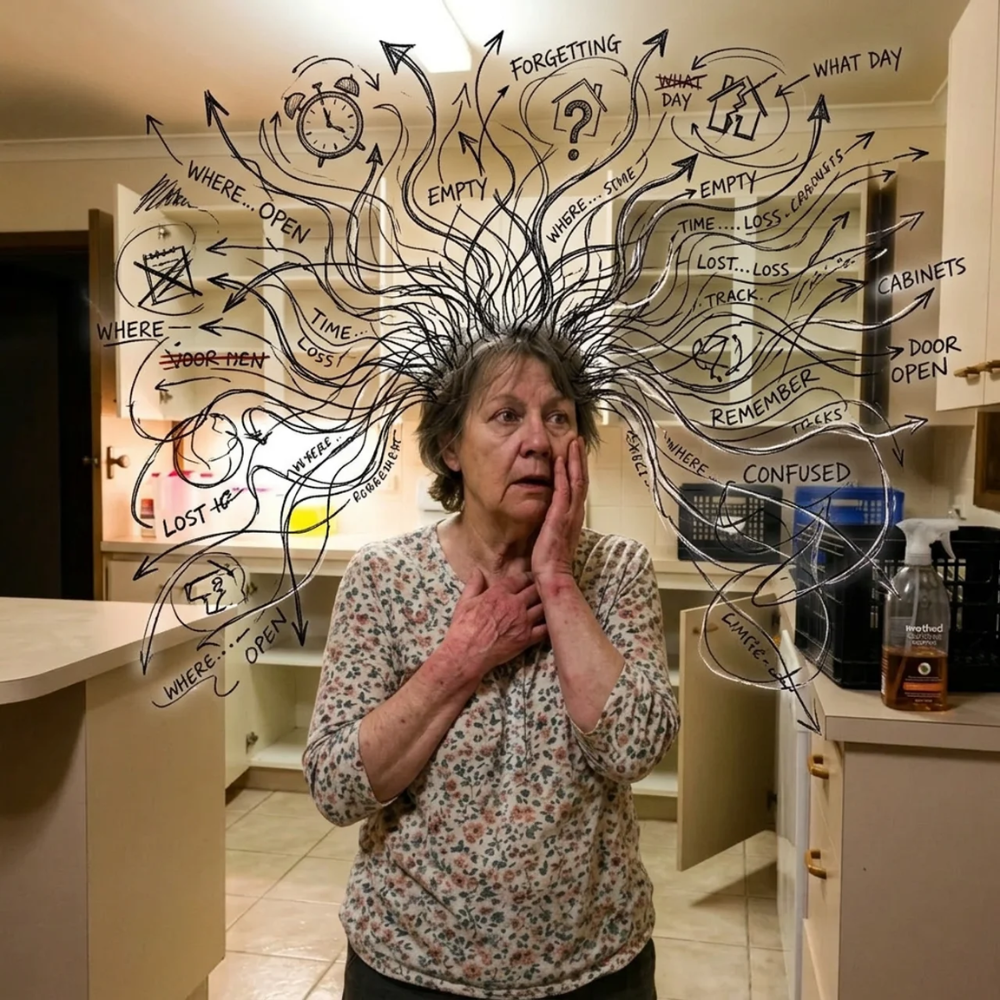
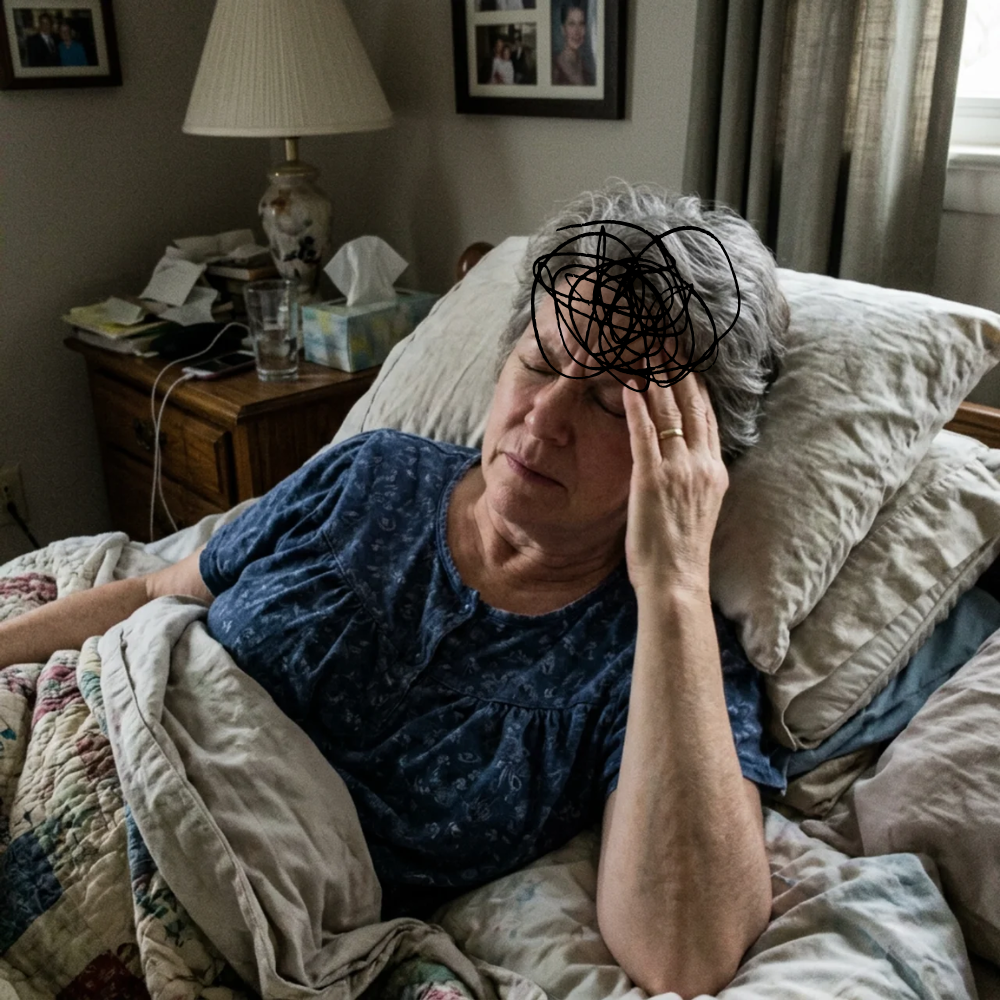
I was standing in the middle of it. Every cabinet emptied. Every shelf wiped down. The floor mopped twice. My hands cracked and raw from the cleaning products. And I was shaking — not from exhaustion, but because I knew it still wasn't done. My brain was telling me I'd missed something. That there was still something dirty. That I had to start over. Three hours. Because of crumbs on the couch. My husband looked at the kitchen I'd just torn apart for three hours and said, "Why can't you just relax?" That's what nobody understands. It was never about the crumbs. It was never about the kitchen. It was about my brain seeing "small" and turning it into "everything is wrong, everything is contaminated, everything needs to be fixed right now" — and not letting me stop until I was completely destroyed. And the person who was supposed to be my partner, my safe place, looked at the wreckage and told me to relax. Like I hadn't been trying to relax for the last twenty years. That's the part of OCD nobody talks about. Not the thoughts. Not the compulsions. The loneliness of not being believed. I was diagnosed at 31. After my first daughter was born, something shifted in my brain that never shifted back. At first they called it postpartum depression. But I had a good doctor — the only person in this whole story who actually listened — and she noticed the compulsions. The checking. The repetitive thoughts. The way I couldn't leave a room until everything felt "right" in a way I couldn't explain. She sent me to a psychiatrist, and I was diagnosed with severe OCD. I thought the diagnosis would change things. I thought having a name for it would make people understand. It didn't. I went home and told my husband. He said, "Everybody has quirks." I told my sister. She said, "You don't have OCD — you just like things clean." One by one, every person I trusted to hold me up made me feel like I was making it bigger than it was. Like I was being dramatic. Like the thing that was destroying me from the inside was a personality trait I should just learn to manage. So after a while, I started to believe them. Maybe I was overreacting. Maybe everyone's brain did this. Maybe I just needed to try harder, pray harder, breathe deeper, relax more. I stopped treatment. I stopped my medication — cold turkey, which I now know you should never do. And I tried to white-knuckle it on my own. Because if nobody around me thought it was real, maybe it wasn't. That was the worst decision of my life. Without medication, without support, without a single person who understood — the OCD consumed everything. The thoughts got darker. The compulsions got longer. I started spending four, five, six hours a day on rituals. Checking things. Cleaning things. Counting things. Replaying conversations in my head to make sure I hadn't said something terrible. And then the really dark thoughts came. The ones I can't put into words even now. Intrusive images about the people I loved most. Violent ones. Blasphemous ones. Things so wrong and so horrifying that I couldn't look at myself in the mirror. I started drinking to quiet my mind. Just wine at first. Then more. Because alcohol was the only thing that slowed the loop down. It was the only thing that gave me thirty minutes of silence. I'm not proud of that. But I'm telling you because this is what happens when someone with OCD gets dismissed. When the people around them minimize it. When the medical system gives them a diagnosis and the world tells them it doesn't matter. You don't just suffer from the OCD. You suffer from the silence of no one believing you. And that silence almost killed me. I got help eventually. Clawed my way back into treatment. Found a therapist who specialized in OCD. Got stable. Got sober. It took years. But the OCD itself — the actual loop, the thoughts, the noise — that never fully went away. It got manageable. But "manageable" still meant two hours a day of compulsions. "Manageable" still meant waking up at 3 AM with my brain running. "Manageable" still meant my brain was never, ever quiet. I accepted that. Because after what I'd been through, manageable felt like a miracle. And then, about four months ago, I found something that changed the math entirely. I wasn't looking for it. I was actually reading about something else — I'd gone down a rabbit hole about serotonin and mood because I was curious about how my medication worked. And I stumbled across a study. A real one. Published in the American Journal of Psychiatry in 1996. It described something I'd never heard any doctor, therapist, or psychiatrist explain to me in twenty years of treatment. The study said that OCD isn't just about serotonin levels being too low — which is the standard explanation everyone gets. It's about serotonin signals not being DELIVERED. I sat up in my seat. Every time your brain fires an intrusive thought, serotonin sends a calming message to your cells: "That thought doesn't matter. Let it go." But serotonin can only knock on the door. A second molecule — a relay messenger inside the cell — has to deliver that signal through. If that messenger is depleted or missing, the signal never arrives. The thought never gets dismissed. And your brain replays it. Over and over. That messenger is a natural compound called inositol. Your body makes it on its own — it was even classified as Vitamin B8 decades ago. But chronic stress, aging, and genetics can deplete it. And when it's depleted, no amount of serotonin can get the calming message through. The researchers tested inositol on OCD patients. Not as an add-on. On its own. And it worked. A 78% reduction in the looping, intrusive thoughts. I sat with that information for a long time. Because it meant something that went beyond the science. It meant that for twenty years, while everyone around me was telling me to "just relax" and "stop overthinking" — my brain was physically unable to deliver the signal that would let a thought pass. It wasn't a personality flaw. It wasn't weakness. It wasn't being dramatic. It was a broken relay. And nobody caught it. Not the psychiatrist who diagnosed me. Not the therapist who treated me. Not a single person in twenty years of treatment ever said the words "inositol" or "second messenger" or "signal delivery." I started taking it quietly. Didn't tell anyone. After twenty years of being dismissed, I'd learned to keep things to myself. First week — nothing dramatic. The usual loops. The usual noise. Middle of week two — I was cleaning the kitchen after dinner. Normal cleaning. And I finished. And I stopped. And I walked away. That might not sound like anything to you. But for me, finishing cleaning and just... stopping... without the urge to redo it, without the pull to check one more thing, without my brain screaming that I'd missed something — that was a miracle. That hadn't happened in years. By week three, the nighttime loops shortened. I was falling asleep in thirty minutes instead of two hours. The intrusive thoughts were still there, but they were passing through instead of parking. Like clouds instead of storms. I'd notice one, feel the old familiar flinch, and then — nothing. It would dissolve. My brain would actually let it go. I started to notice other things changing too. I could sit on the porch and just sit. Not counting. Not replaying. Not arguing with a thought. Just sitting there with my coffee, hearing the birds, feeling the morning air. I'd forgotten what that was like. I'd forgotten that normal people just... exist in a moment without their brain attacking them. By week five, my daughter — the same daughter who'd watched me tear that kitchen apart all those years ago — said something I'll never forget. "Mom, you seem calm. Like... actually calm. Not pretending." She could tell the difference. After all these years, she could tell the difference between me performing calm and me actually being calm. I'm not cured. I want to be honest about that. OCD doesn't work that way. But the GRIP it has is different. For the first time in twenty years, my brain is quiet enough that I can hear my own life happening around me instead of being trapped inside the noise. I'm writing this for the person who got dismissed. The person whose spouse said "just relax." The person whose family said "everyone has quirks." The person who stopped treatment because nobody believed it was real. The person who's been white-knuckling it alone because asking for help just led to being minimized. I see you. I was you. What's happening in your brain is real. It's not a quirk. It's not anxiety. It's not being dramatic. There's a signaling problem with a specific name, and it's been studied for thirty years. You've spent enough years being unheard. Your brain deserves to be quiet. And you don't need anyone's permission to make that happen. I’ve linked the supplement I take below. Third-party tested and cGMP-certified.
Like this ad? Make it yours.
Crush rebuilds this exact creative around your product — your brand, your colors, your offer — in about a minute.