
Inactive· since Apr 24, 2026
- 97
- days it ran
- 0
- relaunches
- 29,508
- EU reach
Ad copy
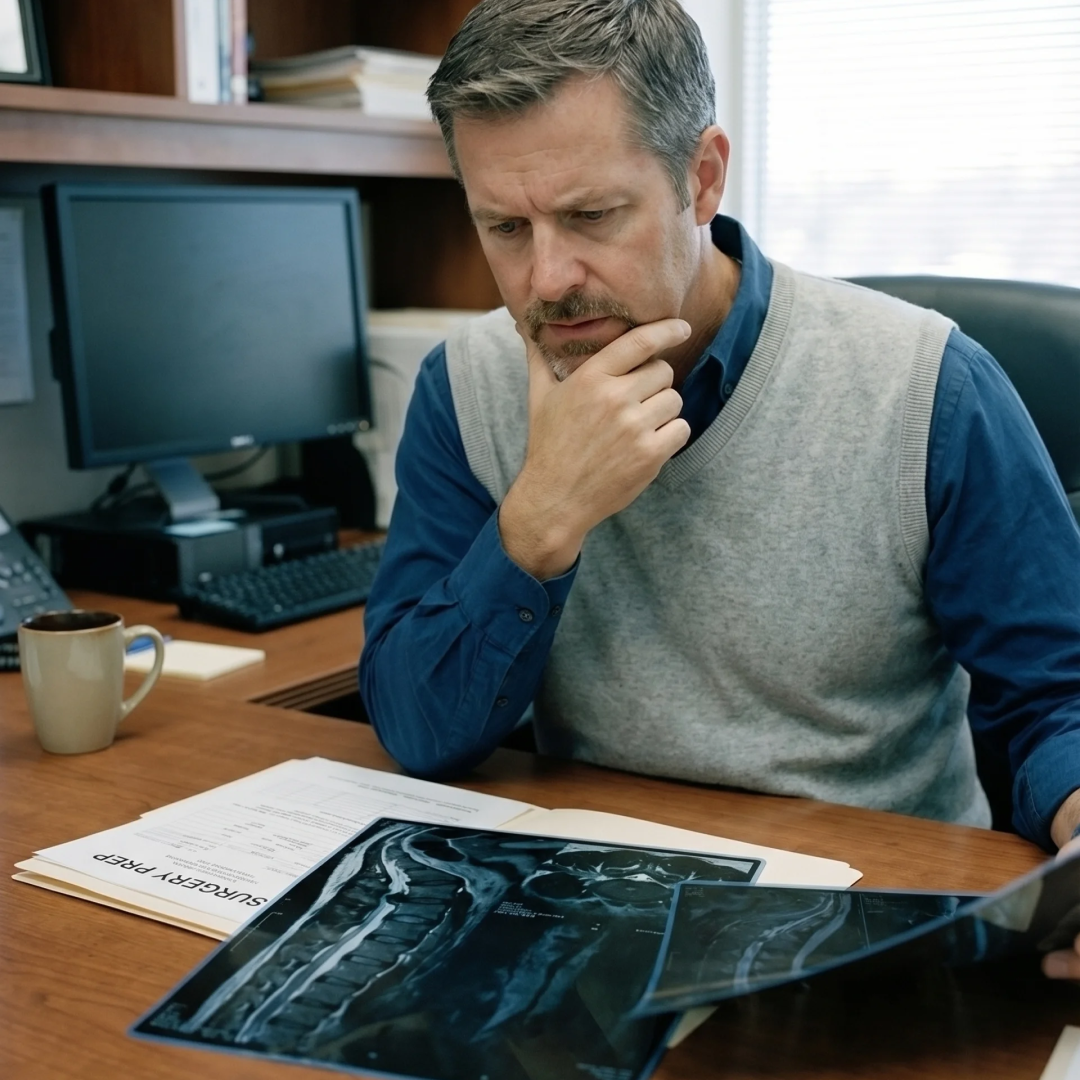
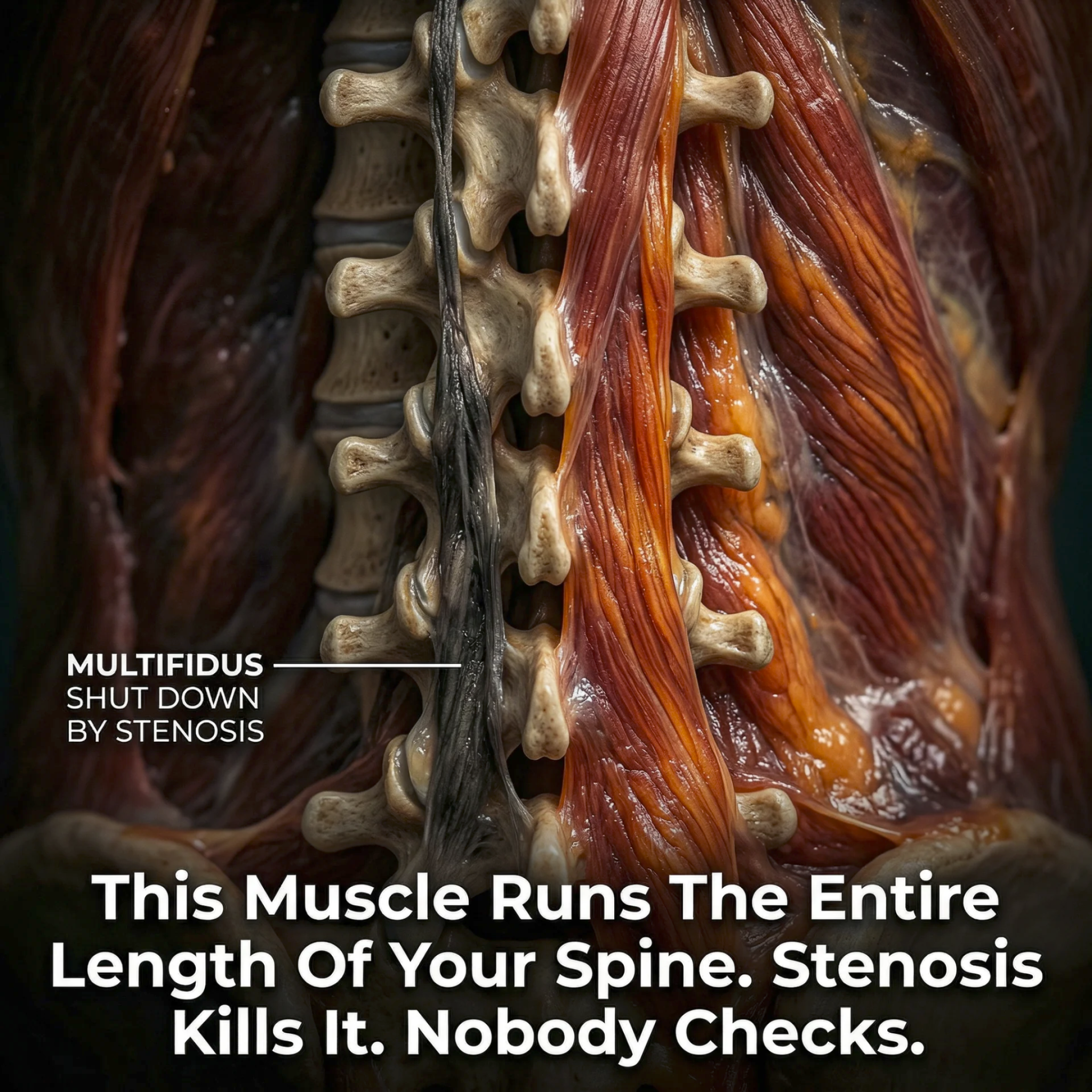
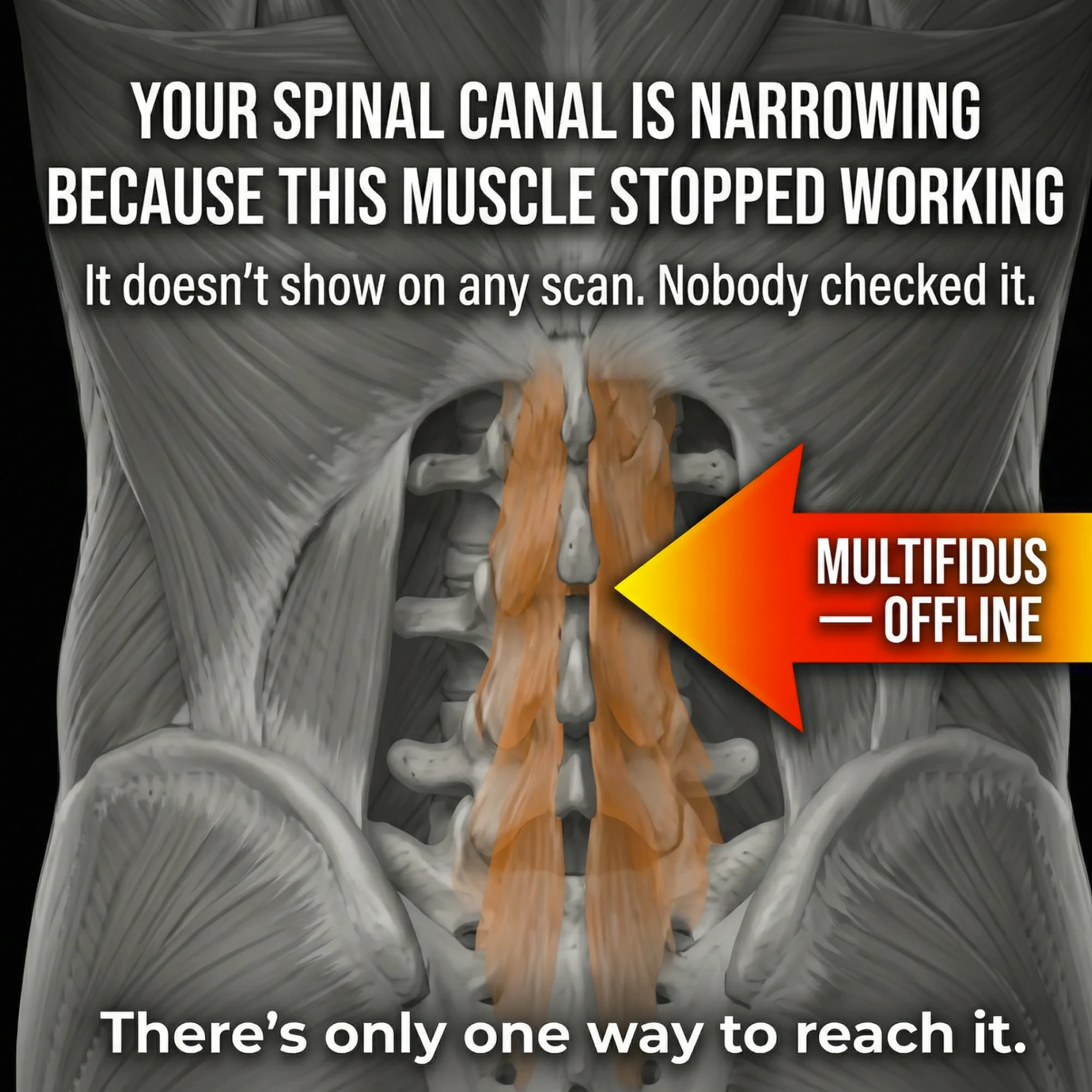
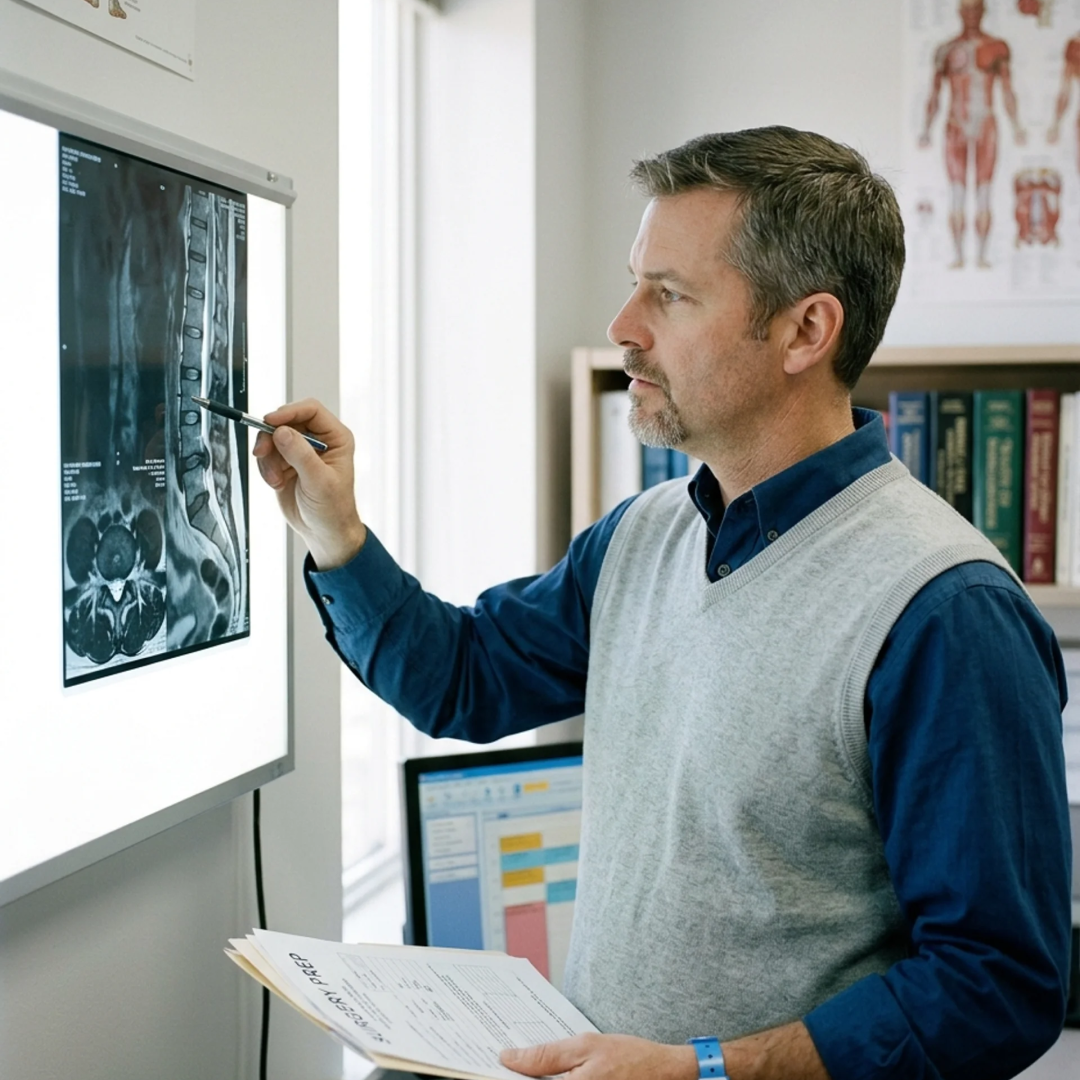
"I share an office with three spine surgeons. We grab coffee. We discuss cases. When my L4-L5 stenosis got bad enough that I could barely walk, they all said I needed fusion. I said no. Not because I don't trust them — but because I understand spinal biomechanics better than they do." I'm a chiropractor. 25 years studying spinal rehabilitation. I work in the same medical building as three of the best spine surgeons in the state. Dr. Anderson. Dr. Kim. Dr. Roberts. We grab coffee together every Tuesday morning. We discuss cases. I refer patients to them when conservative treatment isn't working. They refer patients to me for post-surgical rehabilitation. We have mutual respect. And when my MRI showed severe stenosis at L4-L5 — canal narrowed to the point where my surgeon friends said it was critical — all three of them said the same thing. "James, you need fusion. You of all people should understand." I do understand. That's exactly why I was terrified. Because I see what happens after the patient leaves their office. Not the success stories they show in their presentations. The other ones. Mrs. Patterson. 58 years old. Third back surgery in five years. She came to me six months after her second revision surgery, desperate, asking if there was anything I could do. Her hands shake when she fills out paperwork. Permanent nerve damage from the revision. She had a routine fusion five years ago. Now she has Failed Back Surgery Syndrome. There is nothing left to try. Mr. Chen. 62 years old. Developed adjacent segment disease two years after his fusion. The hardware created stress on the vertebrae above and below. They degenerated faster. Now he needs another fusion. And probably another one after that. The 55-year-old who sits in my waiting room crying because she has had three surgeries and she is in more pain now than before the first one. I see them. They come to me after, desperate, asking if there is anything I can do. Usually, there isn't. Because here is what nobody tells you: 25 to 46% of spinal fusion patients still have chronic pain after surgery. Only 30% of second back surgeries are successful. 15% success rate for third surgeries. 5% for fourth. If your first surgery fails, your odds of ever being pain-free again are almost zero. I know these statistics because I have spent 25 years watching them play out in my waiting room. But the pain was unbearable. Burning down both legs every time I stood up. Couldn't walk more than five minutes without having to stop. Couldn't demonstrate exercises to patients. Couldn't sleep more than two hours without the burning waking me up. My wife would find me at 4 AM sitting on the edge of the bed, hunched over, waiting for my legs to stop screaming so I could stand up. Every. Single. Morning. My daughter said, "Dad, just do the surgery. You're miserable." She was right. I was miserable. My surgery was scheduled for June 22nd. It was May 31st. I had 22 days. I tried everything first. My own physiotherapy protocols for three months. I followed them perfectly. Epidural injections gave me nine days of relief. Then the pain came roaring back. Pain medication made me foggy and useless in clinic. The surgeons were right. Structurally, the canal was narrowed. The nerves were compressed. But I couldn't stop thinking about that 25 to 46% failure rate. And the thing nobody talks about: if this surgery failed, I would be in that 30% success rate for the second surgery. Then 15% for the third. Then 5% for the fourth. I would be Mrs. Patterson. I started researching at 2:14 AM on June 1st because I couldn't sleep. I wasn't looking for miracle cures. I was looking for the mechanism. The actual biomechanical reason why my stenosis kept getting worse even as I treated it. Because here is what kept bothering me professionally. I have spent 25 years in spinal rehabilitation. I understand anatomy. I understand nerve compression. I understand what stenosis does structurally. But there was one question I kept coming back to: Why do so many fusion patients still have pain when the imaging shows the surgery was technically perfect? The canal is open. The screws are solid. The fusion is confirmed. And the patient is sitting in my waiting room crying. I kept digging through research papers. Muscle atrophy studies. Post-surgical nerve pain mechanisms. Paraspinal muscle function after posterior approach procedures. At 2:47 AM, I found a series of peer-reviewed studies on post-surgical multifidus atrophy. Not a blog. Not a forum. Studies published in major spinal journals. The research revealed something that stopped me cold. When you have chronic stenosis — and especially when you undergo posterior spinal surgery — the deep stabilizing muscle that holds each vertebra in position is systematically damaged and shut down. It is called the multifidus. It wraps around every vertebra in the lumbar spine. When it is working, it absorbs 60% of the compressive forces on your lower back. It keeps the vertebrae in position. It keeps the canal open. It protects the nerve roots. But here is what the research showed: Stenosis itself triggers an automatic nervous system shutdown of this muscle. Your brain detects the compression and pulls the multifidus offline as a protective reflex. And then, if you have posterior fusion surgery, the surgeon has to physically retract this muscle to access the spine. That retraction damages the tiny nerve branches that control it. Within 72 hours of surgery, the muscle begins to atrophy. By three to six months post-op, studies show it has lost up to 42% of its mass. The tissue that replaces it is not new muscle. It is fat. Non-functional fat that provides zero spinal support. This is invisible on standard imaging. Your surgeon looks at the X-ray and sees solid fusion, perfect hardware, clean decompression. But the muscle that is supposed to hold all of that hardware in place? Gone. Replaced by fat. Completely offline. I sat there at 2:47 AM staring at my screen. This was it. This was why the surgery works structurally but fails clinically. The decompression succeeds. The fusion is solid. But the internal support system — the muscle doing the work that actually keeps your spine stable — was never addressed. It was already shut down from the stenosis. The surgery made it worse. And here is what the research showed about recovery: this muscle does not come back on its own. A three-year longitudinal study proved it. Patients who did nothing specific to reactivate the multifidus had a 75 to 84% recurrence of pain. Those who specifically targeted it had 30%. But here was the clinical problem. You cannot reach this muscle with standard physiotherapy exercises. It sits 30 to 50 millimeters deep. Your brain has already cut communication to it. You cannot voluntarily contract a muscle your nervous system has disconnected. It is like trying to turn on a light in a room where someone cut the wiring. The only technology that bypasses the nervous system entirely and directly forces this muscle to contract is NMES. Neuromuscular electrical stimulation. Not TENS. TENS hits the surface — 5 to 8 millimeters. Blocks pain signals temporarily. NMES goes deep. 30 to 50 millimeters. Forces the multifidus to contract. Wakes it up. Rebuilds the neural pathway. I knew NMES from clinical settings. We have equipment in clinic that costs thousands of dollars per session. But at 3:20 AM I started searching for a home-based clinical-grade option. I found ReliveX. I ordered it with overnight shipping. It arrived June 3rd. I placed the pads on my lower back exactly where the multifidus sits. Selected the program. Pressed start. The first thing I felt was a deep pulsing — nothing like the TENS units I had used before. Something much deeper. Something targeting a layer of muscle I had not consciously felt in months. After the first session I stood up and something was different. Not dramatic. But real. Like something that had been gripping had let go. Like a small amount of support had returned to a structure that had none. I did not want to get my hopes up. One session was not a clinical outcome. But I did it again the next morning. And the next. June 4th: I woke up with significantly less burning in my legs. June 7th: I walked two miles without stopping for the first time in eight months. June 11th: I stood through an entire patient session — 45 minutes — without sitting down once. June 15th: I called my surgeon and asked for a follow-up MRI. He was annoyed. "We already have your imaging from April. Surgery is in seven days." "I want a new one," I said. June 18th: New MRI results. The stenosis was still present structurally. The canal had not magically widened. But my surgeon looked at the functional assessment and then looked at me. "Your symptoms have resolved," he said. "The canal is still narrowed," I said. "But the muscle holding everything in place is working again. The nerve is no longer under the same dynamic compression it was." He was quiet for a moment. "Well. Structurally you are still a surgical candidate. But clinically — you don't need surgery right now." I cancelled my surgery June 19th. Three days before I was supposed to go under the knife. That was eight months ago. I am pain-free. I am treating patients full-time. I am hiking on weekends. I am sleeping through the night instead of sitting on the edge of the bed at 4 AM waiting for my legs to stop burning. And here is what haunts me. How many of the patients I referred to surgery had the same muscle shutdown I had? How many of them went into that operating room with a multifidus that was already offline — and came out with it even more damaged? How many of them are Mrs. Patterson right now? Did anyone tell them that the surgery addresses the bones but cannot reactivate the muscle? Did anyone tell them that a dormant multifidus means the hardware has no muscular support — and that without that support, the adjacent levels absorb the stress and begin to fail? Did anyone tell them about the 75 to 84% pain recurrence rate in patients whose deep stabilizers were never reactivated? Or did they just trust that fusion was their only option? I still grab coffee with Dr. Anderson, Dr. Kim, and Dr. Roberts every Tuesday. We still discuss cases. But now, before I refer a patient to them, I ask one question: "Has anyone specifically addressed the multifidus shutdown with NMES?" Most of them haven't. Most of them have never even heard the term. I am not anti-surgery. I refer patients to those surgeons every month. I have seen fusion save lives. I have seen it restore mobility in cases where nothing else could have. But I have also seen the 25 to 46% who still have chronic pain after. I have seen the revision surgeries. The hardware failures. The adjacent segment disease cases. And I have seen Mrs. Patterson's shaking hands. If you are scheduled for spinal fusion, I am not telling you what to do. I am telling you what I did. I gave my body 21 days with clinical-grade NMES targeted at the multifidus before I consented to surgery. If it had not worked, I could still have had the operation. But it did work. And now I get to keep my spine intact. No hardware. No scar tissue. No risk of being in that 25 to 46%. I get to sleep next to my wife instead of recovering in a hospital bed. I get to treat patients instead of referring them all to surgery. I get to hike with my daughter instead of explaining why I can't. Your surgery date is coming. I know the fear. I know the desperation. I know what it feels like to wake up at 4 AM and just want the pain to stop. But I also know what happens in that operating room. And I know what happens after. And I know what the research says about the muscle nobody is addressing. Three weeks. Give your body three weeks with ReliveX before you consent to surgery. If it does not work, the surgery will still be there. But if it does work, you will never have to face what I see in those revision surgery patients. You will never have to be Mrs. Patterson. ReliveX is FDA cleared. 90-day money-back guarantee. If you do not feel a difference, send it back. Full refund. The choice is yours. I made mine.
A Chiropractor's 21-Day Decision Before Spinal Surgery
Forget Pills and Risky Injections. Scientists Reveal the Adaptive, Dual-Action NMES Breakthrough That Finally Resets Your Core Support and Relieves Nerve Compression.
LEARN MORELike this ad? Make it yours.
Crush rebuilds this exact creative around your product — your brand, your colors, your offer — in about a minute.