Dr Michael Griffin
Dr Michael Griffin Facebook ad: “Read this if you're a teacher”
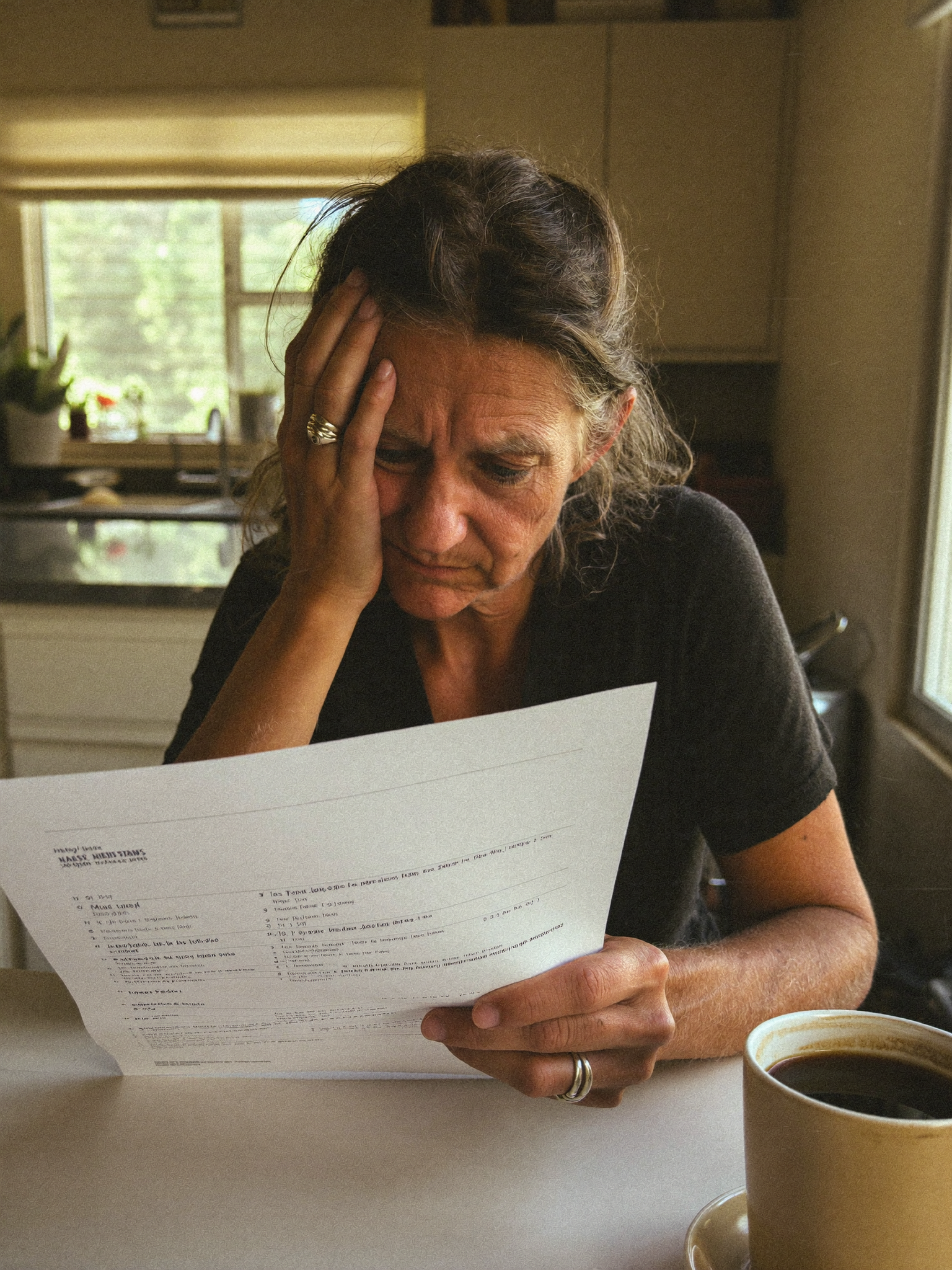
Ran for 1 day, from June 29, 2026, the last day Crush saw it.
Run by Dr Michael Griffin on Facebook. Crush is not the advertiser and does not verify its claims. See this ad in Meta's Ad Library(opens in a new tab)
Want an ad like this for your product?
Crush makes new ad images for your product from this ad: your logo, your product photo, your offer.
Trials from $19.95 USD, then $79.95 USD a month. Cancel anytime.
About this ad
- Meta Ad Library ID
- 26971752182523990
- Platforms
- Facebook, Instagram, Audience Network, Messenger and Threads
- Relaunches
- 0
Ad text
I'm an occupational health psychologist, and I've worked with burned-out professionals for fourteen years. Teachers break differently than anyone else. And I've been treating the break wrong. A teacher came to me last September. Referred by their school's EAP program. 38 years old. Eleven years in the classroom. Middle school English. They sat down and said, "I used to be good at this." That sentence appears in my notes more often than any diagnosis. This teacher was drowning in a way that didn't look like drowning to anyone around them. They showed up every day. Planned lessons. Graded papers. Coached the debate team. Volunteered for lunch duty. None of that had changed. What had changed was invisible. They couldn't read a book anymore. An English teacher who couldn't finish a chapter. They'd read the same page three times, absorb nothing, and put the book down. This had been happening for seven months. They lay awake past midnight every Sunday rehearsing Monday's first-period lesson in their head. Not preparing. Rehearsing. Like an actor before a performance. The same lesson they'd taught twelve times before. But the anxiety of walking into that room had become so consuming that their body wouldn't let go. They'd stopped eating lunch. Not dieting. Not intentionally. They just forgot. Or didn't have the appetite. Or used the thirty-minute break to sit in their car in silence because the noise of the cafeteria made them want to crawl out of their skin. They were short with students. Not cruel. Flat. A kid would ask a question and they'd give the shortest possible answer and turn away. They described it as "I don't have anything left to give after 10am." Here's what I did. What I've always done. What my training taught me. I assessed for burnout. High score. I assessed for depression. Moderate. I assessed for anxiety. Moderate to high. I recommended twice-monthly therapy sessions through the EAP. Six free sessions, then $50 co-pay. I recommended they talk to their doctor about medication. I gave them a workbook on cognitive restructuring for occupational stress. EAP therapy, six sessions: free. Covered by the school. Continued therapy, eight months, biweekly: $800 in co-pays. GP visit for medication discussion: $40 co-pay. Sertraline, nine months: $135. CBT workbook: $25. I also recommended the standard burnout-recovery protocol I'd been using for fourteen years: set boundaries at work, protect your mornings, limit screen time before bed, practice gratitude journaling, find a physical outlet. They did all of it. They walked three miles every morning before school. They journaled every night. They stopped answering emails after 6pm. They took the sertraline. They came to therapy. Let me tell you what else they spent. Magnesium for the insomnia. $25 a month. $200 over eight months. L-theanine because a colleague recommended it. $20 a month. $80 over four months. Ashwagandha from a supplement store. $30 a month. $150 over five months. CBD oil. $50 a month. $200 over four months. A meditation app. $70 for the year. A weighted blanket. $80. Blue-light-blocking glasses. $35. Total outside clinical treatment: $815. Total with my treatment and their GP: $1,815. And here's the honest assessment after nine months: they were functioning. Not thriving. Functioning. The sertraline kept the floor from dropping out. The therapy gave them language for what they were experiencing. The boundaries kept them from actively deteriorating. But they were still tired in a way sleep couldn't reach. Still foggy. Still reading the same page three times. Still rehearsing Monday's lesson on Sunday night. Still running on fumes by 10am. They told me, at month nine, "I'm managing my burnout. But I'm not recovering from it. There's a difference." They were right. And I didn't know how to close that gap. Here is what I was missing. I was treating teacher burnout as a psychological condition. Cognitive patterns. Boundary deficits. Emotional depletion. My entire framework assumed the problem was in how they were processing the demands of their job. But the demands of teaching aren't like other jobs. A teacher's cortisol doesn't spike and recover. It spikes at 7:45am when they walk into a building full of 700 adolescents and it stays elevated for seven straight hours of sustained interpersonal vigilance. No other profession requires that pattern. Not medicine, which has quiet between crises. Not law, which has preparation between appearances. Teaching is seven hours of unbroken social performance with a 22-minute lunch break. The HPA axis, the system that regulates cortisol, isn't designed for that. It's designed for acute stress and recovery. Threat, then safety. Spike, then drop. In a teacher who has been running that pattern for eleven years, the axis loses the ability to complete the cycle. Cortisol stays elevated into the evening. The system never fully stands down. The rhythm flattens. That's the exhaustion that sleep can't fix. The system doesn't know the school day ended. That's the Sunday-night insomnia. The axis is already priming for Monday. That's the cognitive fog. Sustained cortisol affects working memory, exactly the faculty a teacher needs most. Every intervention I'd given this teacher, the therapy, the boundaries, the SSRI, the walking, the journaling, was addressing either the psychological patterns or the mood symptoms. None of it addressed why the physiological stress system had lost its rhythm. I was teaching coping strategies to a person whose stress-response system was mechanically stuck. This teacher left my practice. I assumed they'd either switched providers or decided therapy wasn't working. Teachers do that. They stop asking for help because asking for help takes energy they no longer have. Four months later they emailed me. Not to schedule. To tell me what happened. They'd researched why burnout in teaching specifically doesn't resolve with rest and therapy the way burnout in other professions sometimes does. They found the HPA axis literature. They found the cortisol-rhythm research. They found that the issue wasn't their thinking or their boundaries or their serotonin. It was a stress-response system that had been running without a reset for eleven years. They found Rhodiola Rosea. Standardized extract. Studied in clinical trials for stress-related fatigue and cognitive performance under sustained pressure. A 2000 study on physicians during night duty, sustained high-pressure professional conditions, showed Rhodiola improved cognitive function and reduced mental fatigue compared to placebo. A 2017 study showed significant improvements in stress symptoms and burnout. They found Purelo. $30 a month. They told me the timeline. Week two. They stopped needing the afternoon coffee. They'd been running on caffeine from 2pm to survive until the last bell. One afternoon they realized they hadn't made it and it was already 3:30. Week four. They slept through Sunday night. No rehearsal. No 1am lesson planning in their head. They woke up Monday morning and their first thought wasn't dread. It was neutral. They said "neutral felt like a miracle." Week six. They started reading again. Not forcing it. They picked up a novel after dinner and read forty pages without losing the thread. They hadn't done that in over a year. Week eight. A student asked a question and they answered it fully. Then asked a follow-up question back. Then noticed what they'd done. They had engaged. Not performed. Not survived the interaction. Engaged. Like they used to. Like the teacher they were before the tank emptied. They told me, "I didn't get better at managing burnout. My body stopped producing it at the same rate." That sentence reframed my entire clinical approach. Same job. Same school. Same students. Same schedule. The only variable was whether their stress-response system could complete a cycle. $1,815 managing the psychological presentation of a physiological problem. $30 a month supporting the physiology. I'm not saying therapy doesn't matter. It does. I'm not saying medication isn't appropriate. For some people it's essential. But if you're a teacher or anyone in a sustained-demand profession, and you've done the therapy and set the boundaries and taken the walks and tried the supplements and you're still running on fumes by mid-morning. The problem might not be your mindset. It might be an HPA axis that hasn't completed a full stress-recovery cycle in years. Rhodiola Rosea. Standardized extract. Studied in clinical trials. Purelo. $30 a month. Alongside whatever you're currently doing. Give it six to eight weeks. Because I spent fourteen years teaching burned-out teachers how to cope with a system that was stuck. And one of them showed me the difference between managing the symptoms and resetting the system.
Where the ad sends people
purelonutrition.com
Read this if you're a teacher
Purelo
Learn more: purelonutrition.com(opens in a new tab)