Kim Sanders
Kim Sanders Facebook ad: “If You're on Ozempic and Scratching in Places You NEVER…”
Ran for 31 days, from May 30 to June 30, 2026, the last day Crush saw it.
Run by Kim Sanders on Facebook. Crush is not the advertiser and does not verify its claims. See this ad in Meta's Ad Library(opens in a new tab)
Want an ad like this for your product?
Crush makes new ad images for your product from this ad: your logo, your product photo, your offer.
Trials from $19.95 USD, then $79.95 USD a month. Cancel anytime.
About this ad
- Meta Ad Library ID
- 27020373334284549
- Platforms
- Facebook, Instagram, Audience Network, Messenger and Threads
- Relaunches
- 0
Ad text
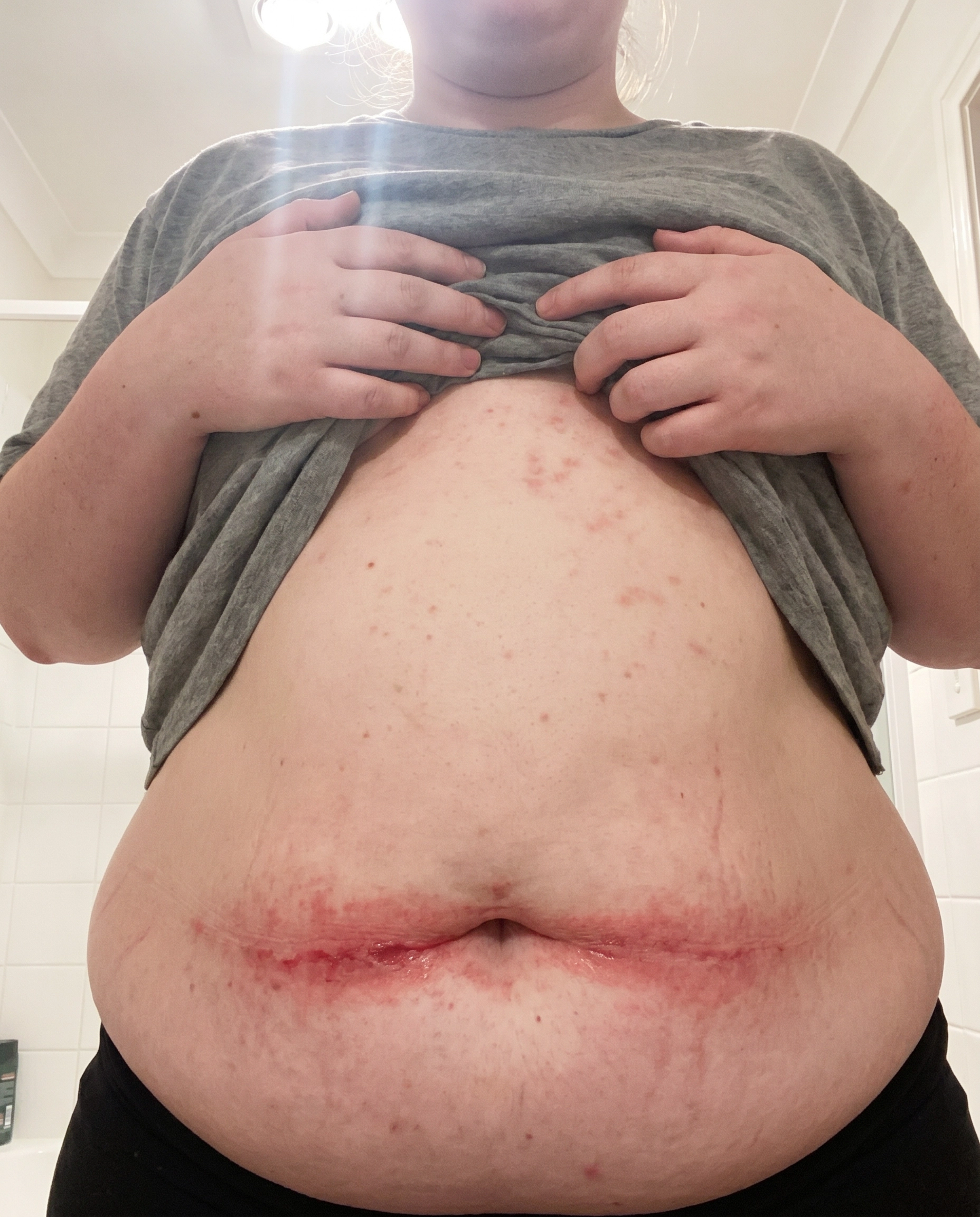
If you're on Ozempic, Wegovy, or Mounjaro and you've started noticing a rash, itch, or raw skin in places you've NEVER had problems before... I'm about to tell you exactly why that's happening. And once you understand this, you're never going to look at your weight loss journey the same way again. Let me tell you what happened with my friend Melissa. Because her story is gonna open your eyes to how fucked up this really is. For eight months, Melissa was dealing with this. Her Ozempic journey? Amazing. She lost 47 pounds. Her A1C dropped. Her doctor was thrilled. She was finally becoming the person she always wanted to be. But there was something she couldn't tell anyone. Under her breasts. In her belly fold. Under her arms. Places that NEVER gave her problems before were suddenly on fire. She's 51, worked as an office manager for 22 years, and raised three kids... And suddenly she's sneaking off to the bathroom at work to scratch herself like she has fleas. The itching would hit around 2pm every day. I'm not talking about "slightly annoying" itching. I'm talking about can't-focus-on-anything, grip-the-desk-and-pray itching. By the time she got home, the skin under her breasts was raw. Red. Sometimes cracked. She called it her "dirty little secret." Because how do you explain this to anyone? How do you tell your friends you're finally losing weight... but you're scratching yourself raw in the bathroom at work? How do you celebrate fitting into new clothes... when you can't even wear a normal bra without wanting to rip your skin off? Here she was, finally successful at something she'd failed at her whole life... And she couldn't even enjoy it because of this humiliating rash nobody could see. She stopped wearing certain bras. Stopped going to the gym. Stopped being intimate with her husband... because she didn't want him to see the angry red skin. And here's the thing that made her feel like she was going crazy: This rash appeared BECAUSE she lost weight. Before Ozempic, she never had underboob problems. Never had belly fold issues. But as the weight came off, her skin didn't shrink with it. New folds appeared. Skin that used to be stretched tight was now loose and touching itself in new places. Nobody warned her this would happen. So she went back to the doctor who prescribed her Ozempic. He told her: "It's just intertrigo. Very common." "Keep the area dry." "Use antifungal cream twice a day." "Try powder." Oh, keep it dry. Brilliant. She was already blow-drying under her breasts every morning like she was prepping for a photoshoot. Already using powder three times a day. But sure, doc. More powder. That'll fix the fungus that's been thriving there for eight months. He gave her Lotrimin. Week one: The redness faded. She thought she was cured. Week three: It came back. Worse than before. She started to feel like her body was broken. Like maybe she really WAS dirty, even though she showered twice a day. That's when I started digging. Why does the rash keep coming back even when the cream "works"? Why does it get MORE resistant over time? I found research from a dermatologist studying recurring fungal infections. He mentioned something called "fungal biofilms." I'd never heard the term. So I went full internet detective mode. And slowly... the picture came together. Turns out, when fungus sets up shop in your skin, it doesn't just sit there waiting to die. Within 48 hours, it builds a protective shield around itself. Like a fortress made of hardened proteins. Once that shield is up? Your antifungal cream can't touch it. It kills the fungus on the SURFACE... the weak stuff that hasn't built its walls yet. That's why you get relief for a week or two. But the fungus hiding INSIDE the shield? Still there. Protected. Multiplying. The moment you stop using the cream, it sends out new colonies. And the rash comes back... often WORSE than before. Because you just killed off the weak fungus. Only the strong survivors are left. This explained everything about Melissa's situation. Lotrimin wasn't failing because it's a bad product. It was failing because it can't break through biofilms. And here's the part that pissed me off: The medical system has known about biofilms since the 1970s. There's massive research on them for hospital infections. But for skin fold fungal infections? Doctors act like biofilms don't exist. They keep handing out the same creams that can't penetrate shields... and telling you to "keep it dry." Why? Because there's no pharma cream designed to disrupt biofilms AND kill fungus. The antifungal companies make way more money selling you tubes that "work" for two weeks. Then you buy another tube. And another. Curing you? That's bad for business. So I kept digging. Looking for anything that could actually break through biofilms. Buried in forums, Reddit threads.I kept seeing the same ingredients mentioned: Tea tree oil. Sulfur extract. Lauric acid. Witch hazel. But nobody made a product with all of them.Then I stumbled onto a thread in r/SkincareAddiction. Someone mentioned a soap called Veloma. Said it was specifically designed to break biofilms AND kill fungus. And it had all the ingredients I'd been researching... in one product. I sent Melissa the link. She ordered it the same day. It arrived 3 days later. The instructions said to lather it up and let it sit for 3-5 minutes before rinsing. By Day 3, she texted me "The itching is less. But maybe it’s a placebo." And by Day 7 she said "Something is happening. The redness is fading. But I've been here before." Day 14, she called me and said "It's not coming back."I replied "What do you mean?" She said "The redness is gone. The itching is gone. And it's NOT. COMING. BACK. This is the longest I've gone in eight months." This was five months ago. She still uses Veloma a few times a week. Not because the rash came back. But because she never wants to go through that again. If you're on any GLP-1, listen to me. Your body is changing faster than your skin can keep up. New folds are forming. Areas that never touched are now pressing together. The perfect environment for fungus to build its fortress. If you wait until you have a full-blown biofilm situation like Melissa did... You'll spend months fighting something that could've been prevented. Veloma is the only product I've found that actually addresses biofilms instead of pretending they don't exist. Link's below. If it doesn't work, they'll refund you. 👉 https://veloma.store/products/veloma™-antifungal-soap P.S. — If you're just starting a GLP-1 and don't have skin problems yet, start using Veloma now. Easier to prevent a biofilm than fight one for eight months.
Where the ad sends people
veloma.store
If You're on Ozempic and Scratching in Places You NEVER Had Problems Before—Read This
The First Naturopath-Formulated Antifungal Soap Designed to Break "Boob Itch" for Good. 6 Years of Research in One Bar.Proven formula so you don’t waste years guessing Breaks the Biofilm Shield.Finally kills the fungus that has been hiding for monthsTargets Fungus at the Root.Goes deeper than cr...
Learn more: veloma.store(opens in a new tab)