Matt Harrison
Matt Harrison Facebook ad: “The 1953 Everest field notes that explain modern insomnia.”
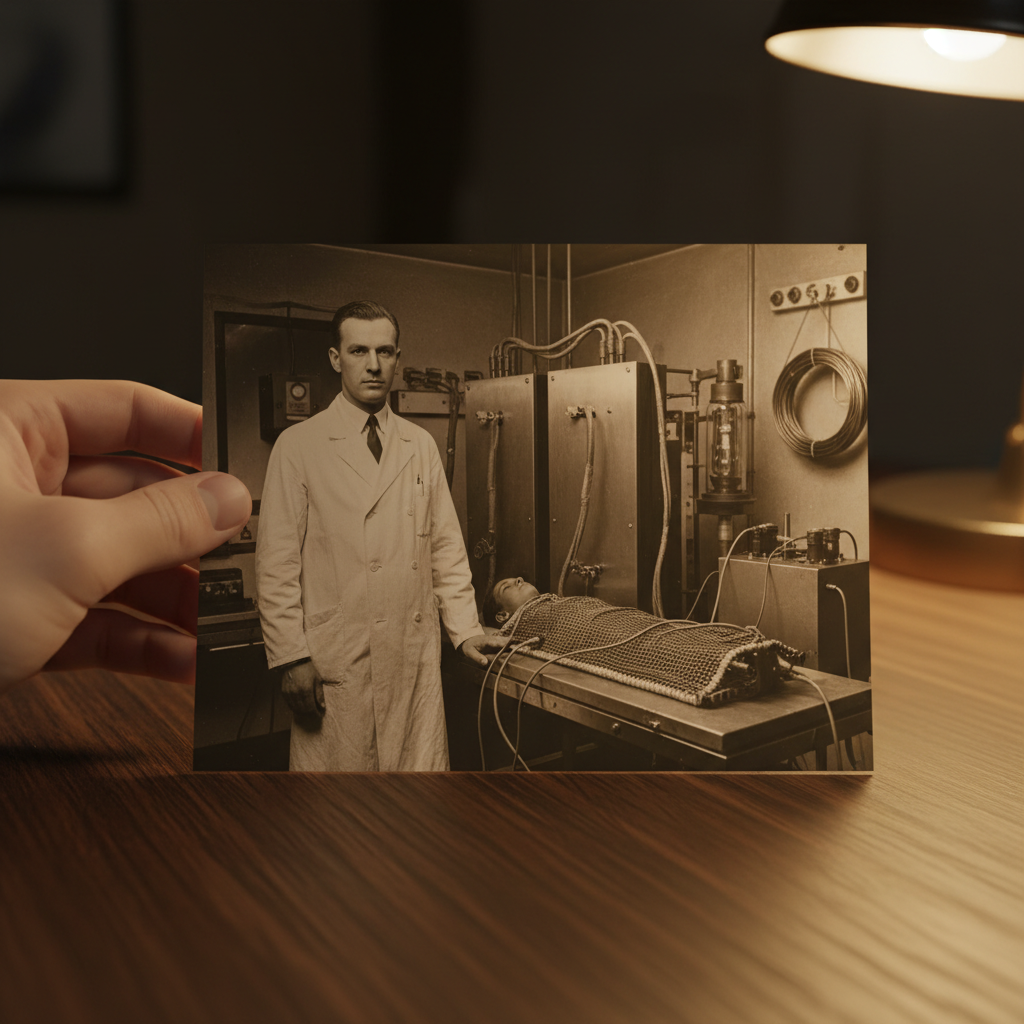
Ran for 19 days, from May 7 to May 25, 2026, the last day Crush saw it.
Run by Matt Harrison on Facebook. Crush is not the advertiser and does not verify its claims. See this ad in Meta's Ad Library(opens in a new tab)
Want an ad like this for your product?
Crush makes new ad images for your product from this ad: your logo, your product photo, your offer.
Trials from $19.95 USD, then $79.95 USD a month. Cancel anytime.
About this ad
- Meta Ad Library ID
- 27056218257317127
- Platforms
- Facebook, Instagram, Audience Network, Messenger and Threads
- Relaunches
- 1
Ad text
In 1953, during the first successful British expedition up Mount Everest, the medical officer noticed something in his notebook that he never published. The Sherpas they hired — men in their 60s and 70s who ran supplies up to the high camps in canvas boots — were sleeping six hours a night in unheated tents at 20,000 feet. And they were waking up calm, relaxed, with pulses in the 50s. Meanwhile the British climbers, sleeping in state-of-the-art insulated gear on synthetic mats, were waking up exhausted, anxious, and with racing hearts. The medical officer, Griffith Pugh, wrote one line in his field notebook that was only surfaced decades later: *"The men who slept on the ground slept well. The men who slept above it did not."* At the time no-one could explain it. Now we can. The Earth itself carries a small, constant negative electrical charge. Every creature on the planet — except modern humans — is in contact with that charge through direct skin-to-ground contact. It's called *grounding*, and it appears to be one of the main ways your body regulates inflammation, stress, and your nervous system while you sleep. Somewhere in the last 150 years we built shoes with rubber soles, cars with rubber tyres, synthetic foam mattresses, and houses on insulated foundations. Every one of those is a genuinely useful invention. And together, they've cut most of humanity off from the Earth's charge twenty-four hours a day. The research on grounding isn't fringe anymore. It's in peer-reviewed journals. Measurable drops in cortisol. Measurable reductions in inflammation markers. Measurable improvements in heart rate variability overnight. And the most practical way to access it while you sleep is a conductive sheet woven with stainless-steel thread that plugs into the earth pin of any wall socket. That's not a supplement. It's not a drug. It's not electricity. It's a cord that reconnects your body to the charge of the planet for the eight hours you're lying in bed — the same charge those Sherpas were accessing by simply sleeping on the ground. Premium Grounding makes one. 90-night trial. Free worldwide shipping. If it doesn't do for you what sleeping on the earth did for those men in 1953, send it back. No questions.
Where the ad sends people
premiumgrounding.com
The 1953 Everest field notes that explain modern insomnia.
A stainless-steel sheet backed by peer-reviewed research. 90-night trial.
Learn more: premiumgrounding.com(opens in a new tab)