
Inactive· since May 29, 2026
- 62
- days it ran
- 0
- relaunches
Ad copy
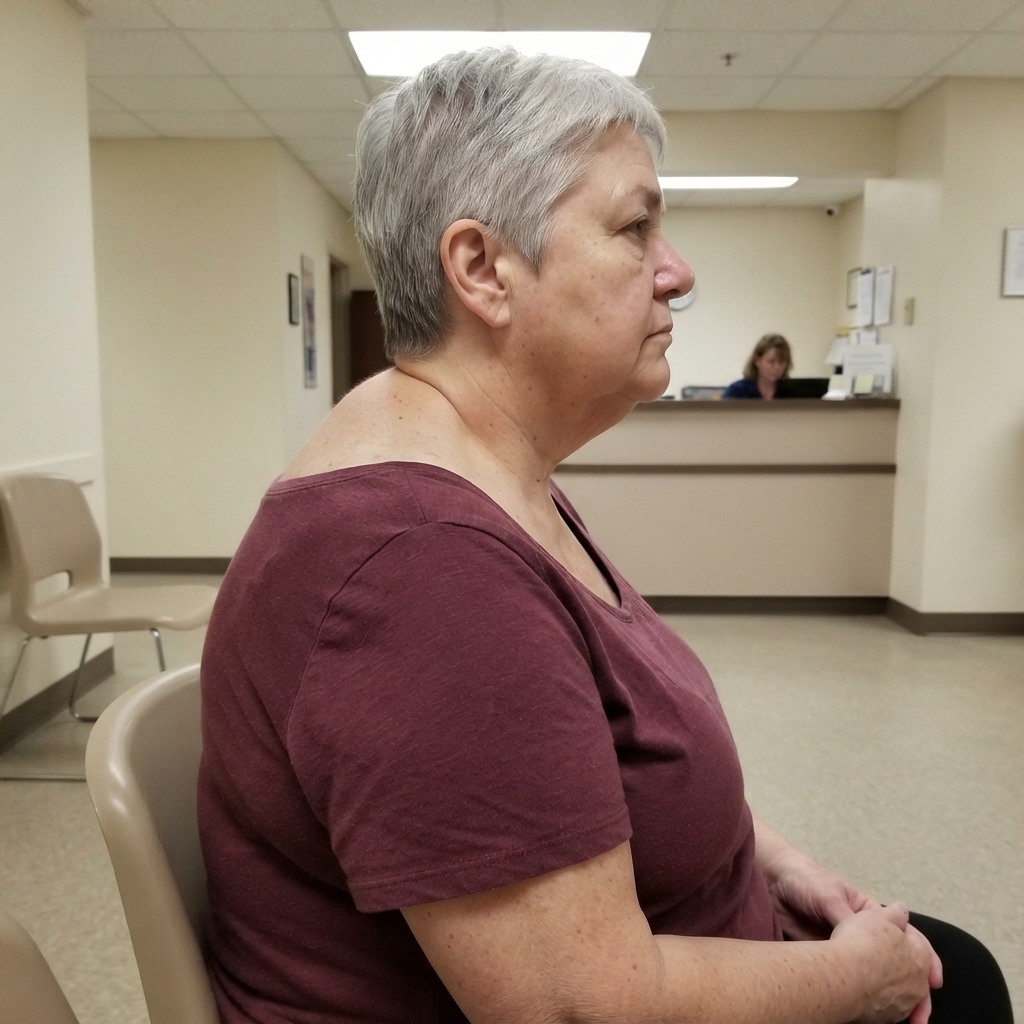
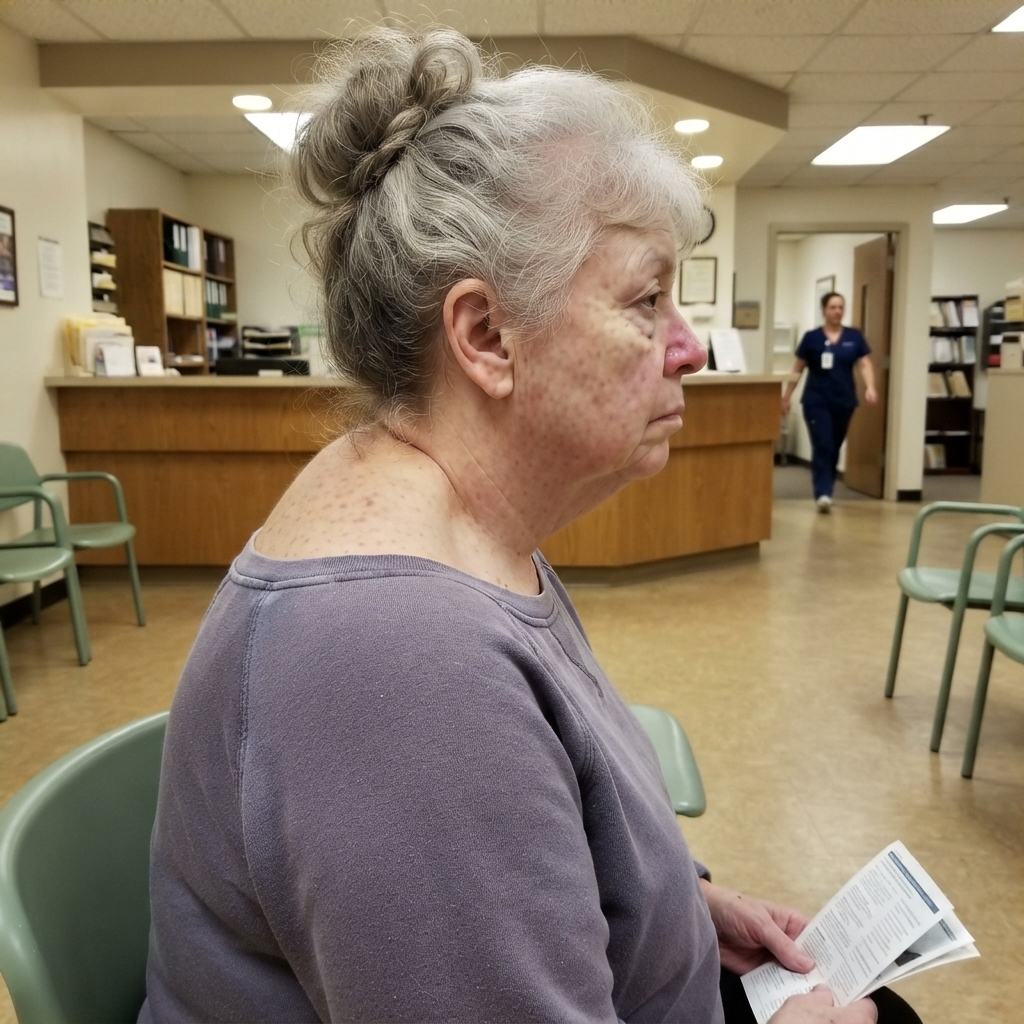
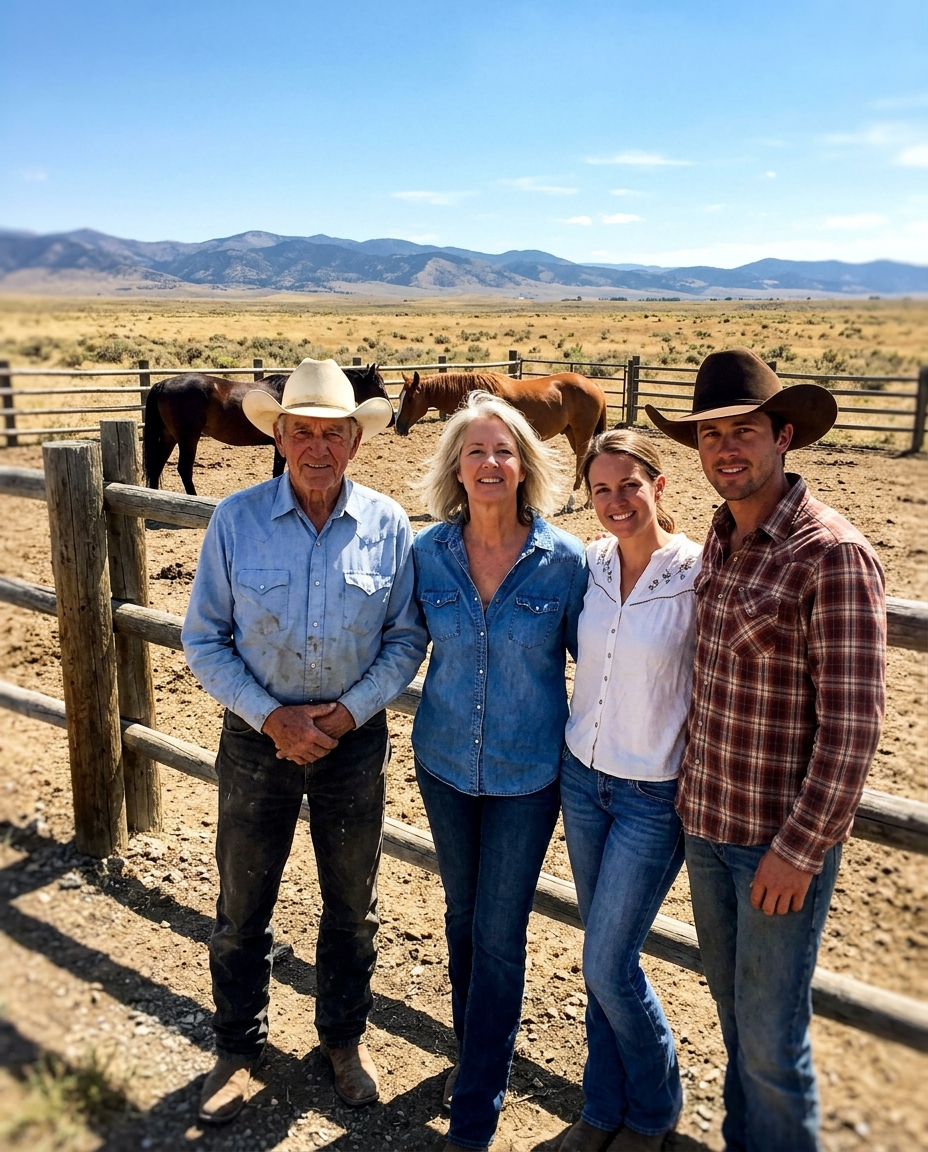
My manual therapy specialist daughter left her practice in Denver, married a cattle rancher in Montana, and moved to a ranch where the nearest clinic is an hour away and nobody needs one. My family thought she was throwing away her career. She was saving her mother's neck. But I'm getting ahead of the story. Way ahead. My daughter Laurie married Cole Mercer on September 21st at the ranch where his family has been running cattle for four generations. To understand how she saved her mother, you have to understand how she got there — and what she found when she arrived. Laurie is a manual therapy specialist. Was a manual therapy specialist. Board-certified, top of her residency class, the kind of practitioner other practitioners sent their patients to. She'd spent years learning how to manage cervical progression. She recommended adjustment protocols. She told patients their measurements looked stable. She managed more neck hump cases than she could count. She believed in what she was doing because every professor she'd ever studied under told her she was doing the right thing. Montana changed that. Laurie took a temporary position at a rural wellness clinic in central Montana two years ago. Ranching families. Farm families. People who drove ninety minutes on gravel to see a practitioner, which meant most of them didn't unless something was broken or bleeding. She came home from her first week talking about the sky and the grass and the silence and a rancher named Cole who had come into the clinic with a dislocated shoulder from being thrown by a young horse. By Thanksgiving she told us she was extending the contract. By Christmas she told us she was seeing him. By Easter she told us he'd asked her to marry him and she'd said yes. My wife Sharon sat at our kitchen table and didn't speak for a long time. Then she said: "She's going to live on a cattle ranch." That was her way of saying everything she couldn't say. We flew to Montana for the wedding in late September. I'd been awake since before the alarm — not to pack, but to watch. Sharon stands at the bathroom mirror every morning. Forward. Step back. Forward again. Five minutes before she chooses what to wear. Then she stands sideways at the full-length mirror and what I see in her face has been the same for three years — that calculation, that assessment, that quiet decision about whether today is a day she can wear what she wants or a day she plans around what she can't. She thinks I'm asleep. I've been pretending for three years. The ranch appeared after a curve in the gravel road. The land ran to the horizon in every direction. A main house — log and stone, long and low, with a porch that ran the full length. A barn that looked like it had been standing since the territory was a territory. Cole met us in the yard. He introduced us to his parents — his father Mack, 62, and his mother June, 59. June moved through the yard the way women move when they've been working since before dawn and expect to be working until after dark. Head up. Shoulders back. Nothing carried forward. Then Walt came out of the barn. Cole's grandfather. Eighty-seven years old. He walked toward us across the yard and I need you to understand how he walked. He didn't shuffle. He didn't hold onto anything. He moved across that yard like a man who had somewhere to be. He shook my hand. Then he looked at Sharon. He looked at her the way a man looks at livestock he's assessing. Not unkindly. Just taking inventory. I saw his eyes pause on her neck. Just for a moment. Then move on. We spent the afternoon at the ranch. Mack drove us past the hay barn, past the calving shed, past the breaking pen. At one point Mack stopped the truck and pointed to a ridge about a mile away. A single rider on horseback, moving along the ridgeline against the sky. "That's Walt. He rides that fence line every morning. Eight miles. Rain, snow, doesn't matter. He's been riding that line since before I was born." An 87-year-old man. Eight miles on horseback every morning. Sharon couldn't wear her hair up anymore because she didn't want the back of her neck visible. June was 59. She moved through the wedding preparations without stopping — carrying, setting, arranging, cooking. Nothing in how she carried herself suggested a woman who calculated her angle before entering a room. Mack was 62. He'd been moving cattle since 4 AM. He stood at the long table like a man whose body still belonged to him. None of them — not Walt at 87, not June at 59, not Mack at 62 — had ever walked into a clinic and been told their posture was progressing. Not because they were lucky. Because their bodies had never been subjected to the decades of chronic forward load that accumulates in a life lived at screens and desks and steering wheels. Their idea of a slow day was eight hours of physical work — heads up, shoulders back, moving through the world the way humans were built to move. Sharon was sitting across the table from me. She was wearing the same high-collar blouse she'd been wearing to every occasion for two years. Her hair was down. She'd spent forty-five minutes getting dressed that morning. After the main plates were cleared, people started giving toasts. Then Walt stood up. The barn went quiet the way a barn goes quiet when the oldest man in the room decides to speak. He looked at Laurie first. Tipped his hat to her. Then he looked at our side of the table — me, Sharon, Linda, Dave. He looked at us the way a man looks at a herd he's about to sort. "I want to welcome Laurie's family into ours," he said. "You raised a daughter who looked at this ranch and this life and didn't run. That tells me who she is. That tells me who you are." He paused. "But I'm 87 years old and I didn't get to 87 by being polite when honest was what the situation called for. Your daughter is a Mercer now. That makes you my family. And I don't let family go lame when I can see the limp." The table was completely still. "I've been on this land since before the highway was paved. My wife June — Cole's grandmother, God rest her — stood straight until the day she died at 81. My daughter-in-law June stands straight at 59. The women on this ranch stand straight because their bodies never learned to carry their heads forward. That's not genetics. That's a life lived upright." He looked at Sharon. "I watched you all evening. I watched you choose where to sit so the light wouldn't catch your profile. I watched you step back when someone raised a camera. I watched you reach up to your collar twice when you thought nobody was looking." Sharon went very still. "Your husband's been watching you do all of that. I could see it on his face." He was right. I'd been watching her all evening the way I'd been watching her for three years. "I had a sister named Lena." Had. Past tense. The barn held its breath. "Lena was two years younger than me. We grew up on this ranch together. She was the strongest woman I ever knew — not just in her body, in the way she stood. She could carry a side of beef from the smokehouse without stopping. She ran this ranch kitchen for twenty years and stood at that stove six hours a day and her posture never changed. Head up. Back straight. The way ranch women stand." He looked at his own hands. Brown, scarred, thick. Still working. "Lena left the ranch when she was 22. Wanted to see what was on the other side of the mountains. Moved to Billings. Married a man named Donald who was good to her. Got a job at a school. Built a life." "She was doing fine. Then around 54 a practitioner told her she had early-stage forward head compensation. Tissue building at the base of her neck. Put her on a twice-weekly adjustment protocol. Told her to keep coming in and recheck in six months." He said "twice-weekly protocol" like the name of something that took from him. "Lena attended every session. Every single one. Because the practitioner said to and Lena respected anyone who'd gone to school that long. She figured they knew things she didn't. She didn't question it. Just came in twice a week and went home and did her exercises." His voice was steady. The voice of a man who's told this story to the mountains and the fence line a hundred times. "First thing I noticed was her collar. She came home for Christmas and she was wearing a turtleneck. Lena never wore turtlenecks. She was a ranch woman. You wear what works. You don't plan your wardrobe around what you're hiding." I felt something cold settle into my chest. Sharon's wardrobe. The high-collar blouses. The scarves in summer. "Year two her photographs changed. She used to be the one gathering everyone together. The one who said 'take another one so we can pick the best.' On the protocol she became the one behind the camera. Finding a reason to step back before anyone pressed the button." Sharon. Our daughter's birthday last year. The way she'd offered to take the photos before anyone else could suggest it. "Year four the practitioner told her the tissue had consolidated. They called it 'established cervical progression.' Said it was still manageable. Keep coming in." "Year seven they used the word 'permanent' for the first time. Said it was as good as it was going to get." "Year ten she had reorganized her entire life around it. She stopped going to events. Told Donald she didn't want to travel anymore because she couldn't stand looking at herself in hotel mirrors. She wore the same five outfits every week because everything else showed it. She stopped appearing in her own family's photographs entirely." Walt looked at Sharon. And then at me. "She never got her wardrobe back. She is 69 years old and she hasn't worn an open neckline in twelve years. She attended every appointment. She did everything right. And nobody — not one practitioner in all those years — ever told her that the thing driving the progression had never been directly addressed." Nobody at that table moved. "The protocol was managing the measurement. The cause was advancing underneath. That's not medicine. That's management of something that didn't have to be managed. It had to be fixed." He sat down. Nobody spoke. The barn held the silence completely, without resistance. Sharon was looking at her hands. Laurie was looking at Sharon. I was looking at Walt. He'd just said out loud — in front of both families, in front of the whole valley — the thing I'd been swallowing for three years. Two days later we left for home. The drive to the airport was three hours. Sharon didn't speak for the first hour. Then she said: "The old man was out of line." "Was he wrong?" She didn't answer. That night at home I stood in our bathroom doorway and watched Sharon get ready for bed. She looked at herself in the mirror sideways — the way she looked every night, the same assessment, the same quiet calculation — and turned away from it sooner than she used to. I looked at that mirror and I heard Walt's voice: I don't let family go lame when I can see the limp. For three years I'd been watching my wife plan every morning around the same problem. Her practitioner called it managed. Her measurements were stable. Every six-month appointment, same thing: "Looking good Sharon, keep doing what you're doing." And for three years I'd watched my wife keep doing what she was doing while her confidence quietly stopped doing what it used to do. Sharon had been a kindergarten teacher for 28 years. She owned the room the way great teachers own rooms — head up, presence forward, the kind of energy that made five-year-olds sit down and pay attention. She used to volunteer to be in every school photo. She organized the class photo every spring. She stood in the front row. She retired two years ago. Told everyone she was ready for a slower pace. She wasn't ready. She was tired of being photographed from the front. I watched it happen the way you watch weather change — you know it's different but you can't point to the exact moment the sky shifted. I'd been calling all of it aging. Her practitioner called it aging. Three years of "stable measurements" while the woman attached to the measurements withdrew. Lena. Ten years of faithful attendance. Couldn't wear a neckline. Stopped appearing in family photographs. Reorganized her entire life around something that was supposed to be managed. Sharon. Three years on twice-weekly protocols. Planning every outfit. Stepping back from every camera. Retiring from a career she loved. Same management approach. Same mechanism never addressed. Same disappearing. I saw it. Standing in that bathroom doorway watching Sharon look at herself in the mirror. Walt had said it out loud in front of everyone and now I couldn't unhear it. For three weeks I carried it. I didn't tell Sharon. I watched her stand at the mirror every morning. I watched her reach for the high-collar blouses. I watched her move through our house carrying something invisible that nobody else could see. Then Laurie called. "Dad, I need to come see you. I have something to show you." She flew down on a Saturday. Drove from the airport to our kitchen table. She sat down. I poured coffee. She wrapped both hands around the mug — steady, sure, the grip of someone who'd been working with her hands all season. "Dad, I need to talk to you about Mom." "I know." "You know?" "Walt said it at the wedding. I've been seeing it since we got home. I've been seeing it for years, Laurie. I just didn't have a name for it." She nodded slowly. Then she opened her bag and pulled out a folder. Thick. Color-coded tabs. Highlighted printouts. Notes in the margins in her small, precise handwriting. "Dad, I'm a manual therapy specialist. I spent years learning how to manage cervical progression. I recommended adjustment protocols. I told patients their measurements looked stable. I said the same things Mom's practitioner says to her every six months." She paused. Her eyes were bright. "And then I moved to a ranch where the nearest clinic is an hour's drive and nobody attends twice-weekly sessions. And I watched Walt ride eight miles on horseback at 87 with a spine that has never learned to carry his head forward. And I watched June at 59 move through her day like a woman whose body still belongs to her — while Mom spends forty-five minutes calculating what to wear." "I started asking a question I never asked in practice: why are the women who never come to a clinic holding themselves straighter than the women I was treating every week?" She slid a printout across the table. "The measurement Mom's practitioner has been watching for three years is the wrong measurement. Forward head position isn't the cause. It's the result. The cause is in the deep cervical muscles — and those muscles have been switched off for years while every protocol addressed the joint above them." "Here's what's actually happening. After decades of accumulated forward load — screens, driving, cooking, looking down — the deep cervical muscles become chronically overloaded. The brain shuts them off to protect them. This is called neuromuscular inhibition. Once those muscles go quiet, the head has nothing holding it back. It drifts forward. The body builds compensatory tissue at the base of the neck to absorb the constant stress." "That tissue is the hump. And it keeps building because the inhibition keeps running." "Mom's adjustment protocol mobilizes the joint above the inhibited muscles. The position improves for 48 hours. Then the inhibited muscles pull the head forward again. The tissue keeps building. The practitioner measures the position, calls it stable, and books the next appointment." She looked at me and her eyes were wet. "Dad — that's not treatment. That's measurement of something that's being managed while the actual cause keeps advancing. I recommended this approach for years. I told patients to keep coming in. And every time I called it 'stable' I was watching the wrong measurement while the inhibition kept running underneath." I thought about Sharon at the mirror. Three years of stable measurements. Three years of wardrobe calculation. Three years of stepping back from cameras. "And here's the part that explains Lena. And explains why Mom retired early. And why the wardrobe reorganized itself around one problem while the practitioner kept saying everything looked good." "When the joint above the inhibited muscles is repeatedly mobilized, the nervous system learns to rely on that external input. The inhibited muscles atrophy further. The dormancy deepens. The measurements may look stable. But the muscles that are supposed to be doing the holding have been getting quieter the entire time." She looked at me. "The women on the ranch don't have any of this. Not because they're lucky. Because their lives never created the chronic forward load that triggers inhibition. They're moving physically all day — heads up, bodies active. Nobody ever sat them at a desk for eight hours. Nobody put them on a protocol that managed the joint while the inhibition advanced underneath." "But Mom can't move to a ranch. So I kept looking for something that addresses what the protocol has been missing." She pulled out one more printout. "Electrical muscle stimulation — EMS. I never encountered it in my cervical rehabilitation training — it's not in the standard curriculum. But the research is extensive. Published in real journals. Clinical trials with real results." "EMS doesn't ask inhibited muscles to respond. It bypasses the broken brain-muscle signal entirely. It sends gentle electrical pulses directly to the inhibited muscle fibers. The muscles are forced to activate regardless of what the brain is or isn't signaling. The motor nerves that have been going quiet for years — EMS reaches them directly and forces them to fire again." "Unlike adjustment, which mobilizes the joint above the inhibited muscles, EMS addresses the inhibition itself. The signal restores. The forward pull eases. The tissue stops building because the load driving the buildup has been addressed at the source." She reached into her bag and set a device on the table. "Cevera. 8 unique massage programs and 19 adjustable intensity levels — engineered specifically for the deep cervical muscles. 15 minutes, whenever it suits you. Not a clinic visit. Not a twice-weekly appointment. 15 minutes at home, any time." "90-day money-back guarantee." She pushed it across the table. "Dad, I have to be honest with you. I spent six months looking for something that does what ranch life does for the Mercer women. I couldn't find it. Nobody can put that life in a device. The work, the movement, the way those women have lived since they were girls — that's not something a gadget replaces." "But while I was looking I found something different. Not a replacement for the ranch. Something that addresses the specific reason Mom is getting worse while June is fine. The reason isn't that Mom isn't on a horse. It's that Mom's deep cervical muscles have been switched off for years — and the protocol she's been attending has been managing the position while the inhibition kept running underneath. Cevera is the one thing I've found that actually addresses the inhibition. That's all it does. It doesn't make Mom into June. It just stops the thing that's been making her into Lena." "15 minutes a day. That's what I'm asking you to try." I looked at the device on my kitchen table. I looked at the mirror where Sharon would stand in four hours. I looked at my daughter — the manual therapy specialist who left her practice, married a rancher, and flew home to sit at her father's kitchen table and say the thing her training never taught her to say. I picked up the device. That night, after Sharon finished her mirror routine and came to bed, I set the device on her nightstand. She looked at it. "What's this?" "Something new. Just try it. For me." "What is it?" "Sharon. Just try it. Please." She looked at me. We've been married 33 years. She knows when I'm asking something that matters. She picked it up and used it for 15 minutes sitting on the edge of the bed. About 17 minutes later she set it down and looked at me with an expression I hadn't seen in years. "Glen. My neck feels different." I didn't say anything. I couldn't. Day five — a Friday — Sharon stood at the bathroom mirror and I watched her reach for the first blouse without turning sideways first. I was already awake. I'd been watching her the way I watch every morning — the way Walt watched Lena change, the way I've been watching for three years, counting what's left. She reached. Pulled it out. Put it on. Turned to look at herself. No second assessment. No reaching back for something else. I stared at the ceiling and didn't breathe for a long moment. Week two. The morning calculation shortened. She was spending twenty minutes getting dressed instead of forty-five. One evening she looked up from her book and said: "Glen, when's Laurie expecting us back at the ranch?" We hadn't been back since the wedding. I said "whenever we want" and meant it in a way she hadn't heard from me in years. Week three. Saturday morning. A sound from the bedroom I hadn't heard in three years. Sharon singing to herself while she got dressed. Not loud. Just under her breath. The way she used to sing when getting dressed was something she did without thinking about it. She came downstairs wearing a scoop neck. The first one I'd seen on her in over two years. She sat down at the kitchen table and poured her coffee and didn't say anything. Neither did I. But I saw it. I've been watching for three years. I saw it. Week four. Sharon suggested we go to the Millers' anniversary dinner. She hadn't wanted to go to a social event in over a year. Not because she didn't like the Millers. Because she'd stopped wanting to be seen. She wore a blouse with an open neckline. She stood in the front of every photo. She was in four of them before I realized she'd stopped calculating her angle entirely. Week five I told her everything. Walt at the wedding. Lena's story. What I'd been watching for three years. What Laurie found in her research. Neuromuscular inhibition. The broken brain-muscle signal. The magnesium piece. All of it. She listened. She didn't say "I'm fine." She said: "I knew something was wrong. I just thought this was what 59 was supposed to feel like." "It's not. June is 59 and she stood in the barn all evening carrying dishes without once calculating her angle." She tapered the adjustment protocol over four weeks with her practitioner's agreement. Assessment at twelve weeks. Fully off the twice-weekly protocol for six. Forward head position: 1.6cm. On the protocol it had been 2.9cm. Down 1.3cm without the twice-weekly appointments. Tissue at the base of her neck: visibly softer on assessment for the first time since her diagnosis. Her practitioner studied the results for a long time. "You stopped the adjustment protocol." "Six weeks ago." "What are you doing instead?" Sharon told her. Everything. Neuromuscular inhibition. The broken brain-muscle signal. The difference between mobilizing the joint above the inhibited muscles and bypassing the signal directly with EMS. 15 minutes a day whenever it suited her. She told her about Walt — about an 87-year-old rancher in Montana who rides eight miles every morning and whose wife stood straight until the day she died. She told her about Lena — about a woman who left the ranch, attended every appointment for ten years, and spent the last decade of her able years invisible in her own family photographs while her measurements looked stable. The practitioner was quiet. "I'm not familiar with this application of EMS for cervical progression. But your measurements are better than they've been since you started treatment. And you look different." She didn't tell Sharon to go back to twice-weekly sessions. First time in three years. We flew back to Montana for the spring branding. Laurie picked us up at the airport. She was wearing boots and a canvas jacket and her hair was in a braid under a hat and she looked like the land had raised her instead of us. Cole shook my hand at the ranch. I looked at Sharon. She was standing in the yard looking at the mountains — head up, collar open, the way she used to stand before the calculation took over her mornings. Walt was on horseback in the corral. Because Walt is always on horseback. He saw Sharon and rode over to the fence. He didn't dismount. He looked down from the saddle. Looked at her neck. At the way she was standing — really standing, weight centered, head back, the way a woman stands when her body is still a tool she trusts. "You're standing like you mean it," Walt said. "I do mean it." Walt studied her for a long moment. Then he leaned down from the saddle and looked at her the way he'd looked at her across the table eight months ago — the same inventory, the same assessing gaze. But what he saw was different now. "That's how the Mercer women stand," he said quietly. "You didn't stand like that when you were here last fall." Sharon's eyes went wet. She didn't hide it. "Your granddaughter saved my neck," she said. "And you said the thing at the wedding that made it possible. The thing nobody else would say." Walt looked at her from the saddle. The blue eyes. The sun on his face. Eighty-seven years old. "I said it because your daughter is mine now. And I watched my sister Lena disappear behind a protocol that was measuring the wrong thing for ten years. And I wasn't going to sit at a table and eat dinner while another woman went the same way when a few hard words might stop it." June came around the barn. Fifty-nine years old. Moving the way she always moved — head up, shoulders back, the body of a woman who has never learned to carry herself forward. She saw Sharon and stopped. She looked at her the way women look at each other when they recognize something — not the change, but the return of something that had been missing. "You look like yourself," June said simply. Sharon laughed. The kind of laugh that comes out when something you thought was gone comes back. "I feel like myself." I stood at the corral fence and watched my wife walk toward the ranch house with June. A kindergarten teacher who retired early because she was tired of being photographed. A ranch woman who had never needed to calculate a single morning in her life. Walking side by side in the Montana sun. Lena left this ranch and lost herself to a protocol and spent ten years invisible in her own family's photographs. Walt's wife June stood straight until the day she died. And my wife — who almost went the same way as Lena — was walking toward those mountains with her head back and her collar open because her muscles remembered how to hold her. I'm telling you this because I think you might be where I was the night of that wedding. Sitting somewhere watching your wife stand sideways at the mirror. Watching her reach for the same high-collar blouses every morning. Watching her step back from every camera. Watching her practitioner smile at a measurement while the woman behind the measurement withdraws. If your wife has been on adjustment protocols and her wardrobe has been reorganizing itself around one problem — if she's been stepping back from cameras she used to be in confidently — if she's been retiring from things she used to love — if her practitioner keeps saying "measurements look stable" while she keeps disappearing — the measurements might not be the whole story. They weren't Sharon's. They weren't Lena's. If you've been watching someone you love plan every morning around the same problem and you've been calling it aging because that's what the practitioner calls it — maybe it's not aging. Maybe it's inhibition. Maybe it's the brain-muscle signal being cut while a measurement on a chart stays stable. An 87-year-old rancher stood up at a wedding dinner in Montana and told my family the truth. He rides eight miles every morning. His wife stood straight until the day she died. Nobody on that ranch has ever needed to manage their posture. And my wife — 28 years younger than Walt — couldn't wear an open neckline. That woman didn't wear out. The protocol was addressing the wrong thing. And it wasn't the years and it wasn't her habits. Cevera fixed what wasn't being fixed. 15 minutes. Whenever it suits her. The EMS reaches the inhibited motor nerves directly and forces the deep cervical muscles to activate — something her adjustment protocol has never done and never will. 8 unique massage programs. 19 adjustable intensity levels. The brain-muscle signal restores. The forward pull eases. The tissue stops building. No more wardrobe calculation. No more stepping back from cameras. No more woman planning her mornings around a problem that was never being addressed at the source. My daughter married a rancher. My family thought she was throwing away her career. She was saving her mother's neck. 👉 https://trycevera.com/pages/adv2-womens-wellness-report P.S. — If you're the husband reading this and your wife has been on adjustment protocols and something in her has been withdrawing for years — you're not imagining it. You're not being dramatic. You've been watching something real. The practitioner has been watching the measurement. You've been watching the woman. You're closer to the truth than the measurement is. Walt told me at a table in Montana: "I know that look — a woman who's been watching something go wrong and nobody's telling her she's right." Except in our case, I was the one watching. If that sentence hit you the way it hit me — if you know exactly what he means — then you already know what you need to do. Don't wait for your own Walt. I'm telling you now. P.P.S. — Sharon stood at the front of the spring branding photos. All of them. June stood next to her. Two women, 59 years old each, one who never learned to carry her head forward and one who just learned to put it back. Walt rode up to the corral fence before sunset and looked at them both. He didn't say anything for a moment. Then he said: "That's how women stand on this ranch." Sharon told me that night it was the best thing anyone had said to her in years. P.P.P.S. — Here's what I'd tell you to do: have her use it for 15 minutes. Whenever it suits her. Set a timer for 20 minutes after. If you don't notice something shift — a lightness in how she's holding her neck, a quiet in how she's carrying herself — then maybe this isn't for you. But if you notice it — and almost everyone does — that's not placebo. That's the brain-muscle signal being restored for the first time. Something her adjustment protocol has never done and never will. The tissue improvement takes weeks to show up on assessment. But that first-session shift? That's her body telling you: finally — something that actually gets where it needs to go. P.P.P.P.S. — Cevera has a 90-day money-back guarantee. If her measurements don't improve, every penny back. No questions asked. In three years of twice-weekly adjustment, nobody ever offered Sharon a refund when the protocol managed her position while the inhibition advanced underneath. Nobody offered to give back the years she spent calculating her wardrobe while her practitioner said "stable." The system doesn't do refunds. Cevera does. Think about what that tells you about who's confident in their product and who's just confident in their appointment schedule. P.P.P.P.P.S. — Cevera is a small company. They sell out. Laurie had to wait 9 days for her second order. I keep two devices now — one for Sharon, one as backup. Because after what I learned about neuromuscular inhibition, I had Sharon's mother start using it too. The mechanism doesn't care about age. If her measurements have been "stable" for years while she keeps withdrawing, this is for her too. If Sharon's next assessment is in 30 to 60 days and you want her to walk into that appointment with real measurements instead of the same conversation — check availability now. Not next week. Now. Every day without addressing the inhibition is another day the signal stays broken. Lena had ten years. Sharon had three. Don't let your wife have another month. P.P.P.P.P.P.S. — Do not forget about their 90-day money-back guarantee. 👉 https://trycevera.com/pages/adv2-womens-wellness-report
Fix Your Neck Hump At The Source
Cevera Posture Release Pulse is a next-generation EMS device designed to selectively reactivate the inhibited deep cervical muscles in your neck — at the source, right where neck hump progression actually starts.
LEARN MORELike this ad? Make it yours.
Crush rebuilds this exact creative around your product — your brand, your colors, your offer — in about a minute.