Dr Jackson Campbell
Dr Jackson Campbell Facebook ad: “My son is finally calm, focused, and happy. I wish I found…”
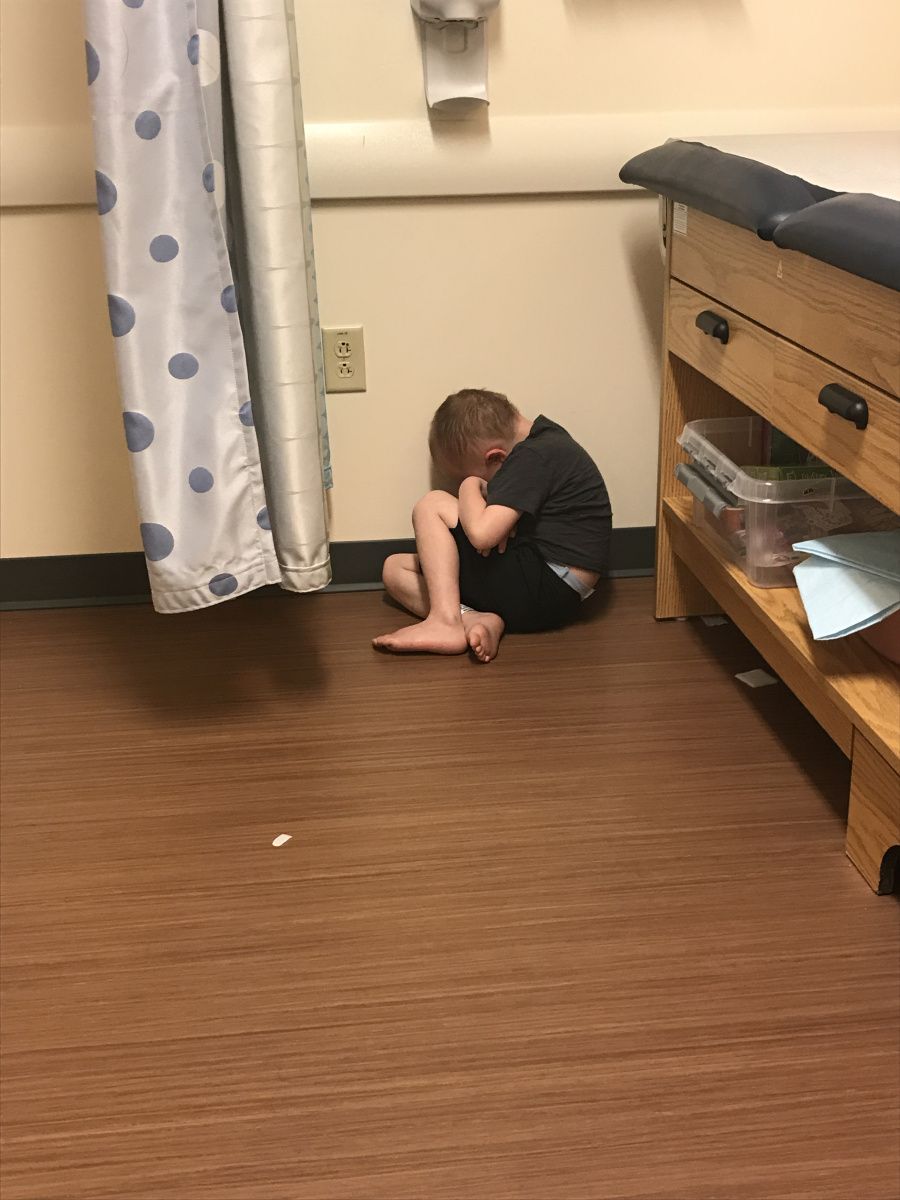
Ran for 8 days, from July 7 to July 15, 2026, the last day Crush saw it.
Run by Dr Jackson Campbell on Facebook. Crush is not the advertiser and does not verify its claims. See this ad in Meta's Ad Library(opens in a new tab)
Want an ad like this for your product?
Crush makes new ad images for your product from this ad: your logo, your product photo, your offer.
Trials from $19.95 USD, then $79.95 USD a month. Cancel anytime.
About this ad
- Meta Ad Library ID
- 27327758723544948
- Platforms
- Facebook, Instagram, Audience Network, Messenger and Threads
- Relaunches
- 0
- EU reach
- 662
Ad text
I have been a pediatrician for twelve years. And I am not afraid to admit that if it was not for my ADHD son, I would have never questioned what I was taught. And by the end of this, you are going to be pissed. Because there are three things happening right now. One. Your ADHD kid's brain is not broken. It is starving for three chemicals, and the medication you have been prescribed only addresses one of them. Two. The medical system is gaslighting you into thinking stronger doses and tighter screen limits are the answer. Three. There is a billion-dollar ADHD pharmaceutical industry that profits every single day you stay on the same prescription pipeline. So let me tell you what happened with my own son. Because his story is going to open your eyes to how messed up this really is. My son was diagnosed with ADHD at age seven. I have been writing his prescription myself for three years. "Try the extended release," I told my wife. "Up the morning dose. Add the afternoon booster." We did everything I prescribed. New dose adjustments every six weeks. Behavior charts on the fridge. Cut the sugar. Cut the dyes. Cut the screens on school nights. He was the “perfect patient”. Last spring? Worse than ever. He could play Minecraft for three hours without blinking. And he could not sit down to do a math worksheet for five minutes without melting down. I would watch him on the iPad after school. Completely locked in. Calm. Focused in a way he never was during any other moment of his entire day. Building entire worlds with his friends online. Executing twelve-step plans from memory. Then I would tell him time was up. His face would change. Not gradually. Like a switch flipped. The kid who had been quietly building a world for two hours was gone. And in his place was a kid screaming at me, kicking the couch, telling me he hated me. Twenty minutes later he would be on the floor. Not screaming anymore. Just lying there. Drained. Staring at the ceiling. I sat on the other end of the couch one night after a meltdown and stared at the iPad on the cushion between us. This flat cold piece of glass that my own son would rather scream and kick and say I hate you over than simply turn off and walk away from. I asked my wife the question that had been keeping me up for weeks. "He can focus for three hours on Minecraft. Why can he not focus for five minutes on anything else." She looked at me. "You are his doctor. You tell me." I did not have an answer. I told her sometimes the dosing takes a while to settle. Maybe we would lower the milligrams. Maybe try a different stimulant. Maybe limit screens to weekends only. She nodded. She did not say anything else. But I saw it in her face. She was done trusting me to figure it out. That night I could not sleep. I kept thinking about her question. You are his doctor. You tell me. I had done everything right. Followed every protocol. Prescribed exactly what I would have prescribed for any other ADHD kid in my practice. Adjusted the dose six different times in three years. And the only thing on earth that could hold my own son's attention was a screen. At 2:15 AM I went into the kitchen and grabbed my laptop. I typed "why can my ADHD child focus on screens but nothing else." The first page of results was the same advice I had been giving my own patients for twelve years. Screen time is dopaminergic. Set limits. Use timers. Earn screens through chores. Talk to your pediatrician about behavioral side effects. None of that addressed the question I had asked. I knew screens delivered dopamine. I had told dozens of families that. What I did not understand was why a stimulant medication that was supposed to deliver dopamine to my son's brain pharmaceutically was not making the rest of the world feel as engaging to him as a video game. If his medication was working, why was Minecraft still the only thing that could hold him? I kept scrolling. At 2:47 AM I found a paper from a neurology research group. The first sentence stopped me. ADHD medications target dopamine alone, but ADHD brains are deficient in three neurotransmitters that operate as one integrated system. I read it three times. Three chemicals. I am a pediatrician. Twelve years. I have written more ADHD prescriptions than I can count. And I had never thought about what an ADHD brain is actually missing beyond dopamine. The research explained it cleanly. Dopamine handles focus and attention. Serotonin handles emotional regulation, mood, and sleep. Norepinephrine handles motivation and drive. ADHD brains are running low on all three. They operate as one integrated system. When you force dopamine up artificially with a stimulant, the other two do not come up with it. They get disrupted. That is why my son's medication was not making the rest of the world feel engaging to him. The stimulant was forcing dopamine into his brain for school hours. It was not touching serotonin. It was not touching norepinephrine. And without those two, the rest of his world stayed flat. Screens deliver all three at the same time. Every level completed sends a pulse of dopamine. Every reward sends serotonin. Every challenge engages norepinephrine. That is why his brain could lock in for three hours on Minecraft. A math worksheet only offers dopamine. And his medication had not actually fixed the dopamine system. It had forced one chemical into the brain artificially for a few hours and disrupted the rest of the system underneath. His brain was not addicted to screens because he was spoiled. His brain was chasing screens because it was the only place in his life that delivered all three chemicals at once. The medication was treating the symptom. Not the system. I sat at the kitchen counter and put my hand over my mouth. I had to figure out how to support all three chemicals naturally. Not just force more of the first one. I kept digging. I typed "natural support for the three-chemical ADHD system." Most results were the usual. Diet. Sleep hygiene. Exercise. Things that might help marginally over months of compliance with no guarantee anything would change for a kid who melted down within thirty seconds of being asked to turn off his iPad. I kept searching. At 3:42 AM I found something. A 2019 peer-reviewed study published in a medical journal had tested three active compounds head-to-head against methylphenidate in children with ADHD. Crocin. Safranal. Picrocrocin. Six weeks. Same diagnostic criteria as my son. Parents rating their kids at home. Teachers rating them at school. I expected the medication to win. It did not win. The three compounds matched methylphenidate on focus. On attention. On behavior. On anxiety. Without the appetite loss. Without the insomnia. Without the personality flattening. There is one plant on earth that contains all three of these compounds at the clinical concentration the trial used. Only one. Saffron. I read the paper twice. Then I read the follow-up studies that confirmed it. Then I read the chemistry on why it worked. Saffron does not force one chemical into the brain. The three compounds in saffron support the brain's natural production of dopamine, serotonin, and norepinephrine. All three. Together. As one system. That is why the kids in the trial got focus without losing their appetite. Sleep without losing their personality. Behavior improvement without becoming somebody their parents did not recognize. And the dopamine came up naturally. Which meant the rest of the world started competing with the screen for the first time. Because the brain finally had its own supply. And I, a practicing pediatrician, had never heard of it. Not in medical school. Not in residency. Not in twelve years of continuing medical education on ADHD. You know why? Because you cannot patent a plant compound. There is no money in telling parents that saffron extract matches a Schedule II stimulant in a controlled clinical trial. There is plenty of money in a two-hundred-fifty-dollar-a-month prescription. In dose adjustments every six weeks. In specialist referrals at four hundred dollars a visit. In a system designed to keep your kid on the same pipeline while the trade-off gets worse and you spend yourself toward the next prescription. I had spent three years routing my own son through that exact pipeline. I started looking for a saffron product. The first two I tried were from Amazon. Generic saffron extract. Cheap brands. Underdosed. Below the 95 percent active compound concentration from the trial. My son took them daily for three weeks. Nothing changed. I went back to the research. The dose mattered. The form mattered. And the brain needed raw materials to actually produce what the saffron was signaling. Methylated B6. Methylated B12. Magnesium glycinate. Not magnesium oxide, which barely absorbs. The B vitamins and magnesium are the building blocks. The saffron is the signal. Both have to be there or nothing works. I started looking for a product that had both at the correct doses. I found Mood Balance. Clinical-dose saffron extract at the 95 percent crocin and safranal concentration from the trial. Plus methylated B6 and B12. It was a gummy that actually tasted amazing. Which mattered more than I thought it would for him to actually take it. I brought it home. My wife looked at it. She looked at me. "If this worked, wouldn't every pediatrician know about it?" I did not have a good answer. I told her "Give it eight weeks. If nothing changes, we will stop." He chewed the first one on a Monday morning before school. He said it tasted like a real gummy. Week two I told him to turn off the iPad after an hour of Minecraft. He set it on the couch. He stood up. He asked me if he could have a snack. I stood in the kitchen doorway and I could not move. Because that had never happened. Not once in three years of timers and dose adjustments and screen battles. Week four he came home from school. Dropped his backpack. Got a granola bar. Sat at the kitchen table. He said "Can I do my homework first so I can play Minecraft after." He had never voluntarily chosen homework over a screen. Not once. I did not bribe him. I did not threaten to take the iPad away. His brain had enough of its own dopamine to choose a non-rewarding task over an instantly rewarding one. He sat down. Did the worksheet. Got stuck on one. Asked me if it was a times or a plus. Kept going. Eighteen minutes. Put it in his backpack. Played Minecraft for an hour. I told him time was up. He said okay. Week eight he asked me to read him a book before bed instead of asking for the iPad. I sat on the edge of his bed and read him two chapters of a story about a kid who finds a dragon egg. He was curled up next to me, calm, actually listening, actually following a story told in words on a page instead of pixels on a screen. When I finished the second chapter I kissed his forehead and walked into the hallway. And I put my back against the wall and slid to the floor. Three years of managing him. Six dose adjustments. A monthly prescription pipeline. And eight weeks with a forty-four-dollar jar of gummies did what nothing in my training had been able to do for him. Because it addressed what was actually missing. The three chemicals his brain had been deficient in. Not just the one. I am not the only pediatrician who did not know this. This is not taught in residency. This is not in ADHD continuing medical education. The profession focuses on stimulant dosing, behavioral therapy, IEP coordination, comorbid anxiety. Never on the three-chemical integrated system that ADHD brains are actually running low on. The research exists. Peer-reviewed. Published. Replicated. But it does not generate revenue. So it is ignored. I have been recommending Mood Balance to ADHD parents in my practice for six months now. Not every kid responds the same way. Some still need medication. ADHD is a spectrum and there is no one-size-fits-all answer. But the kids who lost their personality on medication are themselves again. The kids who could only focus on a screen are reading books and doing homework. The parents who used to cry in my office are coming back to tell me their kid is back. If your child can focus on a screen for hours but cannot focus on anything else for five minutes. If your kid's medication worked at first but the personality went flat. If your doctor keeps adjusting the dose without addressing the trade-off. If you are watching the light behind his eyes get dimmer. It is not a discipline problem. It is not a parenting problem. It is not anything you did or did not do. His brain is missing more than dopamine. The medication you were prescribed is only treating one chemical out of three. And no amount of stronger formulas or dose adjustments or screen limits will fix that. You need to support the whole system. Not just one chemical. I do not get anything from sharing this. I just know what it is like to watch your own son melt down over a piece of glass. And find research at 3:42 AM that should have been taught in residency. But was not. Because there is no money in teaching it. Your child is not broken. His brain is just missing more than dopamine. EDIT: I keep getting asked for the exact product. Mood Balance. Clinical-dose saffron extract at the 95 percent crocin and safranal concentration from the trial. Plus methylated B6, B12, magnesium glycinate, lion's mane, and L-theanine. The same bottle I brought home for my son. https://uselumexa.com/pages/saffron-2 P.S Free units are still available but stock has been tight with clinics like mine buying in bulk. Click below to check availability. P.P.S. He takes it every morning with his breakfast. He has not missed a day. He asked me last week if he could keep taking it forever he loves the taste so much haha.
Where the ad sends people
uselumexa.com
"My son is finally calm, focused, and happy. I wish I found this sooner." — Kathy N.
Lumexa
See details: uselumexa.com(opens in a new tab)