
Inactive· since Jun 17, 2026
- 42
- days it ran
- 1
- relaunches
Ad copy
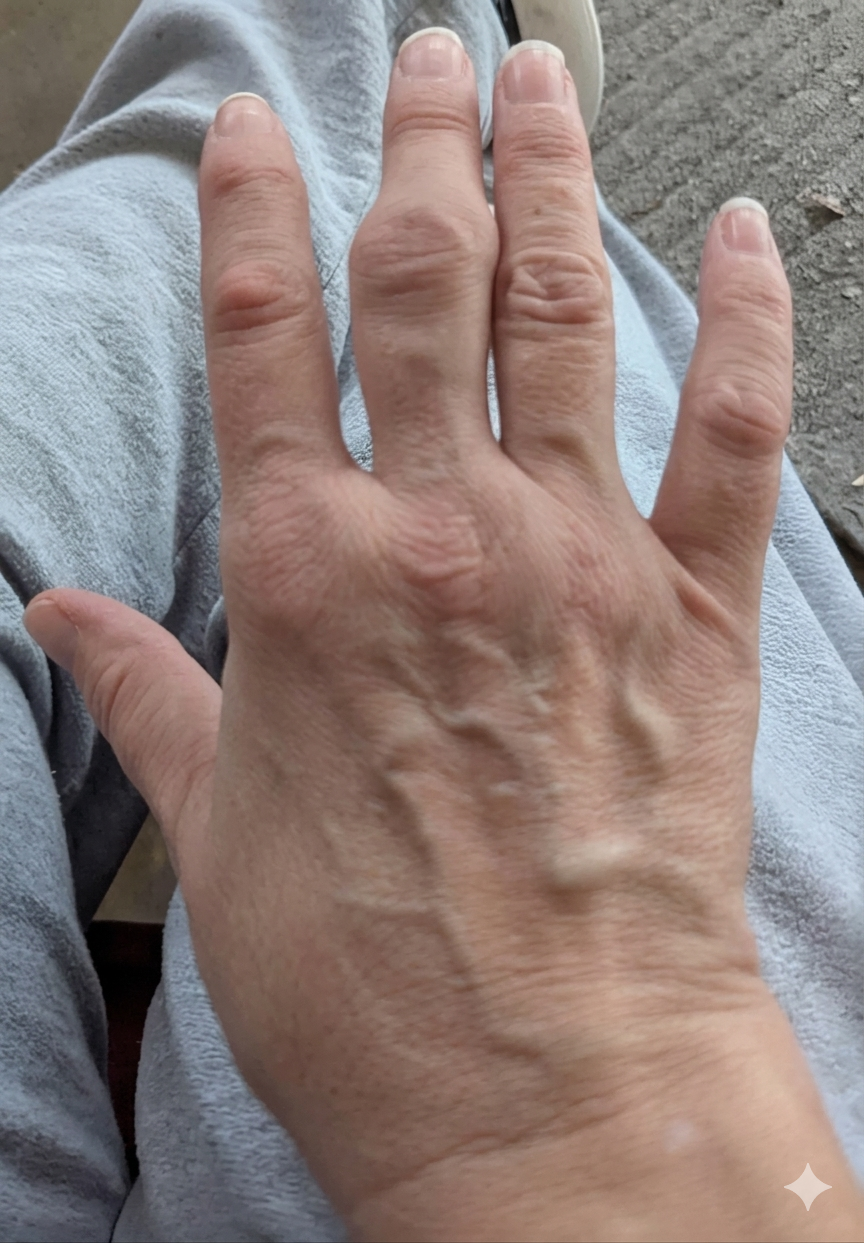
Levothyroxine keeps your TSH in perfect range but the weight keeps climbing. Your blood pressure creeps higher every year. And now your doctor is mentioning a statin. If your weight, blood pressure, and cholesterol are all moving in the wrong direction on levothyroxine despite doing everything right — here's what's actually connecting all three and what I give my patients instead. For THREE YEARS my sister Laura watched her weight climb on levothyroxine. And then her cardiovascular markers followed it. She was diagnosed with Hashimoto's at 38. Put on levothyroxine immediately. Doctor told her the medication would handle it. Within the first year she gained 19 pounds. On medication. Eating less than she ever had. By year two she was tracking 1,200 calories on MyFitnessPal. Every single bite. She'd trained four times a week for eight months. The scale went up anyway. And then her doctor started watching her blood pressure. 134 over 84. Up from 118 over 76 at diagnosis. Borderline he said. We'll keep an eye on it. By year three her cholesterol panel told the same story. LDL 168. Up from 141 two years earlier. Triglycerides elevated. HDL moving in the wrong direction. She noticed her heart pounding climbing stairs she used to take without thinking. She blamed it on the weight. Her doctor looked at the full picture — climbing weight, climbing blood pressure, climbing cholesterol — and reached for his prescription pad. Her TSH was 2.3. Perfect range. Optimal. Her endocrinologist looked at that number every six months and told her everything looked fine. She was gaining weight on twelve hundred calories while her blood pressure and cholesterol quietly worsened and everything looked fine. --- And every single doctor told her the same thing. "Your TSH is optimal. The medication is working." "Your blood pressure is borderline. We'll watch it." "Your cholesterol is trending in the wrong direction. Diet and exercise, then we'll talk statins." One of them — and this makes me want to put my fist through a wall — presented three separate solutions for three separate problems. Levothyroxine for the TSH. A statin for the cholesterol. A blood pressure medication for the pressure. Managed individually. None of them connected. None of them aimed at what was running all three. She went through four doctors in three years. Not one — NOT ONE — ever asked why a woman with an optimal TSH was gaining weight AND watching her blood pressure rise AND watching her cholesterol worsen — all three in parallel, all three unresponsive to everything she tried. --- So here's what they kept telling her to do. And I need you to pay attention because you've probably tried all of this too. Selenium for thyroid conversion — six months — antibodies dipped slightly. Weight kept climbing. Blood pressure unchanged. Cholesterol unchanged. Low-glycemic diet — six months, properly done — lost four pounds that came right back. Cardiovascular markers continued worsening. The AIP protocol — four months fully committed — weight, blood pressure, cholesterol all moving in the same direction regardless. Magnesium and omega-3 specifically targeting the cardiovascular markers — eight months — LDL continued climbing. Blood pressure continued climbing. The $70 a month thyroid support formulas — iodine, glandular extracts, metabolism boosters — nothing on the scale, nothing on the blood pressure cuff, nothing on the cholesterol panel. Between the supplements, the specialist appointments, the nutritionist — she'd spent over $4,200 in three years. Still gaining. Blood pressure still rising. Cholesterol still rising. Heart still pounding on stairs. Doctor now saying statin at every appointment. TSH optimal at every appointment. --- At this point I'm not frustrated anymore. I'm angry. Because I'm watching my sister — following every instruction, spending thousands, restricting every calorie — get worse across every single marker while her doctors prepare to add more medications to a pile that was already failing her. Managing. Every. Number. Separately. Not asking why a woman with an optimal TSH is simultaneously gaining weight AND watching her blood pressure climb AND watching her cholesterol worsen — all three together, all three in parallel, all three completely unresponsive to the treatments aimed at each. And that's when I started asking the questions nobody wants you to ask. Why do thyroid weight gain and worsening cardiovascular markers happen together so consistently in the same women at the same time? Why does treating the TSH never touch the blood pressure or cholesterol? Why does treating the cholesterol and blood pressure never touch the thyroid weight? What single upstream cause is running all three — and why is nobody looking for it? --- So I went down a rabbit hole. A deep one. I started researching not how to support the thyroid or manage cardiovascular markers separately — both had been tried every way possible — but what single mechanism would produce weight gain, rising blood pressure, AND rising cholesterol simultaneously in a woman on levothyroxine with a perfect TSH. Every mainstream site gave me the same recycled answers. Adjust the dose. Eat better. Exercise more. Statins when the cholesterol gets high enough. Then I found something in a research paper that stopped me cold. Not a blog. Not a wellness influencer. Peer-reviewed endocrinology research. And it connected the thing I had never seen connected in three years of searching. --- Here's what I learned. Cortisol. Chronic cortisol. And what it does to two systems simultaneously that produces every single one of Laura's deteriorating markers. When cortisol stays chronically elevated — the low-grade continuous kind every woman managing a full life carries — it attacks your metabolic system and your circulatory regulation at the same time. First, it suppresses AMPK — the metabolic master switch inside every cell. AMPK controls whether your body burns fat or stores it. Whether your liver processes cholesterol or lets it accumulate. Whether your mitochondria produce energy at full capacity or run on minimum. When cortisol keeps AMPK suppressed, the entire metabolic system runs in conservation mode. Fat stores rather than burns. That's the weight climbing on 1,200 calories. Cholesterol accumulates rather than clears. That's the LDL climbing despite cutting saturated fat. Energy production stalls. That's the exhaustion by 2pm. Second, the same cortisol signal gives the kidneys a different instruction. Hold the fluid. The kidneys stop draining what they're supposed to drain. Fluid builds in the circulatory system. Volume pressing against the arterial walls from the inside increases. The blood pressure reading climbs every year not because of salt or age — because cortisol keeps running the hold instruction year after year. Two mechanisms. Same cortisol. Three markers. The weight and cholesterol — AMPK suppressed, metabolism in conservation mode, fat storing, cholesterol accumulating. The blood pressure — cortisol instructing the kidneys to hold fluid year after year. TSH looks perfect because TSH measures hormone in the blood — upstream of every one of these failures. Your doctor sees a number between 1 and 3 and reports normal thyroid function while cortisol quietly runs the two mechanisms producing every symptom your medication was supposed to prevent. All three worsening together. All three unresponsive to separate medications for each. Because none of those medications touched the cortisol signal running both mechanisms from the top. --- And here's the part that made my blood boil. The connection between chronic cortisol elevation and AMPK suppression is in the metabolic research literature. The role of cortisol in kidney fluid retention and blood pressure elevation is documented. The relationship between AMPK suppression and cholesterol accumulation is published and replicated. But the standard clinical protocol for Hashimoto's patients with worsening cardiovascular markers doesn't include a cortisol assessment. Doesn't ask whether the same signal suppressing the metabolic switch is building the fluid pressure and preventing the cholesterol clearance. Because there's no pharmaceutical drug for cortisol-driven simultaneous multi-system failure. You can't patent the mechanism. There's no revenue in finding the single upstream cause and removing it. There IS revenue in levothyroxine for life. A statin for the cholesterol. A blood pressure medication for the pressure. Three separate prescriptions. Three separate specialist relationships. Three separate monitoring schedules. All managing the outputs of a cortisol signal nobody is measuring. Manage every output. Never reset the source. Keep the patient returning indefinitely. --- So I kept digging. Looking specifically for what resets the cortisol signal at the source AND reactivates the metabolic switch — not manages it temporarily, not dampens one output — actually normalizes the hypothalamic command running both mechanisms simultaneously. And I found one compound that kept appearing in peer-reviewed research — not wellness content — as the specific solution. Rhodiola Rosea. Specifically, the active compound salidroside. Not marketed for thyroid. Not marketed for blood pressure. Not marketed for cholesterol. Researched specifically for two things: cortisol normalization at the hypothalamus AND direct AMPK activation at the cellular level. Salidroside does something no other compound does simultaneously. At the hypothalamic level, it downregulates CRH — the signal that commands cortisol production. When that signal normalizes, the kidneys stop receiving the hold instruction. The fluid cortisol was building in the circulatory system begins to clear. The pressure drops because the load generating it was removed at the source. And independently of the cortisol pathway, salidroside directly activates AMPK — the metabolic master switch cortisol had been keeping suppressed. When AMPK switches on, the metabolism shifts from conservation to active. Fat cells receive the signal to burn rather than store. The liver begins processing and clearing cholesterol rather than letting it accumulate. Mitochondria produce energy at full capacity. Two pathways. One compound. Three markers resolving. Because they were always running from the same signal and the same suppressed switch. --- My sister tried to find a Rhodiola supplement that matched what the research described. First — the highest-rated one on Amazon. Five stars. Thousands of reviews. Eight weeks. Nothing moved. Weight unchanged. Blood pressure unchanged. Cholesterol unchanged. Second — a well-known adaptogen brand. Standardized to 3% rosavins and 1% salidroside. The standard ratio. Ten weeks. Marginal stress reduction. Every cardiovascular marker unchanged. Weight unchanged. She went back to the research. Read the methodology. And that's when she found the problem nobody talks about. Every Rhodiola product on the market — every single one on Amazon, every one at Whole Foods, every adaptogen brand — uses the same standardization: 3% rosavins, 1% salidroside. That's the "relaxation ratio." Rosavins produce mild calming. That's all they do. They don't activate AMPK. They don't reset cortisol at the hypothalamic level. They relax you slightly. Same result as ashwagandha. Downstream. Not at the switch. The compound responsible for both the cortisol reset and the AMPK activation — salidroside — is present at 1% in every standard product. A trace amount. Below the concentration at which either mechanism was measured in clinical research. She flipped over both bottles. The first had no standardization listed at all. Just "Rhodiola Rosea extract." The second was 3% rosavins, 1% salidroside. The relaxation ratio. Loaded with the calming compound. Almost none of the compound that actually resets cortisol and activates the metabolic switch. Eighteen weeks of the wrong active compound. The metabolic switch still off. The cortisol signal still running. Three markers still climbing. Between the selenium, the dietary protocols, the specialist appointments, and two rounds of rosavin-loaded Rhodiola — she'd spent over $4,200 in three years. --- I was scrolling through my phone late one night — because her doctor had just told her the statin conversation was no longer optional — and I saw someone in a Hashimoto's support group mention a small company called Restine. Different woman. Different city. Same story. Optimal TSH. Weight climbing on levothyroxine. Blood pressure climbing. Cholesterol climbing. Statins being discussed. Tried standard Rhodiola. Nothing worked. She'd found the AMPK connection. Tried Restine. Posted her three-month labs. Blood pressure down 24 points systolic. LDL down 34 points. Weight down 16 pounds. On the same levothyroxine dose she'd been taking for years. Someone in the thread asked about the standardization. "High salidroside. Not the standard relaxation ratio. The actual compound that activates AMPK and resets cortisol. The rosavin-loaded ones can't switch on the metabolic system — the compound you need is barely there." I went to their site. Ready to be disappointed like I had been every other time. Rhodiola Rosea formulated for high salidroside concentration. Not the standard relaxation ratio that every other brand uses. Salidroside — the actual compound responsible for AMPK activation and hypothalamic cortisol normalization. At clinical concentration. Third-party tested. No proprietary blends. Every amount listed. Not a thyroid supplement. Not a cardiovascular supplement. A metabolic reactivation and cortisol reset formula that addresses both upstream causes running all three markers simultaneously. --- My sister started taking Restine. After two weeks? She measured her blood pressure on the home cuff she'd been using every morning for over a year. 126 over 81. It had been sitting between 136 and 142 for two years. She texted me the reading without any other words. I knew exactly what it meant. The kidney fluid instruction cortisol had been running was beginning to normalize. After four weeks? The scale moved. Down six pounds. Not from eating differently. Something releasing. She called me not because of the number but because of what it felt like. "It doesn't feel like diet weight loss," she said. "It feels like something let go." Because it had. The AMPK switch was on. The fat cells were finally receiving the signal to burn rather than store. After six weeks? She took the stairs at work. Two flights. Without her heart pounding at the top. She stood at the landing and sent me one sentence. "I just walked up two flights without stopping." I knew exactly what she meant. After eight weeks? Blood pressure 118 over 76. Down from 142 over 88 at her worst. The fluid that cortisol had been instructing her kidneys to hold for years was clearing as the cortisol signal driving the instruction normalized. After twelve weeks? She went back to her doctor for follow-up labs. LDL — down from 168 to 127. AMPK was forcing lipid processing for the first time. The liver was clearing cholesterol rather than letting it accumulate. Free T3 — risen into the upper third of the reference range. On the same levothyroxine dose she'd been taking for three years. Weight — down 19 pounds at twelve weeks. Her doctor pulled up the previous panel. Looked at the current one. Looked at her. "Your LDL has dropped significantly. Your blood pressure at this visit is 116 over 74. Your free T3 is the best I've seen since your diagnosis. What changed?" My sister explained it. The cortisol running the kidney fluid instruction that had been building her blood pressure year by year. The AMPK suppression keeping her metabolism in conservation mode — storing fat, accumulating cholesterol, running on minimum energy. Both addressed simultaneously. Both resolving. Her doctor typed notes slowly. "The cortisol-AMPK-cardiovascular connection is documented in the literature. I don't typically investigate it because there's no pharmaceutical intervention for it in the standard protocol. But these results across three markers in twelve weeks — that's significant." Long pause. "Whatever you changed — keep doing it. And I'm not writing the statin prescription today." Not writing the statin prescription. After three years of being told it was coming. She walked to her car. Got in. Then she called me. "LDL down to 127. Blood pressure 116 over 74. Free T3 finally in range. No statin. Three years. Four doctors. $4,200. On medication. Getting worse every six months. Every single one of them managing three outputs while the two mechanisms running all three kept running underneath." Her husband came home that evening and looked at her across the kitchen. "You look like yourself again." Before she'd told him a single thing about what had changed. --- Total improvement at five months: LDL normalized. Blood pressure in optimal range. Free T3 in upper third of reference range. Down 24 pounds. Same levothyroxine dose. Doctor monitoring without prescribing. Statin conversation closed. Not from a statin managing cholesterol while a suppressed metabolism kept producing it. Not from a blood pressure medication fighting fluid while cortisol kept instructing the kidneys to hold it. From resetting the cortisol signal and reactivating the metabolic switch simultaneously. Two upstream causes addressed. All three markers resolving. --- This is what they don't want you to know. Because the second you reset the cortisol driving the kidney fluid retention and reactivate the AMPK driving your metabolic system simultaneously — you don't need their statin for cholesterol that an active metabolism would handle. You don't need their blood pressure medication for fluid that kidneys would drain if cortisol stopped instructing them to hold it. You don't need their dose increases feeding more T4 into a metabolic system running in conservation mode. The cortisol resets. The metabolic switch turns on. The fluid clears. The fat burns. The cholesterol processes. All three markers move from two upstream resets that none of their three prescriptions was ever designed to reach. --- Now here's what I need you to understand. The cortisol signal doesn't stop on its own. The AMPK switch doesn't turn on by itself. Every month they keep running is another month of the metabolic switch staying off while fat stores and cholesterol accumulates. Another month of the kidney fluid instruction building pressure in your arteries. Another month of your doctor getting closer to a statin conversation that treats the output while the signal keeps running underneath. So if you're dealing with ANY of this — weight that ignores every calorie deficit on levothyroxine, blood pressure climbing year by year while your TSH stays optimal, cholesterol moving the wrong direction despite dietary intervention, heart pounding on stairs while your labs say you're fine, a doctor preparing three separate prescriptions for three symptoms running from the same signal — this is the time. Not next month when the LDL climbs another nine points. Not when your doctor says the statin is no longer optional. Not when the blood pressure medication gets added to the pile. Right now. Restine. High salidroside Rhodiola Rosea. The compound that activates AMPK and resets cortisol at the hypothalamus simultaneously — not the standard relaxation ratio every other brand uses. Clinical concentration. Third-party tested. No proprietary blends. Every amount listed. $38 for two months. One capsule a day. Alongside your levothyroxine. 60-day money-back guarantee. Use every capsule. If the LDL doesn't improve, if the blood pressure doesn't normalize, if the weight doesn't start moving — full refund. No questions asked. Because your endocrinologist isn't coming to identify the cortisol running the kidney fluid retention and the AMPK suppression running your metabolic shutdown simultaneously. There's no protocol for it. There's no prescription for it. There's no revenue in it. The three prescriptions they're preparing treat the outputs. Nobody is resetting the signals. You have to reset them yourself. 👉 https://restine.store/pages/rhodiola
Like this ad? Make it yours.
Crush rebuilds this exact creative around your product — your brand, your colors, your offer — in about a minute.