
Active· since Jun 6, 2026
- 101
- days running
- 0
- relaunches
Ad copy
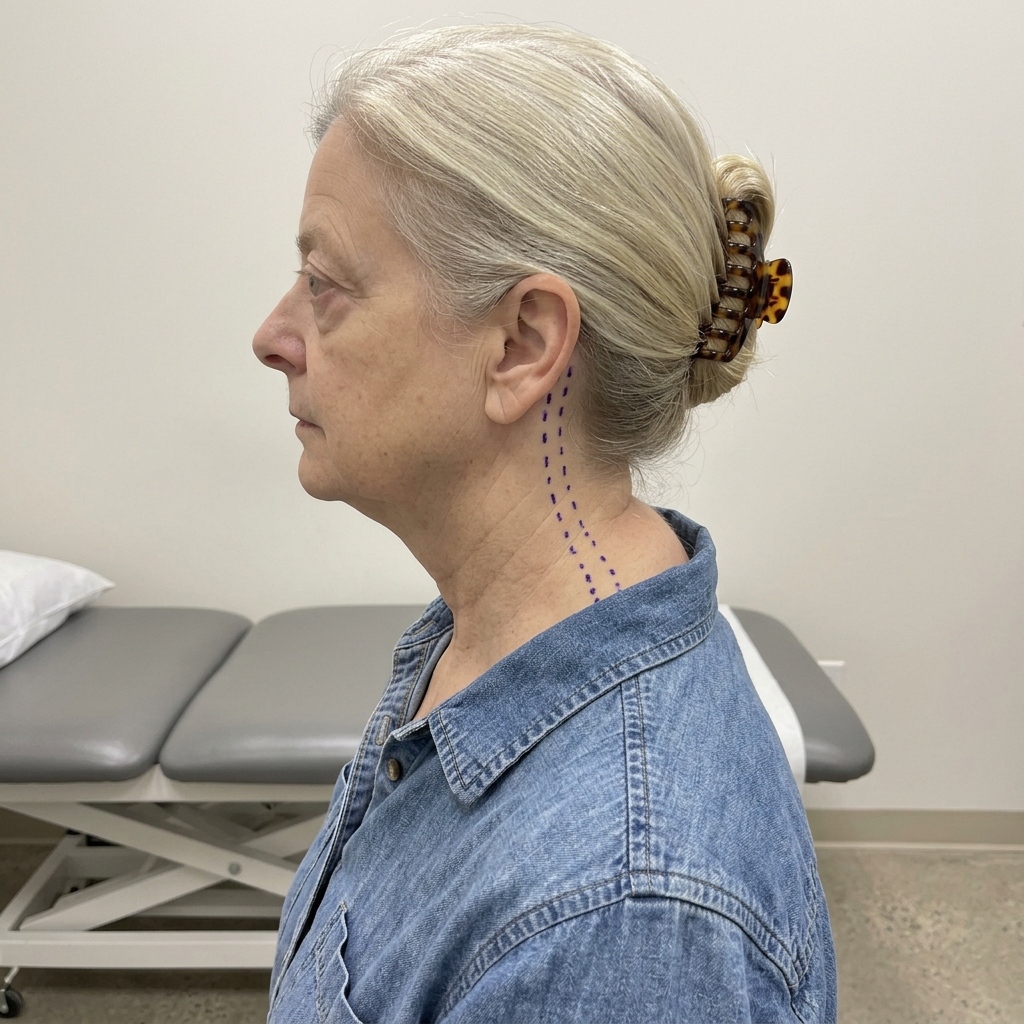
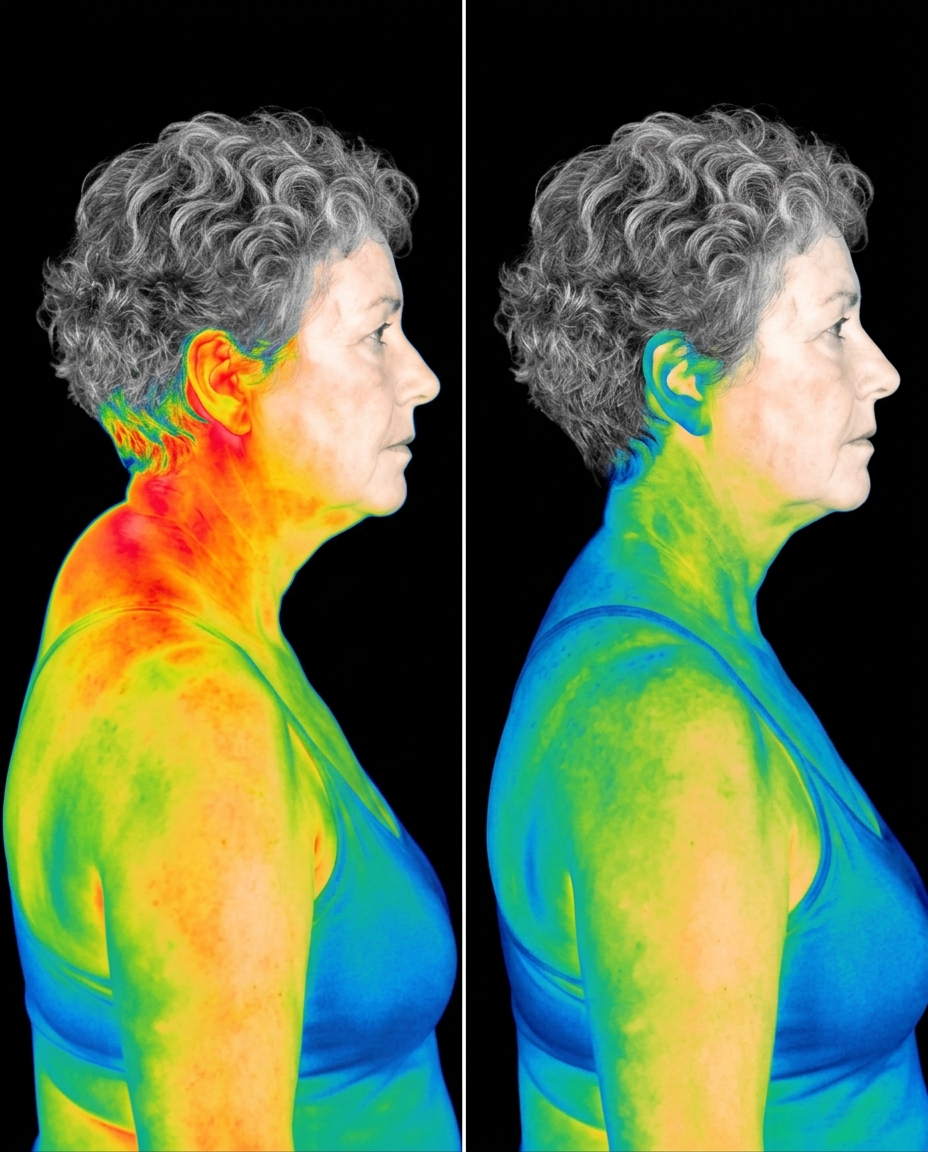
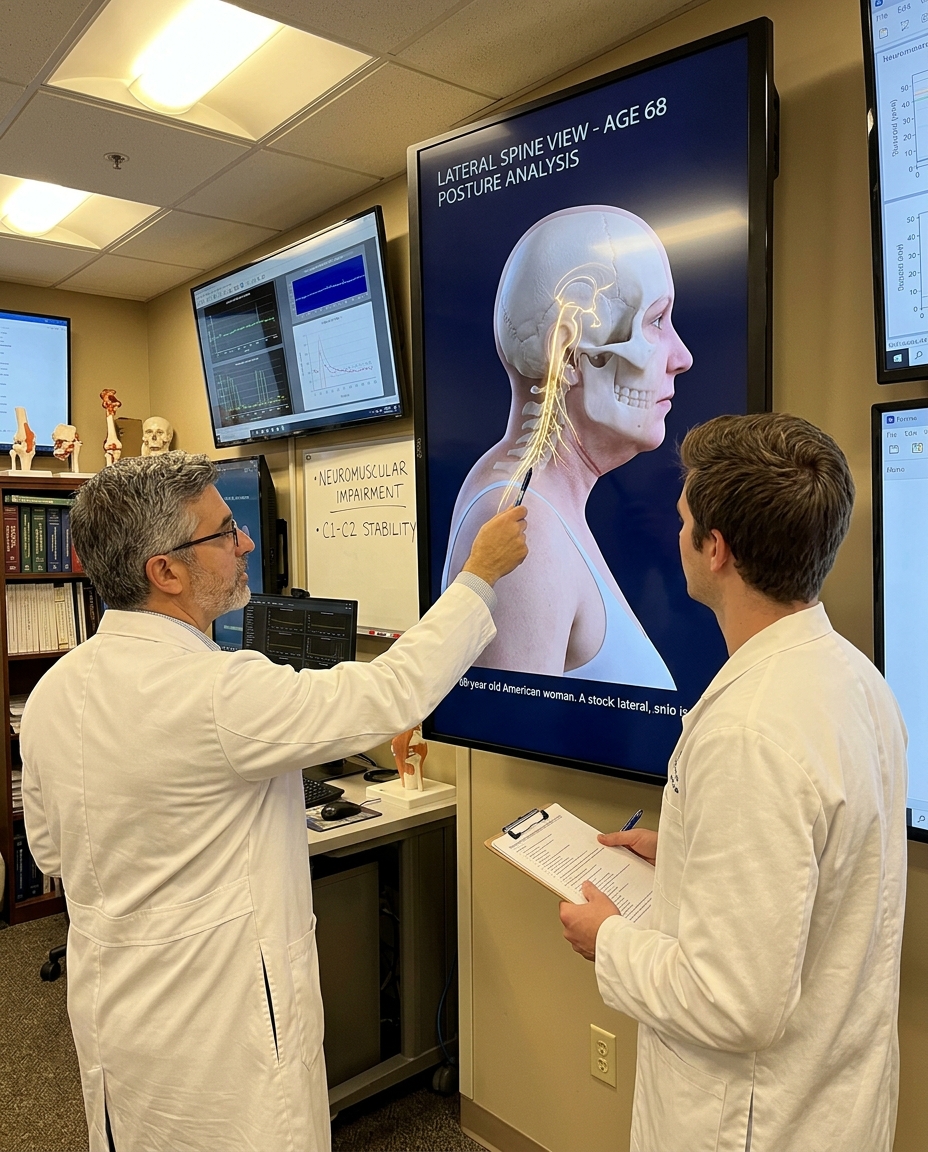
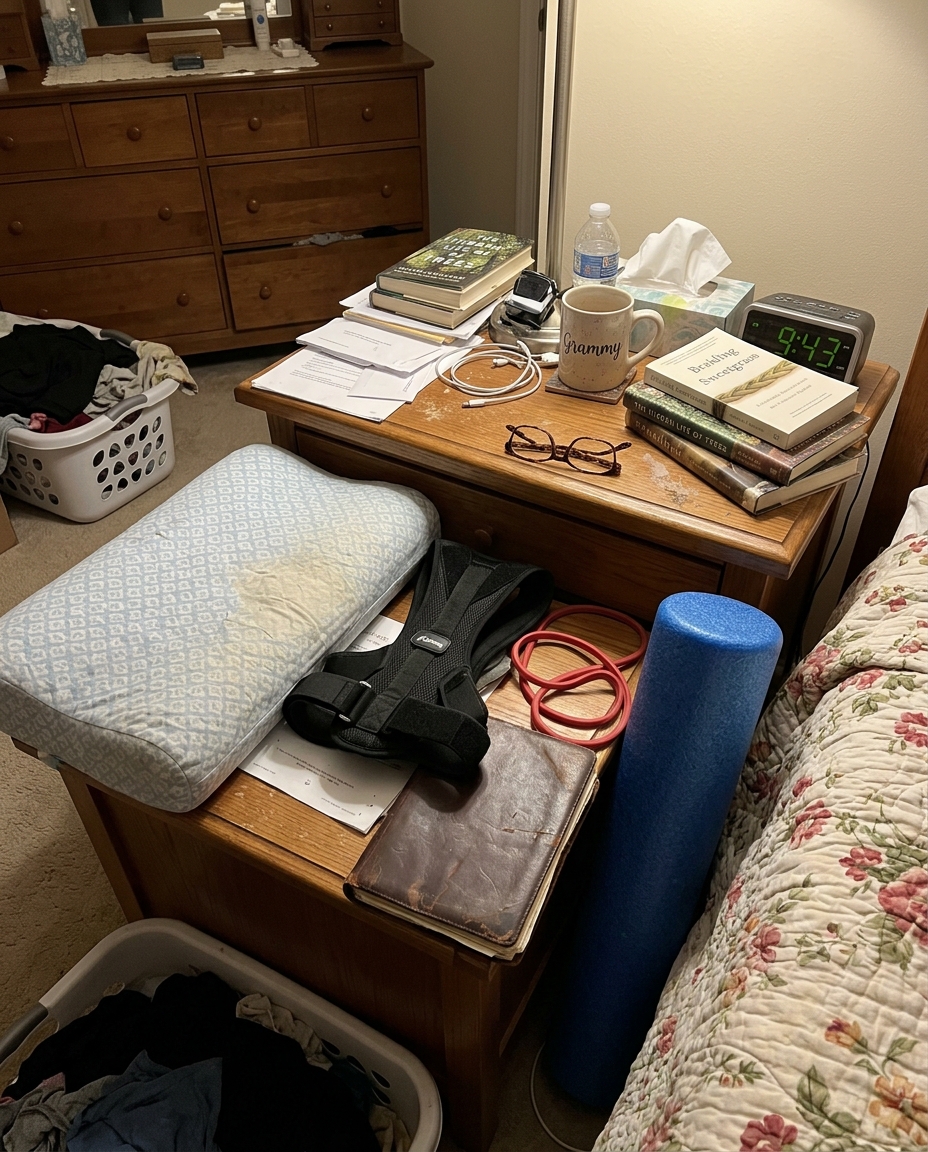
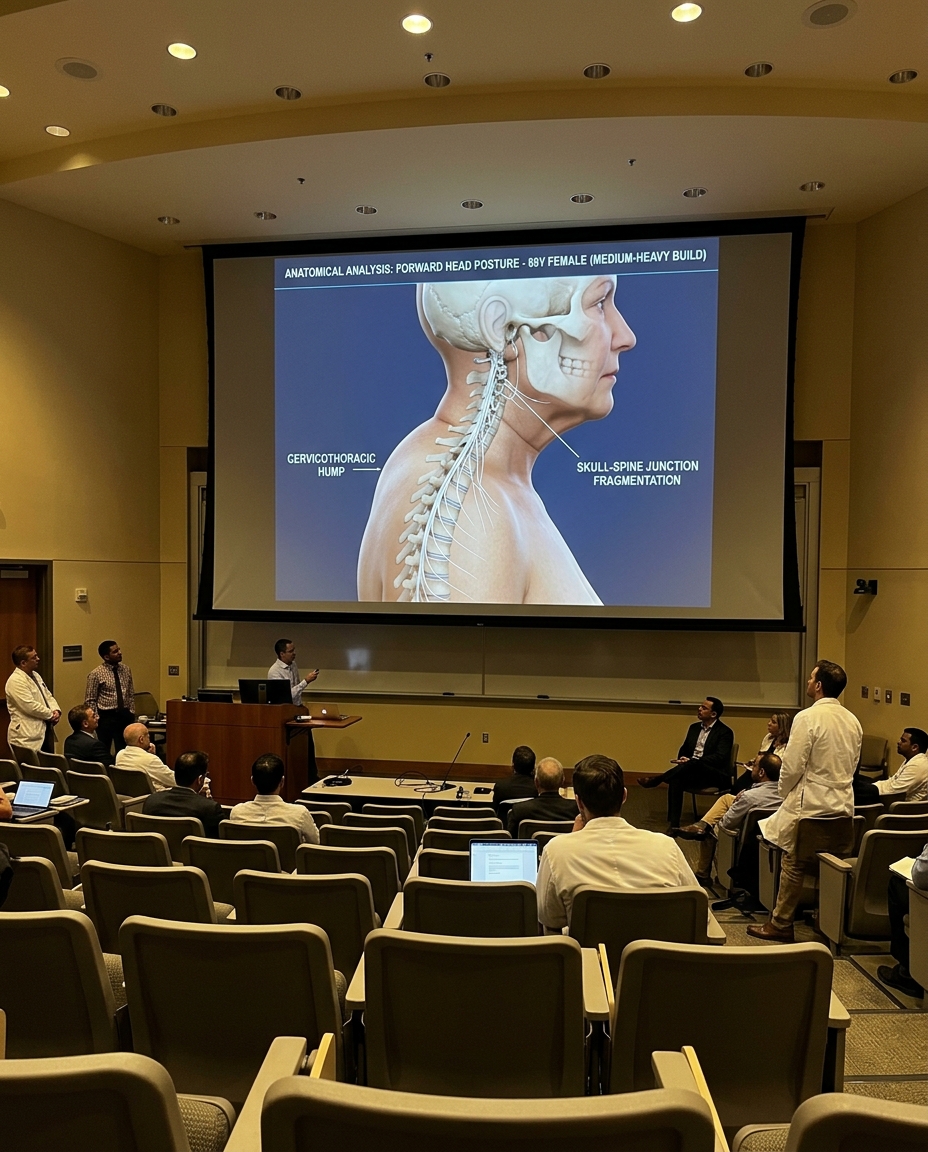
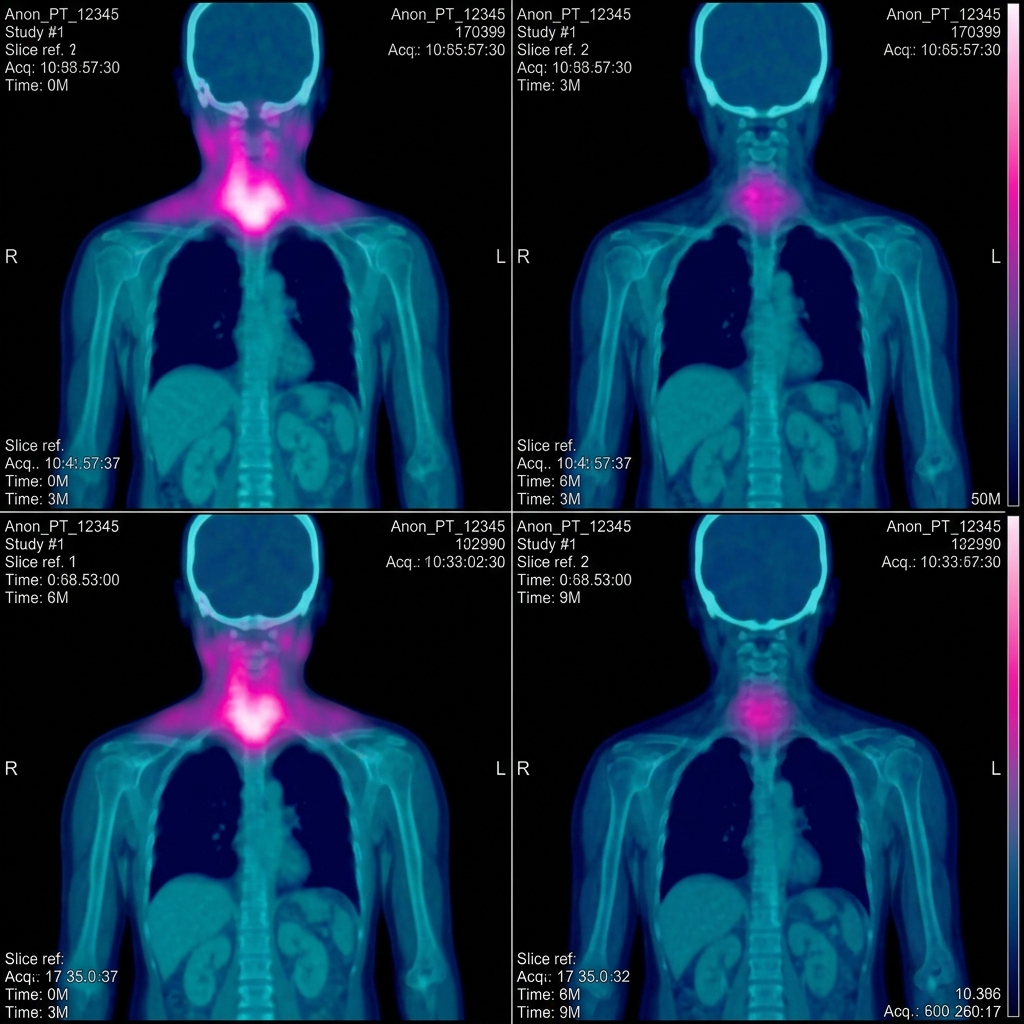
I've watched too many neck hump patients end up in specialist intervention to keep my mouth shut about this. If you've been told "just keep doing your exercises" for your neck hump, I need to tell you something your practitioner isn't telling you. My name is Linda Marsh. I've treated over 200 neck hump patients in 15 years as a manual therapy and cervical rehabilitation specialist. And when a patient walks into my office after their primary care said "do your exercises, we'll recheck in six months," I already know what their assessment will show 5 to 10 years later if nothing changes. Advanced tissue consolidation. The same signal failure driving their forward head progression is quietly building compensatory tissue at the base of their neck right now. And at 51, when my own assessment showed 2.4cm of forward head displacement, I knew exactly what my practitioner was about to tell me. And exactly what she wasn't. Your neck hump isn't a "watch and wait" problem. It's a neuromuscular signal failure happening at the motor nerve level. I've been treating neck hump progression for 15 years. I've seen hundreds of patients dismissed with "keep doing your exercises, we'll recheck in six months." Most of them walked out, Googled the diagnosis on the drive home, and stopped at the wellness store on the way back. Posture braces. Cervical pillows. Foam rollers. One of those 8-in-1 posture correction kits. The tools every neck hump article on the internet eventually recommends. They used them for months. Some for years. Their measurements barely moved. And what's worse, they thought they were doing something about the problem. Because primary care sees you once. Writes the dismissal. Sends you home. They don't see you 5 to 10 years later when you're sitting in my office with tissue that has consolidated past the point of easy reversal and the word "specialist referral" on your chart for the first time. But I do. Margaret's mother. Diagnosed with forward head progression at 49. Same advice. Keep doing your exercises, recheck next year. Year after year. By 62 her tissue had consolidated enough that they finally ordered specialist input. By 65 she had been through three intensive intervention programs. Still progressing. Still managing. Her starting forward head measurement was 2.1cm. Almost exactly what mine was. James — one of my patients, 31. Came to me with forward head displacement of 2.8cm. Normal posture habits. What I'm ashamed to say I didn't recognize quickly enough was that the inhibition was already well established. I gave him the same "exercises and adjustment protocol" speech I'd been giving for years. He came back 18 months later with tissue consolidation at F2-F3 equivalent — visible, measurable, past the window of easy reversal. Still addressable at that stage. But barely. He's the patient I think about at night. They had years. They just didn't know they had them. Because nobody had explained what their assessment was actually pointing at, or what was quietly building underneath those numbers while they waited for the next recheck. The assessment was telling them the truth from the first appointment. The tools they were using didn't change anything. They just made them feel like they were doing something. My symptoms told me I was fine. My assessment said otherwise. I felt fine. A little more careful getting dressed in the morning. A quiet calculation I'd been running for so long it felt normal. My forward head position had crept up but nothing dramatic. Then a routine self-assessment caught it. My practitioner looked at the panel and said what she says to every patient. "Standard plan. Keep doing your exercises, reduce screen time, recheck in six months." I knew it wouldn't work. That's not the point. I'm a cervical rehabilitation specialist. I'd watched over 200 patients try exactly that and watched their measurements stay exactly the same or even progress further. So I ordered my own full cervical assessment. Forward head: 2.4cm. Tissue density at cervicothoracic junction: measurably elevated. Deep cervical muscle activation: 18% of clinical threshold. Because I know what those numbers actually mean. Early inhibition-driven progression. Neuromuscular signal failure at the motor nerve level. The kind of brain-muscle disconnection that exercises and adjustments alone were never going to fix. My forward head progression wasn't a "do more exercises" problem. It was my deep cervical muscles' defense system being switched off faster than any surface protocol could switch them back on. And another six months of "monitoring" would have masked the only early warning sign I had. Here's what primary care doesn't tell you because they don't follow long-term cervical progression outcomes. Your deep cervical muscles don't send obvious pain signals. They don't cramp dramatically. They don't fail suddenly. They don't warn you. By the time your forward head measurement is elevated, the inhibition has been progressing for years. By the time the tissue has consolidated, the signal failure has been running in silence. You're not "just getting older" or "sitting badly" or "stressed." Your deep cervical motor nerves are losing the signal they need to keep the head back. The same process pushing your measurements forward is quietly building compensatory tissue underneath. Right now. Roughly 1 in 4 patients with established neuromuscular inhibition progresses to consolidated tissue within 10 years without signal-level intervention. By the time most neck hump patients seek specialist input, the window for easy reversal has already narrowed significantly. Your neck hump isn't embarrassing. It's your 5 to 10 year early warning system. And exercises silence that alarm while the inhibition advances. So I tried what patients try. Posture habits. Reduced screen time. Ergonomic desk setup. Walking every morning. Improved how I felt a little, but measurements stayed elevated. Tools. Posture brace. Cervical pillow at the clinical dose. Foam roller protocol. A cervical correction kit with 8 components I used religiously. 18 weeks of disciplined use. Assessment came back. Forward head: 2.3cm. I moved one millimeter. 18 weeks of doing exactly what I'd been telling 200 patients to do. Nothing was addressing the signal failure driving the progression. But I kept thinking about something that made no sense. Neuromuscular inhibition IS reversible. The research proves it. The brain-muscle signal CAN be restored. Even established inhibition CAN respond to the right input. So why wasn't mine reversing? And why hadn't my patients' inhibition reversed either? October 8th. Late at night. I was reviewing 18 months of patient outcome data in my home office after a long clinic day. Couldn't sleep. My own assessment had just come back at 2.3cm. I wasn't looking for anything specific. If I'm being honest, I was pretty desperate. I'd compiled outcomes for every patient I'd put on a standard adjustment and exercise protocol for at least six months. Average forward head change at 6 months. Average change at 12 months. Average change at 18 months. The numbers stopped me cold. Patients on standard protocols showed no statistically meaningful improvement compared to patients managing on their own. Eighteen months. 200+ patients. Almost zero meaningful difference. I sat there staring at a spreadsheet I should have run five years earlier. I was the specialist recommending adjustment protocols for 15 years. And I was wrong about the mechanism. Then I pulled up the small subset. The ones who'd done their homework. They'd quietly added something else on their own while I was still recommending exercises. Direct EMS. Electrical muscle stimulation targeted at the deep cervical motor nerves. Some had bought the cheap version after Googling. Generic surface EMS from Amazon. $29.99. Their measurements barely moved either. Maybe a millimeter, then they plateaued. That sent me down another rabbit hole. Generic surface EMS devices have a serious targeting problem. The stimulation frequency and intensity don't reach the deep cervical motor nerves. The signal activates sensory nerves, not motor nerves. Studies show effective motor nerve activation requires specific program parameters — graduated intensity, multiple distinct programs for different stages of inhibition. Most consumer devices deliver fixed surface stimulation. So a generic EMS device? Your deep cervical motor nerves actually receive almost none of the activation required to overcome established inhibition. That's surface stimulation at a fraction of the clinical parameter range, reaching a tenth of the motor nerve depth that matters. No wonder my patients on generic EMS devices saw nothing. But the small group who'd found clinical-grade cervical EMS with 8 unique programs and 19 adjustable intensity levels? Those numbers told a different story. The graduated delivery works past the surface layer and reaches the inhibited motor nerve pathways directly. Same technology basis used in advanced rehabilitation settings. Their forward head measurements were moving. Real movement. The kind of result I'd been promising patients for 15 years but never actually seeing. I'd been a cervical rehabilitation specialist for 15 years. I'd studied neuromuscular inhibition my entire career. And I'd never properly understood why adjustment protocols weren't doing the job. Adjustment protocols work on the joint above the inhibited muscles. That's their mechanism. But they can't give the inhibited motor nerves the direct electrical activation they need to restart the signal. Direct EMS can. It delivers electrical pulses straight to the motor nerve pathway — the one input the inhibited deep cervical muscles need to start activating again regardless of what the brain is or isn't sending. One addresses the joint above. The other restores the signal directly. It's the same mechanism intensive rehabilitation units use when a patient has severe neuromuscular inhibition after a spinal injury. They don't give them exercise sheets. They don't give them posture braces. They give them direct electrical muscle stimulation. Same mechanism. Same principle. The difference is speed. Acute inhibition from injury happens suddenly. Cervical inhibition from accumulated load takes years. But the root mechanism is essentially identical. A 2025 randomized trial tested direct cervical EMS at clinical parameters head to head against adjustment protocols and exercise-only programs in 135 patients with established neuromuscular inhibition. Direct EMS at clinical parameters was the only intervention that showed significant signal restoration activity. The ONLY one. At 12 AM, I ordered Cevera. 8 unique programs. 19 adjustable intensity levels. The clinical parameter range. Not the generic surface EMS from Amazon I'd watched patients buy and see nothing from. I didn't expect miracles. But for the first time in 15 years, the mechanism was sound. The device arrived three days later. I started October 12th. 15 minutes in the morning. 10 days in, I noticed the morning calculation wasn't there. I'd just gotten dressed for a 12-hour clinic day and realized I hadn't checked the angle in the mirror once. First time in months. Three weeks in, my husband Jim noticed before I told him. "You're carrying yourself differently," he said over breakfast. "What changed?" I hadn't told him I was using anything. "Different approach," I said. "Whatever you're doing, keep doing it." Eight weeks in, I ran my full self-assessment. When the numbers came up, I stared at the screen for almost one minute. Forward head: 1.3cm. Down from 2.4cm. Nearly 50% reduction in 8 weeks. Deep cervical muscle activation: 41% of clinical threshold. Up from 18%. Tissue at cervicothoracic junction: visibly and measurably reduced. The drop wasn't subtle. It was the kind of movement I'd been promising patients for 15 years and never seeing. My forward head progression was resolving because my deep cervical motor nerves were being directly activated. I printed both assessment panels. Walked them down to the next clinical review meeting. Dr. Patel looked at the panels. Looked at me. Looked back at the panels. "Linda, what protocol did you put yourself on? Forward head doesn't drop this fast on adjustment protocols alone." I explained the neuromuscular inhibition. The motor nerve activation mechanism. The graduated delivery. The 8-program clinical parameter range vs the generic fixed-frequency devices most of our patients were buying. He studied the numbers for another minute. "And you said your muscle activation improved too?" "From 18% to 41% of threshold in eight weeks." He was quiet for a moment. "I need to start asking my cervical patients whether they've ever tried direct EMS at clinical parameters." I cancelled my specialist referral. But I started telling patients something primary care doesn't. I started with Margaret. 54. Three years of doing everything her practitioners told her. Cut screen time. Ergonomic setup. Walked every morning. Lost 22 pounds of body weight that nobody had connected to forward load reduction. Used posture brace twice a day for eight months. Tried a cervical traction device her sister found online. Her forward head when she started? 2.9cm. Her forward head after three years of all of that? 2.7cm. Two millimeters. Three years. That was her reward for doing everything right. Margaret sat across from my desk and said, "I'm not going to be my mother. But nobody will tell me what to do besides more exercises." So I told her what I'd just figured out. 10 weeks on the same protocol I'd put myself on. Cevera. 8 unique programs. 19 adjustable intensity levels. 15 minutes in the morning. Her forward head at 10 weeks: 1.6cm. Down from 2.9cm. At her 8-week follow-up, her husband pulled me aside in the hallway. He said, "I don't know what you gave her, but she's getting dressed in the morning in five minutes instead of thirty. Whatever you're doing, keep doing it." I'm not telling you this because I'm against adjustment protocols. Adjustment protocols have a place. They're a legitimate intervention for joint mobility and surface tissue management. But they don't restore the inhibited signal. They don't address the neuromuscular mechanism causing neck hump progression. They don't move forward head measurements meaningfully in the patients who need it most. They temporarily address the joint above the inhibited muscles while the signal failure progresses inside. Your elevated forward head measurement is warning you. The same signal failure driving your forward head progression is quietly building tissue at the base of your neck underneath. And you have two choices. Address the joint above the inhibited muscles with adjustment protocols while the signal failure progresses below. Or restore the signal directly and let your deep cervical muscles do the job they were designed to do. I think about what I almost did. I almost wasted years the way my own patients had wasted theirs. I almost let my own progression advance on an adjustment protocol I'd already proven didn't work on my own data. I almost became the patient I see in my office 5 to 10 years later, wishing someone had told them their forward head measurement isn't the full picture. Because once the tissue consolidates past F2-F3 equivalent, your treatment options narrow. Once specialist intervention is on your chart, the window has already closed significantly. Once you need intensive clinical management to reverse what built up while you were "monitoring," your timeline changes forever. There's a new pharmaceutical approach to advanced cervical fibrosis intervention. It costs thousands per treatment course and only addresses consolidation after it's already developed. Direct EMS has been used in clinical rehabilitation for over 60 years. It costs about the price of one clinical session per month. And it addresses the signal failure before consolidation develops. You don't get a second warning. Your elevated forward head measurement is your first warning. The only warning you can still act on. Your progressive forward head measurement is your check engine light. Standard adjustment protocols are tape over the warning indicator. The signal is still failing. You just can't see the light anymore. But I see it every day in 200 patients' assessment results. Every single one of them says the same thing. "I wish someone had told me neck hump progression was actually addressable at the signal level." Someone just told you. You can't unhear it. The choice is yours. Restore your signal, and you potentially reverse the progression before it becomes consolidated tissue. Or address the joint above with adjustment protocols, and risk everything underneath. I'm a cervical rehabilitation specialist. I understand neuromuscular inhibition at a mechanistic level. And I chose to restore my own signal before it progressed further. That's all I'm asking you to consider. Give your deep cervical muscles a chance to reactivate before you accept "monitoring" or risk a specialist referral. Your forward head measurement is giving you years of advance warning. Use them. Eight weeks. That's all it took my forward head to drop from 2.4cm to 1.3cm and start reversing established inhibition. Eight weeks of restoring the signal instead of adjusting the joint above it. 👉 Try Cevera Risk-Free: https://trycevera.com/pages/adv2-womens-wellness-report P.S. The direct EMS protocol I used is Cevera. 8 unique programs. 19 adjustable intensity levels. The clinical parameter range, not the fixed-frequency under-powered devices most patients are buying on Amazon. Graduated delivery so the signal reaches the inhibited motor nerve pathway and actually activates the deep cervical muscles (generic EMS devices have motor nerve penetration equivalent to a fraction of what's needed, so most of the activation never reaches the right layer). If you've been told "just do your exercises" for your neck hump, and you've been using adjustment protocols and posture tools, and your measurements have barely moved — get a baseline forward head assessment. Use Cevera at the clinical program range for 8 to 12 weeks. Get follow-up measurements. Compare your numbers. Cevera backs the protocol with a 90-day money-back guarantee. If your measurements don't move on the 90-day protocol, you get every dollar back. No questions. 15 minutes a day. That's the protocol. Cevera is small. They've had limited availability twice this year already. If your device ships, use it. If it's already out of stock, check back before the next batch. You can always go back to adjustment protocols if it doesn't work. But you can't undo consolidated tissue if your forward head measurement tried to warn you and you silenced it with a protocol that wasn't reaching the signal. I wish someone had told me this 15 years ago when I started telling patients to just do their exercises and try posture braces. I can't get those years back. But I can tell you now. Don't waste the time you have. 👉 https://trycevera.com/pages/adv2-womens-wellness-report — Linda Marsh, Manual Therapy Specialist
Like this ad? Make it yours.
Crush rebuilds this exact creative around your product — your brand, your colors, your offer — in about a minute.