Linda Peterson
Linda Peterson Facebook ad: “No More Sleepless Nights”
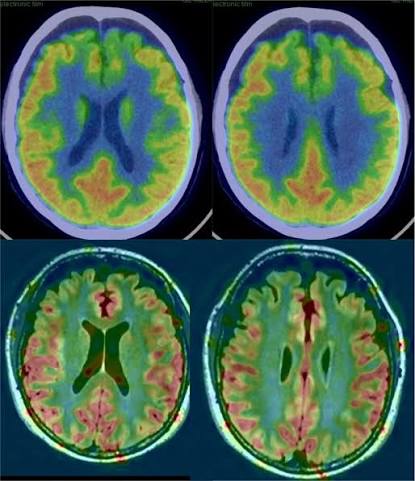
Ran for 1 day, from August 19 to August 20, 2026, the last day Crush saw it.
Run by Linda Peterson on Facebook. Crush is not the advertiser and does not verify its claims. See this ad in Meta's Ad Library(opens in a new tab)
Want an ad like this for your product?
Crush makes new ad images for your product from this ad: your logo, your product photo, your offer.
Trials from $19.95 USD, then $79.95 USD a month. Cancel anytime.
About this ad
- Meta Ad Library ID
- 27711940361835248
- Platforms
- Facebook, Instagram and Messenger
- Relaunches
- 0
- Niche
- Travel & Events
Ad text
Why do most developed countries treat sleeping pills as controlled substances, while here in the UK it's easier to get another repeat prescription of zopiclone than it is to get a face-to-face appointment with your GP? I hadn't thought about it. Not really. Until the evening my niece Sophie — currently reading for her DPhil in Sleep and Circadian Neuroscience at Oxford — came round to my kitchen in Guildford after I'd not properly slept in five months. "Auntie. You do know zopiclone and zolpidem are meant to be short-term only? Two to four weeks, absolute maximum. NICE guidelines are quite clear on this. And yet here you are, three months in, on a repeat prescription that nobody's reviewing." She showed me her laptop. NICE — maximum four weeks. Royal College of GPs — recognised dependency risk. The MHRA had issued warnings about long-term Z-drug use going back to 2014. And yet the repeat prescription system meant I'd been quietly picking up the same little box from Boots for twelve weeks without anyone actually checking on me. "There's a systematic review from the BMJ — long-term benzodiazepine and Z-drug use is associated with a meaningfully increased risk of dementia and falls in older adults. You're 54. You've got another thirty, forty years to think about. This isn't a small decision." "But why does my GP keep signing off the repeats?" I asked. "Because the practice is stretched, they've got fifteen minutes per patient, and the path of least resistance is to renew what's already there. It isn't malice. It's a system running on fumes. But the consequence is that women in your position end up quietly building a dependency nobody's tracking." That moment — half past nine on a Tuesday, my chamomile tea and the little brown pharmacy bag from Boots sitting between us on the kitchen table — was when I knew something had to change. But let me go back to the beginning. I'm 54. I've been teaching Year 4 at a primary school just outside Guildford for twenty-two years. My husband works in London, home in the evenings. My daughter's up in Edinburgh with her own family now. And there's my grandson, four years old, the reason mornings still feel worth getting up for. "I'll sleep when I sleep" — that was always my line. Until last March, when I simply… stopped. Not "sleeping poorly." Not sleeping. At all. I'd find myself at two in the morning sitting on the edge of the bed with tears running down my face, listening to my husband's breathing beside me, feeling as though I was the only person left awake in Surrey. Easter weekend at my sister's in the Cotswolds. I fell asleep at the table during Sunday lunch. Twice. My daughter reached over and touched my arm. "Mum. You don't look well. Are you unwell?" That's when it began. GP appointment — a fortnight's wait for a phone call. "Sounds like the menopause, dear. Try a warm bath before bed." Referral to the sleep clinic — 14 weeks, and that was the local NHS trust being generous. Boots — melatonin isn't sold over the counter here, of course, so I ordered it from an American site via a reshipping service. Started at 3mg. Ended up at 10mg. Then Nytol, then Kalms, then Sominex, then the valerian tinctures from Holland & Barrett, then a magnesium spray from a wellness shop in Guildford, then a weighted blanket, then a Lumie sunrise alarm, then a Calm subscription, then a private sleep consultation in Harley Street that cost me £340 for forty minutes of being told to try mindfulness apps. Eventually my GP put me on zopiclone. First fortnight, extraordinary — I slept. By week four I needed more. By month three she'd added a low dose of amitriptyline "off-licence, just to help you drift off." I was driving to school in a fog, forgetting the names of children I'd taught for two terms, and one Tuesday morning I sat in the school car park unable to remember whether I'd already had my morning coffee or not. Total spent: rather more than a decent holiday. Result: worse than when I started. The worst part wasn't the not sleeping. It was what the pills were doing to my brain. Sophie explained it the way she does — half neuroscientist, half despairing niece: "Zopiclone acts directly on the GABA-A receptors in your brain. After about a month of nightly use, the brain down-regulates its own GABA production. That's dependence. When you try to stop, you sleep worse than before you began. That's withdrawal. And you're going through the menopause — your endocrine system is already in enormous flux. Layering a nightly neurological depressant on top of that is genuinely one of the least helpful things you could be doing." "And the melatonin you were ordering from America — a JAMA study analysed 25 melatonin products off American shelves. 22 of the 25 didn't match the label. One contained 347% of the stated dose. Another contained no melatonin at all. The reason it's a POM here is precisely because MHRA won't allow that sort of quality lottery." I stood there holding my mug. "So I've genuinely no idea what I've been putting in my body for three months." "Correct. And there's rather more." She showed me a piece on her laptop. A quiet, thoughtful account of a sleep physician — trained at UCL, spent years at Guy's before setting up a small private practice near King's Cross. He'd spent his career watching what he called "the pharmaceutical staircase" — patients starting at zopiclone 3.75mg, adding zolpidem six months later, adding amitriptyline a year in. None of it working properly anymore, and the withdrawal worse every time they tried to come off. "I was prescribing dependency," he said in the piece. "To people who had already given quite enough to their work, their families, their aging parents." He'd become interested in a simple question: rather than forcing the brain to switch off with a suppressant, could one help it settle with the right botanical compounds, delivered gently through the night? He put together a small team — a phytopharmacologist from King's College London's Institute of Pharmaceutical Science, a transdermal delivery specialist from the University of Nottingham, and a botanical chemist he'd known at Kew Gardens. Four years, dozens of plant compounds, tested first on themselves and then on volunteers from the nurses' association at a large NHS trust. Two compounds kept surfacing at the top of the list. The first was L-theanine, an amino acid found naturally in green tea. It's the reason a Buddhist monk can drink cup after cup of matcha through a morning of meditation and remain perfectly composed. fMRI imaging showed that L-theanine measurably increases alpha wave activity in the brain — the same waves generated in deep meditative states — within roughly 30 to 40 minutes. It doesn't put you to sleep. It quietens an over-active brain. Settled rather than switched off. That distinction became the organising principle of the whole project. The second was Ziziphus jujuba seed extract — the sour jujube. Western pharmacology has really only started to catch up in the last decade to what traditional East Asian medicine has documented for over a millennium: the seed contains naturally occurring tryptophan, the amino acid the human body uses as raw material to synthesise its own melatonin. Read that again. The formulation doesn't introduce melatonin from outside — which is precisely why oral melatonin dysregulates the natural rhythm. It provides the body with the raw material to produce its own, in the correct quantity, at the correct moment in the circadian cycle. The philosophy is almost the opposite of every melatonin gummy on the American market. Around those two, they layered nine well-studied calming botanicals — magnesium glycinate, GABA, ashwagandha, valerian root, passionflower, chamomile, lemon balm, hops, and English lavender — all supporting the GABA receptors in the gentle, distributed way the brain's own braking system is designed to work. There was one significant hurdle: the human gut. Most botanicals taken orally are broken down by the liver before they ever reach the brain — the first-pass effect destroys somewhere between 60 and 80 per cent of an oral supplement. That bottle of magnesium on your bathroom shelf? Perhaps a fifth of it ever did anything at all. The breakthrough was transdermal delivery. Compounds absorbed through the skin bypass the digestive system entirely and enter the bloodstream over six to eight hours of slow, even release. Precisely the same principle as an HRT patch or a nicotine patch — save that this one is loaded with botanicals rather than hormones or nicotine. That's how Mеlara came about. "Auntie, honestly — this is what you actually need. No hormones. No dependency. Just the compounds your body already knows what to do with, delivered in the right way." That evening I ordered a box from the official site. https://tinyurl.com/ynjcm49k "We've already spent the equivalent of a fortnight in Cornwall on things that didn't work," my husband said quietly. "One more won't ruin us." It arrived within the week. I emptied the bathroom cabinet of everything — seven bottles and boxes altogether. Seven. At nine in the evening I placed the first patch on the inside of my forearm. Twenty minutes on, something happened that had never happened with zopiclone. Not the abrupt loss of consciousness the pill provides. It was, genuinely, relaxation — a quietness that began in the shoulders and moved downwards, as though someone were patiently unpicking each knot in turn. My mind slowed too. Not switched off. Just slowed. I went up to bed at ten. Read a chapter of a novel I'd abandoned months ago. Closed my eyes. I woke. Light through the curtains. "Here we go again," I thought, bracing for the pill hangover. I looked at the clock. 7:14 AM. I had slept. Actually slept. Nine hours through. And my head was clear. I looked at myself in the bathroom mirror — the shadows under my eyes were still there, but so was something I hadn't seen in months. I was there. Behind my eyes. I was back. A week in: "Darling, I can't remember the last time I didn't feel like a zombie." A fortnight: my daughter on FaceTime from Edinburgh — "Mum. You look like yourself again." A month: the head teacher stopped me in the corridor — "Whatever it is you're doing, do keep doing it." The May bank holiday, at Legoland with my grandson — I chased him round the water play area for two hours. My daughter filming: "Who are you and what have you done with my mother?" The whole family uses Mеlara now. My husband: "Best sleep in years. No morning grogginess." My sister, an A&E sister at St Thomas': "I can actually enjoy my days off now instead of sleeping through them." My mother, 78, chronic lower back pain: "I don't wake at four in the morning anymore. Still get to the village shop in time for the papers." Even Sophie uses them during term. At my follow-up, my GP looked up from her screen. "You look — genuinely, quite different from three months ago. What are you on?" I told her. She wrote the name down on a Post-it. "Honestly, patients ask me for something like this every week. Between us — general practice has almost nothing to offer for chronic insomnia other than the pills we already know cause dependency. It's a real gap." Yesterday my husband messaged from the train home: "100 days since you started sleeping again. I've got my wife back." Now — I ought to be honest about something, and it's why I'm writing this tonight rather than next month. I asked Sophie: if it works this well, why isn't it in Boots, or Superdrug, or Holland & Barrett? "Auntie — do you know how large the UK sedative and hypnotic market is? Add in private sleep clinics and you're looking at a considerable industry. A non-addictive patch that actually works, sitting on a Boots shelf next to the Nytol and the melatonin? People would compare, read labels, ask their pharmacist awkward questions. That's genuinely a threat to a great many people's livelihoods." Mеlara is a small operation. No advertising budget to speak of. No listings deals with the high street chains. They sell directly from the site because that's the only realistic way a product like this can exist in the UK market without being buried or bought out. "You should also know," Sophie added, "there are already counterfeits appearing on eBay and Amazon Marketplace with almost identical packaging. Please — official site only. Do not buy from a marketplace listing." I'm not one for conspiracy theories. I'm a 54-year-old primary school teacher from Surrey. But after what I've been through — the pills that create the dependency they're meant to relieve, the supplements that don't contain what they claim on the label, my own GP unable to name a single alternative because she's never been trained on one — I'm rather less naive than I was. If you've been struggling as I was, I wouldn't wait. Official site (30-day money-back guarantee): https://tinyurl.com/ynjcm49k For less than the price of a decent dinner out in town, you could stop layering prescription sedatives on top of a menopausal brain and sleep properly again. The site is running an introductory offer at the moment. I don't know how long it will run, and I don't know how long the product will remain available in the way it currently is — given how the industry works in this country, I've learnt not to assume. Please do not buy from Amazon, eBay, or any other marketplace. Counterfeits are already circulating. The official site is the only place with the authentic formulation and the guarantee. You apply one patch to clean, dry skin about an hour before bed — inner forearm, shoulder, wrist, or stomach all work equally well. Remove it in the morning. That is genuinely all there is to it. Something Sophie said a few weeks ago has stayed with me: "Sleep is the single most important thing you do each day. It deserves to be treated with the respect one gives anything that important." She was right. She usually is.
Where the ad sends people
https://tinyurl.com/ynjcm49k
No More Sleepless Nights
No More Sleepless Nights
See details: daily-rest.xyz(opens in a new tab)