Lymphedema Reset
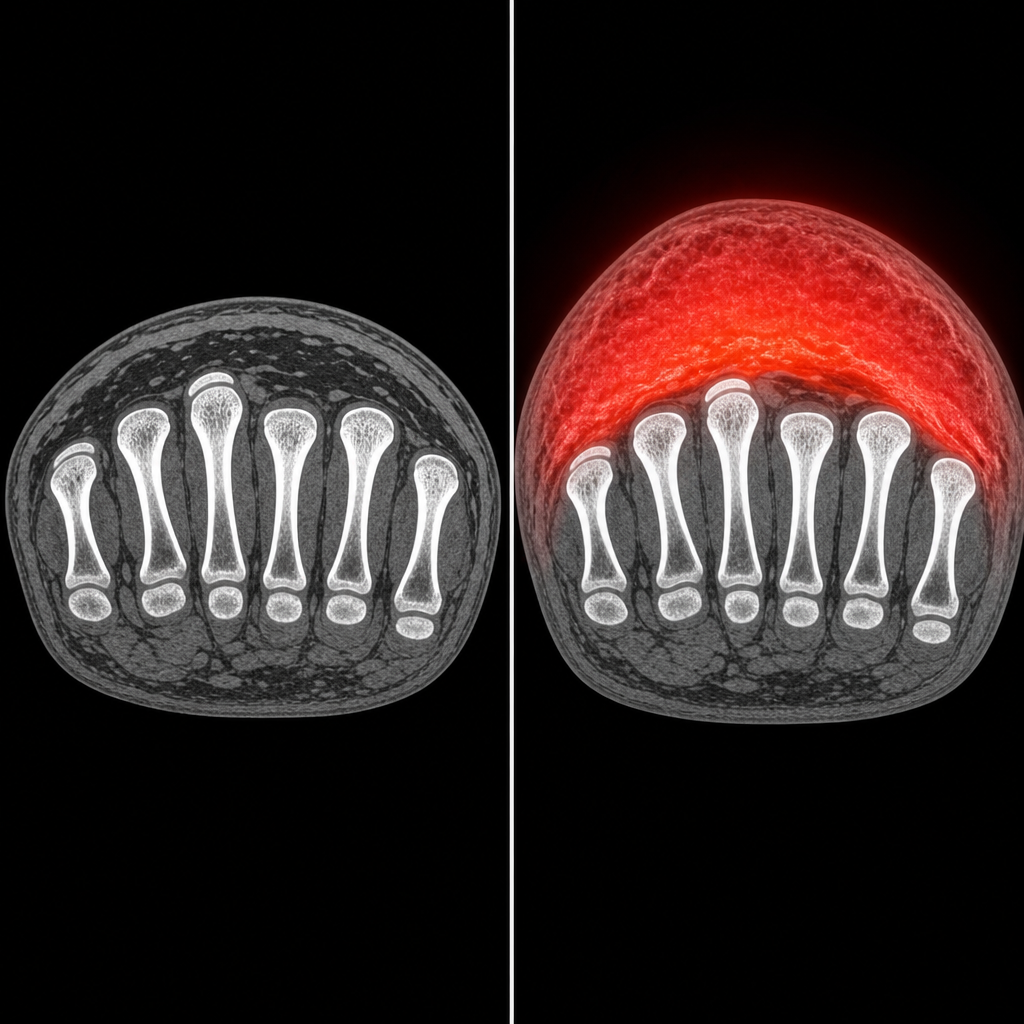
Lymphedema Reset Facebook ad: “Your Swollen Ankles Are The Warning. Your Heart Is The…”
Ran for 17 days, from July 19 to August 5, 2026, the last day Crush saw it.
Run by Lymphedema Reset on Facebook. Crush is not the advertiser and does not verify its claims. See this ad in Meta's Ad Library(opens in a new tab)
Want an ad like this for your product?
Crush makes new ad images for your product from this ad: your logo, your product photo, your offer.
Trials from $19.95 USD, then $79.95 USD a month. Cancel anytime.
About this ad
- Meta Ad Library ID
- 27844449091908700
- Platforms
- Facebook, Instagram, Audience Network, Messenger and Threads
- Relaunches
- 0
Ad text
If you are a woman over 60 and your ankles have swollen, tightened, or started sinking into a deep sock-band ring by evening, you have somewhere between three and five years before the same vascular failure could reach your heart. I am a vascular specialist with 19 years of practice. I have spent the last decade watching this exact timeline unfold in women past 60 while telling none of them what was actually coming. I am writing this letter to break that silence. The single most common phrase I hear from women over 60 who come into my office with swollen ankles, heavy legs, or fluid pooling by afternoon is "it is just aging." That phrase was given to them by a primary care doctor in an eight-minute appointment, and it has cost more women their cardiovascular health than any other phrase in modern medicine. I'm Dr. Alina Reid. I'm a board-certified vascular specialist who spent fifteen years repeating that phrase to thousands of women over 60 without telling them what was actually happening underneath their symptoms. When my own leg and circulation symptoms started at 51, I knew something I had never explained to a single patient. The swelling isn't the disease. The heaviness isn't the disease. The fluid pooling at your ankles isn't the disease. They are all symptoms of one underlying problem, the progressive failure of the calf-muscle pump that drops circulation drainage by 50 percent or more in every woman past 50, and 60 percent or more in every woman past 60, regardless of how clean her diet is or how often she exercises. The vascular slowdown is happening to almost every woman in this age group. The only question is which symptom you notice first, and whether you let the medical system mask it with prescriptions while the underlying failure continues toward your heart. I have treated thousands of women over 60 in my career. I have seen what happens at 62. At 65. At 68. At 72. And I have seen what almost no vascular doctor documents properly because the appointments are too short and "it is just aging" has become a clinical shortcut that closes the conversation. The 62-year-old. Came in last spring with ankles like rising dough by lunchtime and shoes that no longer fit by 3pm. No prescriptions yet. Her primary care doctor had told her for the last two years that her symptoms were "normal for her age." Her blood pressure was 144 over 90. Her total cholesterol was 232. Her calves had felt like cement blocks for over a year and she had stopped fighting it. She was not on a single medication and her circulation had been silently failing for at least a decade. She was almost certain she was about to start the cascade. The water pills she was about to be prescribed would have been the first medication. Within six months the compression socks. Within two years a stronger diuretic added. Within four years the cardiac event nobody saw coming. The 67-year-old. "It is just aging, Doc. Nothing serious." Her leg swelling had been progressing for eight years. Her ankle bone had disappeared three years ago. Her legs had felt like dragging weights for five. Her primary care doctor had told her every one of these was a normal part of aging and had not connected them to anything. Then her cardiologist found a coronary calcium score of 612 during a routine workup. Then her doctor started her on a diuretic and added compression stockings six months later. By the time she came to me for a second opinion, three different physicians had been managing three different symptoms with three different treatments and not one of them had told her the symptoms were connected to the calcium score. I see these women in follow-up appointments. They do not complain. They are grateful I am "managing" their condition. They have accepted that their bodies are simply doing what bodies do after 60. But I know what they lost. They had years, sometimes more than a decade, to address the pump failure that was producing every one of their symptoms simultaneously. Years to restore proper circulation. Years to save themselves from the cascade. Their symptoms had been screaming the warning the entire time. Their doctors had answered each scream with "it is just aging" while the underlying vascular slowdown compounded toward the cardiac event their bodies had been warning them about for ten years. What almost no doctor explains to a woman over 60 with swollen ankles is this. Your heart pumps blood down to your legs, and gravity helps it get there. But to push that blood and fluid back up, your body relies on a "second heart," the calf muscle pump. Every step you take squeezes the deep veins and shoots fluid upward. This pump is what tells your ankles to stay slim, your smooth skin to stay unstretched, and your fluid to keep moving instead of pooling. Without the pump firing, gravity wins, the deep veins do not empty, and fluid takes the path of least resistance, settling into the lowest point instead of draining upward. The calf pump fires strongest in your twenties and declines steadily from there. By age 50, most women have lost about half of that pumping power. By age 60, two-thirds. By age 70, even more. The decline is steeper in women with chronic stress, long hours seated or standing, metabolic dysfunction, and a sedentary lifestyle, but it happens to every woman, regardless. Every swollen ankle, every heavy leg, every tightening sock band, every climbing blood pressure reading, every coronary calcium accumulation in a woman over 60 traces back to the same underlying decline in the calf-muscle pump. "It is just aging" is technically correct. But it is incomplete in a way that has cost women their lives. Yes, this is what happens with aging. No, you do not have to accept the cascade that follows. The decline in pump function can be slowed, partially reversed, and partially restored, even at 65, 70, or older, if the right intervention is applied to the right muscle pathway. The swelling you have been quietly living with is not the warning. The heaviness is the warning. The tightness that came before it is the warning before the warning. The plaque slowly accumulating in your coronary arteries, silent for now, symptomatic later, is the disease. A 2006 study in the vascular literature documented this timeline. Peripheral circulation failure precedes the first cardiovascular event by an average of three to five years. Women with documented leg swelling and venous insufficiency carry a cumulative cardiovascular risk that is substantially higher than women in the same age cohort without either. Your swollen ankles are not embarrassing. Your heavy legs are not just "what happens after 60." They are your 10-year early warning system. I was not going to start the cascade I had been writing for thousands of women past 60. And I needed to find a path that actually addressed the mechanism rather than masking the symptoms. I tried what women past 60 try. Low-salt diet. Exercise. Weight loss. Helped marginally but the swelling persisted. Standard remedies. Compression socks. Leg elevation. Support hose. The standard list. Did not move the needle. My weight had come down. But my circulation markers stayed low. My ankle circumference stayed high. My legs stayed heavy by evening. The lifestyle work had moved some numbers while the pump function kept declining at the age-driven rate. But I kept thinking about something that made no sense in standard practice. Age-related pump decline can be partially reversed if the right muscle pathway is activated. Calf-pump function can be restored even in women past 60. The vascular research had been showing this for fifteen years. Almost no one in primary care or vascular medicine was applying it. So why was I not applying it to myself? November 14th. 10:23 PM. I was reviewing journals after a long clinic day. Couldn't sleep. The swelling was worse. The heaviness was almost constant. I was scrolling through research on venous drainage interventions. Not looking for anything specific. Just exhausted. I found a paper on electrical muscle stimulation and the soleus pump in the lower leg. Gentle electrical pulses activate the motor nerves that fire the calf muscles, the soleus and gastrocnemius, in the lowest part of the leg. These nerves trigger sustained pumping contractions through a pathway that remains functional in older patients even when the body's baseline pump activity has dropped significantly. Those contractions cause the deep veins in the calf, and the fluid pooled at the ankle, and the smooth muscle of the vein walls, to squeeze and empty correctly. The mechanism didn't just support symptom relief. It supported pump reactivation across age groups. Sustained EMS stimulation had been shown in multiple studies to reverse early circulation failure, reduce fluid pooling, and restore venous drainage, including in study populations over 60. Researchers had documented this "second heart" pump reactivation for years. I sat there at 10:23 PM staring at the diagram. Diuretics force fluid out through the kidneys by flushing water from the whole body. The drainage lasts as long as the medication is in your bloodstream. Your underlying pump failure does not improve. The bathroom-all-night leash and the rebound swelling are the price you pay for the temporary relief. EMS activates your body's own calf-muscle pump. Continuous squeeze-and-release contractions. Natural sustained drainage. Your pump reawakens instead of being bypassed. The pump failure causing your leg swelling, your heaviness, your tightening ankles, and your accumulating cardiovascular risk simultaneously, actually improves. I have been a vascular specialist for 19 years. And I had never connected direct EMS stimulation to chronic edema in older women. The shared mechanism, the underlying age-related pump root that explains why women over 60 cluster leg swelling, fluid pooling, heavy legs, and accelerating cardiovascular disease in the same individual, was never part of any vascular curriculum. At 11:11 PM I went looking for a properly built EMS device. What I learned during that search is something every woman over 60 who tries EMS needs to know. The calf pump lives deep in the lower leg. When you use a cheap vibration plate or a skin-surface foot massager, the pulse never reaches the motor nerves that actually fire the pump. For EMS to actually reach the calf muscles where the pump lives, it must deliver targeted low-frequency pulses through a foot plate that contacts the soles and drives contractions up the calf. A properly tuned 8 to 25 Hz waveform is what the research uses. Reach goes from surface tingling to true pumping contraction. Almost no device on the market does this. Most are the cheapest possible buzzing plates, the kind that only vibrate the skin. The same family of gimmick gadgets documented to do nothing for deep drainage. The tool works against the actual goal. I found one device that was different. The Ornexis Second Heart Activator. Gentle painless EMS pulses tuned to the exact frequency used in the clinical research. Delivered through a foot plate you rest your bare feet on rather than a surface buzzer. A waveform designed to drive the soleus and gastrocnemius, the calf "second heart." Fifteen minutes each evening. D3 and K2 deficiency is rampant in women past 60, and vascular calcification accelerates significantly past 60, which is exactly why restarting the pump matters so much at this age. I ordered a unit that night. Fifteen minutes each evening, feet resting on the plate. I started November 15th. November 22nd. One week in. The nightly leg cramps easing. Not gone yet. But quieter for the first time in over a year. November 29th. Two weeks in. Did not wake up with heavy, aching legs the previous night for the first time in two years. December 13th. Four weeks in. Ankle bone visible again by morning. Full slimness returning. My sister asked what I had changed. "Different approach," I told her. "Whatever it is, keep doing it." January 10th. Eight weeks in. Repeat bloodwork. Blood pressure down from 144 over 88 to 126 over 78. Inflammatory markers down across the panel. LDL down 21 points. I went back to my vascular colleague for a circulation study and an ankle measurement. She looked at my ankle circumference. Looked at her notes from six months ago. "Alina, what did you do? Your drainage is back to where it was when you were 45." I explained the calf-pump reactivation. The continuous squeeze-and-release pathway. The EMS mechanism. The way it remained effective even with age-related baseline decline. She was quiet for a long moment. "I have hundreds of patients over 60 I have been telling for years that their swelling was just aging. If what you are describing is reproducible..." "The mechanism is real. It works in older patients. The frequency matters. The foot-plate contact matters. And the timeline matters." She started recommending it for her patients over 60 with chronic swelling and heavy legs. I am not writing this letter because I think medications are bad. Diuretics work. Compression socks work. Antihypertensives work. They relieve the symptoms they were designed to relieve. But they do not fix your underlying pump failure. They do not address the age-related calf-pump decline that produces the symptoms in the first place. They do not lower your accumulated cardiovascular risk. They do not reverse the failure. They temporarily mask each individual symptom while the underlying damage compounds toward a cardiac event that no specialist on your team is currently tracking. And I see what happens five years later when women past 60 who masked their swelling and heaviness with prescriptions walk into a cardiologist's office with chest pain, an LDL nobody had checked, and a coronary calcium score that nobody was tracking. Your swollen ankles are not failing you. Your heavy legs are not failing you. They are warning you. The same age-related pump failure that is causing your leg swelling, your fluid pooling, and your heaviness is right now building plaque in your coronary arteries. You have two choices. Mask each symptom with a separate prescription or another pair of socks while the underlying failure accelerates. Or address the pump root that is causing all of them simultaneously. I think about what I almost did. I almost started the diuretics myself. I almost accepted the bathroom-all-night leash as the cost of "managing" my swelling. I almost became the patient I had been making for fifteen years, the woman in her late fifties on three treatments for three symptoms with no doctor connecting them to the underlying failure that age and pump decline had been quietly producing. Eight weeks. That is how long it took my blood pressure to drop, my swelling to ease, my ankle bone to return, and my drainage to recover to where it had been at 45. Eight weeks of letting my second heart do what it was designed to do. Pump. I am not saying age is reversible. I am saying the cascade is not inevitable. Your swollen ankles are your check engine light. Compression socks are electrical tape over the indicator. The light is still on underneath. You just cannot see it anymore. But I see it every day in the women over 60 who come back to me three years after their first prescription, asking why their legs are still heavy, and six years later when their cardiologist calls me to ask what I recommended. Every single one of them says the same thing. "I wish someone had told me my swollen ankles were connected to my heart." I am telling you now. The Ornexis Second Heart Activator costs $59.95, 70 percent off the $200 regular price. 100-day money-back guarantee. Send it back if your swelling has not measurably improved. https://ornexis.com/pages/ems-edema Dr. Alina Reid, MD Board-Certified Vascular Specialist, 19 years Practicing physician P.S. Give it 60 to 90 days. The upside is the version of yourself that does not accept "it is just aging" as the explanation for a body that has been trying to warn her for a decade. P.P.S. You are not too late. Your calf pump is older but it is not dead. The motor nerves still work. The second heart still responds. Please reactivate it now, before the cascade your primary care doctor has been calling "just aging" finally reaches the organ they will pay attention to. Individual experiences vary. These statements have not been evaluated by the FDA. This product is not intended to diagnose, treat, cure, or prevent any disease. Do not discontinue any prescription medication without consulting your prescribing physician.
Where the ad sends people
ornexis.com
Your Swollen Ankles Are The Warning. Your Heart Is The Target.
Dr. Alina Reid reviews the popular Ornexis Second Heart Activator foot-plate device currently trending on social media
Learn more: ornexis.com(opens in a new tab)