
Active· since May 20, 2026
- 120
- days running
- 0
- relaunches
Ad copy
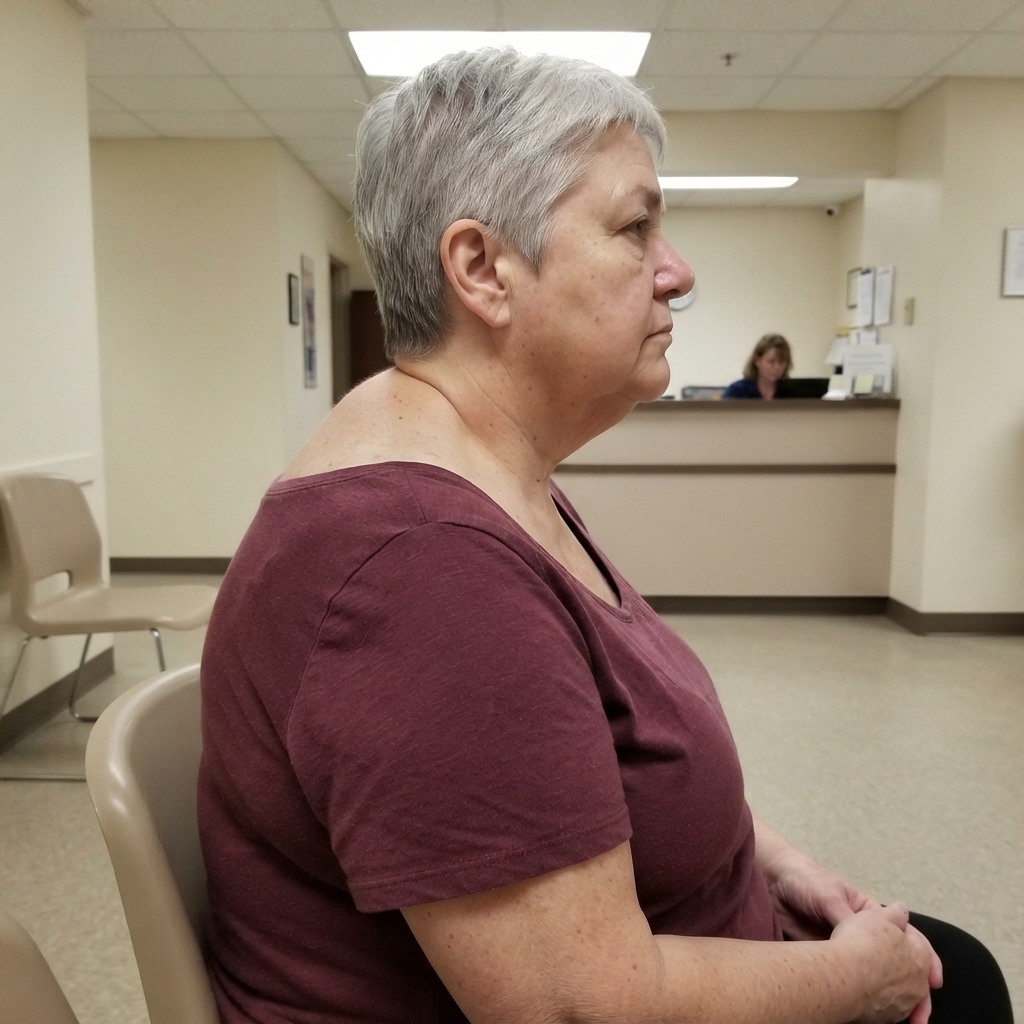
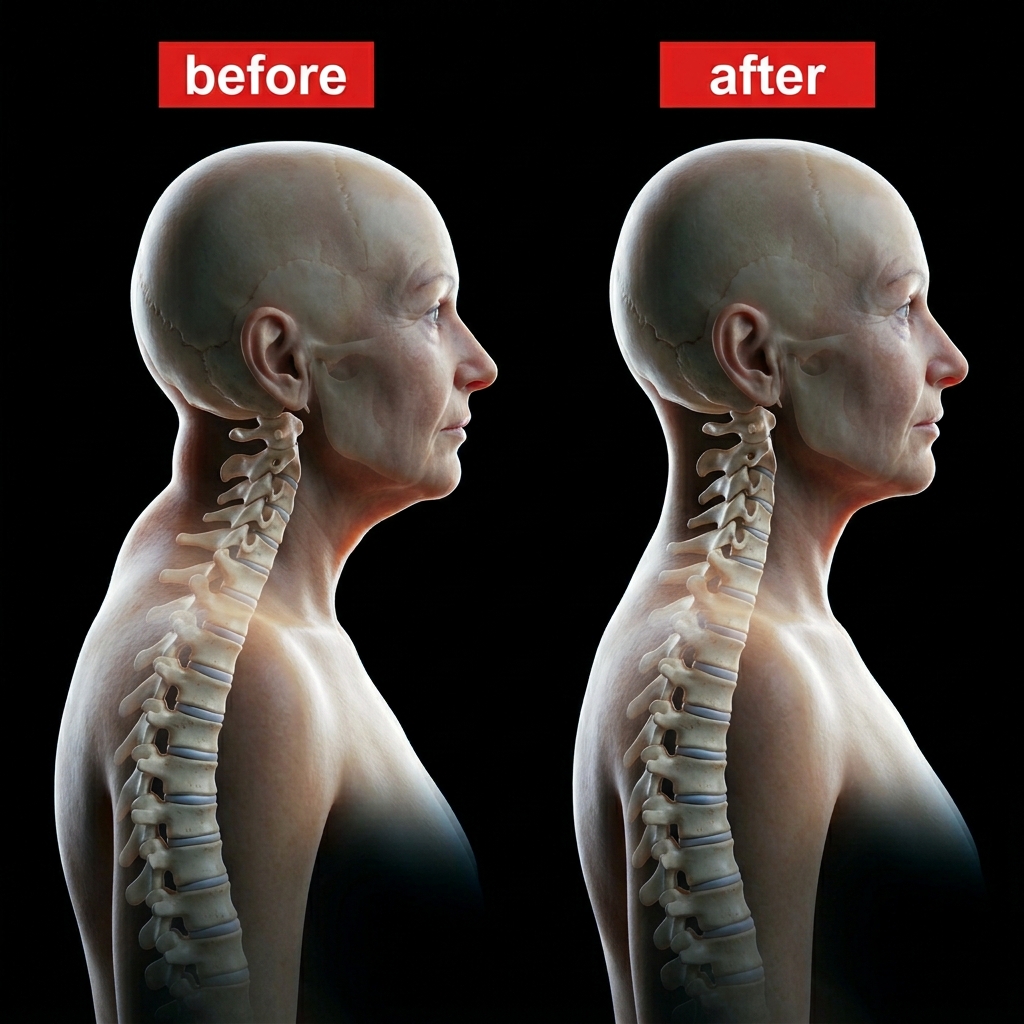
My mother stopped appearing in photos after 11 years of chiropractic management. I have the same progression she had. The same family history. My chiropractor wants to start me on the same protocol. My mother disappeared from her own life at 71. I'm 59. Three weeks ago, my chiropractor closed the exam room door. The click echoed. She sat down. Pulled up my chart without looking at me. "Sandra. We can't wait anymore. I'm recommending the structured escalated protocol. Twice-weekly. You'll start this month." My throat constricted. The walls tilted. Escalated management. The same protocol they put my mother on. Eleven years of it. Her wardrobe first — the little changes that started year two. Avoiding open necklines. Planning outfits around coverage. Asking me a few times if something showed from behind before she left the house. The chiropractor told her it was normal progression. "You're just getting older." It wasn't normal. The afternoon my mother declined to be in our family Christmas photo — the same gathering she'd organized and hosted for thirty years. She stood to the side while we took the picture. Said she was fine just watching. The woman who had dressed impeccably every day of my childhood couldn't choose a blouse without twenty minutes of calculation. Year five: She stopped buying anything with an open neckline. Said nothing fit right anymore. Year eight: She started sitting at the back of every event. Then stopped attending certain events. Then stopped suggesting events entirely. Year ten: She looked at a photo from her granddaughter's birthday — a photo she was standing right next to me in — and said "I don't know why I wore that. You can see everything." My daughter's words at Christmas, barely audible over my own frustration: "Grandma won't be in a single photo anymore. She says she just prefers to watch." Eleven years of management. Eleven years of watching my mother vanish. She's still alive. But the woman she was is gone. The management controlled her measurements. Didn't stop the tissue. Didn't give her back her wardrobe. Just made her last eleven years a slow reorganization into someone who lived around the edges of her own life. And here's the part that haunts me now that I understand what was really happening inside her cervical structure: Her measurements were "stable" the entire time. The adjustments were doing their job — mobilizing the joint, keeping the numbers on paper from climbing dramatically. But her body still couldn't RELEASE the contracture that had been pulling her head forward for decades. The management was mobilizing the joint above it. Nobody ever released the lock below. The tissue kept building anyway. Because managed measurements don't mean released contracture. Not when the neurological lock that's supposed to release after every forward movement has been stuck for years. I sat in my car in the parking lot. Couldn't turn the key. Just gripped the steering wheel. The protocol sheet crinkled in my jacket pocket. I pulled it out. Stared at it. Twice-weekly structured adjustment. Starting this month. My hands shook. My husband was in the kitchen when I walked through the door. "Hey. How was your assessment?" The words stuck. I handed him the protocol sheet without speaking. He read it. Put it on the counter. "No." His voice was quiet. "Sandra, I watched what that management did to your mother. The disappearing. The wardrobe. The photos. The way she started organizing her whole life around covering one thing. I can't watch you go through that. I can't—" He couldn't finish. Turned away. That night I lay awake. The ceiling fan rotated. Over. And over. And over. Red numbers glowed on the clock: 11:52 PM. Rolled over. 12:41 AM. Again. 1:38 AM. At 2:23 AM I gave up. Went downstairs. Sat at the kitchen table. Opened my laptop. The screen's blue glow hurt my eyes. I typed: why neck hump keeps building despite chiropractic The search results loaded. My chest tightened. Article after article describing the same pattern I'd watched my mother live through. Measurements stable. Tissue building. Wardrobe reorganizing. Life contracting. I searched again: suboccipital contracture neck hump Something I had never seen in eleven years of watching my mother's management. I clicked. And I found something that changed everything. A study in the Journal of Manual and Manipulative Therapy about the suboccipital contracture — the neurological lock at C1 and C2 where the skull meets the spine. And it said something I had never heard anyone talk about. Not my chiropractor. Not any of the practitioners my mother had seen. Not a single article in months of research. Your neck hump tissue keeps building because the suboccipital contracture is never directly released. I sat up in bed. Read it again. The suboccipital muscles at C1 and C2 are the primary cervical release mechanism. Every time your head drifts forward — screens, reading, driving, cooking — those muscles are supposed to fire and bring the head back to center. Automatically. Without you thinking about it. When they lock — and they lock after years of accumulated forward load — that automatic return stops. The head stays pulled forward continuously. The body builds compensatory tissue at the cervical base to absorb the constant stress. That tissue is the hump. And it keeps building as long as the contracture keeps pulling. Without releasing the contracture, that entire building process CONTINUES. I stared at the screen. My hands were shaking again. But not from fear this time. From anger. Because I suddenly understood what happened to my mother. Eleven years of twice-weekly adjustment. The management was mobilizing the cervical joint. Keeping her measurements from climbing dramatically on paper. And the whole time, her suboccipital contracture was still locked — unable to RELEASE the forward pull that was building tissue at her cervical base. The adjustment was mobilizing the joint while the contracture below kept pulling. Her measurements looked "stable." Her tissue kept building. Nobody checked. Nobody addressed the release problem. Nobody even mentioned it. Eleven years of management. Tissue building the entire time. She disappeared from her own life at 71 while her measurements said she was "managed." She didn't disappear because her posture was too bad. She disappeared because her body couldn't release the contracture that was already there. And nobody — not one practitioner in eleven years — ever said the word "contracture." I kept reading. Your suboccipital muscles require three specific inputs to release. And standard management delivers none of them directly. Exact C1-C2 anatomical placement — the two precise pressure points where the contracture lives, not the upper back, not the general cervical spine. Gravity-assisted sustained delivery — your own head weight providing consistent downward force for the full duration. Minimum hold duration — eight to ten minutes, long enough for the proprioceptive receptors to activate and the neurological release signal to actually fire. Standard adjustment mobilizes the joint above the contracture. The contracture below re-engages within 48 hours. The tissue keeps building. Braces hold the head in position externally. The contracture inside keeps engaging. Remove the brace and the head returns to forward within minutes. Foam rollers target the thoracic spine — nowhere near C1-C2. Not a single standard approach directly releases the contracture. It's like your cervical structure has a locked door and everyone keeps polishing the handle. The handle looks better. The door stays locked. That's why my mother's management stabilized her measurements while her tissue kept building for eleven years. That's why I tried a foam roller for four months and saw nothing. A cervical pillow for three months. A posture brace for eight weeks. Two different exercise programs. I'd been polishing the handle for months. Nobody had unlocked the door. I searched until 4 AM that night. And I found that there are specific engineering requirements that allow direct suboccipital compression to actually fire the neurological release signal. Two precision foam nodes at the exact C1-C2 pressure points. Gravity-assisted delivery through your own head weight. Minimum eight to ten minute hold. All three simultaneously. At the exact address where the contracture lives. I searched for a tool that met all three requirements. Not one or two. All three. Working together. Most posture tools were useless for this. Broad foam devices applying pressure to the wrong area. Traction devices decompressing the joint above the contracture. Cervical wedges supporting the curve without compressing the lock. Then I found Cevera. Two foam nodes engineered for exact C1-C2 placement. Gravity-assisted delivery through my own head weight. Ten-minute protocol before sleep. All three inputs simultaneously at the exact address. And they offer a 90-day money back guarantee. If I didn't see measurable improvement within 90 days, full refund. No questions asked. I almost didn't order it. I'd been burned too many times. But I figured — 90-day guarantee. What do I actually have to lose at this point? I ordered it that night. The tool arrived two days later. I used it for the first time that evening. Lay back on the two nodes for ten minutes before bed. Day one: Something I hadn't felt before. A release at the base of my skull. Not dramatic. But something that had been held for years was quietly beginning to let go. I slept through the night. Didn't expect that. The second day, I clearly felt something releasing further. Like a fist that had been clenched for years at the base of my skull and now finally OPENED. Warmth moving through the back of my neck. Very soothing. And deeply relaxing. Actually, I almost fell asleep mid-session. Day seven I woke up, went to my wardrobe. Realized halfway through getting dressed I'd already chosen what I wanted to wear. No calculation. No second outfit. Just chose and put it on. When I say no calculation. I mean no calculation. Not even a moment of hesitation. And from that point on, I was simply in awe. Because the constant background awareness ended. For good. No more positioning in photos. No more stepping to the back. And I could stand straight up. At my real height again. No more compensating. The best part? I was free to choose whatever I liked after a very long time. Without strategy. After a month, I cancelled the escalated management appointments. Haven't had a single bad day since. This thing has literally changed everything for me: How I stand, how I dress, my presence in photos, my ease in any room. And it's given me the certainty that the tissue is NOT coming back. Because for nine weeks now, I feel like I did before my neck hump was something I organized my mornings around. For years, I had to plan my entire wardrobe around coverage. Every single day. Last Saturday, I stood at the front of my granddaughter's school play photos. Got in every photo. Drove home. And even wore the blouse I'd been avoiding for two years to dinner. Zero strategy. Zero calculation. Nine weeks and it hasn't come back. My chiropractor ran my assessment at my follow-up. She stared at the screen. Frowned. Refreshed it. Looked at me. "Sandra. What happened?" Forward head translation: 1.4cm. Down from 2.8cm. I told her. The suboccipital contracture. The three simultaneous inputs. The direct C1-C2 compression. The gravity-assisted delivery. The ten-minute protocol. She typed notes. Nodding. "Well." She closed the laptop. "Whatever you're doing, continue. These measurements are excellent. No escalated protocol necessary at this time." No escalated protocol necessary. I walked to my car. Got in. Sat there. Then called my husband. "1.4cm." I heard his breath catch. Then a sob. "Thank God. Thank God, Sandra." That was nine weeks ago. My forward head translation this morning? Still 1.4cm. Normal. Healthy. No management schedule. No coverage strategy. No watching my life contract around one problem. I'm not following my mother's path. Yesterday I stood at the center of our family dinner photo. Full height. Open neckline. Not calculating a single angle. My daughter grabbed me in a hug when we finished. "Mum! You look so like yourself again! Can we do this every week?" My throat tightened. My eyes burned. Because I knew who I was in that photo. I knew where I was and who I loved and every single moment of that evening together. The answer was yes. If you're reading this, you see yourself in my story. Your tissue's progressing. Maybe already significantly. Your mother or grandmother disappeared behind management — the wardrobe, the photos, the slow contraction into someone who lived around the edges of their own life. Your chiropractor's recommended escalated management. You've Googled why nothing works at 3 AM. Seen the articles about tissue that keeps building despite adjustments. Felt paralyzed between two uncomfortable choices. You've tried other tools. Foam rollers. Cervical pillows. Braces. None of them worked. Because none of them addressed the actual problem — your suboccipital contracture has never been directly released. Here's what I want you to know: If I hadn't found that research paper at 1 AM, I'd be on an escalated management schedule right now. For life. Wondering every time I stepped back from a photo if this was how it started for my mother. The wardrobe reorganizing. The photos contracting. The life shrinking. All while knowing the management couldn't actually stop the tissue — because it was mobilizing the joint while my contracture stayed locked. But I had a choice I didn't know existed. I chose to try one more thing. To find a tool that actually addressed why tissue keeps building in the first place — not just joint mobility above the contracture, but direct release of the contracture itself. That choice changed everything. If you catch it early enough, you still have a window. But every day you wait, that window gets smaller. Suboccipital contracture doesn't release itself. It gets more established with age. More tissue builds. The lock gets harder to address every year. If you're where I was nine weeks ago — watching the same pattern start in yourself that you watched happen to your mother, desperate for something that actually works — try Cevera. Track your measurements. Give it an honest trial. Your future self will thank you. I tried foam rollers, cervical pillows, posture braces, and two different exercise programs before Cevera. None of them worked. Here's why Cevera did: It targets RELEASE, not just mobility above the contracture. Every other tool I tried was doing the same thing chiropractic management does — mobilizing the joint above the contracture. Polishing the handle. Cevera targets the contracture directly. Two precision foam nodes at exact C1-C2 placement, gravity-assisted delivery through your own head weight, ten-minute hold. All three inputs simultaneously. At the exact address where the lock lives. That's the difference. That's why nothing else worked. Direct delivery — not pressure to the wrong address. The foam nodes deliver gravity-assisted compression precisely at C1-C2. No broad thoracic pressure. No general cervical support. The specific address. This matters when your whole contracture is locked at one precise location. Three inputs that each do something specific. Exact C1-C2 placement reaches the contracture directly. Gravity-assisted delivery provides the consistent sustained force. Minimum eight to ten minute hold fires the proprioceptive release signal. All three simultaneously. Not one or two — all three. Pure engineering. No complications. Two foam nodes. Lie back. Ten minutes. That's the entire protocol. No appointment schedule. No ongoing costs. No brace to wear all day. 90-day money-back guarantee. If you're not satisfied for any reason — if you don't see improvement in your measurements — if you don't feel the difference in your mornings — contact them for a full refund. No questions asked. You risk absolutely nothing. You're at a crossroads right now. One path: Start the escalated management. Twice-weekly appointments. Hope the tissue slows. Watch your wardrobe reorganize. Watch yourself step back from photos. Follow the same path your mother followed. While knowing the management can't actually release your contracture — because it was mobilizing the joint while the lock kept pulling. Another path: Do what I did. Try a tool that actually targets why tissue keeps building in the first place. Release the contracture instead of just mobilizing above it. Track your measurements. Give it an honest trial with zero financial risk. I chose the second path. It saved me from management. From the wardrobe strategy. From following my mother's path. From years of watching my life contract around one problem. It gave me my mornings back. My photos back. Myself back. Nine weeks ago, I was paralyzed. My forward head translation was 2.8cm. My chiropractor recommended escalated management. I was the same age my mother was when that same management started erasing her wardrobe and her presence from family photos. I sat at my kitchen table at 2 AM reading about why tissue keeps building despite adjustments. I felt trapped. Like there was no good choice. Just two different ways to lose everything. But I was wrong. There was a third option I didn't know existed. This doesn't have to be your story. If you're where I was — watching the pattern start, desperate for something that actually reaches the contracture — try Cevera. Track your measurements. Give it an honest 90-day trial. Your future self will thank you. — Sandra Callahan P.S. — I noticed something releasing by day one. Saw measurable improvement by week two. Reached healthy measurements by week four. Avoided escalated management entirely. Your timeline might be different. But you won't know unless you try. P.P.S. — Every day you wait is another day of tissue building because your contracture hasn't been released. Every day the lock gets more established. Every day closer to starting management you might never be able to stop. Don't wait until it's too late. Order now. 👉 https://trycevera.com/pages/adv-womens-wellness-report
You Don't Need Ongoing Management To Fix Your Neck Hump
Cevera Posture Release Tool is crafted to support your body's natural cervical release mechanism, helping reduce tissue buildup, forward head pull, and morning tightness while improving natural head position and confidence. This precision-engineered tool promotes daily contracture release so you can...
LEARN MORELike this ad? Make it yours.
Crush rebuilds this exact creative around your product — your brand, your colors, your offer — in about a minute.