Over 50 & Fabulous
Over 50 & Fabulous Facebook ad: “Fuel Your Body at the Cellular Level”
Ran for 63 days, from June 25 to August 27, 2026, the last day Crush saw it.
Run by Over 50 & Fabulous on Facebook. Crush is not the advertiser and does not verify its claims. See this ad in Meta's Ad Library(opens in a new tab)
Want an ad like this for your product?
Crush makes new ad images for your product from this ad: your logo, your product photo, your offer.
Trials from $19.95 USD, then $79.95 USD a month. Cancel anytime.
About this ad
- Meta Ad Library ID
- 2842758909417819
- Platforms
- Relaunches
- 0
- Niche
- Sports & Training
Ad text
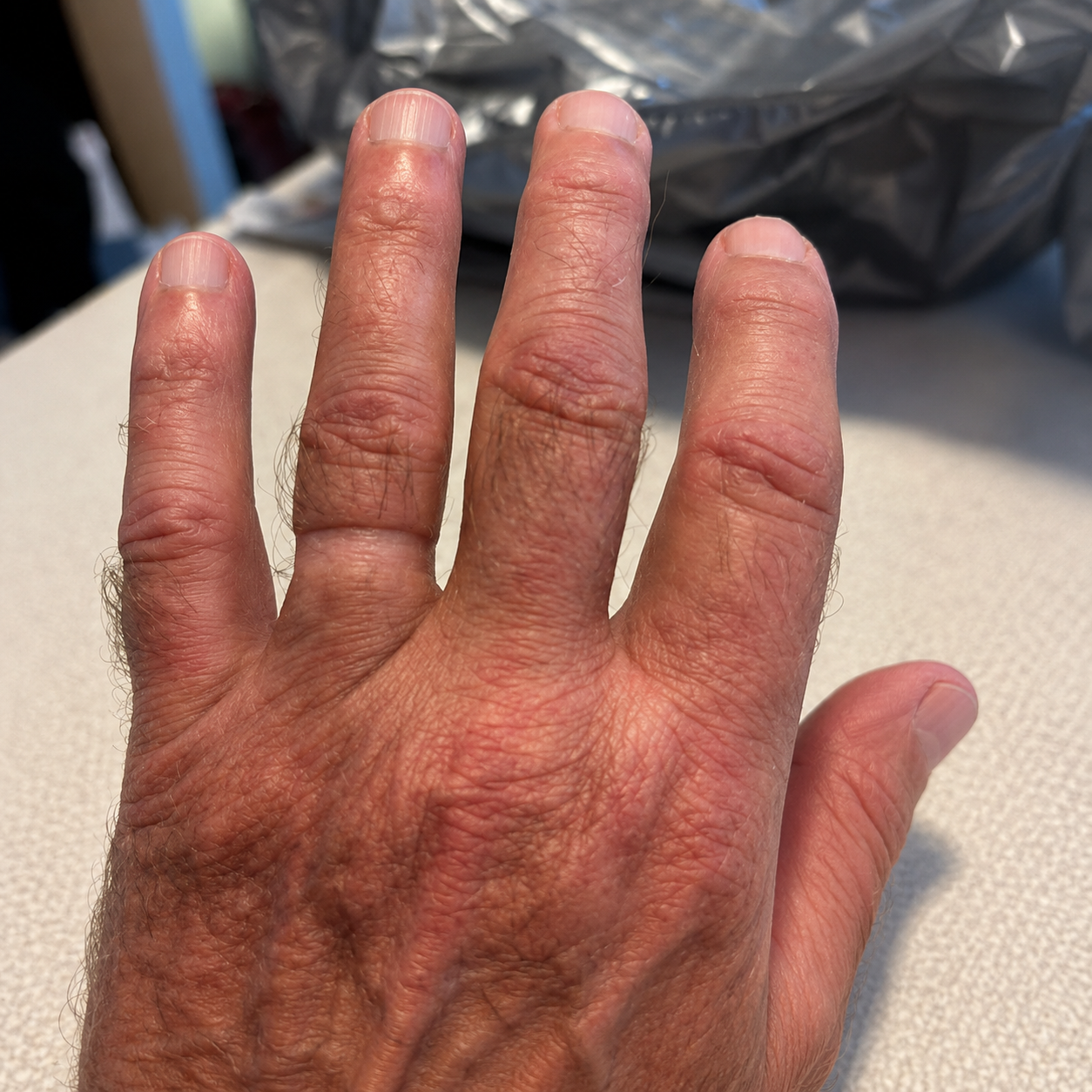
My husband used to be the kind of man who fixed everything. Last Tuesday he sat at our kitchen table and looked at his own hands like they belonged to a stranger. And I realized the arthritis wasn't just taking his strength. It was taking the man I married. My name is Carol. I'm 61. Dennis is 63. We've been married for thirty-four years. He's driven a school bus for the Dayton City School District for twenty-two years. He drives the early morning elementary route - the little ones, kindergarten through third grade. He knows every child by name.. He has driven those same streets in the dark for over two decades, and he has never once been late. His hands are the job. Gripping the wheel through an Ohio winter. Working the door lever. Waving at the crossing guard on Wilmington Pike every single morning. Those hands. I want to tell you what had been happening to them. It started about five years ago. Just stiffness at first. He'd come home from the morning route and flex his fingers over his coffee mug. I'd hear the joints crack. He'd say it was the cold. Ohio winters are hard on a man who grips a steering wheel for three hours before 8 AM. Then the stiffness stopped going away. By the third year, it wasn't just stiffness. It was a deep, grinding ache in his knuckles that was there when he woke up and there when he went to bed. His right hand started swelling around the middle knuckles. Not badly. Just enough that his wedding ring got tight by the afternoon. He stopped wearing the ring. He put it in the little dish on the dresser and said he'd put it back on when the swelling went down. That was two years ago. The ring is still in the dish. He started having trouble with the door lever on the bus. It's a heavy vehicle and he'd been working it without thinking for twenty-two years. Now he had to use both hands. He didn't tell his supervisor. He just started using both hands hoping nobody noticed. His knees started in about eighteen months ago. Getting in and out of the driver's seat, he'd wince. Just a small wince. I started noticing it when we'd get out of our own car in a parking lot. He'd open the door, swing his legs out, and there'd be that half-second pause before he put his weight down. Like he was bracing for something. He stopped kneeling in the garden with me on weekends. He used to help me with the heavy planting - the shrubs, the roses that need deep holes. He said his back was bothering him. His back was fine. It was his knees. He stopped going to his brother Frank's place for the Sunday football games. Frank lives in a split-level and the stairs to the den are steep. Dennis said he was tired of the drive. It's twenty minutes. He stopped taking the grandkids to the park. Our daughter's two boys, Owen and Charlie, they're six and eight. Dennis used to take them to the park on Saturday mornings and push them on the swings and chase them around the climbing structure. He stopped because he said the uneven ground was hard on his knees. The boys started asking why Grandpa didn't come anymore. I didn't have an answer for them. We went to his doctor in the spring. Dr. Hensley. A good man, been our doctor for fifteen years. He pressed on Dennis's knuckles, bent his knees back and forth, looked at the x-rays. He said it was osteoarthritis. He said the cartilage was wearing down. He said it was common in men Dennis's age who did physical work. He said we could manage it. That word. Manage. He gave Dennis a prescription for a strong anti-inflammatory. Naproxen. Dennis took it every morning with breakfast. It helped a little. Took the sharpest edge off the knuckle pain. But the stiffness in the morning was still there, and his stomach started burning after about six weeks. He'd wake up at night with acid coming up his throat. He stopped being able to drink his morning coffee without his stomach cramping. He stopped the naproxen. He switched to ibuprofen. Over the counter, three at a time, twice a day. That helped for about a month. Then it stopped helping and his stomach started burning again. He tried turmeric. He took the capsules every morning for four months. I bought him the expensive kind from the health food store, the one with the black pepper for absorption. He took it faithfully. Nothing changed. He tried fish oil. He tried Glucosamine. His knuckles were still swollen by afternoon. His knees still made him wince getting out of the car. The ring was still in the dish. Nothing stopped the slow retreat. And then last Tuesday. He'd had a hard route. Cold morning, icy roads, a child who'd had a meltdown at the back of the bus. He came home and sat at the kitchen table and looked at his hands. I came over and sat across from him. "Artie," I said. "What happened." He didn't look up. "I had trouble with the door lever this morning," he said. "The big one. The emergency exit. I had to check it before the route it's part of the pre-trip inspection and I couldn't get the handle to move. My right hand just wouldn't close around it properly." He finally looked up at me. "I got it eventually. I used both hands and I got it. But Carol. If I can't work the door lever, I can't pass the inspection. If I can't pass the inspection, I can't drive the route." He looked back down at his hands. "I've been driving those kids for twenty-two years. I remember every single one of their names." I sat there and I felt something cold move through my chest. Because I knew what he wasn't saying. He wasn't just talking about the job. He was talking about who he was. Dennis is a man who shows up. Who has always shown up. For those kids, for our kids, for me. Twenty-two years of 5:30 AM alarms in the dark. Twenty-two years of icy roads and broken heaters and parents who didn't show up at the stop on time. He never complained. He just drove. If the arthritis took the bus route, it wasn't just taking a job. It was taking the last version of himself he recognized. That night I called our daughter, Pam. Pam is 36. She works as a nurse practitioner at a functional medicine clinic in Columbus. She's been in medicine for twelve years and she has the kind of mind that doesn't stop until it finds the answer. She got that from Dennis. I told her about the door lever. I told her about the knuckles, the knees, the ring in the dish, the six months of glucosamine that did nothing. She was quiet for a long moment. Then she said, "Mom. I need to tell you something. And I need you to hear all of it before you say anything." I said okay. She said, "Dr. Hensley isn't wrong about the cartilage. Osteoarthritis is real and the wear is real. But there's a second half of this story that he didn't tell you. And it's the half that we can actually do something about." She asked me to picture a construction site. She said, "Imagine you're trying to build something. You've got lumber. You've got bricks. You've got all the right materials sitting on the site. But there's no electricity. The power is out. So the tools don't work. The workers can't do anything. The materials just sit there. The building doesn't get built." I said I was following her. "That's what's happening in Dad's joints," she said. "The cells in the joint tissue — the ones responsible for maintaining cartilage, for managing inflammation, for keeping the joint lubricated and moving - those cells need energy to do their work. A lot of energy. And that energy is produced by tiny structures inside every cell called mitochondria. They're the power plants." She paused. "As we get older, especially with years of repetitive physical stress like Dad has had, those mitochondria start to break down. They produce less energy. They build up more waste. And when that happens, the cells in the joint tissue don't have what they need to do their job. Inflammation that should be cleared out just sits there. Cartilage that should be maintained starts to thin. The joint starts to run on fumes." I thought about Dennis flexing his fingers over his coffee mug every morning. "The naproxen," Pam continued, "just disconnects the alarm. It quiets the pain signal. It does nothing about why the joint is inflamed in the first place. The turmeric and the fish oil — those are the right idea, but here's the thing, Mom. If the power plants are broken, the cells don't have the energy to use those nutrients. It's like delivering lumber to a construction site with no electricity. The supplies arrive. Nothing gets built." I sat down on the couch. "Six months of glucosamine," I said. "Six months of glucosamine delivered to cells that didn't have the power to use it," she said. "It's not that the glucosamine was wrong. It's that nothing can work if the power plants aren't running." She let that sit for a moment. "So what turns the power back on?" I asked. She told me about Methylene Blue. I'd never heard of it. I'm a gardener. I know soil chemistry and root systems and the pH that roses need. I don't know molecules. Pam told me it's a compound that's been used in medicine for over a hundred years. It's on the World Health Organization's list of essential medicines. It's in every emergency room in the country. Doctors use it to rescue cells that are completely starved of energy. "It does something that nothing else does," she said. "It donates electrons directly into the mitochondria. It bypasses the broken parts of the energy chain and forces the cell to start producing power again. And at the same time, it's one of the most powerful antioxidants ever studied it quenches the oxidative stress that broke the power plants down in the first place. So it does both things simultaneously. It turns the power back on and it stops the damage that was turning it off." She told me about a brand called Valora. She said they make a pharmaceutical-grade Methylene Blue in a gummy. She was specific about why the gummy mattered. "Liquid drops are what most people find first," she said. "They taste like chemicals, they stain your teeth blue, and they only absorb at about 30% because your stomach acid destroys most of the molecule before it reaches your bloodstream. The gummies dissolve under your tongue sublingual absorption so they bypass the stomach entirely. You get more than double what the liquid delivers. And Valora adds Vitamin C to the formula, which keeps the molecule stable so it doesn't stain your mouth." She said they had a 90-day money-back guarantee. Full refund. Empty bottle. No questions. "Mom," she said. "I've been watching Dad's hands for two years. I've been watching him give things up one at a time. The garden. The park with the boys. Frank's place on Sundays. I don't want to watch him give up the bus route. Just try it. 90 days. If nothing changes, send it back." I ordered a bottle that night while Dennis was watching the news. When it arrived on Thursday, I put two gummies on a napkin next to his coffee mug in the morning. He looked at them. He looked at me. "Pam said to try these," I said. "She said 90 days. If nothing changes, we send them back and get every dollar refunded." He picked one up. Turned it over. Put it back down. "Is this another supplement, Carol?" "It's not like the others," I said. "Pam explained why the others didn't work. These work differently. Just try." He sighed the way he sighs when he's decided to trust me. He took them. I want to tell you what happened over the next few months, and I want to be careful. Dennis is still 63. His joints aren't 40 years old. I'm not going to sit here and tell you a gummy reversed twenty-two years of gripping a steering wheel. But here is what I watched. Week one: Nothing. He came home from the route and flexed his fingers the same as always. I didn't say anything. I just watched. Week two: He poured his own coffee on a Saturday morning without wincing when he gripped the pot. He didn't notice. I noticed. I didn't say anything. Week three: I was in the backyard turning the compost when I heard the back door open. Dennis came out in his work boots. He walked across the yard to where I was standing. He knelt down next to the raised bed — both knees, all the way down — and he looked at the soil. He hadn't knelt in the garden in over a year. He said, "Your roses are going to need cutting back before the frost." I had to look away. Week five: He drove to Frank's on Sunday. He didn't say he was going. He just came into the kitchen at noon and said, "I'm going to watch the game at Frank's. You want to come?" I said yes before he finished the sentence. He walked up those split-level stairs without holding the railing. Week seven: Our daughter brought the boys over on a Saturday. Owen and Charlie. Six and eight. They came through the front door like a small storm, the way they always do, and Charlie ran straight to Dennis and said, "Grandpa, can we go to the park?" Dennis looked at me. I didn't say anything. I just waited. He said, "Go get your coats." I stood at the kitchen window and watched the three of them walk down the driveway. Dennis in the middle, a boy on each side, Charlie already talking about something with his hands going. Dennis's hands were in his jacket pockets. When they came back an hour later, Charlie was on Dennis's shoulders. Dennis was carrying him. I had to sit down at the kitchen table. I'm writing this because I know there is a woman reading this right now who is watching her husband give things up one at a time. The hobbies. The family dinners. The grandchildren. The things that made him who he is. And she has been told it's just aging. Just wear and tear. Just something to manage. But if the power plants in the joint cells are broken, the cells cannot repair the tissue. The anti-inflammatories just mask the alarm. The turmeric and the glucosamine and the fish oil sit there like lumber in the dark, waiting for electricity that never comes. Methylene Blue turns the power back on. The brand is Valora. The product is their Methylene Blue Gummies. Pharmaceutical-grade. Made in the USA. Third-party tested. They don't turn your mouth blue. You can find them here: 👉 https://thevalorastore.com/products/methylene-blue-gummies-nerve-pain-support P.S. Dennis passed his pre-trip inspection this morning. He worked the emergency door lever with one hand. He came home and told me at dinner, very quietly, like it was something he didn't want to jinx. He said, "The door lever was fine today." I said, "Good." He nodded and went back to his food. That was it. That was the whole conversation. But I know what it meant. His wedding ring is back on his finger. P.P.S. The 90-day money-back guarantee is the only reason I had the nerve to order it in the first place. If you take it for three months and your husband's hands feel exactly the same, you send the empty bottle back and they refund every penny. No phone tree. No argument. After six months of glucosamine that did nothing, that guarantee was the difference between ordering and not ordering. P.P.P.S. Pam told me after Dennis's first good week that the saddest thing she sees in her clinic is patients who waited too long. Who watched themselves give things up one at a time and told themselves it was just aging, right up until the thing they gave up was the last thing they had. She said she didn't want that to be her dad. She said she wanted to give him a chance before it got to that. That's all I'm asking you to do. Give the person you love a chance. 👉 https://thevalorastore.com/products/methylene-blue-gummies-nerve-pain-support
Where the ad sends people
thevalorastore.com
Fuel Your Body at the Cellular Level
Valora
Learn more: thevalorastore.com(opens in a new tab)